
Kukes, Albania. 18th October 2024.
Another strange border crossing today. I arrived at a border post, which I assumed was for exiting Kosovo. A guy examined my passport and my bike registration documents then waved me on. And that was it. Free to go. So was I not checked out of Kosovo or not checked into Albania? I don’t think I’ll ever know.
I made my way to a small hotel, combined with a car workshop, in the town of Kukes. The owner, Seth, used to work in England, often with Irish people. When I showed him my Irish passport he was so pleased he gave me a beer!
My bike needed a clean so I asked Seth if they had a jet wash. Sorry, but no. Then he changed his mind and decided he did have one after all. It must have been my Irish charm. I gave the mechanic who washed it some money, which he said he didn’t want. But I made him take it.
I walked down into the town for a meal and shopping but had to turn back because I’d forgotten my wallet. As I was walking back the mechanic saw me and insisted on giving me a lift. Then, when I’d got my wallet, he saw me walking back again and gave me another lift. I didn’t mind too much. In the town I had a tasty meal of Country Casserole and salad. I found a bakery and bought something for breakfast. Another successful day in a new country.
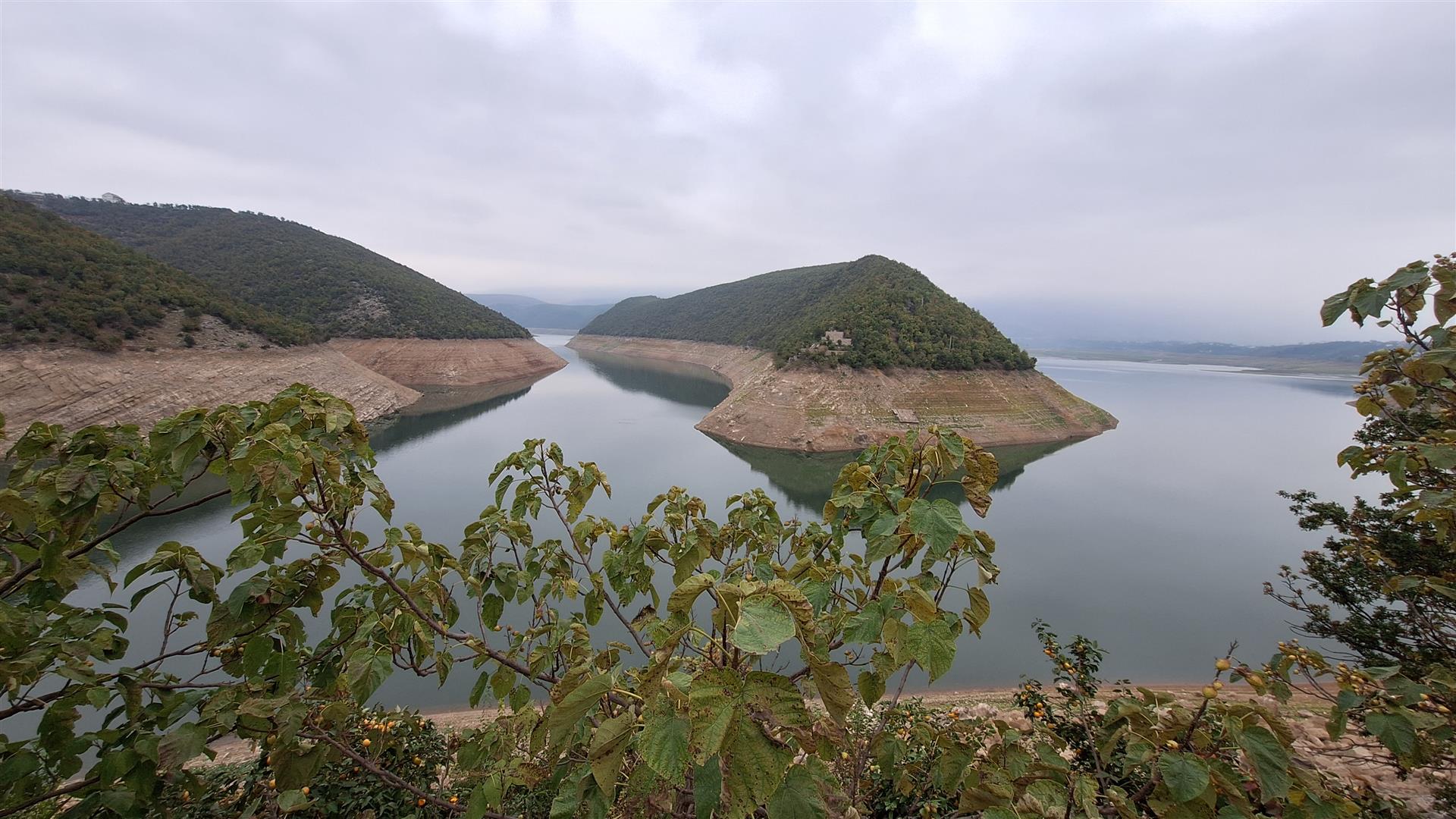
A pleasant view in this new country.
Albania’s history is much the same as other countries in this area. Greek and Roman occupation, followed by the Byzantine Empire. More or less independent from the 13th century until the Ottomans came along. Many Albanians fled, mostly to today’s Italy. Those that were left gradually converted to Islam, thereby gaining the privileges brought by being Muslim within an Islamic regime.
Post WWI, Albania was pushed and pulled in various directions by its much stronger neighbours. The country was mostly Islamic and didn’t have proper borders. The interwar years were very difficult, especially economically. When WWII started Mussolini invaded the country and then as Italy’s influence declined, Germany took over. During that period Greater Albania was formed, bringing in most areas that had Albanian speaking people. Germany was finally pushed out by the partisans, led by Enva Hoxa.
He became President of a communist government and led an extremely repressive regime. It banned religions, dropped contact with the outside world and dealt extremely harshly with any kind of opposition.
On the other hand, having inherited a country with deep illiteracy, oppression of women and crises of health and poverty, Hoxa launched a programme of industrialisation, education, railway and infrastructure improvements and literacy and health improvements. At first he was aligned with Yugoslavia but that ended when they tried to absorb Albania into their collective. He aligned with Russia, but fell out with them. Next was China but he fell out with them too. Isolationism was now the norm.
Post communism Albania modernised and developed a proper democracy, albeit with some hiccups. It’s now in NATO and has gained candidate status for the EU. Lots more info here.
The country had a reputation for poor infrastructure and poverty. Photos of people pulling the rear half of cars with horses were common media fodder in the 1990s. I didn’t see any. Which is a shame from the point of view of novelty, but good if it means people can now own a complete car with a functioning engine. Even if many of them were mobile wrecks. I guess it means plenty of work for Seth and his workshop.
I left there and moved on to Shkoder. I stopped at an ATM, which charged me £7.50 for the privilege of withdrawing my own money. I took out 20,000 Lek and the machine gave me 4 x 5000 Lek notes. How the hell was I going to change those, was my immediate thought.
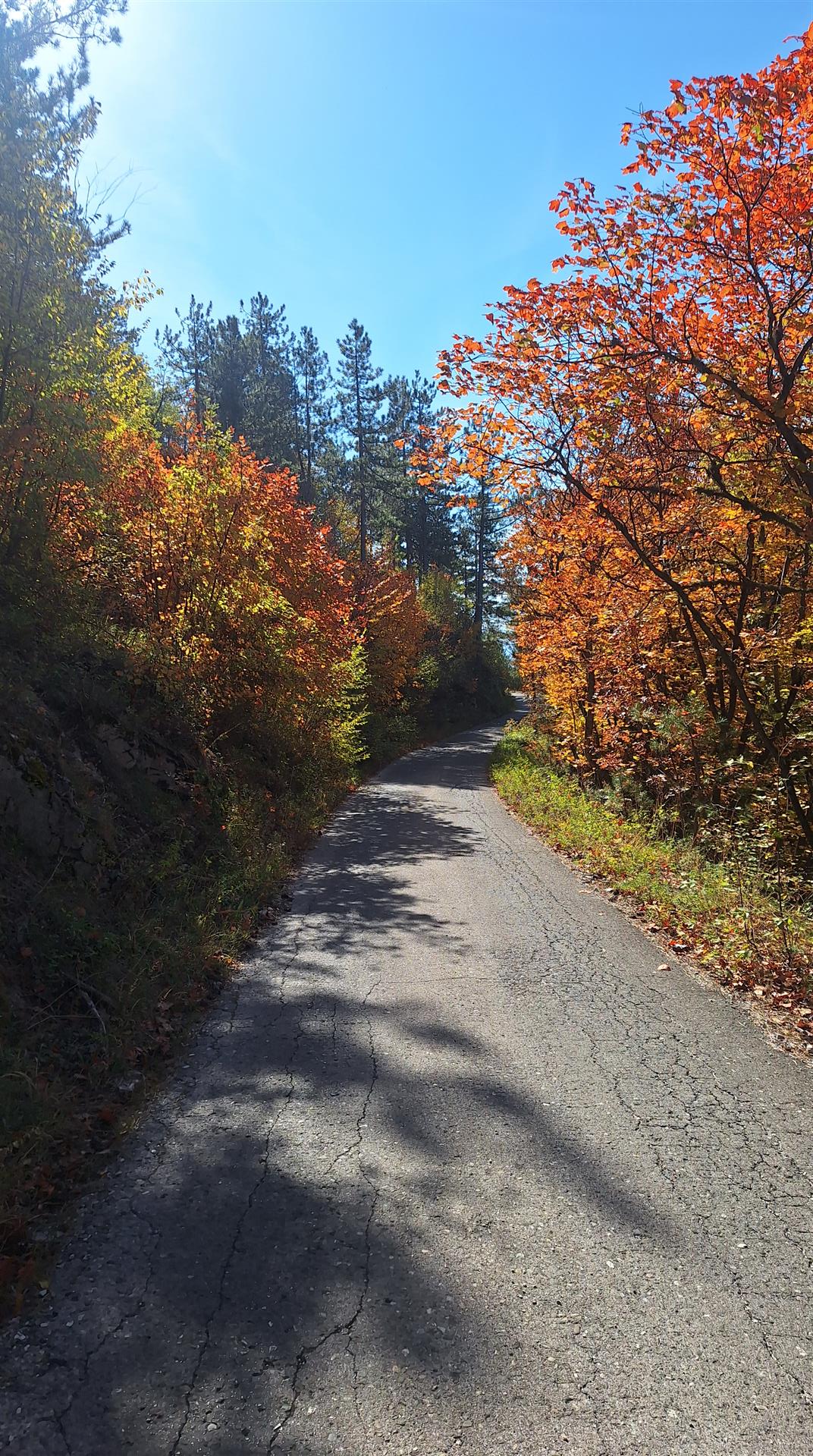
Very pleasant riding on roads with this kind of view.
It was a nice day’s riding. I was on SH23, which was a decent road but when it turned off up into the hills it became much more interesting. The road was wide enough for me and a car, but not two cars.
I took it steady as the bends were pretty sharp and the drop very steep. I also needed to look out for cattle, their poo, and gravel from the patches of broken up road. The views were good as I climbed higher but the flora was a bit dull. Mostly low trees and bushes, albeit looking picturesque in their autumn colours. The highest I got was about 900 metres and it never really got cold.
I came off SH23 onto SH22 and was looking for a coffee stop. At some crossroads I found the Restaurant Avdi Rexha and pulled in. I ordered coffee and cornbread with sauce on it. The sauce had pickled something in it, so it wasn’t great.
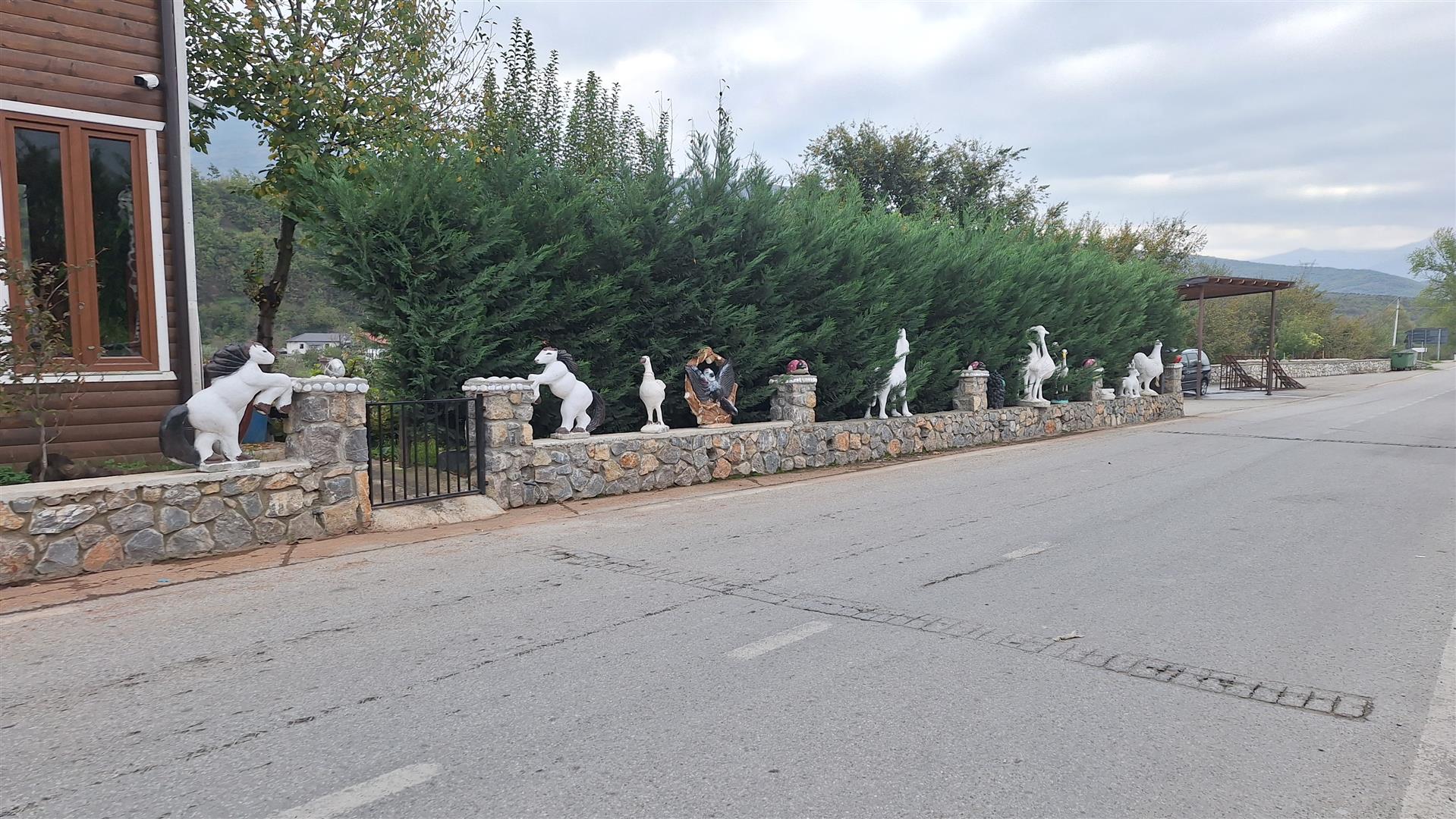
Statues of animals and ‘things’. Why? I don’t know.
But the best part was when I came to pay. I asked the manager if he could change one of my 5k notes and he said yes. I gave it to him and he was asking me where I came from. When I said London, he immediately gave me the money back. “I like London” he said, “even though I’ve never been there. Lunch is free.” Rock on! Albania rules! But I still asked him to change up my 5k note, which he did. The restaurant had a load of sculptures outside it, and along the side of the road opposite. Some just animals etc, but with a few off the wall ones. Why were they there? I never found out.
The road continued to be poor, needing care. Then I got to a much better highway, which had a decent width and where I could attack the bends properly. I’ve mentioned before that I was having trouble with right hand bends but this time I realised I wasn’t moving my backside across the seat properly to make the bike go down more. Once I’d adjusted that aspect things were much better. But I’d already concluded that Albania was going to give me lots of opportunity to hone my riding skills. It was definitely justifying the expense of my upgraded suspension.

The scenery was quite spectacular at times.
I’d booked a room in hotel Shkoder but it smelled very musty, despite the big fan the owner brought to try and get rid of it. I’d already decided to stay two nights in Shkoder but the second one wouldn’t be at that hotel. Niko, the manager, was very nice. I went out for food and he offered to make me some ‘tea’ when I came back. But he was going to use mountain flowers so I gave him one of my tea bags.
Next morning I found a better, sweeter smelling, hotel then headed off to Theth, on a pleasant and warm day. The road was busy with Sunday trippers. I managed to get past whatever I came across with no real problems but the road was mostly quite narrow. One thing I did see, that really amazed me, was a Swiss car towing a caravan. I mean, what was the guy thinking of? He was holding up the traffic as he reversed into a layby. Where he ended up going to I have no idea, but he’d gone when I came back down.

A man who likes a challenge. What was he thinking of?
The scenery was stark and beautiful. The mountains were almost as white as snow but it was the limestone rock. All the trees were wearing their autumn leaves and looked fabulous.
On the way down the hill I saw a parked car which had clearly broken down. I thought about stopping but didn’t Then I felt guilty for not doing so. I might have been able to help.
I eventually got to the Tower of Reconciliation but there was nothing to tell me what it was about. I asked the lad who took my money and he just said it will explain it inside. Well it didn’t so I had to look it up. These towers provided neutral ground where local people came to settle disputes, according to the local laws. They also had a defensive purpose. I climbed up inside and there was only some old style household goods to look at. I had a coffee at the little café next to it, which tasted like it was made of dust. But I really did like the chestnut tree next to the tower, looking gloriously golden.

Theth Tower of Reconciliation.
I rode back over a different bridge rather than take the dirt road that Google had brought me down on. On the other side I checked the map and reckoned that the road alongside the river would bring me back on a much shorter route and had a good surface.
All was well for a while, until I came to a parking area from where people hiked or played on the river. The road ahead was stony but I went up it thinking it might be just a short stretch. Wrong! It went round a sharp uphill bend. I stopped and was trying to slowly roll backwards, using the front brake and the clutch/1st gear. Inevitably I lost balance and fell over. Of course the bike was now laying downside of the camber.
I got myself up and a guy who’d come running over helped me pick the bike up. Another biker came over too and stood guard while I got the bike turned round. Feeling a right idiot, I went back the way I’d come. God’s punishment for not stopping at the broken down car? Don’t be so silly!

A magnificent chestnut tree in its Autumn colours.
I stopped at a proper café for a decent coffee and a cake. Then I headed back up the hill. I passed the broken down car again. This time I stopped. The young guy there told me the engine was kaput. So not stopping made no difference in the end but I was happy I stopped at the second opportunity. Once over the peak I stopped at a view point and took some nice photos. Then I rolled my way back down the hill and out to Rozafa Castle.
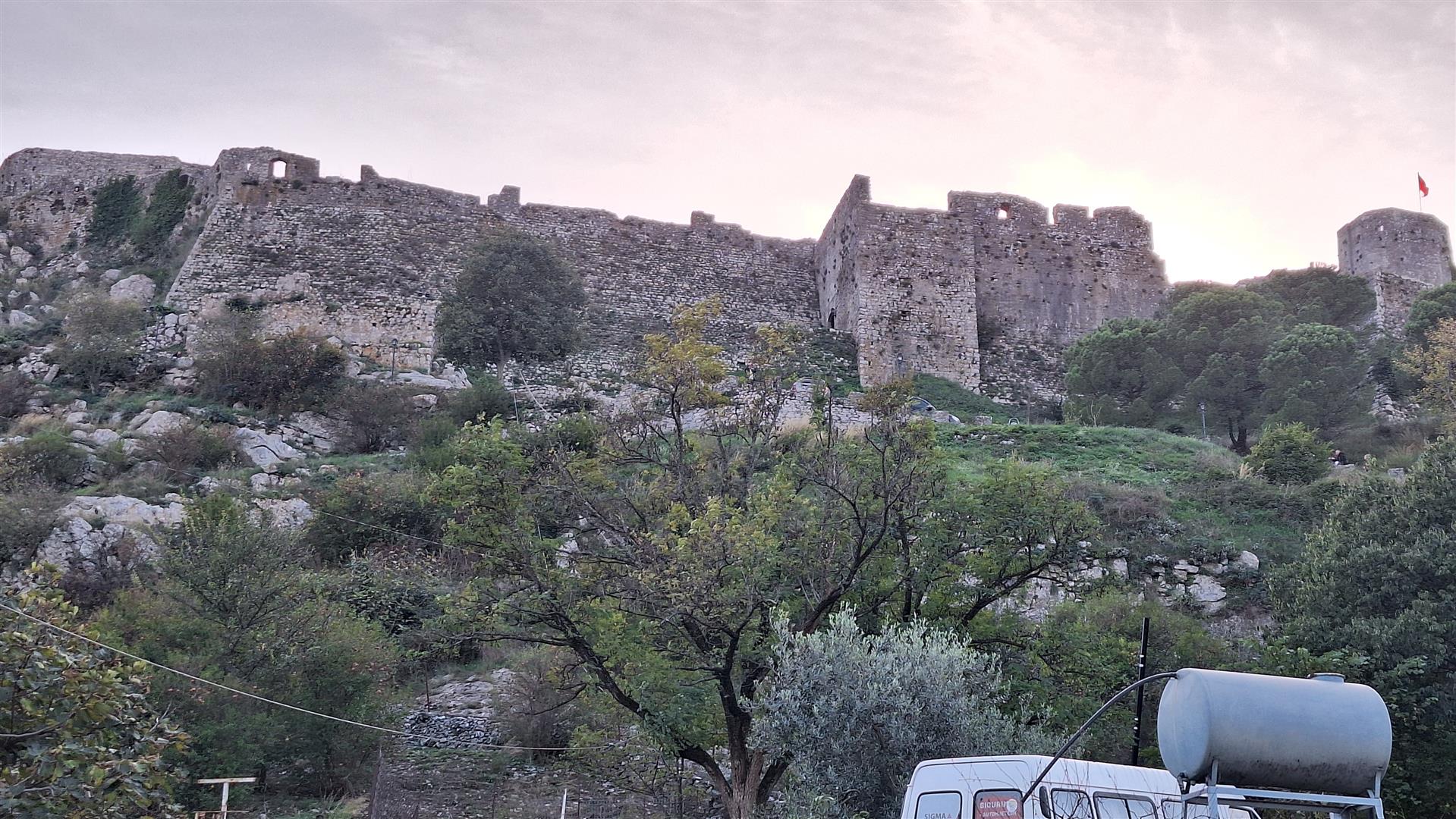
Rozafa Castle. Big and bold.
This is a big fortress, with quite a lot of the buildings and walls intact. There’s a reasonable museum detailing the history of both the fort and the area, so it was all worth the entry fee. The road up to it was very steep so I’m glad I was able to take my bike all the way up to the barrier rather than park it below.
The castle was built by the Illyrians, who were the main occupiers of Albania in ancient times. It was the last castle to fall to the Ottomans, who also used it because of its strategic position at the confluence of three rivers – Drini, Kiri and Buna. It also has a macabre legend.
Three brothers were building the castle walls, but each night, the walls fell down. A wise old man advised them to sacrifice someone to avoid this happening. They eventually decided to sacrifice one of their wives and agreed that the one who would bring their lunch the following day would be buried in the castle walls. Although they promised not to tell their wives, the two older brothers did, so it was Rozafa, the wife of the younger brother, who brought lunch. She was told of the deal and accepted being walled in on condition that her right breast was exposed to feed her new-born son, her right hand to caress him and her right foot to rock his cradle.

The lady of the legend.
Once settled into my hotel room I walked down to the busy part of town for some food, finishing off a good day out.
Albanian drivers are dozy so-and-so’s. That’s the only way of describing them. They drive far too slowly, although I think the urban speed limit may only be 40kph. But they double park everywhere and have no sense of how to drive effectively. I know they were only permitted to drive quite recently so I suppose that’s the reason. But in some of the towns I’ve seen dozens of learner drivers, very often all on the same road. So something is happening to improve the situation.
On the other hand, the police have been quick to join in the game. I’ve seen lots of police checks. Cars coming towards me will often flash a warning and I’m learning to keep the speed down in urban areas. They’re very fond of speed bumps too. Far too fond for my liking!
Next morning I headed to Kruja Castle. It’s big, with quite a lot to see there. A former resident’s house had been converted into an ethnographic museum. Full of the usual household stuff but I was quite taken by a mirror that I could stand in front of while my reflection was dressed in various costumes. Very amusing.
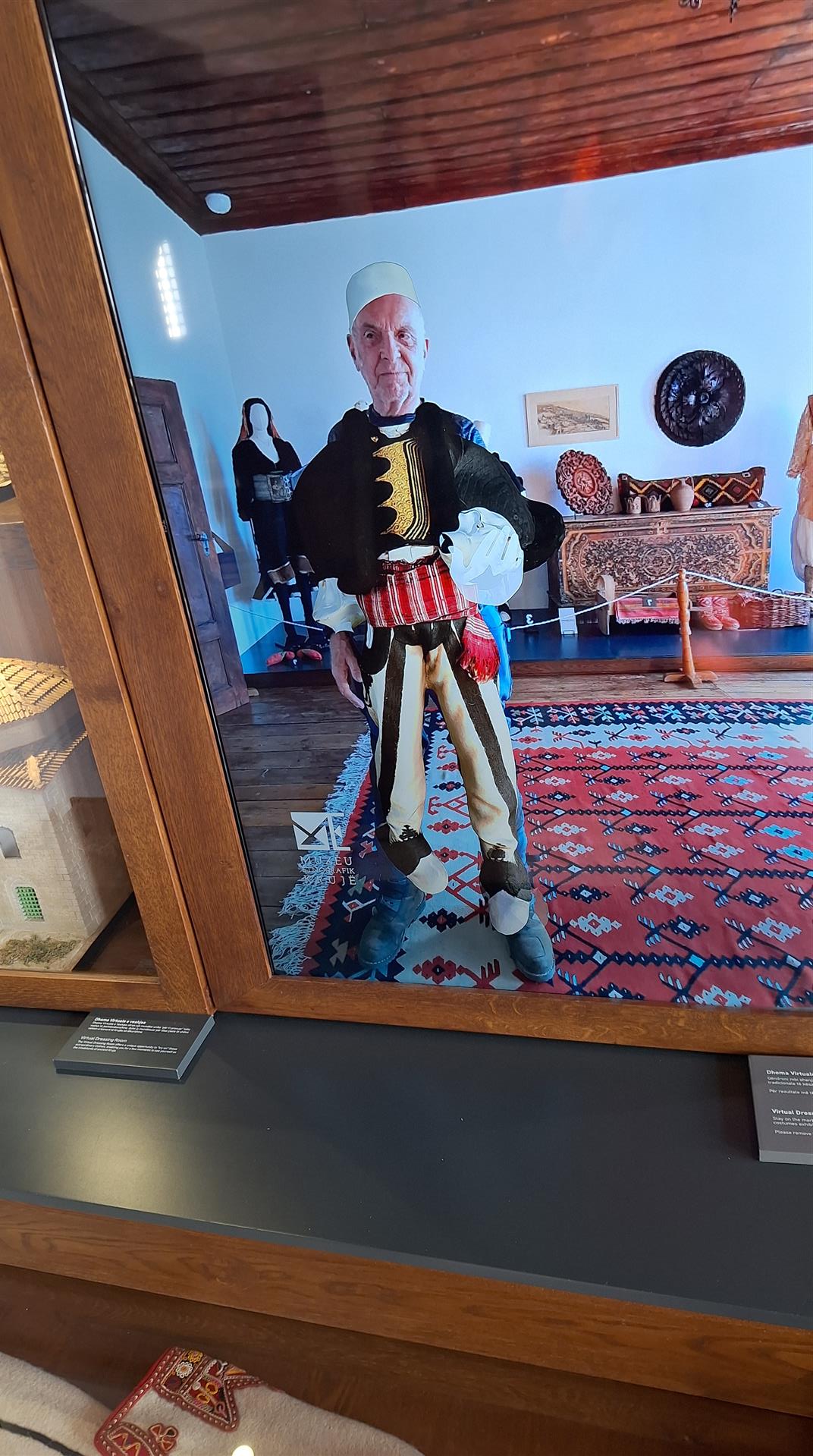
The dressing up mirror. It kept me amused for a while.
Another building was newly built but looked very good. It covered the history of the area and had some amazing murals of some of the battles fought with the Ottomans. The Albanians tried really hard, resisting three different sieges, but were beaten in the end. There were various other buildings in the complex, in different states of repair. Evidence of a Byzantine church had been found but the main religious building was a mosque.
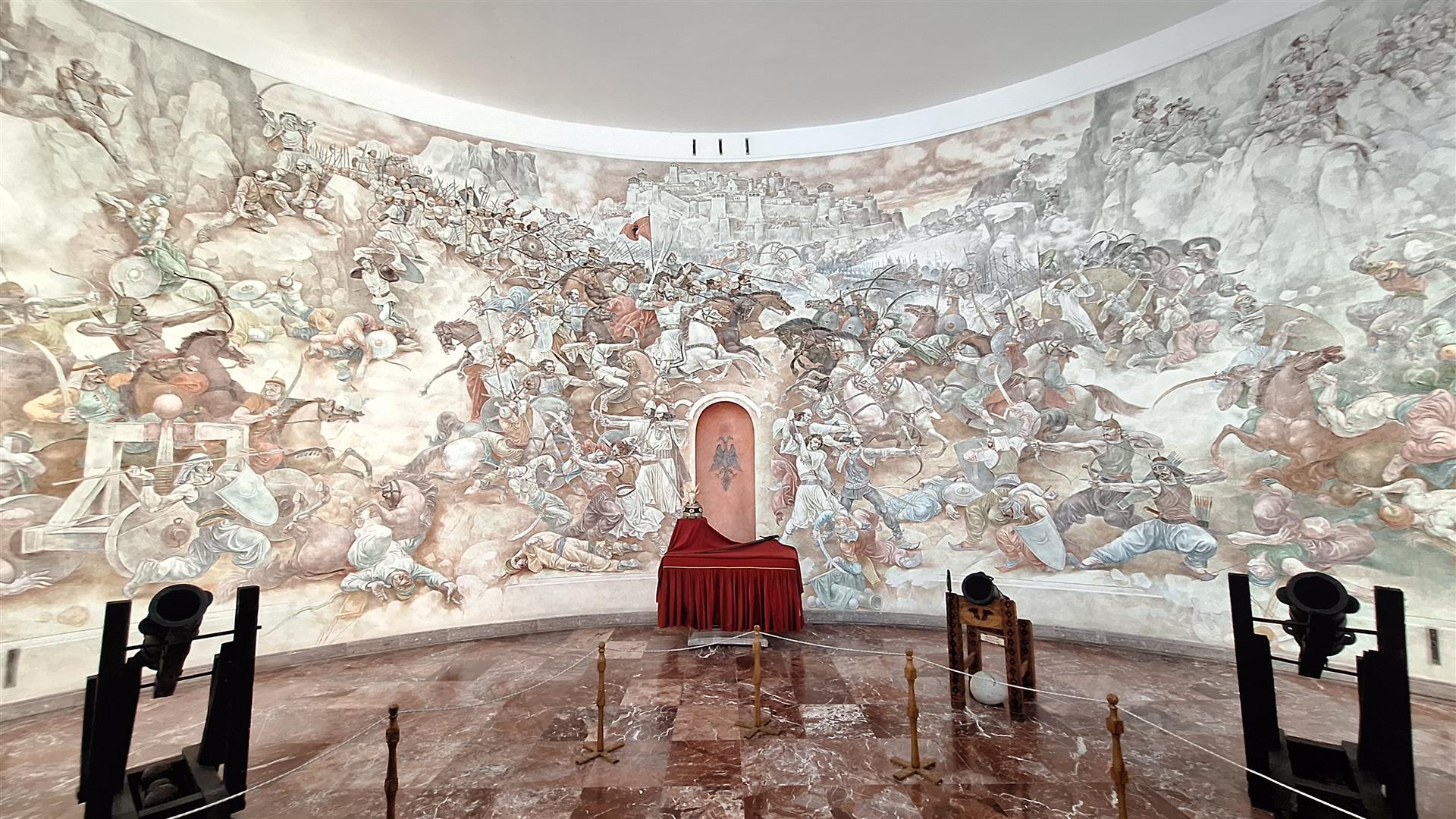
A quite incedible mural. One of several.
It was now time to head to Tirana, Albania’s capital city. I’d booked a hostel there. Getting to it was fun. Driving in large Albanian towns and cities is a lot like India, with cars parked anywhere and junctions blocked with unmoving traffic. I had to ‘Indian’ my way through some of it, just forcing my way across junctions regardless of the traffic light colour.
The hostel was quite good, as they often are. Very funky in many ways. The room was OK, my bunk bed was on the bottom. Sensible showers, one of which was much needed. I could park the bike just outside. It was a very quiet cul-de-sac so I expected the bike to be secure.
About a week before a bit of (plastic) tooth broke off – one of the molars on the RH side. It wasn’t a problem until a few of days later when the rest of it broke off. That left behind a sharp edge which was digging into my cheek. Google maps found me a nearby dentist who was able to see me straight away. She ground it down and removed the sharp edge. It was much better after that, I’m pleased to say. Dental discomfort can become a major issue when travelling.
Next day I went to visit a place called Bunker Art, across the city. A thirty five minute bus ride got me there and I bought a ticket for Bunker Art 2 as well. It was a very interesting place. Hoxa was convinced the West was going to attack Albania so he planned to build 220,000 of these bunkers, although in the end ‘only’ 177,000 were built. He really did have an exaggerated sense of his own importance.

Just one level of five. A small town underground.
There’s a huge network of tunnels, on 5 levels, all with gas tight doors and a self contained ventilation system, to be used in the event of a gas attack. The Chinese sold him the tablets that would produce oxygen. But most of the system was a normal one.
He had special accommodation and an office in there, never used of course. The history line told the story of life under his regime, which became ever more difficult and paranoid. He came to mistrust, and execute, many of his close colleagues. Meanwhile Albanians got poorer, and hungrier as time went by. Eventually a resistance movement was formed, giving him even more prisoners to murder and torture. The whole country was surrounded by barbed wire, with a dedicated border force to police it. Anyone caught trying to escape was executed.
The other story in there was that of the WW2 occupations by Italy and, following their surrender, the Germans. Partisan groups were formed to fight them, with arms supplied by Yugoslavia. Very interesting, and a slightly different war history to the rest of that area.
The same bus, oddly going the same way, took me back into the city and I went to Bunker Art 2. Much more of the same but with a focus on Hoxa’s political prisoners and the resistance movement. Fascinating stuff.

A funky piece of artwork in BA2.
I visited Et’Hem Mosque, which was nothing special. Then went to Postblloku, or Checkpoint. It’s a memorial to Communist Isolation and commemorates the country’s political prisoners who suffered under the communist regime. There were three items: an old sentry point; a memorial to those who suffered under the communist system; a piece of the Berlin Wall, donated by Germany.
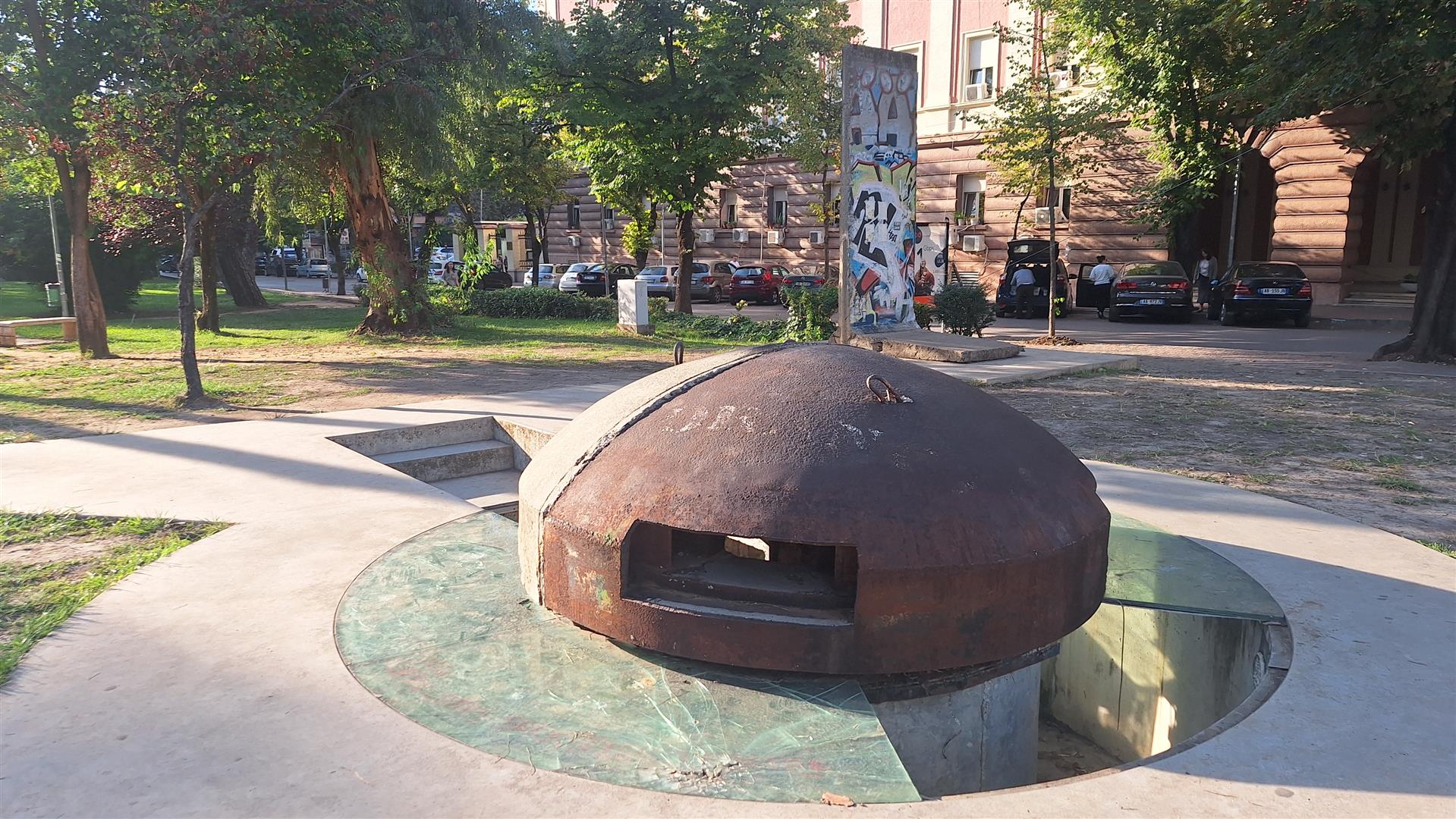
Postblloku, including a piece of the Berlin Wall.
I sat down for a while in Skanderberg Square, which has a Ferris wheel and is a vast open space in the centre of town. The most noticeable things there were the numbers of electric scooter riders who just blasted their way across the square, heedless of pedestrians or anybody else. But that wasn’t really the case as they carefully avoided any collisions. But I felt like one of those fixed cameras that had no choice other than to record what passed in front of them, as scooters and bikes came past me from all directions.
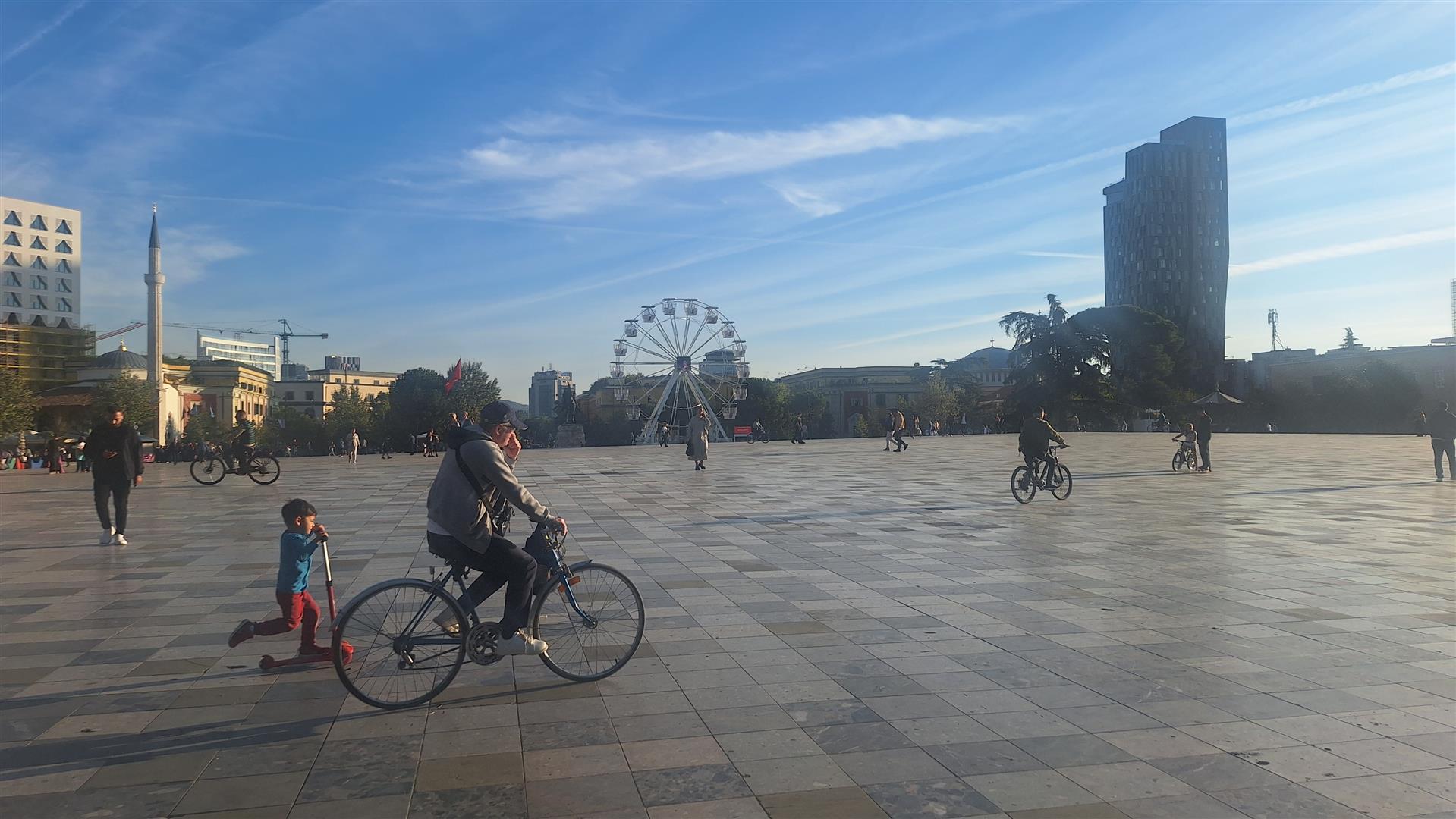
Whizzing around in the evening.
With Tirana done and dusted I headed to Gjirokastra, with a another castle to visit when I got there. It was a very good ride. The weather was warm and once I’d filled up and left town the highway became a dual carriageway. It stayed that way for a long time before turning into a motorway. At the end of that it was single carriageway again, which wound its way through some low hills. Very pleasant riding and an easy day.
I decided to go to the castle first. It wasn’t very late when I arrived so I was able to spend some time looking around. Other places had given me a pensioner discount and it’s a handy way to save some money. So I wasn’t happy with the guy at the ticket booth because he said the pensioner discount was only for Albanians.

The castle at Gjirokastra. Big, with lots to see inside.
It was a very interesting place with a good museum (extra cost). Its heyday was during the period from Albanian independence, in the 12th century, to the end of the Ottoman era. There were loads of info boards detailing the history, especially of the time of Ali Pasha, who based himself here. He was the Ottoman emperor’s key administrator but he finally decided Pasha was getting too big for his boots and got rid of him.
Pasha helped the British fight Napolean rather than join with him. His reward was British cannons to add to his armoury. Inside the castle walls had been built a town, as well as one outside.
This town was on an important east/west and north/south trade route and became quite rich. Many of the merchants and important families built fortified houses, made from stone and with deep foundations. They have stone or slate roofs, earning the town the nickname The Silver City because of the way the slates shine when wet.
Once I’d settled in to the hostel I’d booked, I went for a walk up to the tourist area and found a reasonably priced meal. Moussaka, reflecting the Greek influence. The streets were steep but that made the layout of the buildings nicer. Walking up stairs to small platforms, then wandering around to find a way back down again. It seemed that town planning involved a lot of jumbling up.
In the morning I walked to a couple of places I’d read about. The first was an obelisk, which I couldn’t find. The second was an example of the type of house the rich Ottoman merchants had built, Zekate House. But it wasn’t open for visitors at that time of year. One of its attractions is supposed to be it’s building style, particularly the lower section and its two towers. But that was hidden by an outside wall. All I could do was to take a not-very-good photo and leave it at that.

Zekate House.
It was time to leave Albania and head further south, to North Macedonia. Usefully, I was able to use up my small Albanian money in paying the hostel owner for some wine I had drunk, buying fuel and then a coffee. With all thirsts satisfied, I headed up to the border, sited at a chilly 1,000 metres. Once again, Albania, having not cared about my arrival, didn’t seem to care about my departure either.
Getting into North Macedonia was routine and I headed down, to a warmer level, and the town of Ohrid. I’d booked an apartment there, which was very comfortable. It had pots and pans in the little kitchen but no kind of cooking appliance on which to use them. Not potless, but pointless.
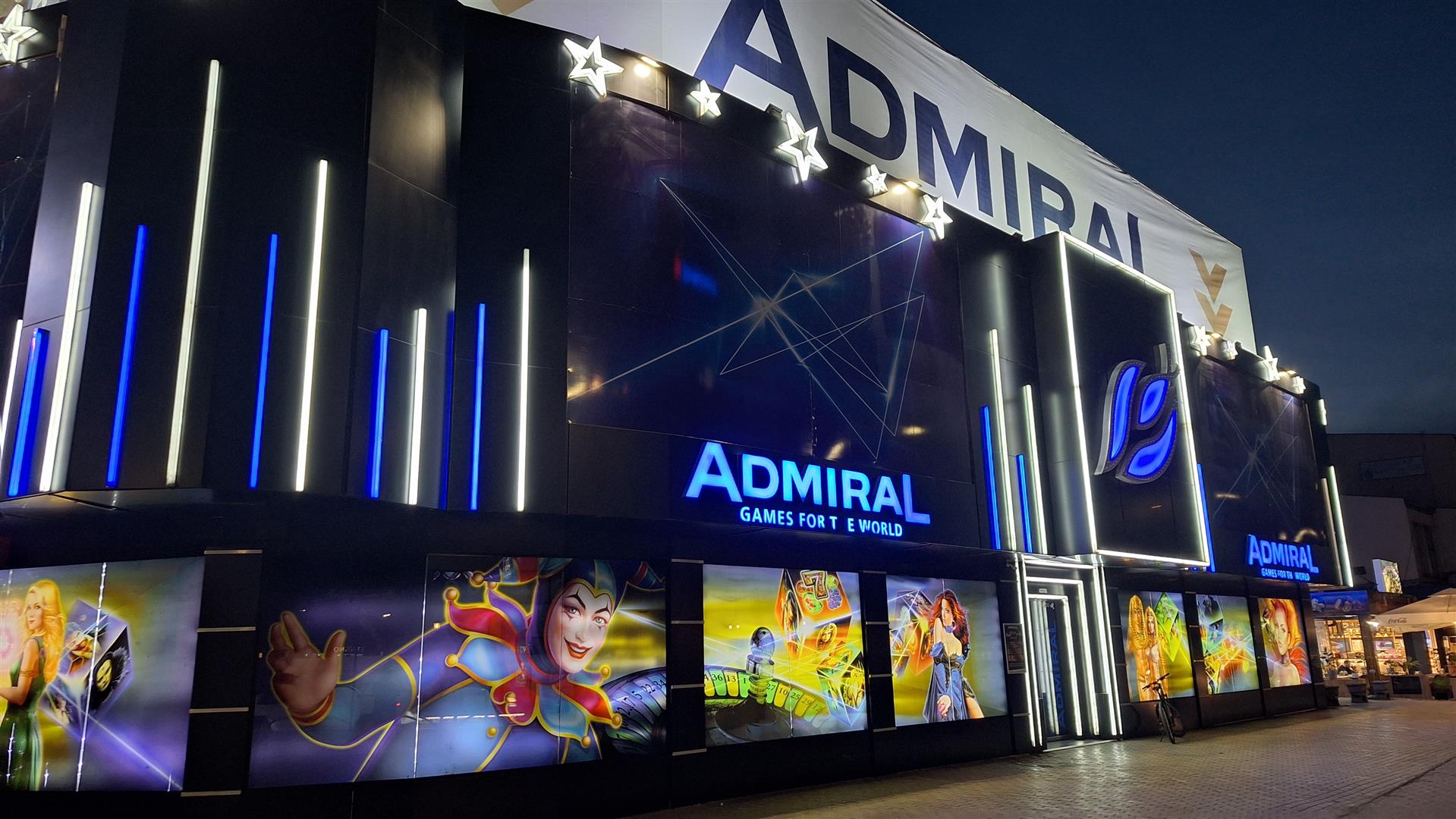
Lots of garish casinos in this town.
I walked down into the main town and was surprised at how many casinos and jewellers’ shops there were. I’m guessing the town was taking advantage of its proximity to the border as well as being a lakeside tourist town. The best option for food was a very good bakery, where I bought supplies for tea and breakfast. I’d found this to be an easy and cheap option in this part of Europe, although I dreaded to think what all that wheat was doing to my waistline.
The town of Ohrid had only been a convenient stop over. I’d been able to exchange my last, big Albanian note and find an ATM too. So I headed to Skopje, to see what the capital city had to offer.
The road went up again, back into the ‘My word it’s chilly’ zone, at over 1,100 metres. But I buttoned up and kept going. It did go down again after a while. Then the route turned off the main road and started following a river, with the road on a hillside above. It seemed to be new, judging by its quality, and was a real pleasure to ride, especially given the nice view.
But eventually it left the river behind and after a while I came to what looked to be an entrance to a national park. A guy was trying to tell me something, with no success. So he beckoned me over to his little cabin and showed me a schedule pinned to the wall. Then I realised that I wouldn’t be able to ride the road until 1pm. It was then 12.40 so I sat down and ate lunch.
When allowed to go I followed a car up the road and very quickly realised why they only allowed one way traffic. The road was only wide enough for one vehicle. Not even me and a car could have passed each other. It was very steep and twisty, and was quite a challenge. Fortunately the surface was mostly good. I took it easy and enjoyed the autumn colours as I passed through the trees.
At the top I had to wait again, but only for a few minutes. The fuel gauge was flashing red by now so I kept the bike in neutral and coasted down the hill. All the rest of the way into Skopje I was hoping for a filling station but didn’t see one. I carry a spare can of fuel so I wasn’t all that worried and I did find one in the city before I ran out. This type of riding was kind on fuel consumption. The Honda likes hills and bends and I was regularly getting over 30kms per litre.
Once settled in to my hostel bed I decided to go for a walk. There’s a large fort on top of a hill, which I was able to wander around. There aren’t many buildings remaining inside although the walls and their towers are quite well preserved. Skopje suffered a very damaging earthquake in 1963, destroying many buildings, including historical ones. I’m guessing that the interior of the fort was included and that it’s not been thought of as worth completely restoring. But there was no information about it inside so that’s just an assumption. I walked along the walls, with views over the town and of a very glowing sunset.
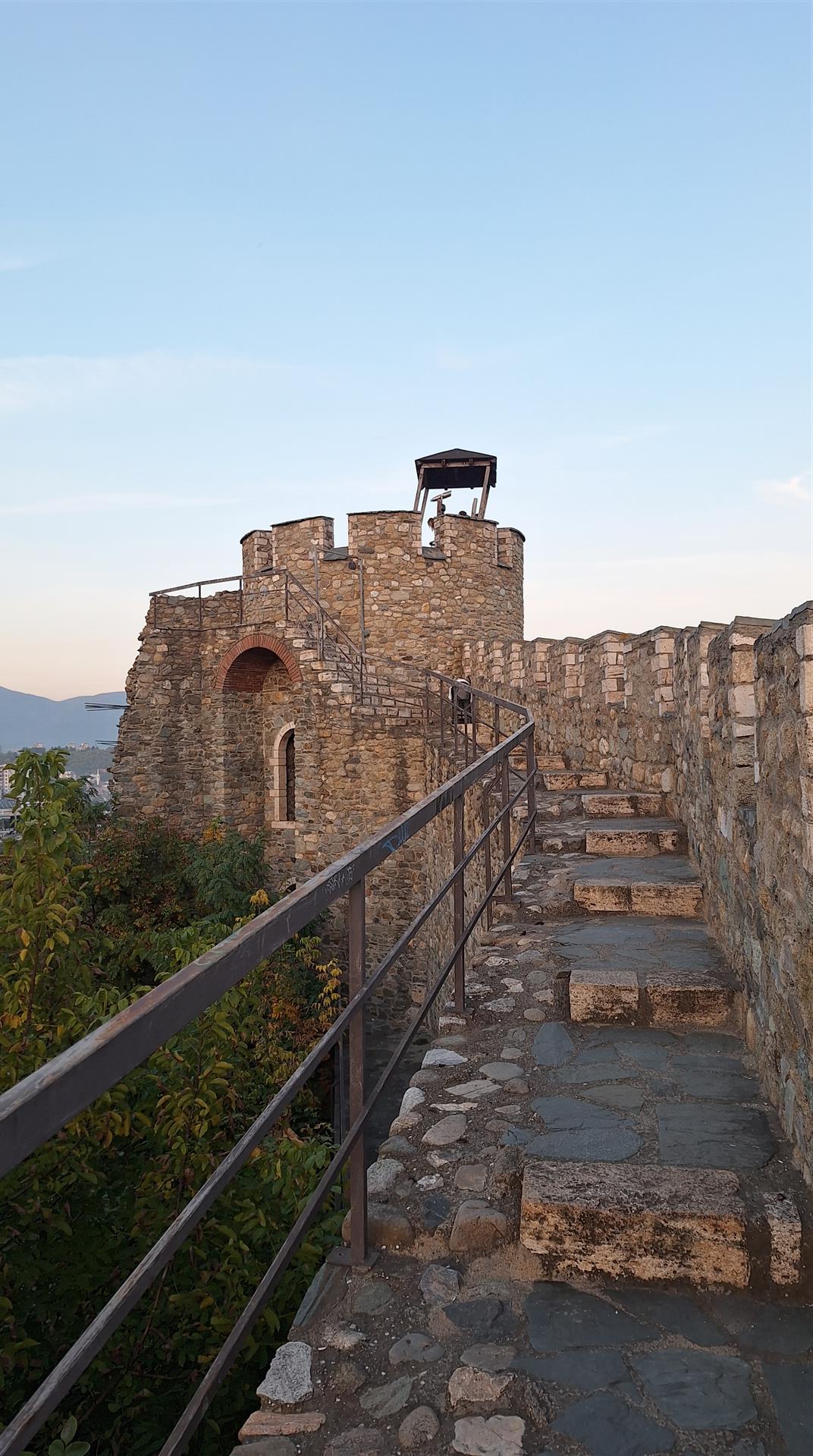
Sunset makes the walls glow.
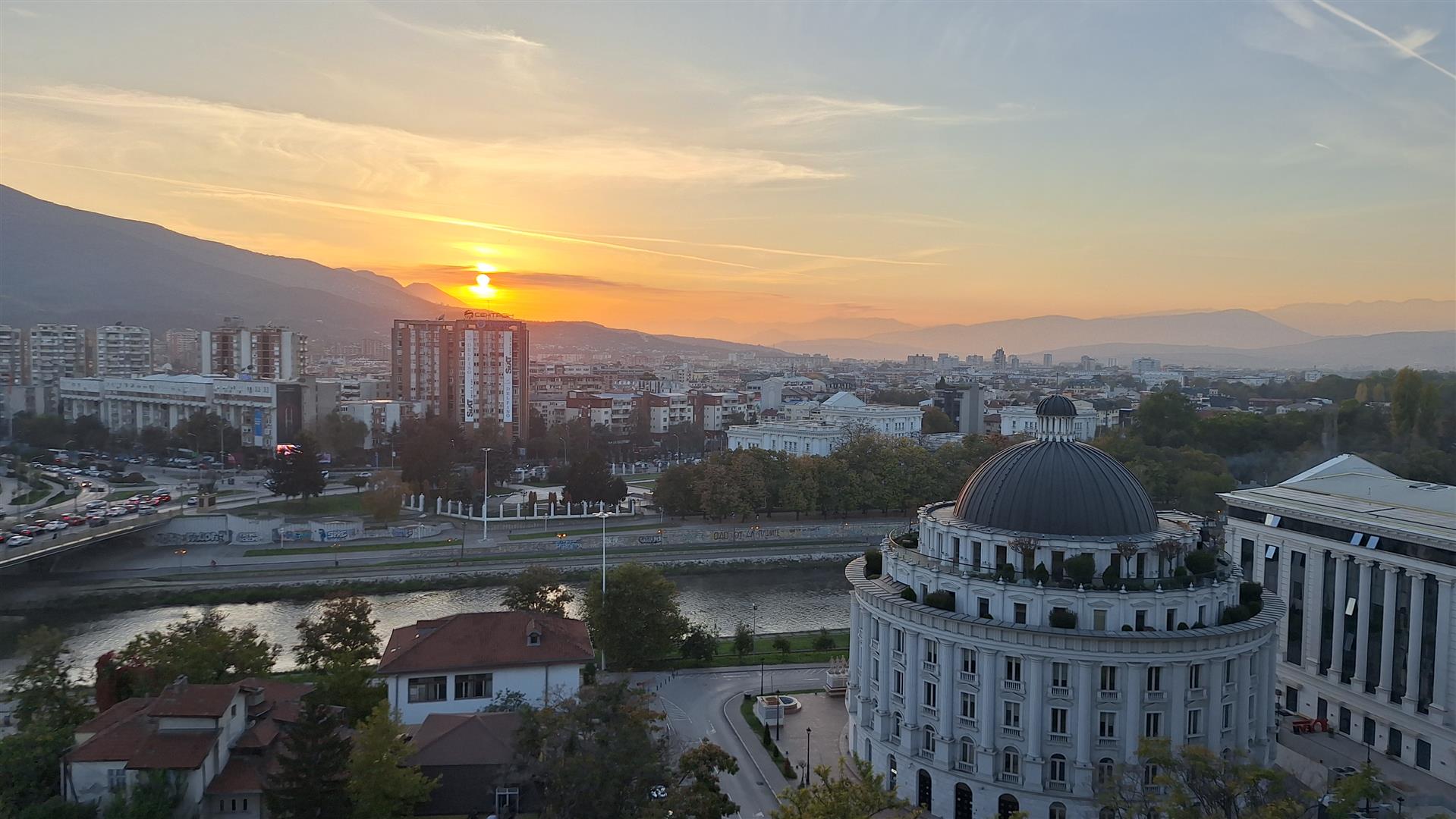
And it softens the view of the city.
I walked back to the hostel through Macedonia Square, which contains a large statue of Alexander the Great, the world’s most well known Macedonian. It’s true to say that he looks pretty good on a horse. I noted various museums and other statues, all to be included in my plans for the next day.
The city is very modern, with lots of high rise buildings, mostly as a result of rebuilding after the earthquake. The population of the city is very mixed, having been occupied by most of the nations surrounding it at one time or another, before the Ottomans arrived. Just about every religion you can imagine has a presence there, with buildings to match. It’s the home city of Mother Teresa, although that fact didn’t excite me one iota.
Next day was for wandering and discovering. I took photos of everything. I visited the Museum of Macedonian History and was quite fascinated by it all. There’s the usual story of rebellion against the Ottomans. But after WW1 the country was split between it’s three neighbours. It wasn’t until after WW2, under Tito, that it got to be a complete country again. But what the museum didn’t tell me is why the southern part ended up in Greece. It said almost nothing about the post WW2 history.
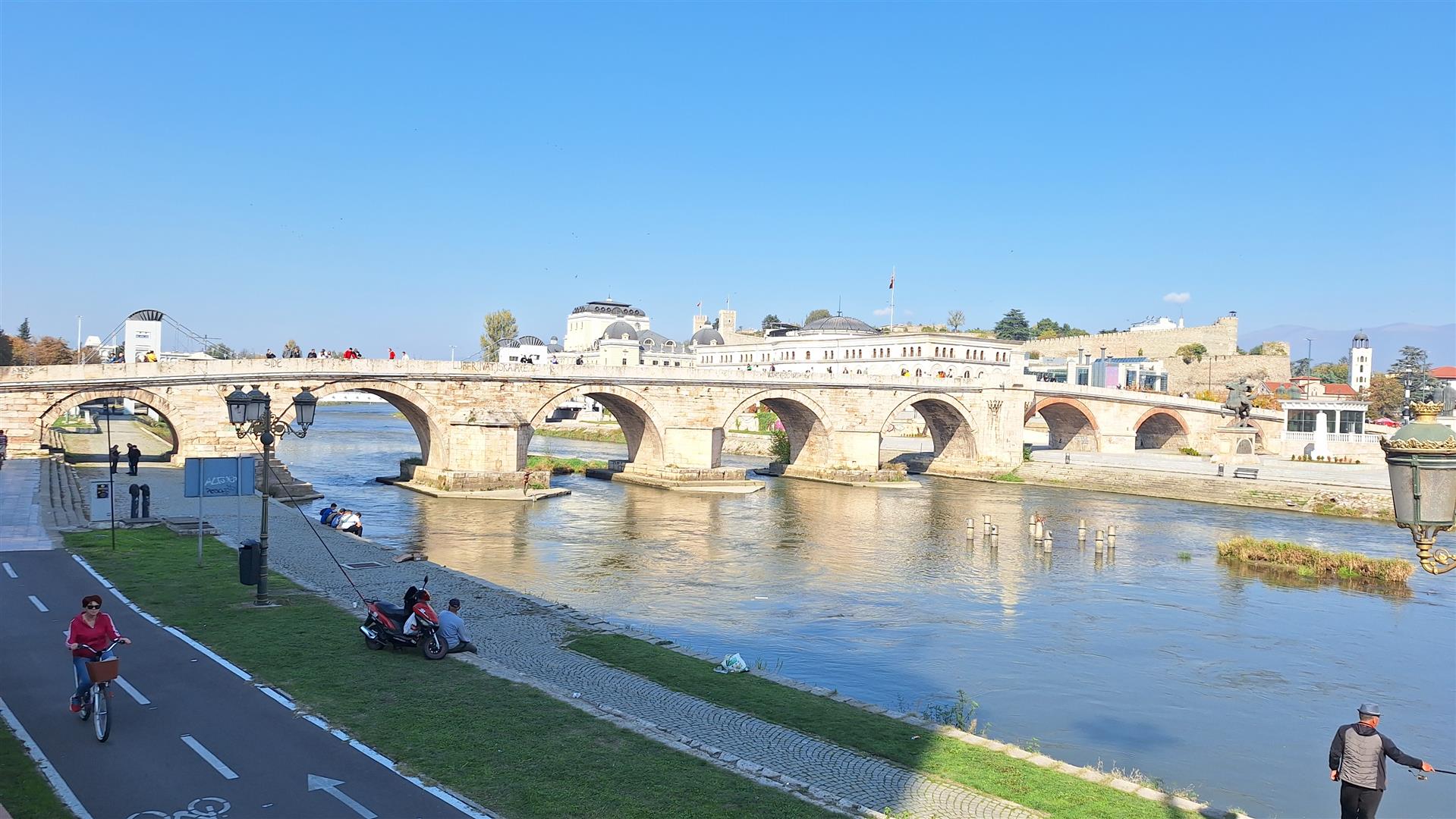
The Stone Bridge ovet the River Varder.
The other museum was about the city itself. It majored on the effects of the 1963 earthquake and how much of the city and its cultural history was destroyed. But it was here that I learned that the southern part of the country went to Greece after WW1 and that Macedonia got its borders back under Tito.
It amazes me how many countries in this region suffered? Enjoyed? border changes around that time. WWI finished off the Ottoman Empire completely, and these southern countries were the last to be given up. But looking at how fluid the borders had been before the Ottomans arrived, there must have been some really difficult negotiations to resolve it all.
Being part of Yugoslavia seems to have been the key to establishing fresh borders. And I’m left with the impression that Marshall Tito’s approach to governing this area was key to the future stability of many of the states that made up post war Yugoslavia. He was very aware of the different ethnic histories of those countries and devised successful methods of holding them all together while allowing them to still retain their individuality.

Alexander the Great, keeping an eye on things.
With Skopje done and dusted I moved on to Prilep. I ended up going back over the pass with the narrow road once more. When I got to the bottom of the road a sign said it would be open to me at 12.00. It was 11.40 so I carried on up and only had to wait five minutes at the gate. Another lovely ride, where I took the opportunity to get some Autumn photos. At the bottom I headed to the Ilinden Monument, as had been mentioned in the museum.
Google Maps decided I needed waking up a bit so it took me down some tiny, tiny roads that wandered around farms, tractors and general rural challenges. Lots of fun. Eventually it brought me to the monument.
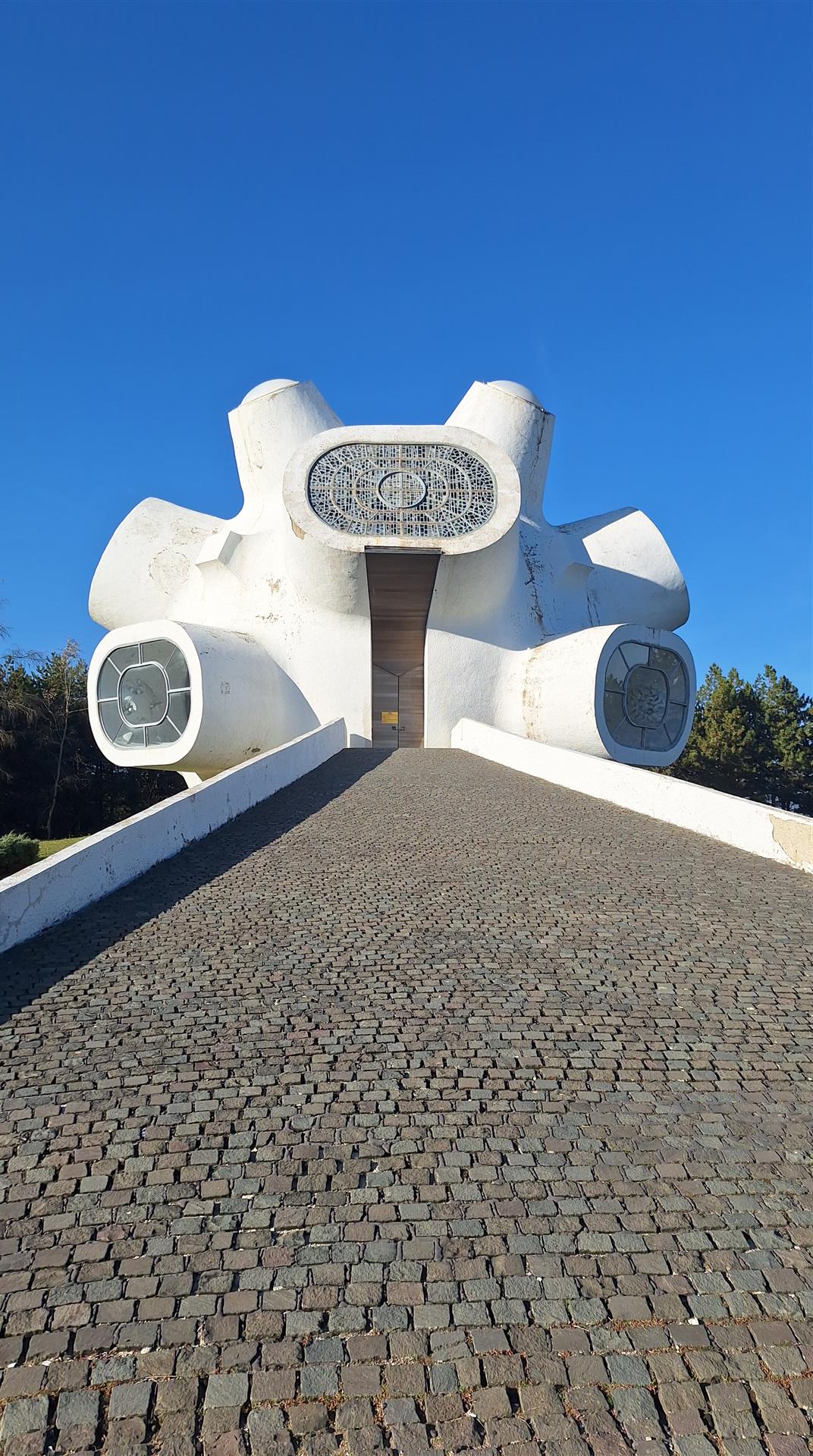
The Ilinden Memorial.
This is another spotemik, dedicated to the martyrs of the Ilinden uprising against the Ottomans. It looks quite stunning and the design is very impressive. When I looked through the lower windows I could see the light from the stained glass upper windows shining on the walls inside. It looks very arty. Down by the car park were some sculptures that reflected the Ottoman occupation during the time of the uprising. A very good place.
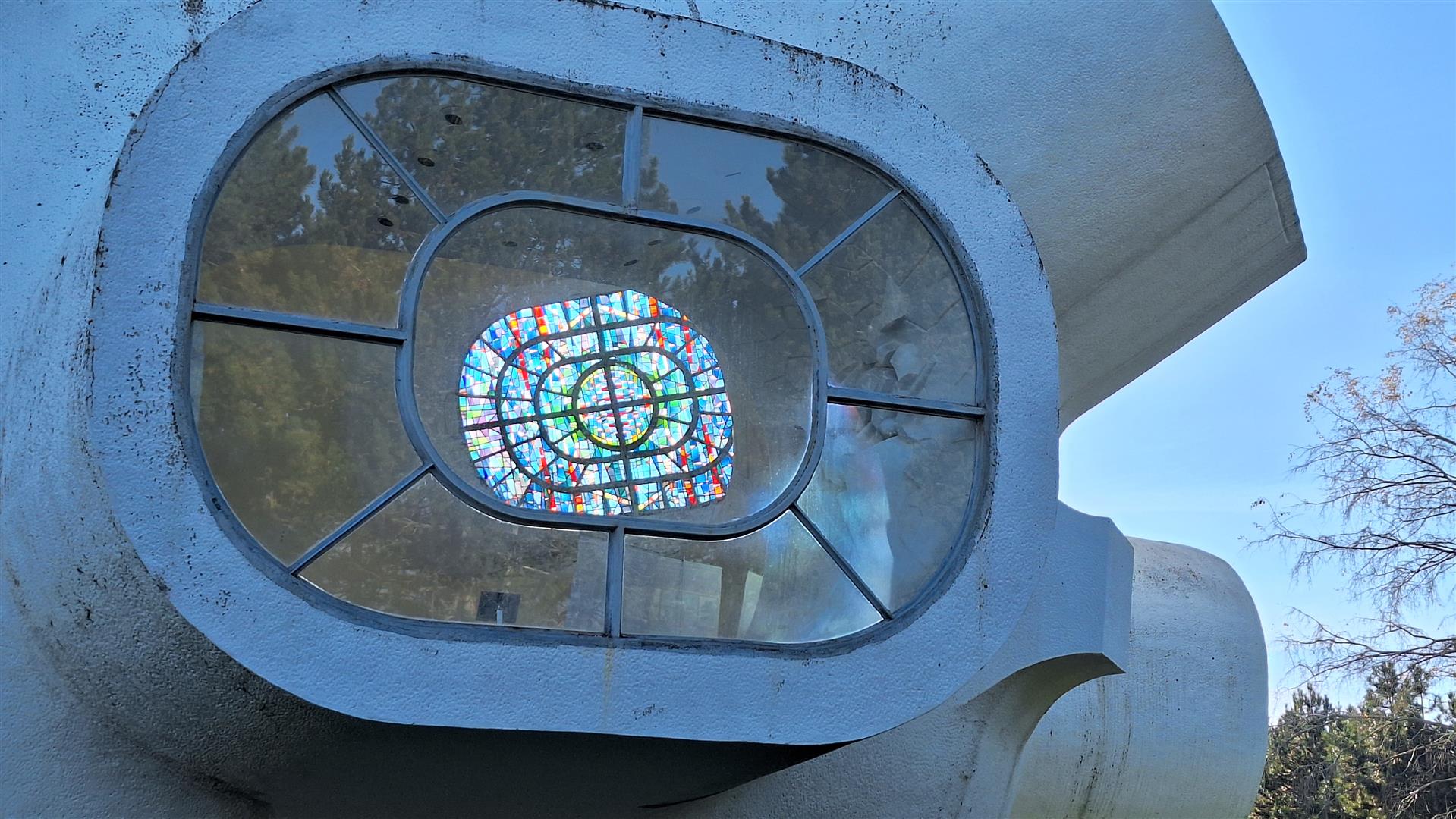
When the sun shone through the stained glass window it put a rather lovely pattern on the wall.
I’d booked a hotel in Prilep. I was able to bring the bike into the courtyard, which is always a plus. My two tasks for the evening were to find some food and to make plans for my last Balkan country, Bulgaria.
Albania had been quite different to what I’d expected. I was aware that the 1990s media photos of ancient horse and carts, made from old cars, wasn’t going to hold sway any more. But the country had modernised very quickly after the demise of Enver Hoxa. Farming systems seemed to be quite modern. The main roads were good, many of them new. Infrastructure all worked as it should. I think much of this was helped by European investment as well as the Albanian’s determination to make up for Hoxa’s lost decades. A good news story.
 MOTOPANGAEA