
Tehran, Iran. 5th December 2024.
It’s a strange moniker, isn’t it. But it reflects the fact that Tehran is home to all of the ethnicities that populate Iran. There has been a town of some sort at the location since the 6th millennium BCE, according to archaeological research. Its later name was Rayy, which still exists as a suburb. Tehran itself has been established since at least the 13th century.
Modern Tehran came about when it was chosen as a capital by a local ruler in the 1780s. The presence of the military and courtiers, followed by indutrialisation, caused the city to grow, eventually becoming the capital of a unified Iran.
It sits just below the Elburz mountain range, to the north of the city. It quickly became the case that richer people occupied the northern areas and the poor lived in the south. This situation still exists today and has led to all the problems that inequality brings. Various mayors have tried to improve this situation, with varying degrees of success. From my point of view it’s a busy urban area and is fascinating because of that. This link gives the detailed story of the city.

Hostel people, of the best kind.
The hostel supplied breakfast, which was served in the Zee Café next door. A choice between Iranian breakfast – cheese, salad, jam – or eggs over easy. Eggs it was then, with warm bread and tea.
I spent the morning in the warm and on the internet. It was cold outside! It was Thursday and a national holiday, which meant that all the places I wanted to go to were closed. So at about 1.30 I walked up to Laleh Park, sited more or less in the middle of the city. Laleh translates as Tulip, one of the symbols of Iran.
The walk itself turned out to be interesting. Halfway there I came across a stall with a big slogan across the front. There were people handing out bowls of soup to passing motorists so I had some. Lentil soup and delicious too.

Misinterpreted slogan. But delicious soup.
I used Google to translate the slogan, which it stated as being, “May god damn Fatima Al-Zahra, she’s a murderer”.
This was intriguing. A holiday to celebrate her and a stall saying God damn her. But when I got back to the hostel and showed the guy there the translation he was quite shocked. He said it was actually God damn her murderers! He suggested I delete the photo in case someone saw it. I was quite disappointed really. I was hoping to hear some dreadful tale of internecine conflict. When I looked her up I discovered she was one of the wives of Mohammed. So no surprise at the reaction.
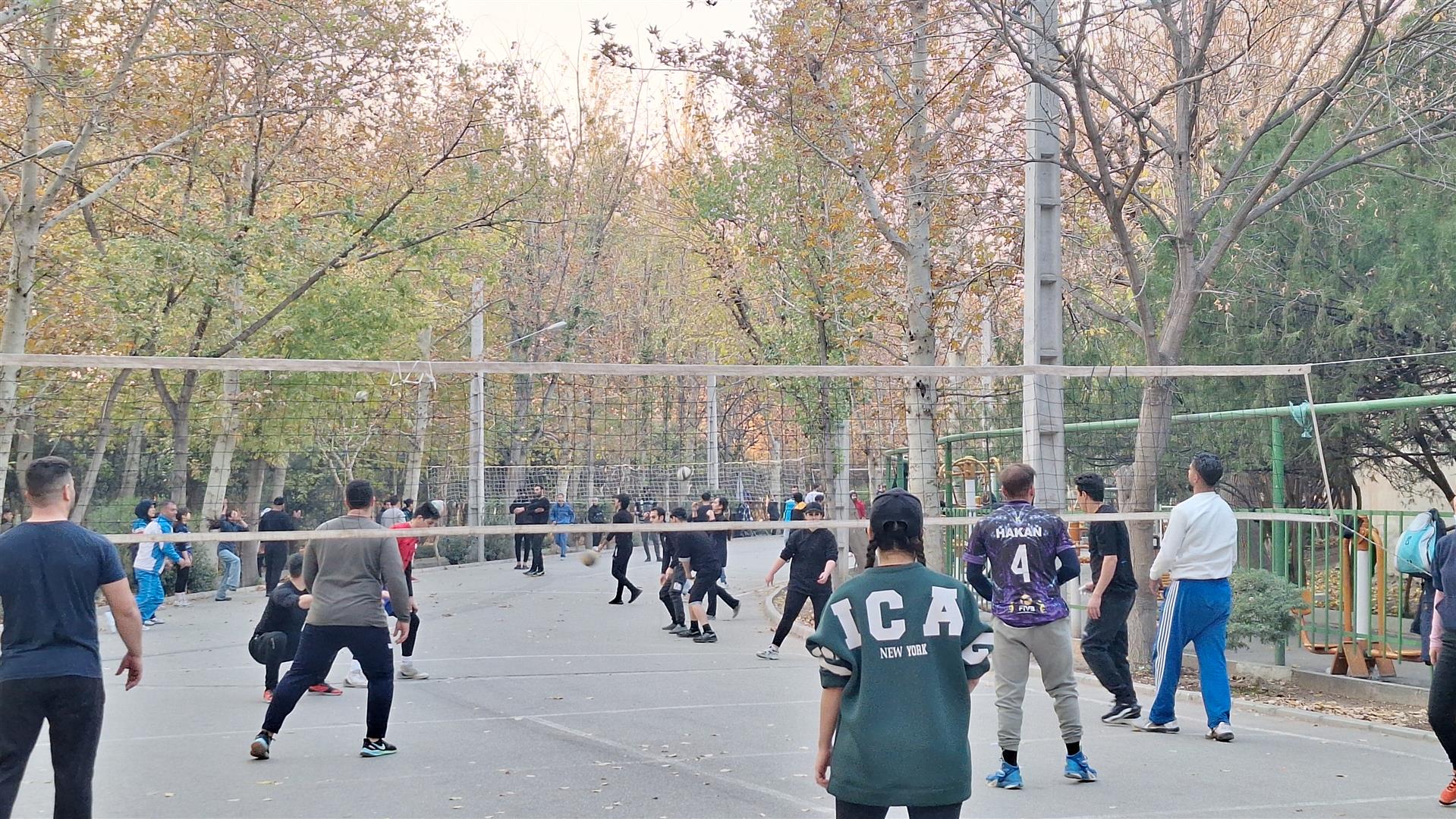
Five volleyball nets, in all. Each one with a game on the go.
When I got to the park I walked along a wide pathway and soon came to an area with several volleyball nets mounted across it. Several games were on the go, with people of all ages playing. It was obviously a designated place because all the lines were marked on the ground. Further along the path was a badminton court, with other people playing it in other areas of the park too. That included a girl and an older guy using one of those sports wheelchairs. He was pretty good too. I thought the whole thing was a great use of public space.
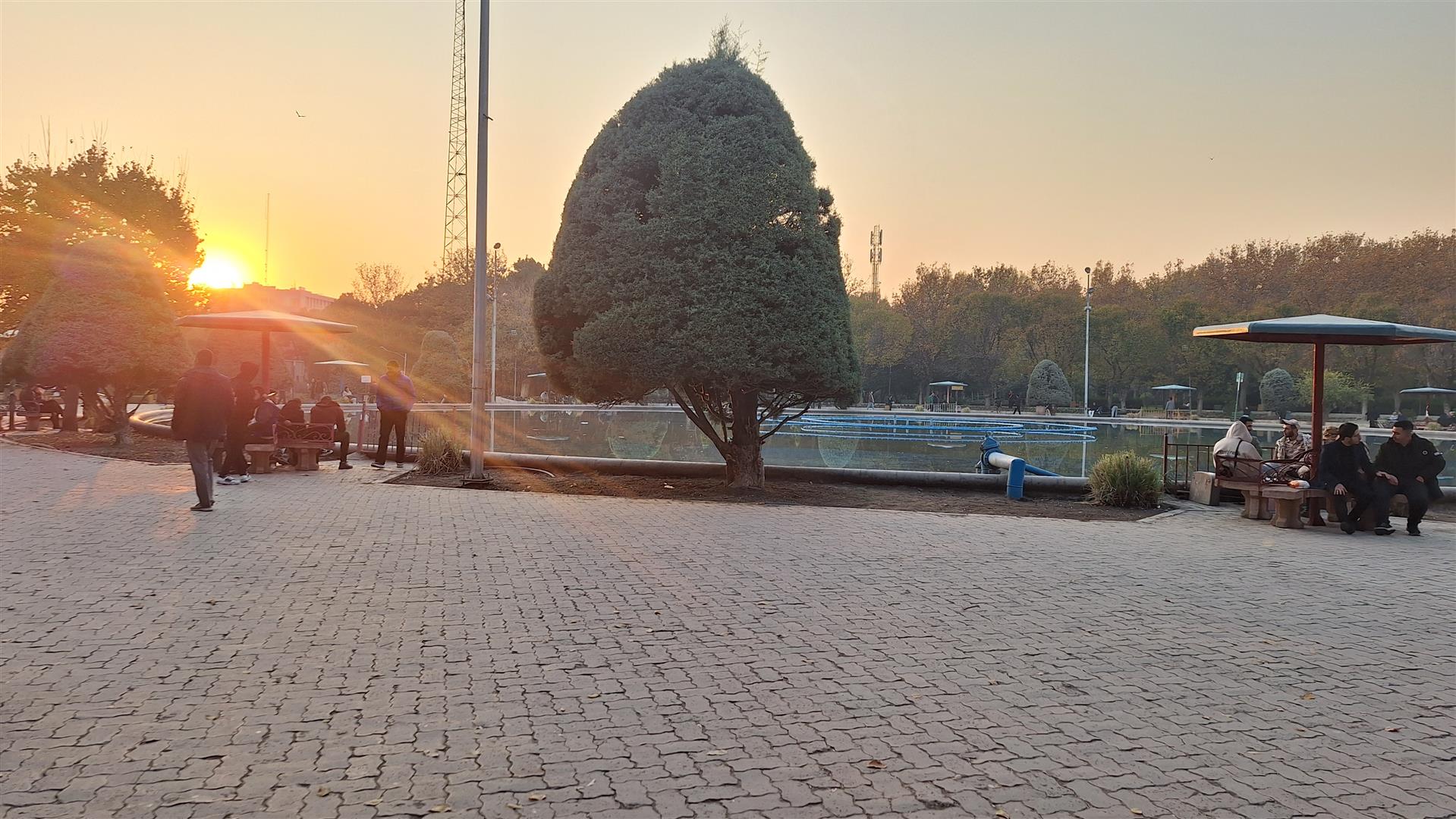
It’s a nice time of day to be in a park.
I found the lake in the middle and took photos, including of the setting sun. Also of a Swan Dial (a sundial with a swan as the pointer). Near the exit was a statue of a guy twirling three balls around his head. A very entertaining walk, and watching people out enjoying themselves was very good to see.

A very good use of a swan, I reckon.
On a sadder note, the park hosts evening meetings of The Mourning Mothers, who are a group of Iranian women whose spouses or children were killed by government agents in the protests following the disputed Iranian presidential election of 2009. The group also includes relatives of victims of earlier human rights abuses, including mass executions during the 1980s. The principal demand of the Mourning Mothers is government accountability for the deaths, arrests, and disappearances of their children. The mothers meet on Saturdays, and are often chased by the police and arrested.
They’ve called for the revocation of death sentences for political prisoners, the release of prisoners of conscience, and trials of “those who were responsible for and who ordered their children’s murders”.
Near the exit to the park was a coffee shop. Americano and some carrot cake was the order of the day. When I came to pay I realised I was almost out of Toman. I just about had enough. I’d received the debit card that Erfan had sent to the hostel for me, but he hadn’t been able to put any money on it because of the holiday weekend. Hence the need for some cash. They weren’t able to take €€€s but the guy there suggested I went along to a big hotel nearby to see if they could.
Well they could, but at a really bad rate. The café guy had said to accept nothing less than 74,000 Rial per Euro. The woman there said the rate would be 70,000. Well, beggars can’t be choosers, especially as she was acting illegally by changing money for a non hotel resident.

Seen at the park. I have no idea what it represents.
The next day was busy and tiring. My morning routine had quickly settled into breakfast at the café next door, then onto the internet while the weather warmed up a bit. It was gloomy and chilly.
I decided to walk down to Golestan Palace, about a one and a half hour walk. It’s an original royal palace and is Tehran’s oldest monument, plus being a World Heritage site. It dates from the 16th century, was renovated in the 18th and rebuilt in the 19th.
The challenge was getting there. Google had been playing me up recently. It kept placing me out at the airport and I didn’t know why. But I teased my way through the streets and got there. As the afternoon wore on it regained its accuracy. I could only assume it was Iranian security nerves.
When I got there I found that I didn’t have enough money to pay to see everything. It seemed quite expensive. 2.5 million Rial just for the garden. Same again for the museum, plus more money for different things. It’s a very big complex and would have cost quite a lot. But I had no way to pay so it didn’t matter.
So I left there and walked up to the Erbat Museum. This used to be a prison for the Shah’s regime and was a dreadful place. A young man showed me around.
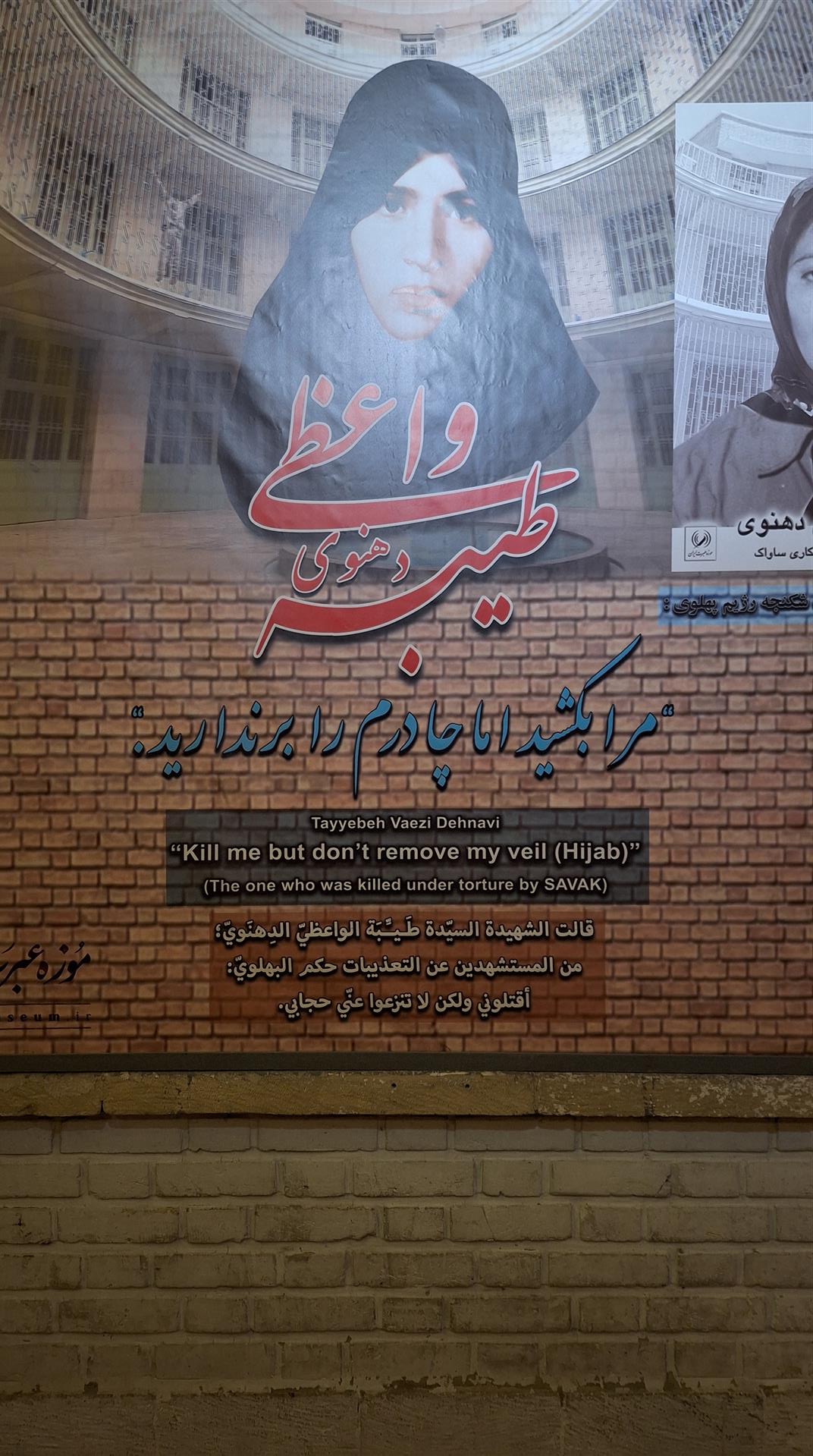
In the Erbat Museum.
They used to do awful things to people, including women. There were very graphic displays. Some of the torturers escaped Iran when the revolution came. Others were caught and punished.
There was an interesting poster showing a woman saying they could do whatever they liked to her but not to take her hijab. I commented to my guide that these days it’s the other way round!
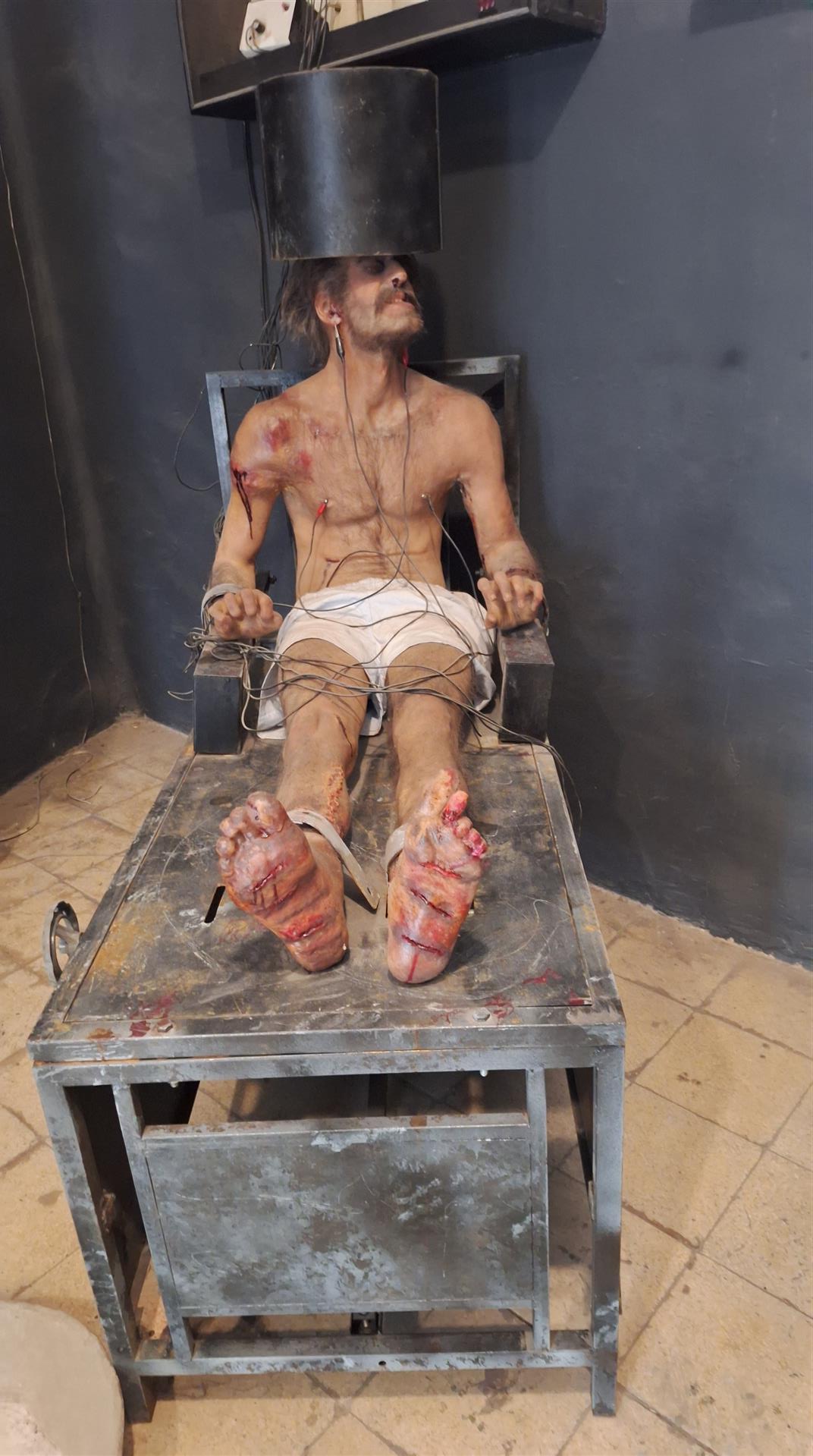
Torture.
What made me feel ashamed was that the British Secret Service, along with the CIA and Mossad, helped to train these people in how to torture better. If that’s true it’s an awful thing to contemplate. There were photos of the victims. Brave people.

Female victims.
After he’d shown me around we had some tea and a political discussion. He’s only a young guy so I don’t know what they’re taught at school about Iran’s situation and recent history. But I expressed my wish that Iran could stop supporting pointless fighting against Israel and make peace. Then the country would boom, in my opinion. He accepted some of what I said but wasn’t all that convinced. What I wondered, but didn’t ask, is where the current regime imprison their dissidents and what happens to them.
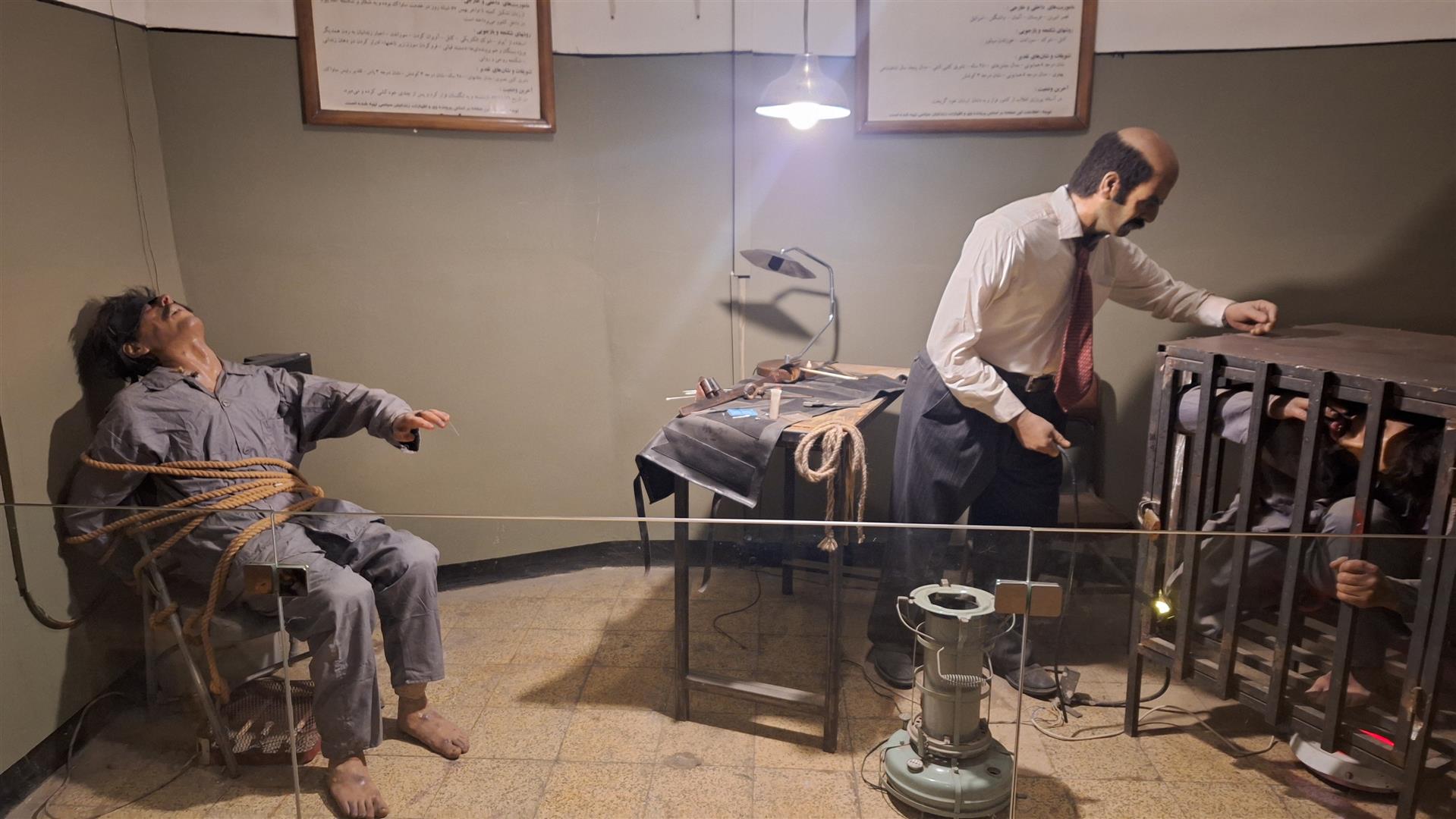
More torture.
I walked north and found a place for a nice coffee. It amuses me that I have to almost train the people how to make what I want. It’s the ‘add milk’ to my Americano that confuses them. But it tasted good.
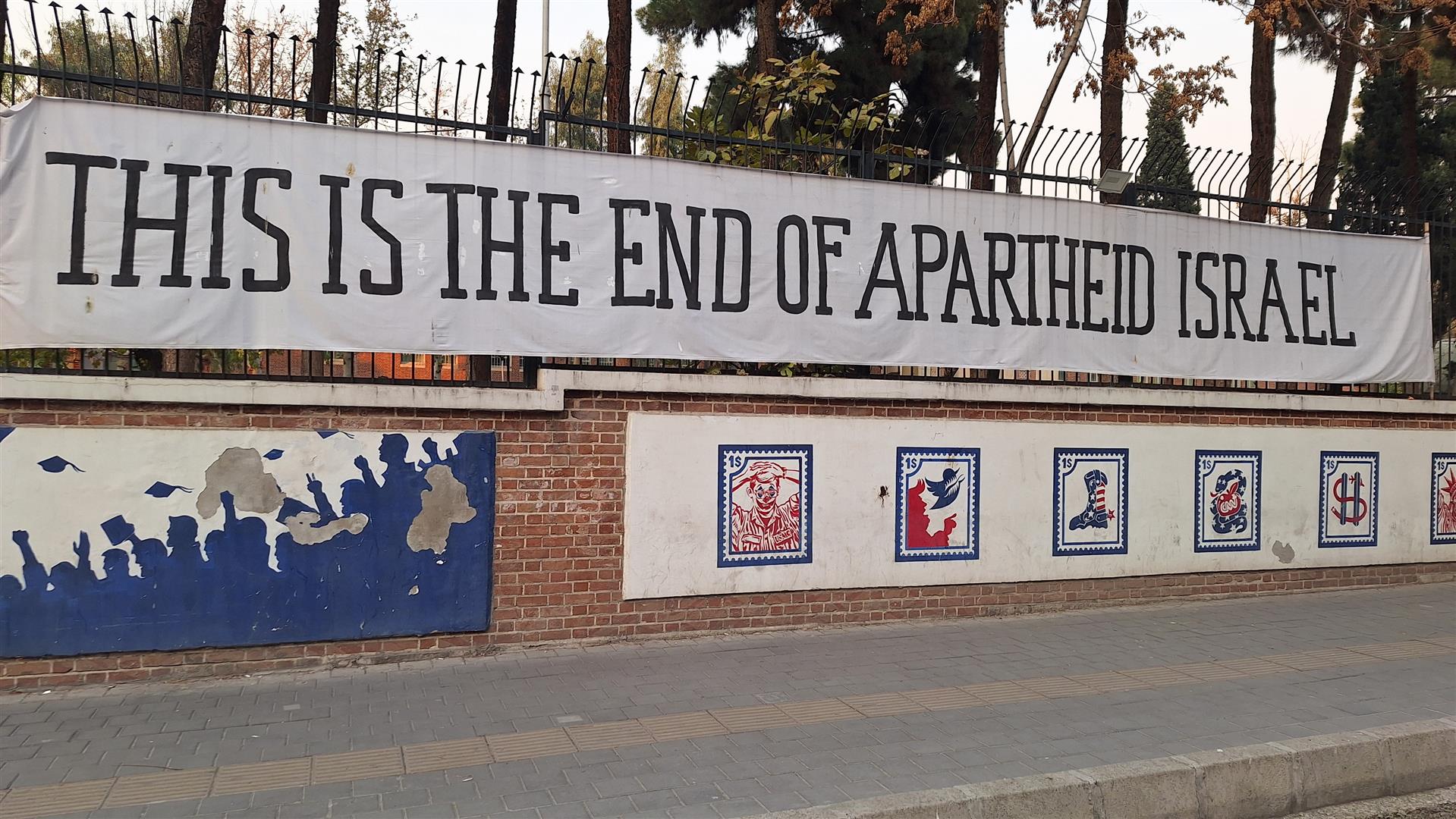
Seen outside the former embassy. Written more in hope than expectation, I think.
Onwards to the former US embassy. A fascinating place which is now a museum, and somewhere I’d very much wanted to see. I remember all the news broadcasts of the revolution very well, with this event being front and centre.
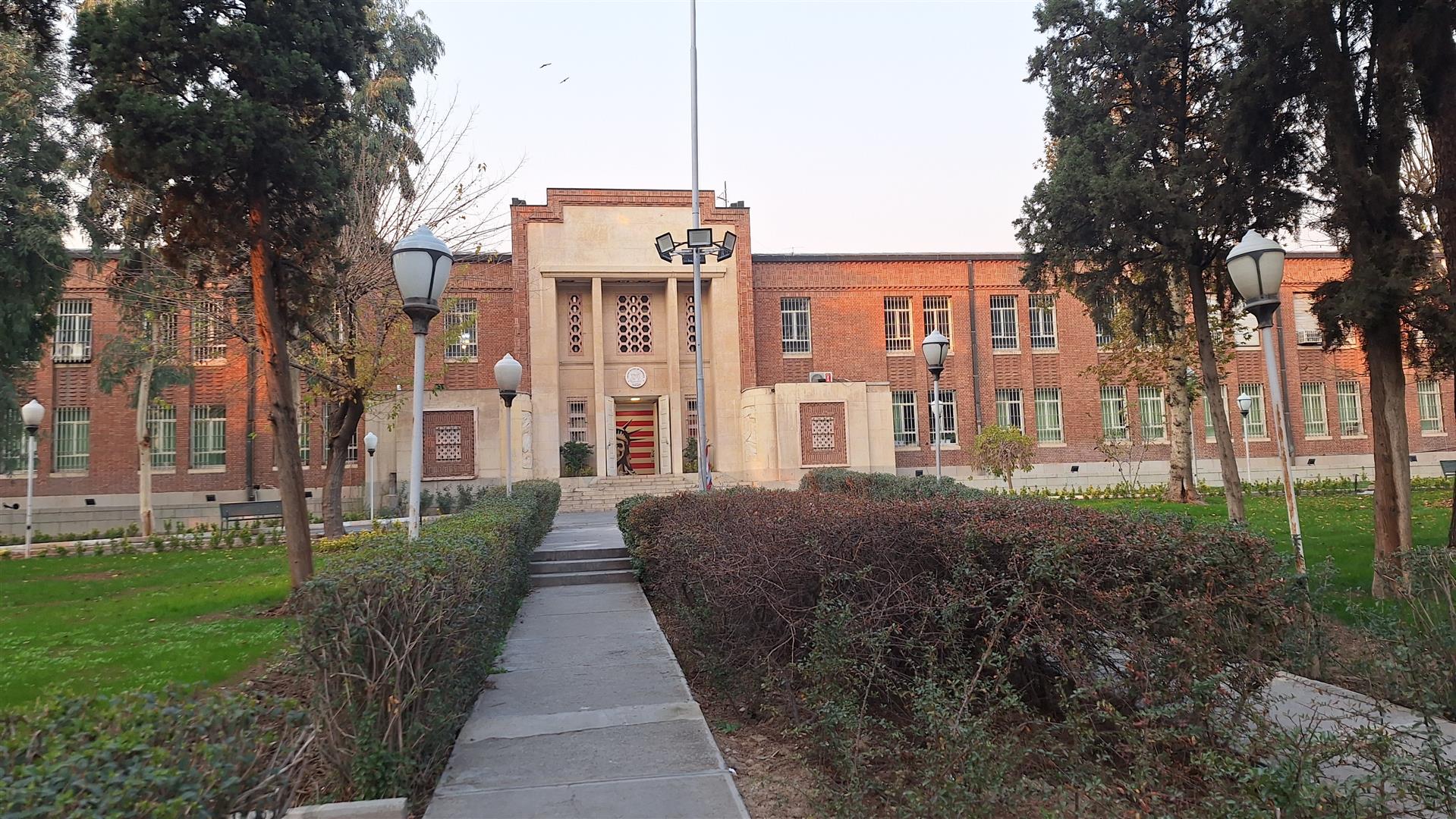
Have a close look at the doorway to the embassy.
The tale is told inside as to what happened on the 4th November 1979. Students storming the building and taking the place over, then kidnapping the staff. There was a really good piece of artwork in the entrance. The anti-American feeling was very strong at that time. They were described as The Great Satan.
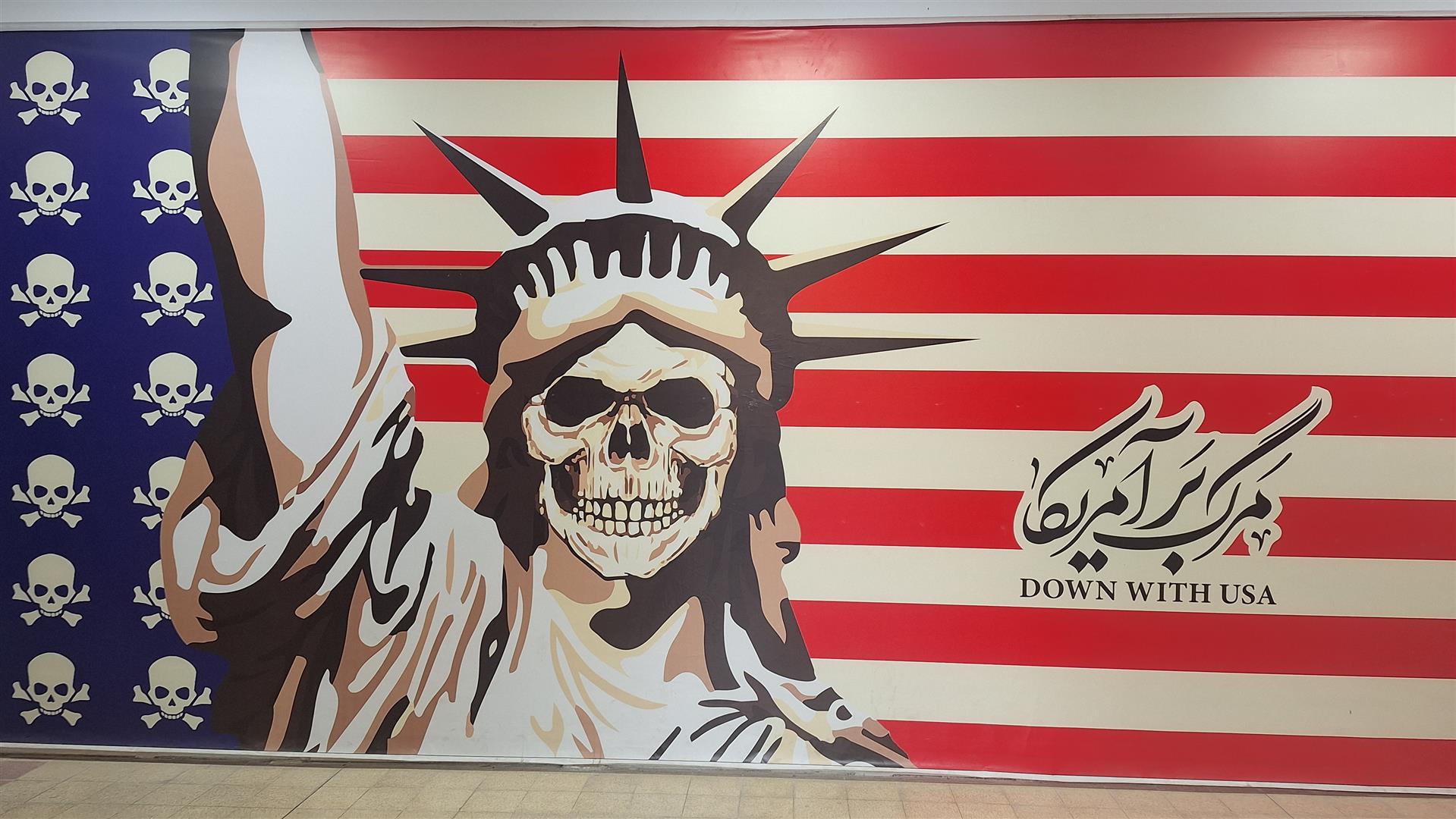
A great bit of artwork. Displayed in the doorway.
There were info boards all around the place showing bios of those held; their role; their personal history etc. All the communications equipment was still in place, including what the USA used for spying. Lots of photos of the hostages. At Christmas 1980 they were allowed to hold a party. A month later a deal was done and they were all released.
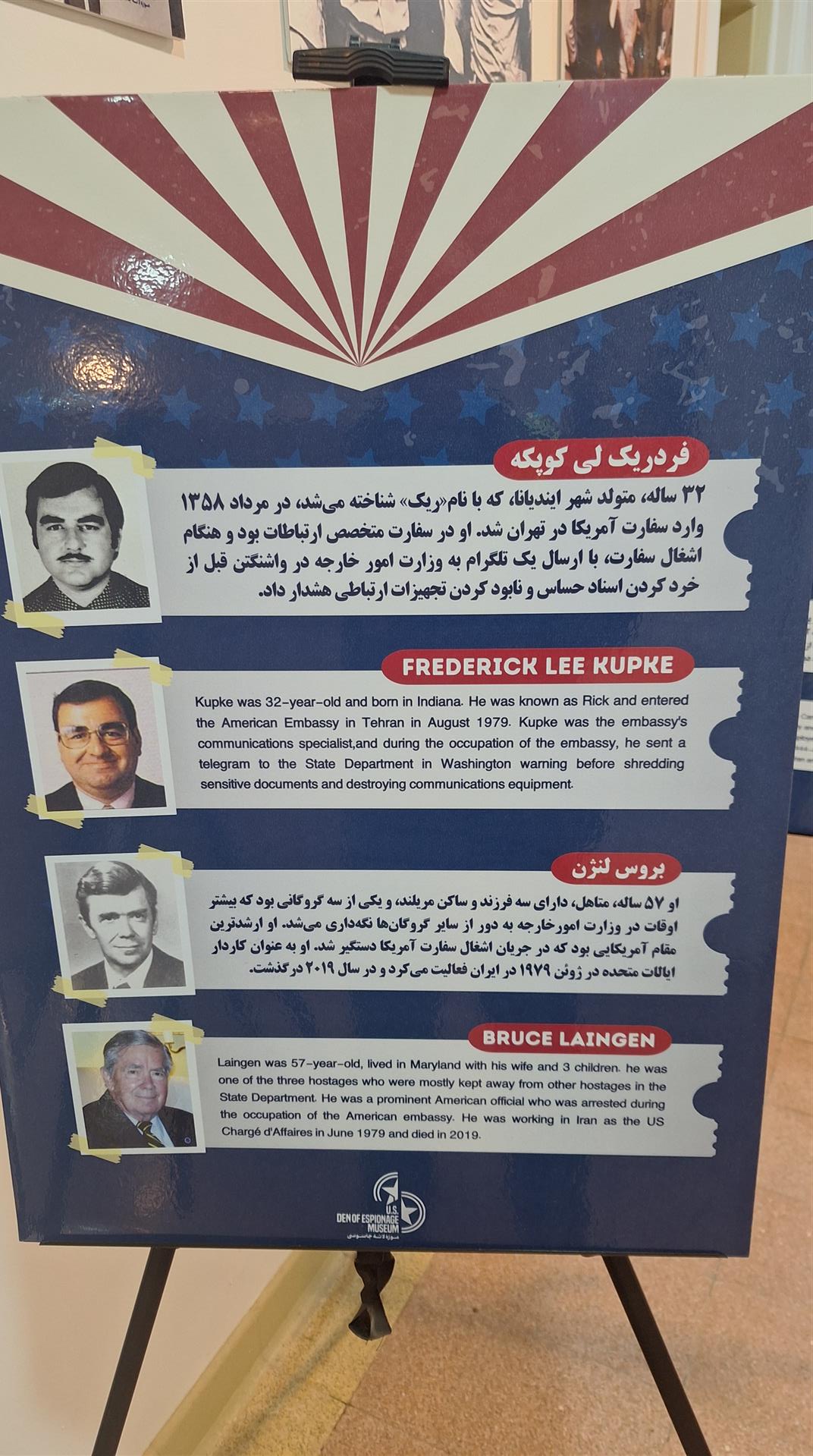
One of the infoboards about the staff.
Canada had helped rescue some of them at the beginning and therefore remains on Iran’s ‘Bad Boy’ list, along with the UK and the USA. I did wonder what mental effect such a long period of capture had on those people. My memories were still strong so how must theirs be?
There’s good telling of the story here. And if you want to read about all the events that led up to it, follow this Wikipedia link.
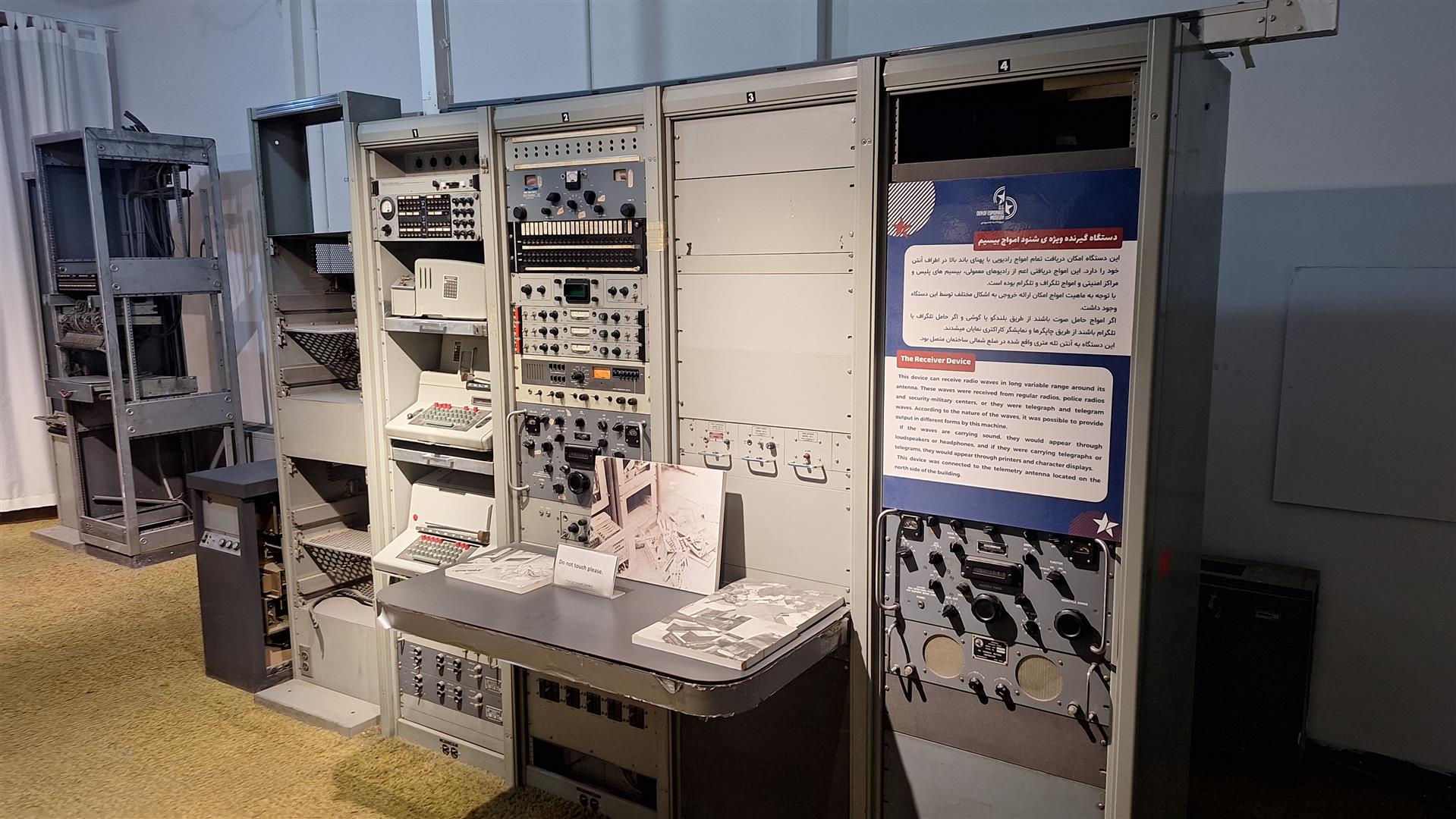
Some of the spying and security equipment.
The juxtaposition of these two visits only struck me later. The awful treatment of dissidents by the Shah, who was very much supported by the West, for the sake of cheap oil. And then a kind of revenge for those things, visited upon the USA. Kharma, or something.
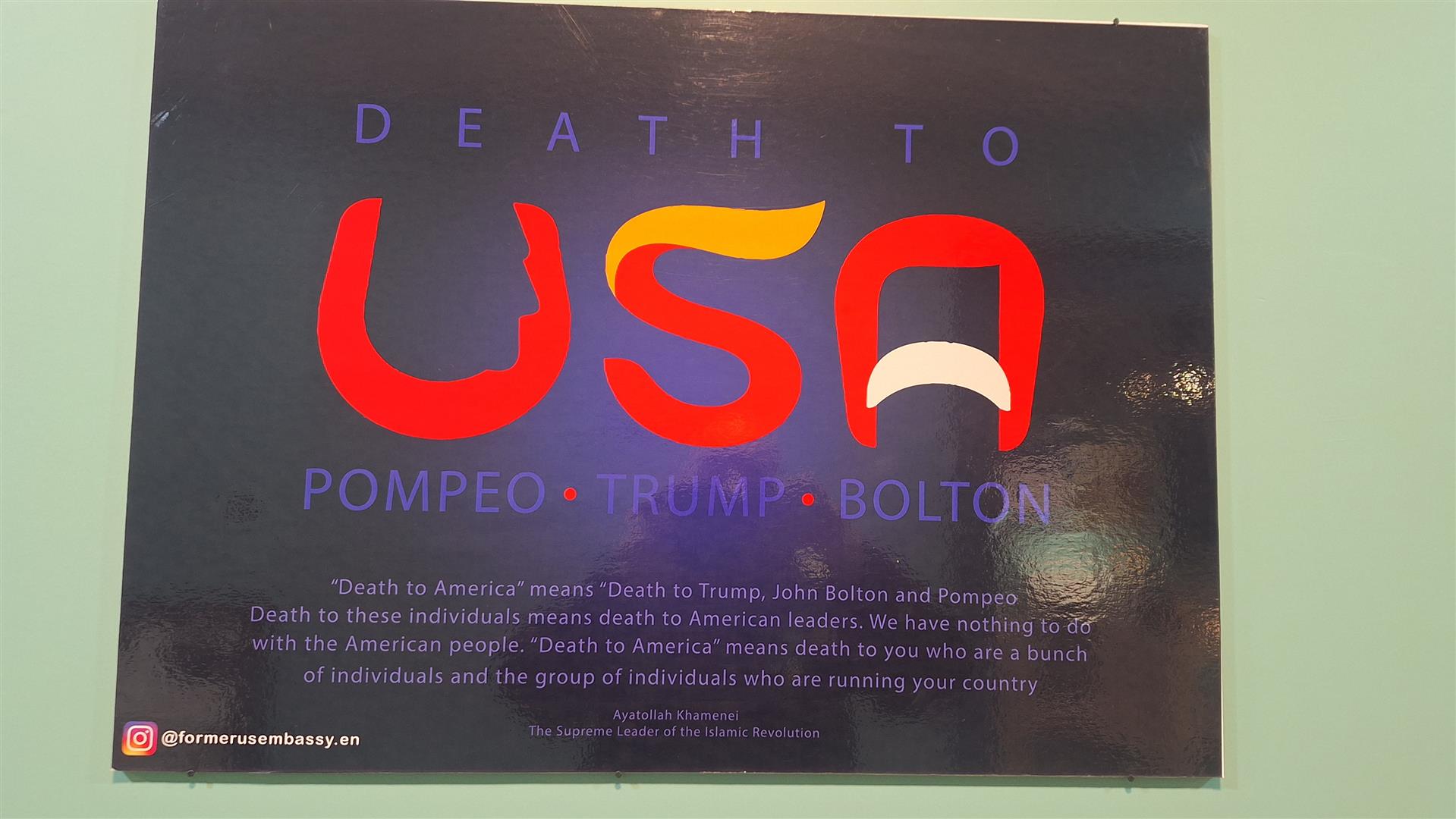
Strength of feeling, writ large
.There had been no internet in the hostel all day. They had no explanation other than ‘It’s Iran’. We were quite close to the area where all the leaders live so that’s possibly the reason. Fortunately I could get it via my phone.
I’m interested in planes. But, more importantly, I have a friend in the UK who is REALLY interested in them. There’s an aircraft museum close to Tehran’s airport and Dave was super excited at the thought of me getting some photos of F4 Phantom, or F14 Tomcat jets, along with obtaining certain badge patches relating to them. To that end I headed out to the airport and, just for once, Google had me located at my starting point rather than my destination.
The location I had wasn’t great but I spotted the planes (not difficult) and eased my way in to the car park near the entrance. “Closed today, come back tomorrow” was the message I got. But at least I was able to mark the correct location on the map – probably!
Instead I decided to head to the Omnivar Brothers’ Museum but Google threw a wobbly again so I gave up on that. The bike needed cleaning and I’d marked a car wash on the map, near to the hostel, thinking to use the jet wash. So I headed back the way I’d come, remembering enough of the route to be able to navigate until Google sorted itself out. And here’s where the day got really interesting.
As I neared it I rode down a main, one way street and turned left into a side road. Google was saying to then turn right but I couldn’t see a turning. I pulled up to check the map (Google was mostly working by now) and a guy walking past pointed to a sign, saying it was a tow away zone. OK, I thought, obviously a sensitive area.
I carried on round the block and as I went to turn into the same turning again I almost collided with a car coming out. I hadn’t realised the side road was a two way street. I pulled back slightly, thinking the guy would just drive on but he didn’t. Both occupants got out of the car and that’s when I spotted their big, fat, police radios. Oh dear, I thought. This isn’t good. There were several policemen on the street corner, next to a police post. A young officer spoke some English and he asked me a few questions then told me to park the bike. I followed the two guys from the car into the office and was sat down while they looked through my paperwork and passport. It was luck or good sense that had made me bring my backpack with me so I had everything.
I sat around for a while, with nobody saying anything. The driver of the car was happy to share a smile. The passenger was miserable and unsmiling so I didn’t waste my time even looking at him. They seemed happy to let me stew.
Eventually a third guy arrived who spoke English. He sat down and asked me questions about where I’d entered Iran, where I was going to etc. He also asked me if I knew anybody in Iran. He was happy with all my answers and, after ten minutes or so, things were relaxing. He asked if I had a camera and when I said I only had the phone he asked to see it. I opened up Google photos for him but he went for Gallery, knowing it tends to save more things.
Satisfied with everything we went outside and I had to open some panniers. He was intrigued by my camping gear. He asked about my family – just a friendly question, he said. In the end he asked me why I was in Iran. “To meet lovely people like you”, I said, as I tapped him on the shoulder. And that’s the comment that always gets a smile or a laugh. I was advised how to get to the car wash and sent on my way. But I gave up on it anyway.
I’m still not sure whether that was a narrow escape or just routine checking of a foreigner. Although I have an Irish passport it clearly states that my place of birth is GBR. A more hostile interrogator might have picked up on that and made my life more difficult. But I didn’t feel threatened as I knew I was acting out of innocence. The city is full of delicate places, best avoided.
Next morning I tried for the aircraft museum again. Googleloopy was in play once more so I felt my way across the city until it woke up. But deep disappointment for Dave and me once more.
“No foreigners allowed in today.”
“Tomorrow?”
“No.”
So that was that. I told Dave the bad news.
Off to the Omidvar brothers’ museum next. I can hear the thought in your head, “Who on earth are they, Geoff?” They’re the authors of a fascinating book I came across a while ago, which describes their world travels.
The museum is sited in the grounds of Sadabad Palace, along with various others. When I got there the guys on the gate let me park the bike inside. Problem was that nobody told me I needed to buy a ticket by the gate. There were no signs that I could see.

One of the bikes and the 2CV.
So I walked all the way up a long and very steep hill to get up to it. When I went in the guy on the desk explained, in English, that I should have bought a ticket at the entrance. I expressed my deep despair at having to go all the way back down and walk all the way back up, and he let me in without one. What a lovely man.
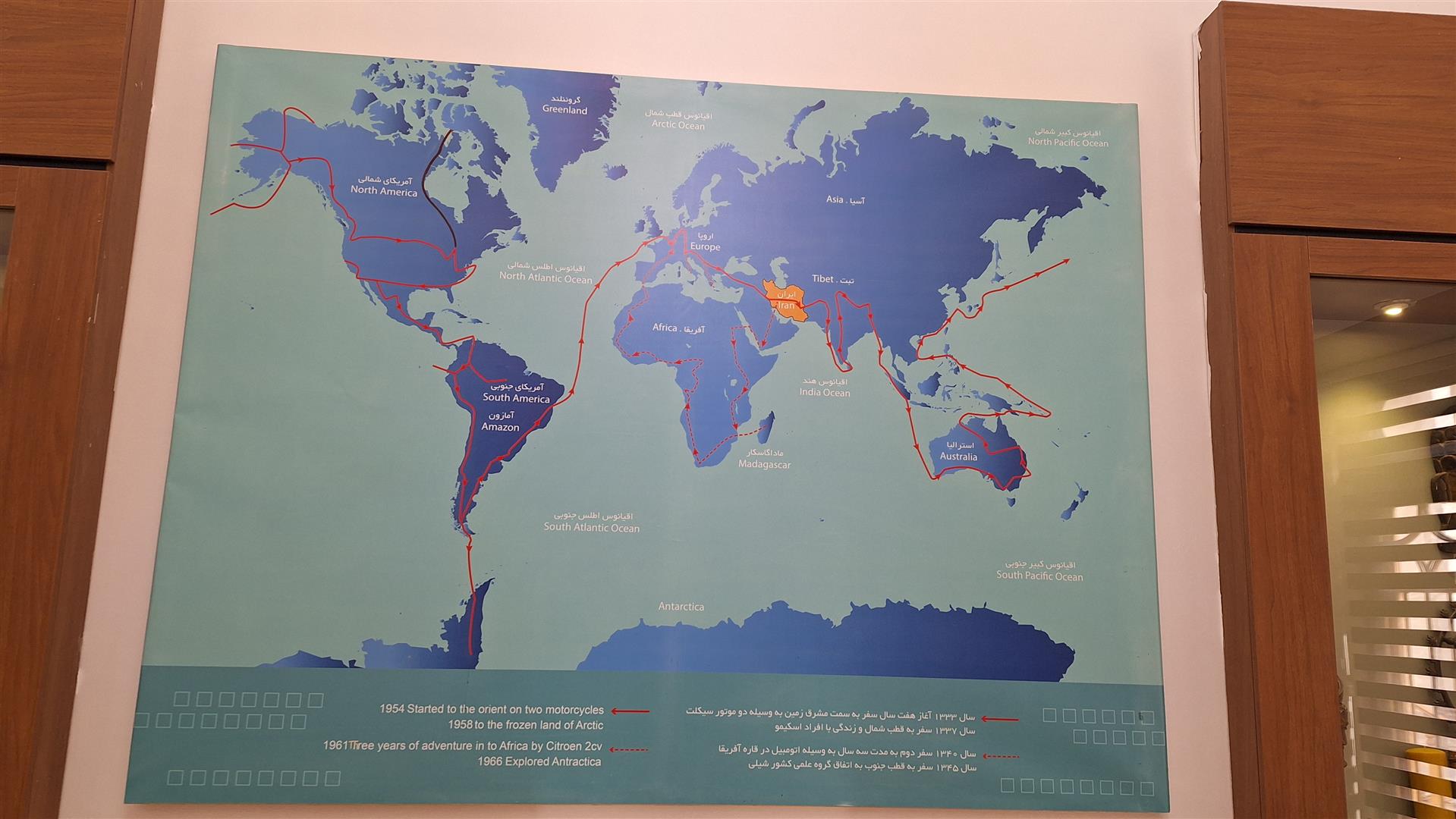
Their route.
Their museum is dedicated to the various journeys they made, starting in 1954 on two Matchless 500s. They visited most of Asia, most of the Americas, and Europe, in one continuous journey. They were only in their twenties and left Iran with $90 each. They earned money as they went, giving lectures about their journey and what they’d seen.
Their main aim was to make contact with as many remote peoples as possible and share their daily lives. Accidental anthropologists, in a way. They filmed and photographed as they went then produced a documentary about their travels and the people they’d met.

Well equipped for the task.
After they returned to Iran they set off again, this time in a Citroen 2CV van provided by Citroen, along with some sponsorship. They visited many remote places in Africa. They became celebrities in Iran, especially for being the first Iranians to undertake such a journey.

Out in the wilds.
I walked around, looking at the photographs and memorabilia they brought back. It was quite a journey for them. One of the bikes, and the Citroen van, were on display outside. I thanked the guy profusely as I left. I was really glad that he’d let me in. I’d enjoyed the book very much and the visit to the museum added much more meaning to it.

Some of the items they brought back.
I rode on, back towards the city to see the Niavaran Palace, also inside a historical complex. 2.5 million Rial to enter the complex and the same again for the palace. If I’d gone to all of the places inside it would have topped 10 million.
The palace was built in 1968, had lots of luxurious rooms and was lived in by the Shah. All the displays were more or less what you’d expect in such a place, but I took photos anyway. It was all laid out in landscaped gardens. Both places really needed a day each to see the whole of them.

Palace opulence.
Having tried for a car wash I checked Google for bike washes and found a place about halfway back to the hostel. I decided to leave it until next day and to have a bit of a maintenance morning. I need to check the tyres, chain etc.
But the weather had other ideas. Rain stopped play. The sun came along eventually so I checked the bike over then headed off to the wash. It was a good ride through the city, with light traffic and no hold ups.
I followed the lead of other bikers and used the bus lane that sits in the middle of the dual carriageway, ignoring the prohibition signs. Amusingly, I was following five police bikes along there and we were all overtaken by a car. Casual or what!

That’s the way to do it.
The guys at the wash were absolutely delightful. They did a brilliant job on the bike. They put some stuff on first, possibly degreaser, but I’m not sure. Then the jet wash. Foamy soap and a hand wash to follow that, then the jet wash again. It was dried off and wiped down.
They were very keen for me to tell them it was a great job, so I did so. Many photos were taken. The owner refused to take any money, despite my insisting five or six times. So I accepted his generosity then gave them 100,000 Rial for their chai and biscuit fund, which he accepted. The price of the wash was, I think, 120,000 Rial. So all was square.

The cleaning crew. Lovely guys.
I was leaving Tehran next day and I felt a bit disappointed, having not been to as many places as I’d wanted to, especially the aircraft museum. But what I had seen had been really interesting, especially the former US embassy. But the upside was that the hostel was excellent. A lovely place to stay, with great people.
How did I get the bike out of the garden? Simply pushing and shunting it round.
 MOTOPANGAEA