
Basra, Iraq. 22nd January 2025.
Iraq, formerly Mesopotamia, is described as the Cradle of Civilisation. The areas around Iraq’s two rivers, the Tigris and Euphrates, often referred to as the Fertile Crescent, are where humans slowly changed from Hunter-Gatherers to farmers, 10,000 years ago. Mesopotamia saw the invention of writing systems, mathematics, navigation, timekeeping, a calendar, astrology, the wheel, the sailboat, and a law code. Busy people! If for no other reason, that makes Iraq a fascinating country. Added to that are the events of the war eras, from 1980 to 2017. It seems that Modern Iraq has rarely been out of the news. It’s currently divided into two areas, of Federal Iraq and Kurdish Iraq. The Kurdish area is autonomous but the two co-operate with each other on most subjects.
I found the hotel I’d been recommended. A decent place, with breakfast supplied. Once settled in I went for a walk, in particular to look for a SIM card. The Asia Cell outlet was just closing so it became a job for the next day. I stopped at a food stall on the way back and a guy there helped me out with ordering. Then he paid for my roll because the only money I had was a 10,000 Dinar note (£5.50) and the stall didn’t have change. Very kind of him. It turned out that was a biker, so no surprise.
That’s it for my first day in Iraq. A good place so far, except for the hotel wanting 10K for a towel. Guess what? I used mine.
The café next door supplied next morning’s breakfast. Eggs, bread and coffee. My first job was to walk down to Asia Cell and get a SIM. Easy to do. Helpful young woman. But two surprises. 42,000 Dinar (£26). My debit card was not accepted, so I had to pay cash. Unlimited data for 30 days, which was good, and accounts for what I thought was a bit of a high cost.

Down by the river.
I walked down to the riverside, a touristy area. There was nothing much there apart from a fair ground. There were sheltered seating areas overlooking the river. But I needed coffee!
I found a place called Joan’s, a 20 minute walk away. I ordered coffee and cake then sat outside.
A couple of guys came and sat at the next table. We ended up chatting. One had relatives in Islington, London, and has visited there. The other had visited Newcastle, poor sod. They’re well travelled but I forgot to ask what they did.
When we parted company they insisted on paying my bill. I was delighted by their kindness. A very nice meeting.
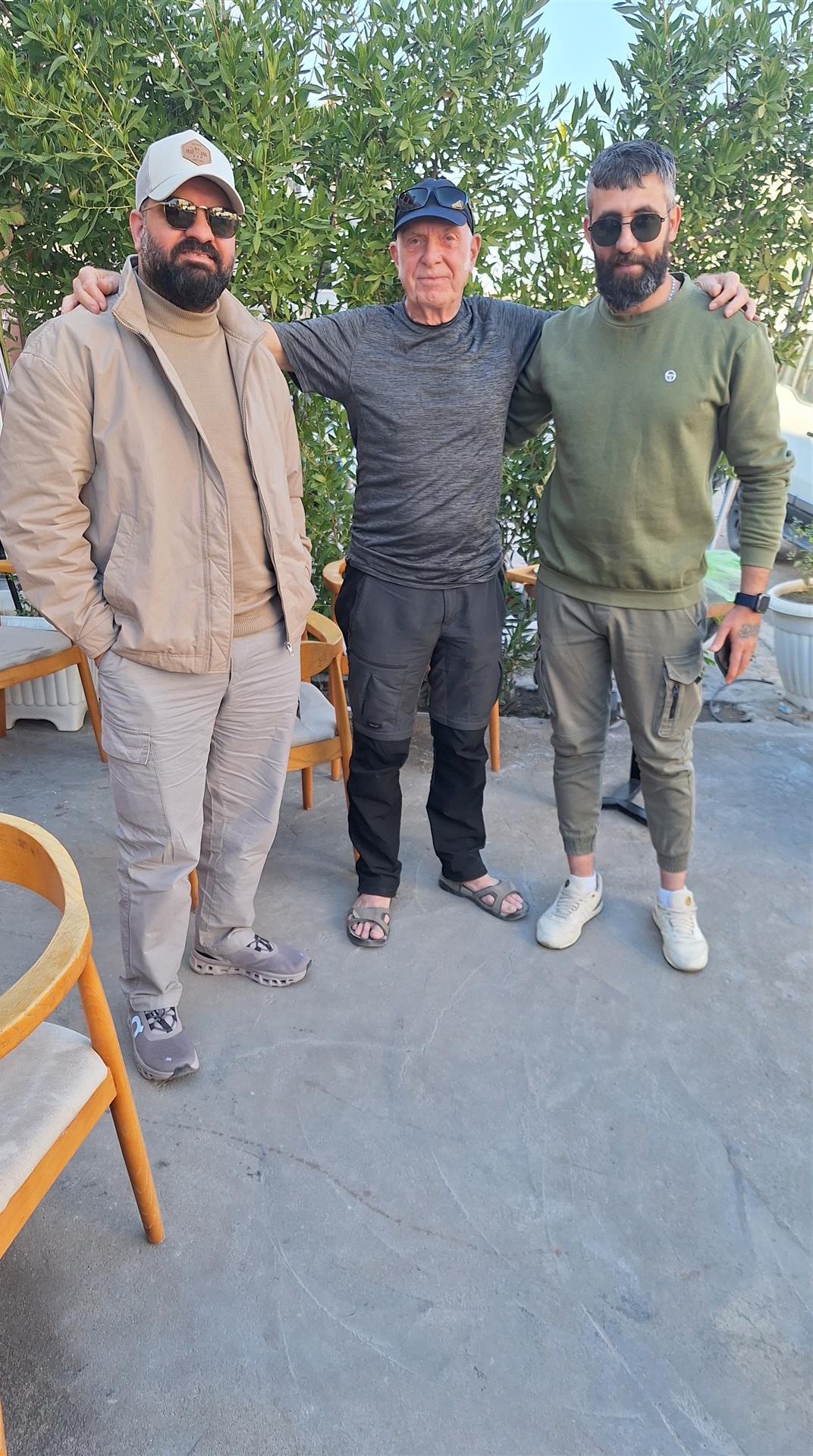
Friendly locals.
There’s lots of ropey old buildings in the back streets. Some seem to be getting demolished, others refurbished. Lots of piles of rubble and rubbish. It’s easy to see that the city had been a war zone. It all looked very down beat.
A few observations. LOADS of big, expensive cars on the streets. A few old ones. Tuk Tuks abound. There’s a smelly canal running up through the city, which seems to accept a lot of the waste water. Most women wear hijabs, some wear the chador, some a full burka. But a few came in the café with no head covering at all. It’s good that they seem to have the freedom to do that.
Traffic is busy but there seems to be less aggression here. Crossing the road is OK. Just dodge the traffic. Food on the street is very cheap, although the coffee and cake were £5. That’s not unusual everywhere.
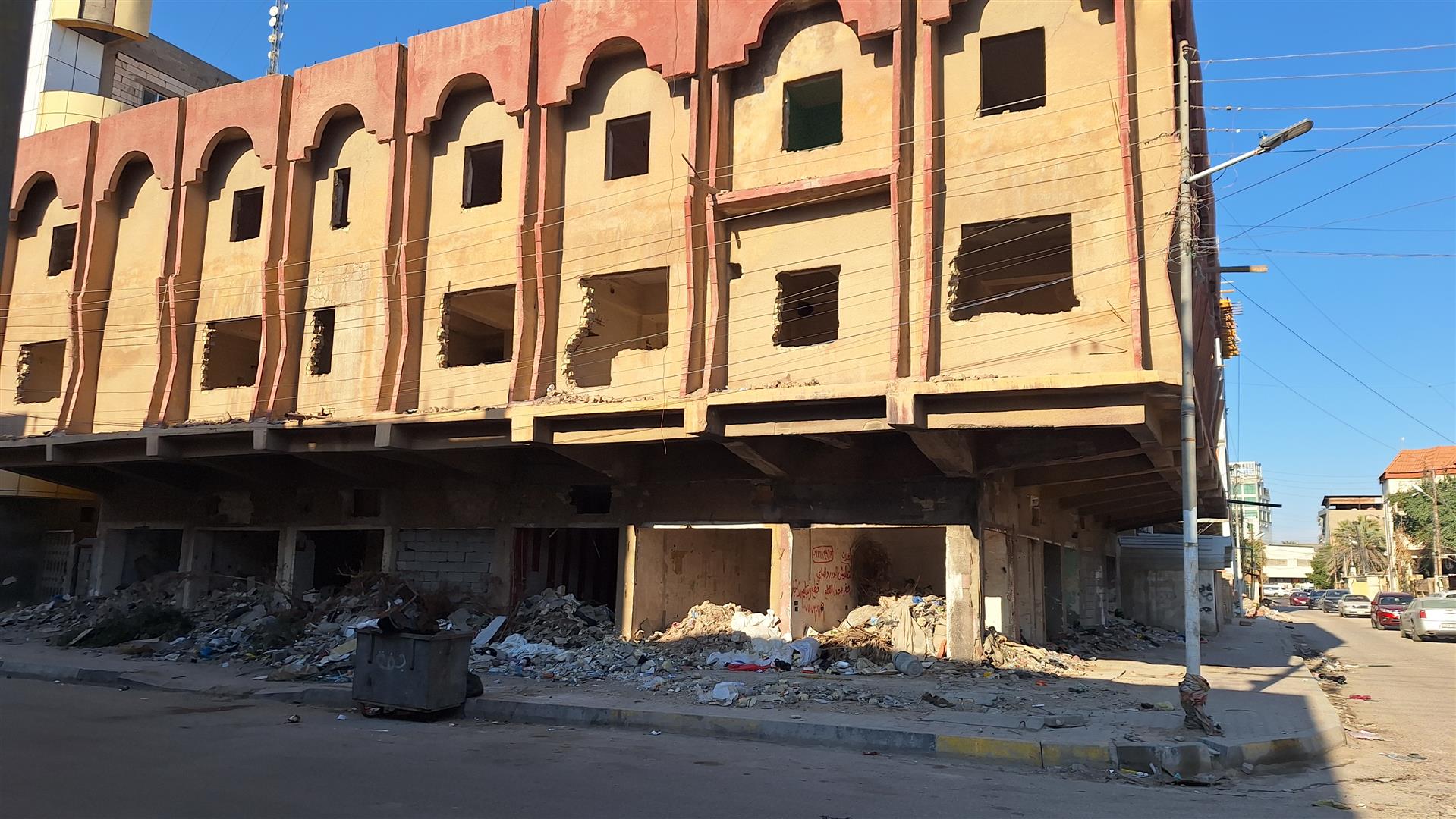
Buildings are under repair.
A laid back day followed. Trying to make plans and work out a roue to follow. I went to an ATM and drew out 50K Dinar. The success in doing that made the inability to use my card yesterday even more puzzling. The rate wasn’t brilliant. Lower than that on on XE Exchange. I decided to see if I could get some USD with my card and then just exchange the cash.
Another visit to Joan’s Café helped with the planning. There were plenty of places to visit but one of the problems was that entry fees for all these places were 25K Dinar. That translates to over £15. That’s way to much and is, to be frank, taking the mickey in a big way, although I know foreigners usually pay more. Somehow I was going to have to be selective about what I paid for but also try to focus on the free places. But equally I didn’t want to miss out on the really good stuff. Something to be played by ear, I reckoned.
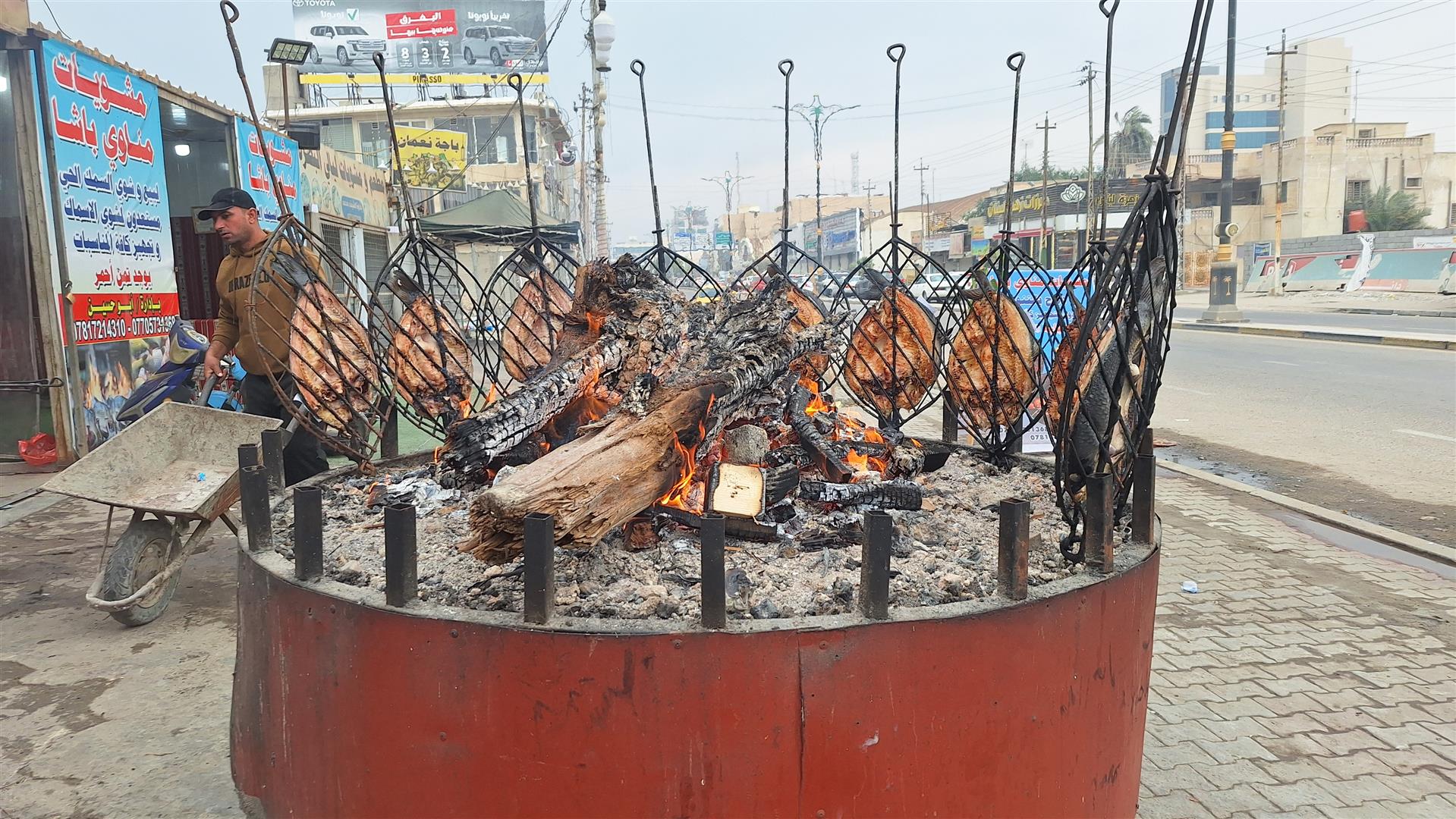
Cooking Flatfish on the street.
After breakfast I checked out and set course for the town of Chibayish, only to find that Google maps wouldn’t navigate. It would only show a preview. Neither would Maps.me, the off-line mapping app I used. I messed about with the settings, to no avail. I dropped a message in the WhatsApp group to see if it was common, or just me. I even Googled the problem. It seems it’s because it can’t navigate so it only shows a preview of the route. Iraq block Google’s mapping. This was going to be fun!
Fortunately the route was mostly straight roads, with not many turns. In the end I managed OK.
I passed loads of check points, some of them with small armoured cars parked next to them. Inevitably I got pulled over. I was taken across the road into a police station.
They got another guy on the phone. He took my number and gave me his. He spoke good English and explained that he’s responsible for tourists in the area and I should call him if I get any problems. Fair enough then.
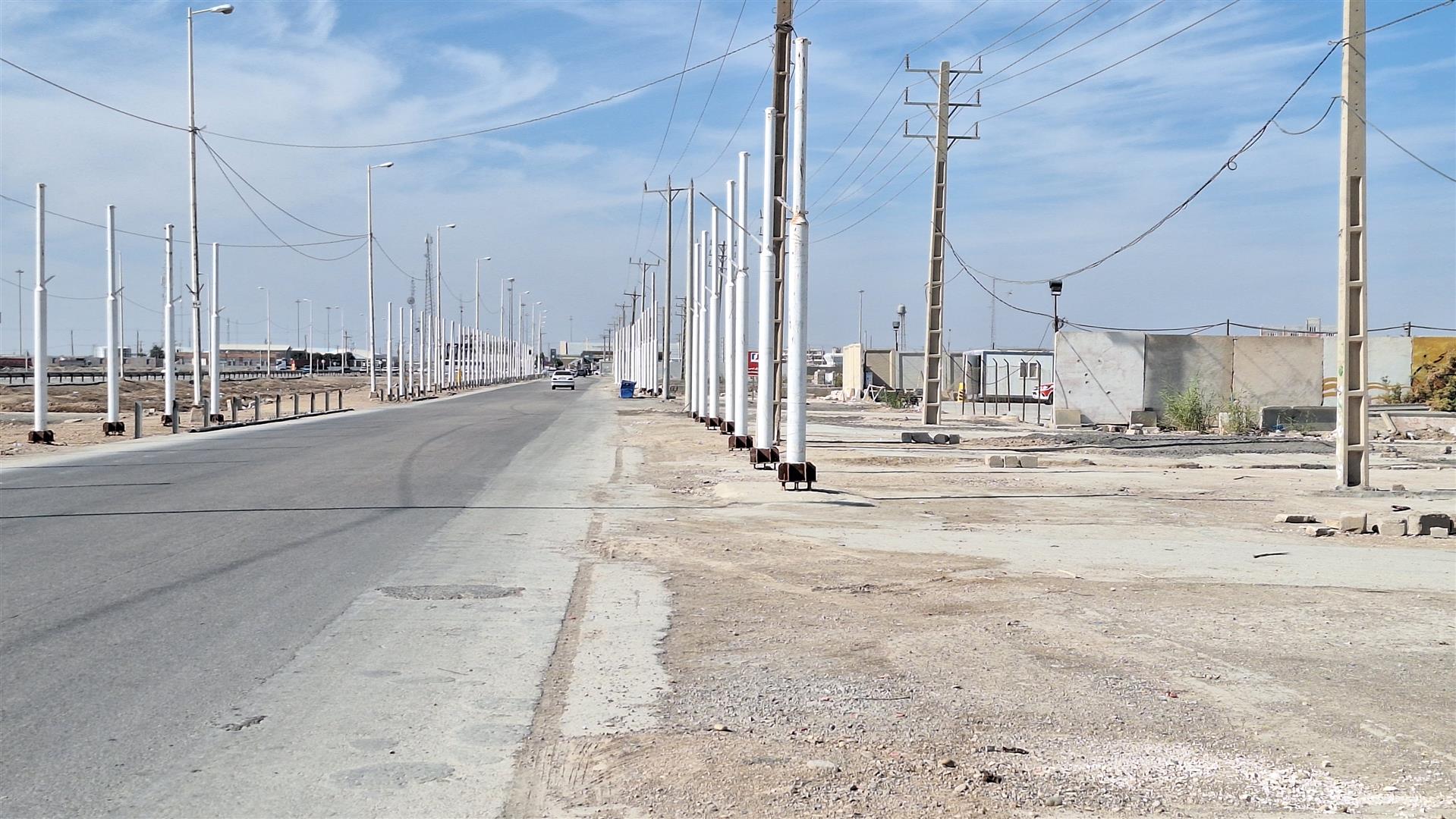
I was puzzled as to what all these poles were for. New lamps, maybe?
Once clear of the city the road passed through fairly non-descript areas, with poor quality buildings alongside it. A lot of sand and rock. Depressing in many ways.
But it eventually ran alongside the marshes. Water either side, with reed beds in them. There were pockets of dry land, where small buildings had been placed. Plenty of cattle grazing there too. It’s a typical example of how people make the most of the opportunities their environment provides. And this being Iraq, it will have been going on for centuries.
After the police check I saw a sign for the Matyrs’ Memorial. I pulled off down the lane for a look-see. I could see a domed building which, when I’d seen it from the main road, I thought might be power or radio infrastructure.

Out in the waterways. Reeds everywhere.
The guys at the gate checked my passport then insisted I bring the bike inside the compound. A guy was offering me a boat ride out in the marshes. I checked with him if I’d get to see some reed houses. Then I knocked his price down from 25K to 20K.
He had a narrow canoe with an outboard motor and I settled down for the ride. Before too long we pulled in to a small island where there was a reed house. There was also tea, which was disgustingly strong. I took photos, and my guide took one of me.
Then we just rode through the reeds, along twisting waterways. There were mud banks too. Very obviously clay. The reeds where of a variety of types. Some in tall clumps and some low and straggled.

Typical reed house.

Supporting the roof inside.
Those used for the houses were, I reckoned, specially cultivated. They were strong and long and I didn’t see any of them growing among the reed beds. It was an interesting experience. When we got back I gave the guy the 25K he’d originally asked for.
Back on dry land I had a look inside the memorial. It contained a sculpture in the design of a twisted pole with a twisted creeper around it. God knows what it’s supposed to represent.
There was another sculpture outside. A hand with bamboo fingers placed within an arch. There were graves as well, but no names on them. The whole place was a bit run down. The roof was damaged, with some of the aluminium panels missing. I’m not sure who the martyrs were. Most likely from the Iran/Iraq war.

Outside the memorial.
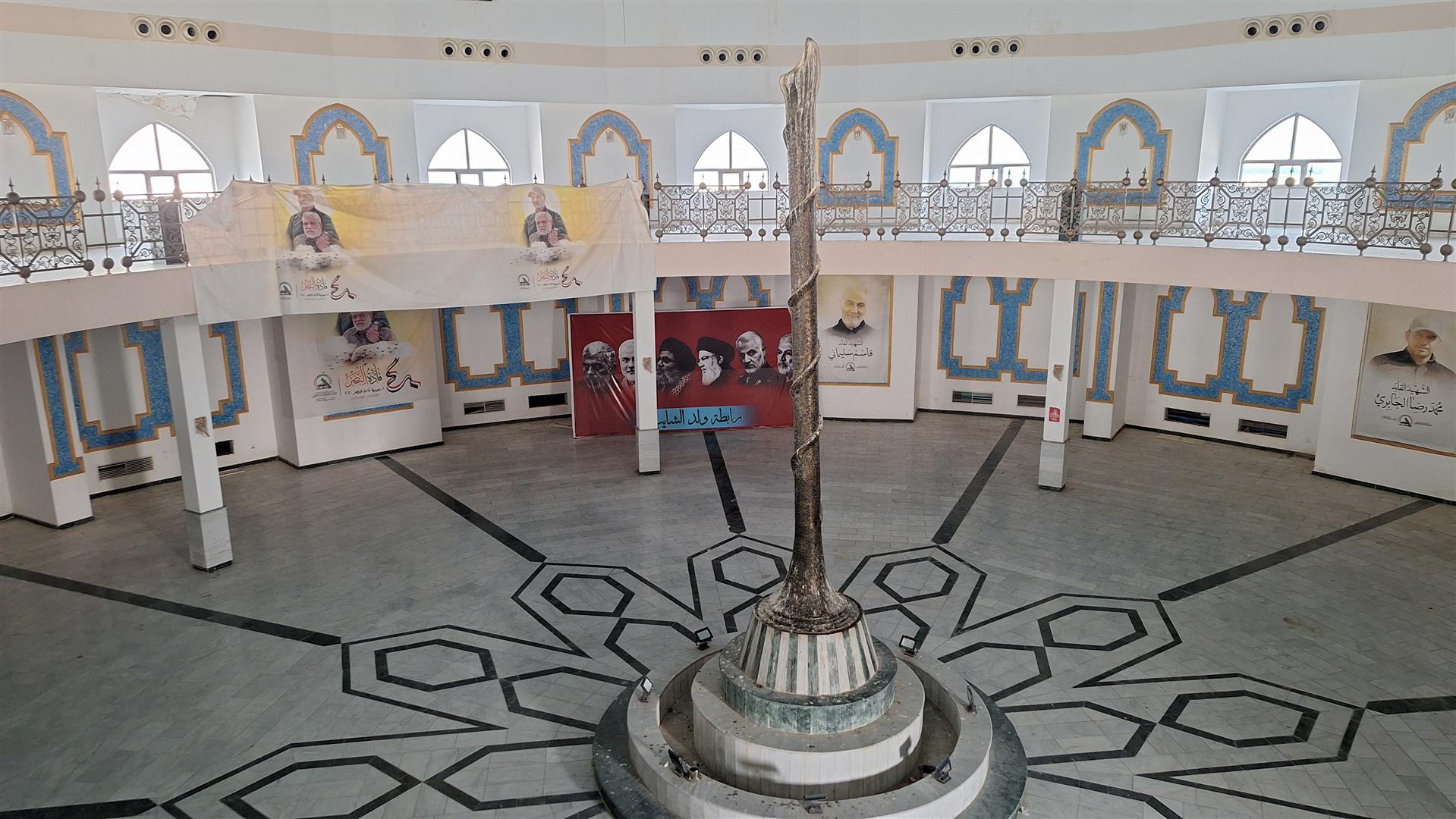
Inside the memorial.
I pushed on up the road, looking for a couple of hotels shown on Google. They weren’t there, as far as I could tell. So I rode on into the town of Nasiriya, big enough to have several hotels to choose from.
Once I’d found my way around the closed bridge I tried the first hotel. 125K Dinar. Errr… No thanks! The next one was 50K. Better, but still too much. The third one was 80K. It was getting a bit late so I gave up the search for a reasonable price and went back to the second one. It’s not bad but has no kettle in the room and I had to ask for a towel.
I went out for food. I found a place for a takeaway kebab. But I’d forgotten my wallet! The owner was very good and let me take it, trusting me to come back – which I did, of course.
I woke up during the night and there was no electricity in the room. It had been switched off from reception. It also meant there was no heater. Brekkie was very poor too. There were some other guys in there and they had scrambled egg. When I asked the woman for some she said it was finished. One of the guys offered me some of his but I declined. So it was just bread and cream cheese, cucumber and tomato. But I did steal a load of biscuits.

A parade for an Imam. A good excuse for a walk, I suppose.
The first job for the morning was to get fuel. Something of a task according to what Michael told me.
I was ready to go by 9.30. I moaned at them about the electricity but the guy just shrugged. When I went outside there was a parade going down the street. I wanted to go to Nasiriya Museum but the parade, and blocked streets, prevented it. So I headed out to Ur. I did ask someone what the parade was for and it’s to celebrate one of the Imams.
On the way out of town I found a filling station and, contrary to what Michael had said, I was able to pull up to the pump and get filled up. They would even have taken my debiit card but it wouldn’t work. The guys there invited me into the office for chai and chat. They made me a tea and asked me if I wanted two teabags. Horror! Way too strong but one of the guys did have two in his. I can’t imagine how awful it must have tasted. One of them even offered me a whisky. I declined, of course.
It wasn’t far to Ur. When I rode along the road that led to it I got stopped at two checkpoints. Nothing heavy though.
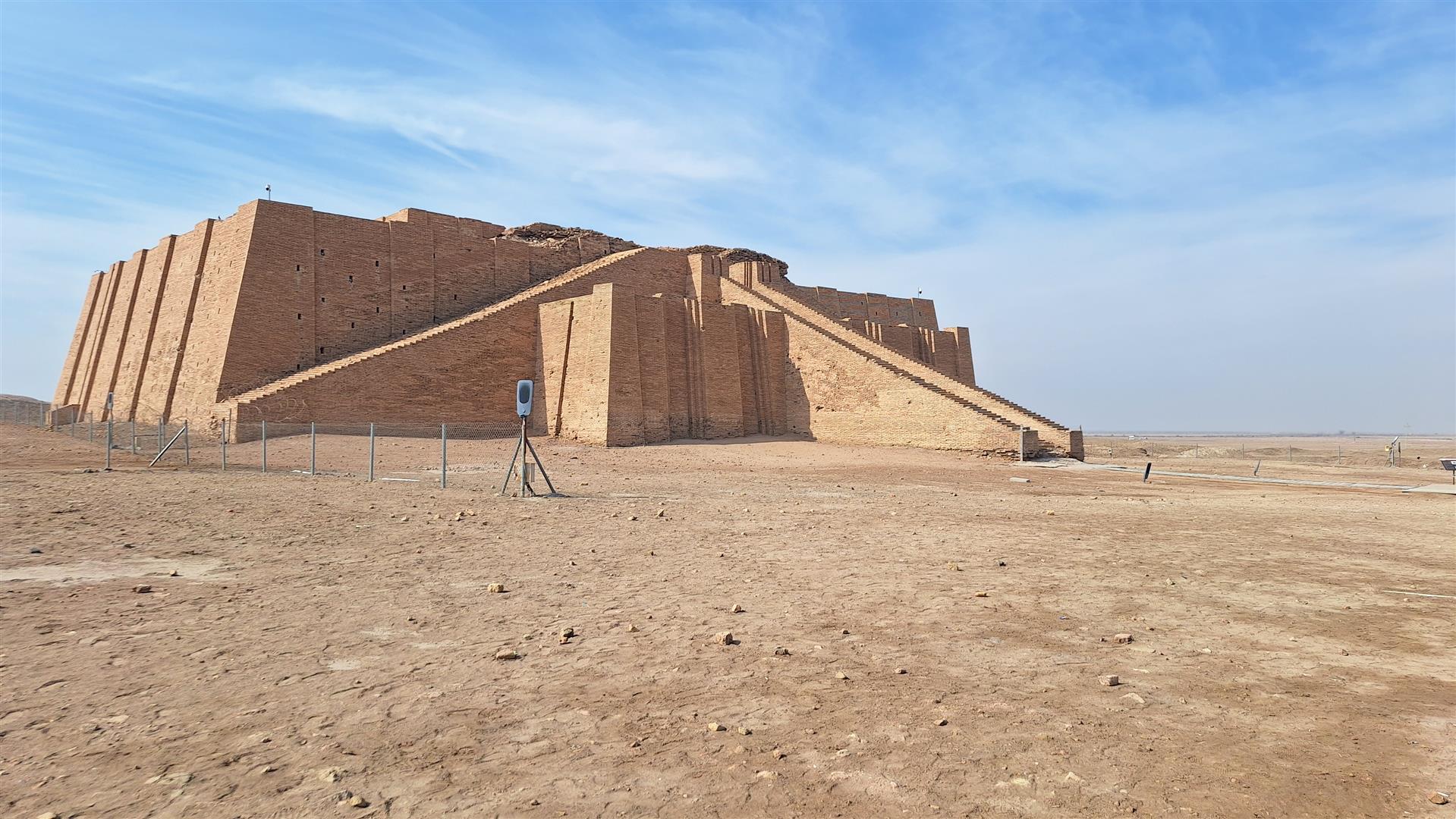
The Ziggurate Temple of Ur.
The Ziggurate (Temple Hill) of Ur is reckoned to be the worlds oldest city. It was first occupied in 5,000 BCE, and the temple I was looking at was started about 3,000 BCE, in the Mesopotamian era. It’s dedicated to their Lunar god.
It was 25K IQD to get in but it was worth it. Entering the temple wasn’t permitted but I wasn’t surprised. It’s built of brick and It wouldn’t take too long for thousands of feet to wreak havoc on such an old and crumbly structure.
They used mortar that contained bitumen, which must have been available in the locality. Some of the bricks and carvings were stamped with the kings name.
The temple was very striking. I’d seen pictures of it in the past but it definitely looked much better close up. And the lower section is in pretty good condition too.
There were the remains of some other buildings but only low level walls etc. It was easy to see how they’d made use of the bitumen. Another area had been a cemetery, with deeply buried remains going back to long before these buildings were erected.

There were the remains of other buildings there too.
The info boards were very good. They showed how the city was laid out and how it had been excavated in the 1920s and 30s by a team led by a British archaeologist. It was a very large site. A fascinating place and worth the fee.
My target now was Najaf. The scenery changed as I rode on, with green fields appearing – a good sight. The roadside areas were still a bit of a mess. Very basic buildings surrounded by rubble, spoil and rubbish. Although there were some good houses too. I was looking for tea but could never see a place that I could be certain of selling it, even when there were actual shops there.

I have no idea what this is meant to represent.
I got pulled in at another checkpoint and was told to park up the bike and come inside the compound. When I went inside there was some weird, but interesting, modelling on display.
A house and garden, with a wishing well. Some odd looking sculptures of stones seeming to pour out of a tube. Once I’d been examined I asked the soldier if I could photo them. He was quite happy to let me and even insisted on taking some with me in them. A real change from the stern attitude of most checkpoints.
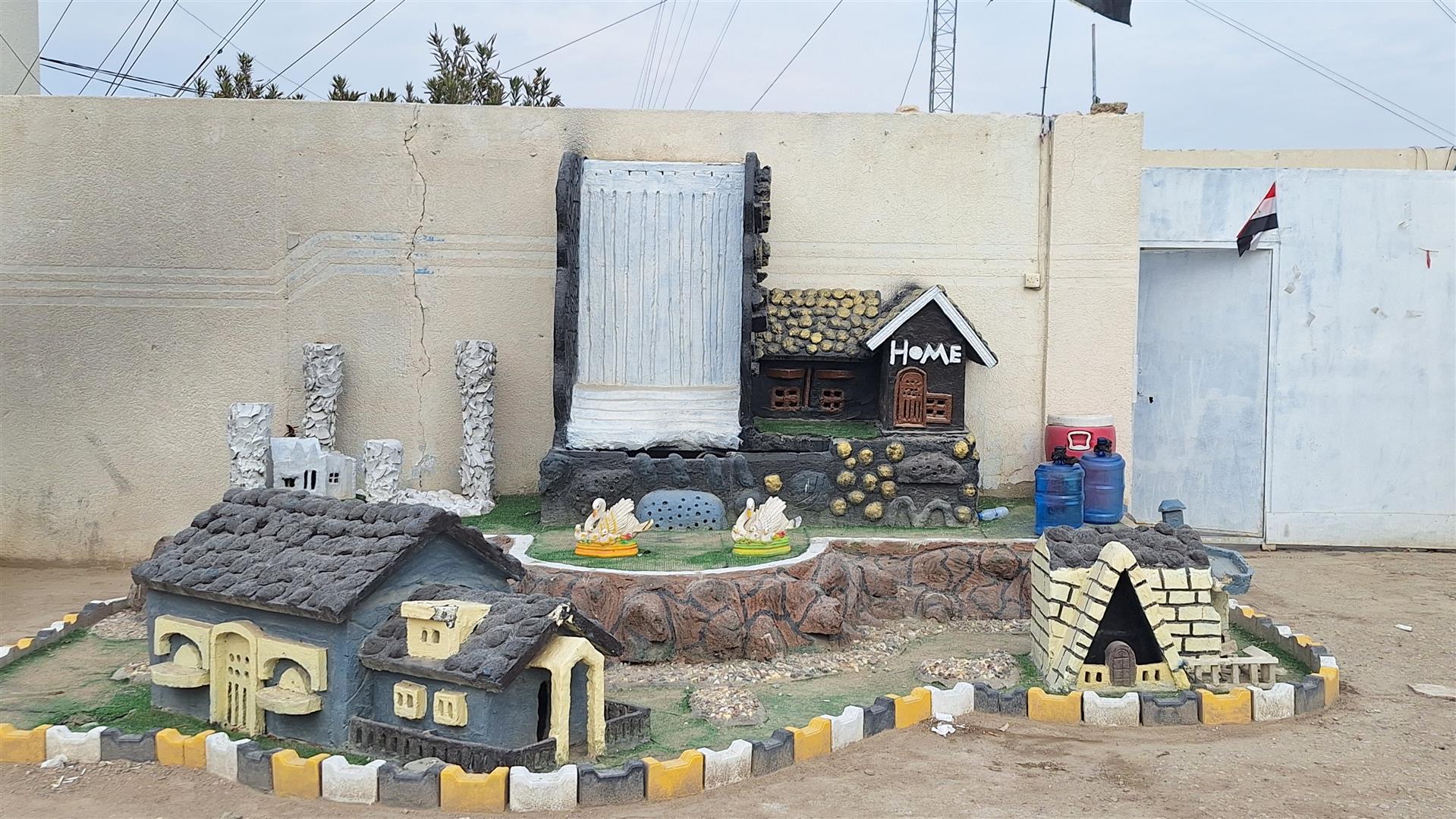
This one was less strange. But why wre they there?
I don’t mean to sound critical of the military at the checkpoints. Iraq is only safe all the time these guys are doing that job. One of the security officers explained to me that they keep a record of me on their system so that were I to go missing they’d have some idea of my most recent location. I couldn’t argue with that.
When I left there I was still looking for somewhere to get tea. Then I saw something happening at the side of the road, just past a check point. I pulled up and found some tables with people handing out food. I stopped and enjoyed some rice porridge with beans in it, followed by tea, which they’d pre-sugared, and biscuits. By not stirring the tea it didn’t become too sweet so I had two. I also had a bit of a laugh with the young lads there. Happy photos before I moved on, although I didn’t ever discover why they were there.
I carried on into Najaf but stopped for fuel just before it. This time what Michael told me held true. The guy told me to wait outside the fence. I told him I wanted fuel and he took 5K off me. For that I got 8 litres, which should really have been 3.6K. I let him get away with the balance. After all, it’s not much. The pump showed 1800 for 4 litres so it’s 450IDK per litre – just over 28p. In Iran that amount of money would have filled the tank.
Once in Najaf, and, with the help of a local, I found a place to park (free) near the mosque and walked round there.

Inside the mosque, where the tombs were. Stunning crystal work.
It was massively busy. It’s a shrine to Imam Ali Ibn Ali Tabid, plus several others, which would account for it. He was the first Shia Imam and was Mohammed’s cousin. It dates from the 7th century, which is when Islam originated. This isn’t the original building and it’s been refurbished many times. This is normal for these mosques.
In Shia legend it’s where Noah lived and where he built the Ark. I hadn’t realised that Islam bought into quite so many old testament myths. It is one of the most important mosques in Shia Islam.
I deposited my boots and went in. No charge, which is normal for mosques. It was very beautiful in the room of tombs. Lots of shiny glass and crystal. Busy as all get out, with a surprising amount of women. People were sitting on carpets in the courtyard as well as walking around. The nearby markets were equally busy.
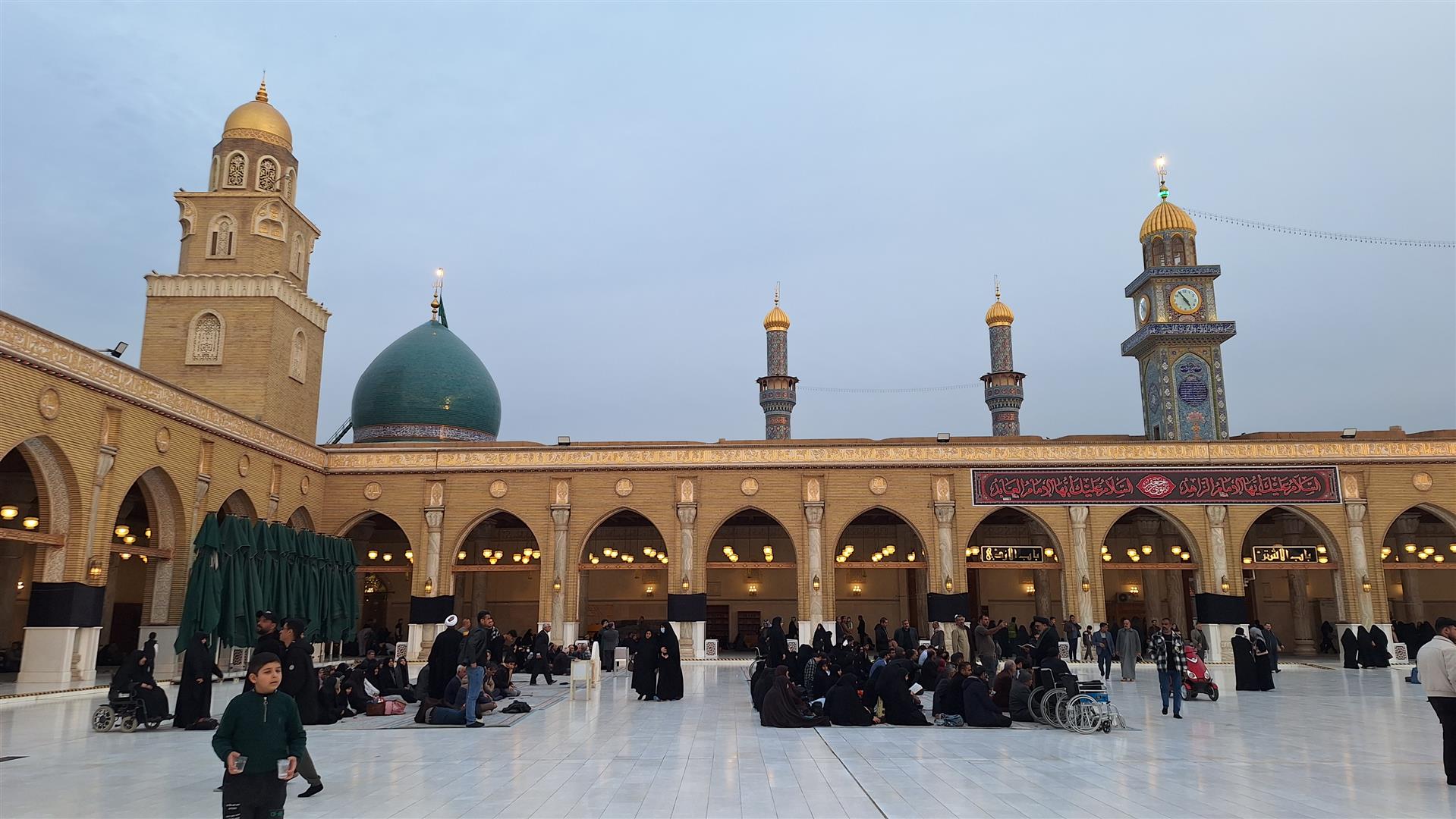
Plenty of people in the grounds of the mosque, waiting for prayers.
After I left there the day turned sour. There was a hotel marked on Google, just round the corner but it was closed. So I went onto the iOverlander app and found a hotel called Golden Star. I pressed the link to the map and it said it was in a town 20kms away. But the write up was so much better than the others that I decided to go there. It was now 6pm.
I couldn’t find the hotel. I asked some locals and they said not here. Have you tried Najaf, there’s lots of hotels there. Grrrrrrrrrr! I did a bit more searching on the map and finally pinned down the location. Between Google and Waze, another mapping app, I got myself there.
I talked the room price down from 30K to 25K, which made me feel a bit better. The room is nice enough but I couldn’t get the AC unit to throw out any heat. And the TV remotes didn’t work. I couldn’t get better than tepid water out of the tap. But I managed to get clean anyway.
I was down to my last 25K note so, knowing that the food shops probably wouldn’t be able to change it, I asked the desk jockey for some small notes. Nope! He just indicated I should go out and around the corner. I left there, cursing him for his unhelpfulness. But he was right. I went into a shop and asked the young guy there for change and he gave me some.
I bought a chicken dish, which was served on bread but didn’t look as good as the picture. Does any food ever? I took it back to my room and it was nice enough. The hotel has hot and cold water dispensers and they provide a thermos flask, so I was able to make some coffee.
Almost all women I saw today were wearing a chador. I suppose it wasn’t a surprise in this town, given what’s here. Many of the men were wearing thawbs, which is an ankle length robe, straight up and down, with long sleeves. A keffiya would often accompany it. Even young boys were wearing thawbs.
They’d also be carrying rosary beads, usually called a Subha. Every bead moved counted as a prayer, helping to meet a believer’s daily obligation. It reminded me of the Pakistani Shalwar Kameez in the way that it’s a catch all style of dress. Around the mosque dark clothing was the norm.
Now I’ve travelled a bit I’m finding drivers are much better than in Iran. More prepared to give you space. They don’t seem to be in such a hurry. Roundabouts are just as chaotic tho. People in positions of power can be quite abrupt, although they’ll usually relax after a while. Or maybe it’s just my charm!

Street art.
By the end of the day I was feeling very negative about Iraq. But I’m almost certainly being unfair. The country is, after all, still coming out of a long period of instability and war. But I could see why Iranians didn’t like to be thought of as Arabs. I wonder what the feeling was in the other direction?
I decided to stay another day. The hassle of trying to find hotels gets a bit much and the places I wanted to see in Hallah were only about one and a half hours ride away.
Breakfast was just about OK. They had some scrambled egg mixed with tomato, plus the nice bread pouches that are common in Iraq. So it was good enough. I took a boiled egg for lunch.
I told the desk that I wanted to stay but that I needed money to pay. I walked down to a nearby currency exchange. I think it was part of a bank. She couldn’t change up my dollars and my Starling debit card wouldn’t work.
Neither of my cards would work in a nearby ATM. No communication with my bank, the machine said. So there was obviously a problem between the two countries at that moment, or in that part of Iraq, at least.
A half hour walk, on a lovely sunny morning, brought me to another exchange shop. He was quite happy to take my dollars and gave me a rate of 1,500 Dinar per USD. This was the exchange rate mentioned in the WhatsApp group. I changed up $200 so I was pretty flush with cash.
When I arrived back at the hotel I told them I needed a heater for the room and that the TV remotes didn’t work.
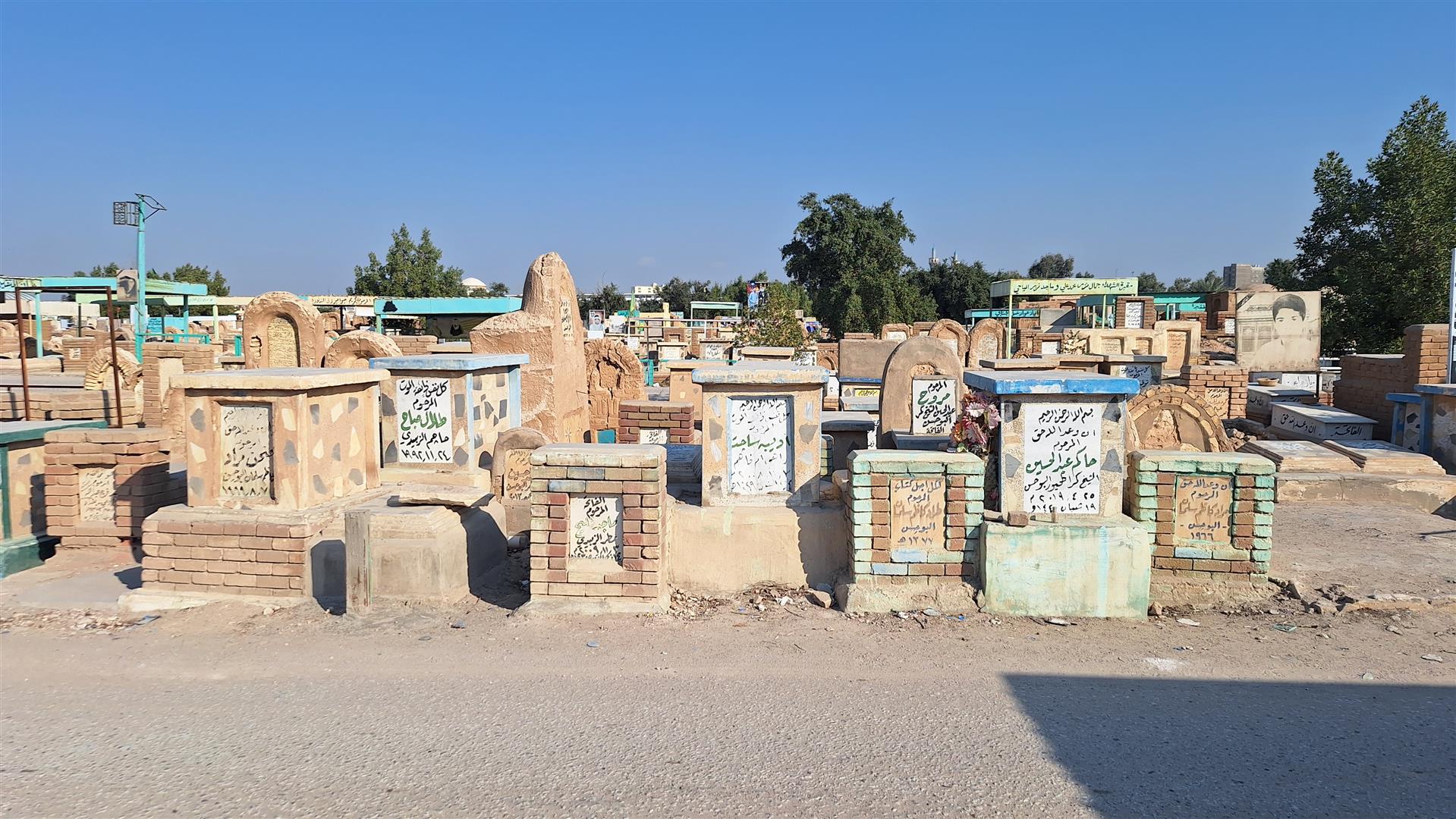
Six million people interred here.
I walked up to the Wadi Al-Salaam cemetery. Reckoned to be the largest in the world, it holds 6 million graves across six square kilometres. Many are in 50 person catacombs. I walked around and took some photos. I walked past a young man who gave me some cakes. An older couple tried to give me some fruit. I guessed it was part of an obligation to do this kind of thing during a visit. Pilgrims visit as well as relatives. It’s a much desired place to be interred, especially given that it’s also Imam Ali ibn Abi Talib’s burial place.
The nearby area seemed to have a lot of damaged buildings, looking to have been shelled or bombed.
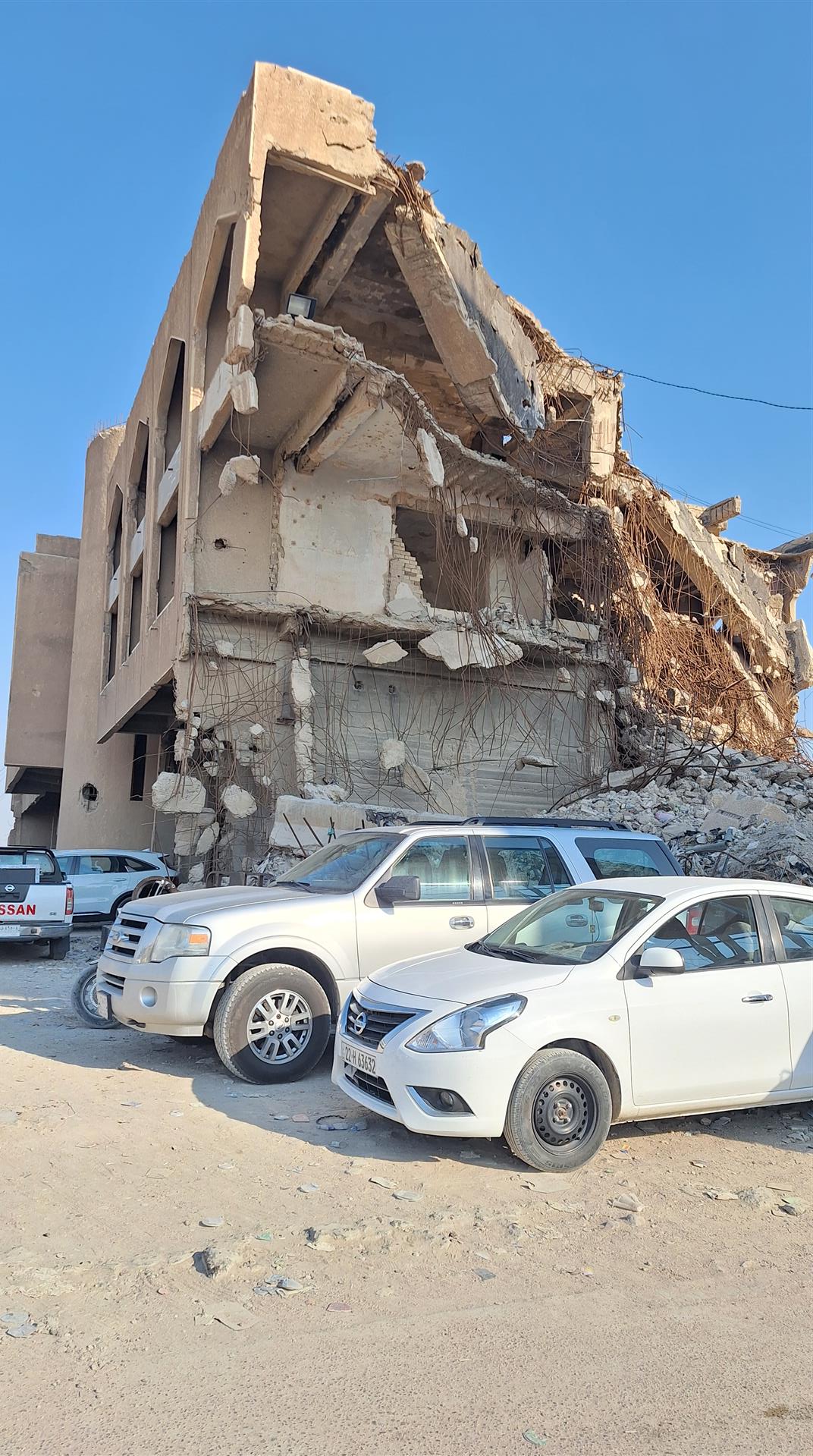
Bombed or shelled. This wasn’t an unusual sight in Najaf.
I walked out of there, back towards the hotel. I came to a small park and sat down for a while. It was weird to see people around the area with weighing machines, letting people use them for a small payment.
I walked down to the bazaar area and bought some mixed nuts. The shop owner was getting told off by a policeman for letting some of his goods block the pathway. As I left I said to him, “Pain in the arse!”. He smiled back at me, clearly having understood what I meant. At the end of the bazaar was a big mosque, another one dedicated to a martyr. I went in but didn’t stay for long.
Back at the hotel I chased them about the heater. A guy came up and made the AC unit run warm. He took the non working remotes away. But I had to go back down and chase them up to bring one that worked. But now I can select what to watch.

A copy of the original Najaf Gate, Babylon.
Next morning was a bit chilly so I didn’t rush. I had a straightforward run to Babylon, apart from some heavy traffic going round Hallah. At the entrance gate my passport was copied and I paid the expected 25K entry fee. I parked up by the Ishtar Gate and went in. The gate is a model. The original sits in a museum in Berlin. I looked in the onsite museum. Not a lot in there, just some old drawings of how Babylon used to look (presumed), and a few artifacts.
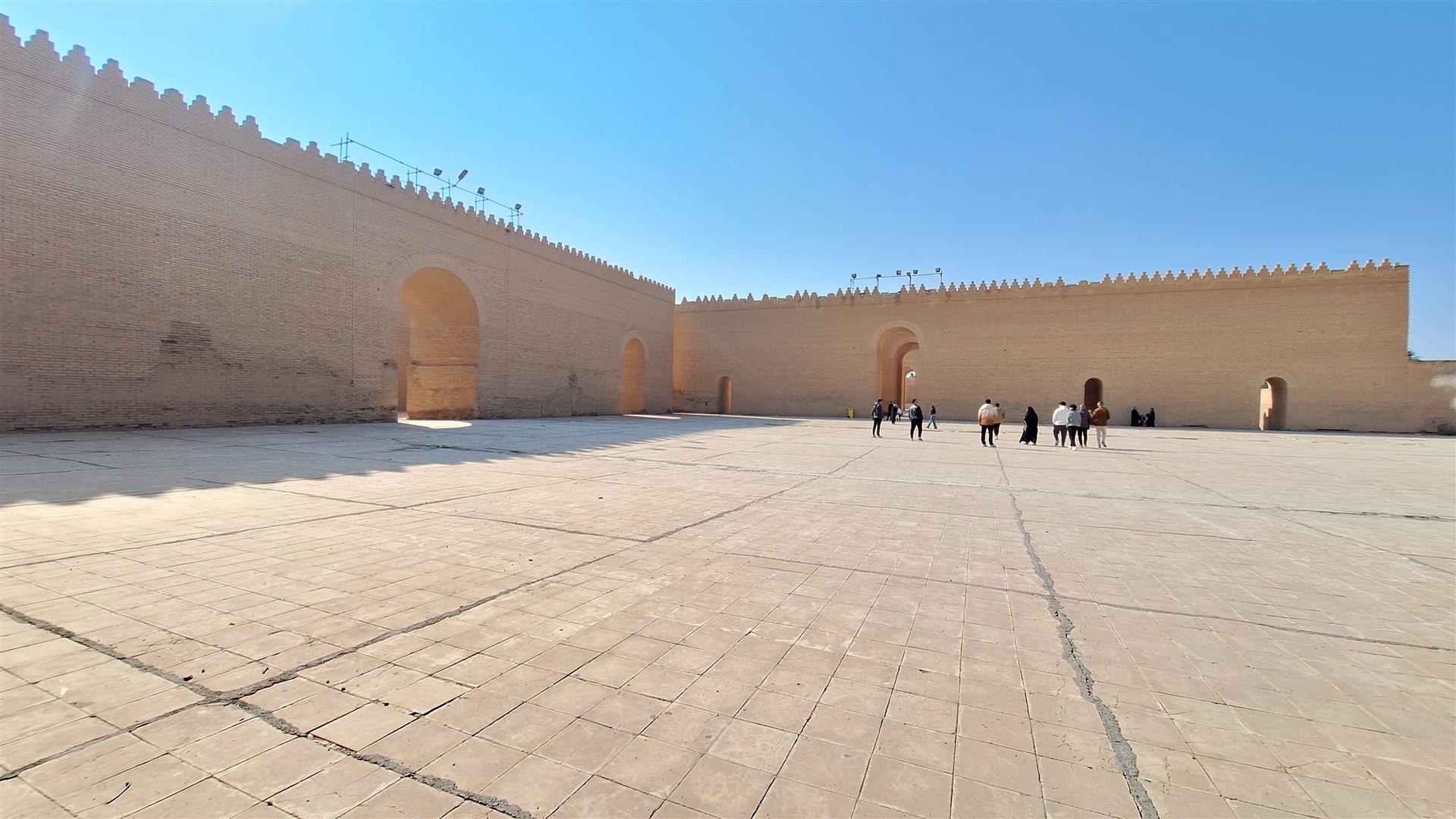
The Babylonians knew how to build a wall!
The walls around the city are massive. They’re not original but it’s hard to pin down when they were originally built. It seems that Saddam Hussain rebuilt them, as well as building himself a palace on top of a nearby hill, sitting on top of some ancient ruins.
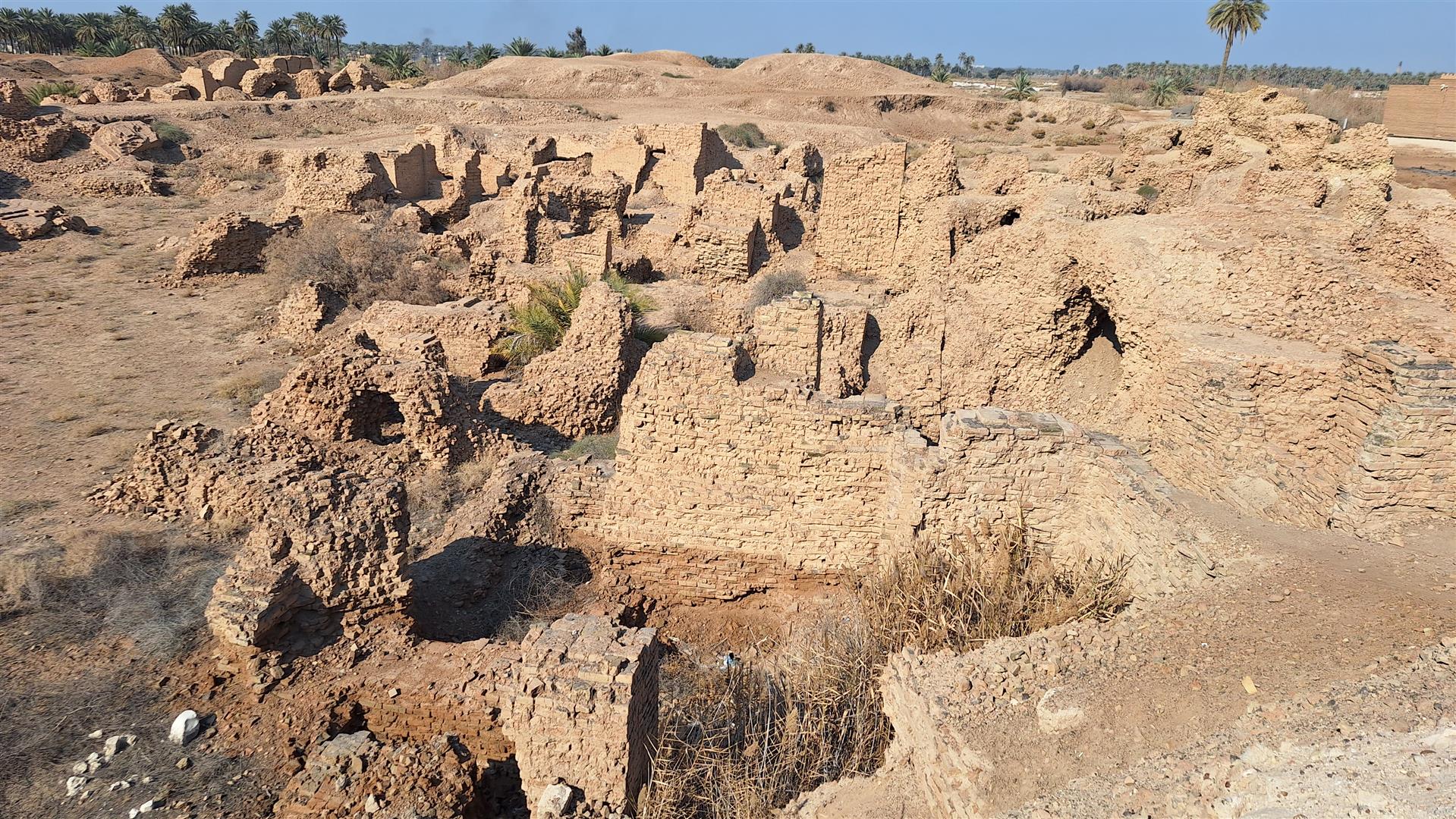
Reckoned to be the remains of the Hanging Gardens of Babylon.
I had a walk around the whole site. The only original buildings there is an area of ruins which are believed to be the Hanging Gardens. A few of the bricks have marks on them which could be hieroglyphics. It was impossible to know. But an interesting place to see, even if it may not even represent how it actually was.

Possibly hyrogliphics.
I rode around to what I thought was an old tower but turned out to be a nicely laid out garden with Saddam Hussain’s palace in the middle. That was closed but there was a place where I could get a coffee. So I did just that and ate my lunch too.

Saddam’s house-on-a-hill.
I chose a hotel in Hallah from the map but when I got there it was closed. So I found another place at 40K. A reasonable room but generally quite tatty. I had to organise a remote for the TV again and a remote for the AC, which is nice and warm.
I walked out and found a place that sold roasted chicken with rice. That made a nice change.
I was moving on the next morning. Basra had been a fascinating place to visit. It had clearly suffered hugely during the Iraq War. There is much rebuilding work still to be done. The other towns less so, but the effects were still evident.
A greater effect on the visitor is that of the general deterioration in service infrastructure and standards. By that I mean hotels, inability to use debit cards and so on. There’s plenty of catching up to do in that regard. I’m not really moaning, just observing.
The security situation seems OK but sometimes it gets very annoying. But it keeps me safe so I shouldn’t complain really.
The next city to visit was Baghdad.
 MOTOPANGAEA