
Chebonet, Uganda. 15th August 2025.
When British people of my age hear the name Uganda, we tend to remember the 1971 military coup by Idi Amin and the subsequent ejection of tens of thousands of Ugandan Asians in 1972. Between 27 and 28,000 British passport holders were welcomed into the UK, almost all of Indian origin.
Amin was ejected in 1979, leaving a legacy of extra judicial murder, torture and oppression. Roll the clock forward forty years and Uganda is in much better shape although it remains one of Africa’s poorest countries. Its politics is still corrupt as is its financial management.
But what impact did that have on me? Not very much really. Water mostly came out of the taps wherever I stayed or ate and electricity was theoretically supplied although not always all the time. On a fair few occasions I was very pleased to have available the torch function on my phone.
Border posts are often a place where corruption pops up. But not this time. I’d had a good ride up there, mostly on quiet and good quality roads. I’d stopped at a fuel station and used up all my Kenyan shillings. Oddly, despite showing the pump jockey that I only had 1250/- he put 1325/- into the tank. And didn’t seem fussed about wanting the extra. Not that the difference amounted to much.
At the border things went very well. The Kenyan side was undergoing a lot of upgrading. I had to hunt around for the offices. I got stamped out. Then upstairs to customs and the Carnet was stamped out too.
On the Ugandan side it was just as easy. The immigration officer asked me how long I was likely to stay. I said 2-3 weeks so she gave me a one month period. She took my photo and that was that.
A money changer was hanging around but he could only deal with Kenyan and Ugandan shillings, not dollars. He reckoned customs would want shillings.
Over to customs. He asked me if I’d paid any money online. I said no and that I’d read that I’d be able to pay any fees to him. I told him I only had a bank card or USD. He said to sit down and made a phone call. Then he stamped my Carnet and said TTFN. I asked if I needed any paperwork and he said no, I’ve cleared you. Chatter on the WhatsApp groups had mentioned the need to pay three months road tax – $60. But nothing was mentioned and I later learned that didn’t apply to bikes.
The money guy said I needed to go over for a health check. They just took my details and my temperature.
I went to the exit gate but that wasn’t in use. Instead I went out of the Reject Gate, the first time I’d ever seen one of those. But it led me onto the road outside anyway. Very odd. I had enough phone connectivity to plan the route to the nearest MTN phone shop, and off I went.
The shop was in the town of Bukwo. Google didn’t have the location right but I spotted it at the side of the road. And then the fun began.
He sorted me out a SIM card, with 10GB of data, but wasn’t able to accept USD. He sent me across the road to a Post Bank outlet but they couldn’t supply cash nor exchange the dollars.
After lots of chat back and forth, with the guy saying he couldn’t personally accept USD because there was nowhere close by to change them, a woman from Kenya who was buying a SIM gave me KES for the dollars, which the shop could accept. Finally!
I carried on to the town of Kapchorwa, a reasonably big place. I found a Post Bank but the ATM wouldn’t accept my cards. Nor would they exchange USD unless I was a customer.
The security guard rang a money changer and I followed him down to his shop. That happened to be next to a different bank but that ATM wouldn’t accept my cards either. So I had to accept a lousy exchange rate of 3,300 Ugandan shillings per USD. It should be 3.500.
But finally I had some cash and headed out to Florence Guesthouse, where I’d booked a room for a couple of nights.
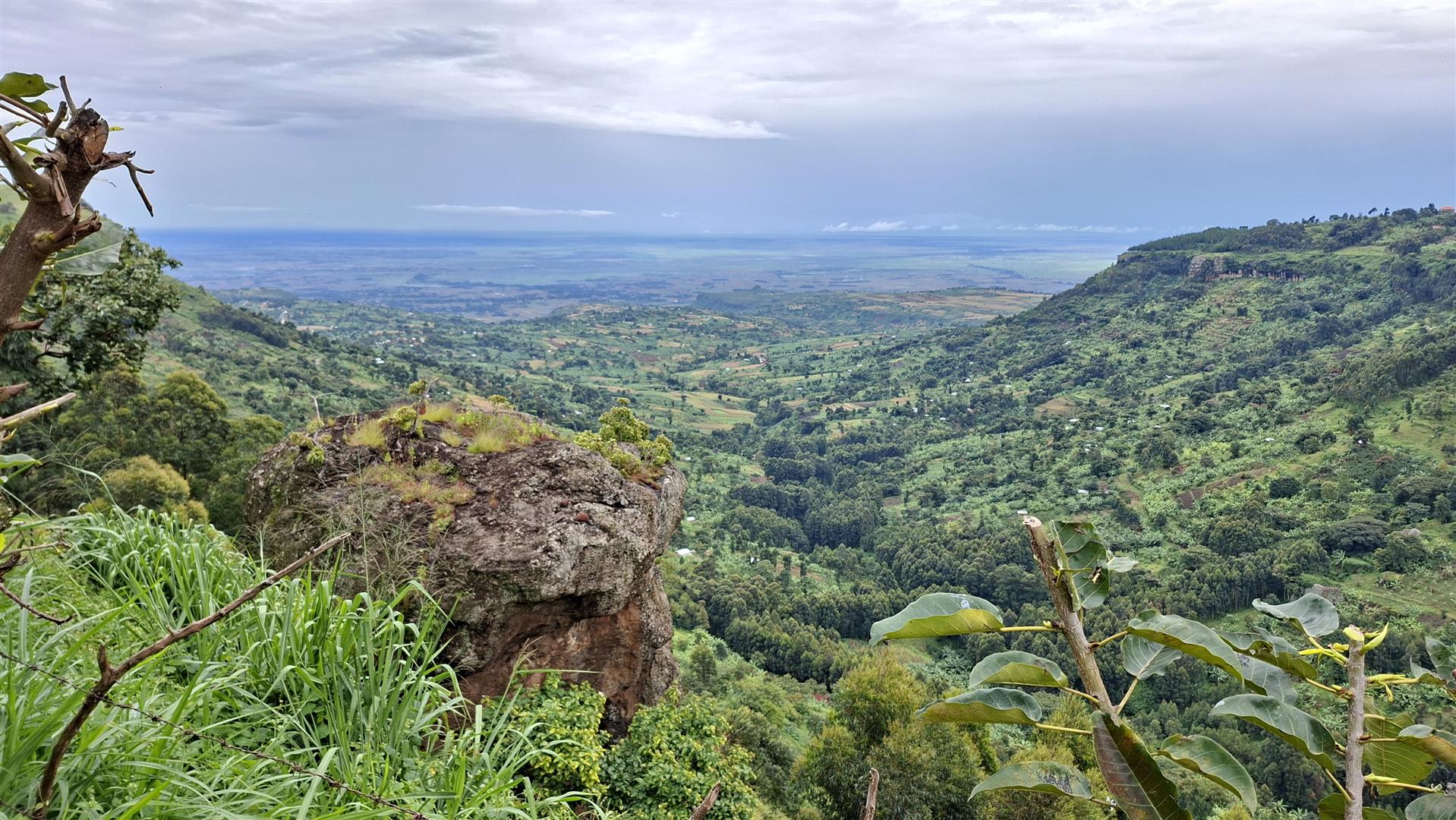
The view out over the valley from the guest house.
It was a bit of a makeshift place. The room I was in had only just come into use and had no hot water. The area had almost no electricity since the local transformer got hit by lighting. There was a generator down in the restaurant, but that was it. I dug out my headtorch!
When I went down there for food they turned the generator on so I was able to charge up my earphones and phone, but didn’t quite get a full charge on the laptop. The young guy who ran the place, Francis, was friendly and we agreed that I’d do a trip to Sipi Falls next day. He said it was a 4 hour hike or we could go on a bike. I chose the bike.
My plan for the next day was to visit Sipi Falls. But night time provided biblical amounts of rain, heavier than I remembered experiencing anywhere. So the trip to the falls looked like it wasn’t going to happen. However, Francis came round at midday, the rain having stopped, and said we ought to go while it was dry. He was worried the weather might change.
The problem was that he’d assumed we’d go on my bike. Ah, no. I had to disabuse him of that idea. I had no rear footrests and not really enough room for a passenger. He said he could rent a bike for 10k so he went off to get it.
It was a little Bajaj 150 (Indian) which was totally gutless. But it got us down the hill to the turning off to the falls. The track was OK but had the potential to be slippery. I was quite glad I wasn’t on my bike, with luggage and a passenger.
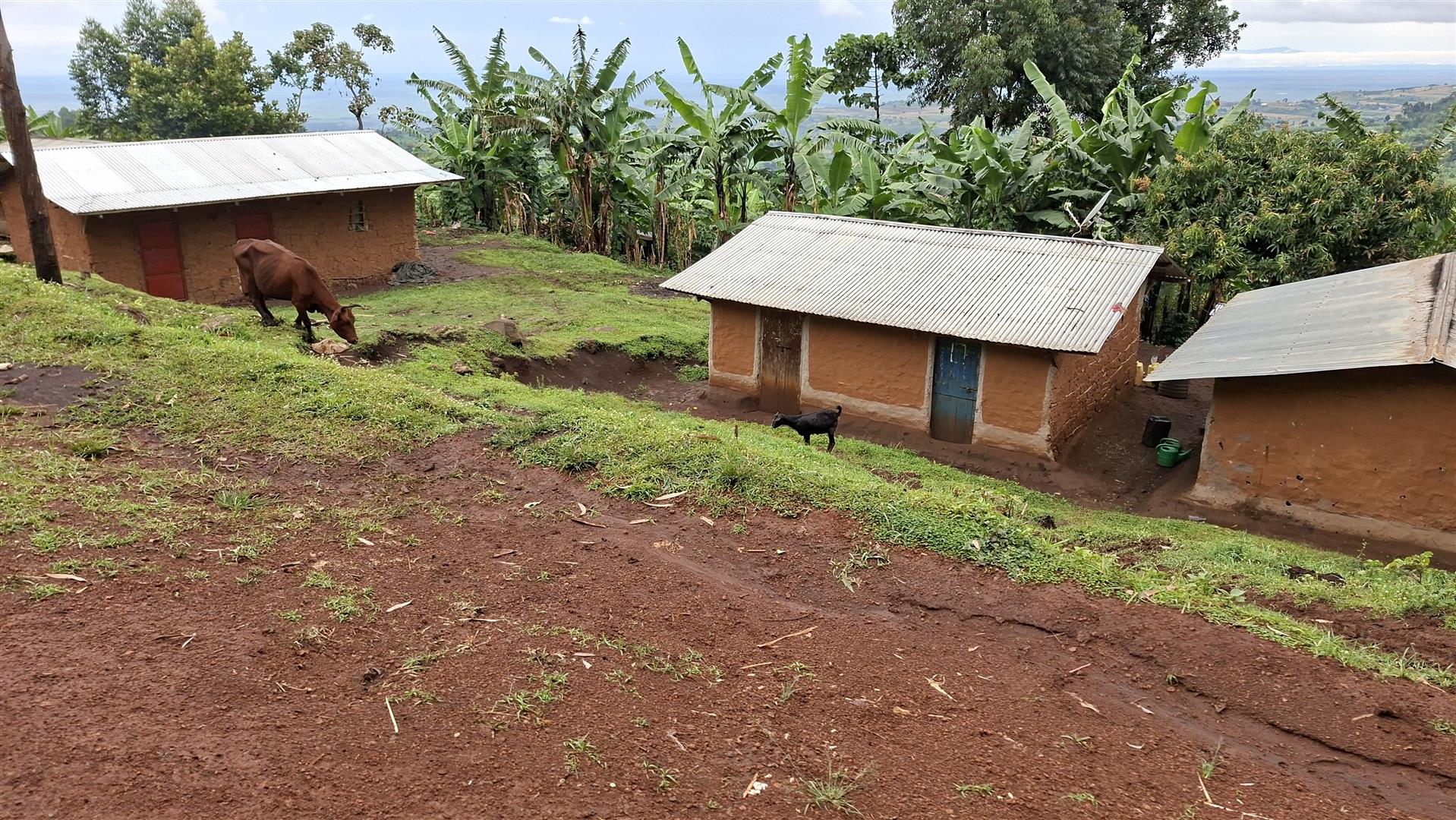
Quite good quality houses but no electricity except for Photo Voltaic.
We passed through several collections of houses. He said they didn’t have electricity but had small solar PV systems to operate lights and charge a phone.
At the entrance we walked up and along a path which had marram on it to aid footing. It worked out OK. The first part was steep and had me puffing a bit, but I was OK.
The falls looked great. A straight drop of 100 metres into a pool. There were people abseiling down alongside it too. It was very good.
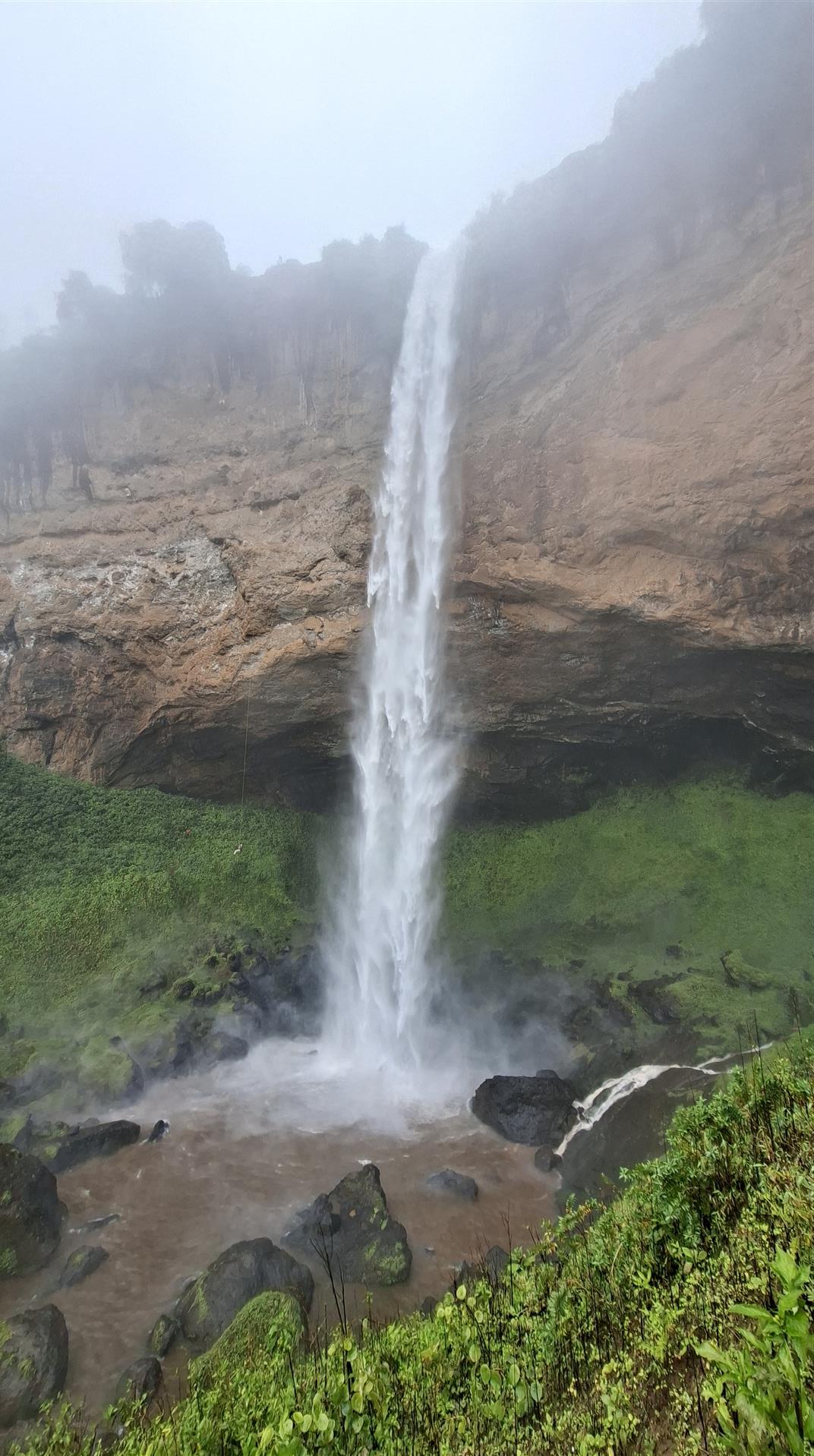
Sipi Falls 1. About 100 metres straight down.
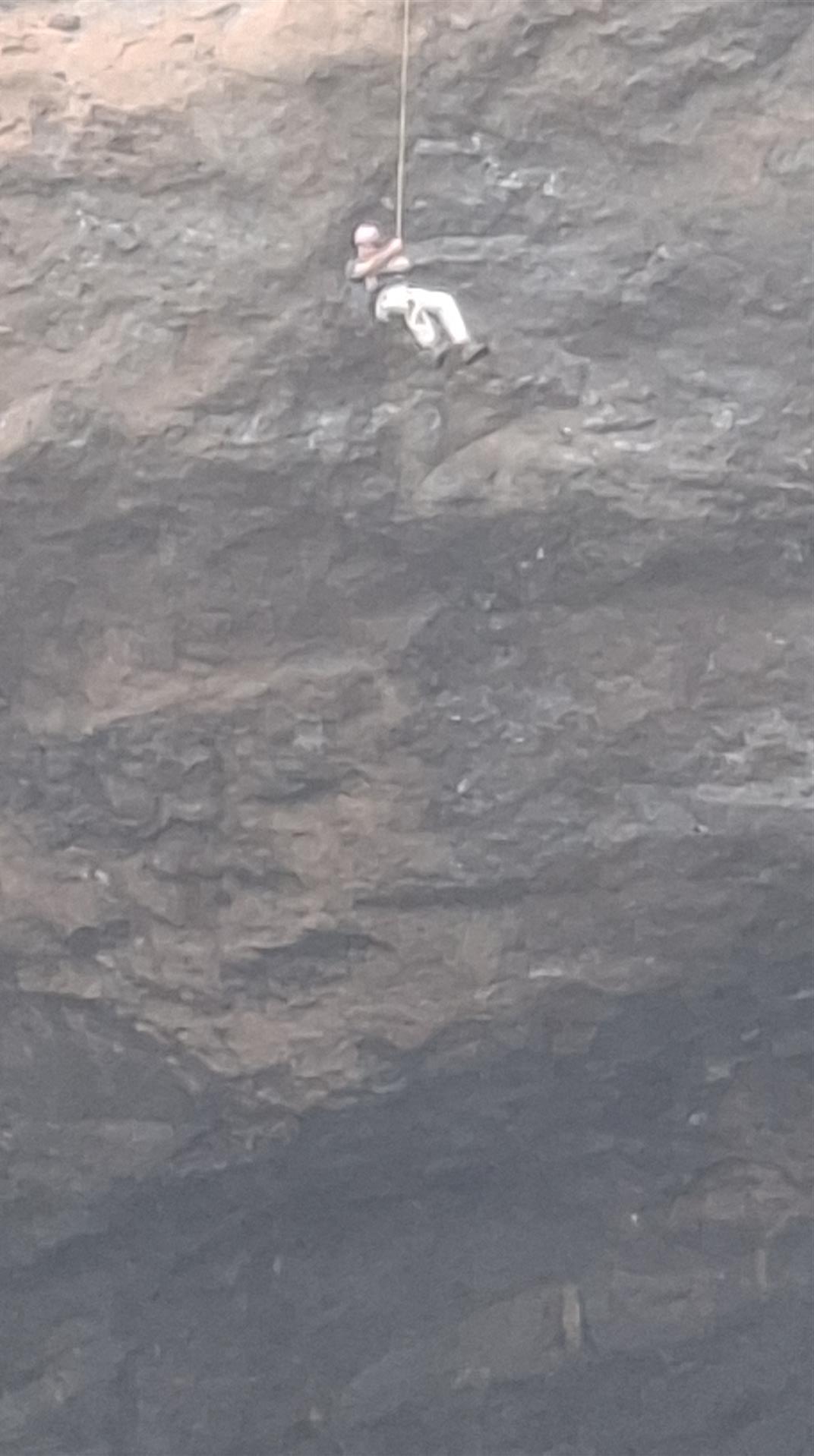
Dope on a rope.
One thing I’d noticed was that coffee plants and banana plants tended to be placed alongside each other. Francis explained that the banana plants absorb and store a lot of water which thay then supply to the coffee plants in the dry season. A nicely symbiotic relationship.
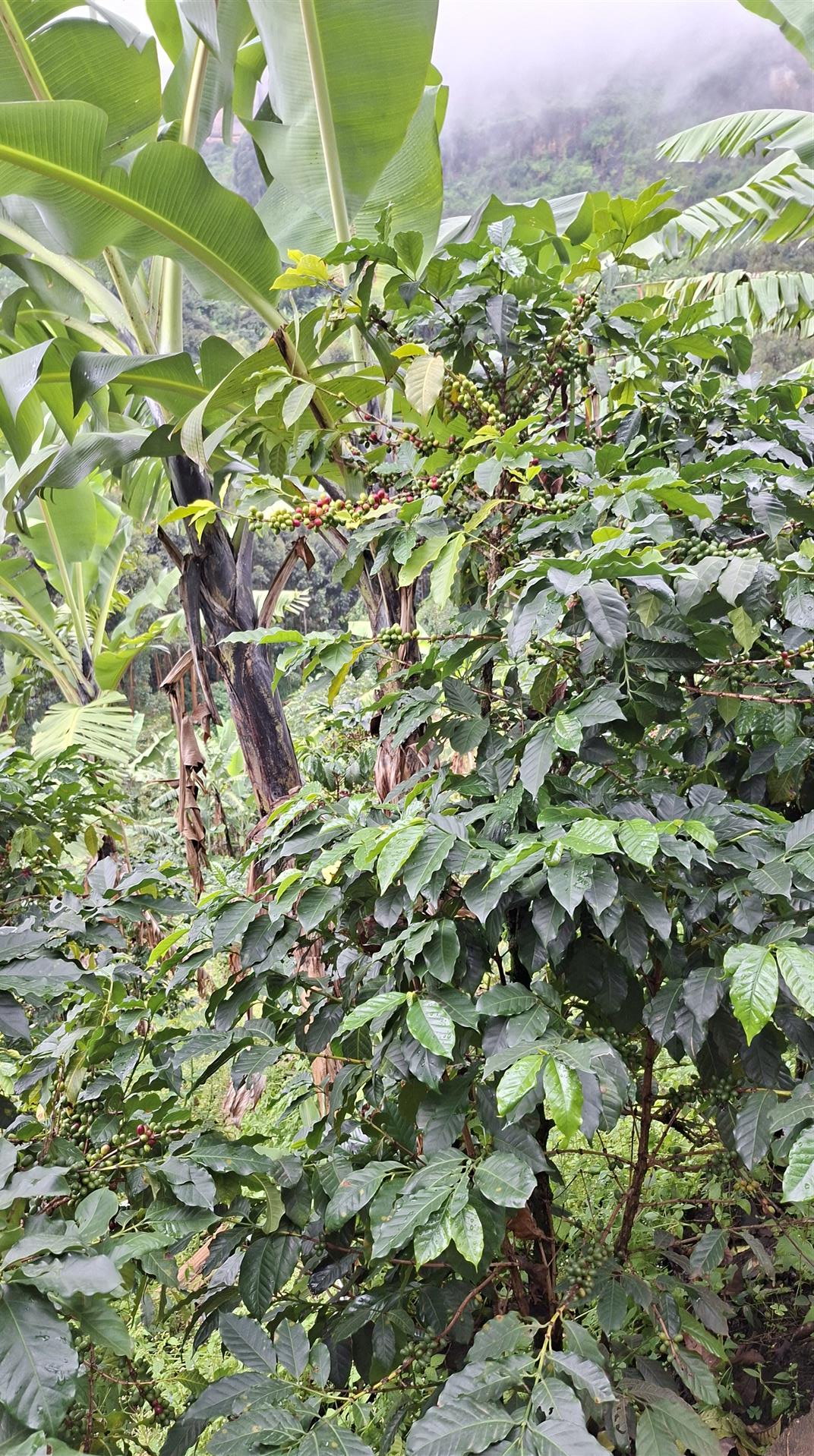
Coffee and banana plants, working together.
We rode back to the main road then went to No.2 falls. The path there was a different kettle of fish. Steep and slippery. I was given a stick to steady myself and it was needed in some places. But I trod carefully and made it there OK.
These falls were wider and more dispersed across the cliff, but partially obscured by trees. There was a big cave alongside too, although I couldn’t get into it. Another group was also there.
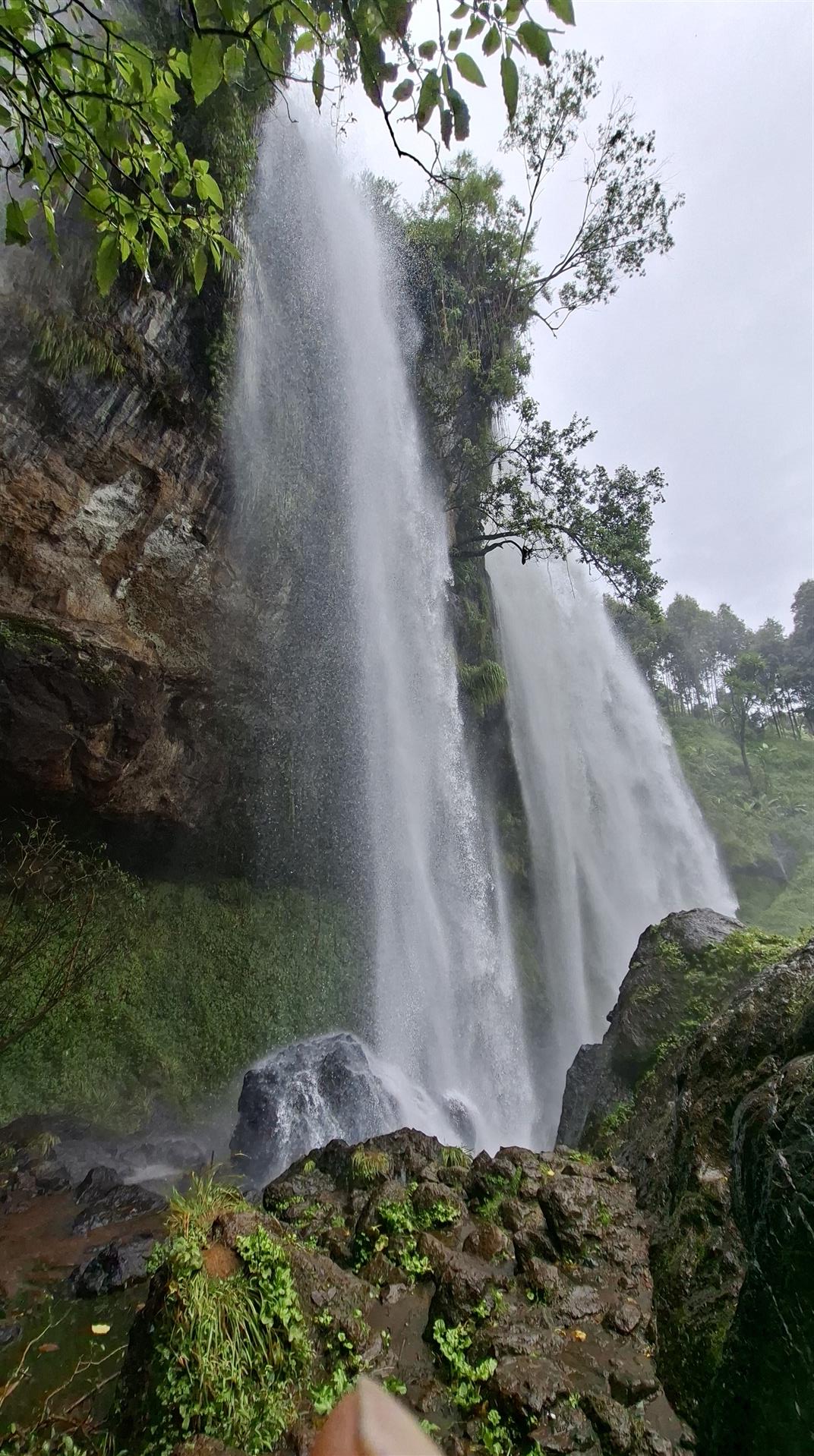
Sipi Falls 2. Shorter but wider.
It had been a very good trip out and I had some nice chats with Francis on the way, about life in Uganda. He’s 26 and is saving up to go to university to do Business Studies. He has a website which I promised him would be mentioned in the blog. sipifallsug.com, about Sipi Falls, Mount Elgon, which we were on the side of, and the activities available there.
I was actually able to see the falls from the hotel garden if I leant out a bit. But the best thing was the superb view, right out across a series of valleys and ridges, going down the side of the mountain.
I noticed a few vehicles that had Kenyan plates on them. Francis said that it was easy to import them. A fee has to be paid, but that’s all it takes.
Later, the power was on so I was able to get everything charged up in the restaurant. When I went to bed there was a Saturday night disco in full swing. But I still nodded off OK.
Next day I didn’t leave until midday. No special reason, just procrastination really. I booked a hotel in the town of Lira and had a very pleasant ride there. A very good road all the way apart from one typical Google shortcut along a dirt road. It was nice and dry. It took me through several villages, which all had an electricity supply.

Typical Ugandan dirt road. I was going to be getting used to these.
On the main road the traffic was very quiet. Some cars, loads of bikes but very few trucks. Sunday? The next day may be different.
Cars expect you to move out of their way for overtaking but it’s not as aggressive as Kenya. Roadside vegetation was much the same as yesterday. Corn and bananas.
A new thing to see was the amount of rondavels (round houses), in small collections of 5 – 10. They had thatched roofs but were brick built, sitting in among the farmed fields.
I passed through small towns which were shabby and busy. At one point I was looking for coffee but it was hard to identify anywhere. Fuel stops were cash only and a bit under £1 per litre.
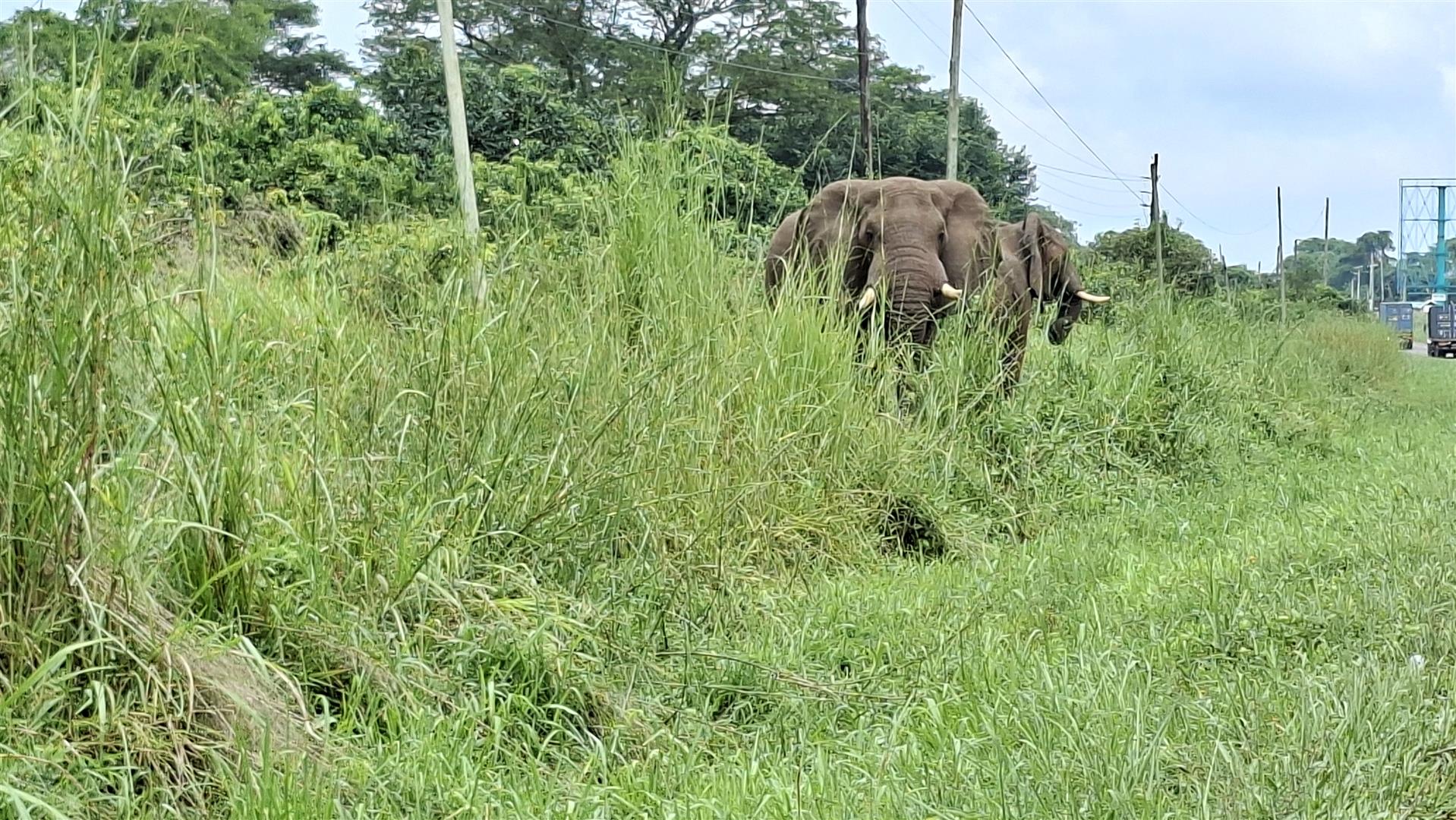
I spotted these two ‘hiding’ in the bushes.
At one point I stopped for a break. Three young girls walked past on the other side of the road. About thirteen I’d guess. I noticed how tall and slim they were. Almost all the women I’d seen had short, fuzzy hair and were mostly the same.
When I got to Lira I went to the hotel but it was closed, according to the armed guard at the gate. I asked if there was anyone there and he said not. He said something about everyone working at the stadium, which seemed to be quite near. My guess is that it had been block booked. That was really annoying because booking.com had allowed me to book a room. I did get it cancelled though.
I went to a hotel that I’d nearly booked that morning. They had a room at 120,000. That was £25 including breakfast. Booking.com were quoting £33. Naughty! That was a lesson to bear in mind. In future I’d use Booking for research but go to the hotel direct.
In the morning I found an ATM which would accept my card but charged me £5 for the privilege. It also limited me to 100,000/- about £22. Nowhere near enough but at least I knew that my bank card would work.
I headed off to the town of Misindi but found some rain on the way. But I quickly came across a café so I pulled in. I bumped into an elderly European couple in there, Mike – German. And Doris – Swiss.
I commented that they weren’t very German names. They said the live in Uganda, thereby suggesting they adopted more local nomenclature. I asked what they did and they said they were missionaries. I commented that a Christian country like Uganda shouldn’t really need them but they said they’re teaching people how to live better by the bible.
They reckoned it can teach them how to behave and to know the future. And also teach them the history of the past. I said it could only teach them about the Levant and the world was much bigger than that.
I told them about my travels, of course, and they were very interested. When they left Mike gave me a card. Jehova’s Witnesses! They hadn’t tried to convert me and I hadn’t challenged them at all, as I sometimes do with people like that. We’d had a nice conversation and I was happy about that.
I pushed on to Misindi and found the hotel I’d identified on Booking, which had looked OK. And it was.
Booking had said 144,000/- with breakfast. I paid 104,000 without. With breakfast it would have been 130,000. The room was OK and had a balcony. I left my wet gear out there to dry.
Later on I went out to get some food. I went to a place on the opposite corner and had a lousy meal. I asked for chicken stew, which arrived as a leg of chicken in a bowl of soup, along with potato, rice and unlungi (maize). The chicken had no meat, just a bone covered in skin. Dreadful. That place wasn’t visited again!
A very good day followed. I went round the corner, to a bakery I’d seen on the map, to get breakfast. There was a European woman sitting outside and I said Hello. When I’d ordered my food I sat at her table.

Maja, from Poland. Travelling on her Suzuki DR650 and heading for Ethiopa.
I asked her how come she was there and she said she was travelling on her bike. Well! I expressed my surprise and told her I was doing the same. It turned out she’s Maja, off one of the WhatsApp groups. I recognised her name and she recognised mine too. She’s from Warsaw.
So we had a good chat. She’s riding a Suzuki DR650, an excellent travel bike, and is heading to Ethiopia. I’d decided not to go there because of the restriction to entry and the time and cost of overcoming them. She agreed with but wanted to go there anyway. She’d pretty much finished her meal so had to get away. We wished each other well.
My main reason for staying in Misindi was to visit Murchison Falls and see the Nile River hurl itself down a forty metre drop. It was a very good ride up to Murchison National Park. It was only about 30kms to the entrance, where they relieved me of $75! I suppose I wasn’t all that surprised really.
Then the journey up to the falls, which was a mostly straight and long ride through thick forest. There were plenty of monkeys alongside the road but no other animals. I took the indicated right turn and had a much nicer ride, with some great downhill bends on the approach to the falls. Huge piles of elephant dung were on the road but no elephants to be seen, sadly.
When I got there a guy asked me for the ticket, so I showed him my entry ticket to the park. He said I should have stopped at a booth just by the junction and paid an extra $10. I told him I hadn’t seen the booth (true) and he said not to worry.
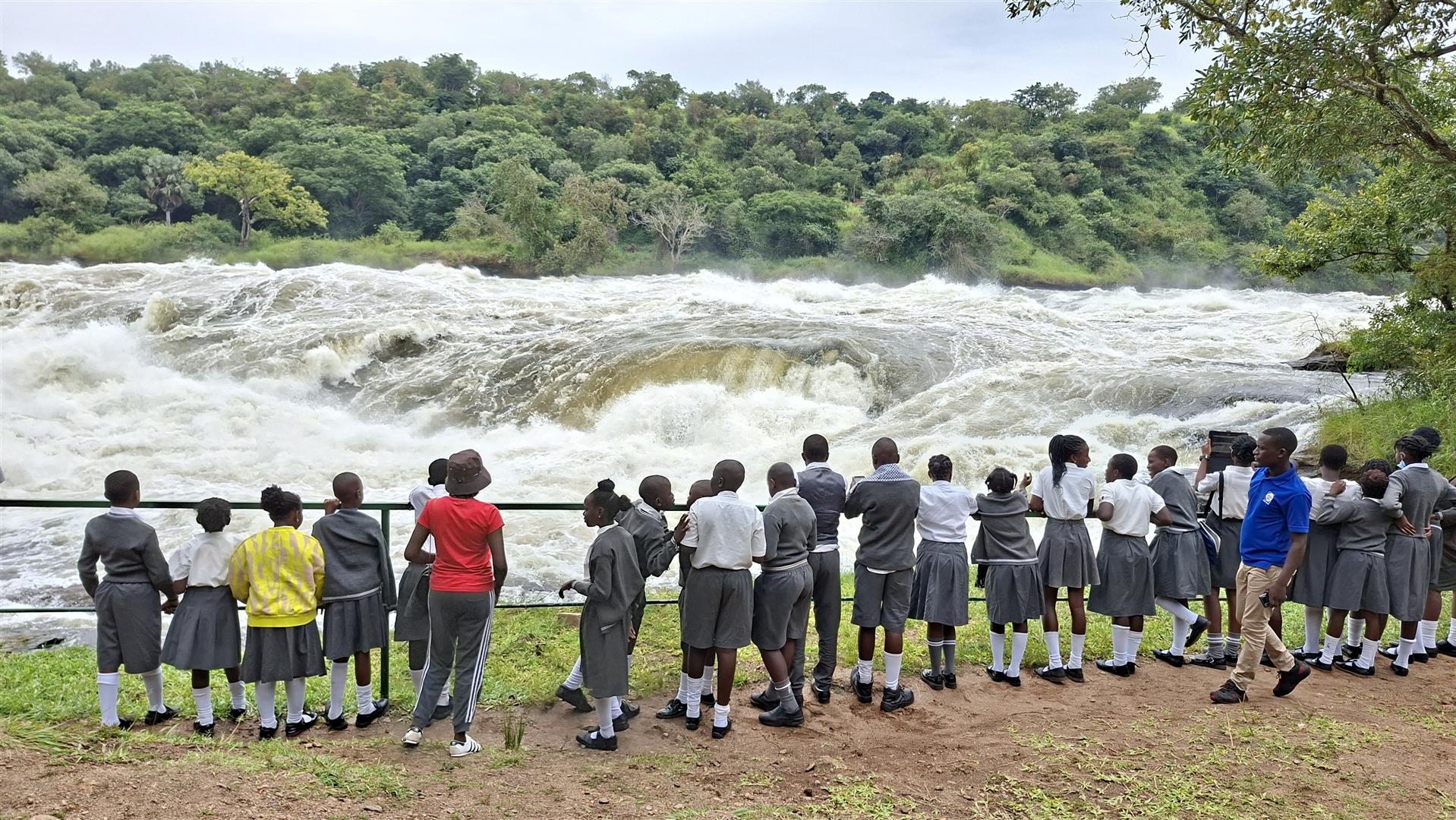
These kids were impressed by the amount of water. So was I.
The falls were phenomenal! The amount of water that comes down the Victoria Nile River is unbelievable. Then it’s all forced through a 7 metre wide gap. Then the water disappeared along a narrow gulch, and on towards Egypt. There was a lot of spray in the air, making life a bit damp. And it was very noisy too. Watching that kind of natural feature makes you feel very inconsequential, and rather temporary too.
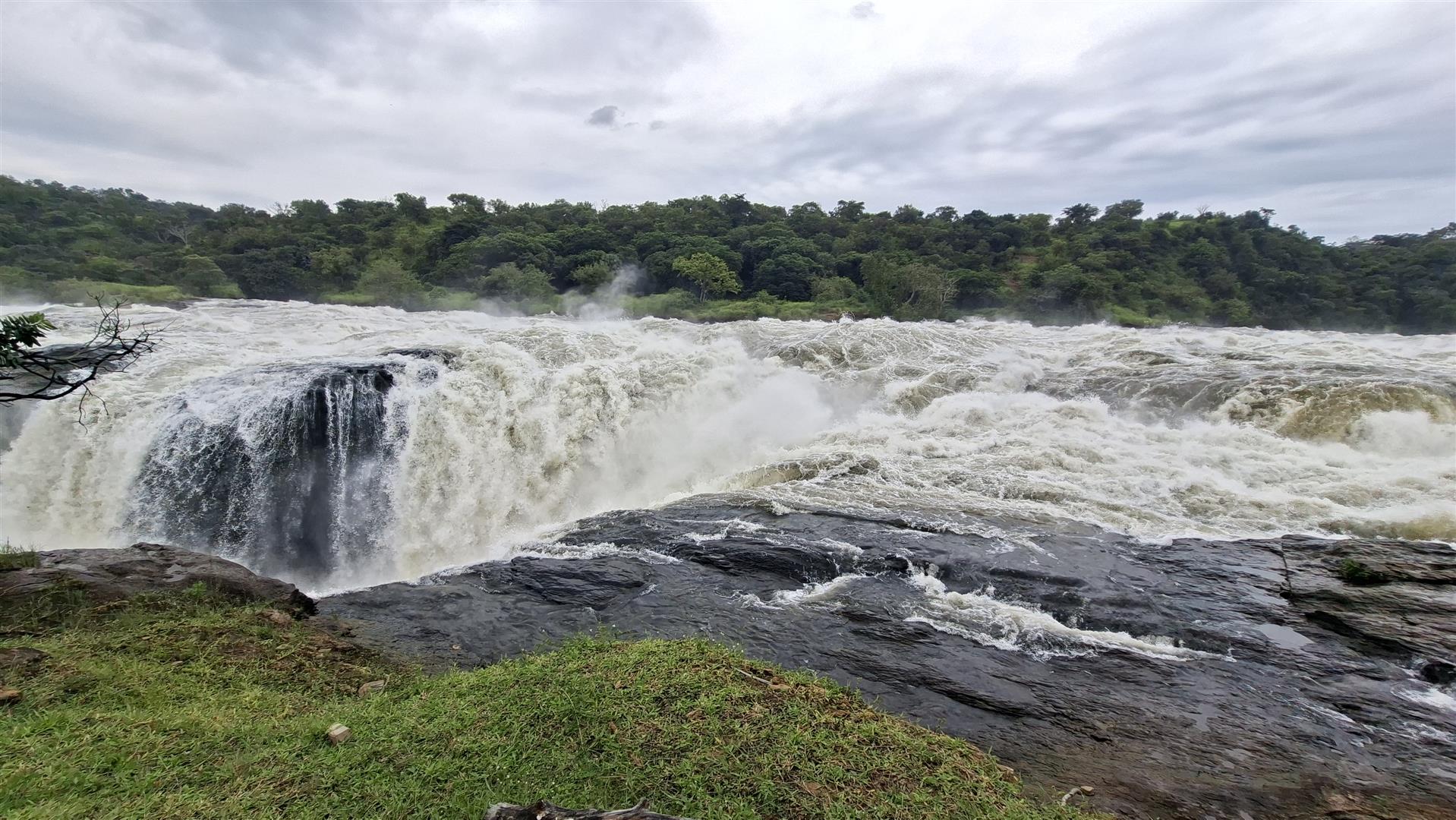
The gap that all that water flows through is a mere seven metres wide.
There were loads of schoolkids around, both little ones and teenagers. I took photos of them when they lined up for a class photo, underneath the Murchison Falls sign, erected for the purpose. I also chatted to some of the teachers and posed with them too.

Posing for the class photo.
Very oddly, there was an area close to the bank, just up from the falls, where some tables had been laid out for an upmarket picnic. A heated servery for lunch, wine, beer etc. I followed a path down to there, despite attempts to close it off. I just wanted some photos of the river. All the guests were European, presumably on a special day out.
I went to a nearby hotel/restaurant that evening. More expensive but the food was very good. I felt a kinship with the people on the riverbank.
Another very good day followed. I decided to stay another day and visit the Ziwa Rhino Park. It was less than an hour to get there. I paid at the gate then rode the 5kms to the reception.
There, I was given a pair of bright yellow wellington boots, ‘because it might be muddy’. My guide gave me a talk on safety and some info about the breeding programme that led to the founding of the park.

This big guy is a mere teenager.
The White Rhino had become extinct in Uganda due to poaching. So they got some from Kenya and started a breeding programme. It was successful enough that they could begin to stock their park. Now there’s 48 of them. A massive success.
My guide got on his bike and I followed him back down the track I’d come up, until we turned off. We parked up fairly soon then walked off into the bush.
We saw a ranger who was able to know where the rhinos were by means of GPS tracking. Not far away we came across some of them lying in the shade.
There was a mother, a baby, another youngish female and a male ‘teenager’.
The mother and two young ones were lying together, with the male slightly away from them. They were all sleeping, trying to keep cool. My guide said they do that from 10am to 4pm.

A bit too curious for our liking.
We walked around them so I could see the group from different angles. I took loads of photos. But at one point we got a bit too close and the small group woke up. The baby was heading towards us so we retreated. But the others weren’t concerned and started grazing.
They only eat grass. Live to around forty years old. Are reproductive from around ten years old. The females are fertile until about the age of thirty.
They’re a lot like elephants in the way they live. The males are on their own and will have a territory. If a female comes into it they have first dibs at her. But if she wanders into another male’s area then the first male will let her go unless he’s up for a fight. Fascinating stuff.
We headed back to reception where I got coffee and cake. She brought a really big cafetiere full of coffee, far too much. But the chocolate cake was good.

Tetse fly trap.
One useful thing the guide did was to explain the purpose of the blue/black rectangular nets I’d seen hanging in the trees, both there and at Murchison NP. They’re fly traps for tsetse flies. In seems they’re attracted to the colour and the nets are impregnated with insecticide. A brilliant idea.
My left elbow started hurting after my ride. It was quite painful. I took two paracetomol but got some Ibuprofen next day. I was only thinking the other day how good it had been lately. I spoke too soon.
I gave myself a day off because the weather looked very much like rain was coming. It didn’t, but I enjoyed doing not much for the day.
My next destination was Jinja, which sits next to Kampala, the capital. The fastest route was going to involve a long section of dirt road, which I’m always wary of, but it was time to test the bike and myself as I knew there’d be plenty more in the future. But it was 100kms or so of asphalt first so I got organised and got on with it.
The first section of dirt was a bit ropey and slow. But when I joined a bigger road it was pretty good. It was well used and went through a constant flow of villages and settlements.
Along the first part of the road there didn’t seem to be any electricity supply to the houses. But on the bigger road all the buildings seemed to be supplied. But none of them seemed to have a water supply, apart from the really big buildings. There were village pumps every so often. Going there seemed to be a job delegated to children, although water cans were one of the most common loads on the bikes.
I saw lots of Muslims along the road. Women in hijabs and men and boys with their prayer hats on. I also passed a quite big mosque, which seemed to have no minarets.
After near to 100kms I came back out onto an asphalt road and headed to the hotel I’d selected. But that didn’t come off because I couldn’t find it. There was a place that looked to be closed but there were no signs on it, so I couldn’t be sure.
I searched Booking and Google and found another place.
It was nice enough. The room wasn’t big but it was OK. The woman who ran it allowed me to talk the price down and I didn’t think she quite realised what she’d done.. 130k per night became 120k, then 220k for two nights.
When I came to give her the money she looked a bit distressed until I reminded her that it was the price she’d agreed.
Later on she supplied me with a very lovely fish meal, with potatoes and greens. And a cold beer. Something I’d quickly realised in Uganda was that I needed to specify cold beer, otherwise it would be served warm. I couldn’t get my head around that. Who on earth would ever want to drink warm lager??
In the morning I sat around on the internet for too long. The sun had been out then the clouds came. But after a while the sun came out again. “Procrastination is the thief of time”, as poet Edward Young once said, so I collared that thief, stirred myself up and went out to the railway museum.

Entrance to the museum. Still a working station.
It was an interesting place, all about the spread of the railway from Kenya into Uganda. Cotton plantations were the biggest crop in Uganda. But it wasn’t very easy to get it from the gins to the railhead.

Improving the transport network.
There were ships that sailed back and forth across Lake Victoria but it wasn’t very efficient. So in the 1950s they extended the line, in several stages, across the country. The discovery of copper ore made it even more necessary. By the time independence came along in 1962 all the important areas had been covered. There was a display of a few railway items – lamps etc, but that, and the info boards, was all the museum contained.
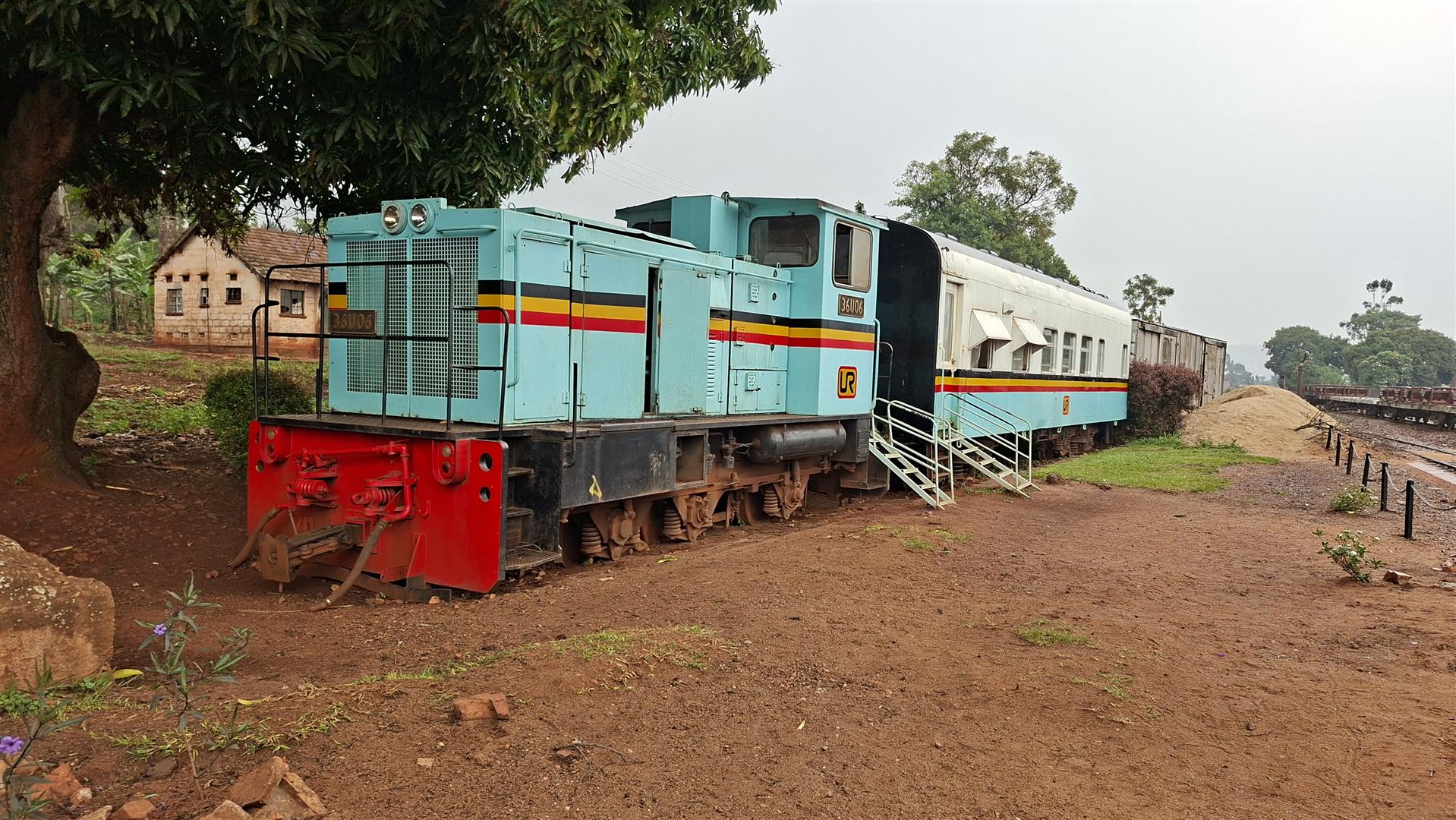
A classic diesel locomotive.
Outside was an old diesel locomotive. The young guy who was with me said it took 30 minutes to warm it up ready for use. That surprised me. He took some photos of me in the cab. The station is active and there were several lines of goods wagons in the sidings, with a bit of shunting going on.
It started to rain while I was in there. But in the cafeteria there was the Man City v Spurs game on a TV. I bought the lad and myself a drink and I got a packet of biscuits too. That’s the first of those I’ve had in a long time. At half time Spurs were 0-2 up and that was the winning score. The rain had stopped so I left.
I headed down to get a photo of the Nile Bridge. This wasn’t anything very special. Just a nicely designed cable stayed bridge with an attractive look. The kind of big engineering I like.
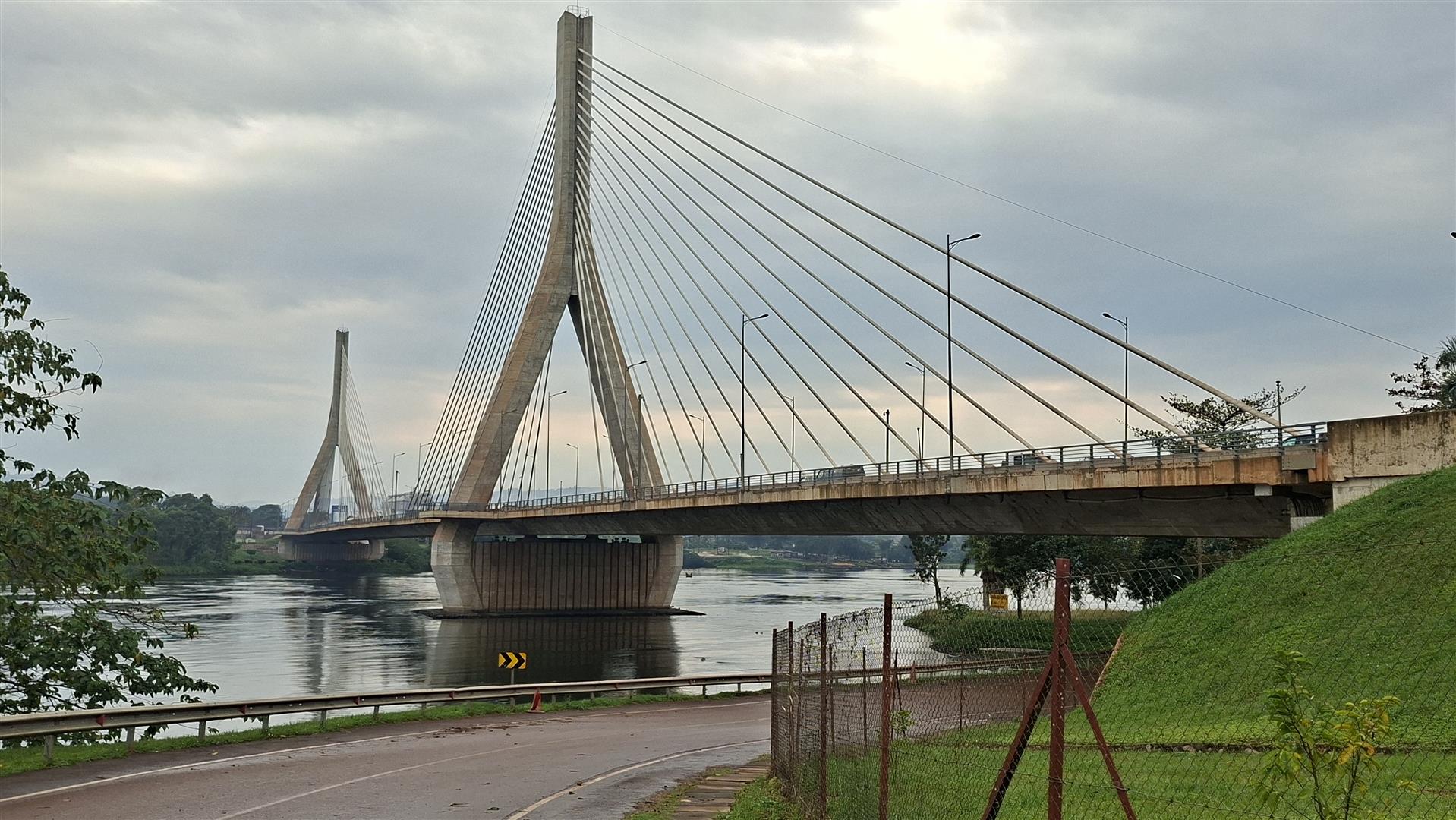
Bridge over the River Nile.
After that I went to the Source of the Nile viewpoint. But they wanted around £6 to go in so that got vetoed. I wandered down some back roads, hoping for a free view but didn’t really find a place. I wasn’t worried. There’s more than one River Nile after all.
On the way back I to the hotel I spotted a Hindu temple and went in for a look. I took a few photos, including of a staue of Mahatma Ghandi. To my surprise it stated that his ashes were immeresed into the River Nile.
There was a presentation going on in the grounds, to a mixed audience of Indians and Africans. A film of some American guy going on about the need to practice discipline. It sounded like a load of American codswallop, if I’m honest.
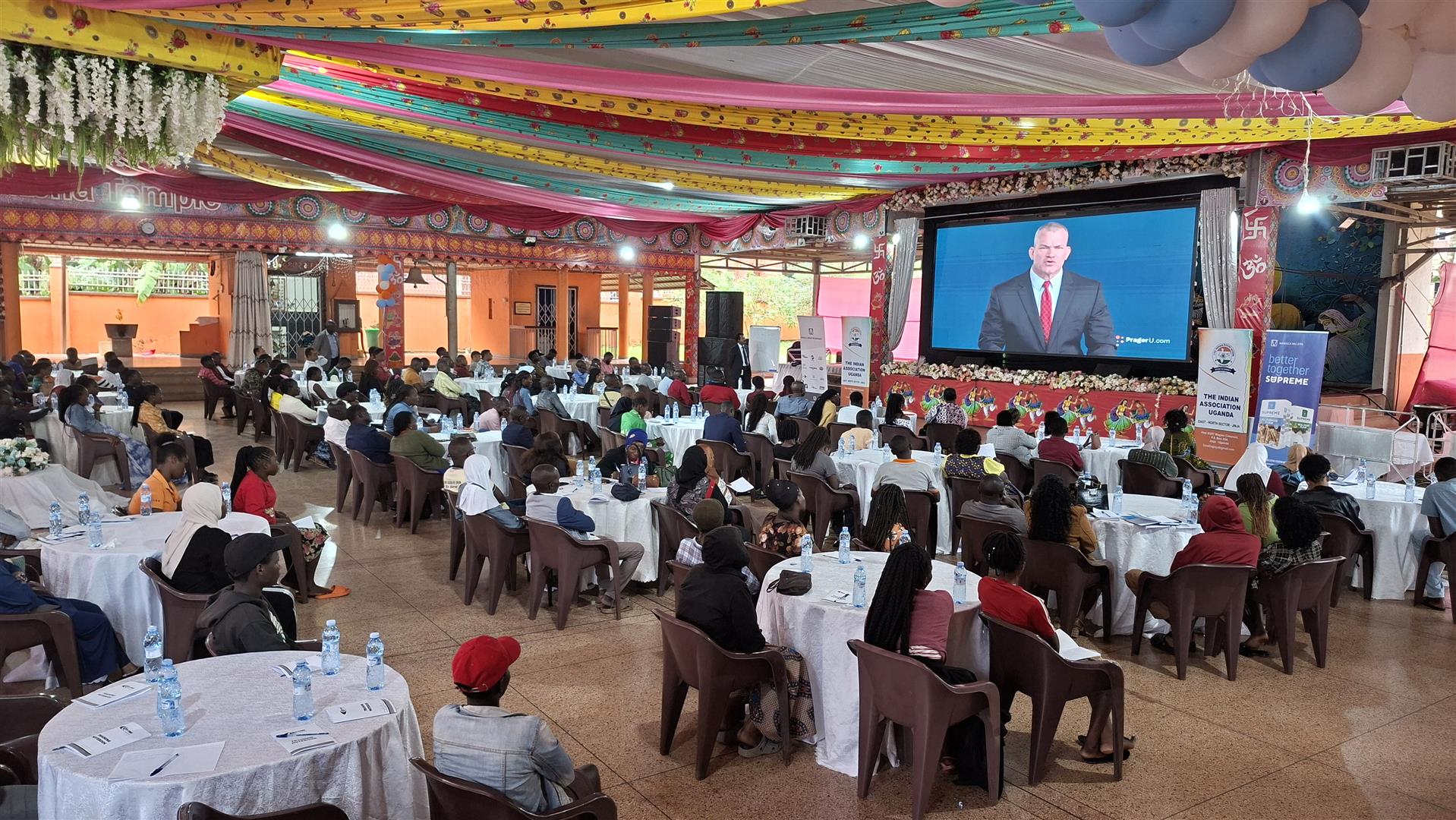
The Yankee talks.
Jinja sits right next to Kampala, Uganda’s capital. Next day I headed along there with an appointment to keep. That story will be along soon.
 MOTOPANGAEA