
Mbeya, Tanzania. 8th November 2025.
Paul had led me out of town and onto the same road we’d previously taken when visiting his friends on the avocado plantation. It was important to avoid the the trucks which were now crowding the main road.
It was an easy and pleasant ride to the border. I filled up with fuel and then got some money exchanged. Initially just my Tanzanian shillings into Malawi Kwacha.
Leaving was easy although I had a bit of a surprise when I realised my visa had overrun by two weeks. Fortunately the immigration guy didn’t notice. It was a short ride across the river to Malawi immigration where I was stamped straight in.
Customs was a bit different. I used my Carnet but noticed that it had expired four days earlier. Customs didn’t notice and happily stamped it. They also issued me with a Temporary Import Permit at a cost of $20.
While I was waiting for all that to happen I was negotiating with a guy over a SIM card. The option was 10GB for one week, at $10. Or 30GB for one month at $30. I only needed a week and, despite his efforts to sell me a month, I insisted on just a week. But I ended up paying for a month because he ‘couldn’t get it to work properly’.
I gave in and then turned to change some money. The official rate is very low so the black market is the best route. People in the WhatsApp groups had been suggesting 4,000 Kwacha for one USD. The best I could get was 2,000. I needed cash so had to accept it. Another con job. That was not a good border crossing!
I’d heard that the roads in Malawi weren’t very good but on the ride down to Karanga I found them to be good enough. There were a couple of checkpoints but there was room for bikes to ride along the side of them.
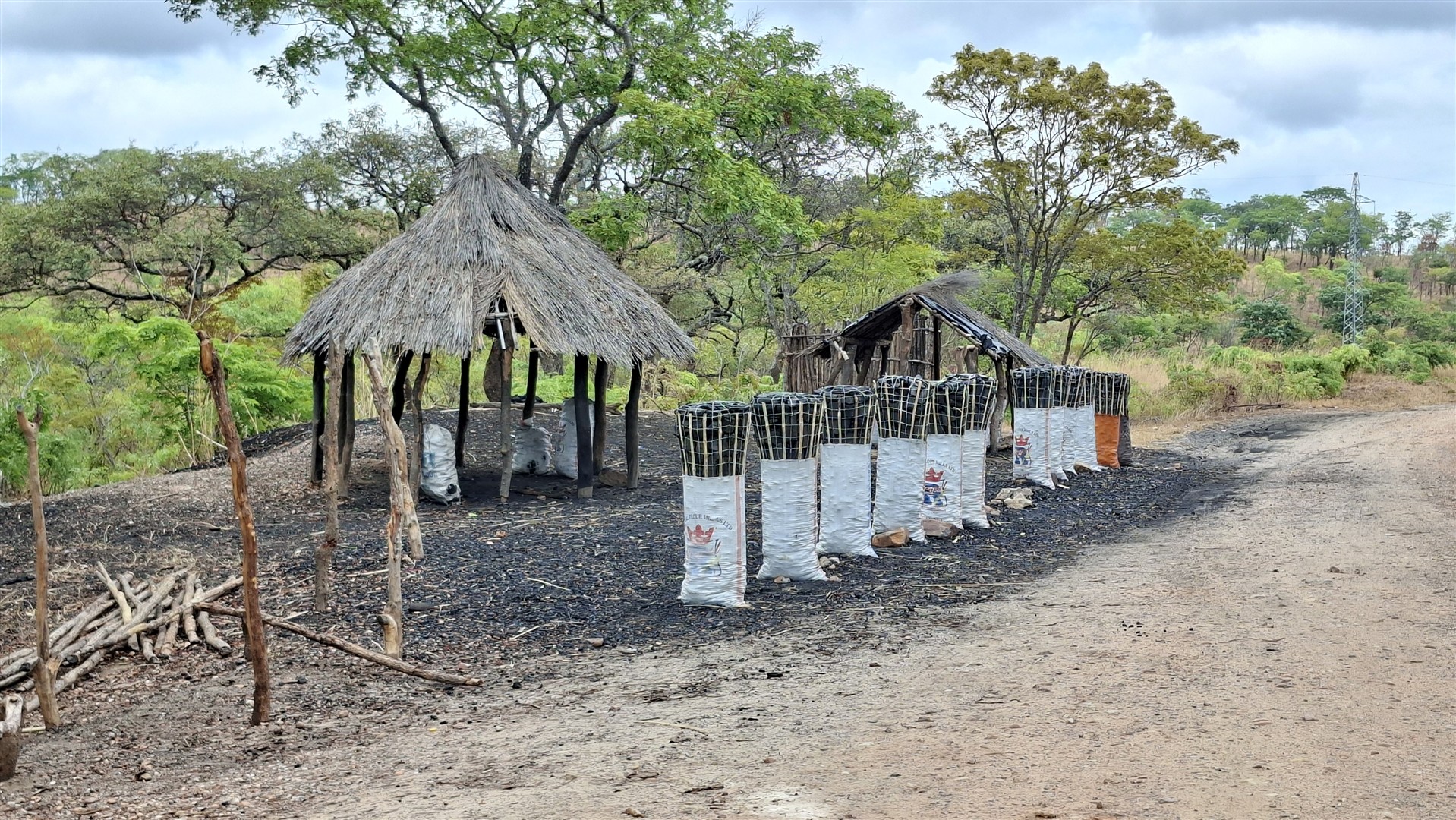
Charcoal stalls were everywhere.
The hotel I found was not too bad but quite expensive for such a poor country. So was the food I had.
Malawi was reckoned to be a very beautiful country and I wanted to explore it a bit. But the big problem was lack of fuel. It had a poor reputation for fuel supply anyway but the situation in Tanzania, with all the trucks held up for five or six days, had made it far worse. I hadn’t seen an open filling station on the ride from the border.
Next day I carried on riding south with the road getting worse. I wanted to visit the town of Livingstonia, supposedly a place with an interesting history. Nearby was a tourist resort called The Mushroom Farm, also reckoned to be worth visiting.
I came to the turn off and within fifty metres of the main road I came into sand. I looked ahead, up the hill, and all I could see was more sand. No thank you! I’d already decided not to wander around too much because of the fuel situation. All that sand was the decider.
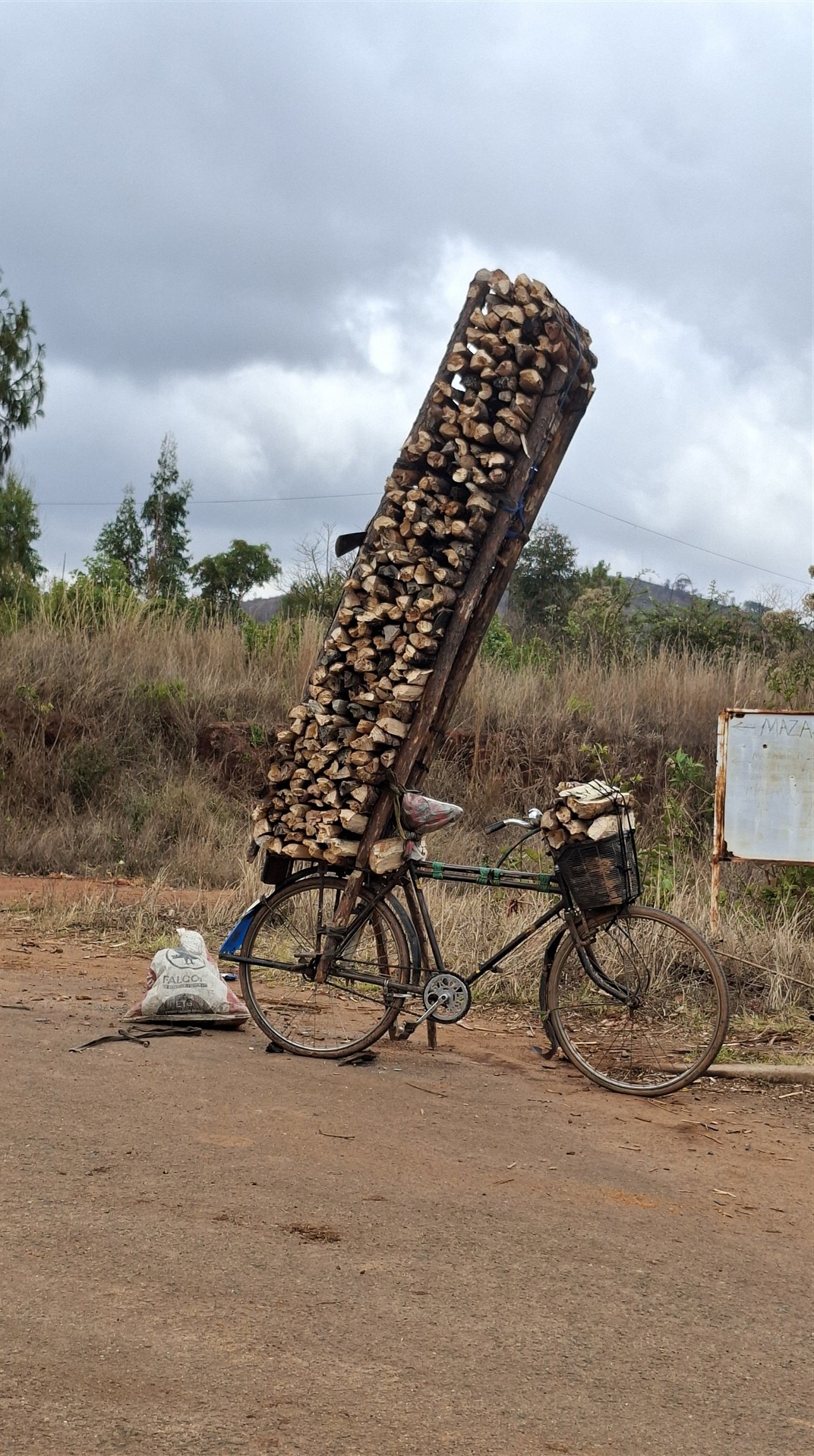
Firewood on the move. That looks like hard work.
Further along the main M1 highway the road began twisting up into the hills and turned to dirt. As I went higher the bike started overheating. I stopped to let it cool off then, when the warning light had gone out, I carried on. But it happened again soon after.
This time I let it cool down then carefully poured some water into the dry radiator.
I got another 35kms before it happened again. There was clearly something wrong. By now I was on a flat road so I topped up again and made it to the town of Mzuzu and a hotel.
The woman there brought me some water, both for my cup of tea and the bike. With the side covers and the radiator cap removed I ran the bike up and pretty soon had the radiator boiling like a kettle.
I was worried about it being a head gasket but then I noticed that the fan wasn’t working. Why? A blown fuse. With a replacement fitted all was well again. Well, almost.
I’d noticed nail in the rear tyre earlier on and it needed fixing. Here’s where the benefit of tubeless tyres comes into play. Struggle to remove a wheel and tyre then replace or repair an inner tube? No thank you!
I dug out my repair kit and plugged the tyre. All done, and airtight, in fifteen minutes.
The hotel was able to supply some good food, this time at a good price.
I was now in the large town of Mzuzu and needed fuel. I’d had a look round round when I arrived last night but nowhere was open. I’d been offered some from a bottle, at 10k Kwacha per litre. The pump price was 3,500. A swift ‘no thank you’ was the reply.
I headed through the town towards the road I needed. Eventually I came to a filling station where the forecourt was crowded with bikes and cars. That suggested fuel was available.
I chatted to some of the boda boda boys who said it was worth waiting to see what happened. After a while one guy suggested I go to the office and ask for some. We’d seen a few vehicles getting filled up so it was clearly available.
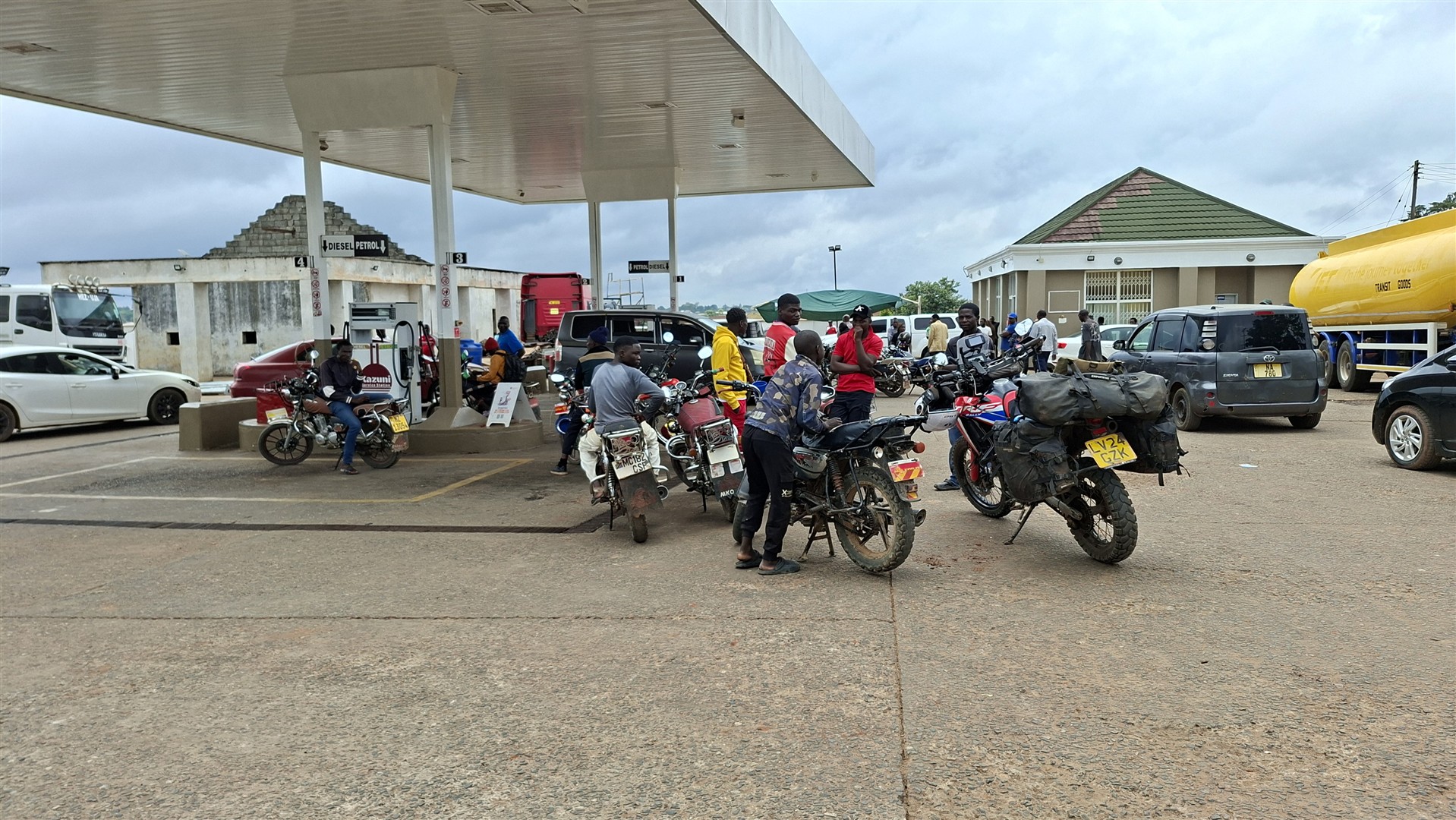
Waiting for petrol.
The office pointed out the owner and told me to ask him, which I did, giving him a bit of a sad story to help things along. He directed me to a pump where one of his staff filled me up, and at normal pump prices too. Was I happy? You betcha!
But despite this it was still obvious that getting fuel was going to be very difficult ongoing so I decided to cut short my visit and head towards Zambia. It was a shame but practical considerations had to come first.
To that end I carried on towards Malawi’s capital, Lilongwe. The road was of mixed quality. Some very good stretches mixed with diversions due to roadworks. The first of those was a very long one and the surface was sandy in places but also corrugated.
Further on the road went off down the side past roadworks. These were all OK to ride on. A lot of African roads had been built by the Chinese as part of their Belt and Roads scheme. But the quality was often very poor and the surfaces soon broke up. I was happy to see these roadworks had a very deep substrate, suggesting much better longevity.
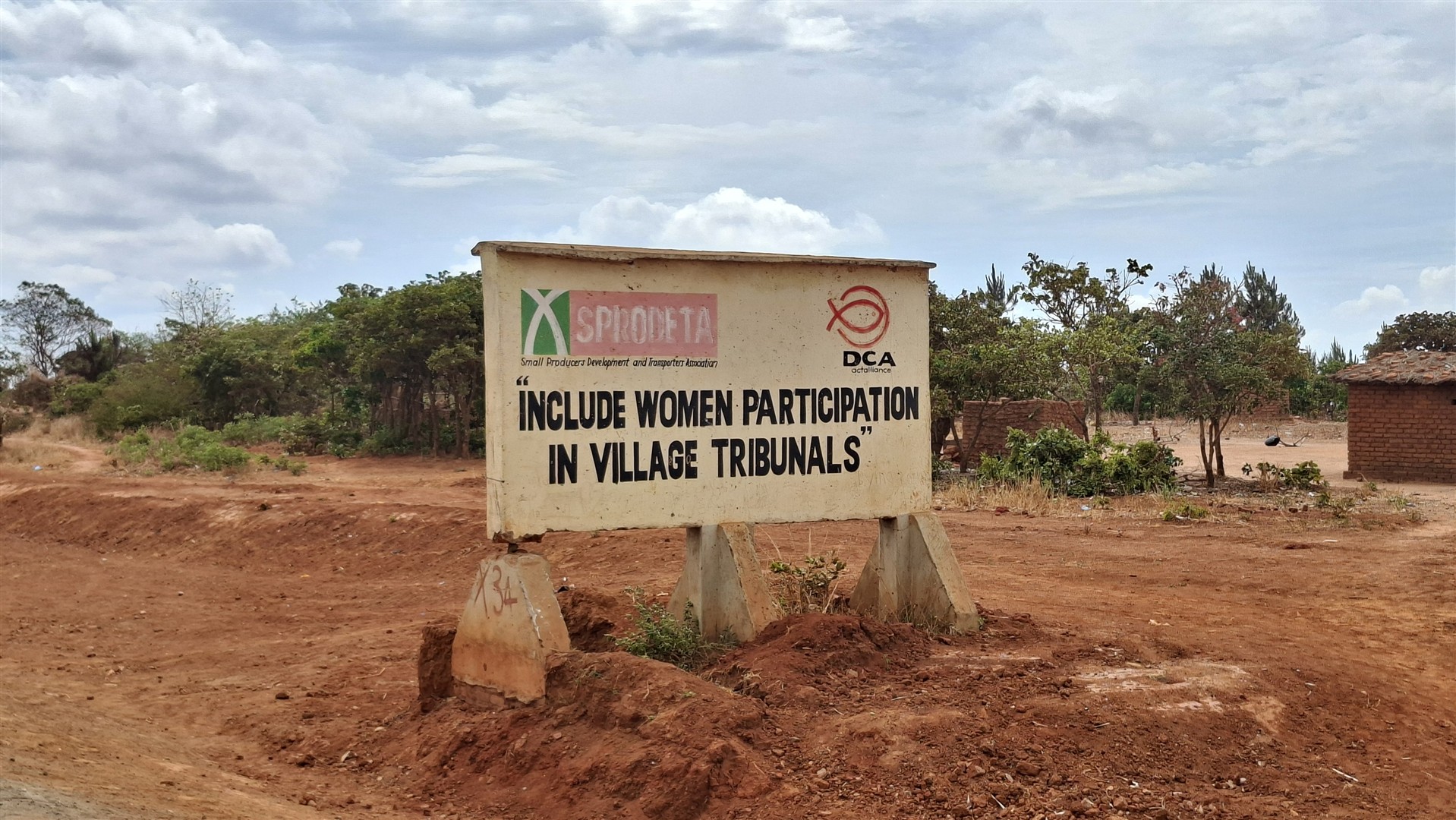
Promoting women’s progress No 1 ……
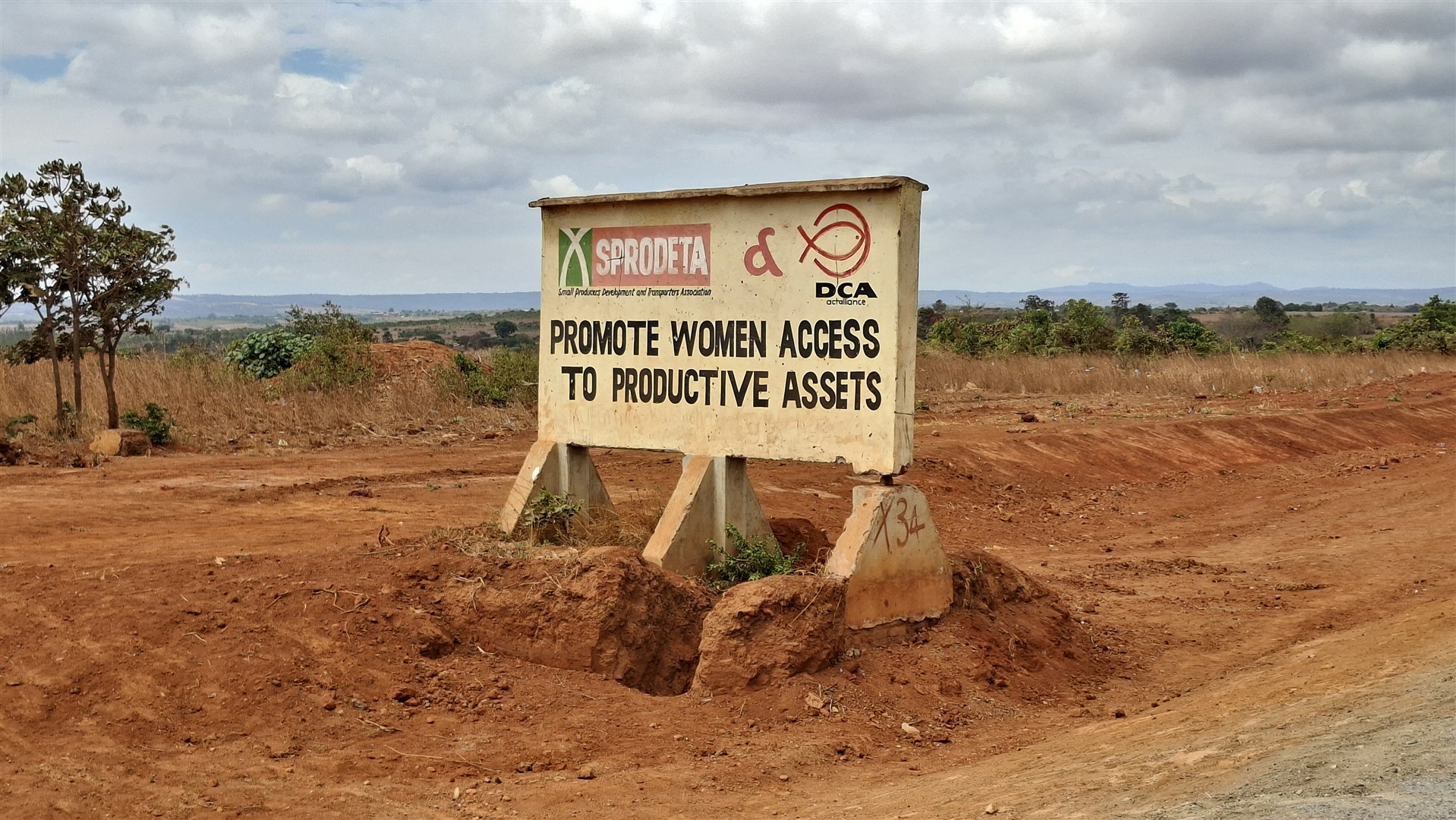
….. and No 2.
I popped into a couple of filling stations because they had people there, but no petrol.
Near to where I stopped for the night there was one with a huge crowd of bikes and cars on the forecourt and they were serving petrol. People had brought their generators to be filled up. One guy was carrying a bike tank on his head. Desperate times!
I chatted to a guy. He had a pretty little Yamaha 125cc Crosser. Malawi seems to have quite a lot of trail bikes.
I waited for a while but got fed up. There was too much chaos so I left. Later on I worked out that I could get to Zambia on what I had left in the tank and my spare supply.
The hotel I stayed at was very nice albeit a bit expensive at 55,000. I asked about paying in dollars or by card but the exchange rate would be the official one of 1750 Kwacha to the USD. So I paid cash but was worried about how much I had left.
I wasn’t far from Lilongwe and a Google search suggested that the only place worth visiting was the war memorial. It happened to be the 11th November, Remembrance Day, And I arrived there at 11am. Very fitting.
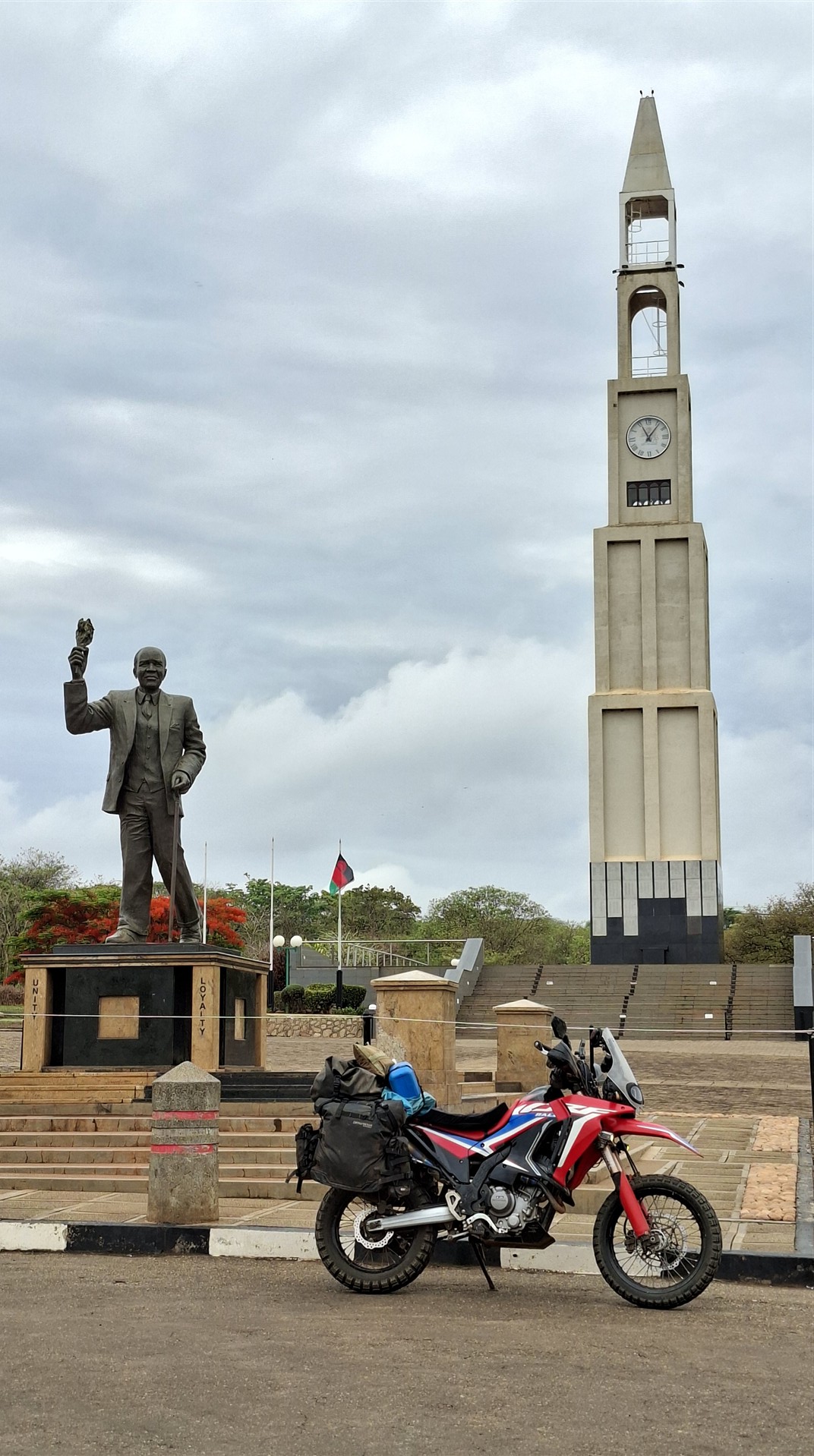
World War 1 memorial.
There were names of the dead from WW1 but none from WW2. A woman there offered to show me around, which I declined. But I did ask her why the WW2 names were missing. She said they were unknown.
That puzzled me but after some thought I realised that the WW1 fighting would have been against the Germans locally. Did any Malawians fight in WW2? I don’t know.
I carried on to the border, stopping to put my wet gear on when the rain arrived. I chatted to a money changer who swapped my Malawi Kwacha for Zambian Kwacha. Out of interest I asked him how many Malawi Kwacha he’d give me for a dollar. When he told me 5,000 I realised how badly I’d been done over when I came in.
Getting out of Malawi and into Zambia was very easy although, once again, it was customs that provided the hiccup. I’d read in one of the groups that I could get a ninety day Temporary Import Permit for Zambia. That pleased me because I planned to leave the country for 5-6 weeks around Christmas and new year and leave the bike there.
But, and there’s always one of those, ninety days was divided by three. In other words I had to renew the TIP after thirty days and then after sixty. Christmas plans blown apart.
A very nice woman helped deal with customs. I had to take a copy of my registration document up to the police office to get it authorised. It was fortunate that I had a copy because the customs office had no power, so no copier.
That situation put a delay in the whole process because everything was being done manually. But it was finished in the end and the helpful woman didn’t want any payment. I didn’t argue.
I headed along to the town of Chipata, the nearest one to the border, still with several litres of fuel in the tank. But I needed money and that became a whole other challenge.
Google found me an ATM, a pair of them in fact. But they were a pair of rogues. They either went through the transaction process but gave no cash or they just didn’t work at all. Both of them were the same. I found another, working, ATM nearby. And it was fee free too, unlike the others.
It was a few weeks before I was able to establish, via my bank, that I hadn’t lost any money.
I found a hotel and food at a good rate. And the thing I immediately discovered is that Zambian businesses will take credit or debit cards very willingly. No more black market or dodgy money changers.

In almost every village there was a brick kiln. That red earth became red buildings.
I’d been chatting online to Andy and Alissa over the past few weeks, with a view to meeting somewhere. They travel under the guise of Mad or Nomad and Andy writes blogs and reviews relating to every aspect of motorcycle travel. madornomad.com is where you’ll find them.
Although they were also heading to Malawi and Tanzania, our journey plans suggested we should meet in Zambia’s capital of Lusaka. That was a two day ride from Chipata so next morning I set off.
It was quite the day. It hammered down with rain overnight but stopped in the early hours. Then started again. I had to hang around at the hotel until it stopped and left at 10.30-ish with the cleaners chasing me out.
I filled up then rode towards ever darkening clouds, some with quite a strange formation. Lightning started to flicker so I stopped and put my jacket on. I already had the over trousers on and the backpack cover too.
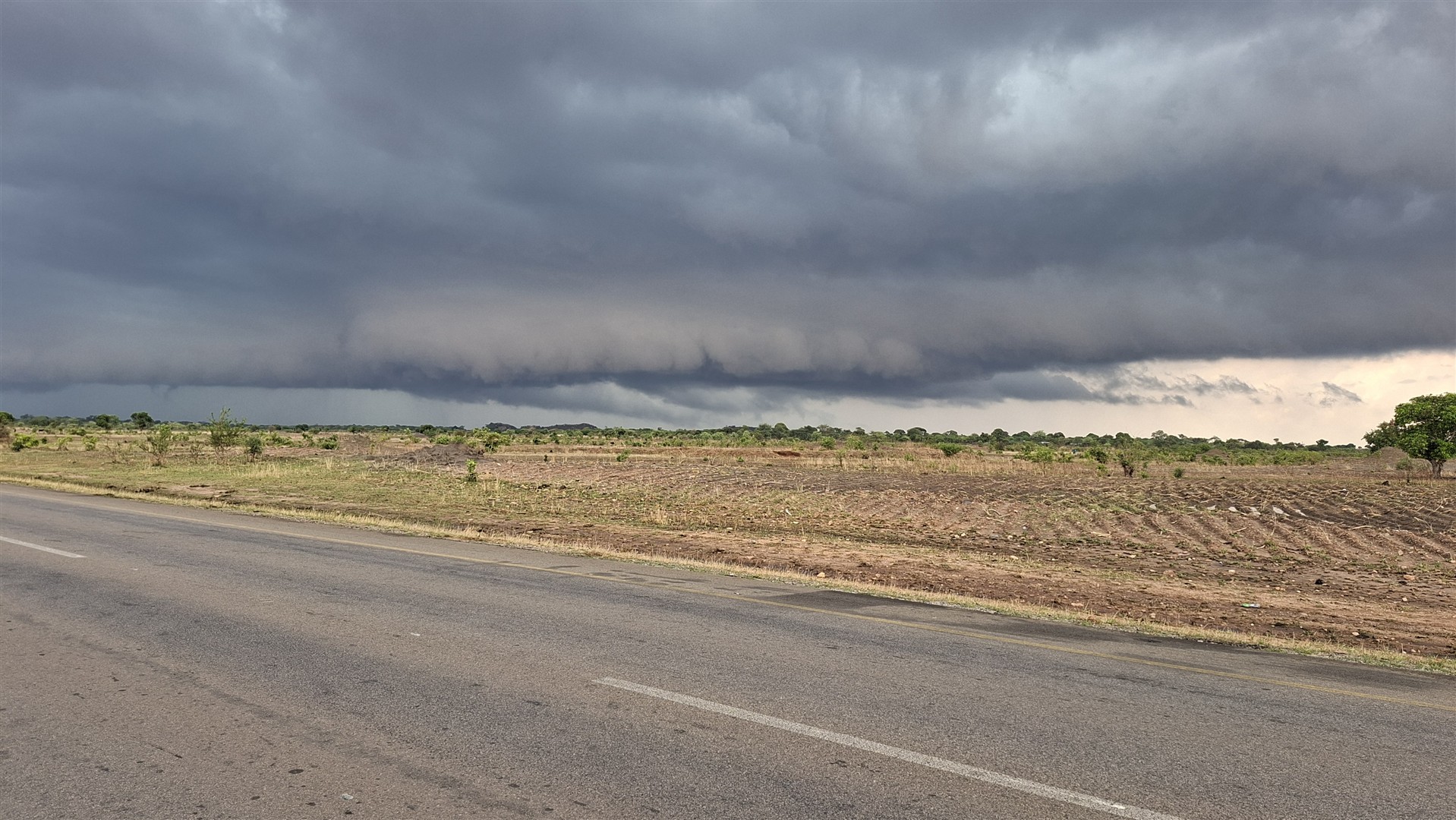
These clouds promised rain. And kept that promise.
The rain came down like you wouldn’t believe. I got wet and just got on with it. There was nowhere to shelter anyway. Trucks and coaches were doing their best to drown me too.
There were dry periods but the rain didn’t stay away for long. I pulled into a filling station in the rain but left in the dry. But the rain returned. I was hoping one of them would have a coffee shop but no such luck.
Eventually the rain did move on and I was then able to enjoy the very nice countryside and some good bend swinging.
What surprised me was how everyone, including school kids, got wet and didn’t seem to let it bother them. I suppose the rain was warm enough if you were walking but I was getting a bit chilly.
I’d selected a place to stay near the Lunagwa Bridge, a notable point to stop and stare at. I’d booked to stay at Bridge Camp Zambia, an eco resort not far away.
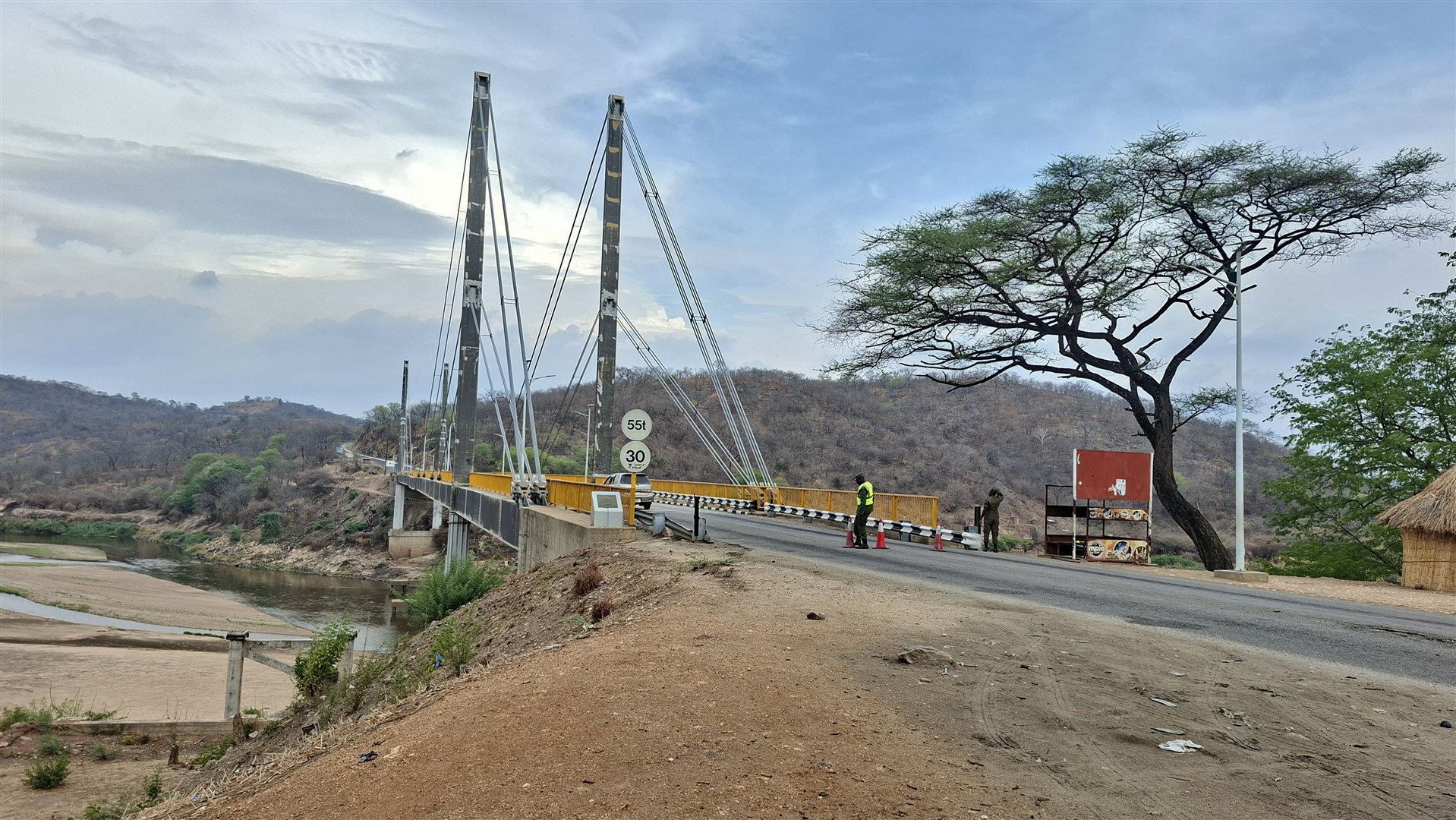
A nice piece of bridge engineering.
After some photos at the bridge I found my accommodation. It looked a bit strange when I first rode in, with the steep roofed chalets placed higgledy piggledy up the side of the ravine.
The ground was mostly of flat, broken flag stones. The main area was up some nicely laid steps. The whole site was clearly aimed at nature loving tourists and the price reflected it.
I gave the woman there my soaking wet rain gear, plus my riding trousers to hang out for me. She didn’t believe it had been raining very much until I told her to put her hand in my rain filled coat pocket. Then she did!
I was desperate for coffee so they made me a pot plus some eggs on toast. Later they made me a quality meal. Just what was needed after a challenging ride.
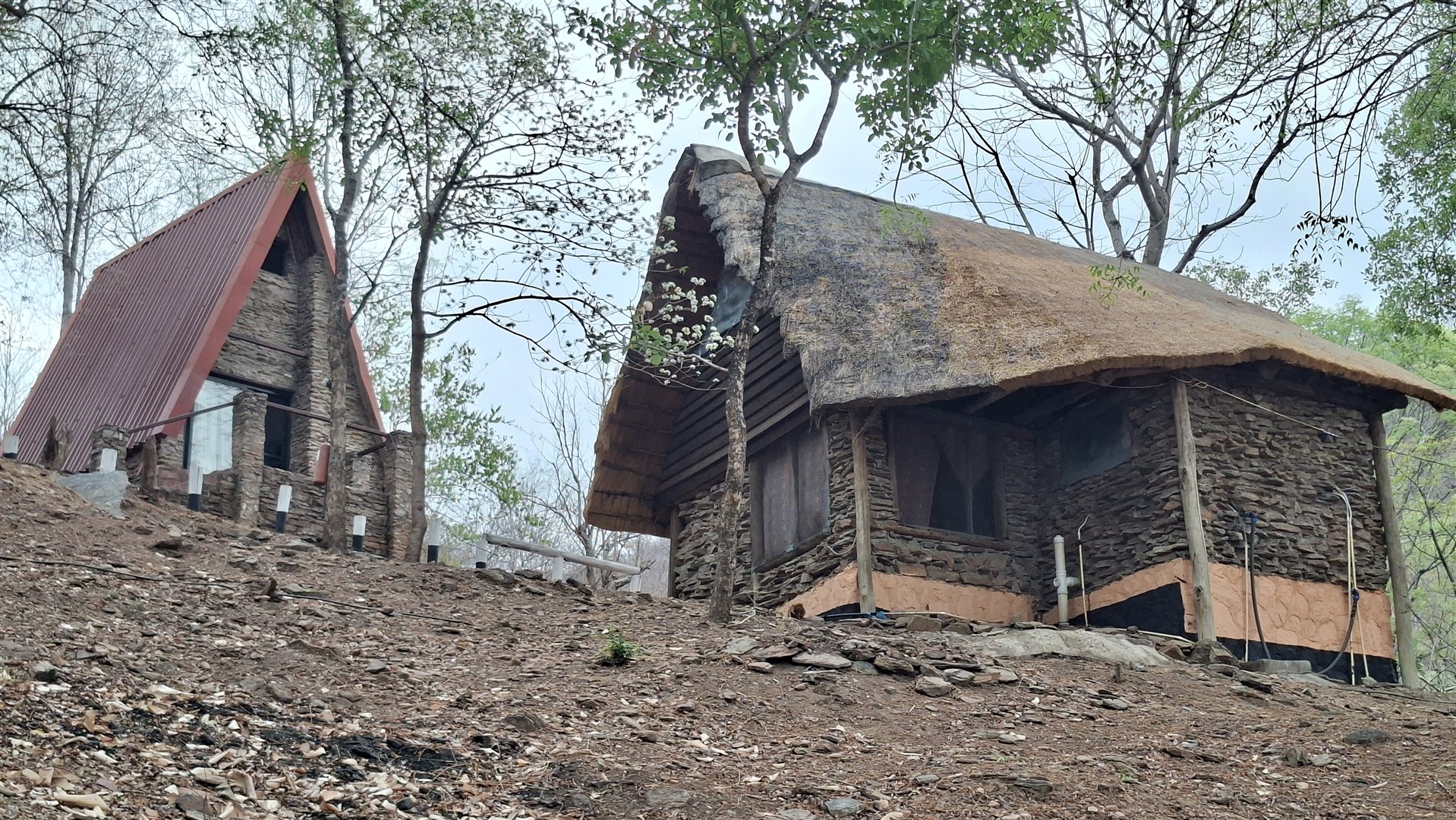
Very well designed chalets.
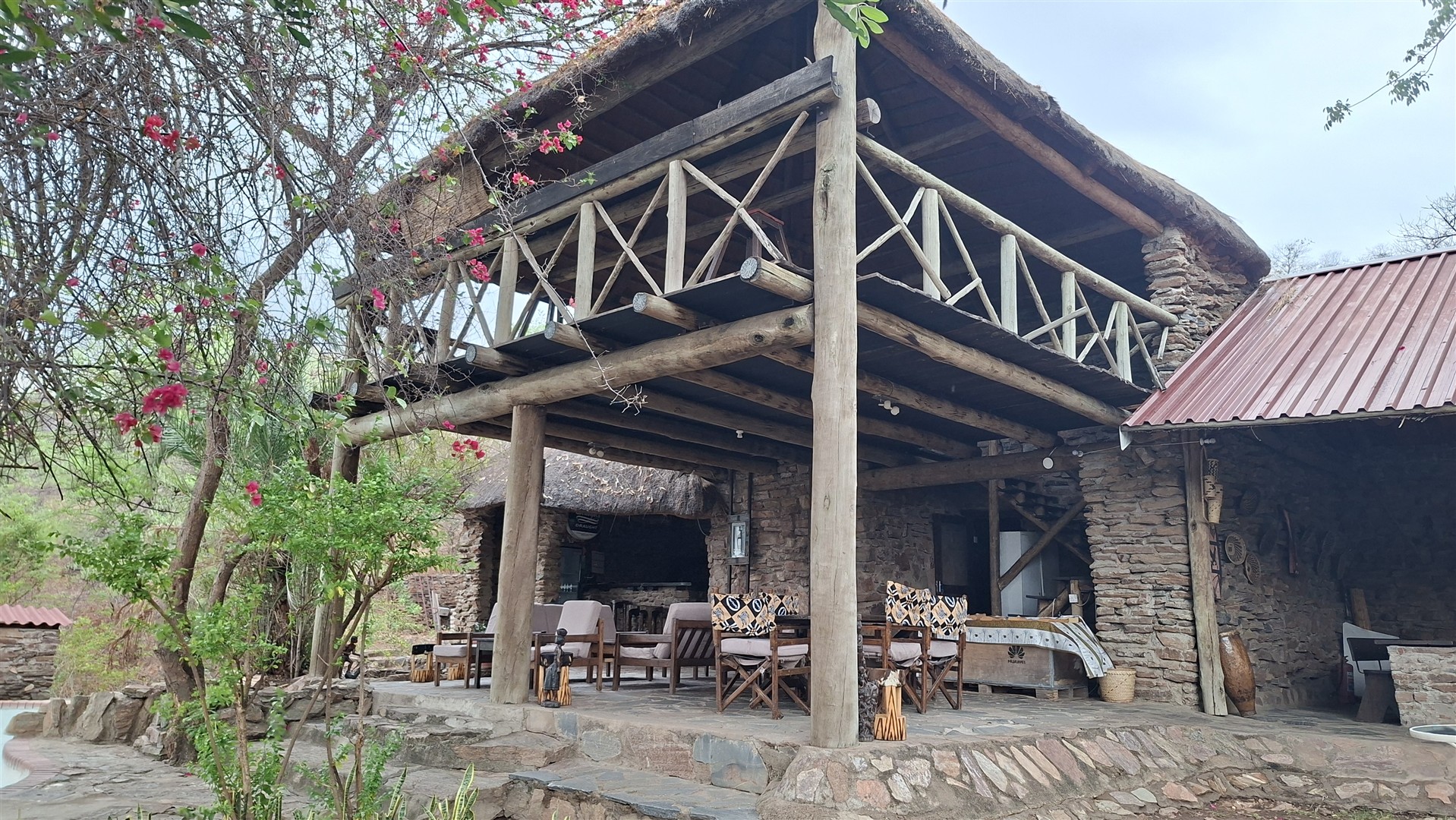
The lounge area. Very eco looking.
Andy and Alissa had booked a place in Lusaka via Air BnB and were sharing it with another couple, Katherine and Brandon. They’re American and were travelling on big BMWs. They were leaving on the same day as I was arriving so we planned to meet on the road.
After a very good breakfast the woman who owned the resort asked me if I knew anything about solar PV systems. It just so happens that I do so we had a long talk about her plans. She wanted advice because she was worried about being cheated by an installer. I suggested she engage an independent consultant and then I gave her some general advice.
Then I got underway on a lovely sunny day. Eventually I met up with Katherine and Brandon. We had a great chat about various travelling topics before parting company. Katherine moderates one of the WhatsApp groups, something that can sometimes be a thankless task.
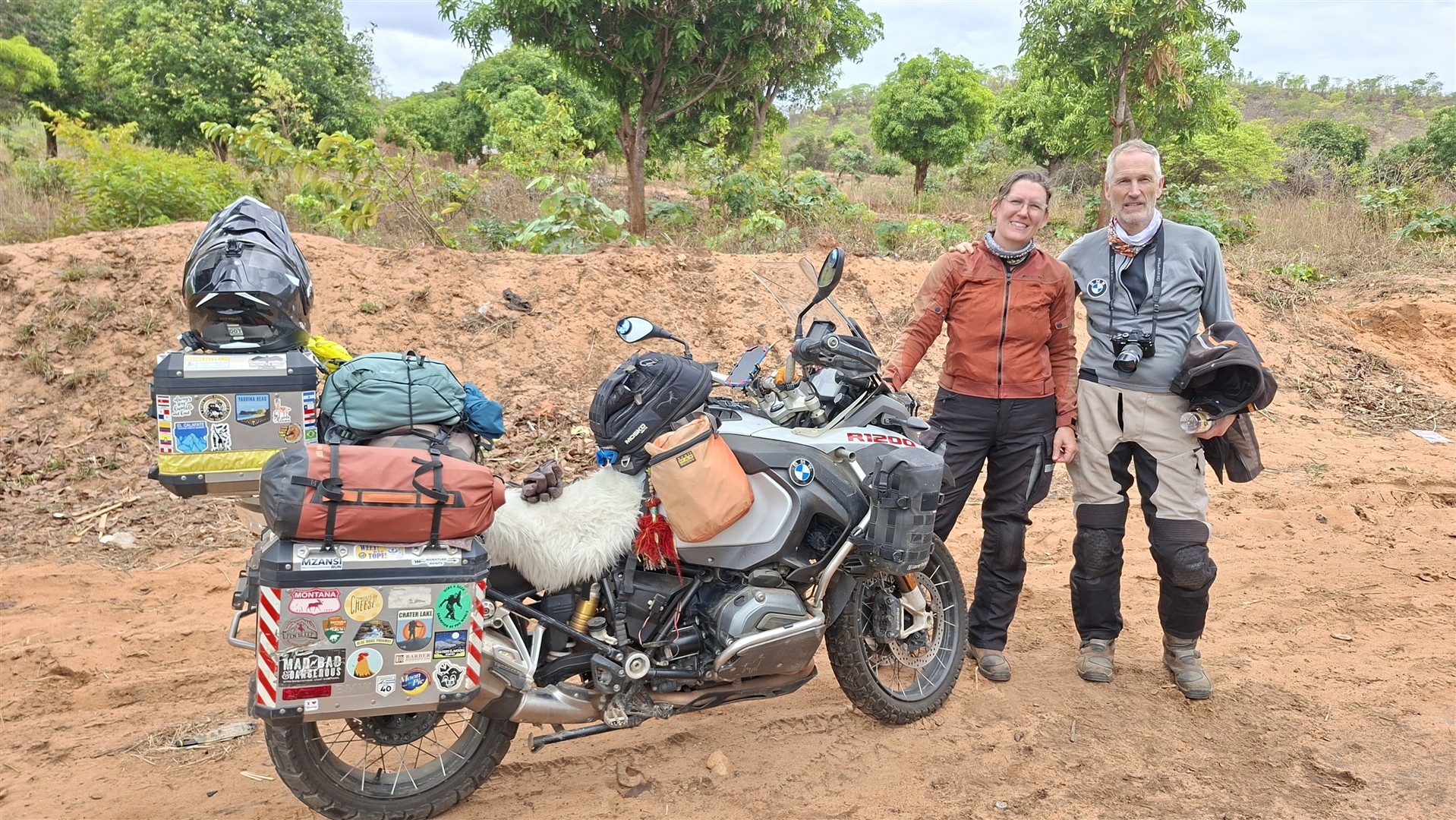
Katherine and Brandon. All the way from the USA. They each have one of these big BMWs.
They warned me about a police speed trap they’d been stopped at and had been forced to pay an 800Kw (£27) fine for ‘dangerous overtaking’. The choice was to pay up or go to court. They paid.
But guess what? I got caught as well. The police car was hidden behind bushes so I didn’t see it. And the guys with the camera were down in a ditch so I didn’t see them either.
I was travelling at 96kph in a 80kph limit, they said, so I had to own up to that one.
But they accused me of dangerous overtaking too. I argued my way out of that by pointing out I was on a straight road and there was at least a kilometre of clear road in front of me.
The problem is that if there are solid white lines down the middle of the road they’re so worn out as to be invisible. Anyway, 600Kw (£20) for speeding. No receipt and straight into his back pocket.
I stopped for coffee and biscuits in a café and got the address of where Andy was staying.
They’re in a 3 bedded apartment which they’d shared with Katherine. So I had a room to myself.
It was really good to meet them at last. They’re a lovely couple and are around the age of forty. They’re both riding Honda CRF300ls, essentially the same bike as mine. Theirs have already been ridden down through the Americas.
We talked loads about the bikes and travelling, of course. They were cooking pasta so I went down to the shop and bought a couple of bottles of wine.
So a very pleasant evening was passed. Andy sent me details of places to go to and I did the same for him. He told me of a shipping agent in Cape Town who’d been very helpful to them. Noted for later.
We talked about carnets and I need to investigate whether I can manage the rest of the trip without needing a new one. Some research is required.
It was an excellent evening and it’s a shame that they were leaving next day.
We had more good chat over breakfast before they headed off. I had some research and planning to do.
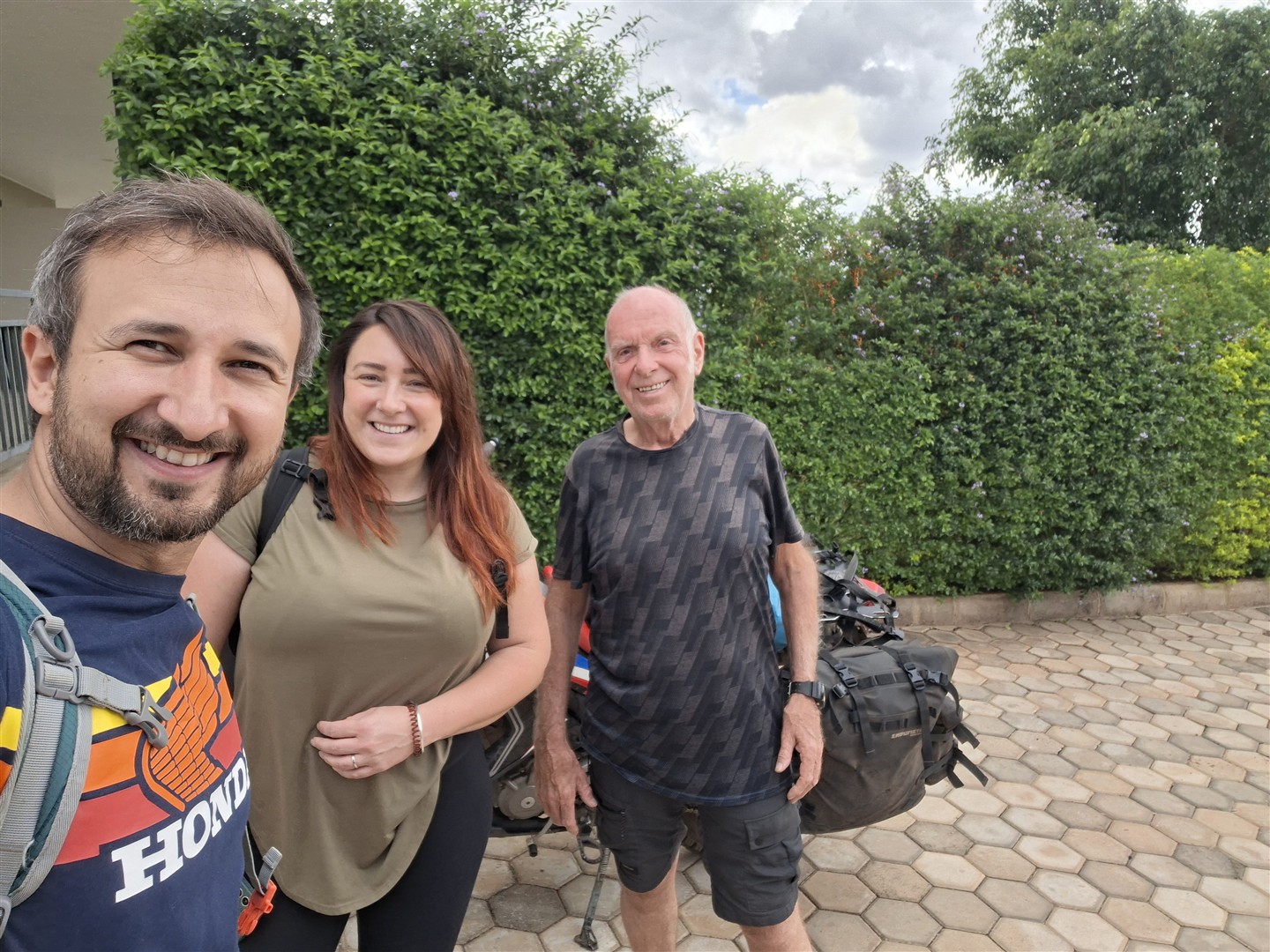
Andy, Alissa and yours truly.
The big question was whether or not I needed to renew my now expired carnet. The firm opinion of those in the groups was that I would not. All the other African countries I planned to visit would be happy to issue a TIP.
But, there was a ‘but’. I planned to ship my bike from South Africa to Europe. I’d been in touch with a guy named Duncan who ran a WhatsApp group for South Africa. He also acted as a shipping agent. He was very explicit in saying that I would not be able to ship a UK registered vehicle into the Schengen area without a Carnet.
I believed this to be complete nonsense. European countries do not use the Carnet system. I contacted my Carnet issuer to ask about it and they assured me one would not be required.
But it almost certainly won’t matter. My original thought was to ship into Spain or Portugal but Duncan strongly advised against it because of likely problems with inefficiency and corruption. So the bike will probably come straight back to England. But that’s a few months ahead so I won’t worry about it for now.
At this point some of you might be remembering that my original plan was to ride back to Europe up Africa’s west coast. Well I’ve given up on that idea. Various people in the groups have told tales of corruption, problems getting visas and very bad road conditions. I’d be travelling in the rainy season on those bad roads too.
So my current decision is to not bother. I very much feel that I’m giving up because it will be tough. And I don’t feel good about that. But, at time of writing this, it’s the way I’m feeling. But who knows, there’s plenty of time for a change of heart – and a new carnet!
I stayed where I was for a couple of days. The bike had been misfiring between 5 and 6,000rpm, although not really losing power, and I wanted to find out why. It felt like an electrical problem. I checked the plug lead and the spark plug, which both looked OK. The plug had recently been replaced anyway.
I made some adjustments to the clutch and brake levers, both of which improved riding comfort.
I rode down to the customs office to ask about the procedure for extending my TIP. I didn’t bother wearing my earplugs and it was very obvious by the noise from the bike that it was an ignition fault that was causing the problem. I felt very strongly that it was the spark plug and I planned to refit the old one.
At the customs office the young woman explained what I’d need to do and it was very straightforward. I planned to call in there before going to the airport when I went home.
I checked on flights back to the UK and because I had to commit to extend my TIP before I left, and then be back in time to extend it again, I was able to book a return ticket. A very unusual thing for me to do.
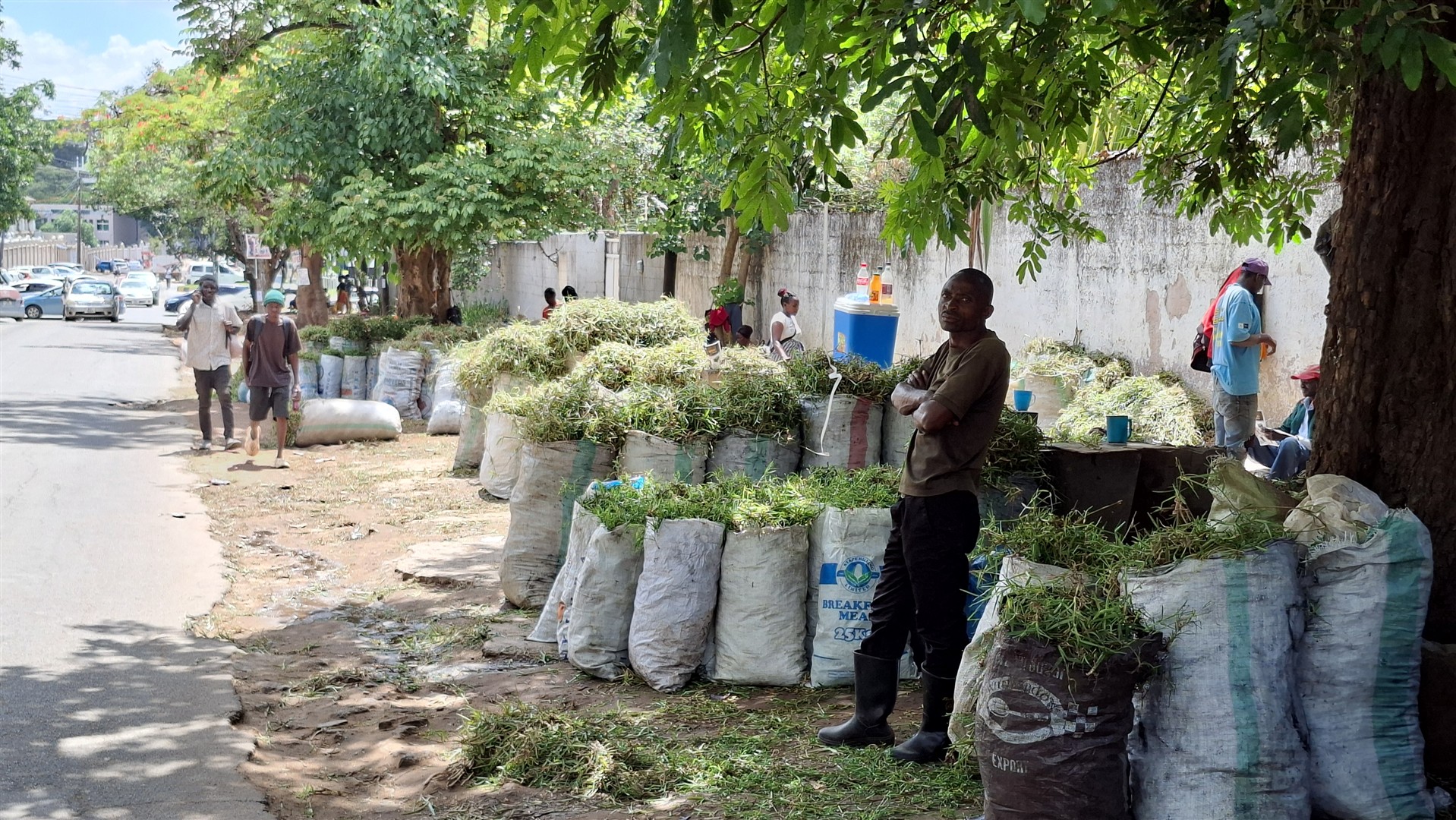
Grass (fodder?) for sale in the suburbs.
But now it was time to move out. At $50 per night for the apartment I needed a much cheaper place. I intended to stay in Lusaka for a few more days and have a look around.
I moved into a hostel called Natwange Backpackers. ‘Natwange’ translates as ‘welcome’ and that’s how they made me feel. I had a bunk bed in a dormitory and very quickly made myself comfortable.
This was a big place, with several buildings within a compound that was mostly garden. It had plenty of outdoor seating areas and even a small swimming pool. I was in the main building which had a sheltered patio outside. Just right for the very pleasant day time temperatures.
Having said that, some parts of the building needed a bit of repair work and there was a dearth of sockets in the room. But it was all generally good.
I’d intended to spend a few more days in Lusaka before going south to see the Victoria Falls. But after some thought I decided to hold that plan over for a while. I knew that I’d want to go to Zimbabwe eventually and seeing all of the falls involves crossing into Zimbabwe anyway.
A study of available options showed that there wasn’t a great amount of things to do or places to go in or near Lusaka. Most things involved animals and that usually meant organised, and expensive, jeep tours.
I spent a lot of time sitting around, talking to other guests and making plans. But there were some sites to visit around the city – three of them interested me.
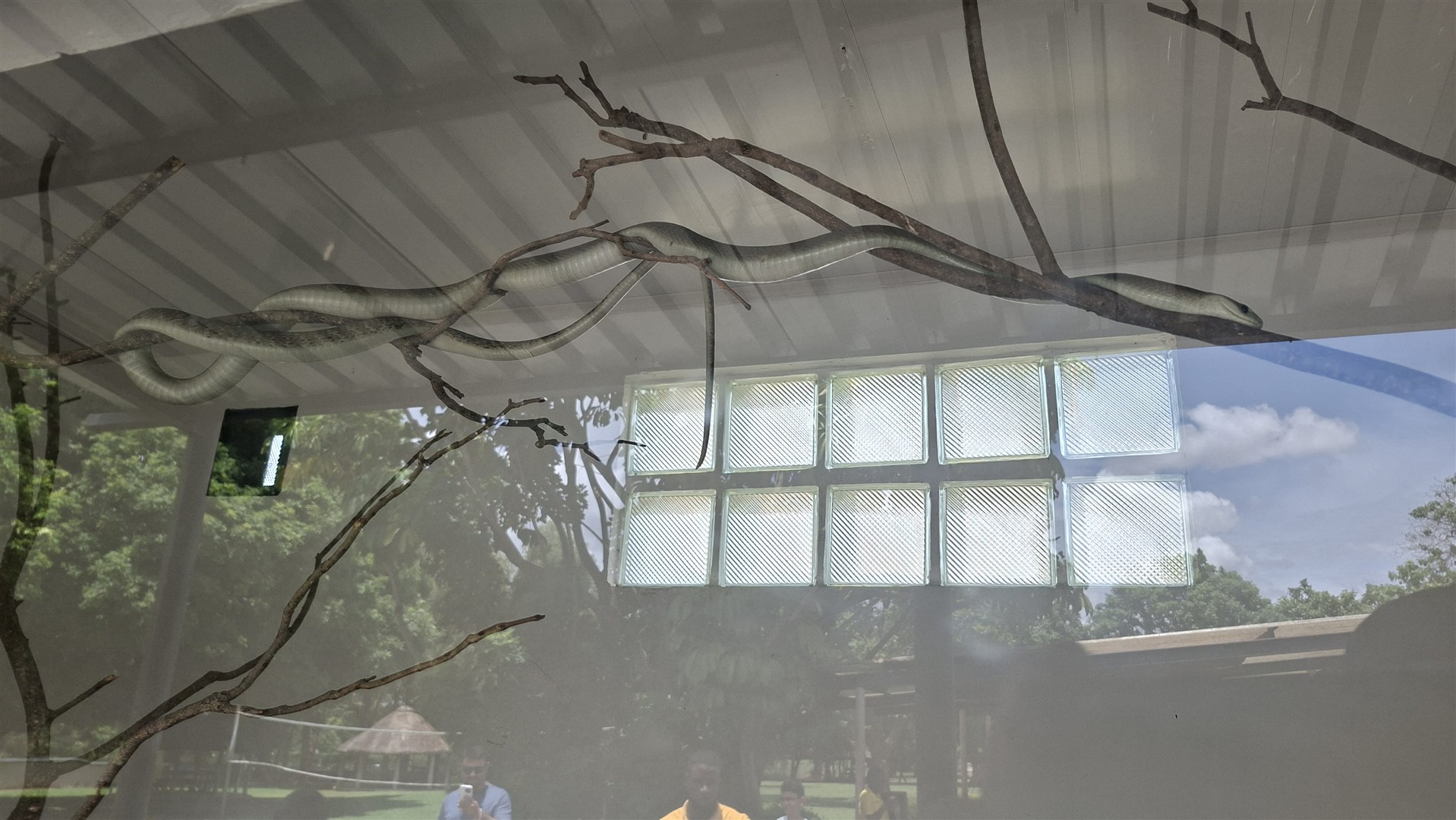
Snakes at the reptile park.
The first was the Kalimba reptile park, which wasn’t bad. There were plenty of snakes, with an excellent labelling system explaining their habitat and whether, and how, you’d die if they bit you. There were several ponds with crocodiles too, of various sizes and ages. The place is geared up for families, with a paddling pool and a swimming pool. There’s a play area too and lots of picnic tables spread throughout the trees. I took advantage of the café, of course.
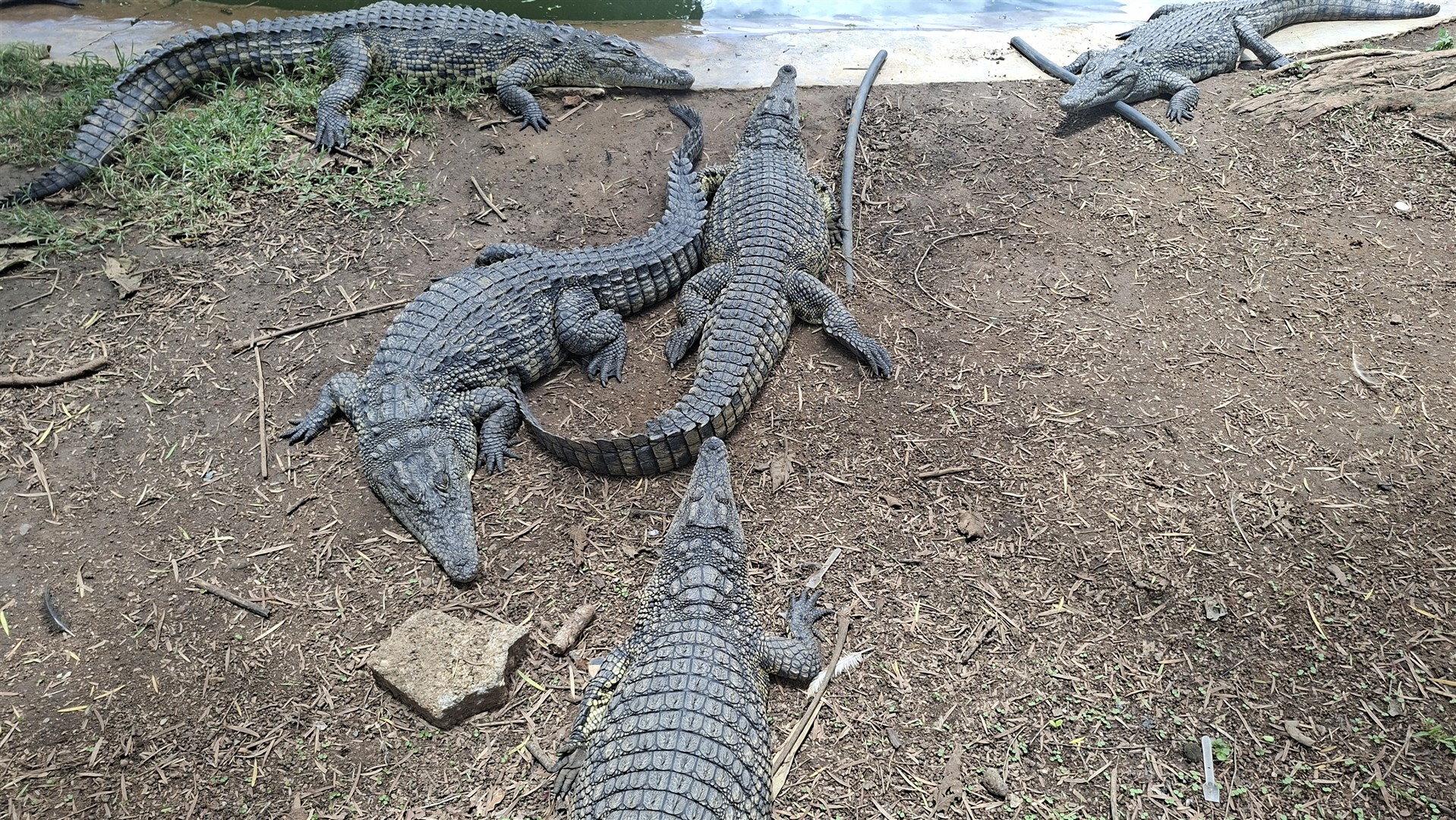
‘Gator Parade.
The second place was the National Museum. It had a couple of good sections, on man’s early history and the early history Zambia. There was lots of ethnographic stuff and a diorama of a village.
There was a big exhibition about Kenneth Kaunda, Zambia’s first president. He was a key figure in the resistance movements of neighbouring countries by giving them shelter and assistance. He is revered for that reason.
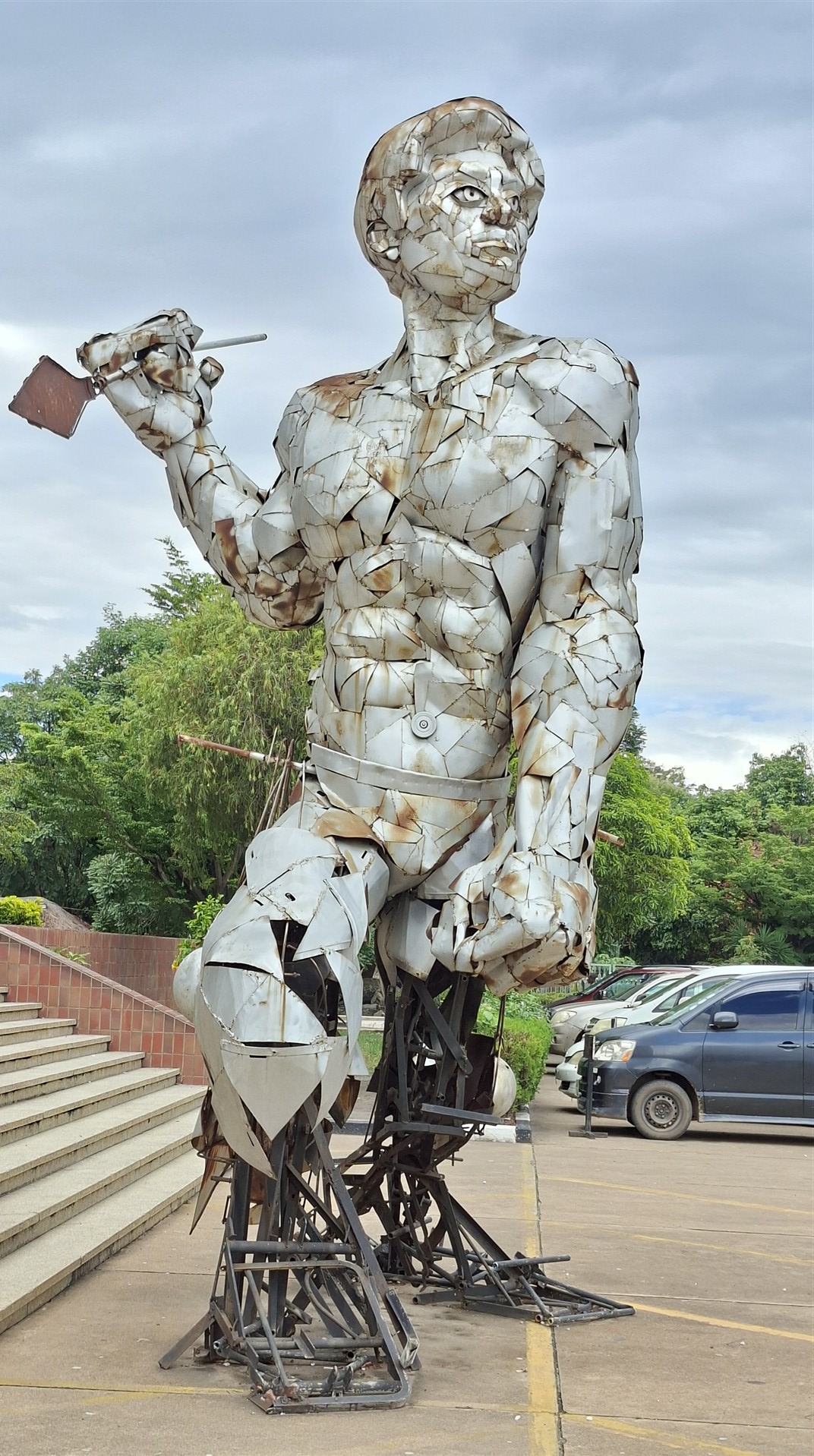
Tin Man, outside the museum. Made from old hospital beds.
There was a display about the first government, which included a white guy, surprisingly. It became a one party state in the 1990s but is back to full democracy now. It struck me that Zambian governance had been fairly stable since independence and I reckoned that was probably the reason why it seems to be more developed than its neighbours.
Nearby was the freedom statue, representing Zambia’s independence struggle. A photo was duly taken.
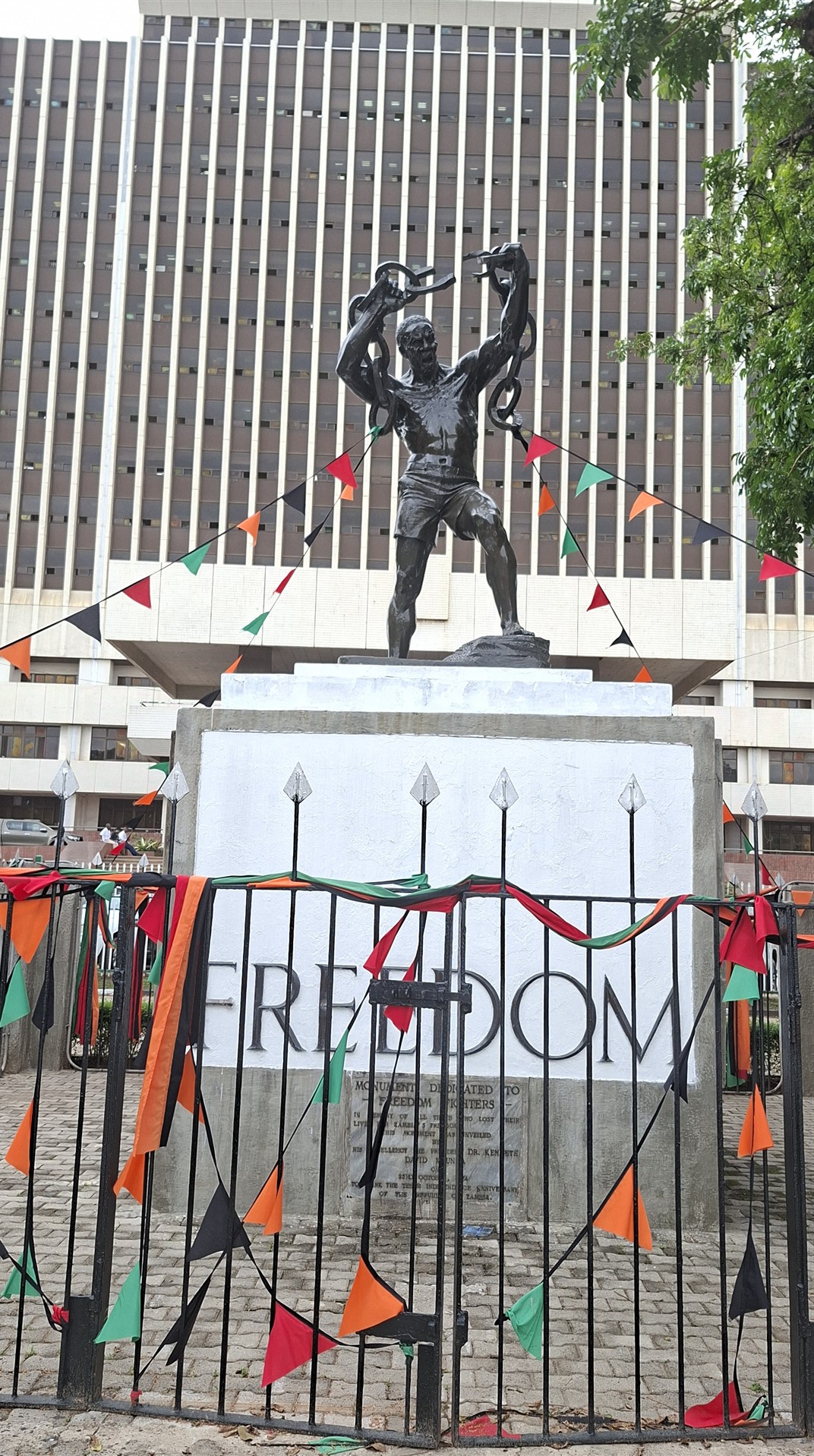
Frredom Statue.
The last place was a bit less touristy but still very interesting, the Henry Tayali gallery. It’s inside a large show ground, mostly used for agricultural shows and events, but which also has sports pitches and lots of different businesses in there too.
The gallery had plenty of good artwork, some of it ethnic and some quite funky. I enjoyed looking around. A few photos reveal all.
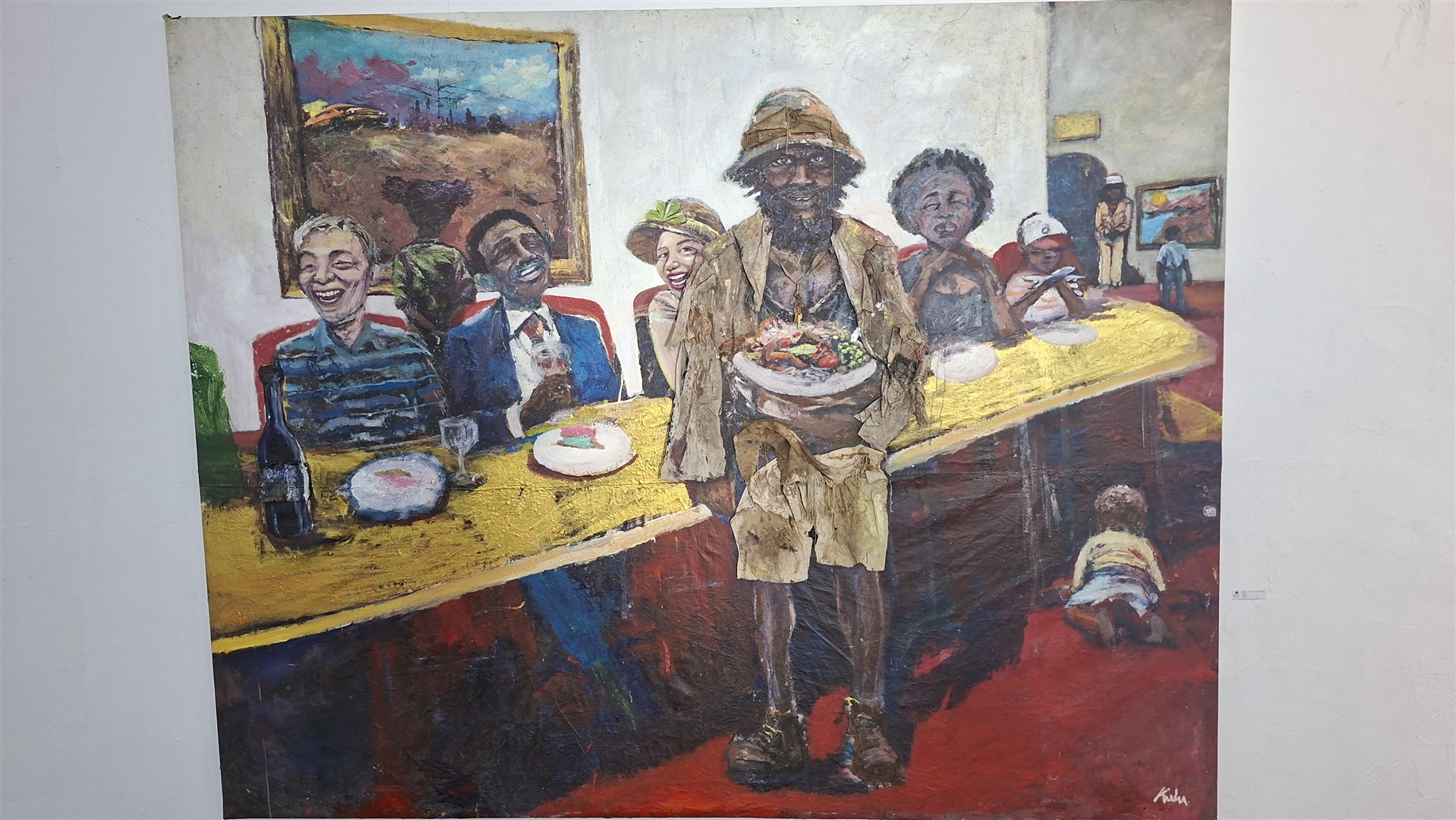
Poor man at the rich man’s table.
I got into the habit of visiting a nearby shopping mall. A very modern place, with plenty of good shops, coffee bars and eateries. Two branches of Shop Rite supermarket made it a good place for getting supplies of fruit and also, I’m ashamed to say, biscuits. Naughty!
It was a great pleasure to sit in one of the open area cafés and watch the world go by.
A couple of times I went down there with other people from the hostel. One of them was a Swedish guy whose name was Natfali. A very strange name for a Swede, I thought, but it was an adopted name.
He told me some of his family history and how he was on a pension despite being only forty nine. He also told me he’d converted to Islam and was on the run from the Swedish police.
It all sounded somewhat fantastical to me, especially when he said that some people referred to him as ‘The White Jesus’, because of his long blond hair and beard. You meet the strangest people sometimes.
Another guy I met was a young German named Jonas. He was a Journeyman. What’s one of those then? It’s a North European tradition that when a young man has finished the apprenticeship in his chosen trade he’ll go travelling and get work wherever he can. The idea is to learn different ways of working in his trade thereby enhancing his skill and his knowledge.
Jonas is a bricklayer and he’d been working his way around East Africa plying his trade. He was trying to buy a motorbike to make his travelling easier. What an amazing thing to do.
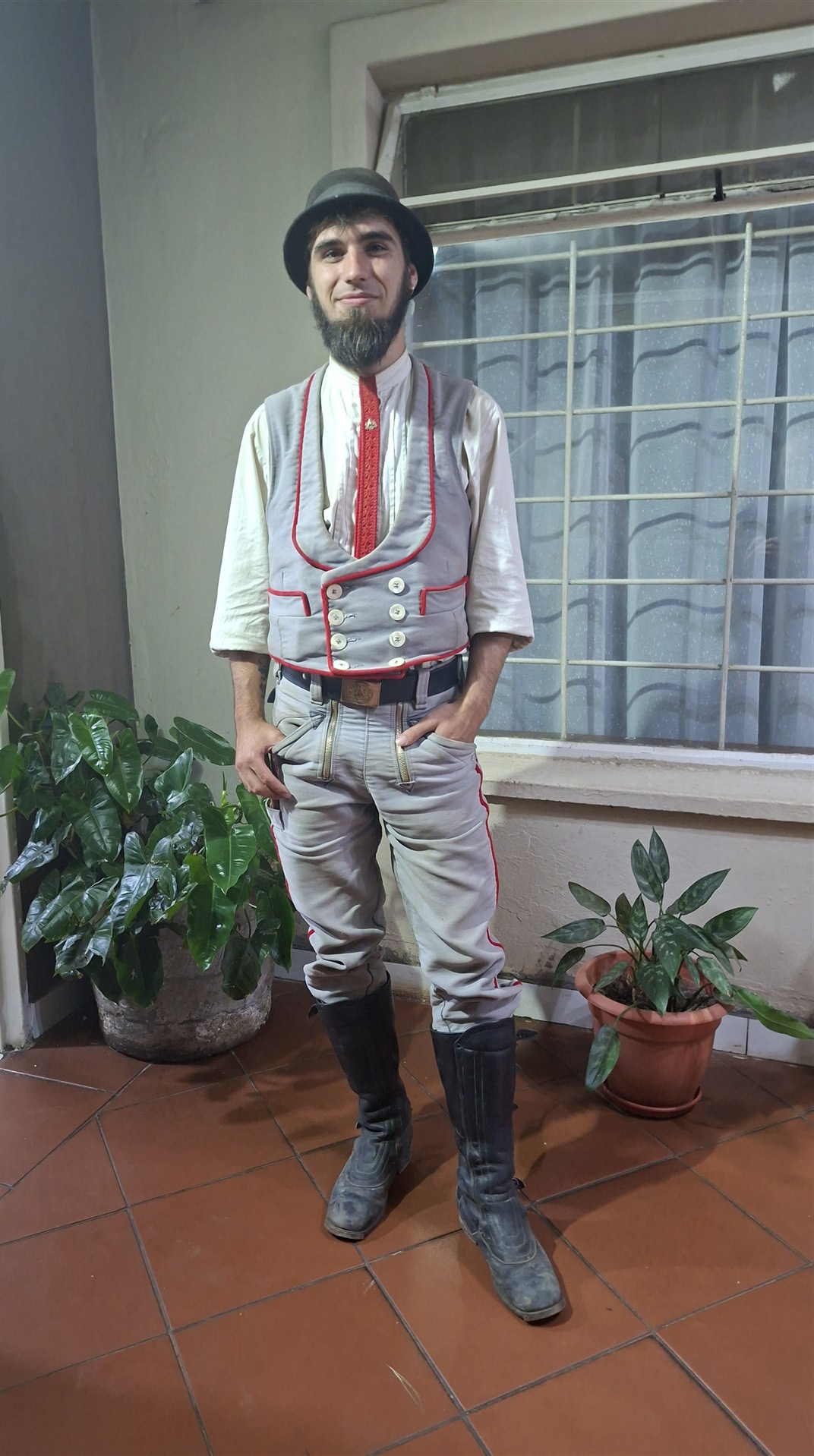
Jonas the Journeyman in the traditional German garb.
There was a young lady here named Grace who was training to be a yoga teacher. We walked down to the mall for coffee and she was telling me that she was from Rwanda but lives in Zanzibar. She hopes to be a yoga teacher and is planning a month’s training in India. She says she still needs more sponsorship money. Was that a hint? If so it was ignored.
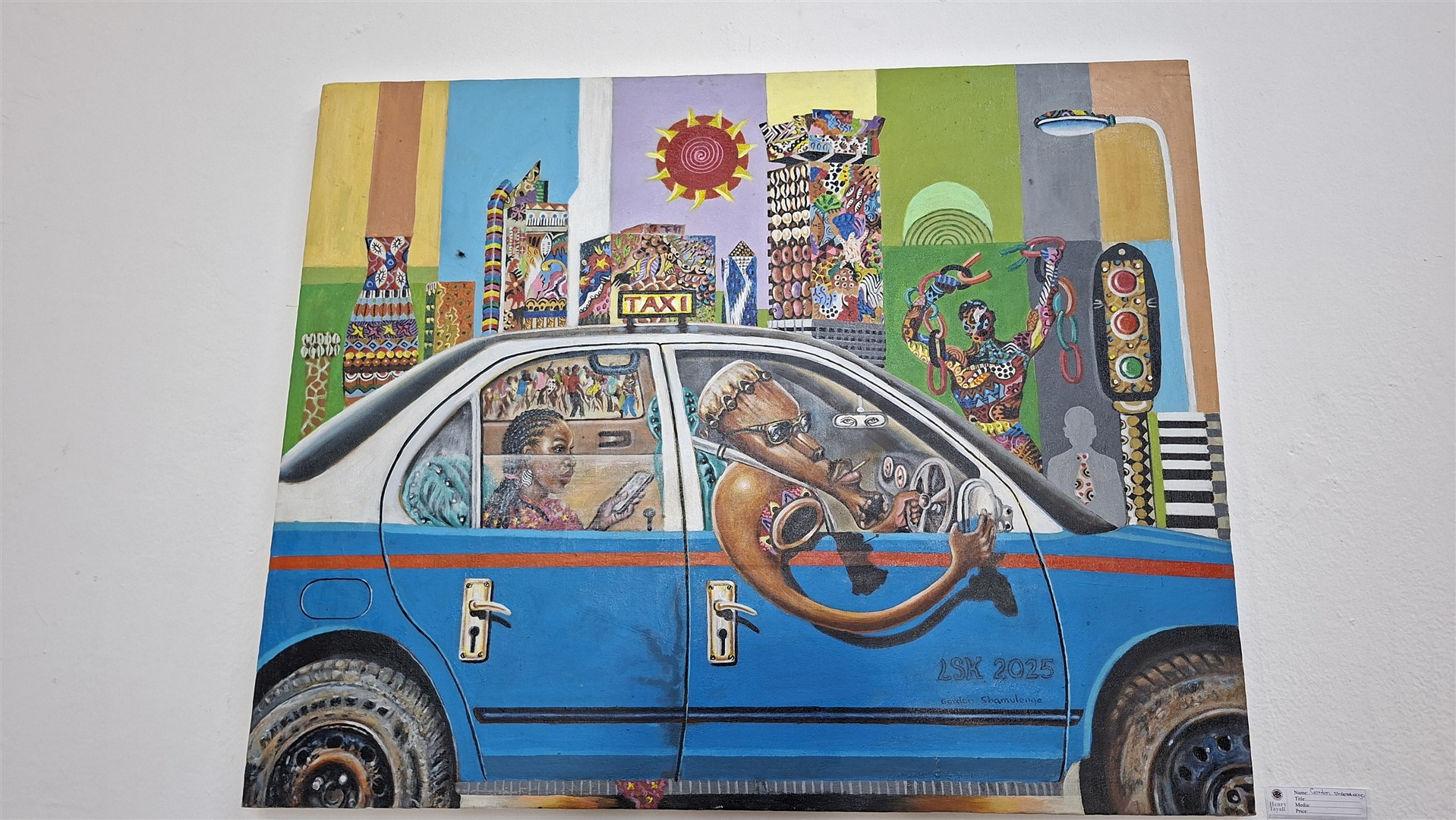
Funky taxi driver.
I decided I’d been in Lusaka long enough and needed a change. Some research revealed a place up in the north west of Zambia that had an ancient cave with drawings inside. It seemed interesting enough to be worth the two day ride and would at least provide a change of scenery.
It was a busy ride because of roadworks. There were plenty of trucks around, most of the route being the road to the border. I’d booked a night at a place called Fika Lodge.
When I arrived there I was told I’d booked a space for a tent, What! I showed them confirmation from Booking.com which mentioned a bed, not a tent, and I’d assumed I’d be in a dorm. I was going to get a refund and go somewhere else but for $20 on top of the $20 I’d already paid I got a pre-erected tent with two beds in it. It saved me messing about going somewhere else.
The food there was good and I was able to charge everything up in the lounge area as the tent had no power.
After a very good breakfast I endured a long and mostly boring ride to the town of Mpika. Straight roads most of the time, not too busy. One bit of road was severely broken up and another stretch was so narrow that trucks had to take to the dirt to pass each other.
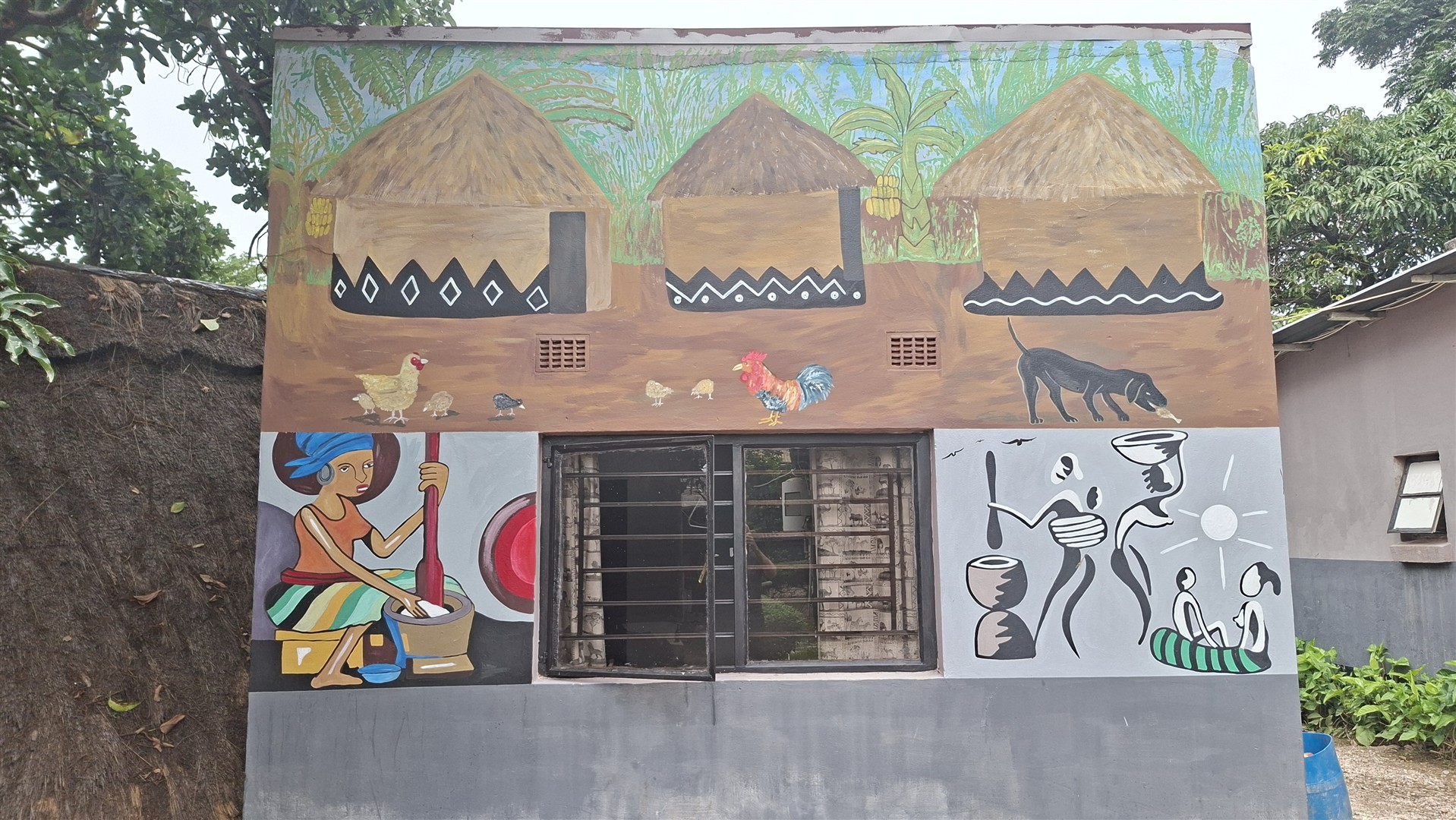
Local art.
The hotel I was aiming for was full, which is a shame as it was cheaper than where I stayed by about ten quid. But the room still cost less than the tent in the woods I was in the previous night!!
The hotel was very busy with people from mining companies. There were presentations going on so I guessed it was a conference.
I headed out to see the cave at midday. I turned down the track, over the railway and stopped at a small building. There was a young woman in there who barely spoke any English but indicated I should ride further down the track.
I parked up and waited then she called me from across the rocks. She’d obviously used a short cut.
There was a large limestone escarpment facing me. She led me to the entrance to the cave. I read all the info boards then she showed me where the drawings were.
They were nothing very special, Just some stick figures of humans and a couple of grids supposedly representing animals, although the red rock in the background looked good. There was no colour, just charcoal. They date back as far as 15,000 years.
The Nachikufu Cave itself was interesting, with a main passage running into the rock, but quite small. And another one to one side, even smaller. I wished I’d brought a torch.
The main passage was big enough to go into but only by stooping. There were loads of bats hanging about in the passageways.
The whole site wasn’t spectacular, evidenced by the general lack of tourist infrastructure. But it was worth the visit.
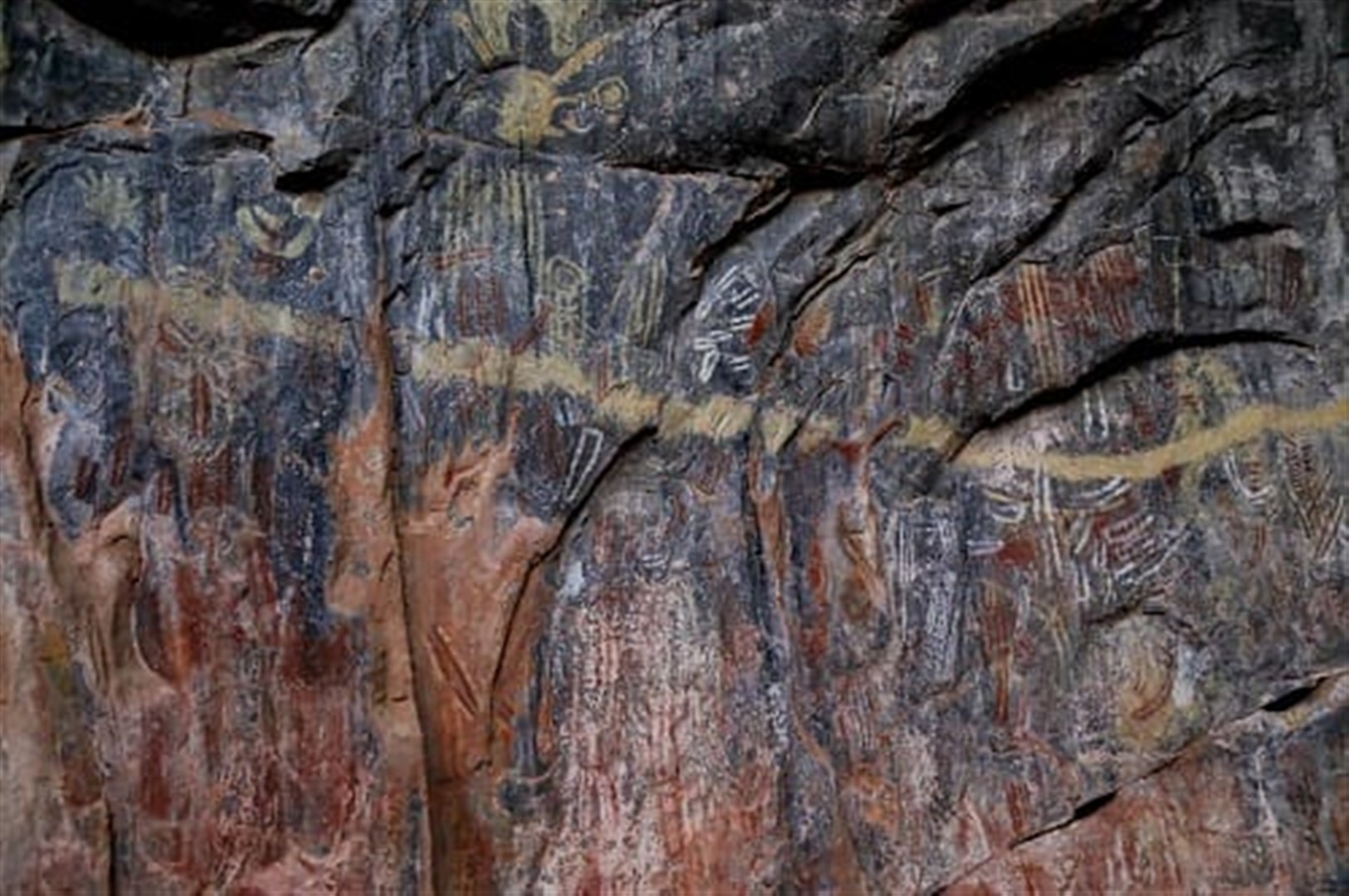
Drawings on the wall.
(In between the visit and the writing I changed my laptop and have mislaid the photos I took. So these are from the internet. Credit lies with the posters.)
Next day I headed back to Lusaka. I enjoyed some rain showers, which served to demonstrate the poor quality of my wet weather gear. I was planning to back to the UK for Christmas and that was on the list to be upgraded.
I retraced my wheel tracks to Mkisha but found a much better place to stay this time. And a much better breakfast too.
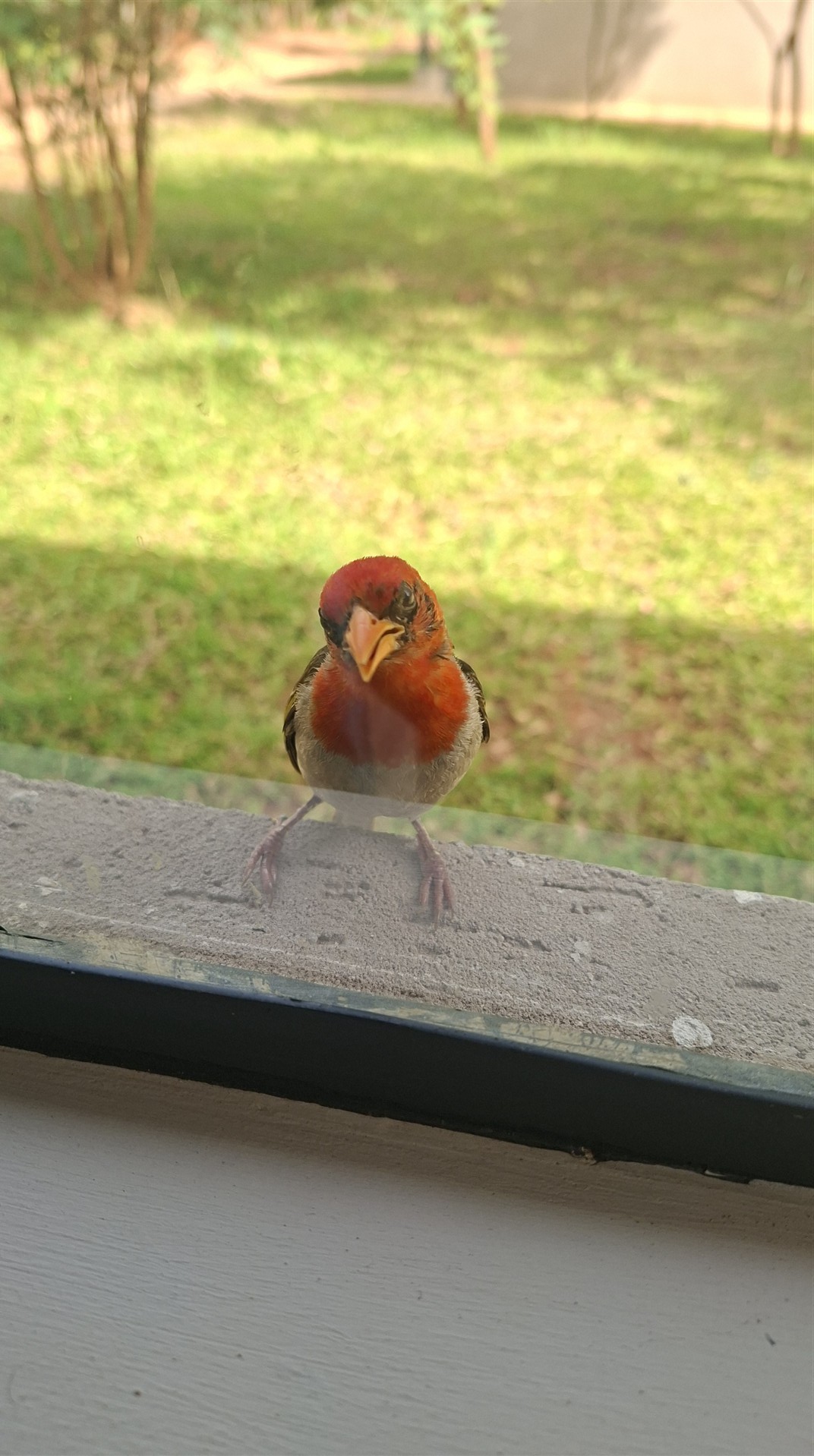
This Red Headed Weaver bird was tapping on my window when I woke up.
The first part of the ride was OK but once I joined the border road it got very busy with trucks. But all there was to do was get on with it.
Over the last few days I’ve been amazed by how many dead tucks/trailers/containers there are at the roadside. I think the drivers basically drift off the road and down into the dip at the side. Tired? High? Who knows. Yesterday I saw a tanker completely burnt out.
Eventually I was back at Natwange Backpackers where I was welcomed like an old friend. Having already stayed there for two weeks I suppose I was.
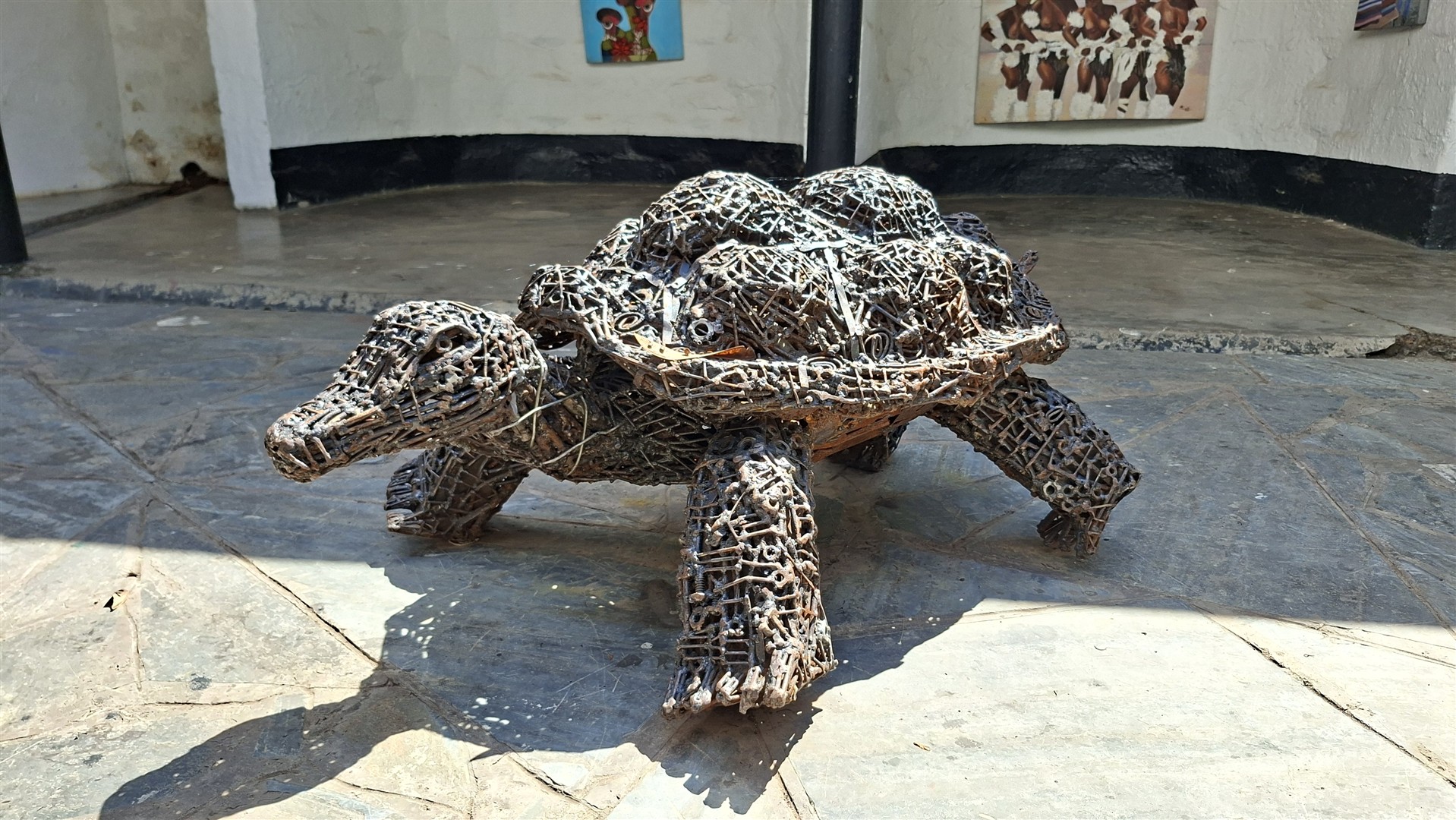
At the Henry Tayali gallery.
This visit would be a short one because of going home for Christmas. A flight had been booked. But what about the bike? That was going to be stored at a friend’s house for the four weeks I’d be away.
I went through the panniers and took out items that I hadn’t used while travelling and put them in with my normal luggage. I was carrying far too much ‘just in case’ in my case and it needed to go back.
For my last night in Lusaka I’d booked into a hostel close to the customs office. The plan was to extend the TIP first thing in the morning then get to Narendra’s house to park the bike.
When I got there I wasn’t allowed into the street where the hostel was. Security and police all over the place. I talked my way through though.
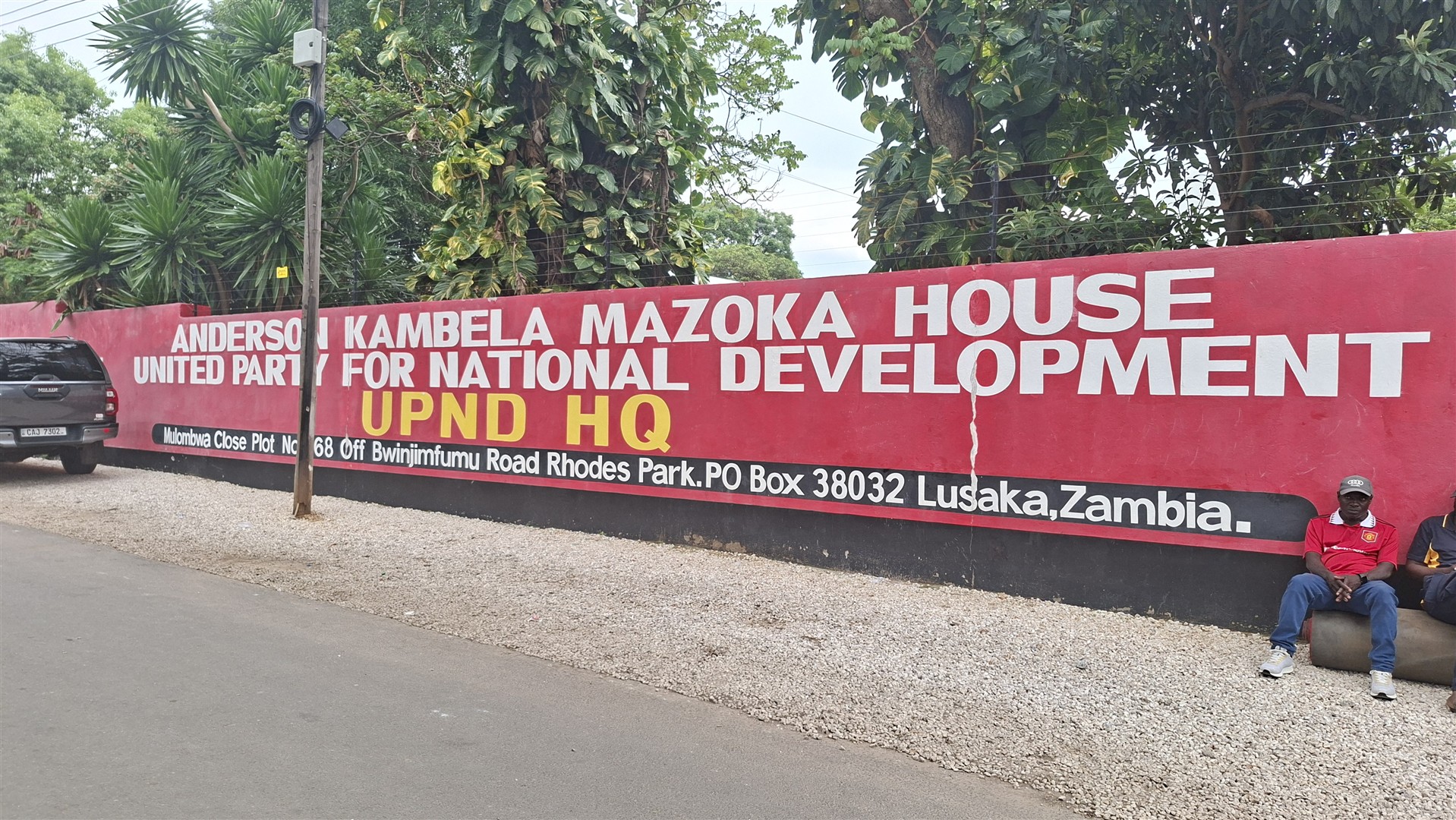
UPND HQ. The President came to visit.
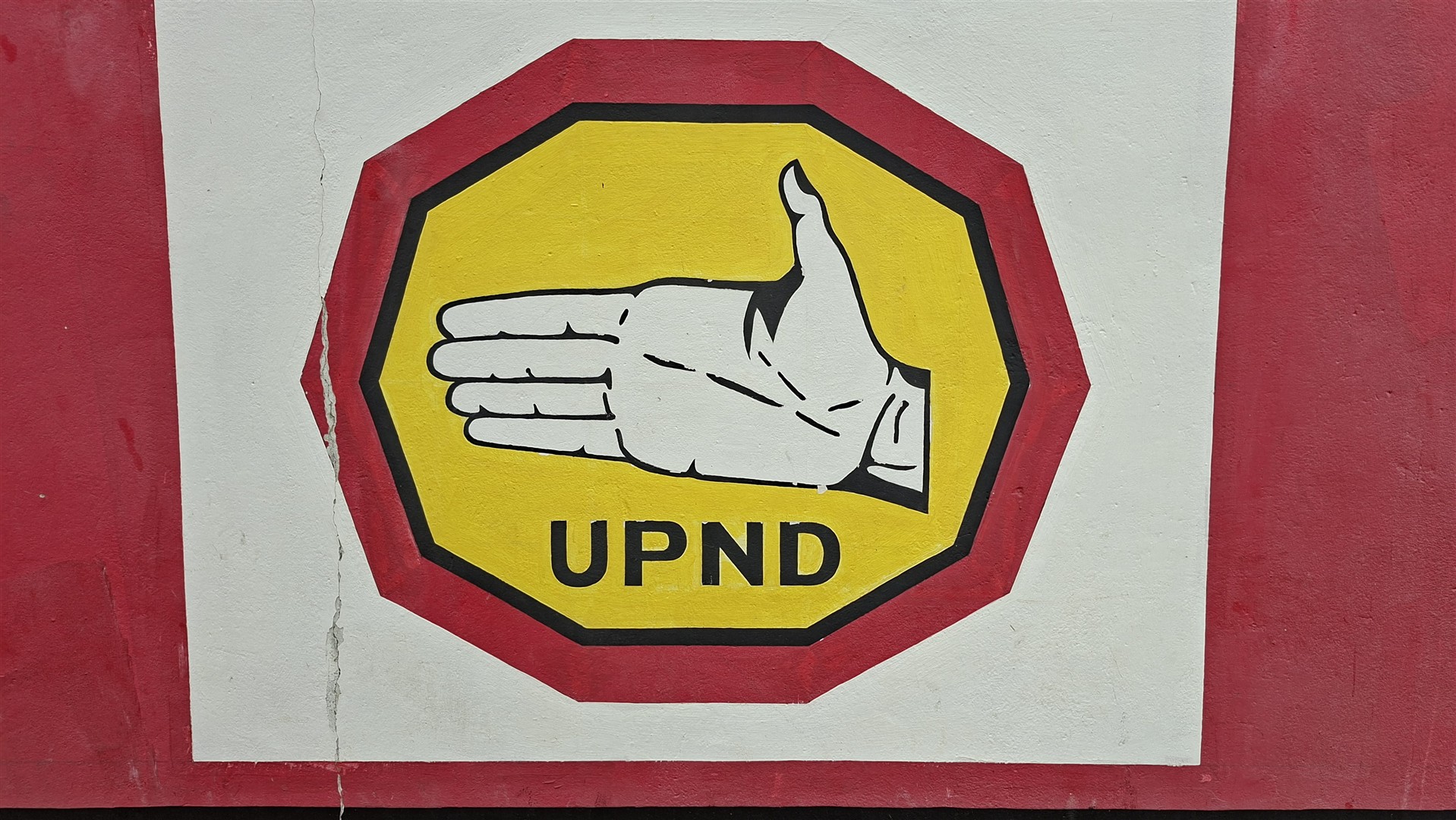
UPND logo.
Once changed I went outside to see what was happening. Across the road was a compound for the UPND HQ. That stands for United Party for National Development and it’s the ruling party.
I checked out the UPND choir, singing and drumming outside, African styli. After a while a convoy of police cars and bikes arrived, delivering the president to the compound. As time went by I heard speeches etc. It was obviously a big event.
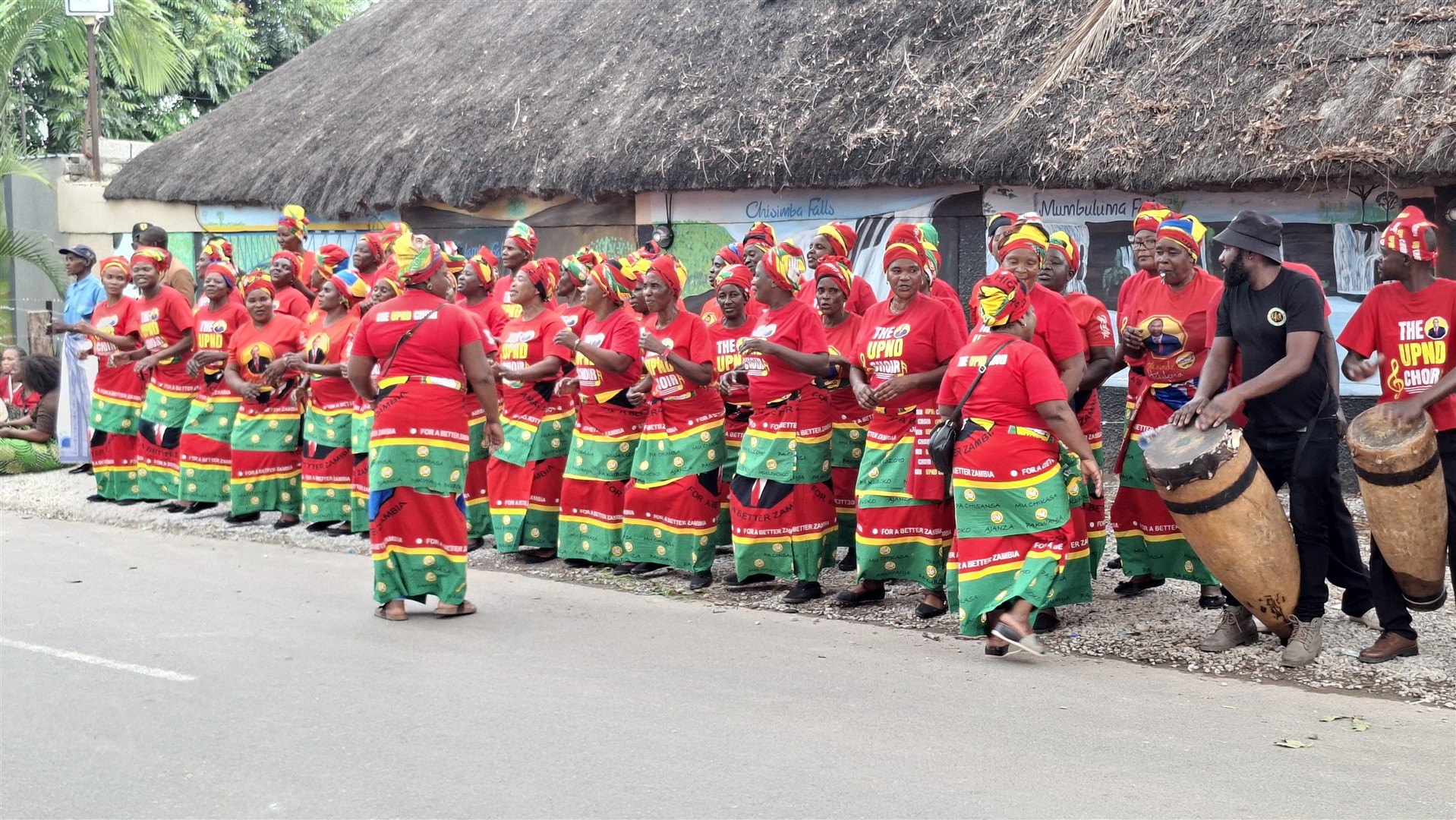
The welcoming choir. They sounded good.
I walked along the road, admiring the police BMW bikes and security vehicles. I couldn’t help but compare this small security detail to the forty vehicle convoy I’d seen when Tanzania’s unpopular president had been roaming around. I’m guessing that Zambia’s president is a bit more popular.
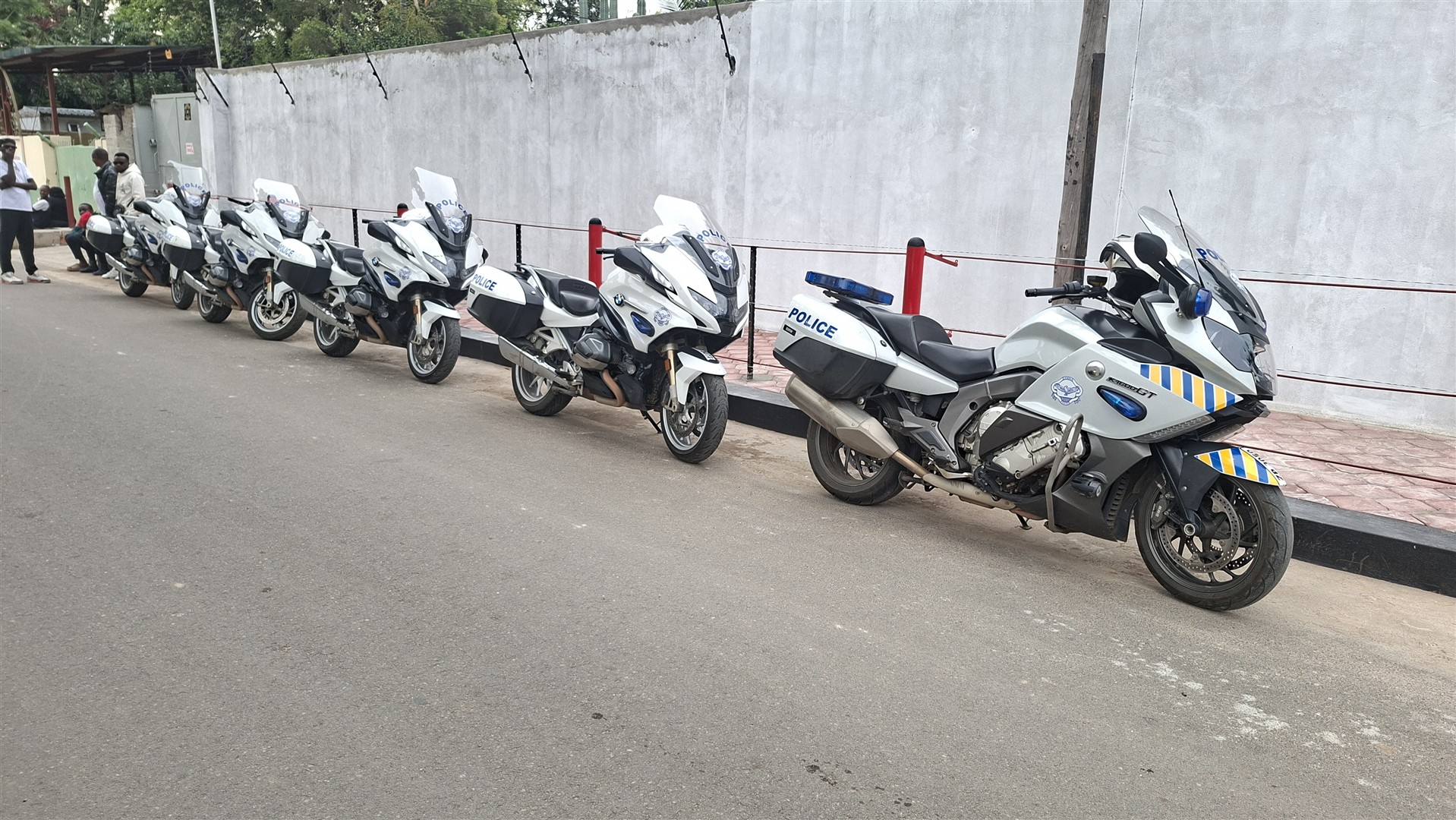
A collection of shiny BMWs.
Next morning I was out and about in plenty of time to get to the customs office nice and early. I hadn’t thought it would take long and I was right. Someone checked the numbers on the document against the numbers on the bike then they stamped the form and it was all done.
I headed to Narendra’s house and was met by his maid, Aida. Then I spent time changing into travelling clothes and sorting out the things to take back.
Then things went a little bit wrong. Narendra had offered the use of one of his drivers to take me to the airport but had forgot to arrange it. It wasn’t possible to do it at short notice.
Taxi? No. Opposite his house was a conference centre and Aida spoke to a young guy who works there. He had time to take me to the airport and we agreed a price of about £12. Quite good for a 45 minute drive.
We had a nice chat about how things worked in Zambia and what he told me confirmed my impression that it’s a well developed country, especially by African standards.
He got me there by 12:00 and my flight was at 16:15. Plenty of time to check in then relax. The only thing of note on the journey home was that I was sitting next to two children, a girl of about 9 and her brother of about 11, who were travelling alone to Paris. They were met by a chaperone at Addis Ababa and seemed to be completely unfazed by the whole thing.
What was the first thing I did after arriving home? I left my bag in storage at Victoria Station and went to the dentist for some maintenance work on my teeth.
Welcome home.
 MOTOPANGAEA
Always good to see your posts Geof! Enjoy and take care.
LikeLike
Thank you Seb.
LikeLike
Great
LikeLike