
Seeboden, Austria. 1st August 2024.
With Michael heading west, back to Ireland, it was time for me to head east. The aim was to cross the rest of Austria and get to Slovakia. It would be my first unknown country on this trip, having been in Austria on a family holiday when I was sixteen.
The next few days were routine, with a mix of riding that included highways, forested hills and flat, windy farmland. The bike and I were settling in together, although sometimes the front wheel felt a bit jittery. Was it the new tubeless rims, the tyre or the road surface? I didn’t know. It wasn’t there all the time so I just lived with it.

Nice decorations above a shop, where I stopped for lunch.
As I crossed the border into Slovakia I noticed that cars going into Austria were being stopped. That puzzled me as both countries are in the Schengen Zone. Checking for migrants was my guess.
I reached Bratislava, Slovakia’s capital, and found a hostel. I had to park the bike in the street. Whenever this happens I put a disc lock on the front wheel and a cover over the bike. That’s the best I can do for security. But my theory is that the biggest risk is petty theft from the panniers and if they’re covered up that risk is pretty much eliminated. Let’s be honest, if a bike is in the street and somebody wants to steal it, they’ll find a way. So I don’t tend to worry about what I can’t prevent.
Slovakia used to have ‘Czechko’ attached to it but with the collapse of the Soviet Union, and Yugoslavia along with it, they became two separate countries. Initially they remained as one but nationalism in both countries became stronger and the ‘Velvet Divorce’ took place in 1993. But both countries remain the best of friends and both are in the EU. Slovakia’s economy is doing very well, with rising wealth. But it’s not shared by everyone, as is often the case.

One of the many statues around the city, to entertain the tourists. No, I don’t know who she is.
There’s a ‘free’ walking tour of the city available so I went down to the starting point and met a young woman named Gabriela. Nobody else turned up so we had each other’s undivided attention.
The city has existed for at least a thousand years and was at that time the capital of a large area called Moravia. That was eventually subsumed into Hungary. The city’s main claim to fame is that because the Ottoman Empire took over most of Hungary, the rulers had to decamp from Budapest and make Bratislava their capital until the Ottomans were defeated. The old castle was rebuilt for the purpose of accommodating and crowning the royal family, which went on for about 300 years.

Bratislava’s castle. Suitably on top of a hill.
We went up to the castle, which looks very impressive, but didn’t go in. It’s a museum now. She pointed out the former Soviet tower blocks, on the other side of the Danube. They’re now being refurbished and sold off at a high price because they’re so close to the city centre. It’s strange to think that Austria, which isn’t far away, used to be a cold war front line.
The area was occupied by the Romans so the Danube was a natural barrier between them and the German tribes.
She showed me some of the odd statues around the city centre, such as the one of a man emerging from a manhole, and a couple of others. I love these touristy things, designed to amuse us.

A man emerges from a manhole. No surprise really.
The two hour tour was over. When I’m part of a group tour I’ll usually give the guide €10. This time, as there was only me, I gave Gabriela a lot more. But she was worth it.
Alone, I wandered back to the castle, checking out the history of the Synagogue. It had been destroyed by the Soviets to make way for the new bridge. Next door to that was the cathedral. But it was the castle that interested me more so I hauled myself up the steep hill and into the Crown Tower, where the jewels used to be kept. It’s the only remaining part of the medieval castle.
The castle museum told the history of the city, how the castle had been altered as usage changed. I was beginning to get a feel for the history of this region.
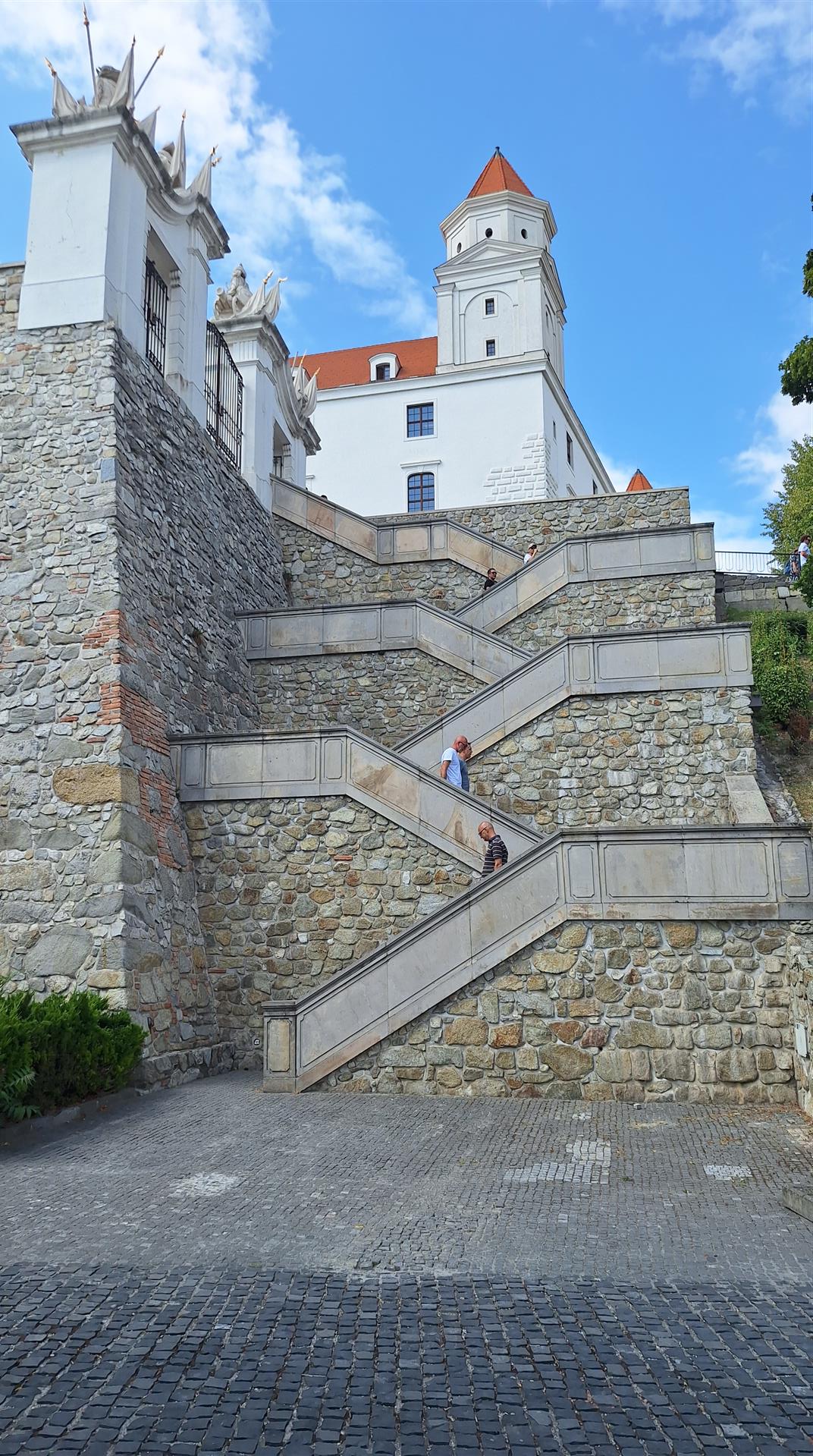
Up to the tower and museum.

The Gate Tower.
.I walked around the old city, admiring the buildings and the Gate Tower. I found a café selling Goulash and had a dark beer to go with it. A nice way to finish off a busy day.
A more relaxed day followed. That comment is relative because I still found myself walking up steep streets and lots of steps to visit the Slavin Memorial. It’s dedicated to Russian soldiers who died freeing Bratislava from German occupation. It’s surrounded by a cemetery with some mass graves and some individual ones too. Almost 7,000 soldiers died and are interred here. The monument is surrounded by a park where, sitting down for a rest, I made friends with a cat.

A fairly typical Russian memorial.
Near the hostel was a transport museum, which covered all modes except for flight. There was a collection of cars in there. Mostly locally made, which is what made them interesting. Some of the bikes were great, and odd. Especially the bike designed to seat four in line. At over 3 metres long, it definitely wasn’t practical. Lots of railway stuff, and some boat engines too. I love these mixed, and slightly disorganised, museums. They often have some gems among the exhibits and it always seems more human somehow. Exploring rather than just looking.
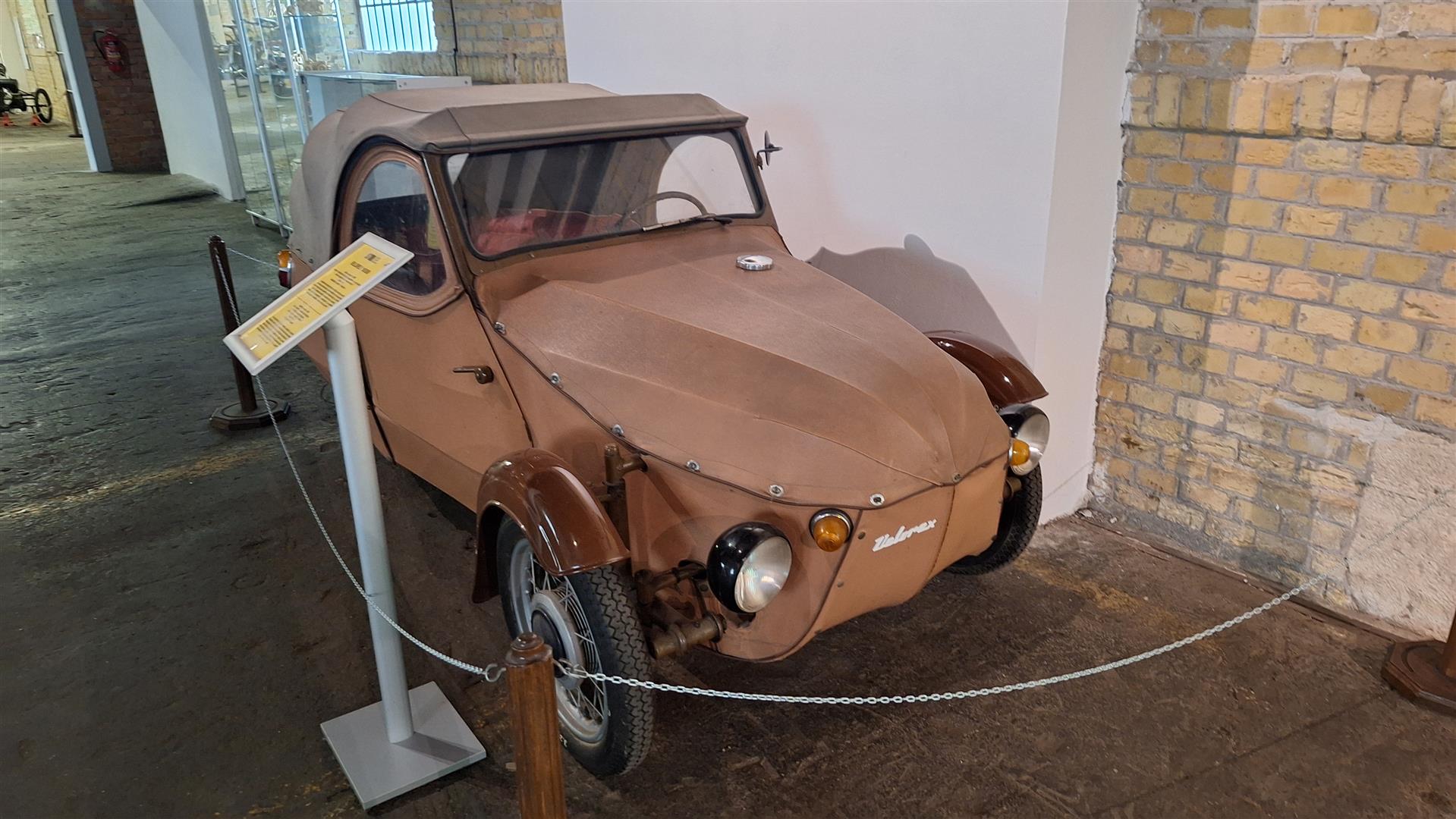
A locally made car.

Functional but pretty.
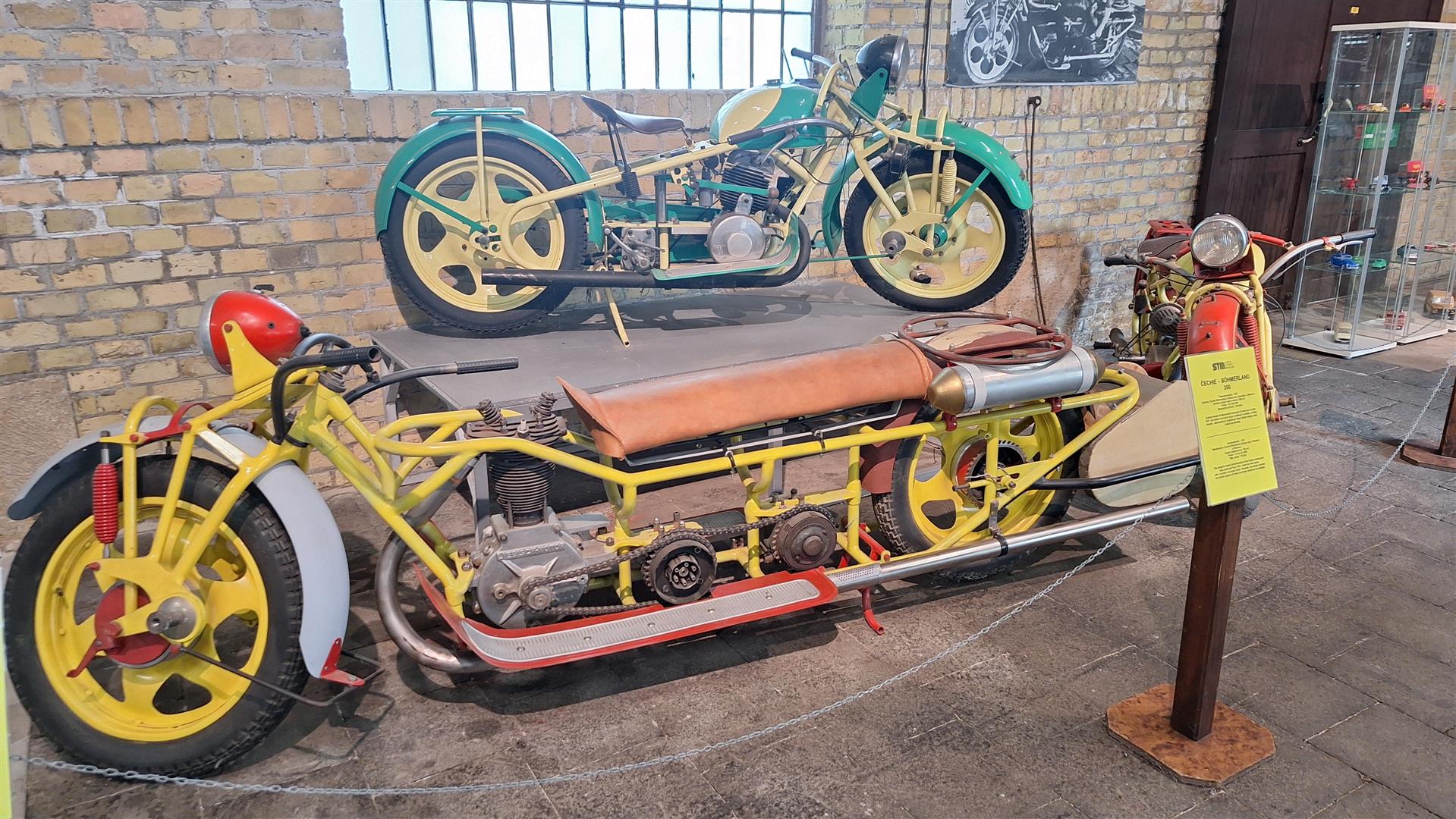
Can you just imagine riding this around London’s West End!
After Bratislava, Banska Stiavinca was the next place I visited, where there’s a mining museum. I was in a group and we were taken down below to see how the work was carried out. Various displays showed the equipment used. The signage was in English as well as Slovakian but the guide only spoke Slovakian, which is fair enough. I was given some laminated sheets with the information in English. I was told it was the same info as the guide was saying but how on earth would I know? Some old buildings were up above, worthy of a look. All in all an interesting visit.

Nice little statue outside the mine.
The area I crossed on the way here was very flat and equally boring. Closer to the mine I came to some hills, where I had to up my game a bit as the bends were quite tricky and there weren’t many white lines on the narrow road. The Honda and I were still getting used to each other and I overcooked a couple of bends. Fortunately with no bad effects. Slow cars became really annoying though.
In this part of Europe I was finding that Booking.com had lots of cheap accommodation on offer. They were mostly apartments, owned by local people specifically for tourist rentals. Instinctively I’d thought that the owners would want longer term rentals but I never had a problem with booking for just one night. Mostly somebody would meet me there to give me a key and collect the money (always a cash transaction). Other times I was given the code to a key safe and the owner would meet me next day.
Some of them were just a hotel type room with a kettle and a fridge. But others were surprisingly large, with several rooms and a high standard of equipment. But to a tea drinker like me it was mainly the kettle that mattered.
In contrast to a hotel that may have had a restaurant attached, I always had to go out in search of food. But there was always a shop, especially a bakery, nearby where I could buy something. Usually a café or takeaway as well. The upside of this was that it was quite cheap and I was meeting local people.
A bit of a castle day came next. I rode round to look at the ruins of Sasovsky Castle, took a couple of photos then set off for Bojnice Castle (castle of spirits).

Bojnice Castle.
Quite a nice ride,with some back road twisties to deal with en route. I found my way there and sneaked a parking spot close to the entrance.
At the ticket office I paid my reduced pensioner fee of €10 then tried to find my way in to the castle but couldn’t. Back at the ticket office I found a woman who spoke English and she explained that I could could only go in there on a tour. Mine was booked for 12.45, it was now 11.45. I explained to her that I couldn’t wait an hour and asked her to help me get a refund. After an extended chat at the ticket office the decision was to put me onto the 12.00 tour. Good enough. Thank you, helpful and attractive woman.
The tour was worth it. It was, of course, in Slovakian, but I’d been given a written guide in English, explaining all the rooms we went through.

Amazing carving on this ceiling.
The original, wooden, version of the castle was built around the early 12th century and the first stone version during the 13th. It’s been altered several times by the occupants and what we were seeing was the 19th/20th century version, based on French castles from the Loire Valley. This makes it one of the oldest and most significant monuments in Slovakia.
It was always occupied by the nobility, rulers of the local area, and the last family were the Palffys, who were forced out in 1939. Post war, it’s been owned by Slovakia’s National Museum.
It was an interesting place to see, showing the fashions of life and design in that part of Europe. I’ve visited many grand houses and castles but this one was the first located in the east. The influences came from designers and artists from both the western and eastern parts of Europe, as did the design of the building. I don’t have the skill or the will to give you descriptions of the various rooms and what they contain, especially as there’s a lot of them. So the photos will tell you some of the story.
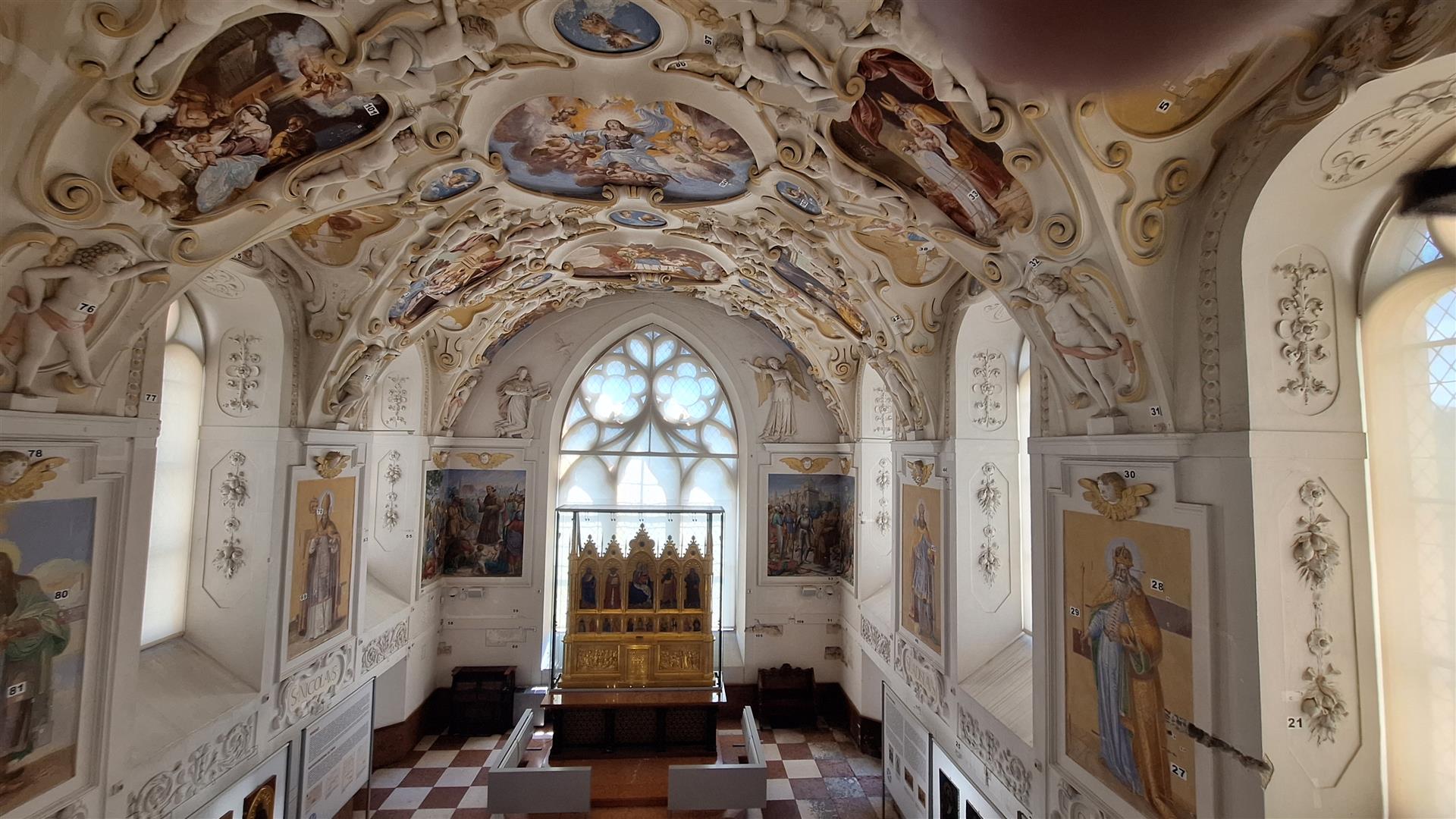
Now that’s what I call a decorated ceiling!
From there I moved on to look at the village of Cicmany, located up in the hills. It’s designated as a Folk Village, aimed at keeping a particular tradition alive as well as encouraging tourism.
It’s main feature is the geometric patterns painted with lime onto the wooden buildings. It was originally done to preserve the wood but these days even new buildings are decorated this way. Sadly, most of the original buildings were destroyed in a fire in 1921. Funds were provided to rebuild them because of the village’s importance as a folk architecture reserve. Folk festivals are held during the summer. It was a lovely place to visit on a bright and sunny day.
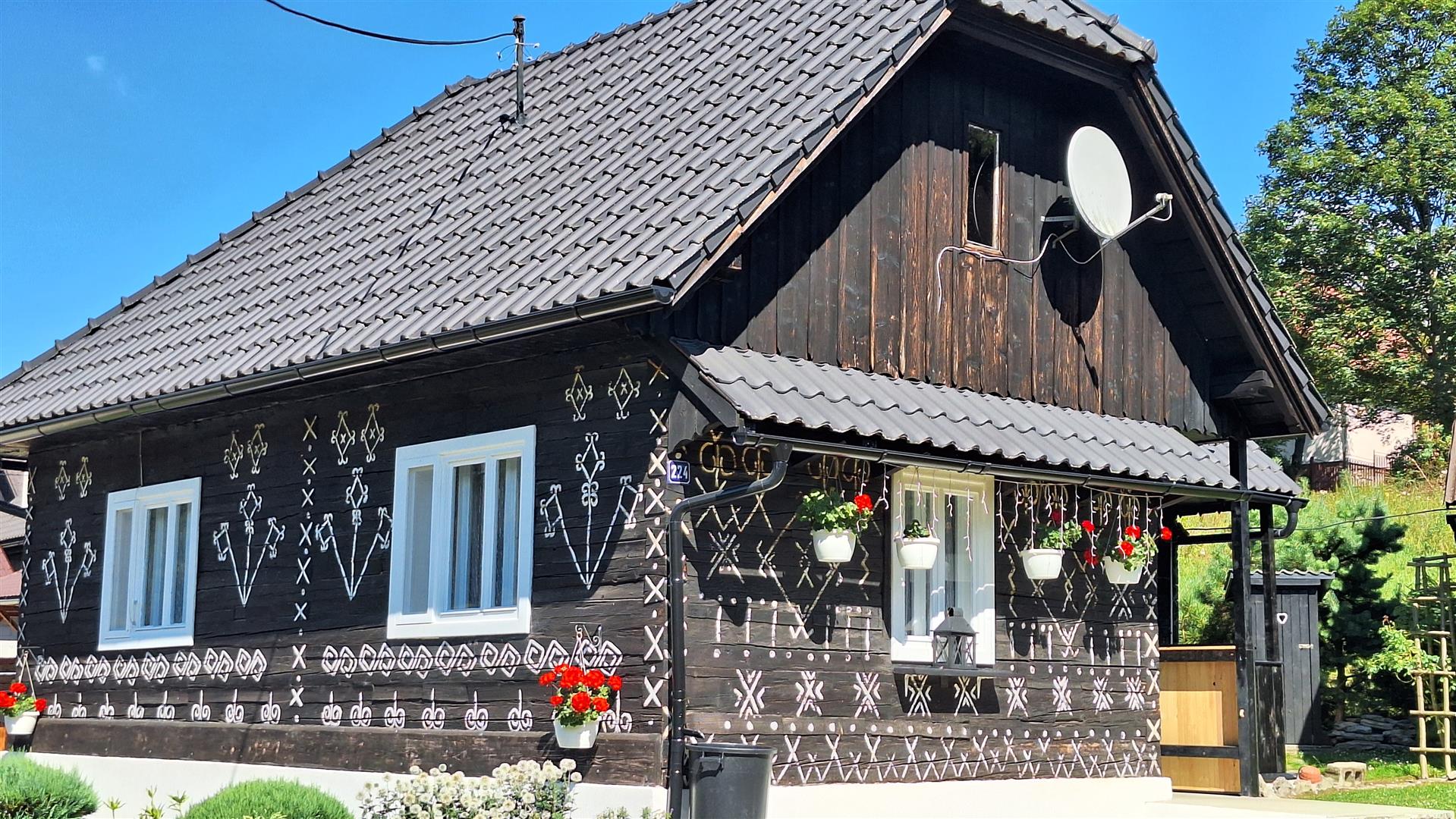
Fancy living in a house like this?
Moving on, I came to the town of Oravský Podzámok and went to look at Ovara Castle. It sits on the top of an outcrop of jagged rock. After a steep walk up there I found it to be mostly original and therefore more interesting. It dates from the 13th century and is on two levels. The decoration of the rooms is similar to that of Bojnic castle, although lower key. Nothing worthy of a photo this time. Its best feature is its location. But here’s one anyway.
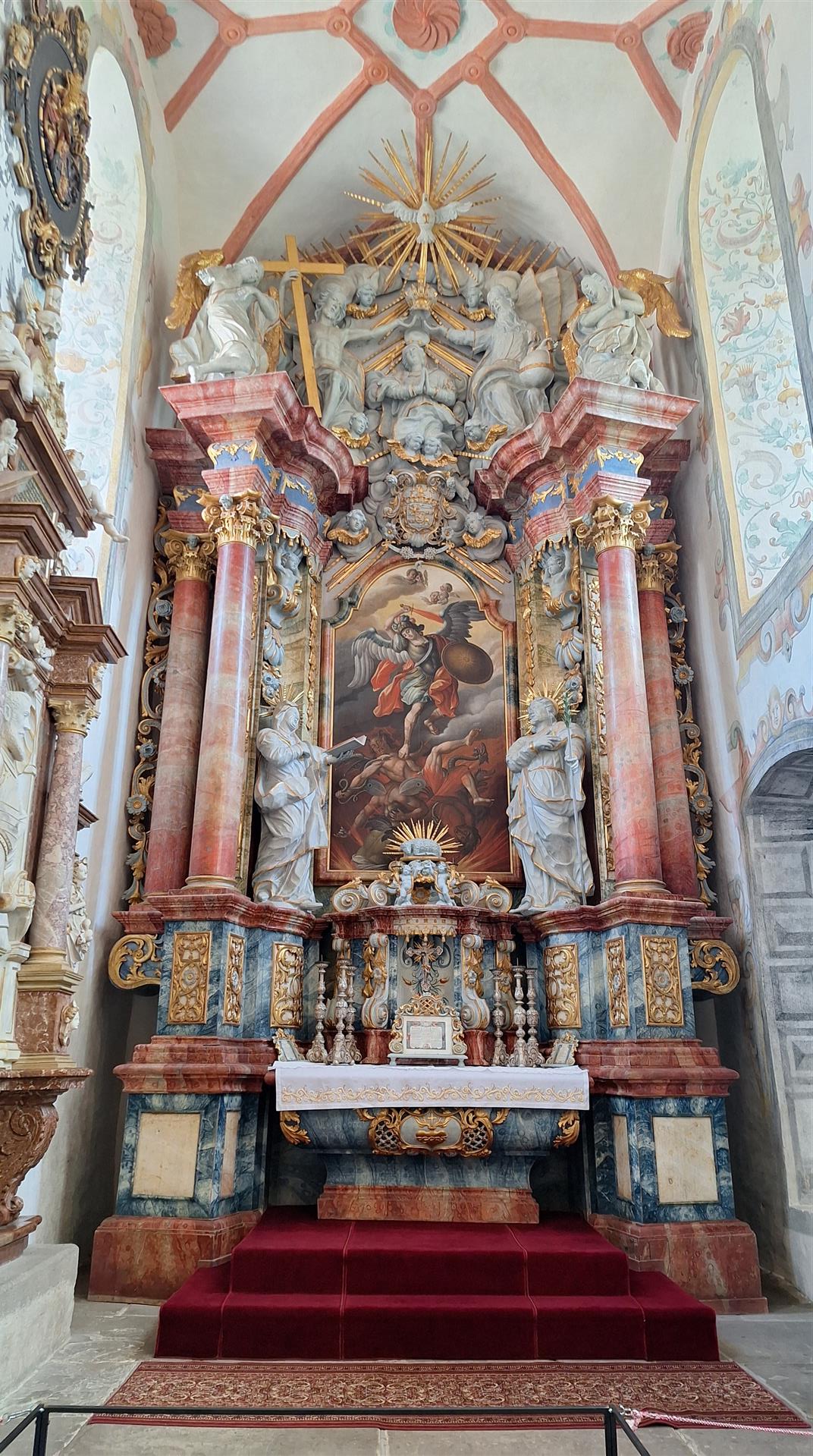
The altar in Ovara Castle church.
I stayed the night in a town called Propod and rode from there to Levotca. A typical central European town, unaffected by war damage, and therefore with a good collection of original buildings. Some very nice houses, with decorated fronts. The main attraction though, was the Tower of St James. Built in the 19th century as part of the Basilica of St James, it stands at seventy metres high.
Those of you who know me well also know that I can’t resist a tower. I just have to go up it. After climbing 211 steps I wondered if I was now cured of that habit! But the view from the top was worth it. There’s always a different aspect to a place from above. Looking down on the other old buildings gives a sense of connection that isn’t apparent from the ground, and it was nice to see the town slowly blending with the countryside, and the hills in the distance.

The Rathaus (Town Hall), in Lavotca.
When I got back to the bottom I was collared for the €1 fee by the ticket office that I hadn’t noticed when I went in. I wanted to go into the basilica but decided against it when they asked for too much money. God and Mammon are never very far apart, I’ve found. Instead I walked around the rest of the town, admiring the other old buildings. An old monastery included a coffee shop. Very sensible use of a religious building.
Y’all ready for another castle? Here we go then.

Spis Castle. Up on a hill, where castles belong.
Up in the aforementioned hills was Spis Castle. A proper ‘castle on a hill’. It’s big. And old. Medieval, in fact. After a chat about bikes with the car park attendant I walked up to have a look around.
Unusually, this castle had no connection with royalty. It was owned by families all the time, although they had royal favour. Dating from late 12th century, it was transformed from a fortress into a grand residence in the 16th century and remained that way until the family moved out to more comfortable residences nearby. It was used as a military garrison from then on until it was destroyed by fire in 1780. After that it quickly fell into ruin.
When I came back down again I saw a couple of big trikes arriving. Both had Czech number plates and they looked very bold, both in appearance and design. The yellow one had a 1.6 litre petrol engine from a Ford Focus. The blue one had the same type of engine but from a modern Volkswagen. I had a chat with the riders, telling them how impressed I was with their mobile metal artwork. And I meant it.
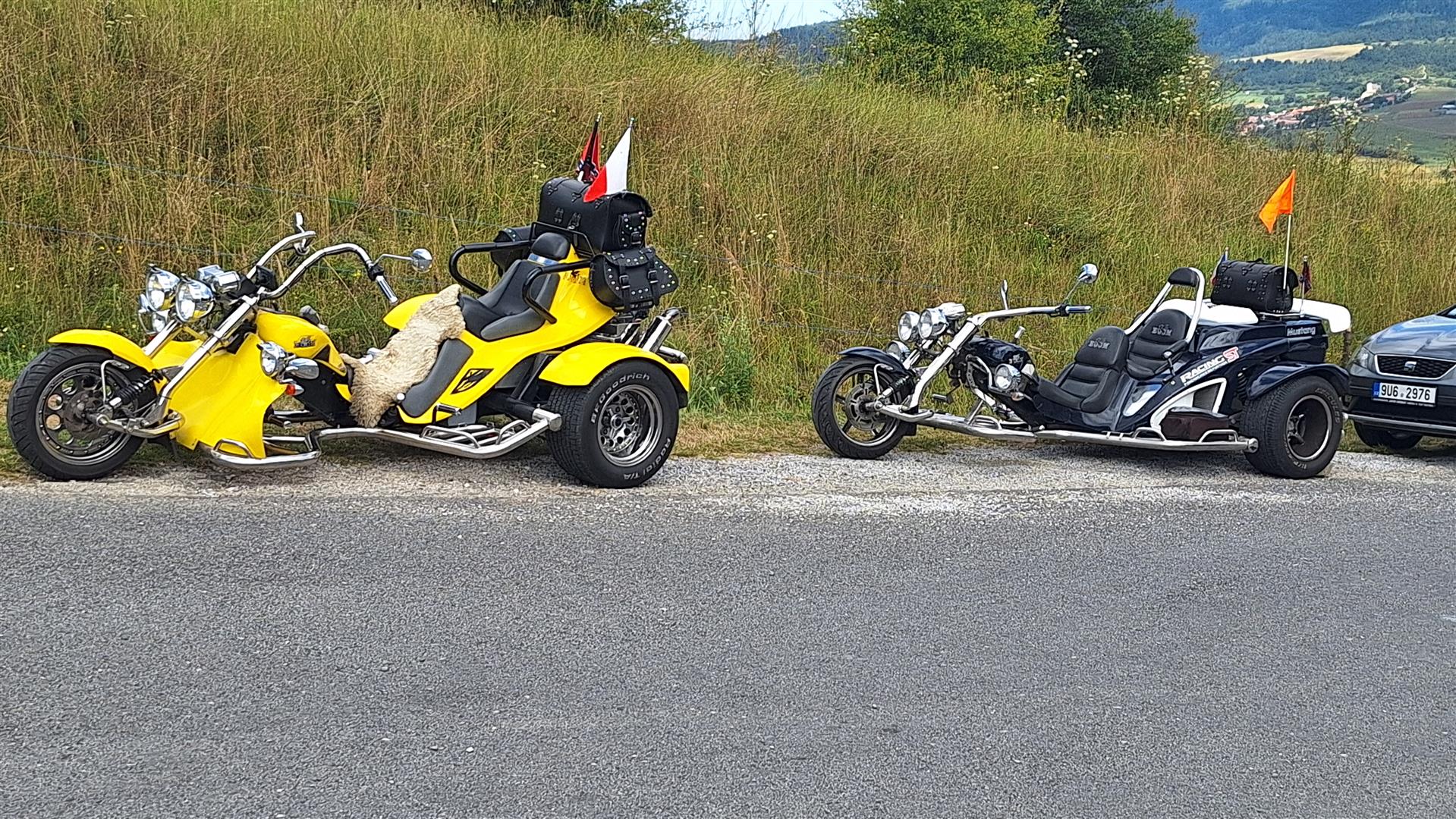
No complaints about these two beauties, all the way from Czechia.
Enough of stones now, and the buildings they make. It was time for some wood, and the the buildings they make. I rode on to Hervartov, which is a village in the hills containing a 16th C wooden church, dedicated to St Francis of Assisi. There are, according to the info board, some superb original murals inside. But it was locked, sadly, so I had to be stisfied with looking at the pictures on the board.. There were some other wooden buildings there too, built in the early 20th C. One of them had a display in it, showing lifestyle items from the era. A pretty place to call at on the way to my overnight stop of Bardejov.
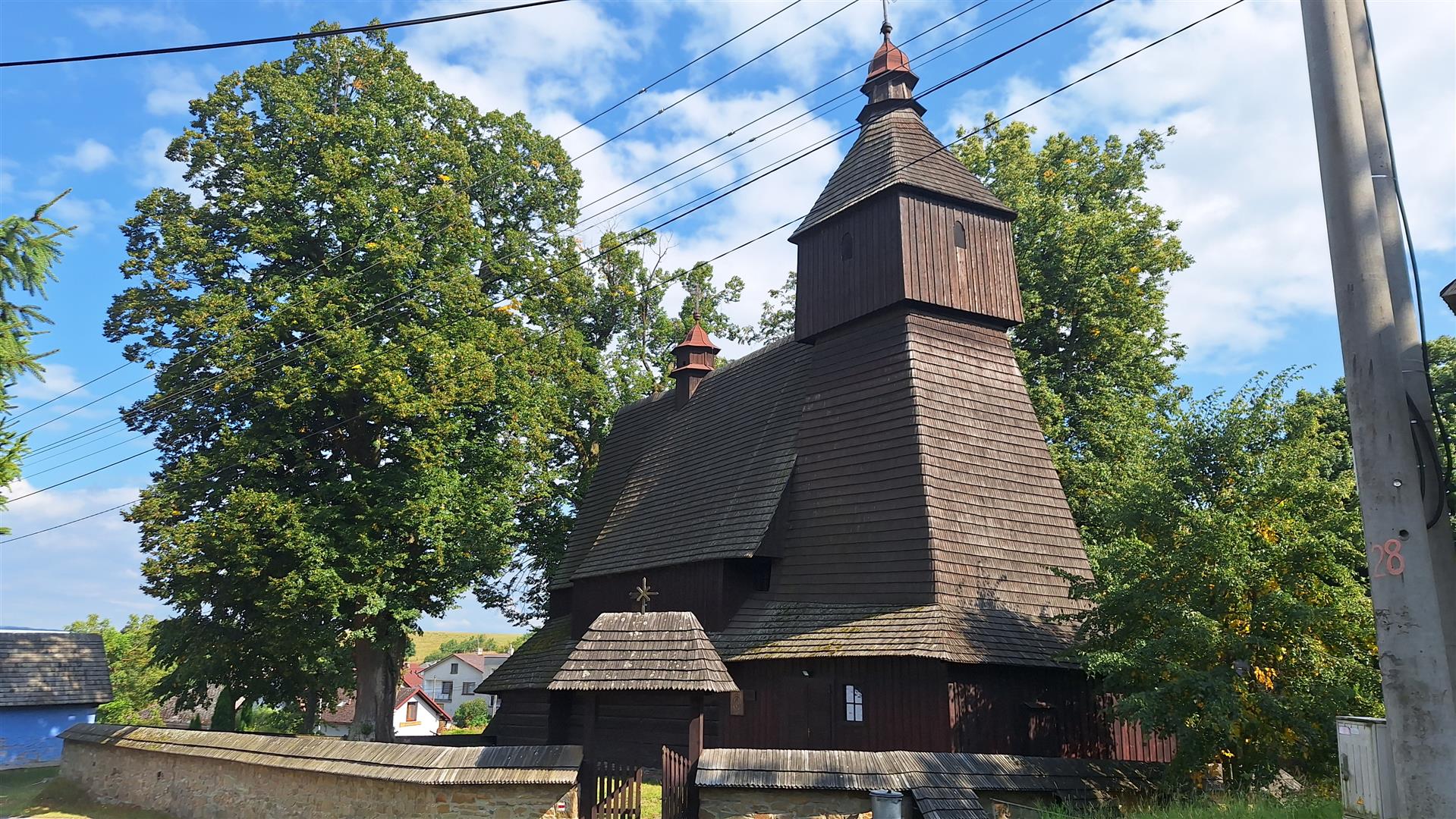
Distinctively designed wooden church.
Bardejov had a big plaza, filled with, and surrounded by, nice old buildings. A couple of churches; some bells; a town hall; lots of old shops and houses around the edge of the square. I was struggling to find a place to eat until I spotted a restaurant behind some buildings, in a pretty courtyard. Chicken in sauce and a couple of dark beers finished off a busy day very nicely.
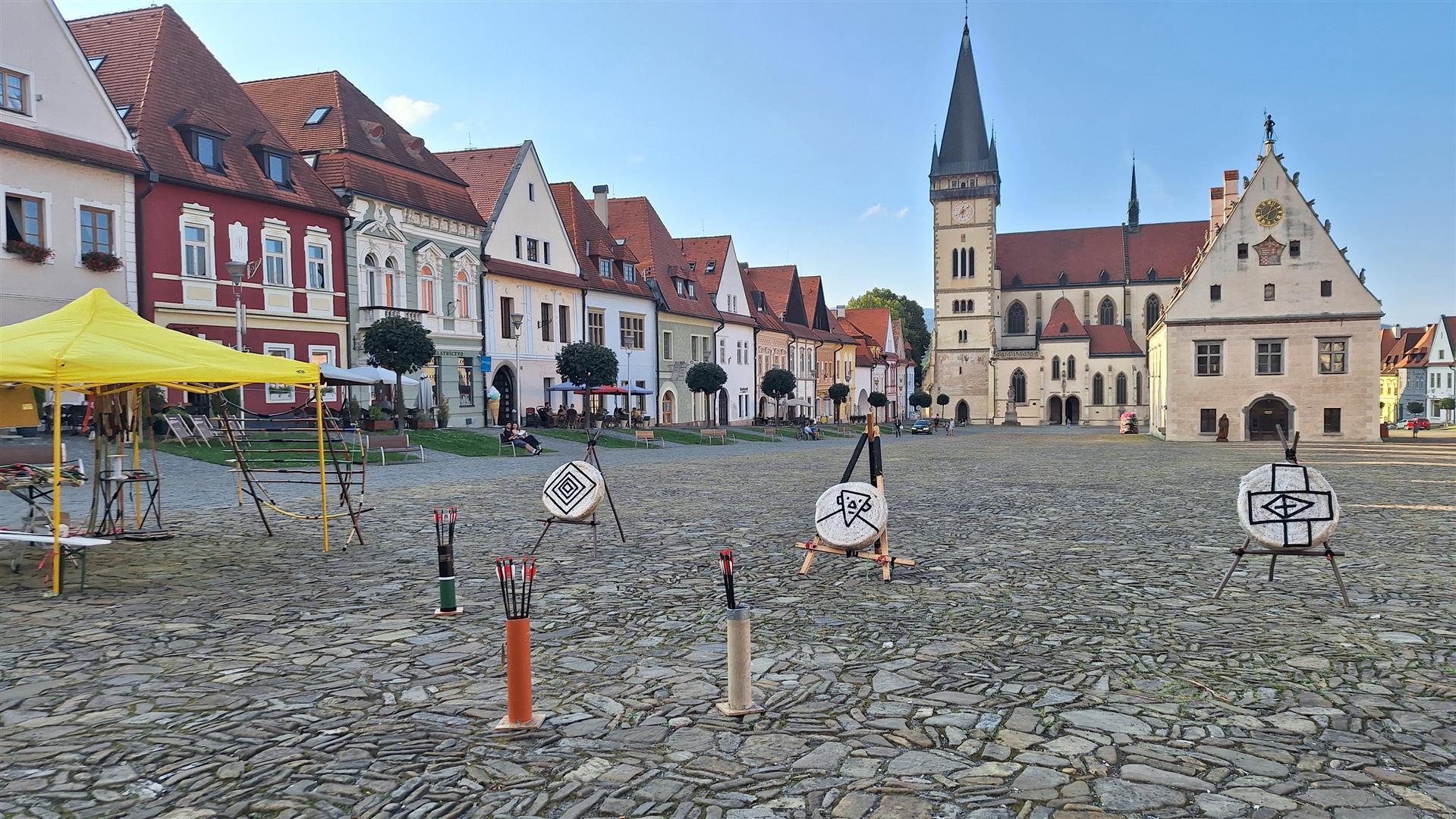
European towns often have large plazas such as this one, in Bardejov.
I don’t know about other moto travellers, but I like to keep a record of costs, including fuel bought and fuel consumption. My 12.7 litre tank was giving me around 300kms before filling up. But my ambition was to be getting 30 kms per litre, where possible. That would equate to over 80 mpg. But I hadn’t done it yet. Close, but not yet. I knew that long highway distances wouldn’t be any good for consumption but I hoped the twisty and slower backroads I was now riding would get me there.
At this point the bike had covered around 5,000 kms, so it was nicely loosened up and was running very well. One of the problems with a light, but fully loaded, bike is that consumption is affected by many outside factors, such as wind direction, fuel quality and the terrain. But I wasn’t really complaining. It was a great bike to ride and perfect for the kind of travelling I was doing.
This part of Slovakia was lower, with gentle hills and plenty of arable land. I was surprised to see sunflowers growing as a cash crop, but thinking back, I’d seen them before in Turkey. I passed through the town of Kosice, planning to look at the stunning St Elisabeth cathedral. But there was a long queue for tickets and I didn’t have that much time. Coffee and strudel was much quicker to attend to, before riding on.

St Elisabeth Cathedral. No opportunity to visit this one.
The road got more interesting. Up and down a bit, which always means bends. Google took me across country, which was pleasant. The farm land, laid out across low, rolling hills, was very peaceful and bucolic. All the roads ran through towns and villages so my speed, of necessity, slowed down. Would that help me get the 30kms/Litre I was chasing?
I was now aiming for Budapest, a city I was very much looking forward to seeing. I went through a couple more nice towns, all with interesting buildings to see, and with decorative plague statues. These were often built quite a few decades after the black plague had passed through these areas, and were quite fancy in their design.

Plague statue, commemorating those who died.
The town of Pecs had been the European City of Culture in 2010 and had a very large square, with two buildings that caught my attention. The first was a mosque that had been converted into a church once the Ottomans had been driven out. And it was easy to see that from the design.
The second one was the county hall, which had a beautiful roof, with different coloured tiles across it. But what caught my eye was the date, in Roman numerals, at the top of the building. It was written as MDCCCLXLVIII, which made no sense to me. After consulting with my kids we worked it out to be 1898. It was a very odd way of writing that date. It ought to be MDCCCXCVIII. Something I read later confirmed that as the build date.

Once a mosque, now a church.
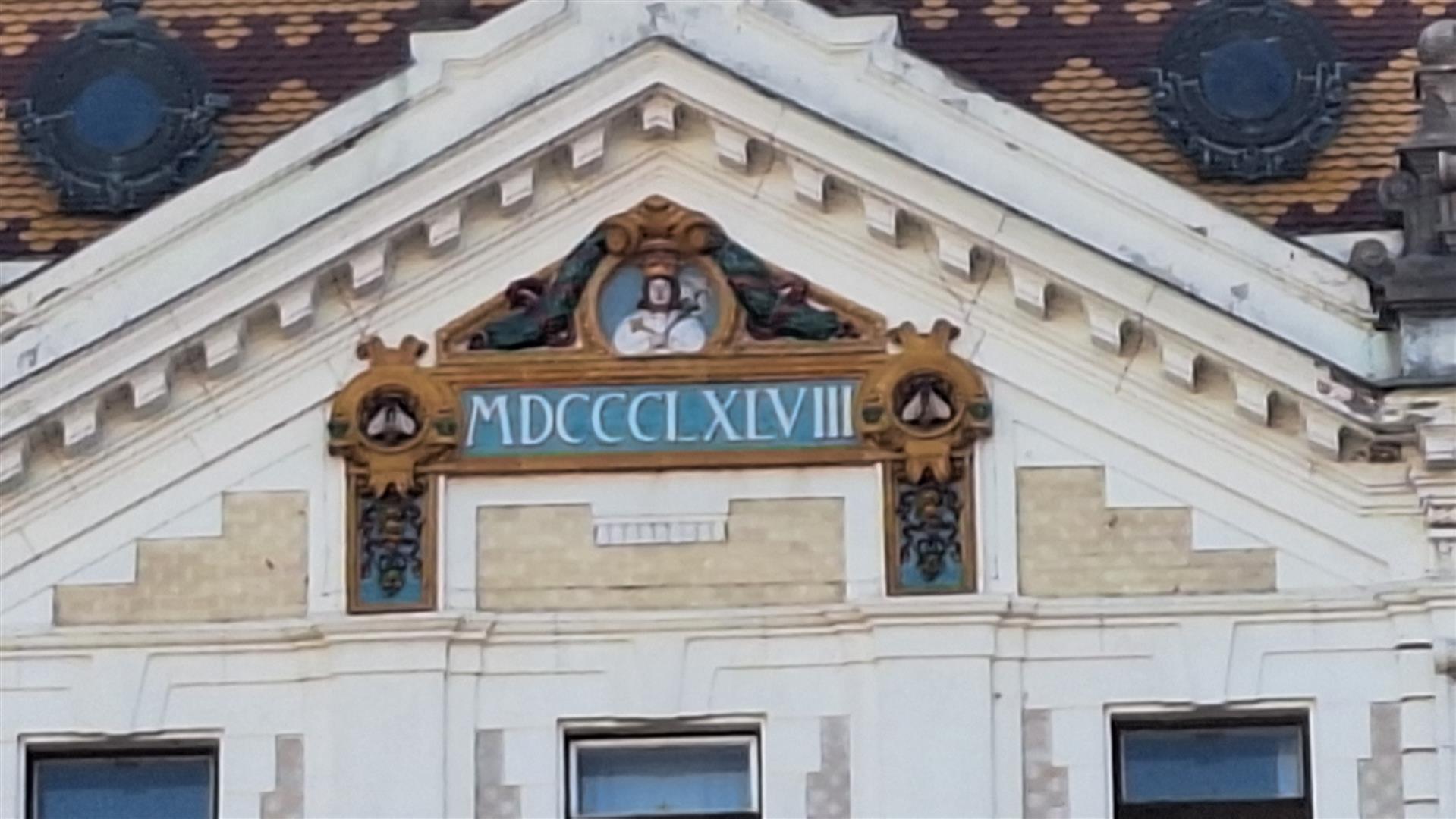
Something very odd here!
Finally, Budapest! I found a hostel in which to stay, with a small plaza where I could park my bike, just across the street. My first visit was to the tourist office to book a hop on, hop off bus and riverboat tour of the city. I reckoned it would be a good way to get an overview and decide which specific places I wanted to return to.
A bit of history. The area was settled by the Celts, then taken over by the Romans. It sits on the River Danube, which divides the city. The Hungarians came along in the 9th century but were driven out by the Mongols. The Hungarians returned in the late middle ages and Buda became one of the centres of Renaissance Europe. That was, until the Ottomans arrived. One hundred and fifty years later they were driven out. The city thrived again, with Buda and Pest unifying in 1876. The city was a joint capital, with Vienna, of the Austro-Hungarian Empire.
That empire collapsed in 1918. Between the wars the city flourished but was occupied by the Soviets after WWII. War damage was eventually repaired. The city was the scene of the Hungarian Revolution, which was eventually put down by Soviet tanks once Russia understood its threat to their system. With the collapse of the Soviet Union in 1990 Hungary, and it’s capital city, quickly took advantage of being in the EU. It’s now one of the EU’s largest cities.
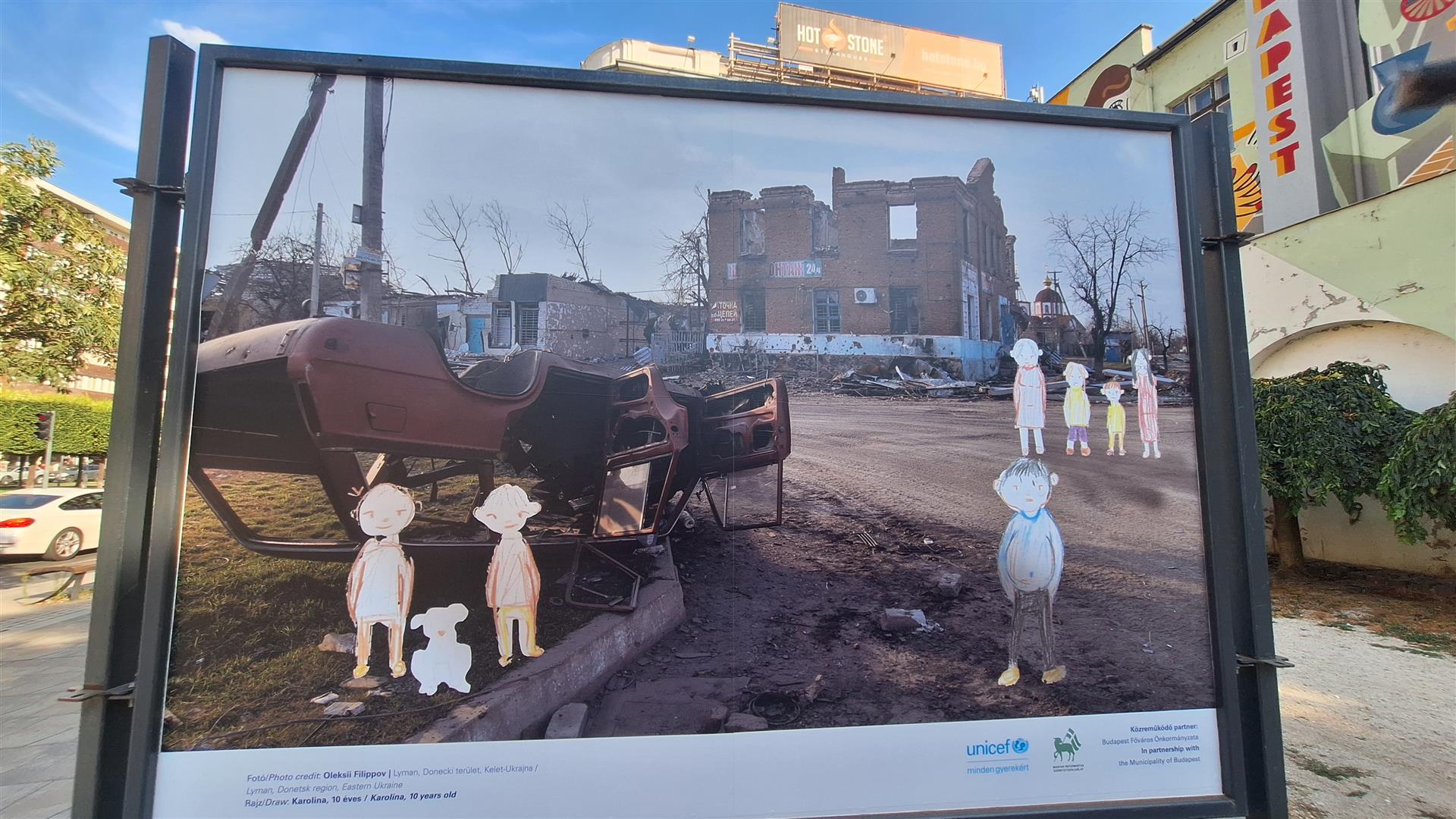
One of a series of paintings in support of Ukraine, seen near the tourist office.
I was on the bus at 09.30, earphones in place, ready to learn. I got off at stop No. 9, which is Heroes Square. There’s a huge, semi circular monument there, dedicated to all the heroes who have fought for Hungary over the 1,000 years since the state was founded. It includes statues of the seven Chieftains of the Magyars, and various other heroes. There’s a Corinthian style column in the middle with a statue of the Archangel Gabriel sitting on the top. It was surrounded by scaffolding as it was being taken down to get refurbished. On one side of the square is the Museum of Fine Arts, and the Hall of Art is on the opposite side.

Heroes in Heroes’ Square.
I went to have a look at one of the city’s several hot spa baths. They were built by the Turks and Budapest is one of the few places were they still remain. The city sits on around eighty geothermal springs. The building is a beauty, especially the foyer. The artwork is really nice and reflects the purpose of the building.

Amazingly opulent just for a baths.
Nearby was the City Park, with some heritage buildings inside it. A gatehouse tower and a castle, containing a museum. I didn’t go in but noted them to visit another day.
Back on the bus and down to the river for my riverboat trip. There’s always something good about seeing a city from its river. Important riverside buildings are designed to be looked at from the water, offering out their best side, so to speak.
The most impressive and important of these was the parliament building, the largest such building in Europe at the time it was built. Its riverfront length is 268 metres and is has a tower 96 metres in height. There is a city ordinance, still in place today, that no other building is allowed to rise above that height. Hence, no skyscrapers have been built. There are moves afoot to change that, at least in the zones away from the heritage area. The Gothic Revival style of the building makes it look stunning. It was heavily influenced by Britain’s parliament building, party because the government looked to be part of Western Europe and admired Britain’s political system.
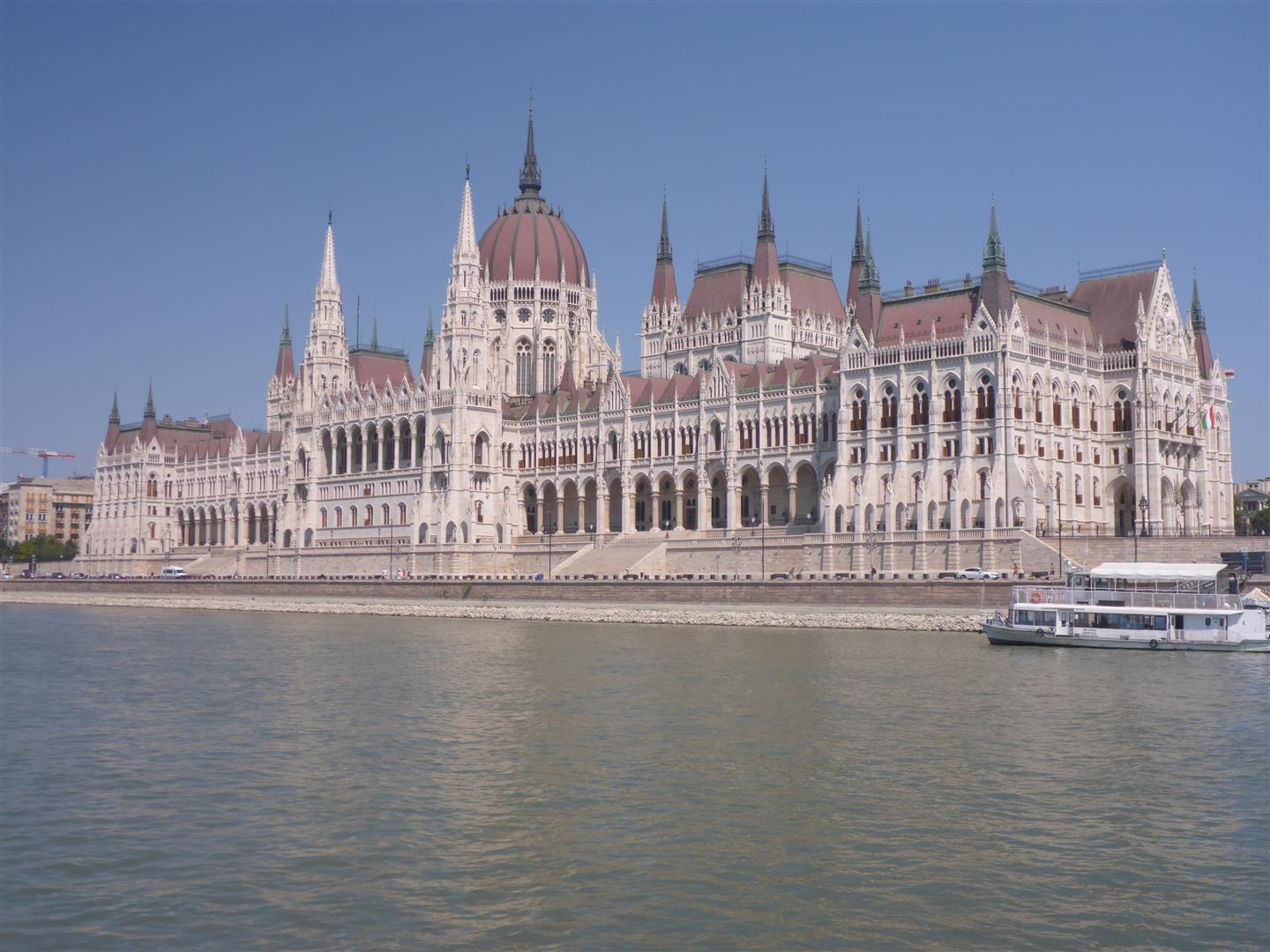
The parliament building, with definite echoes of Britain’s Houses of Parliament.
There were many other wonderful buildings on the other side of the river too, especially churches. Even the river bridges are tourist attractions, with the Chain Bridge being the most popular of these.
It was a warm walk back from the bus stop. The day was hot and sunny, making the city look especially nice. I passed the huge synagogue on the way back to my hostel and I would have gone in, but the queue was too long. When I went past it on another day there was no queue to prevent me visiting. Instead the massive entry price of £24 achieved that. What was I saying about God and Mammon?
That evening I went down to the bar area of the hostel. The building was built around a central atrium and that bar got very noisy as the night wore on. It did surprise me that almost none of the noise got through to the dorm rooms. I was there earlier in the evening and got a very lovely draught IPA to enjoy. A far better drink than the standard issue Euro largar. But I had to escape the main bar area and go into the eating section. To my great surprise smoking is allowed inside bars in Hungary. There was a no smoking section but it was surrounded by smoking areas. I was defeated, so I retreated. The beer was excellent though.
Next day I ventured out again, this time heading for the railway station. I’d read that it was a classic piece of railway architecture and I wanted to see it. Well yes, the exterior was very nice but these buildings often hide their gems inside. Not this time. The interior was very mundane indeed. I was disappointed but at least I got amused by two large groups students gathered outside, singing and chanting while they waited for their train.
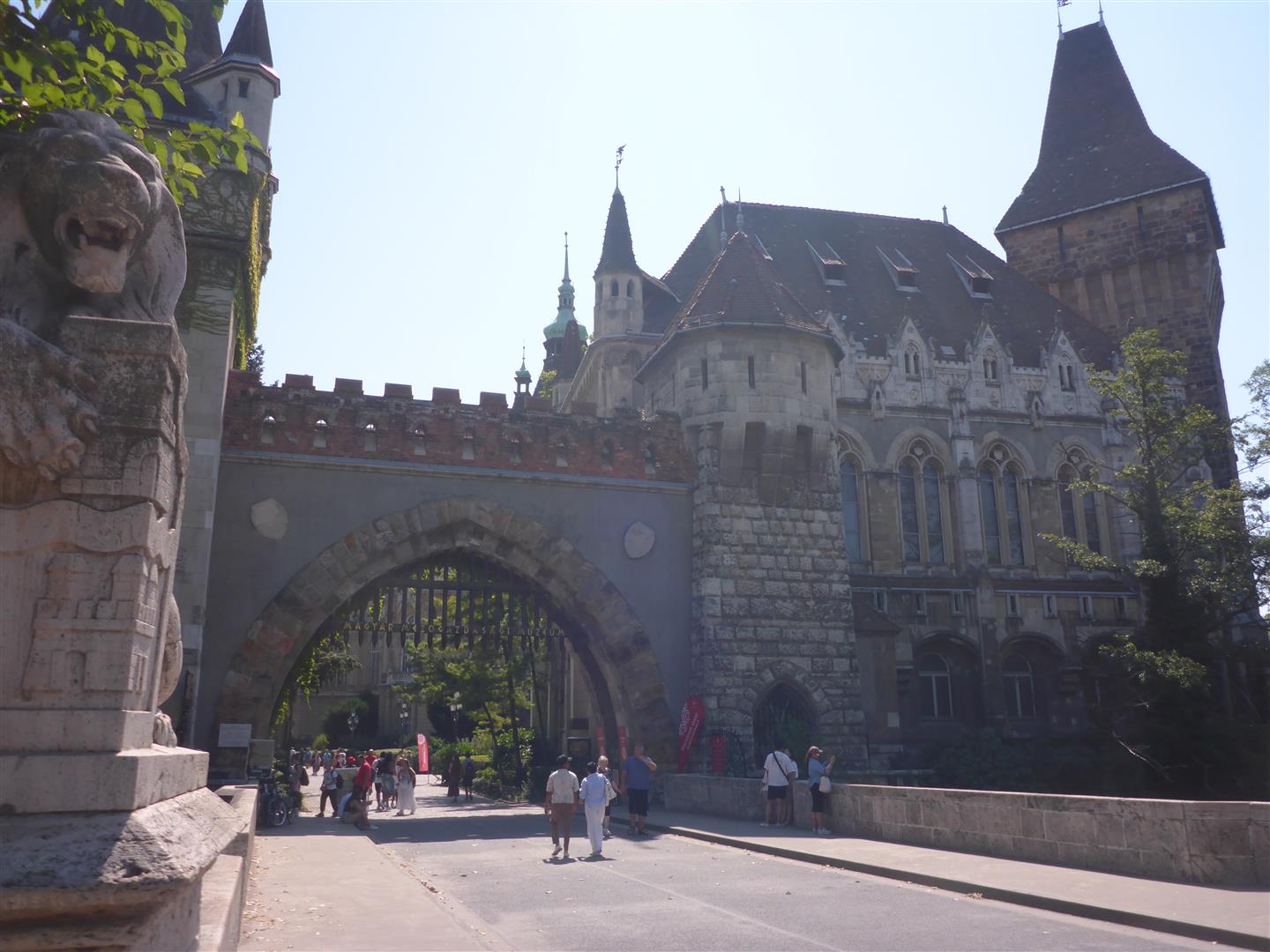
Tower in the park, and the museum.
I walked across the city park enjoying the shady trees, back to the buildings I’d seen the day before. I went up into the tower, following the guide. To my surprise he gave his spiel in English, although I stopped paying attention after a while. I was merely enjoying the views from the top, looking out over the city.
The museum inside the castle was much more interesting, focusing on agriculture in the region. A lot of the information related to the way people lived and were ruled. It went back in time to tell of where the Hungarian people came from – the steppes of Russia, going back to pre-history.
Once the Turks had gone Hungary quickly became a forward looking country, with rapid development of improved farming methods. It usefully painted more details onto the emerging picture of Central Europe. All the countries over this way contributed to each others development during the late middle ages, by the movement of people and the farming methods they brought, especially regarding the animals they raised. Hungary was an early starter in the process of looking after ecosystems, introducing laws to control forestry, hunting etc., in the mid 19th Century.

A very nice church, opposite the museum.
My final day in the city was spent along the river bank. I wanted to go inside the parliament building but I needed a day ticket. Unfortunately they’d all been sold. So I took a walk around the outside, taking photos as I went. Then I walked alongside the river, snapping away at anything that took my fancy. It was another hot day but still very enjoyable for walking. I have to confess that I didn’t get across the river at all. There’s plenty of good places to visit there but they’ll have to wait for another day. More info on Budapest here.

A really lovely wooden church, seen in a village I passed through.
I’d really enjoyed Slovakia and Hungary, despite the flat, windy boredom of the Hungarian countryside. Since leaving Austria it was notable how infrastructure deteriorated, especially the roads. I was very glad of my upgraded suspension at times. Slovakian roads appealed far more, because the topography was much more enjoyable to ride through. But it’s worth remembering that as quality drops, so do prices. And there’s not much wrong with that.
Where next? Romania beckons.
 MOTOPANGAEA
Hi GeoffTks for your latest editi
You’re very welcome Bob. I hope you enjyed it.
Geoff
LikeLike
Only been to Bratislava in Slovakia, clearly a lot more to see. I first went to Budapest in Communist days to advise them on how to set up business associations as they could see that the end of the regime was near and there had to be an effective transition. Unfortunately both countries now have unpleasant governments.
LikeLike
I picked up on some negativity from the woman who was my tour guide. Yes, I agree about the governments, especially Orban.
LikeLike