
Nairobi, Kenya. 11th June 2025.
After a week or so visiting friends in Thailand I was ready to venture forth onto the ‘Dark Continent’ of Africa. No longer ‘dark’ because most places have electricty now.
The flight from Bangkok to Nairobi was direct and relatively short. My bag was the first to appear on the luggage carousel so I was out of arrivals nice and quickly. Nairobi airport surprised me by how small it was. Only three carousels. Not a busy place, clearly.
Jane, the representative from the import company, was there to meet me. A very nice woman who waited while I got a SIM card then took me to my guesthouse. She told me that I’d be able to collect my bike the next day and that she would come to collect me. Excellent news!
I’d booked into Zarita Boutique Airport Hotel and I’d thoroughly recommend them. Part of their service is airport pick up and drop off. Not expensive, decent rooms and there’s a bar and food service.
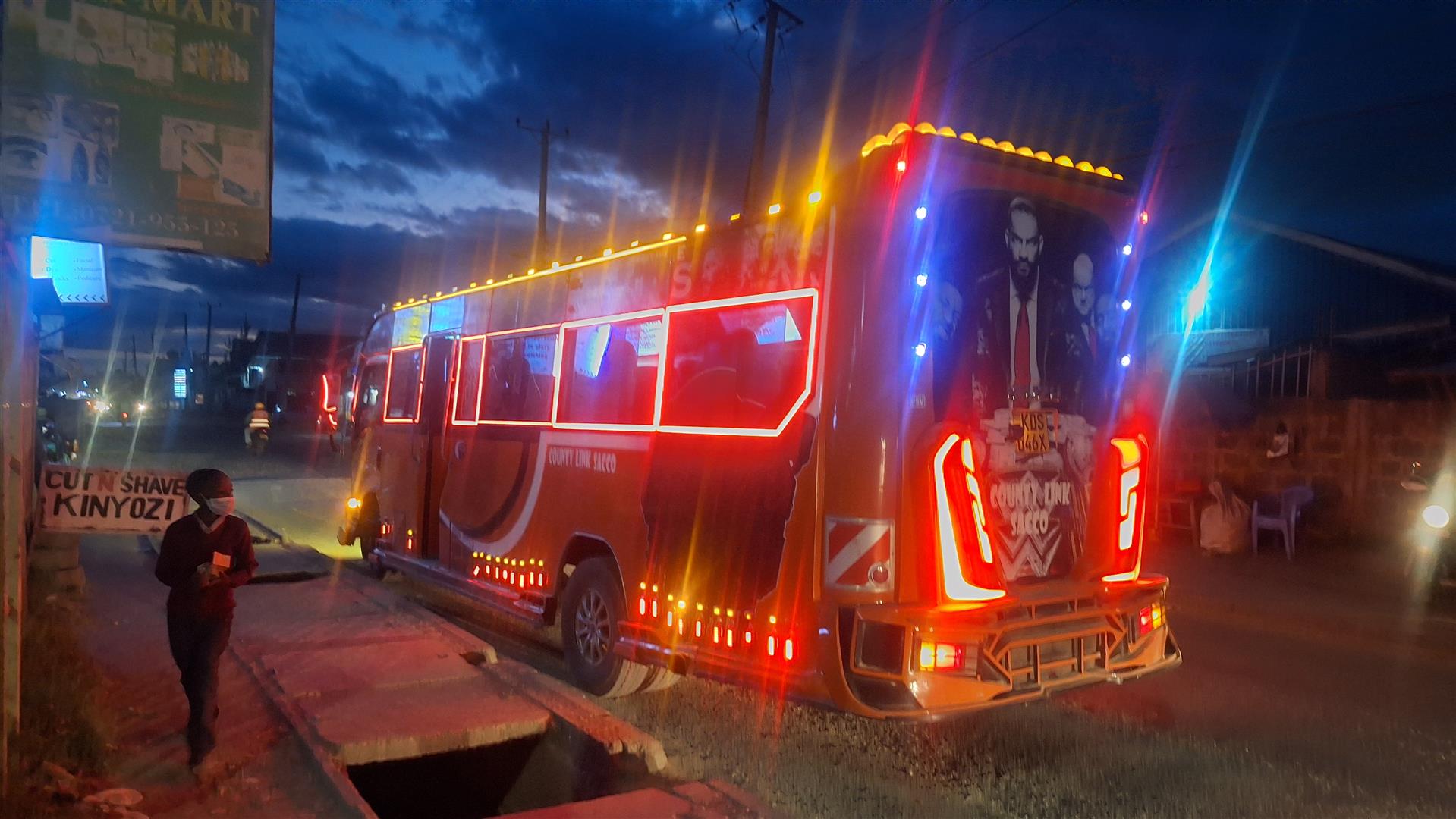
A blinged up local bus.
I spent the next morning transferring money to both companies involved. I had to use the Wise app, at a cost of £23, because my bank wouldn’t transfer money to the UAE or to Kenya. That disappointed me a lot, if I’m honest.
Jane came to collect me at lunchtime and took me to the warehouse at the airport. Once we’d gone through security I found my bike in the yard, still in its crate, awaiting release. A helpful warehouse guy came to my assistance and between us we made short order of removal of the wooden cage.

Fresh off the plane.
Jane gave me the Carnet, which had arrived with the bike, and I immediately noticed it was incorrectly completed. UAE customs had completed the exit section of a page. Kenyan customs had completed the entry section of the same page. Not good. It would have meant that when I left Kenya the customs office would have had no space for their exit stamp. Jane took me back to customs and we got it done correctly.

Jane and helper.
Back in the yard I replaced the screen and reconnected the battery. And …… it started on the button! Relief, even though there was no real reason for doubt. I gave Jane my heartfelt thanks for her very efficient work, tipped the guy who’d helped me unpack, and headed back to the hotel.
Thinking back, I’m not sure what I expected from Kenyan customs and the import process. You can easily find negative comments about how Africa deals with such things. I can only say that Nairobi airport dealt with it all professionally, efficiently and with a friendly approach. Easily the best and simplest import process I’ve experienced outside of the UK.
It’s quite a well used route between Asia and Africa, which must have helped. I may have said this in the last post, but flying the bike was ultimately easier and cheaper than putting it on a ship.

Roadside DIY supplies.
While I was in Thailand I’d bought some parts for the bike so I got stuck in to fitting those when I got back to the hotel. The issue I had was that when I rode standing up the bike just didn’t feel right. I was too high above the handlebars, which placed me too far forward. Having proper control over the bike became difficult.
There’s two ways to solve this problem. The first is to raise the bars by putting risers underneath where they mount on the top of forks. I couldn’t do this because there wasn’t enough slack in the control cables. The second way is to lower the footrests. So while I was in Thailand I bought some lowered footrests and a suitable rear brake lever from Grace, at Hi Volt Spares.
Fiddly but straightforward, and the job was soon done. Time for food and beer.
I stayed in Nairobi for quite a while as there were some things I needed to do and to see.
Top of the ‘to do’ list was new tyres. Those I’d had fitted in Bulgaria had covered 38,000Kms. A distance that surprised me. But some of the handling I’d experienced told me the compound was quite hard. And when I checked them at the hotel I found that the tread blocks had started to break away.
Some Googling found me a supplier across the city, tucked away in a small business estate. But no sign of a workshop. The Indian shop manager told me they supplied but didn’t fit. He told me of a place to go where they could be put on.
While I was there a couple of English guys came in the shop, who worked at the embassy. They wanted riding gear as they planned to get a couple of bikes and explore Kenya. A good plan, I thought.

Ben, who does what I do.
Then another English guy arrived, name of Ben, on a Yamaha Tenere. He was riding the reverse of my planned route, having travelled down Africa’s west coast to Cape Town and was riding back up the east side. We had a very good chat about our travels, took photos and exchanged details.
He told me about his experiences with malaria, which he said he’s had three times. He doesn’t bother to take prophylaxis because there’s now a course of medicine that will cure it. And taking them isn’t good over a long time period. That was a new one on me but I had seen it mentioned in one of the WhatsApp groups. He gave me the name of the tablets, which I was quick to go and purchase.
I went round to the tyre fitting place that I’d been told about but I was too late to get anything down. It was very much car orientated and I didn’t feel happy about getting them to fit my tyres. I decided to look for an alternative.
In the morning I found a couple of bike shops on Google and when I rang one up he recommended a place called Max Torque. When I rang them up the guy said he could do it although he didn’t have a machine. I liked the way he spoke about it so I rode over there, out on the west side of the city, feeling confident, with the tyres on the back.

A few of the bikes in the shed.
Steve, and his mechanic Kevin, got stuck in with the tyre levers and had a really difficult time getting the old ones off. And an equally difficult time getting the new ones on. I felt truly sorry for them. It was done in the end, with no apparent damage to the spoke sealing system. I was very happy. I got them to clean the chain as well.
The premises are very intriguing. His large workshop is full of bikes in different stages of repair and disassembly. Road bikes, including Gold Wings and Harleys. ADV bikes of all sorts and some Royal Enfield classics. There’s a large, open fronted shed also filled with bikes but in greater stages of disassembly. Mostly ADV style but also some small road bikes.

Another shed full of wheels that delight.
He said some of them are his and some belong to customers. That sounded weird because it was clear that very few of them had moved for some time. Across in the garden were a couple of rows of bikes, but covered up. About ten in all.
Alongside of these were roses and other plants, with a nice lawn. At the edge was a wooden house used an an office. His family are involved in various jobs centered around organising events.
He said that, apart from one other business, all the other premises in the road were godowns for storing tents and marquees, which were rented out for events. The tone of the whole road, which sits behind gates, is of a family of businesses that are inter connected. Steve said he supplies bikes for displays. What a terrific place.
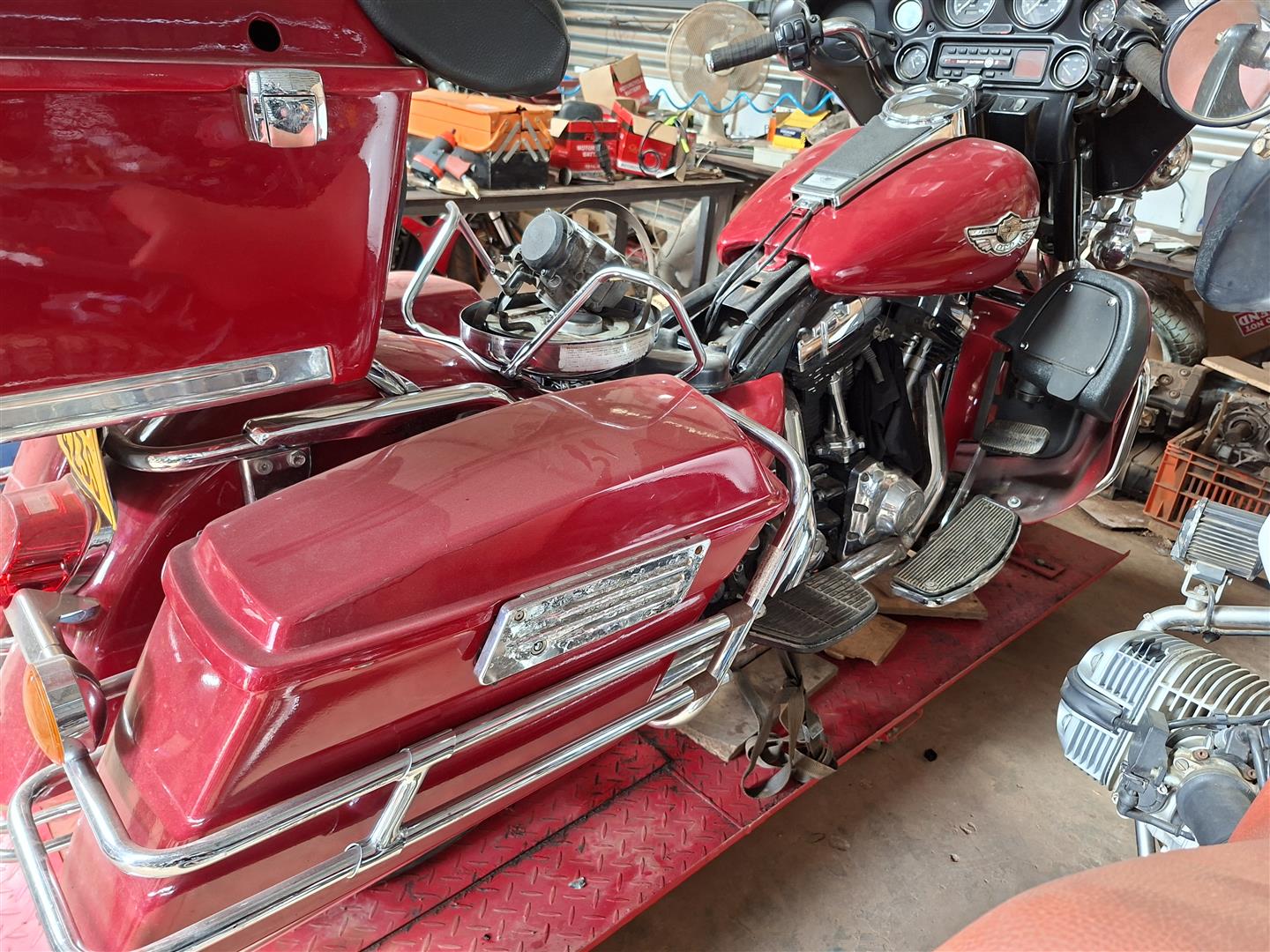
This lovely Harley is one of Steve’s.
I gave Kevin 1,000 KES as a tip while Steve was out testing the bike. He’d worked really hard. The cost was based on time and was 5,500 KES, about £32. Not too bad.
On the way back I called in at a mall for coffee and cake. Then I took a walk around what was clearly quite a new place. Plenty of quality shops for clothes and things. This was in complete contrast to the area near the guesthouse, which itself was in a gated area of nice houses.
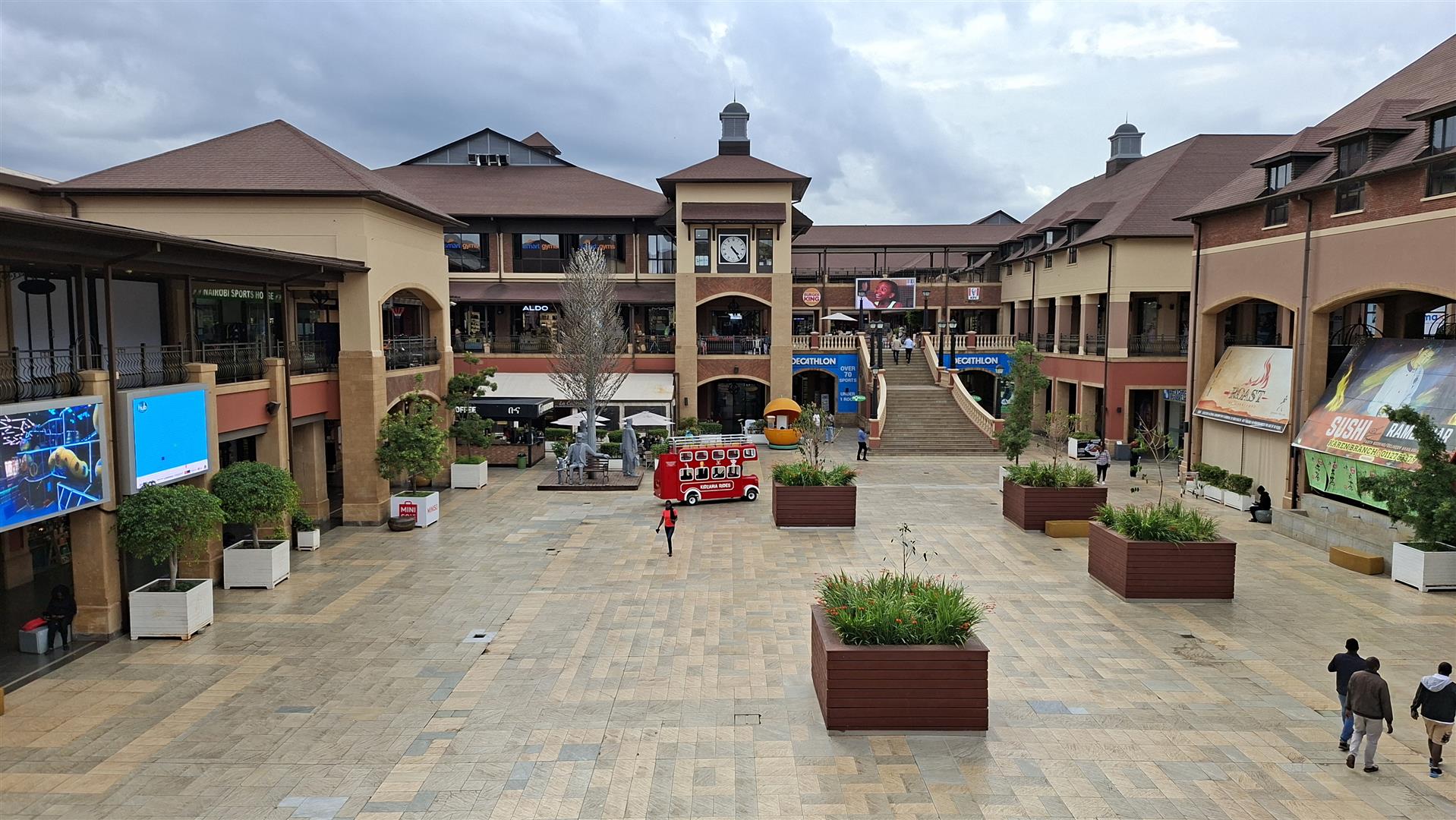
A mall that looked newly built.
But the main road near to the guest house, where all the shops were, was very typical of a developing country. Many buildings were in very poor condition. Their interiors were shabby and poorly lit and there were iron grills across the pay desk. The pavements had sections of concrete missing, exposing the drainage system beneath, with potholes in the road. It all reminded me of the poor areas of South Asia. But in a similar way, the people I saw looked like they survived well and were always friendly.
Being in Africa means looking at animals, of course. Over the next couple of days I went to two places. The first was a centre which housed Rothschild Giraffes. These are becoming endangered because of habitat loss. What makes them different is that they have no markings on their lower legs. I bought some food to feed them with. They stick out their long, purple tongue and you place the food on it. It consisted of small cattle nuts and something green. It was good fun. There were plenty of people there on a nice afternoon.

Rothschild Giraffes. No markings on their legs …..
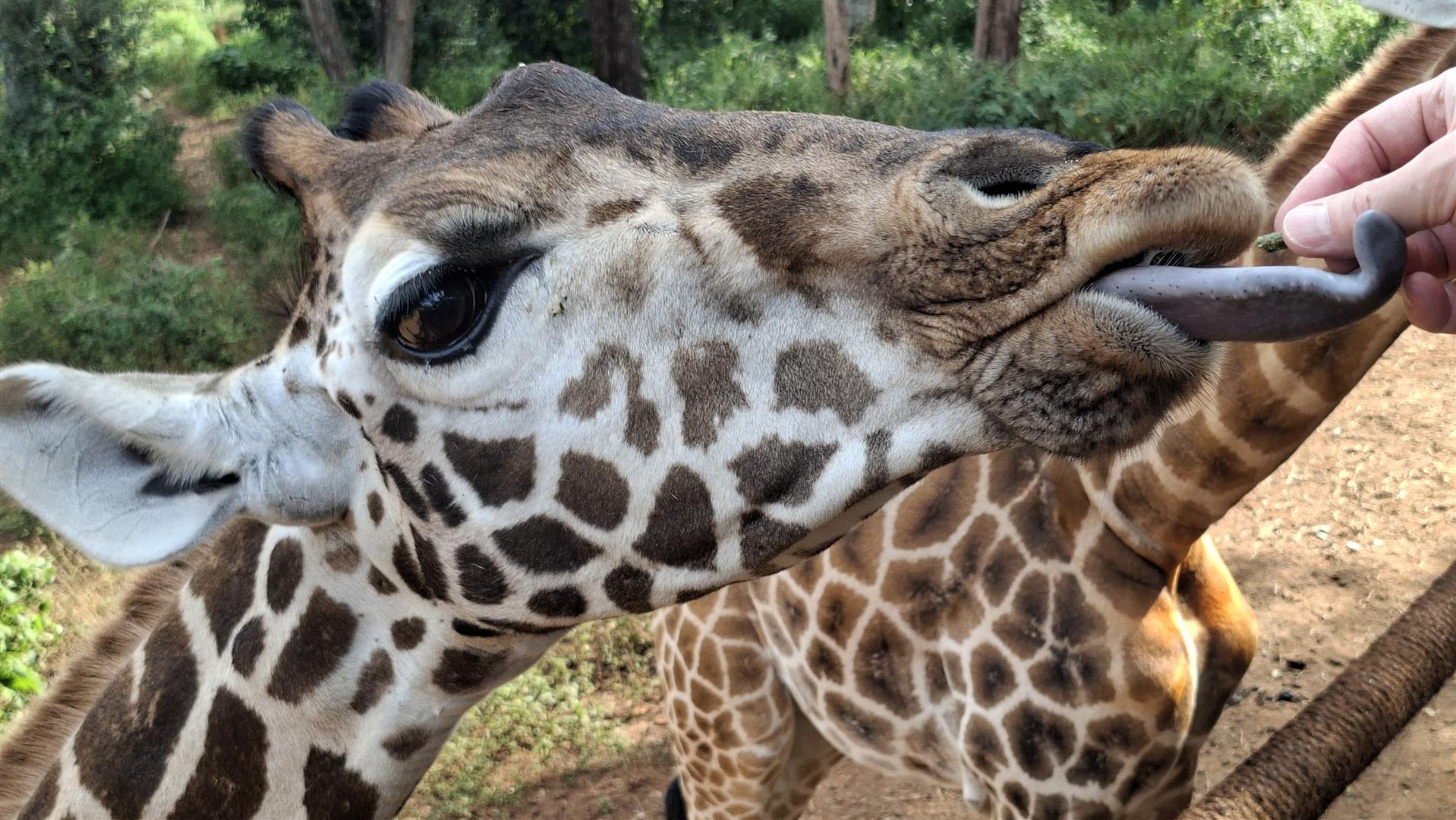
…. but with a purple tongue.
Nairobi has a national park attached to the city so I went there hoping to be able to go in. But no dice. I was told I couldn’t go in on my bike, I’d get eaten by a lion. The only way was to hire a vehicle with guide costing close to £100. Add that to the £35 entry fee and the decision not to bother was quickly made.
But there was a useful alternative. Attached to the park was a Safari Walk, so I went for that instead. It worked out very well. It wasn’t too costly and was very enjoyable. I followed the walkway around the area, with a guide pointing out various animals to me. He directed my eyes to a leopard resting up in a tree, among other things.
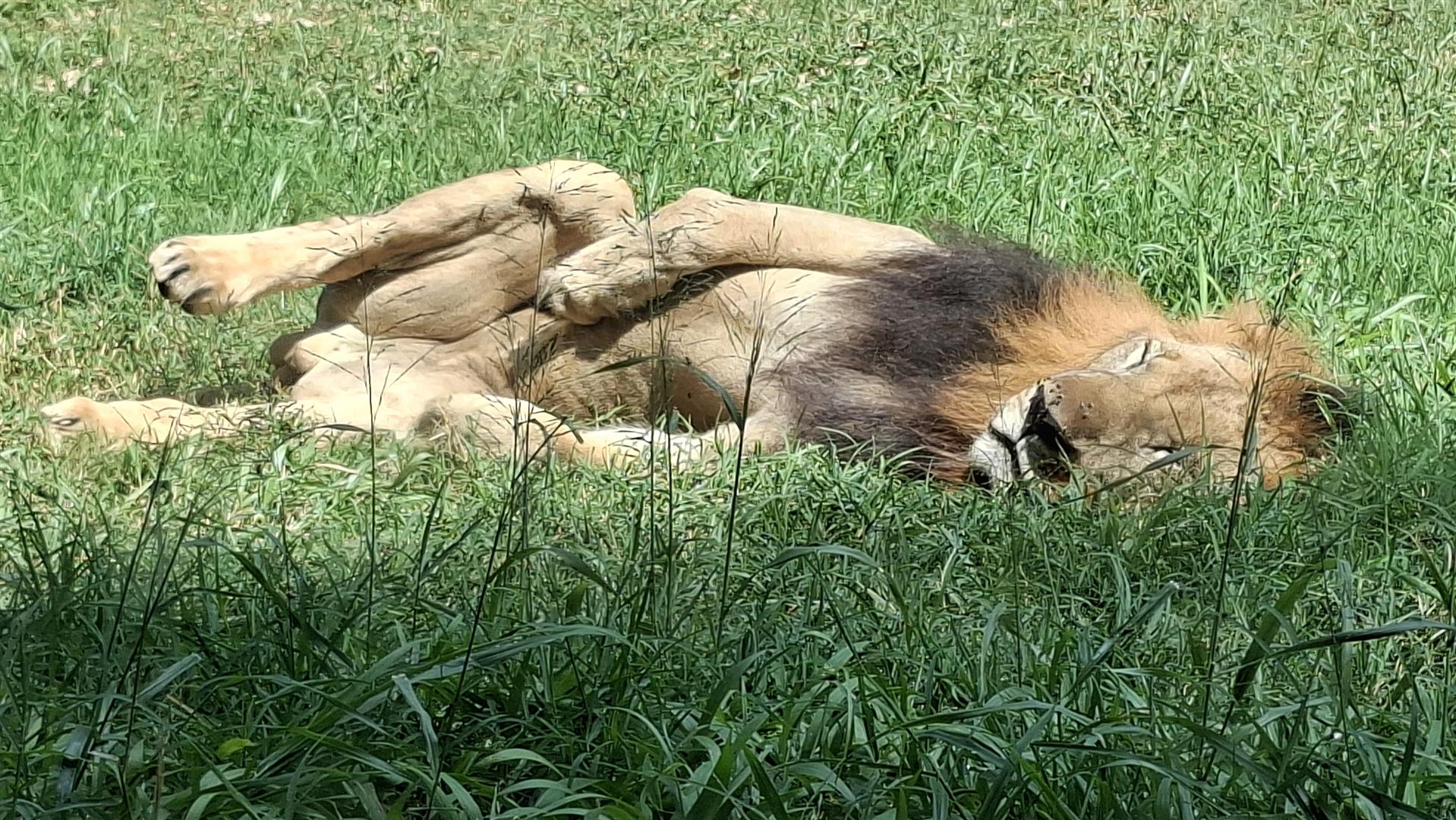
Lenny the Lion having an afternoon snooze.
I was delighted to see a male and female lion asleep in the grass. The male was lying on his back, with his legs in the air, just like any cat. They definitely looked well fed. The other notable sight was a massive rhinoceros, with a big curly horn. There were various grazing animals to look at and an ostrich.

A very big Rhino.
One of the nicest things was the response of a couple of groups of young kids whom I smiled at as we passed. When I did they all wanted to high five me as they walked by. How delightful.
I enjoyed an educational visit to the Kenya Museum. It had a section about the animals from the area, especially birds. The human occupation of the area, based on the many fossils that have been found, was also covered. And the colonisation of the country, firstly by the Portuguese down on the coast. They were driven out by the Omanis, who’d been asked by the local people to save them from virtual enslavement.
Then the awful story of the British occupation. Them and Germany had sat down in Berlin in the 1890s and divided up East Africa, giving no consideration to the local people or tribal areas. Same old story of oppression and occupation.
The British government drove the local people off the land then encouraged settlers to come over. They were allocated thousands of acres of land to farm with a ready pool of local labour. Independence was gained on 12th December 1963. I have a friend who was in the army and served in Kenya before independence. He said they were fighting Communism.
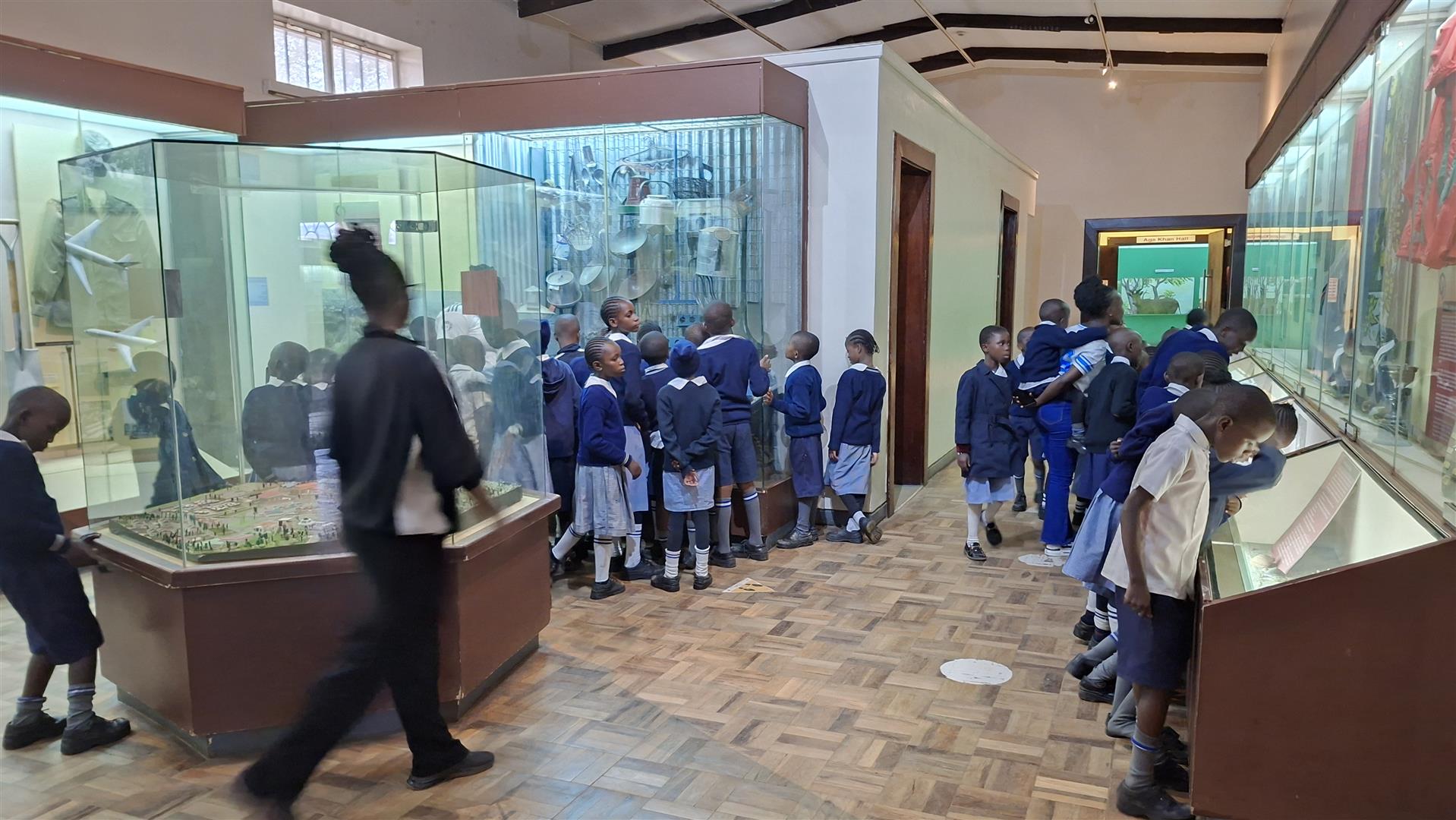
Plenty of kids, happy to say Hello.
But the really good part about the visit was the interaction with some groups of kids. Firstly young teenagers, happy to chat once I’d smiled at them when they’d been standing there looking at me. A second group, slightly younger, all shook my hand as they walked past me.
But the best was a group who looked to be about five or six. When I smiled at them, they all came over and gave me high fives. So nice and so cute. Just like at the Safari Walk.

KICC Tower.
Nairobi has a tower, like many other cities. The KICC Tower. It’s very low in the rankings at only 27 floors. I got the lift up, then walked up two floors, then up a spiral staircase to the helipad. I very much enjoyed the view over the city, including of the parliament building.

Looking over the Parliament Building.
But by far the best place I visited in the city was the Kenya Railway Museum. This was an amazing place, with a large yard full of locomotives and rolling stock. The indoor museum focussed on things such as communication equipment and so on. The line became known as the East African Railway and it used to run from Mombasa, on the coast of Kenya, right up to Lake Victoria, in Uganda. It ran on a one metre gauge and was single track most of the way up.

Movie star.
One of the locos was used in the film Into Africa. There were three locos which had a configuration of 4-8-2-2-8-4. They were slightly articulated in the middle and were fired by oil. They hauled large goods trains up from the port of Mombasa and into the interior. I’d never seen locos that big before. Mighty impressive.

The biggest locomotive I’ve ever seen, with sixteen driving wheels and a bend in the middle.
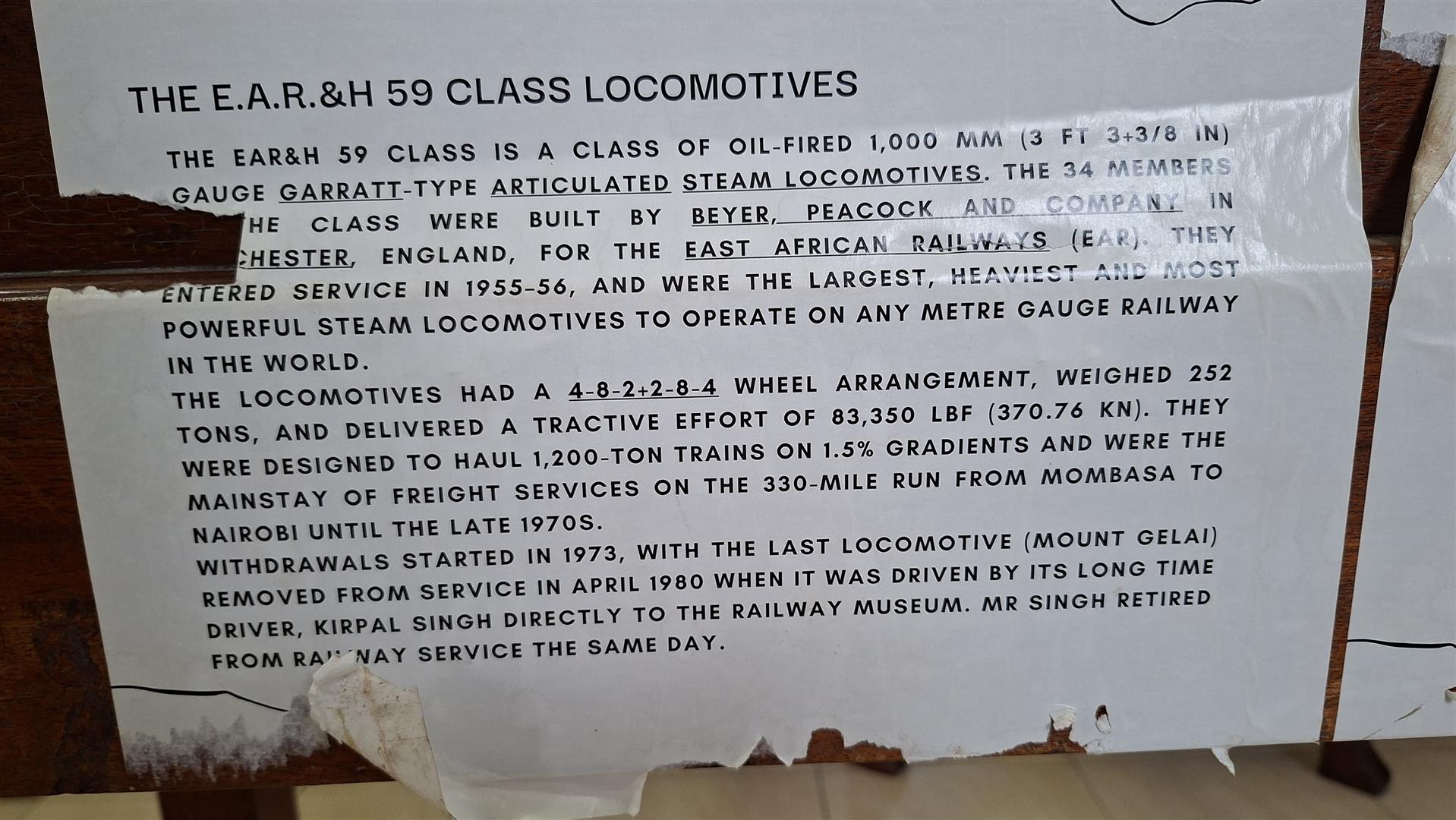
All the information you might want to know.
The rolling stock on display included carriages, which visitors could walk through. A large wagon with a steam crane mounted on it. And there was a diesel loco as well. All of it was made in Britain, unsurprisingly.
I went inside but didn’t have long there before the museum was due to close. I went back a couple of days later and Judy, the woman in charge, was conducting a party of Americans around and I tagged on. There was lots to see and enjoy.
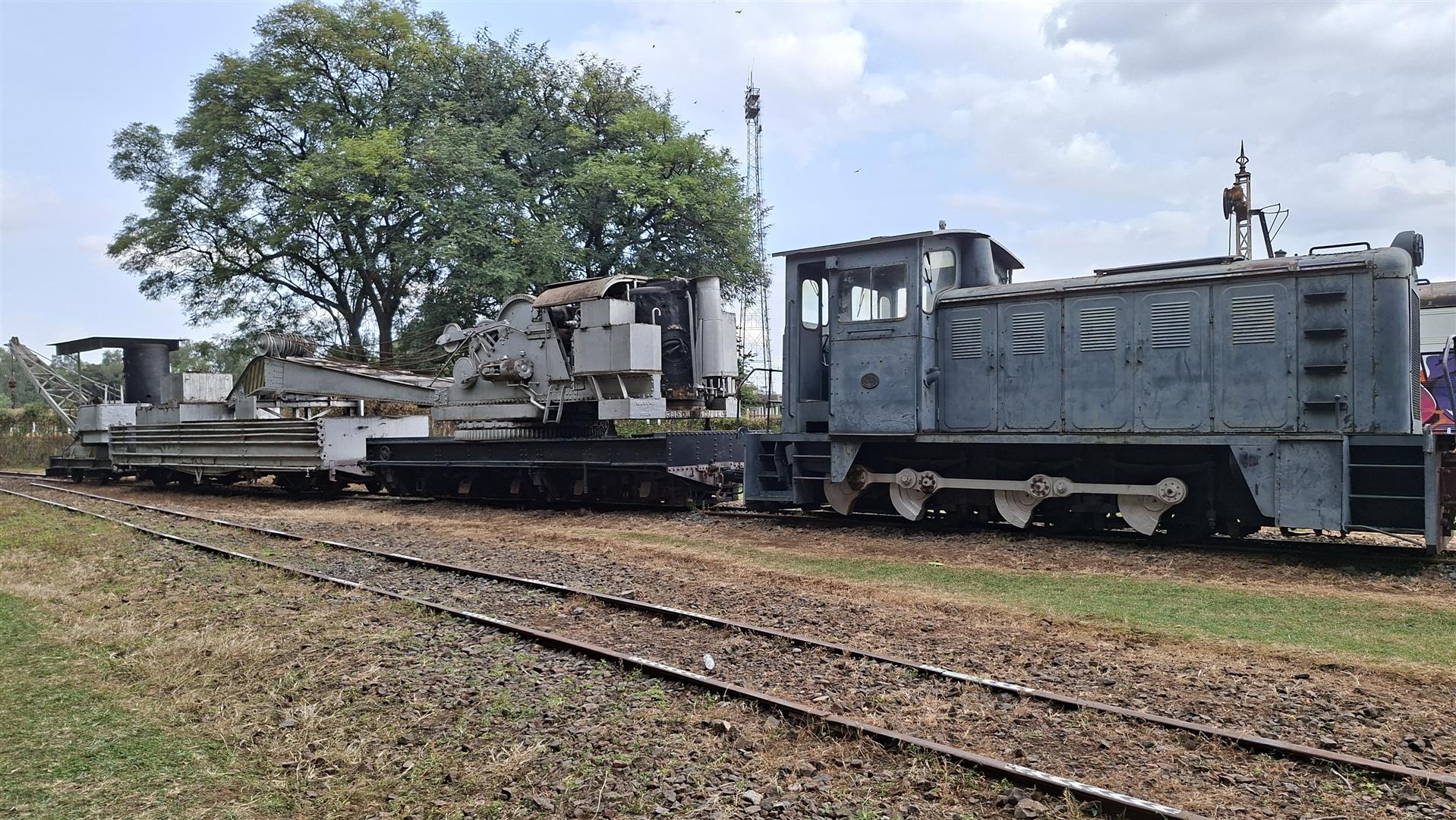
Diesel hauled steam crane.
The line is still used but it has been upgraded by the Chinese Belt and Road scheme, which is heavily used in Africa. The new line is of standard gauge and has two tracks but with fewer stations. All of the staff are from China, as is all of the equipment, locos and carriages. There is almost no employment for local people or use of local manufacturing. Such is the way of these things.
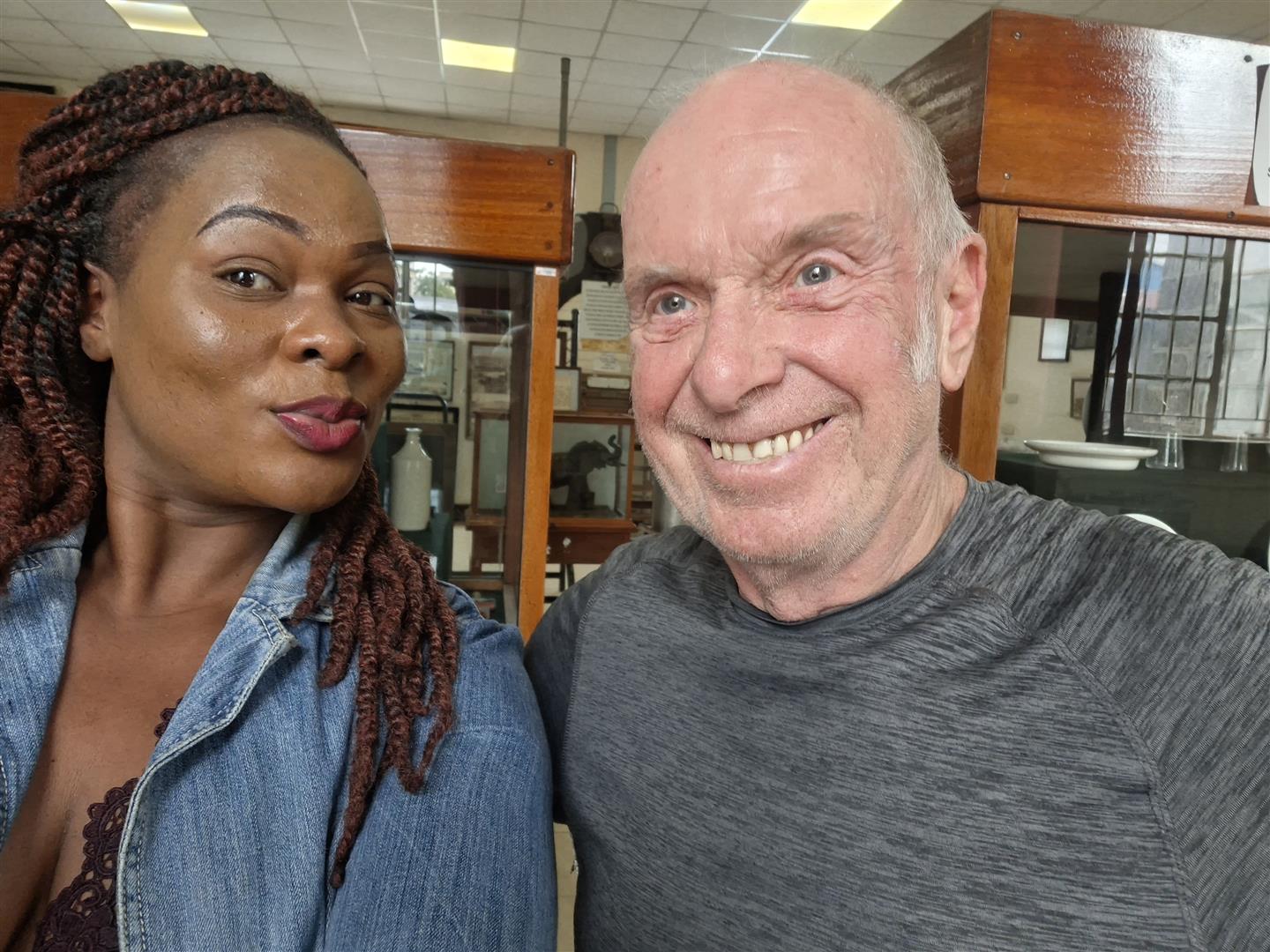
Judy, who collects tickets and tells you the stories.
While I was at the guesthouse another European guy arrived. He kept mostly to himself but I did get talking to him one morning. It turned out he was Israeli and he was hanging around in Nairobi waiting for a replacement passport, before going to India.
We had a brief chat about the situation in Israel, which he started when I said I had an Irish passport. I made sure it was short and very general.
I saw him again around tea time and he was telling me about being at the cinema the previous night. He was in a hurry because he was a bit late and while he was in the queue for snacks he was trying to chivvy along the people in front of him. He said they were taking too long in making a decision about what they wanted. Another European guy who was there put his hand on his shoulder, telling him to calm down a bit.
The Israeli didn’t like that at all and told him off. So he asked me what I would have done and why I thought the other guy did what he did. I didn’t want to tell him I thought it was because he was an annoying, arrogant, entitled wanker, but that’s what I was thinking. I just gave him a neutral answer.
I was telling him about my blog and that I kept a journal. He’d been travelling about 3-4 months and I suggested he ought to keep one too. I talked to him about the delights of sitting around people watching. He said that bores him. I said it delights me. I don’t think he’ll like the closeness and fumes of India. I got the impression he’s a bit autistic or something, and lacks the ability for self awareness.
I had a very interesting ride out from Nairobi to the town of Nyeri. This was where Lord Baden-Powell, the founder of the Boy Scouts movement, spent the later years of his life with his wife. He had a cottage, which was part of a larger bungalow, situated in the grounds of the Outspan Hotel. It had been built in 1926 by a friend of his. I was fascinated to learn that that the hotel was a sister to Tree Tops Hotel, where Princess Elizabeth had been staying when she learned of her father’s death.
Once out of the city and onto the A2, I had a lovely ride up there. The road was mostly dual carriageway, lined with fields planted with what looked like sweet corn, with plenty of banana plants too. There were plenty of petrol stations and people selling vegetables at the side of the road. It was my first view of the countryside, which was very green and well cultivated.
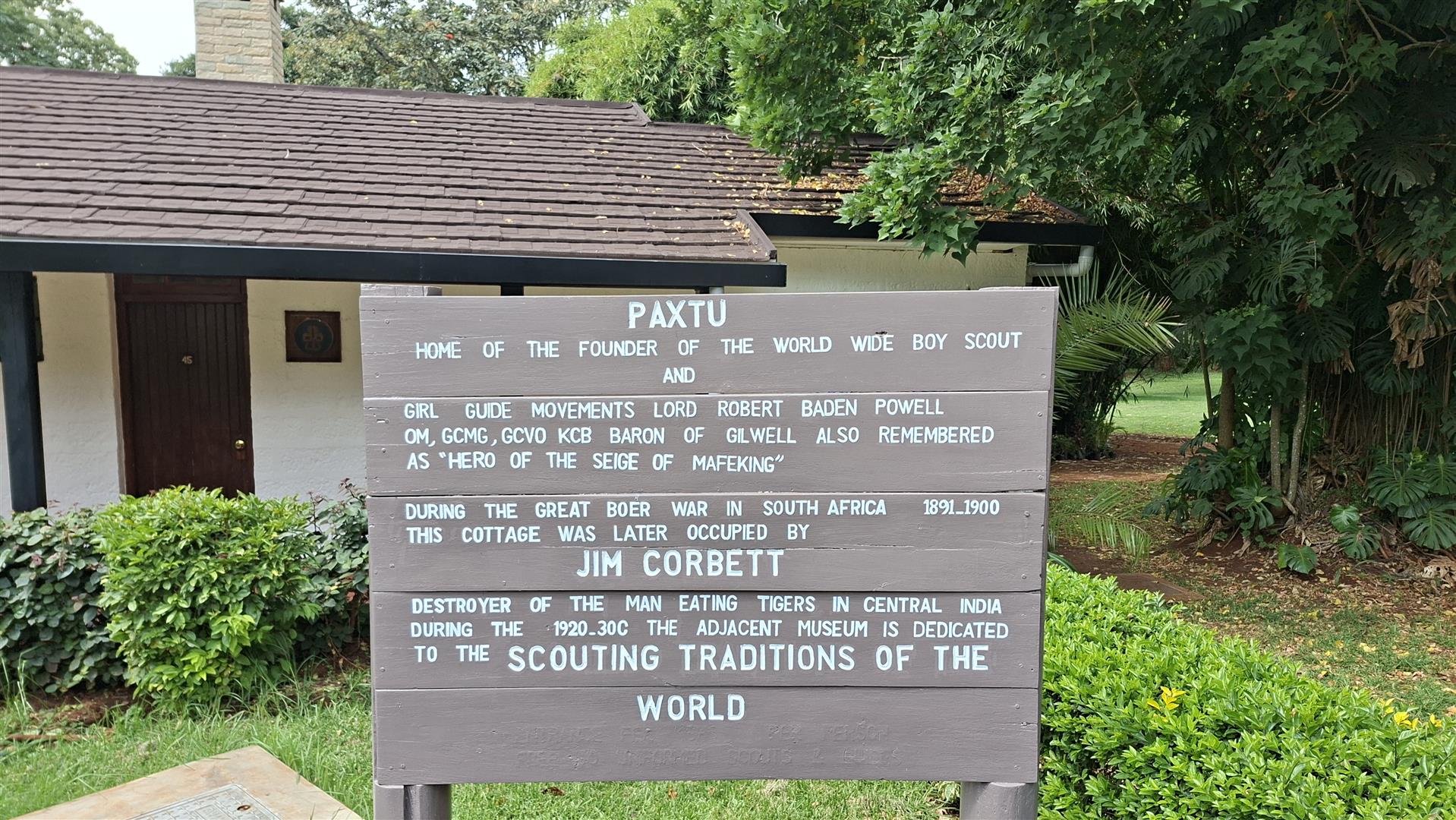
Last home of Baden-Powell.

His part of the bungalow.
When I got there I was taken to the museum in the cottage by a guy named Benson, himself a scout. He dressed up in his scarf and beret before showing me around. I asked him where the grave was, expecting it to be in the grounds. But it was actually down in the village. He said it was closed as it was Sunday but he could ring up the caretaker to let me in.

Where’s my woggle.
After coffee and cake I went down there. It’s a scout centre, with a shop and a library etc. The whole place was very nicely kept, with a pathway lined with flags, and the scout mottoes written on stone lining the path. The grave is quite ordinary. Although his wife went back to England after he died (she was quite a bit younger than him), her ashes were brought out and interred with him when she died. There were ordinary graves there too, of local British people.

The path up to the cemetery, replete with scout mottoes.

His ‘n’ Her grave.
The time eventually came to leave Nairobi and head south to Mombasa. The city had been a fascinating place to explore and a great introduction to both Kenya and East Africa. Having been occupied by Britain, most Kenyans tended to practice Christianity. I’d seen plenty of small churches and people I spoke to would often bless me, in some way. But I knew that Mombasa, having been occupied for several centuries by Oman, would be different.
Fond goodbyes were given to all the lovely people at the guesthouse. They’d made my stay a real delight. I rode out to the main road and headed south. Then I was stopped by the police. “What now?” was my thought? A street protest, was the answer. I could see smoke further along the road, probably rubbish or a tyre. But the road was blocked.

Signs of the protest.
What was it about? I’d been aware of troubles in the city. People had been protesting against a new tax and general government corruption. Heavy handed police action had led to an uninvolved man being killed by a rubber bullet fired into the back of his neck at almost point blank range. I’d seen the reports on the TV. It was no surprise that people were angry.
I rode up onto a nearby overbridge and parked by a crowd of taxi bikes, also waiting things out. That turned out to be lots of fun. I was stuck there for about 20 mins, chatting to these guys. We all had a really good laugh. They were asking me lots of questions about where from and what I was doing. Of course they were surprised and also very interested.
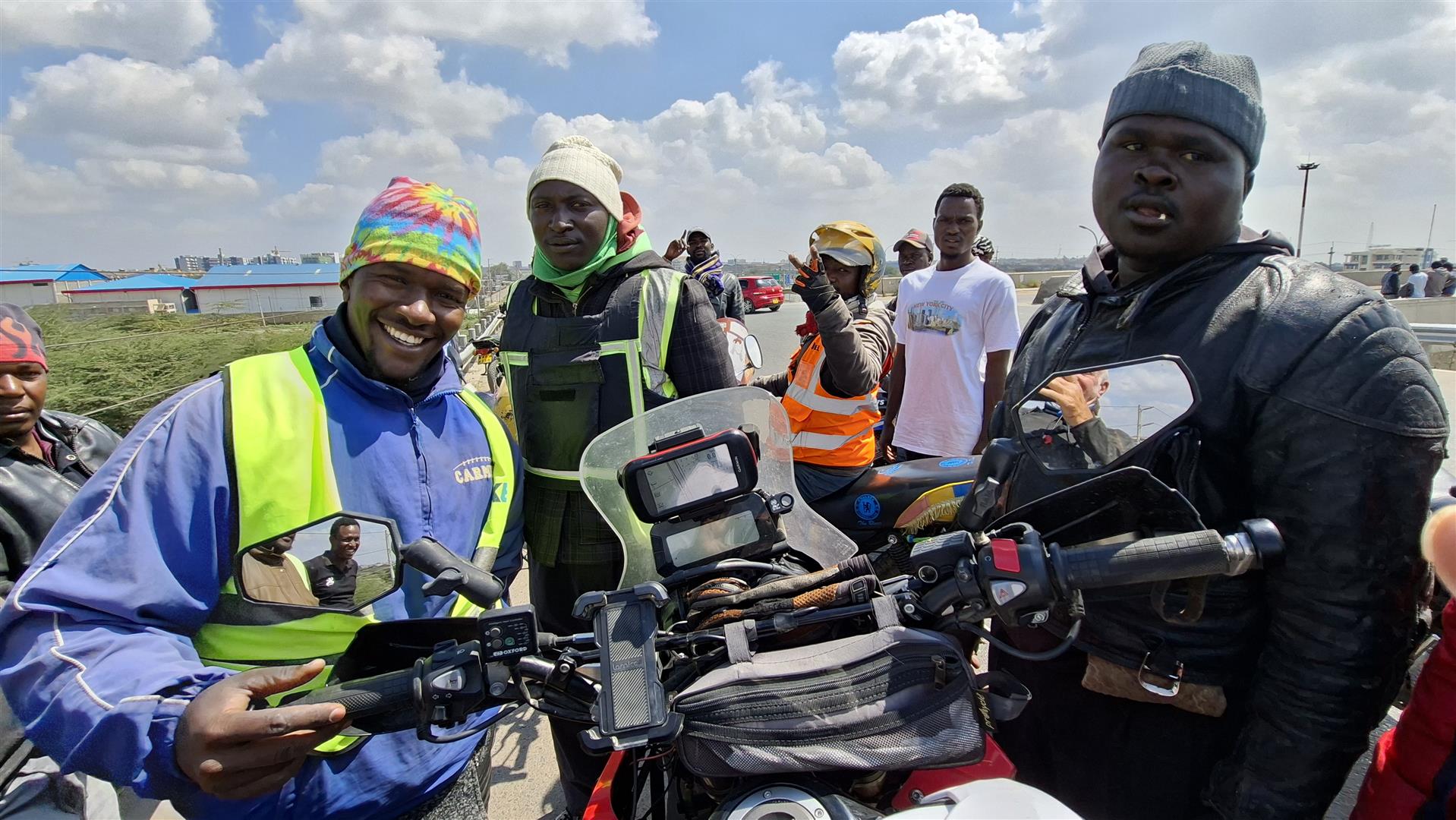
Having a laugh with taxi bikers (Piki-Piki Boys).
No sign of aggression from any of them, nor of jealousy or anything else negative. There were a couple of guys from Uganda there and one of them started asking me if I had any food. I said no but felt that was my cue to leave. I don’t like it when people start asking me for things. The smoke had gone so it was fist bumps all round and I headed off.
The road was clear but I could see debris from the road blockages – mostly stones and rubbish. The road was a good quality dual carriageway. Eventually I came to a town called Emali where there were more protests taking place. I could see crowds of people milling about further along and there were rocks and vegetation across the road.
A guy I was talking to where I’d stopped said he could direct me around it, along some back roads. He was probably hoping for a payment. But there was a turning just by where I was stopped and Google suggested it rejoined the main road past where the protest was. I told my ‘guide’ that I was going to give it a try but that if it didn’t work I’d come back.
It took me through the main part of town, where there were market stalls etc. But there was nothing going on there. The road had a few rocks and stuff strewn across it here and there but I got through it. And I was right, the road came out past were the protests were.
Further along the road I came to a filling station. The gauge was still on 2 bars so I carried on. But when I came to the town of Kiboko there was another demo going on. This time I could see people running about and it looked risky, so I turned round and rode the 12kms back to the filling station. I’d seen a restaurant there so I knew I could wait it out for a bit.
One of the women there lived in Kiboko so after about 30 minutes she rang up a friend who said to wait for a while. I did ask her about staying at the attached hotel but it was too dear. I searched on the map and found another place further south. I rang them up for a price and it was about £30, including breakfast. Dearer than I wanted but it would do.
She rang up again and was told that I’d be OK to sneak through on my bike if I kept to the side of the road. I actually just rode down the road and got stopped by a group of lads. The leader chatted to me and then after the usual fist bumps, I was allowed through. Their argument wasn’t with the likes of me. Phew!
The hotel I’d booked was very good and had a decent restaurant. In there I met a white Kenyan guy who suggested to me all sorts of places to visit and marked them on Google for me. It had been an interesting day all round.
After a very nice breakfast I had a good ride down to Mombasa. The only thing I didn’t like was the way drivers coming towards me would pull out to overtake, ignoring the fact that I existed and was in their way. This forced me onto the shoulder. It made me really angry but it’s the way things are done here. Bikes generally travel on the shoulder anyway.
As I neared Mombasa I had to get on a ferry. A policeman stopped me and said that if I gave him 100/- he’d get the ticket for me. He didn’t come back! But I was directed around the queue of cars and onto the ferry anyway.
When I got to the hotel I was made to feel welcome but was annoyed to find there was no parking, not even on the street. They said I could bring the bike inside, which I tried to do. But they wanted me to take it past the lobby and put it in a small corridor. I took the panniers off, a job I dislike, but there was no way it would go in. So it’s ended up locked, covered and on the pavement outside. The panniers were behind the reception desk. An OK room and an OK meal finished the day.
The hotel were very helpful when I needed things. There was no kettle in the room but the restaurant was always happy to give me a flask of hot water so I could make coffee or tea.
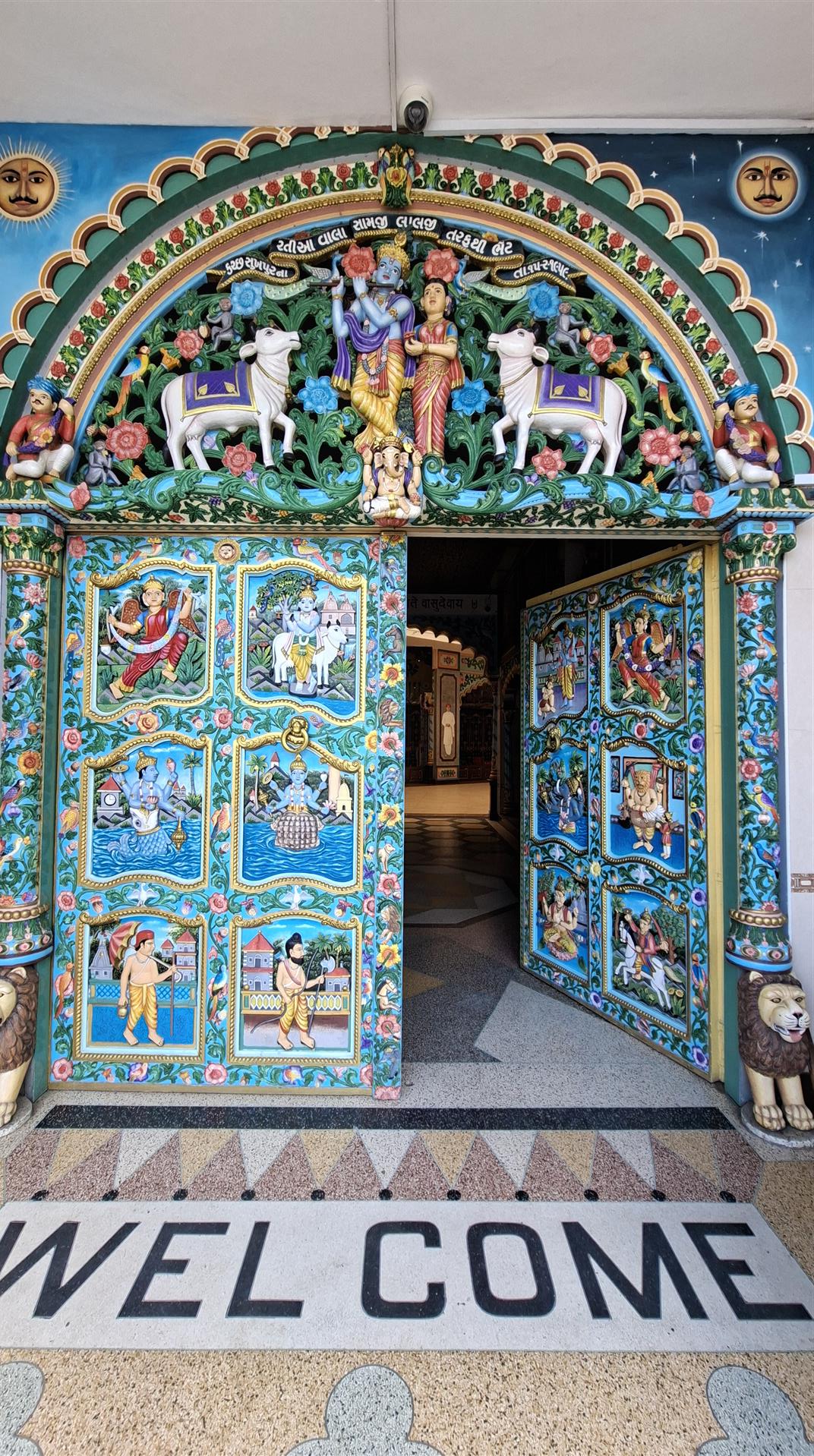
Entrance to the Shri Cutch Satsang Swaminarayan Hindu Temple.
I’d lined up some things to do next day so after a good breakfast I stretched the legs and went walking. First was the Shri Cutch Satsang Swaminarayan Hindu Temple. A modern building but with a typically decorative entrance. Inside the main hall were a series of paintings reflecting various morality tales displayed in single picture dramas. Very decorative, in typical Hindu style. Well worth seeing.
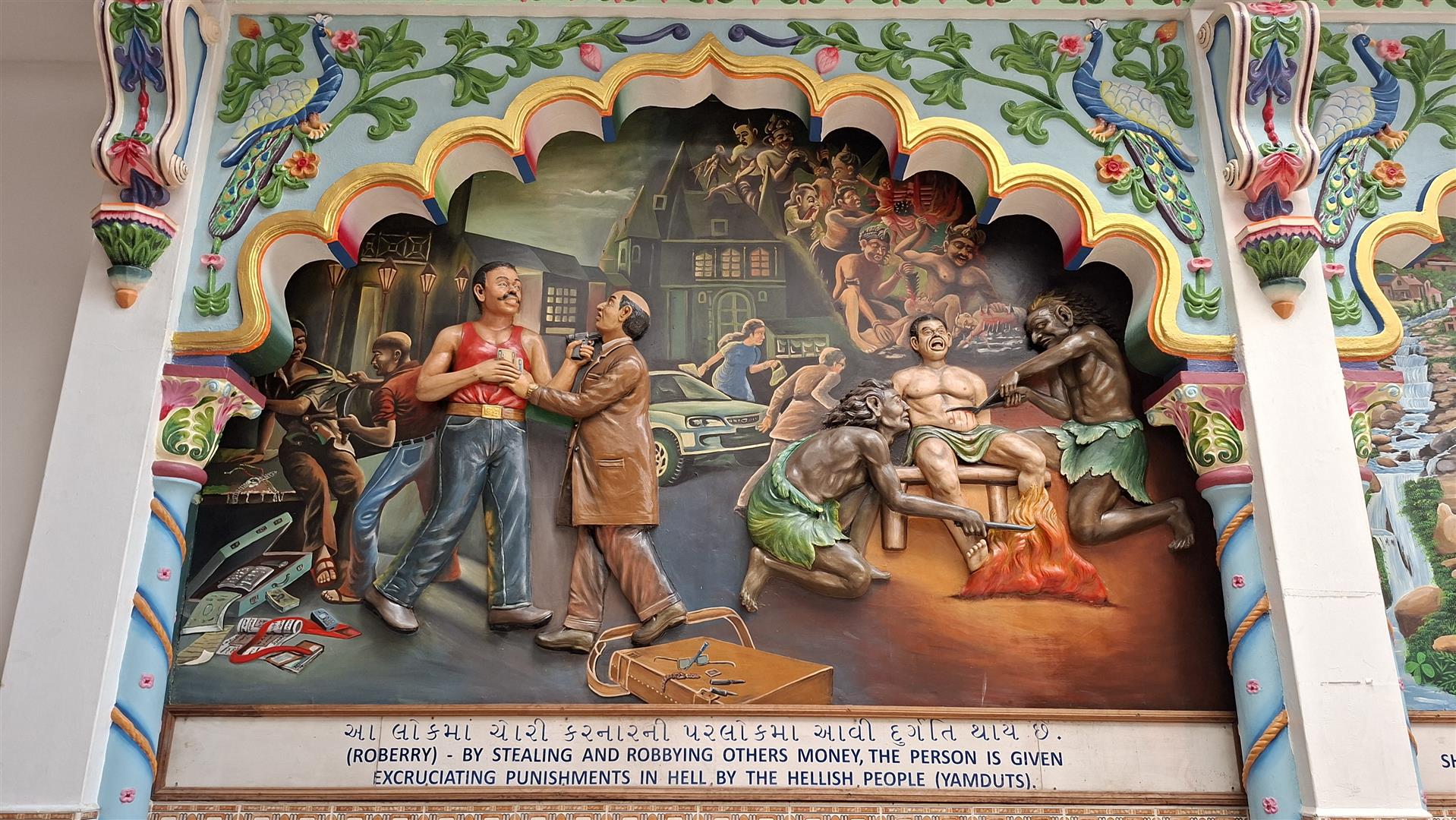
Moral advice for us all.
Then I walked down to the Mandhry Mosque. I wanted to get there ahead of Friday prayers. The route I took went down several back alleys, so I got a sight of ordinary life. I saw a guy ironing with a coal powered iron. Waste water running down the middle of the streets, and rubbish crammed into odd corners. About what’s expected from a developing country.
Dating from 1570, the mosque is a simple building, with very little by way of decoration. It had a white painted, wooden beam ceiling, with simple arches across the building. There were some people praying there. I sat down for a while, just to look around and reflect.

The simple interior of the old mosque.
On the way down to the Jesus Fort I walked through the old town and admired the buildings. Built around the turn of the century, they looked typical of sunny climes and old cities. Painted mortar, decorative windows and doors and verandas on the first floor.
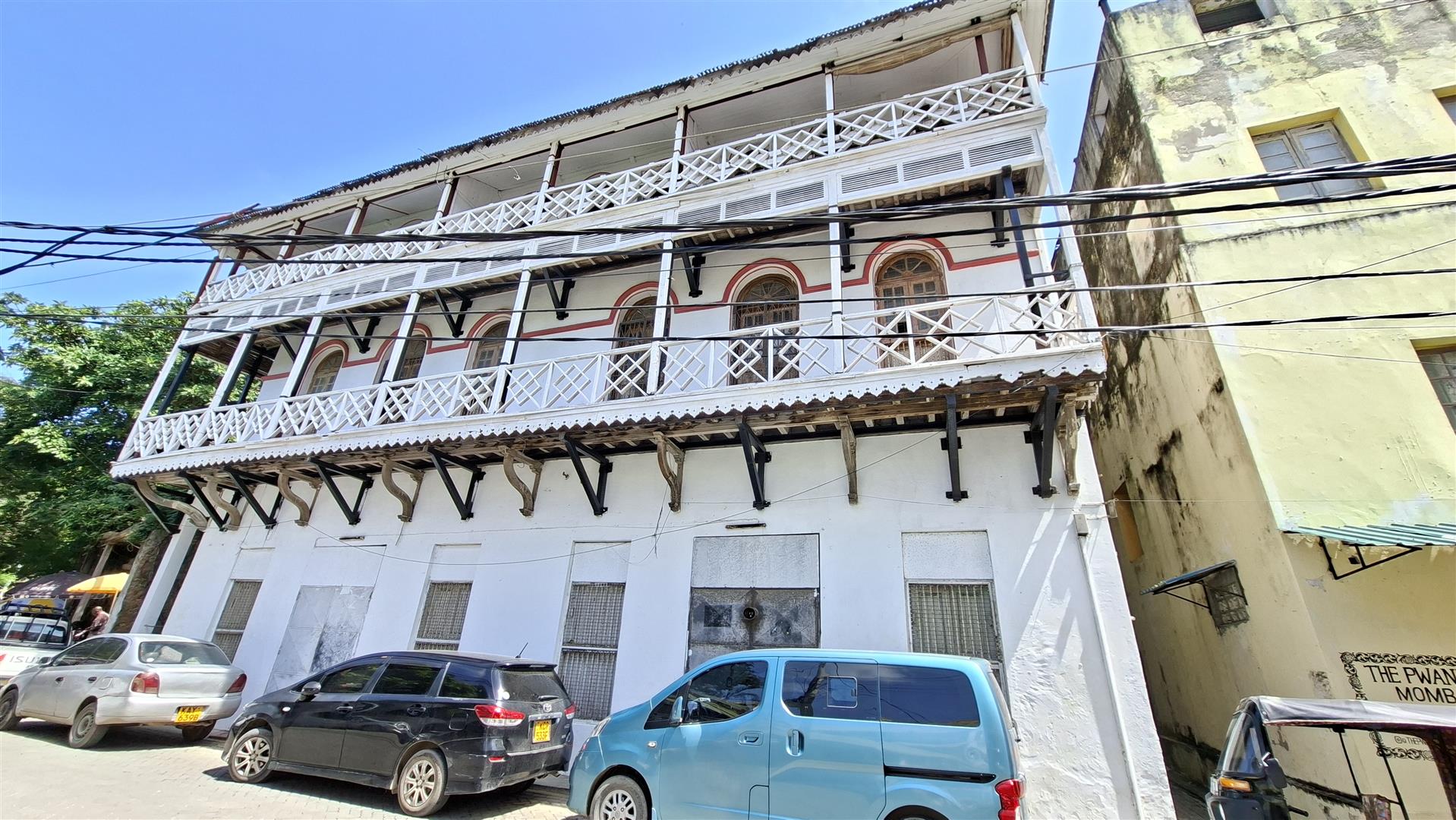
Decorative buildings in the old part of town.
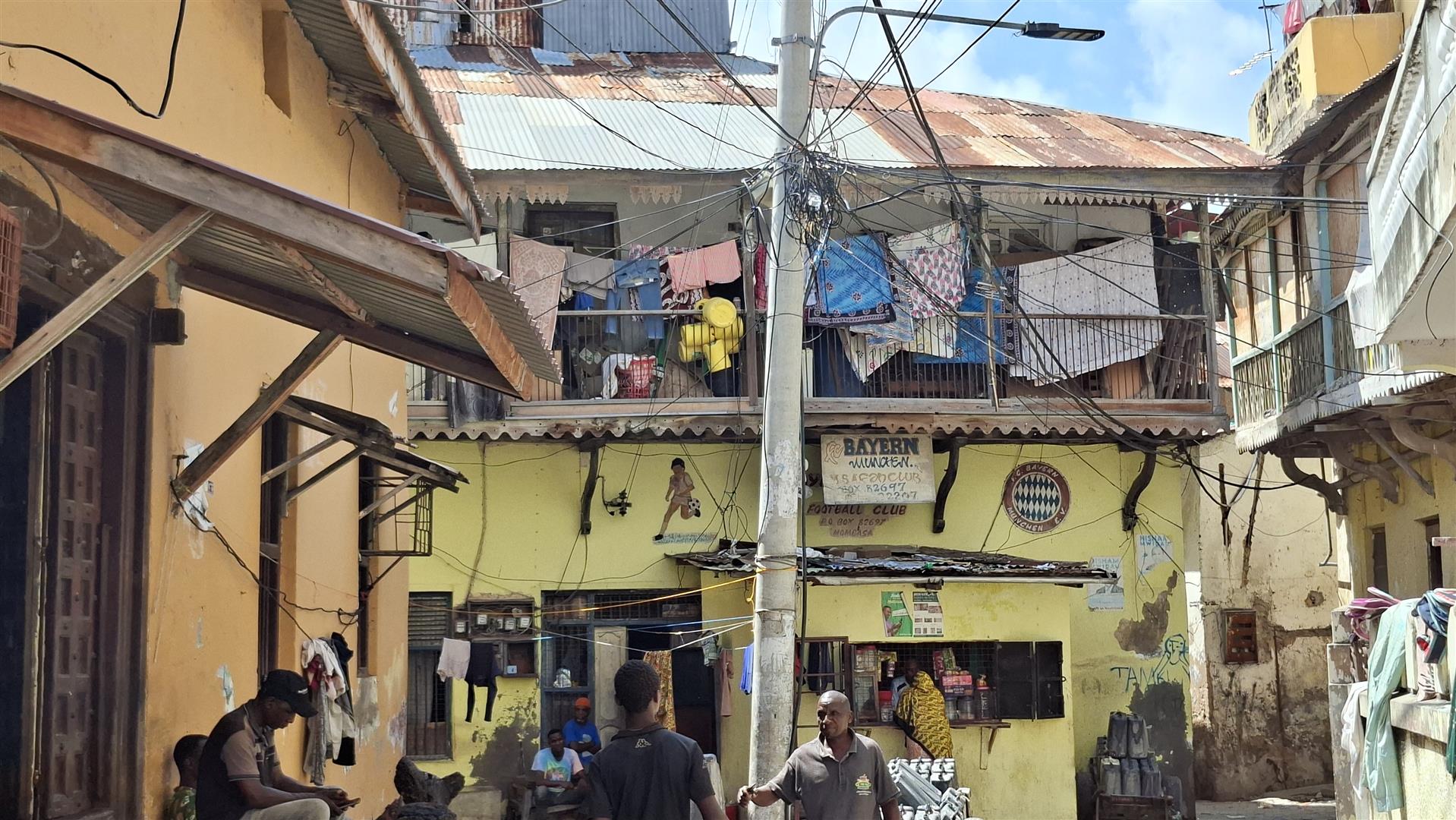
Although some areas are a bit more chaotic.
The Jesus Fort is a big place and was built by the Portuguese in the 16th century. The oppressed local population appealed to their old friends and trading partners in Oman to help get rid of them. They obliged and finally forced the Portuguese out after a two year siege.
The Omanis then ruled until the British took over. They had improved it and built the walls higher. It holds a commanding position overlooking the bay. All the mortar looked dirty. The place could do with a lick of paint! There was no shortage of cannons though.
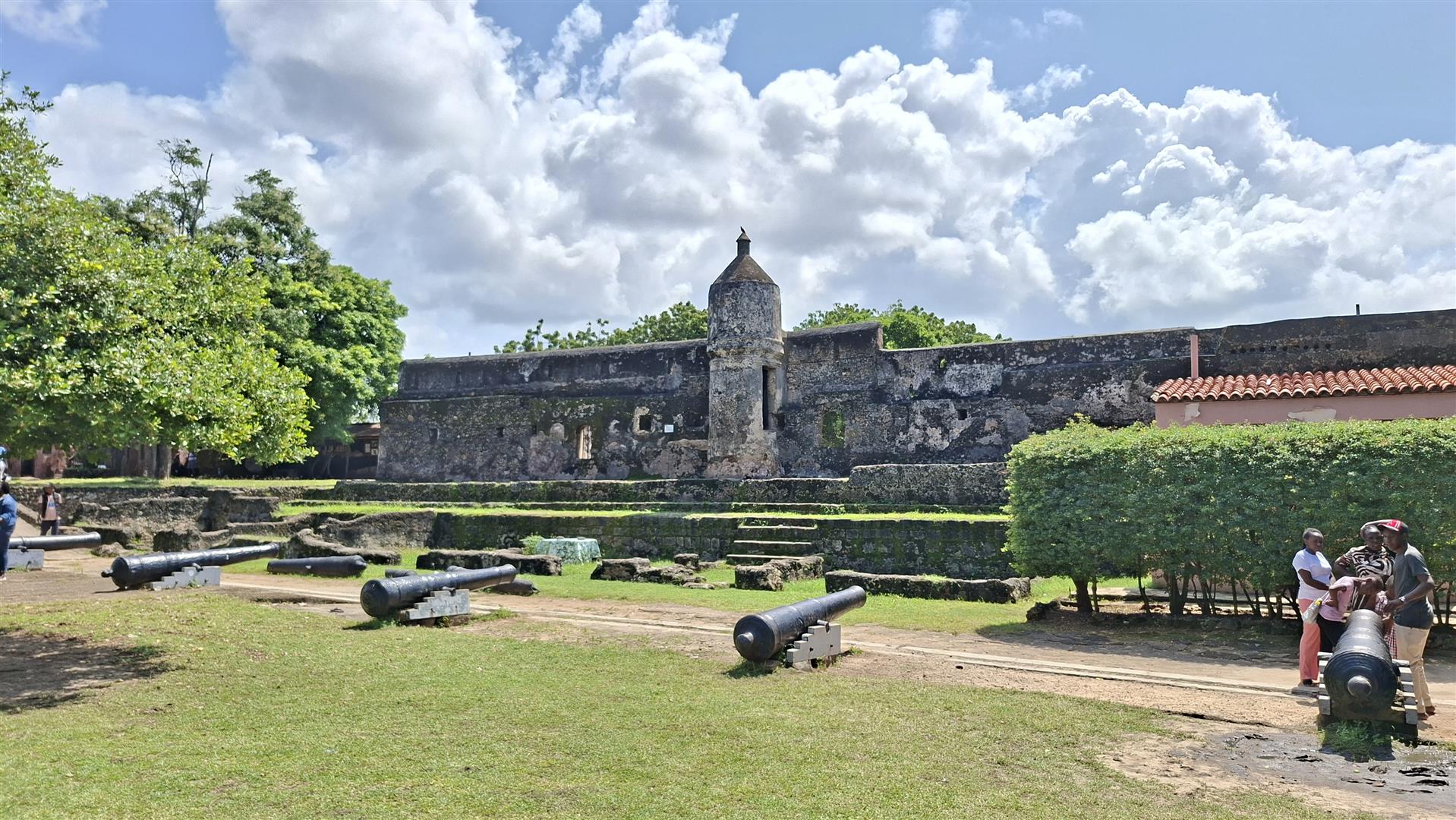
Plenty of cannons inside the Jesus Fort.
I found a cup of coffee in a nice little café, and said Hello to a couple of western women sitting in there. Then I went to look at the Lord Shiva Temple. Nothing spectacular there. Very modern building with some shrines in the grounds for me to photo.
The last place was the Holy Ghost Cathedral. But it was closed. Is that typical of something? Buttoned up Christianity, compared to an open welcome from the other religions?
I’d worked out that there were bike shops not far away so I walked up there. The USB charger on my bike had failed and I wanted a new one. I couldn’t find the shop I’d marked on Google maps so I kept walking up the road towards where there were others.
On the way I saw a car that had dropped it’s front wheel into a collapsed drain. Well and truly stuck! Some guys were trying to get it out by putting stones underneath the wheel and getting the driver to come forward.. But that was never going to work. So I took charge and got the guys to put the stones behind the wheel. Then, with a bit of a lift from willing hands, it came out backwards. Well done me!

A bit of lateral thinking got this car out of its hole.
I found a shop that could sell me a USB charger, so it was mission accomplished. I went back to the hotel for tea and a snooze after all my hard work.
I planned to leave the next day. My fingers crossed for good weather.
So how was Mombasa? Very obviously heavily influenced by Omani Islam. Most women wore abayas, hijabs etc. But that didn’t stop some of them looking for business with me.
The city is typical of a developing country, with a general air of untidiness and shabbiness. People sleeping on the streets sometimes. Very poor housing in some areas, albeit no real shanty towns.
The city hasn’t got any smart shopping centres, that I saw. Loads of small shops and street businesses. As Kenya’s main port city it was a busy place but had enough of interest to have made the visit well worth while. An Islamic flavour colours the city differently to Nairobi.
Having visited Kenya’s two biggest cities I was keen to get out into the countryside and see the other side of Kenya’s coin. That story will be along soon.
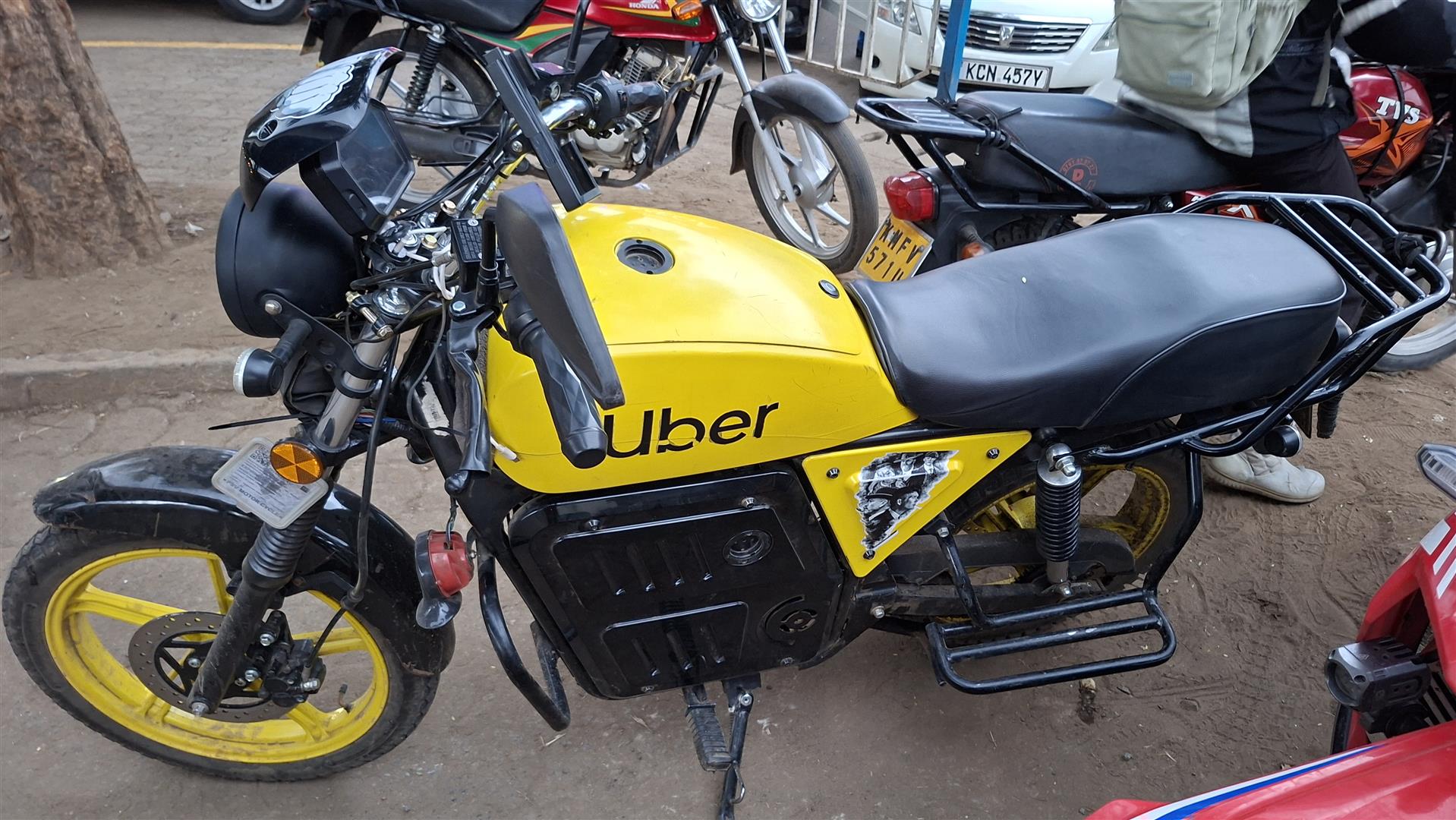
Electric Uber bikes were quite common. A great idea in polluted cities.
 MOTOPANGAEA
Great post, Geoff – I may go to Africa in a month or so and will heed your advice!
LikeLike
Thanks Mark. I’m very pleased you enjoyed it.
LikeLike