
Livingstone, Zambia. 28th January 2026.
There were two routes into Namibia. The quickest, but dearest, was to go into Botswana then straight into Namibia. The other route went a very long way round and I’d been told the road was a bad one. I chose the first.
Stamped out of Zambia, into Botswana, with some road fees to pay. I stopped in a town, found an ATM and drew out some Botswana Pula. Not many needed right then, but I knew I’d be returning later.
I was stamped out of Botswana and into Namibia. There were more road fees to pay. Then I rode to the town of Katima Mulilo to spend the night. I was now in country number sixty five.
I was heading for the coastal town of Swakopmund. It took two more days, via Divundu and Grootfontein. The riding was quite boring. Mostly low level forest. Not much agriculture that I could see. Plenty of signs warning of animals but no sign of the animals themselves.
All the kids would wave at me as I passed by. I saw plenty of them in school uniform, which always pleases me.
A Dutch guy I bumped into at a coffee stop told me Namibians don’t like bikes very much. That might explain why I was occasionally ignored by car drivers pulling out of turnings. As with Zambia, I saw almost no small local bikes on the road.
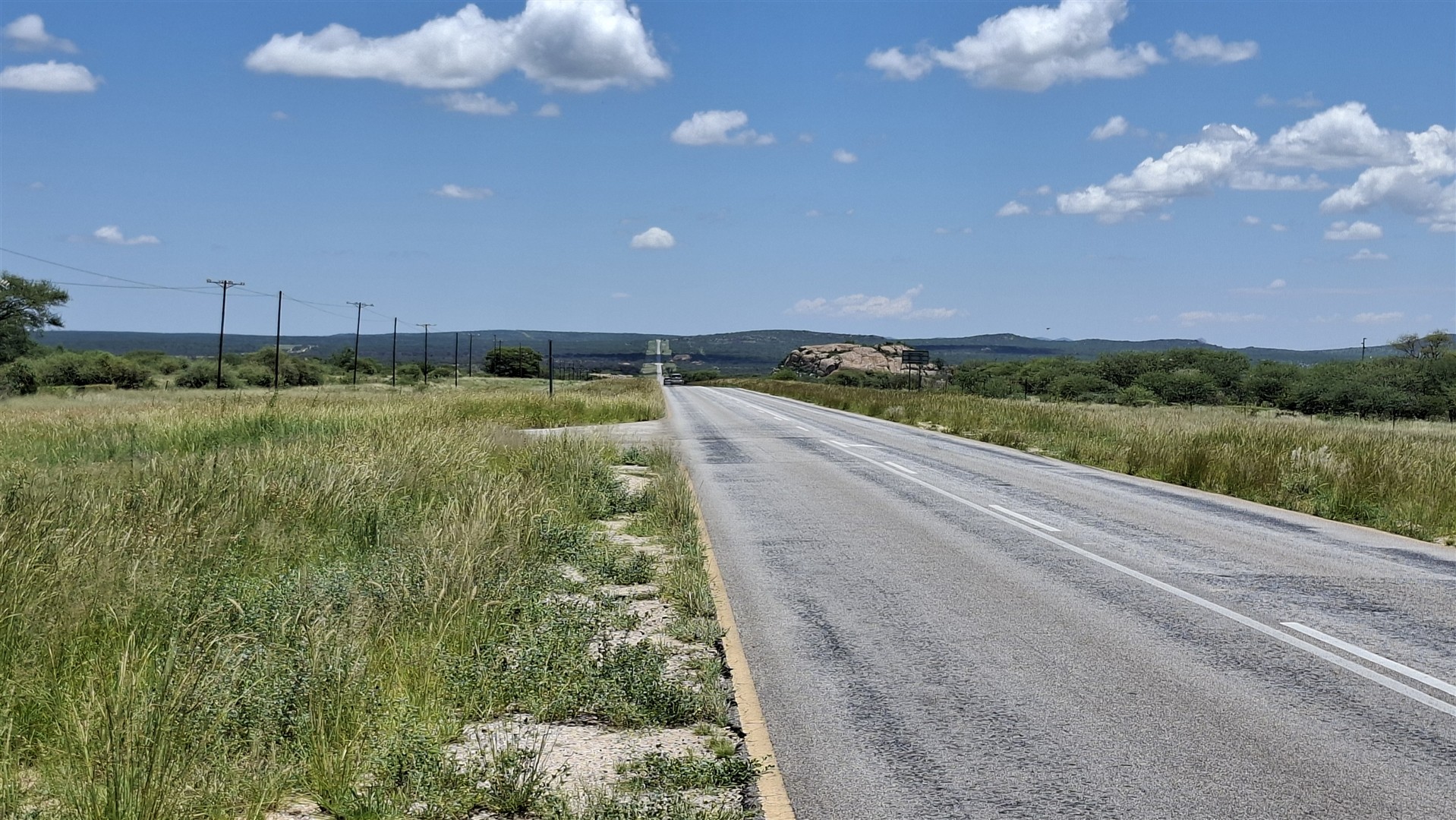
The long, lonely and empty road, typical of this region.
Swakopmund is very much a holiday town which sits on the Atlantic coast. It was interesting to realise that I’d now ridden Africa from east to west. I was staying in a hostel which was quite a good place and wasn’t too far from the main beach and the town centre.
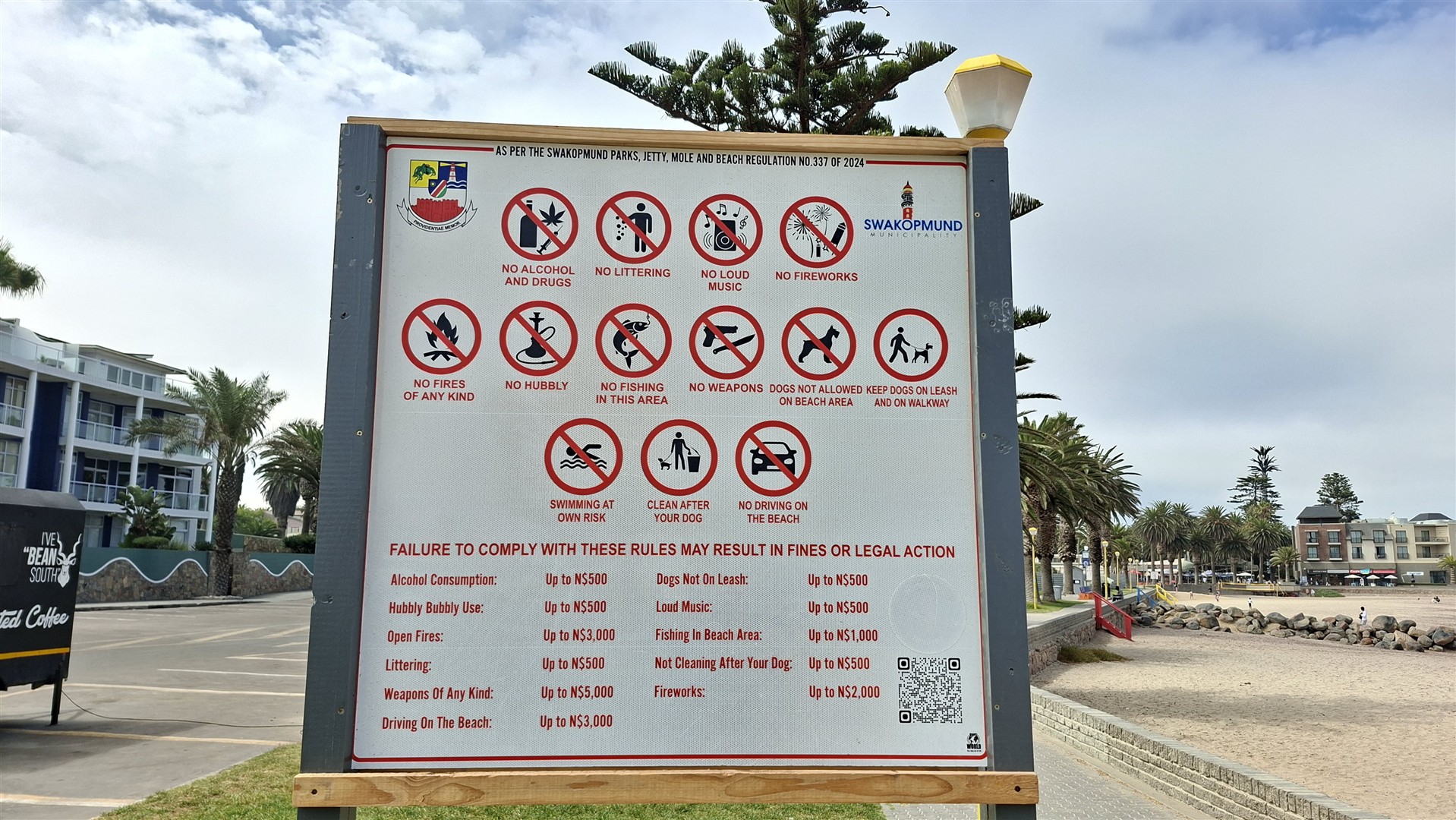
Lots of things not to do on these beaches.
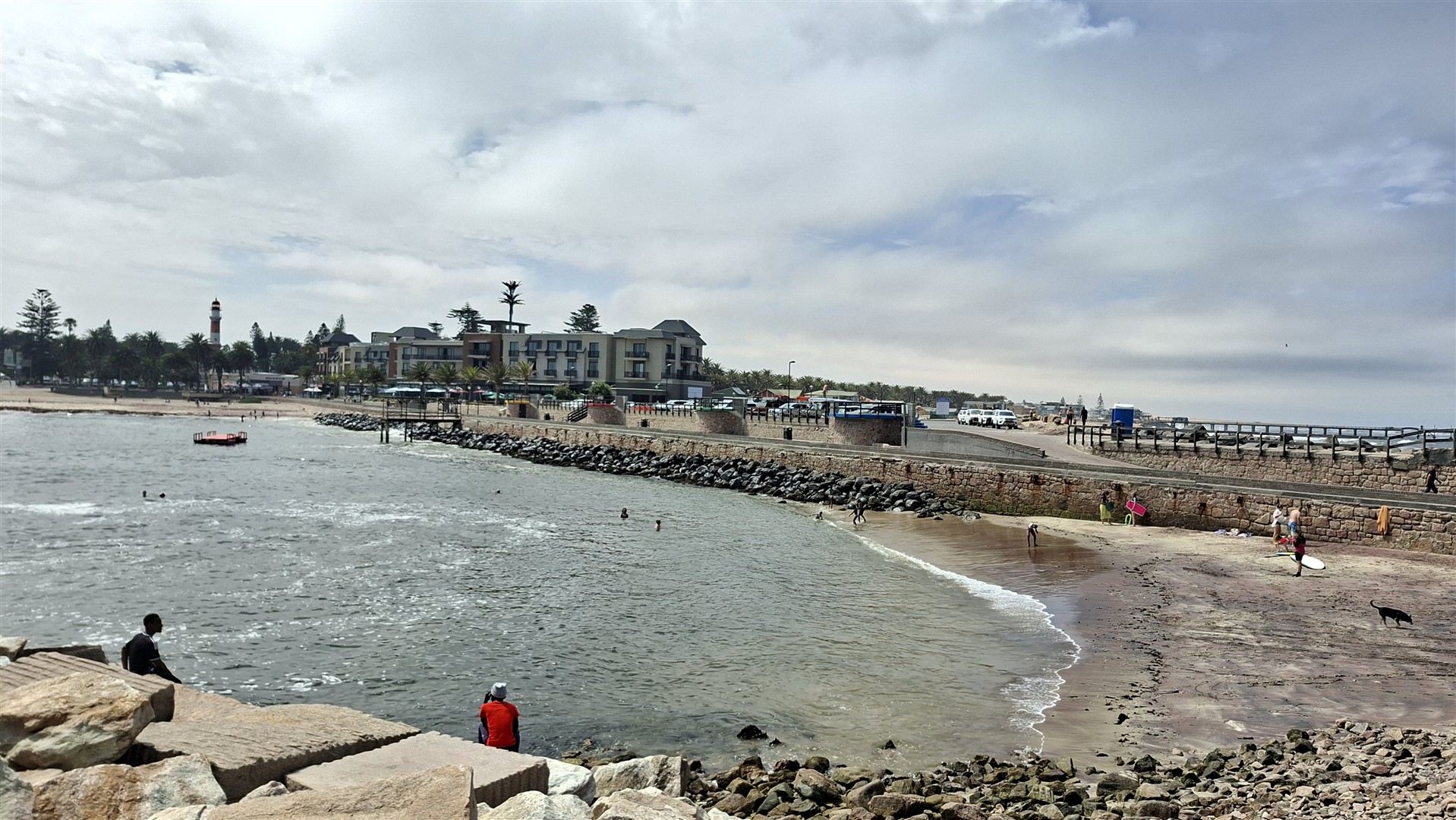
Beachfront view.
The bike needed a service so I located a place called Dune Worx who were quite happy to do it for me. They dealt with all sorts of bikes, from big BMWs to small dirt bikes, so I was confident in the ability of their workshop.
The service manager’s name was Neil and we had a good chat about the local biking scene. The bike shop was an impressive place with a large display of clothing and accessories. I wasn’t used to that level of sophistication.
After I’d explained to the mechanic about removing the seat and about my foam air filter, I went to sit down in the shop and wait.
They had an oil filter in stock, which saved using one of mine, and some high quality Motul 7100 oil. I was thinking that the old girl was going to have a birthday.
When it was finished I paid the requested amount and left. Or tried to. When it was time to leave the bike wouldn’t start. The fuse for ‘start’ had blown. We put in a spare and that blew, so did the second spare.
We tugged at the wires and after a while he got another fuse and it worked. Very odd.
But then I made a mistake. I didn’t check what was on the invoice and when I got back to the hostel and did so, I realised there was a lot of extra items on there that weren’t relevant to my service.
I went back next day to sort it out. The woman on the desk called the mechanic in and we eventually worked out that she’d used the wrong job card to create my invoice. She refunded the money to my card and after yet another visit I got a correct invoice. A bit of a palaver.
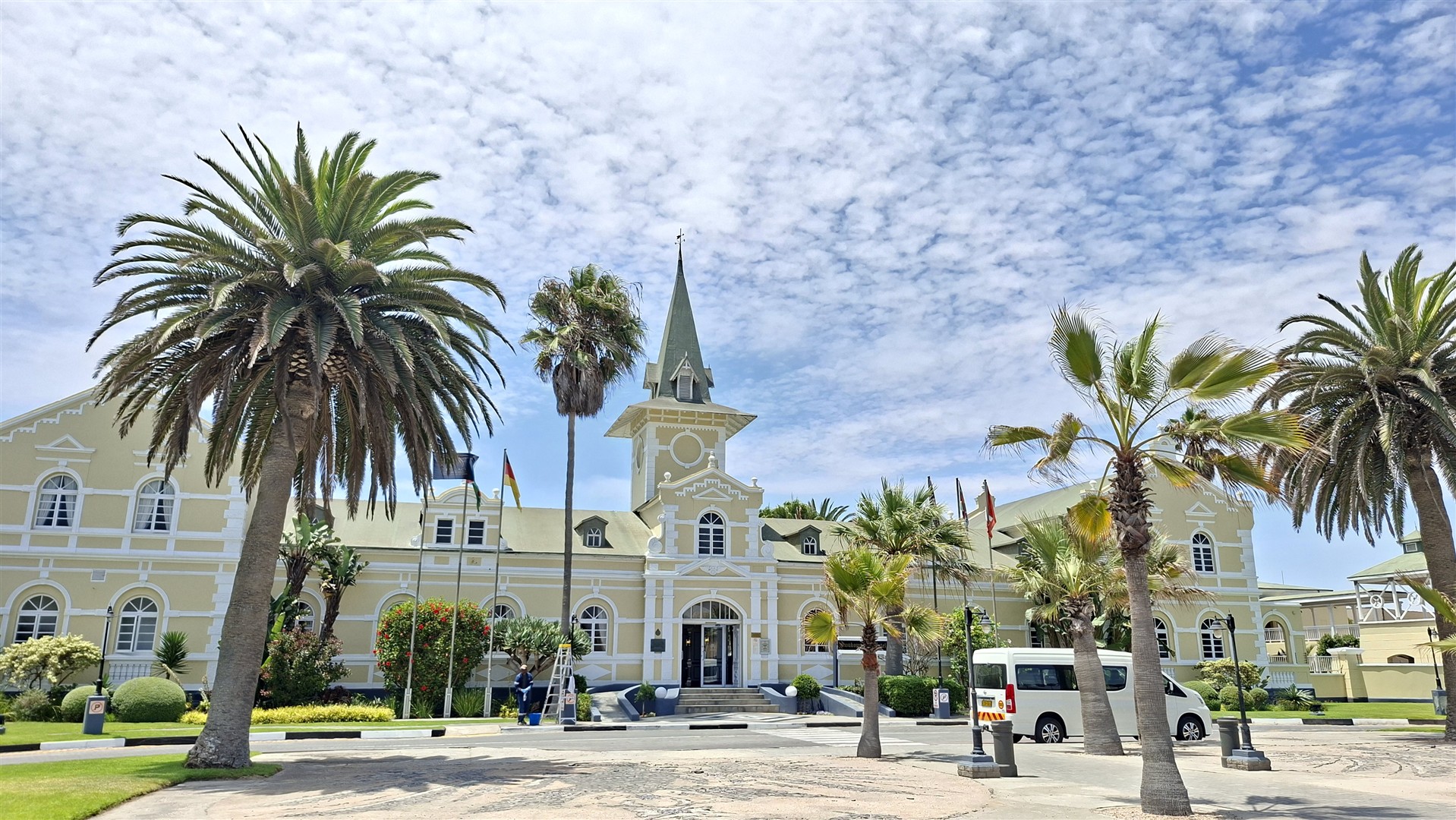
The very lovely local railway station.
While I was back in the UK I’d left the battery connected and the USB charger switched on. The battery went dead flat and although it jump started OK it became unreliable, refusing to start the bike at odd times. I bought a new battery and fitting it became one of several jobs that I tackled one afternoon.
I’d been in the town the day before and the fuse had blown again. I’d wiggled the wires around and it became OK. Then it happened again in the yard of the hostel.
To try to find the reason for that was one of the important jobs. To try to fix the fault with the incorrectly reading fuel gauge was another.
With the side panels and the fuel tank off I used my test light, connected between the battery positive terminal and the outlet of the fuse holder. The light was at full brightness, showing a direct short to earth.
I moved the wiring harness and the light went out, showing there was no longer a short. I examined all the wiring but it was pretty much impossible to locate where short had been and I was unable to recreate it. So I replaced the blown fuse and I’ve been keeping my fingers crossed, and some spares to hand, ever since.
When I examined the fuel pump properly I realised I’d put it back in the tank 90 degrees out. That meant that the float inside the tank was fouling against something inside, preventing it from working.
I moved it around and it started to show a proper reading. It’s still not 100% right but it’s a lot better than it was.
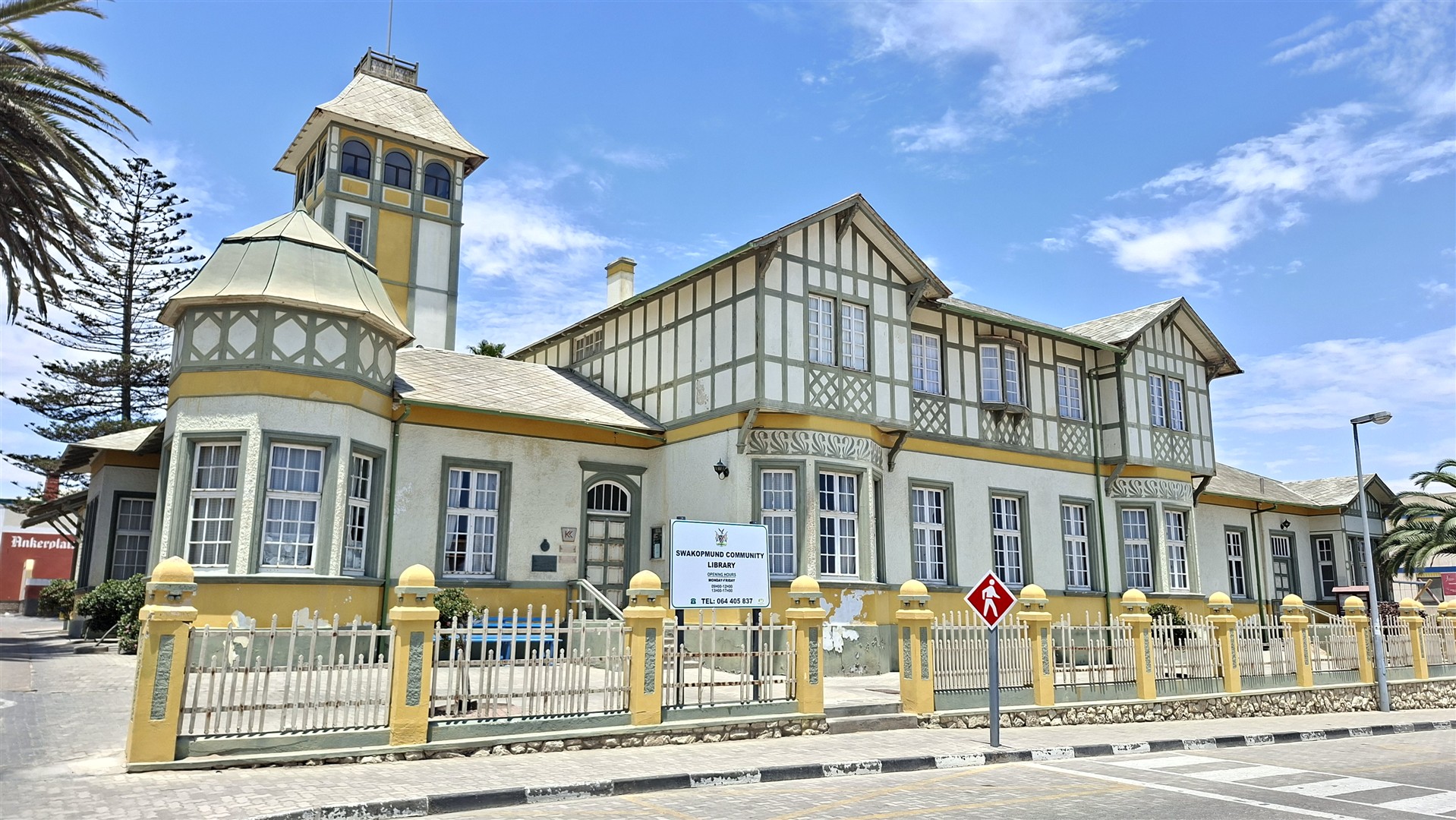
A German colonial building.
There was a fair bit to see in and near the town. Namibia was occupied by Germany up until 1916, when, following their defeat, it became part of South Africa.
That meant there were some really nice colonial buildings to admire and some German heritage was still evident. This included a very good German bakery, which just had to be visited a couple of times for strudel, despite my BBC diet.
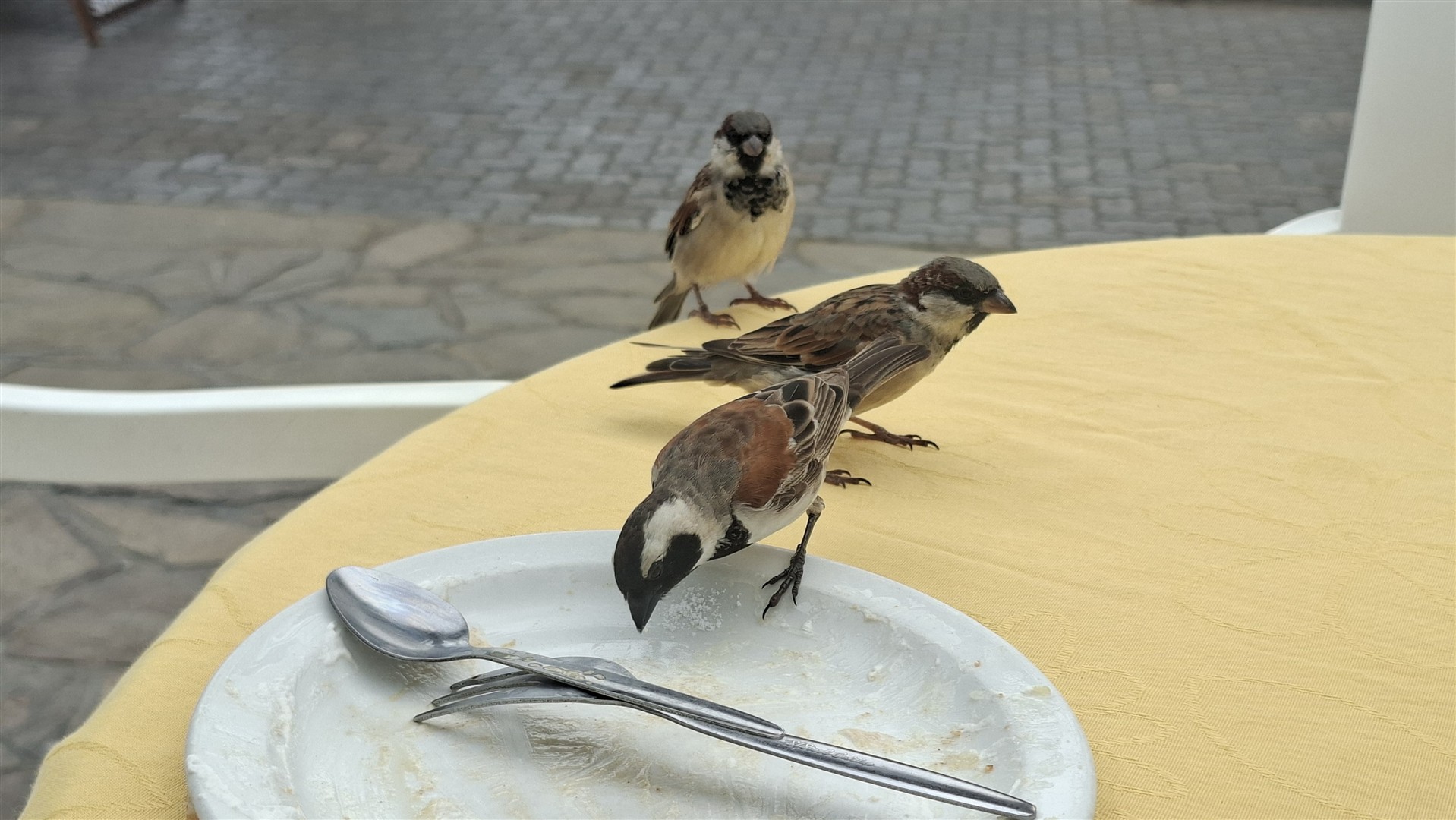
I left some crumbs for the local birds.
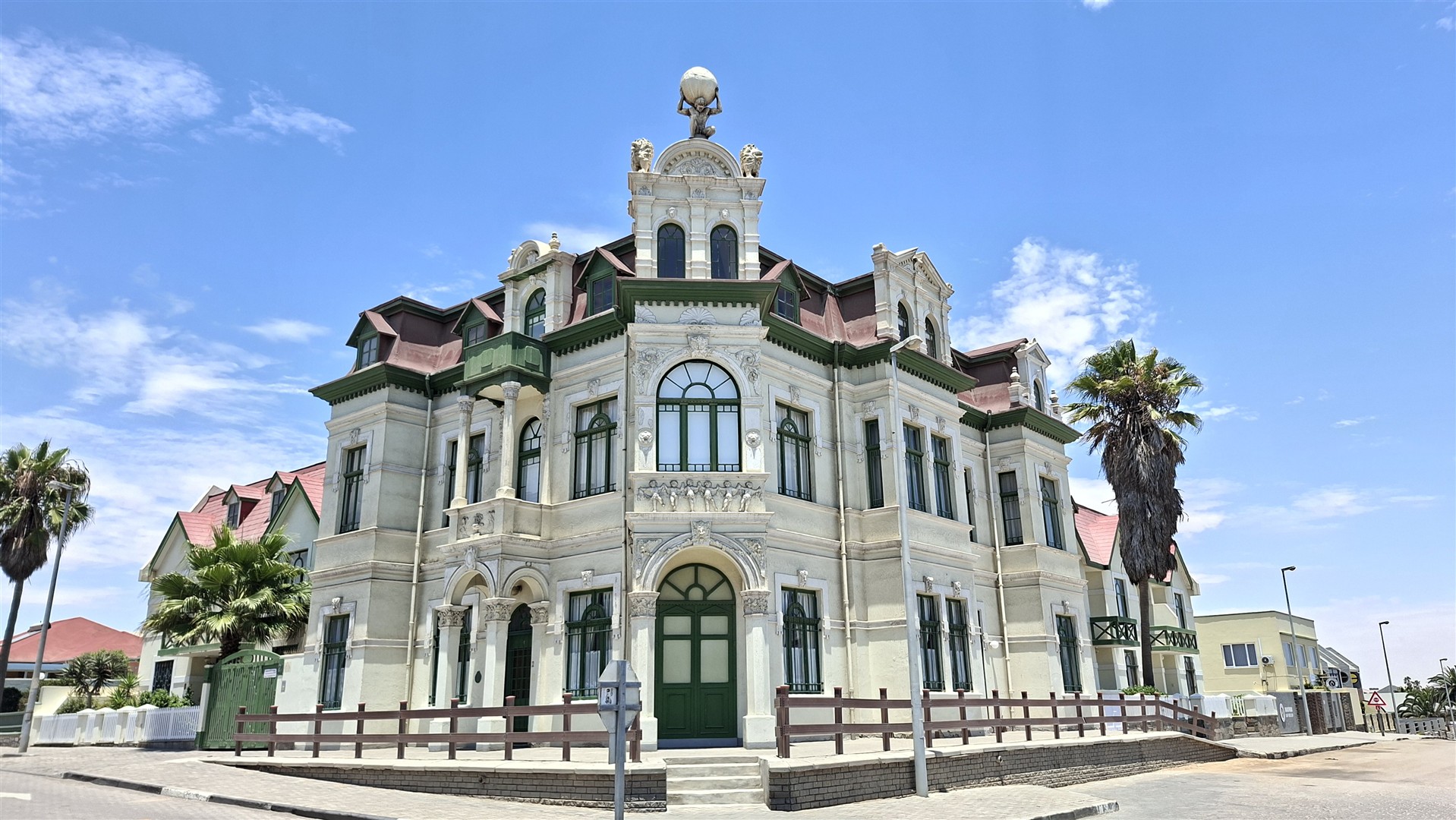
Another German colonial building, with Atlas up on the roof.
The seafront was an attractive area with good beaches, a mole jutting out into the sea and a small marina. A photoworthy lighthouse was close to the front too.I spent some time walking around and admiring it all, camera at the ready. One particular thing I enjoyed was the fish and chips from a van parked on the seafront. It was very tasty.
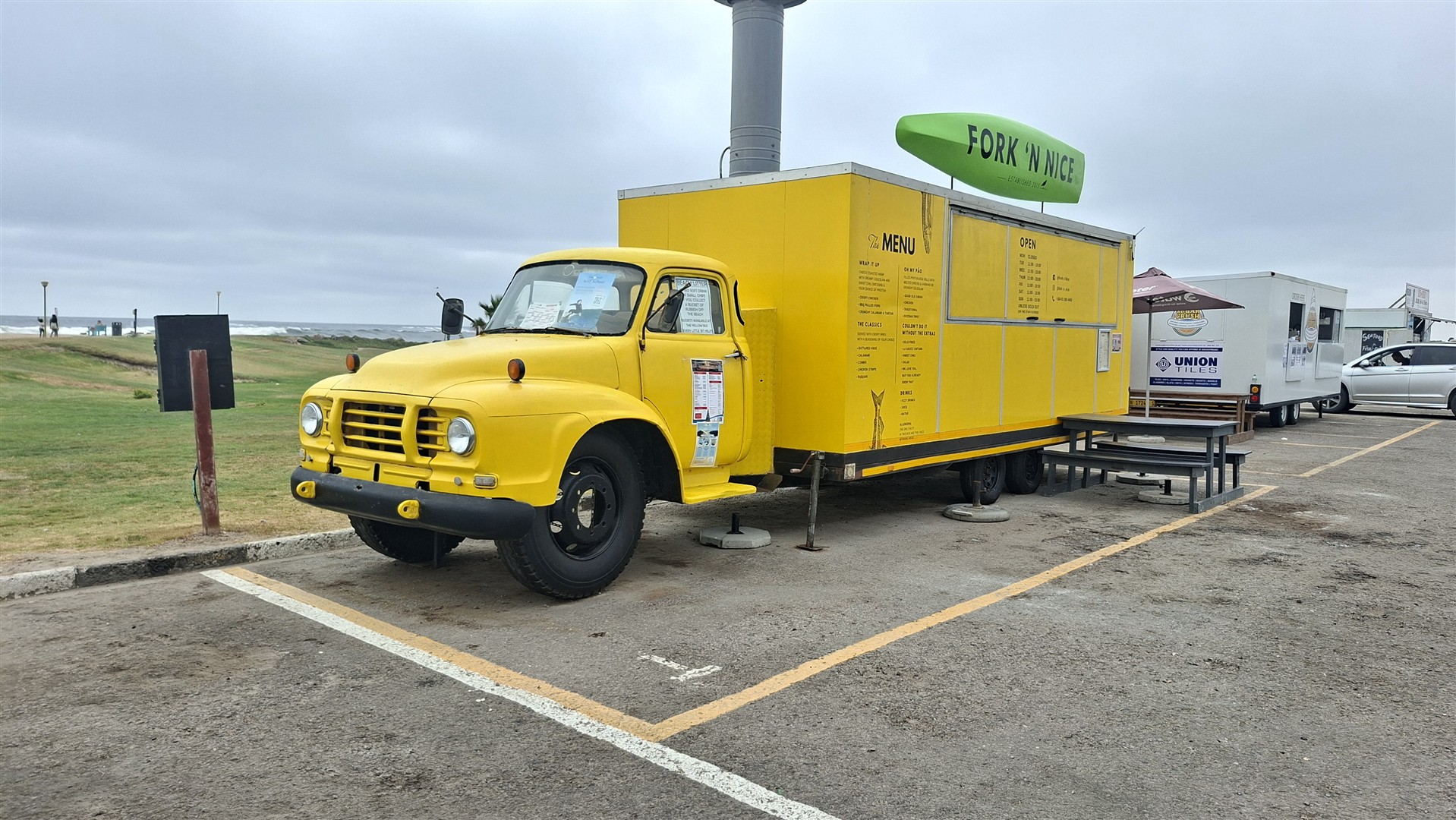
Fish and chip van, based on an old Bedford J3.
I had a few rides out while I was there. The first was to see the wreck of a small ship called the Zeila. It was a good ride across the desert, just inland of the shore.
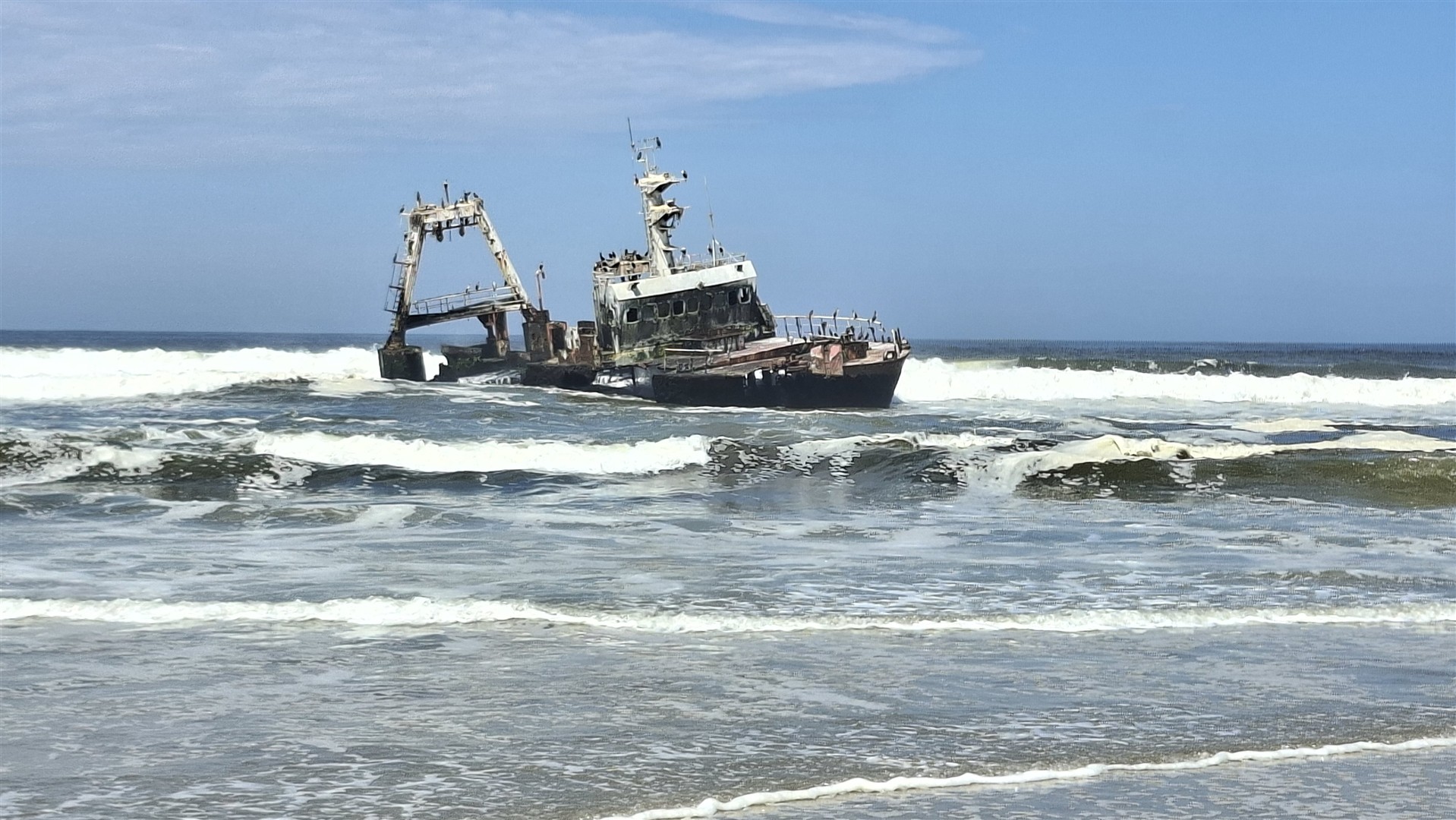
Wreck of the Zeila, very close to the shore.
The wreck happened in 2008 when it was being towed to Japan for scrapping. It ran aground after the tow line broke. Both crew members were OK. It’s not very far out from the low tide line. There are more wrecks along this coast, further north.
Some local people had created a human skeleton out of old, bleached seal bones. It looked quite dramatic on its bed of sand. It had become a focal point for those who like to sell trinkets to tourists. Not to me though.
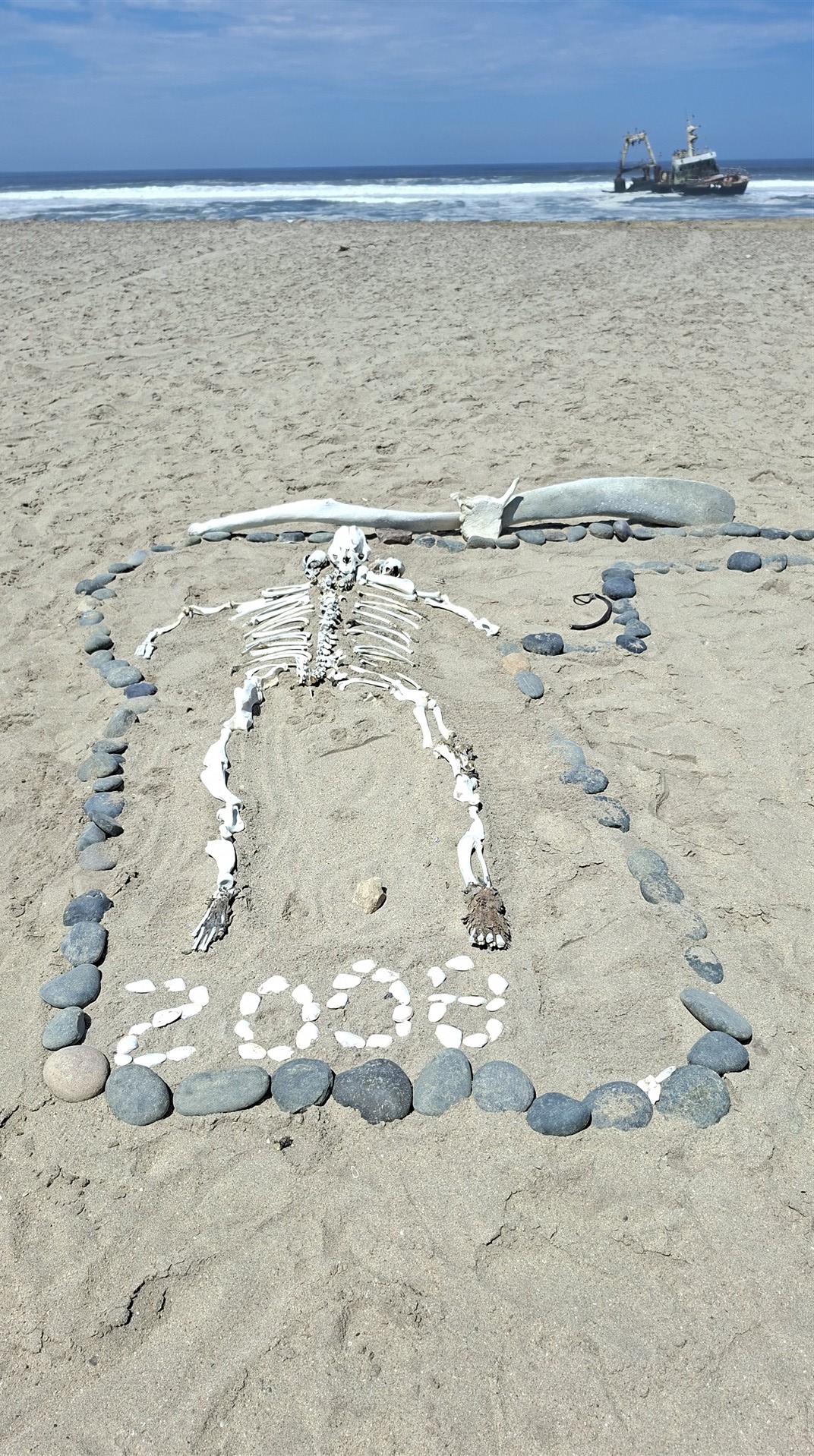
A clever bit of artwork.
Then I carried on up the coast to Hettie Bay. There’s nothing there except for loads of flats and retirement homes. A big supermarket, where I got a free cup of tea in the café. That’s it. The place looks deserted and desolate.
I then rode down to Walvis Bay, south of Swakopmund. This was a much better place. Although it’s a shipping port, it manages to have a long promenade path and a small marina with tourist businesses next to it.
I had a coffee and a cake and chatted to a couple of elderly English guys who are on a three month tour of southern Africa without their wives. They looked well on it.
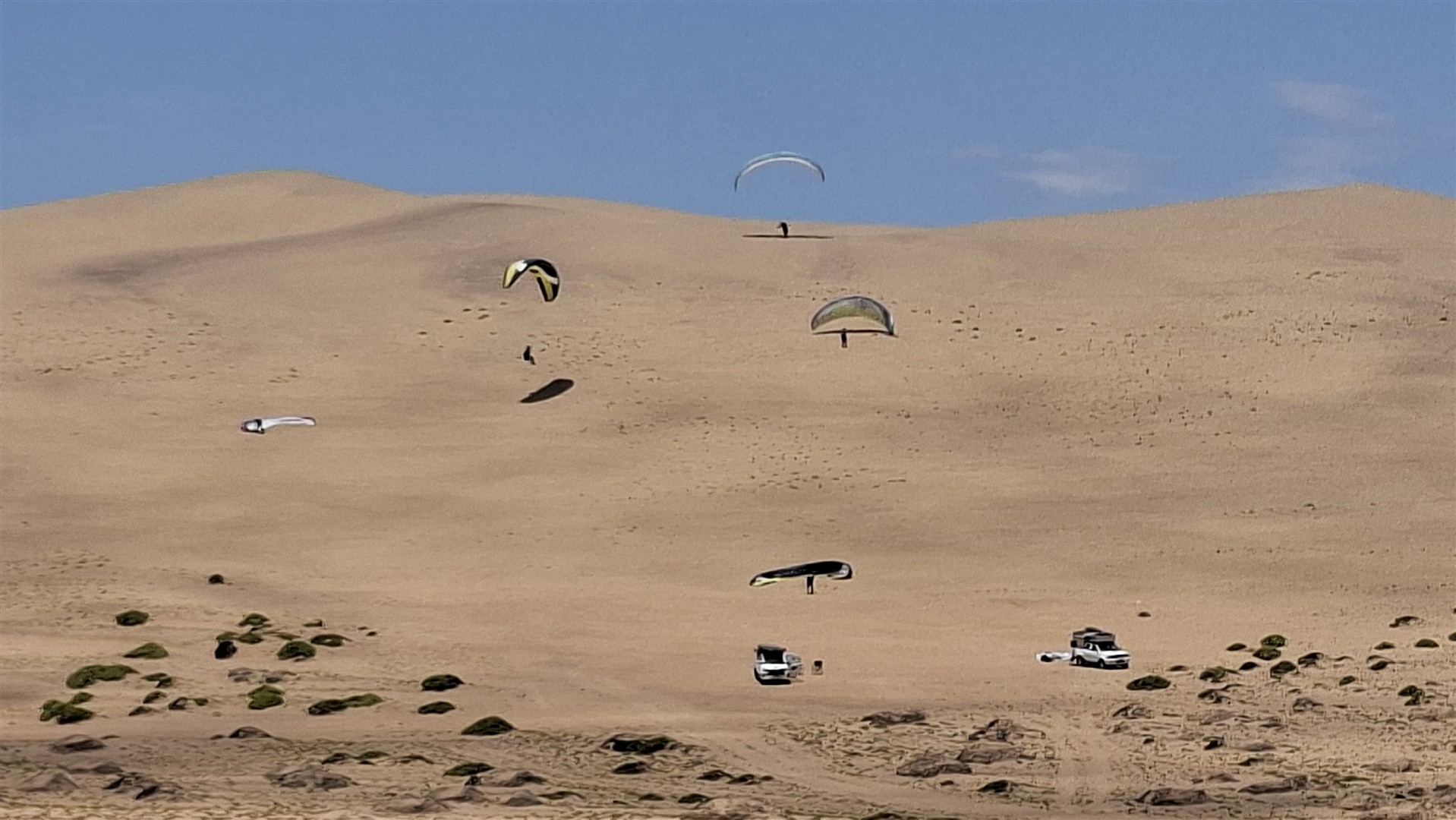
Flights of fancy in the dunes en route to Walvis Bay.
Meanwhile someone at the hostel had put me in touch with a tour operator about a trip out to Sandwich Bay. This was the first port set up by the Germans in the 19th century. It was subsequently abandoned when a better one was built at Walvis bay.
I was supposed to be picked up from the hostel at 7.30 but the driver was late. He eventually arrived, with some others already onboard, and we headed out to Walvis Bay to meet up with others on the same trip.
When we got there a bit of car shuffling took place and my companions were three women from Europe, two of them young and speaking good English. There were five or six other 4x4s and we all headed south in convoy.
Our first stop was at the Flamingo Lake. There weren’t many there although we did see some later on, mostly pink. Our guide, Martin, said it’s the bacteria in the water and the shrimps they eat that cause it.
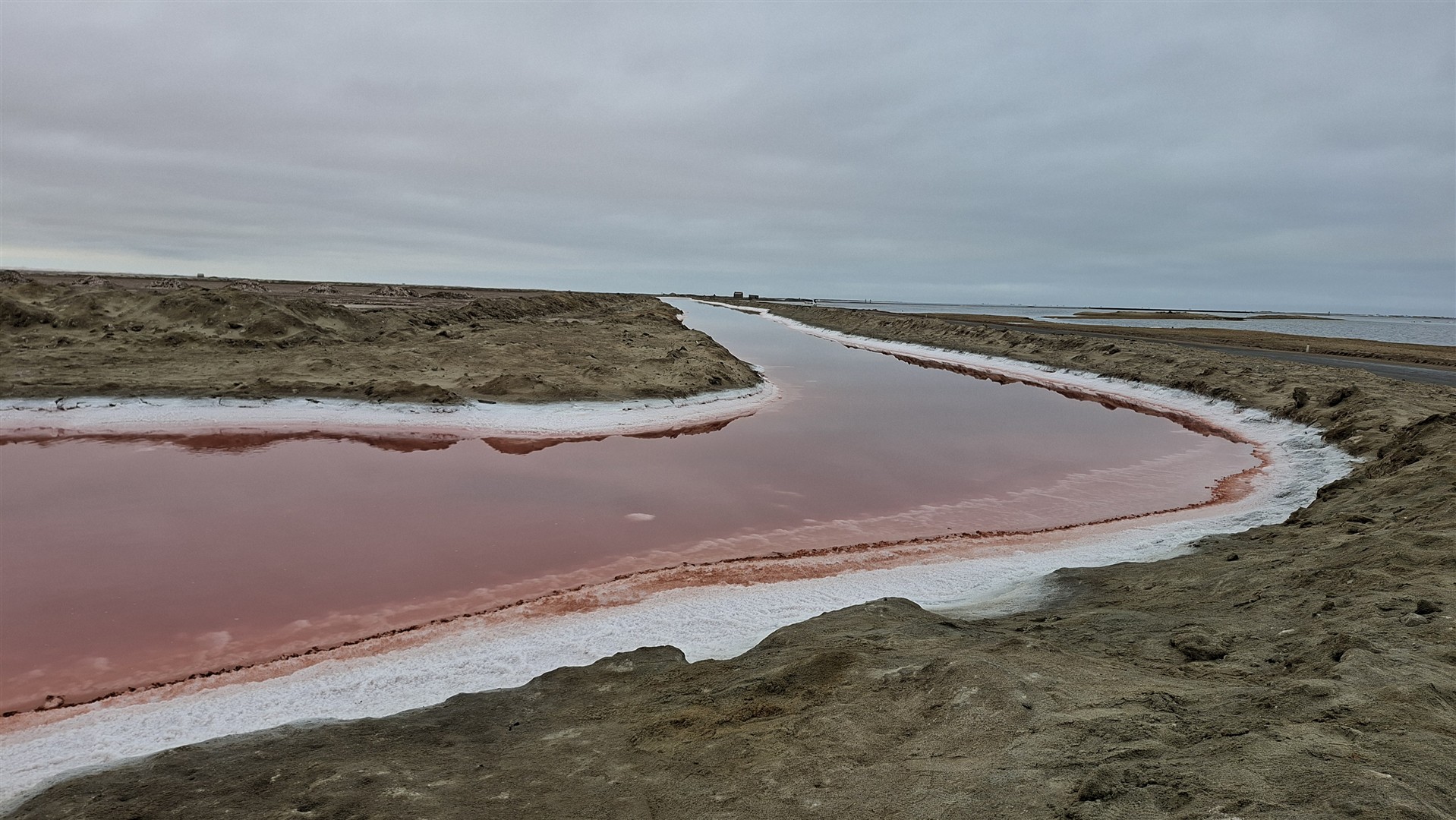
Water flowing into the salt factory.
Then we went to look at the salt factory. Here the water was very pink indeed. Martin said they don’t extract all of the water because evaporating fresh seawater would take forever. So they put the water back in once the salt has been removed. It sounded a bit odd if I’m honest so I may have got that wrong.
Then we had an excellent drive along by the beach, right at the water’s edge, frightening the seabirds as we went. They were mostly gulls and hundreds of black cormorants, which crowd together at the water’s edge. When I tried to get a photo they flew off en masse. But I managed to get some on the way back.
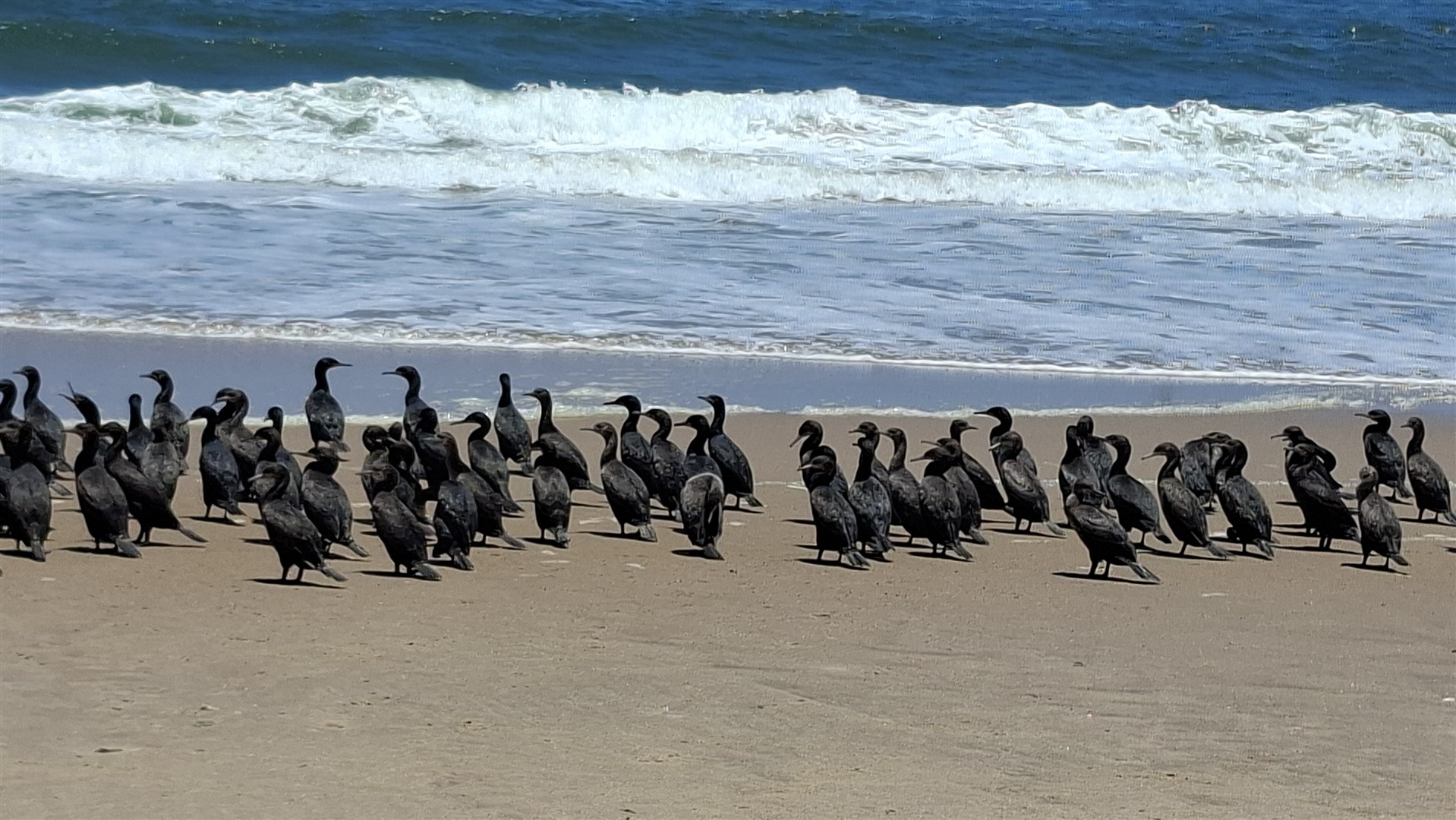
Black Cormarants, hanging around in crowds.
After a while the guides aired down the tyres and we went up into the dunes for a great time driving up and down.
We stopped and they laid out a very nice finger buffet for lunch. I enjoyed a couple of beers, of a brand I hadn’t seen before. A bit better than the others I’d tried.
I had a chat with a couple of British guys. One was on a cruise and the other was on planes, both with their wives.
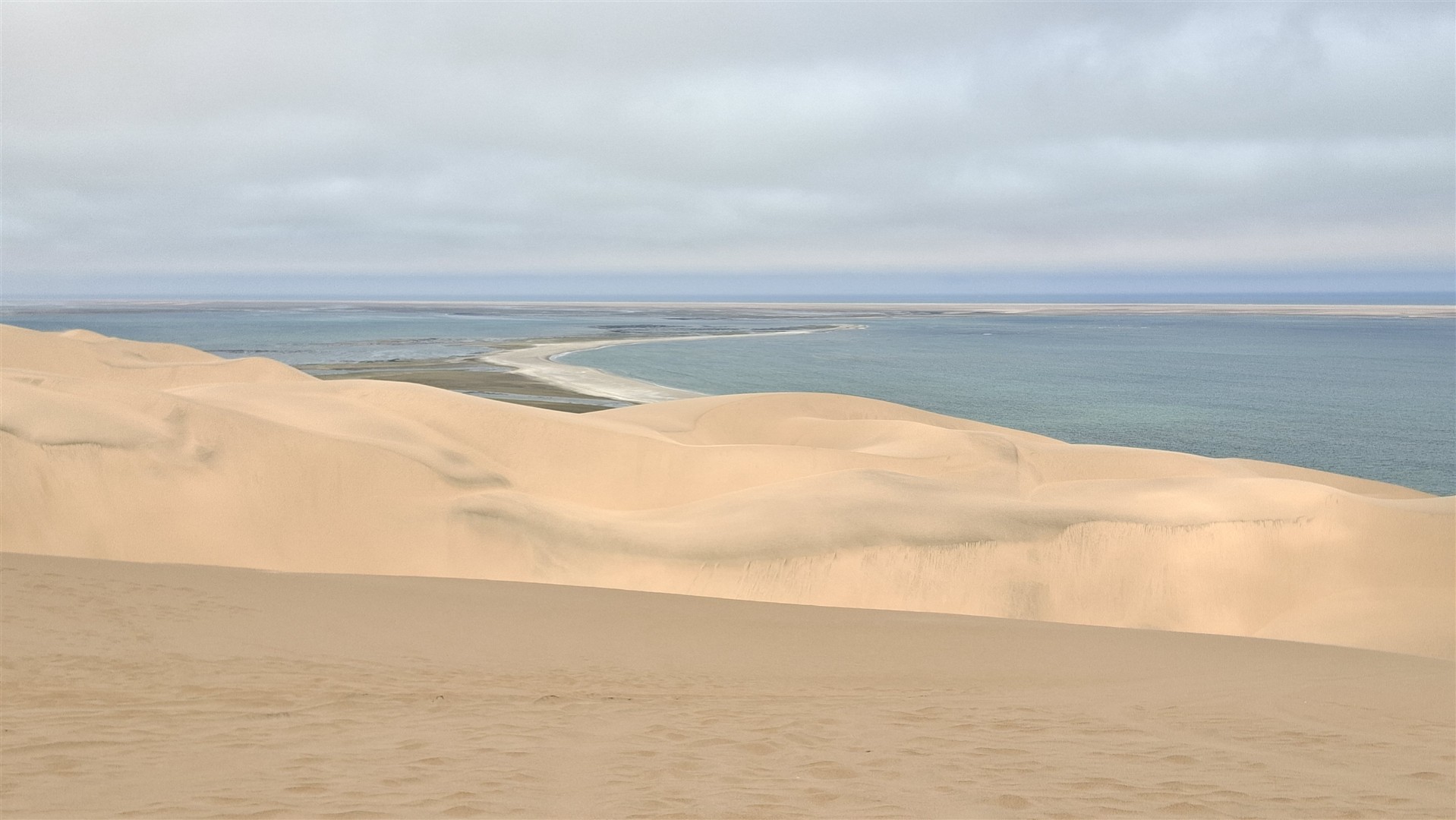
Looking over Sandwich Harbour.
Sandwich Harbour looked fantastic from up on the dunes. There’s no access road any more, nor is there any infrastructure remaining. It’s prohibited to go down there.
The area is famous for how the dunes of the desert come right down to the sea shore. The only place in the world where this happens. Driving through them was a fun experience too.
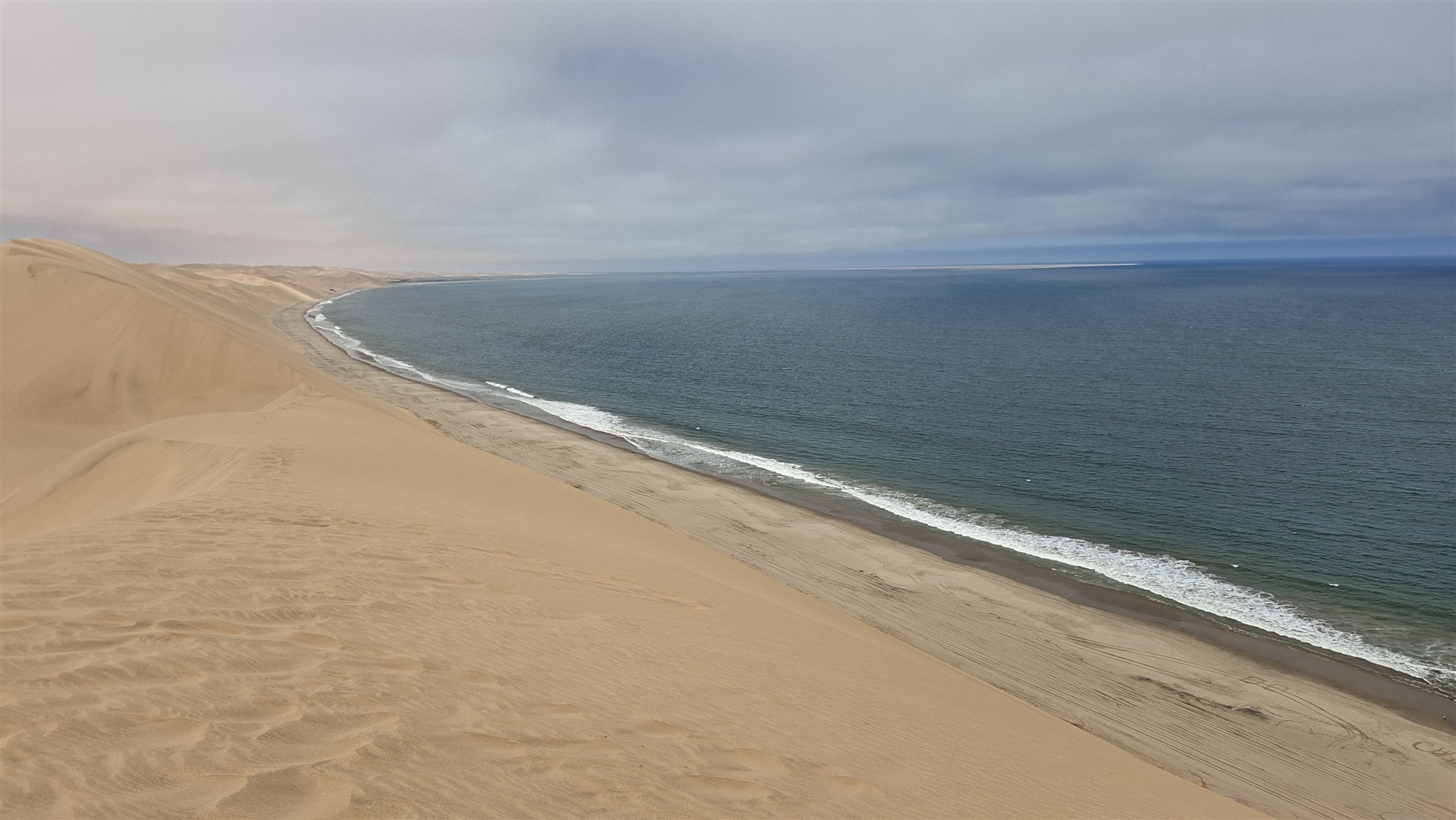
Dunes by the beach. Very rare.
We headed back to Walvis Bay, swapped around again and I got dropped off in the town, right by Anton’s café. Needless to say I went there for strudel.
My last trip out was to Spitzkoppe, an area of rock famous for the shapes and, especially, the large rock arch.
I commenced my chilly ride. But once away from the coast it got very nicely warm.
After 90 Kms of boredom I turned onto the dirt road and, after a couple of Kms of wibble wobble I stopped to air down my tyres. And it really did make a difference. The bike felt much more stable on the reduced pressures.
I hadn’t had cause to do that up until now. All of my off roading had been on solid dirt. But this surface was of small gravel. Packed down but still a little loose on top.
Despite that I still had a large ‘moment’ in a sandy section I hadn’t seen. After that I noticed the colour change from the sand and slowed right down to paddle through. I hate sand!
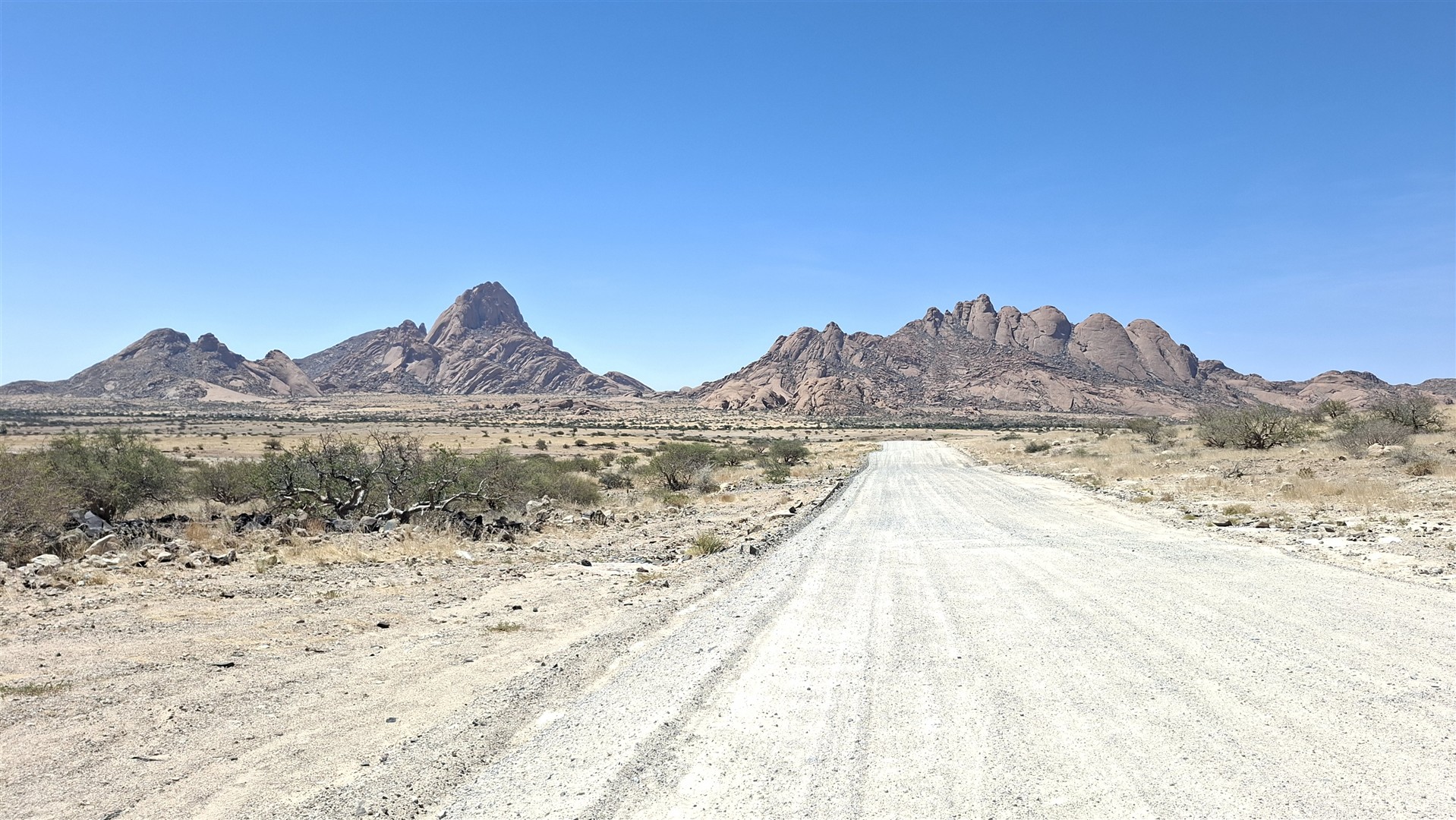
Outcrops of sandstone rock on the way to Spitzkoppe.
I took the signposted turn and after a little way I saw a car stopped on the roadside. I stopped a bit further on to check the route and the car caught up with me. The nice German woman in it told me she’d been up to the signposted location and was faced by a locked gate. The guy there had told her to go somewhere else.
We went to one of the camps and a woman there gave us directions. We found the entrance easily after that. We paid to get in, N$180 (£8) for a day visitor. We followed the map to the rock arch then went our different ways.
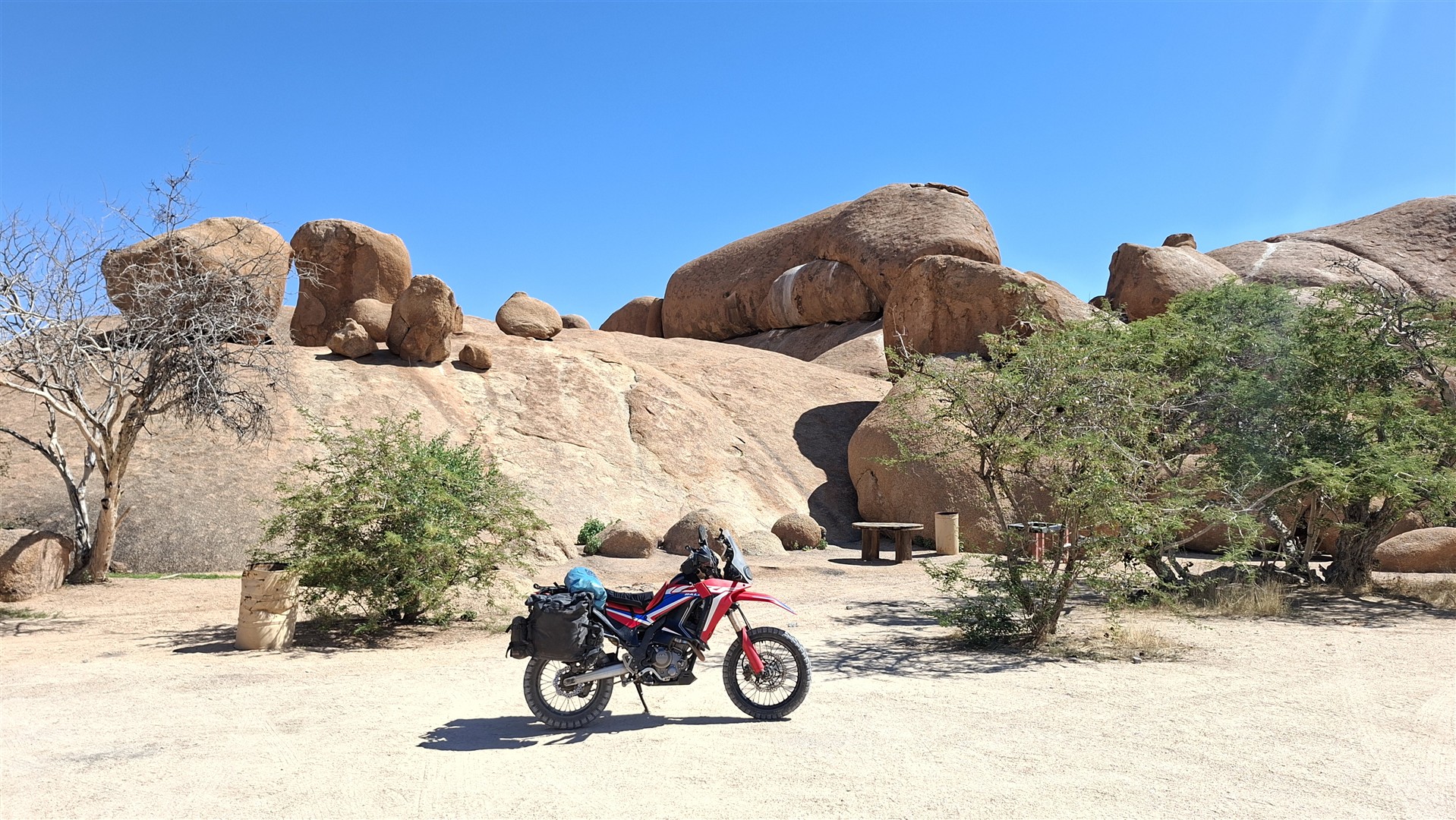
My bike rocks!
It was a short walk/scramble round to see it. Fairly impressive but nowhere near as good as those I saw in Jordan. But worth the journey. Arty photos were taken.
The rock was sandstone and on the way in I’d been happy to admire and photo the massive rock outcrops rising up out of the flat nothingness of the desert.
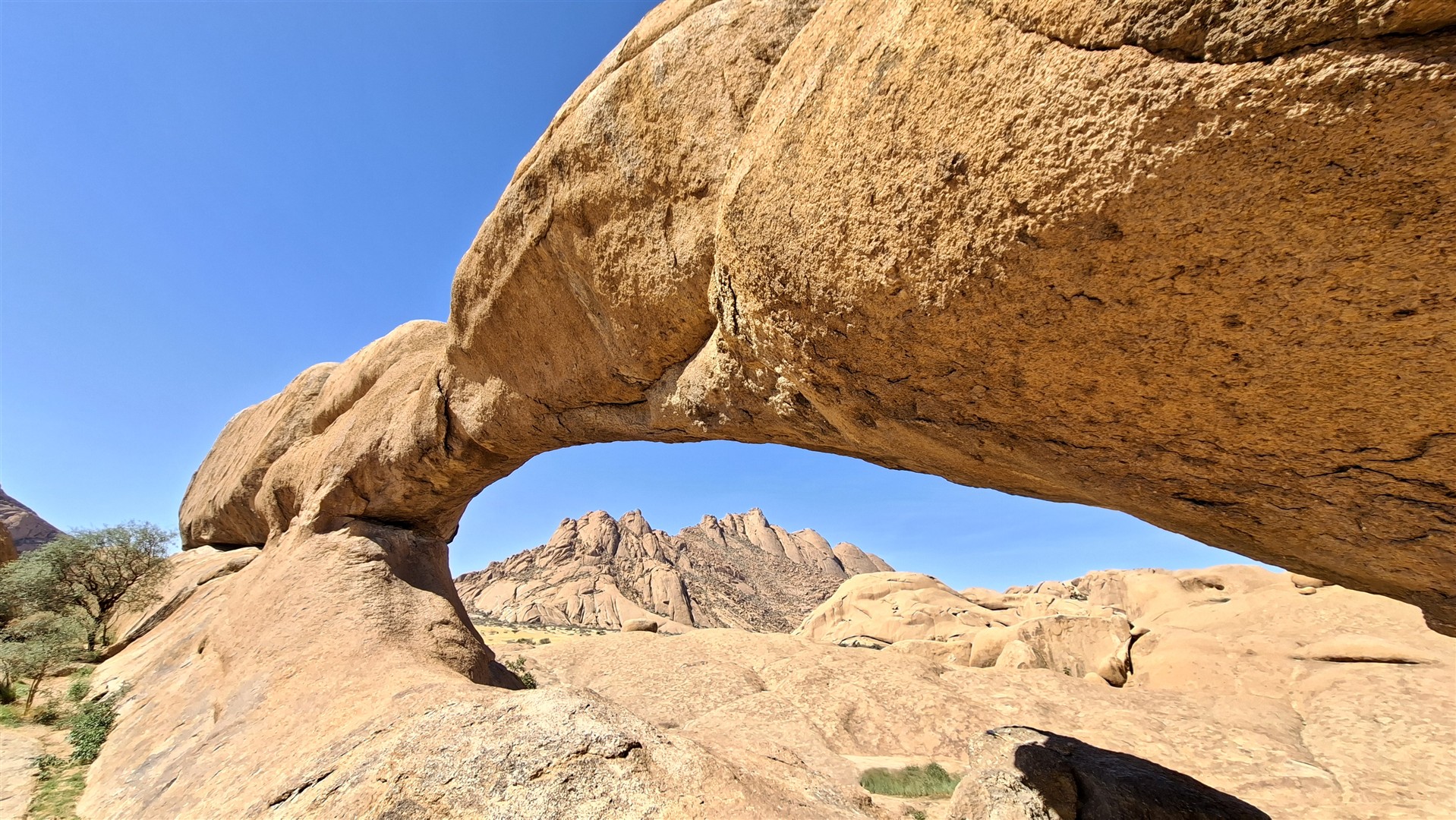
Spitzkoppe arch.
I stopped for a coffee then hit the trail back. It seemed to take a lot less time to get to the main road this time and my confidence level had definitely come up a few notches on the ride back.
At the junction with the main road I aired up the tyres then wound the throttle open. I hit the bank of cold air about 30kms before town. There was a very definite line of cloud across the sky as I approached the coast. I knew it was going to get cold.
That line of cloud is a strange phenomenon which is caused by a very cold current running parallel to the shore along that part of the coast, It’s effect is to cause the temperature to drop considerably at various times of the day. Oddly, it stops before it reached Walvis Bay, south of the town.
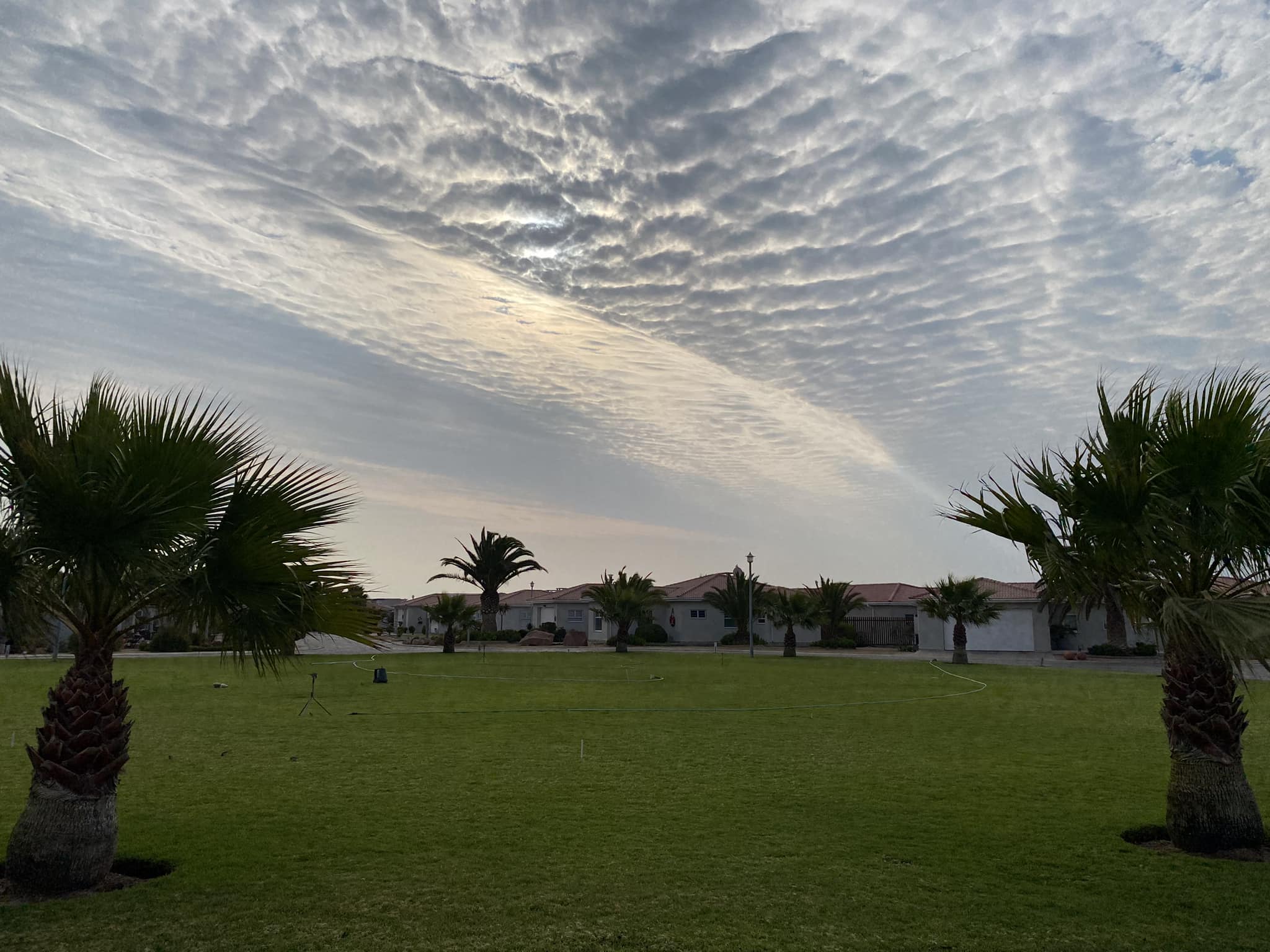
The cold layer of cloud that sits out to sea. (Copyright belongs to the photographer)
The time came to leave Swakopmund and head for Namibia’s capital, Windhoek. I’d tried a beer with the same name one time and it was nothing special. I hoped the city would be better.
That evening, in the hostel, an English woman named Sarah had a birthday. She invited all the guests to join her for cake and prosecco. She’s from Birmingham but lives in London, so we enjoyed a neighbourly chat.
A free city walking tour was taking place next morning so I sat at the meeting point to wait. A couple of young women were waiting with me. The start time passed by and I commented that our tour guide was running late. One of the women said, “I’m the tour guide.”
So we set off, with me the only customer. Her friend was along to learn the ropes and they were both students.
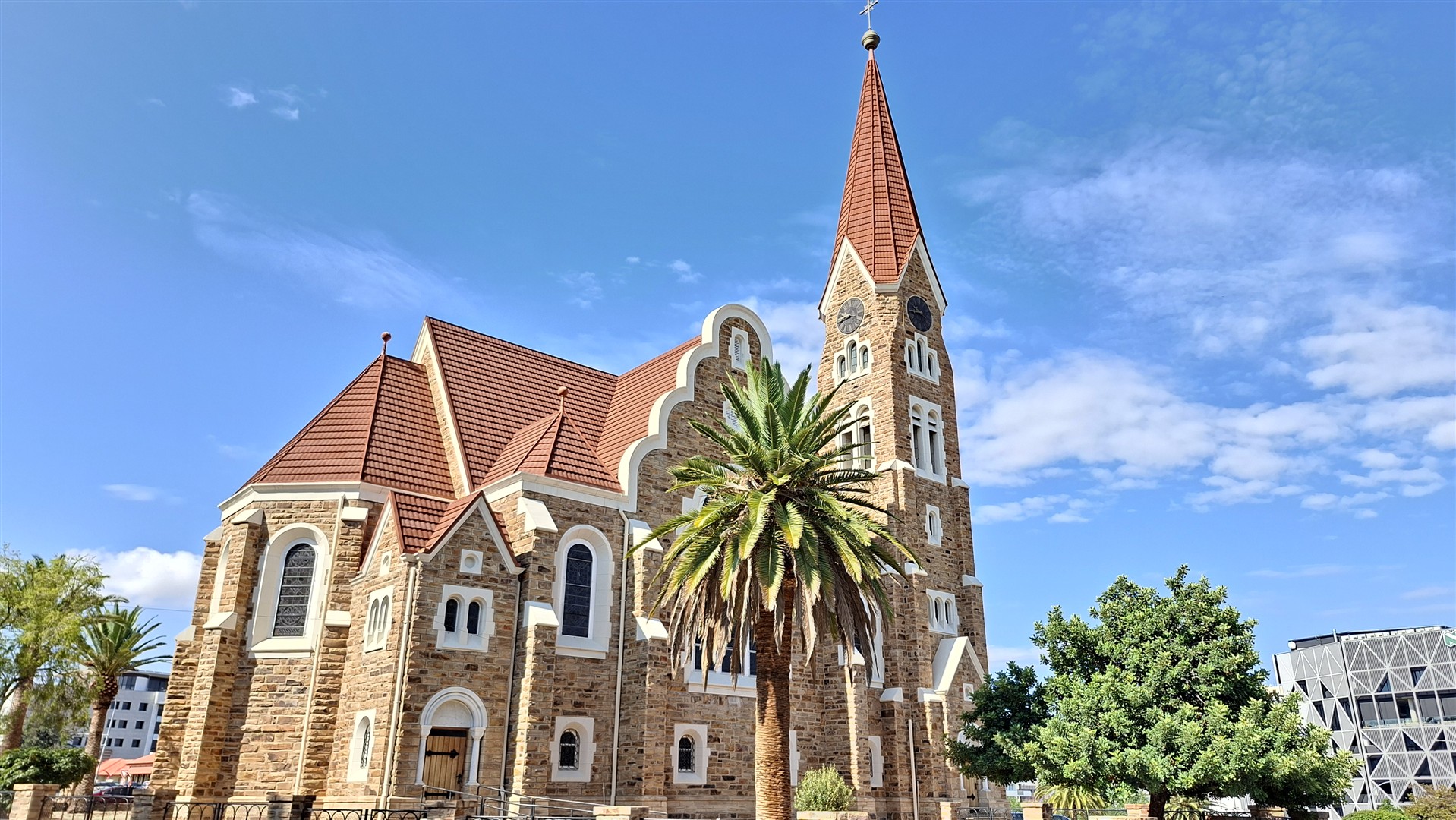
The Lutheran church, looking good.
We visited the old part of the city and saw the Lutheran church, unfortunately closed. Then the parliament building and gardens. We couldn’t enter the building so I admired the gardens.
Next was the freedom memorial and the attached museum.
The women knew their stuff although I struggled to understand the actual guide. Her friend’s English was much better.
With the tour finished I went into the Freedom Museum. It was very good. It focussed on the German genocide of 1904, when they tried to kill one of the main tribes fighting their invasion. The Germans mostly murdered the women and children.
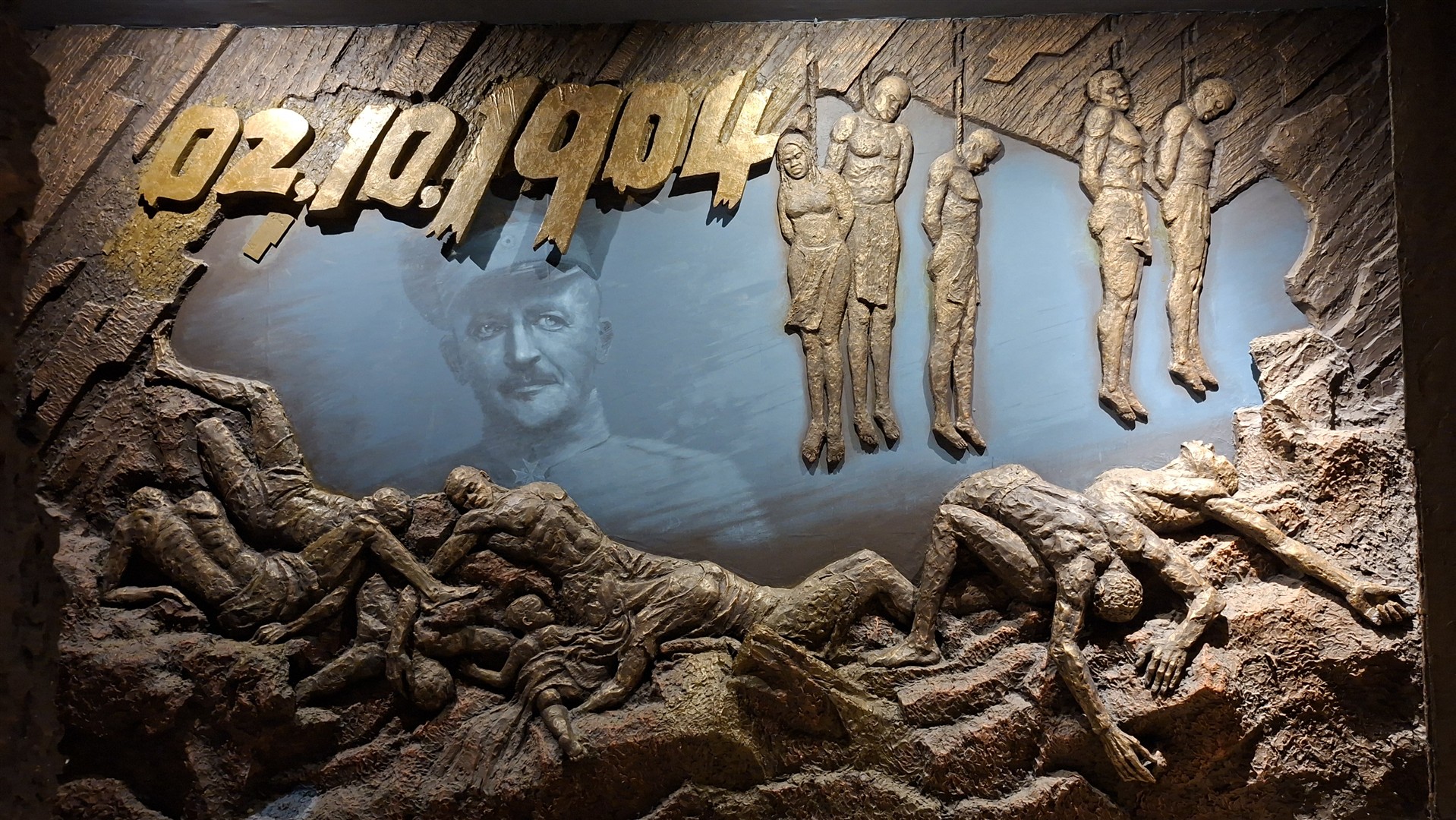
The German occupiers didn’t like rebels.
There were lots of excellent murals and bas relief carvings telling the tale of the murders and the resistance. Included was the fight from the modern era when trying to obtain freedom from South Africa.
Namibia had been taken over by South Africa in 1920, and they ruled it until the early 1990s. It had been known as South West Africa and its freedom fighters were SWAPO, the South West African People’s Organisation.
As far as the United Nations was concerned, South Africa was supposed to be preparing Namibia for independence. Instead, they introduced the appalling apartheid system in 1948, soon after it had been enforced in SA.
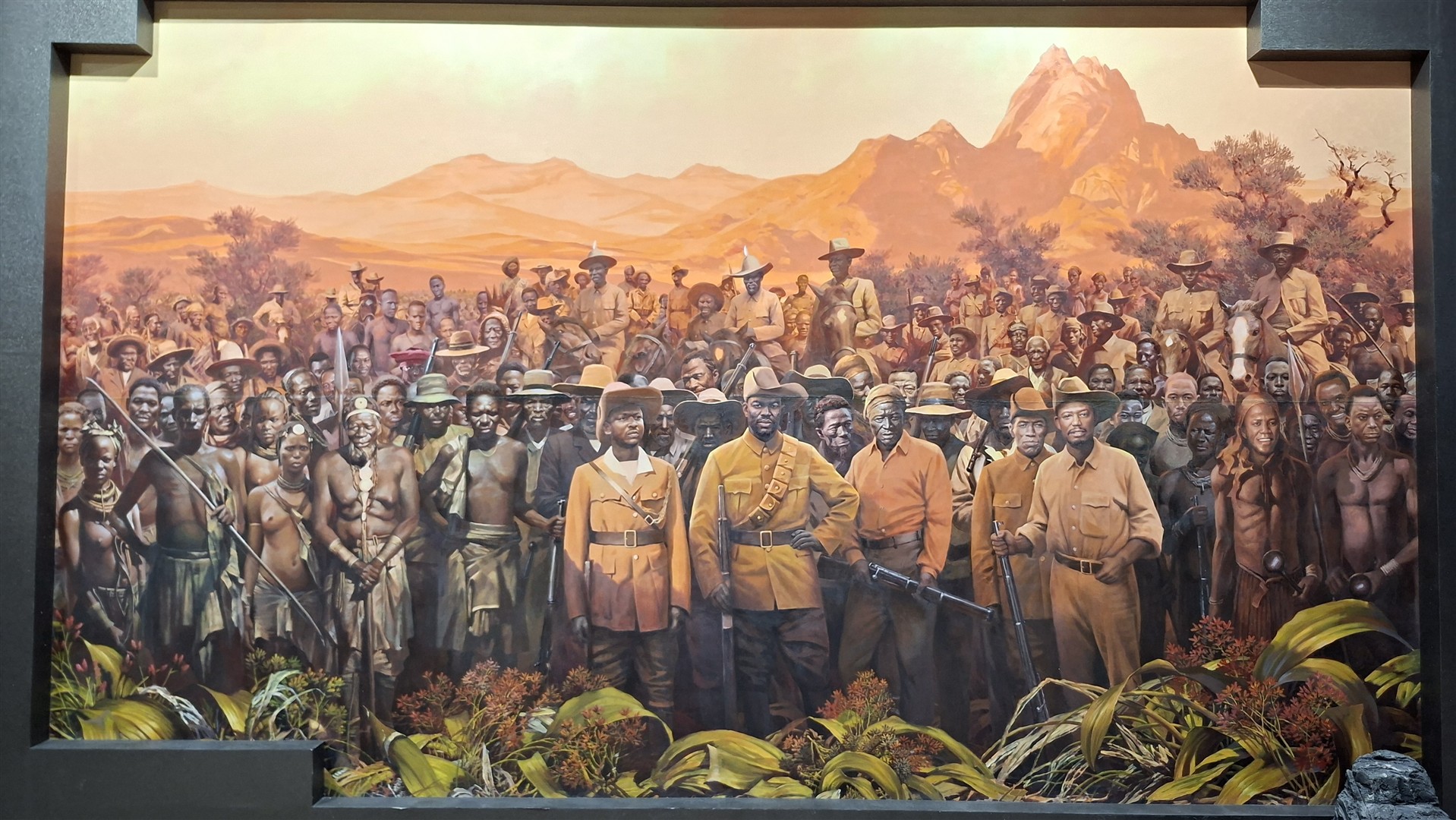
SWAPO fighters.
It is one of the driest countries in the world and one of the most sparsely populated, with around 3.1 million people. Most of it is covered by the Namib Desert, the oldest in the world.
For millennia it was occupied by tribes such as the San People but Bantu tribes moved south during the second millennia. I was surprised to find that cattle herding is still one of the main activities in such a dry country.
I was also surprised at the population mix and how many white, Afrikaans speaking people there were in the towns. It had been a popular place for European immigration. Much more info here.
I paid a visit to the Museum of Namibian Art. There were some good sculptures outside and some good paintings inside.
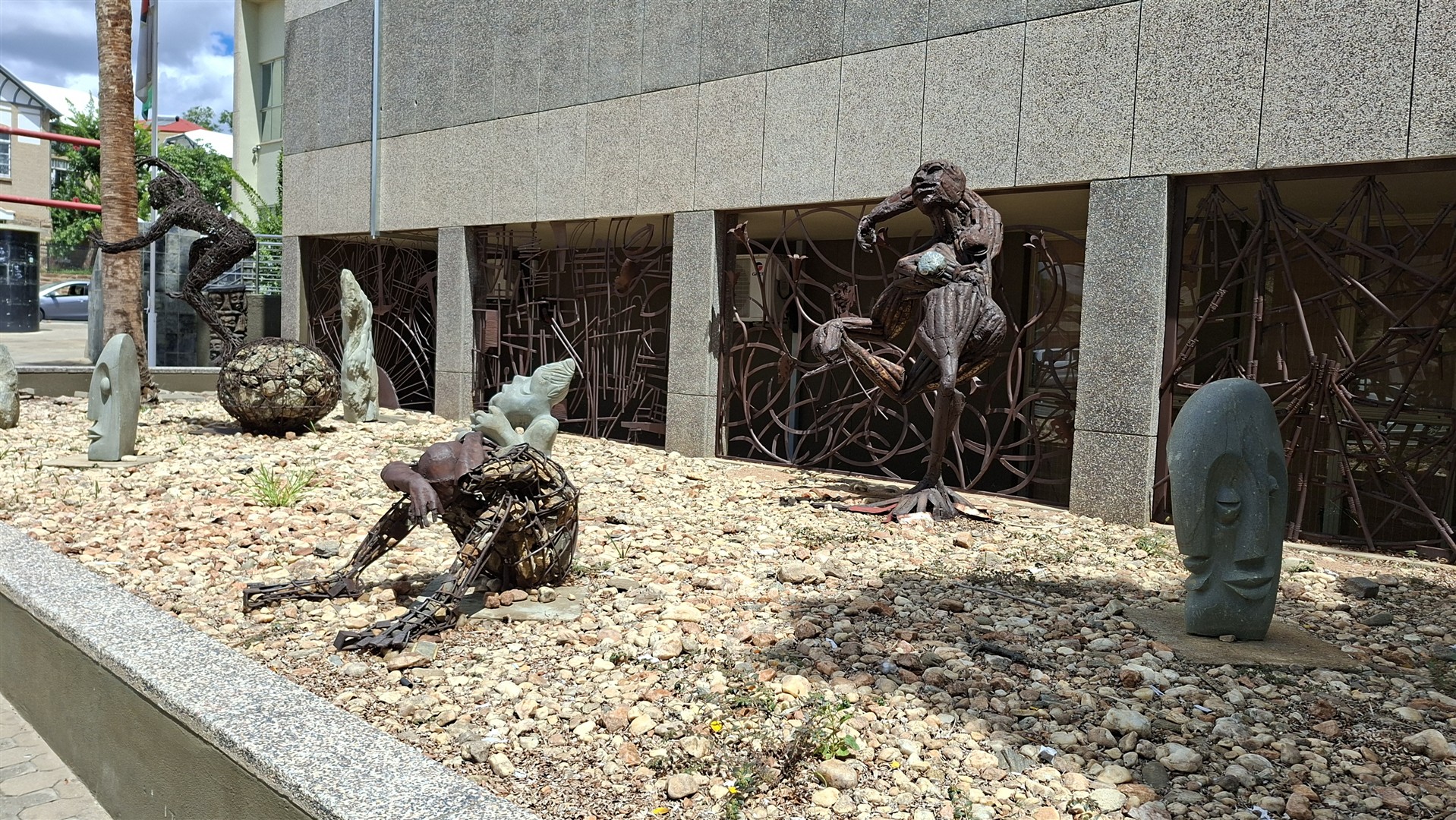
Sculptures outside the museum.
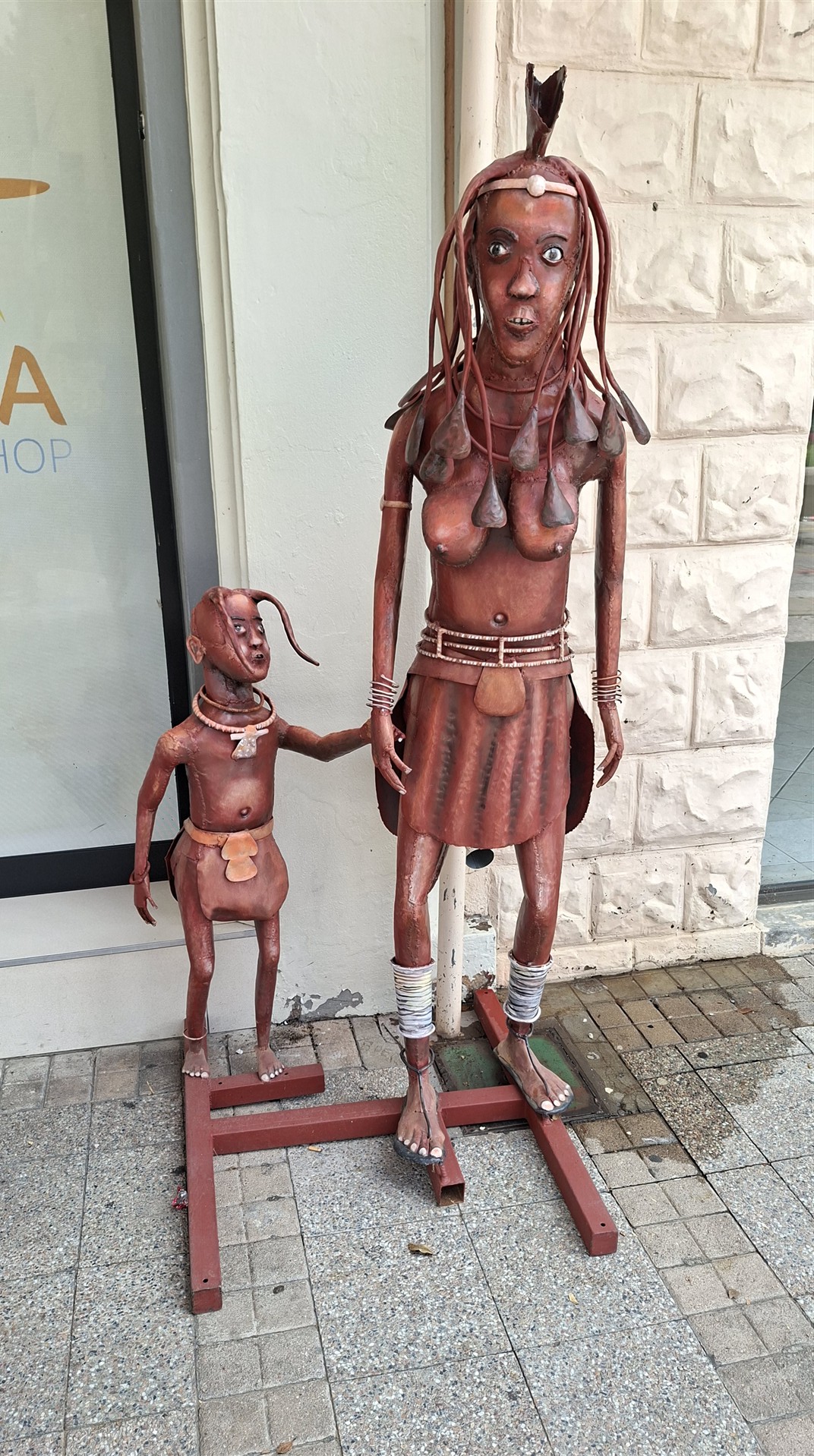
This one was out in the street.
The city centre was very modern, with plenty of places for coffee and food, and modern shops and malls. Busy with people, it was a pleasant place to be.
But the call of the wild was getting stronger so I made a trip up into the north, to a safari centre near Etosha National Park. It was a good ride up there, on good quality roads.
I’d booked an expensive campsite for two nights and paid for a very expensive, but good quality buffet meal. Places of this type are never cheap.
When I arrived they said there wasn’t a space on a safari trip available to me. They had one vehicle filled with ten people going out next day. A minimum of four was required for another vehicle. The hope was that more would arrive.
In the end two, more people did arrive and they split the party up into two vehicles.
It was a very good day out. We drove around all day and saw lots of animals although I was definitely getting bored at one point. We seemed to be just driving across empty plain, stopping occasionally to look at stuff we’d already seen.
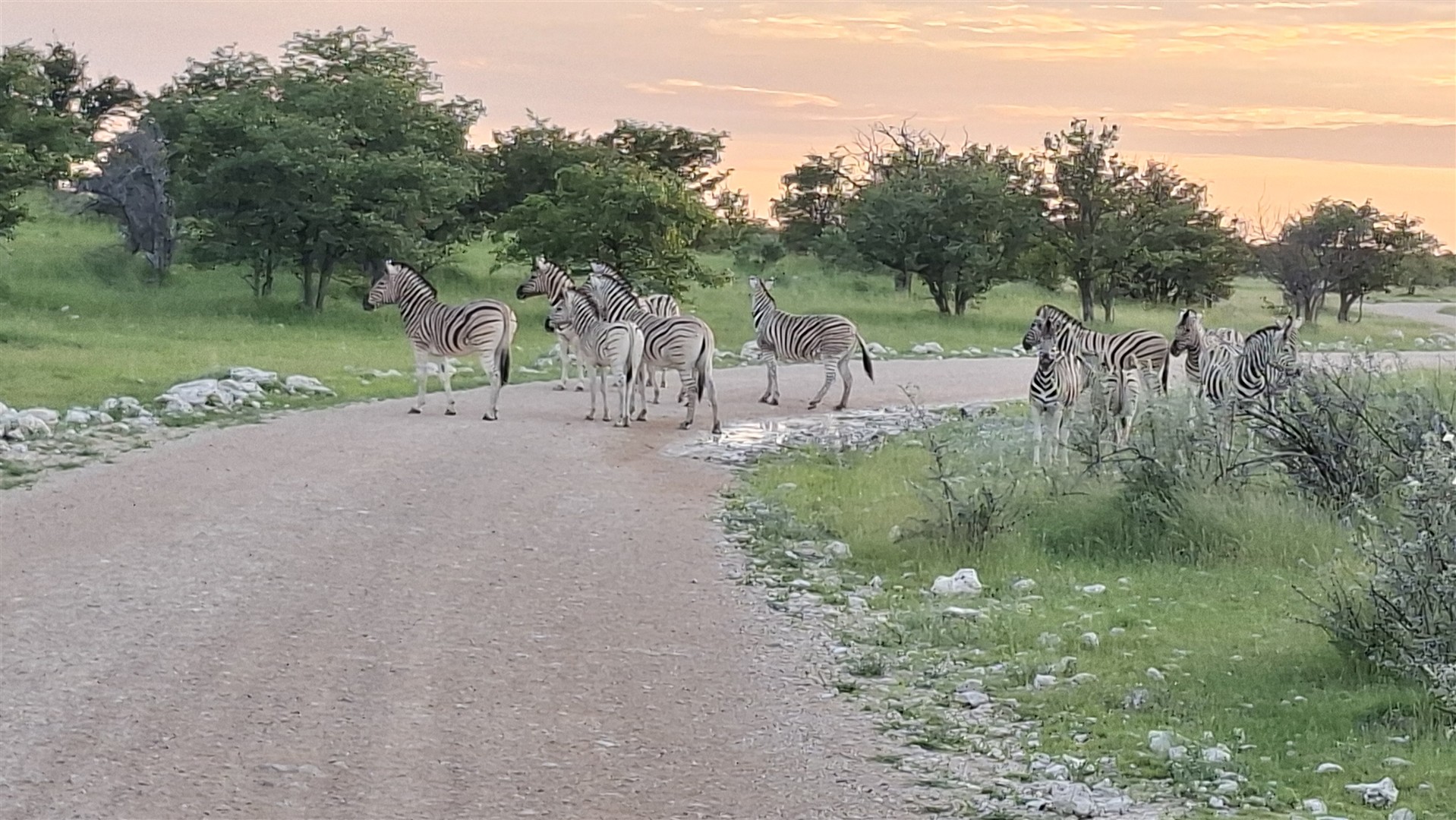
Zebras.
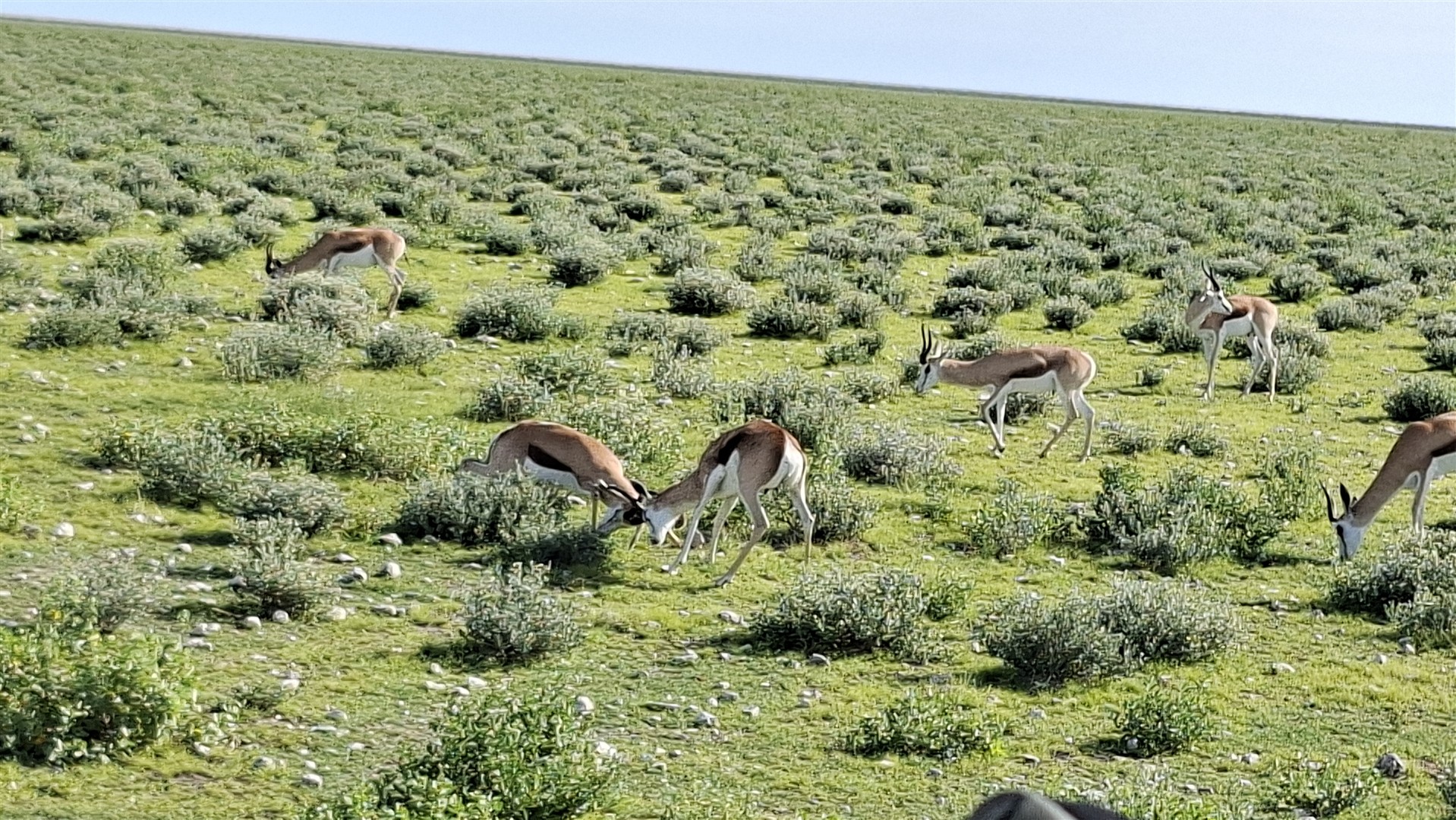
Springbok.
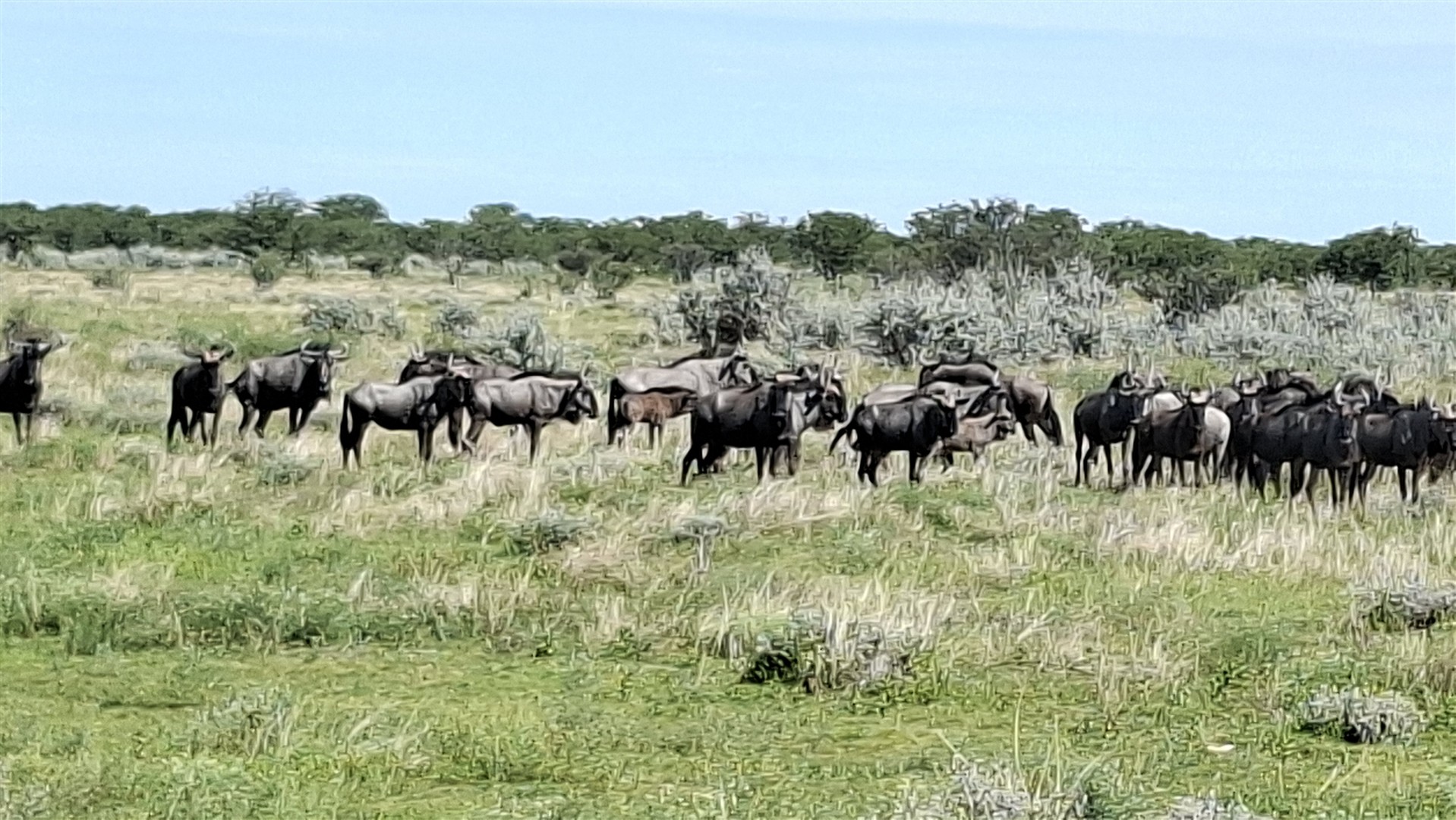
Wildebeest.
So what did we see? Zebras; springbok; wildebeest; oryx (Namibia’s national animal); various birds, including one that acts as sentry for the grazing animals against lions. Very fascinating.
We had a short break about 8.30 and then stopped for lunch at 1pm for an hour. I was definitely bored by then but suddenly things woke up.
Earlier, we’d gone to a place where a couple of lions were supposed to be crossing the road. Sadly, we were too late. But we went there again and drove across to the bush they were sheltering under.
The male got up and walked away but the female stayed where she was. Eventually the male came back so we got some excellent photos of them both, from only about 4-5 metres away. Magic. They seemed amazingly disinterested in us.
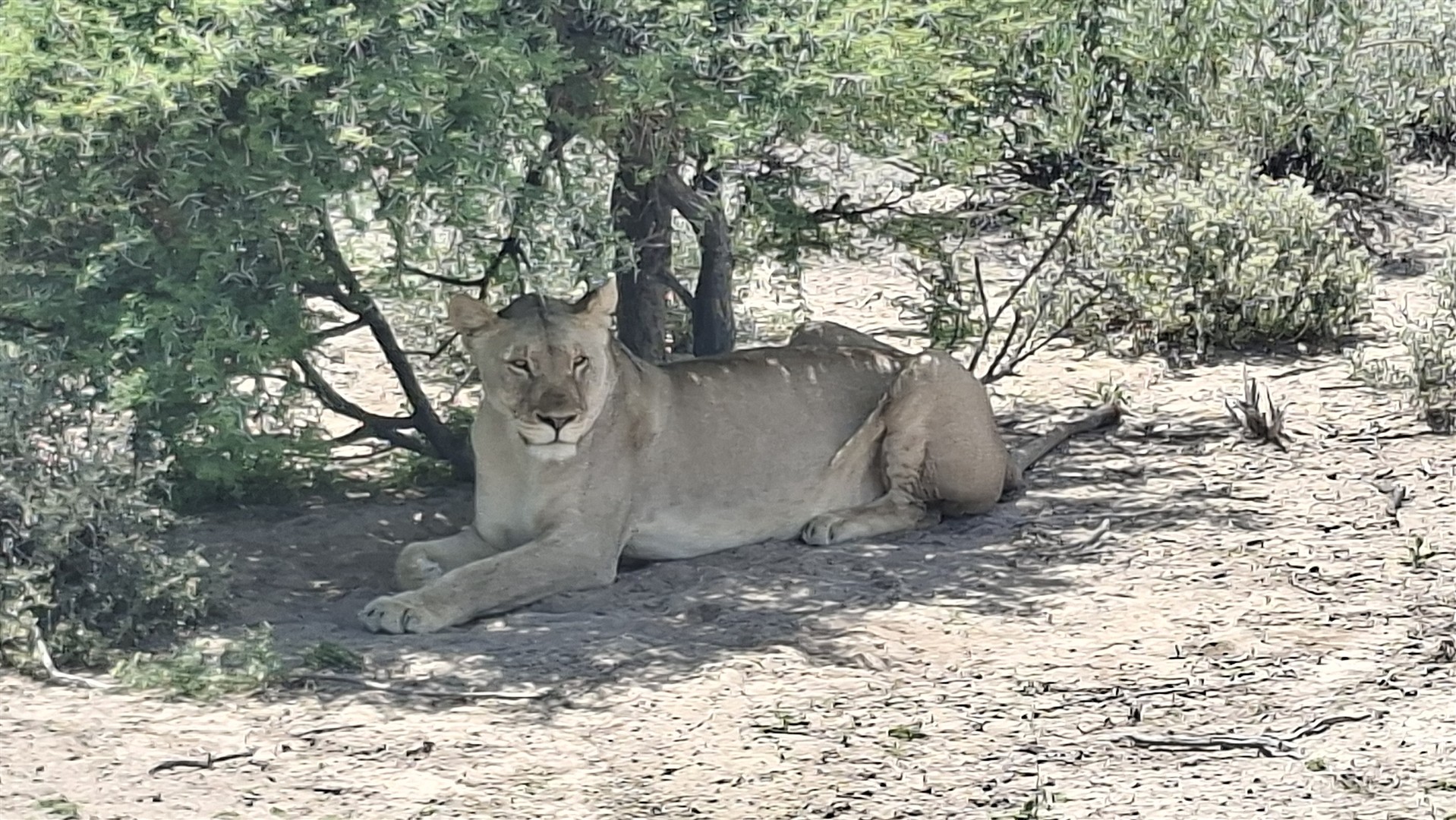
Mrs Lion stayed calm.
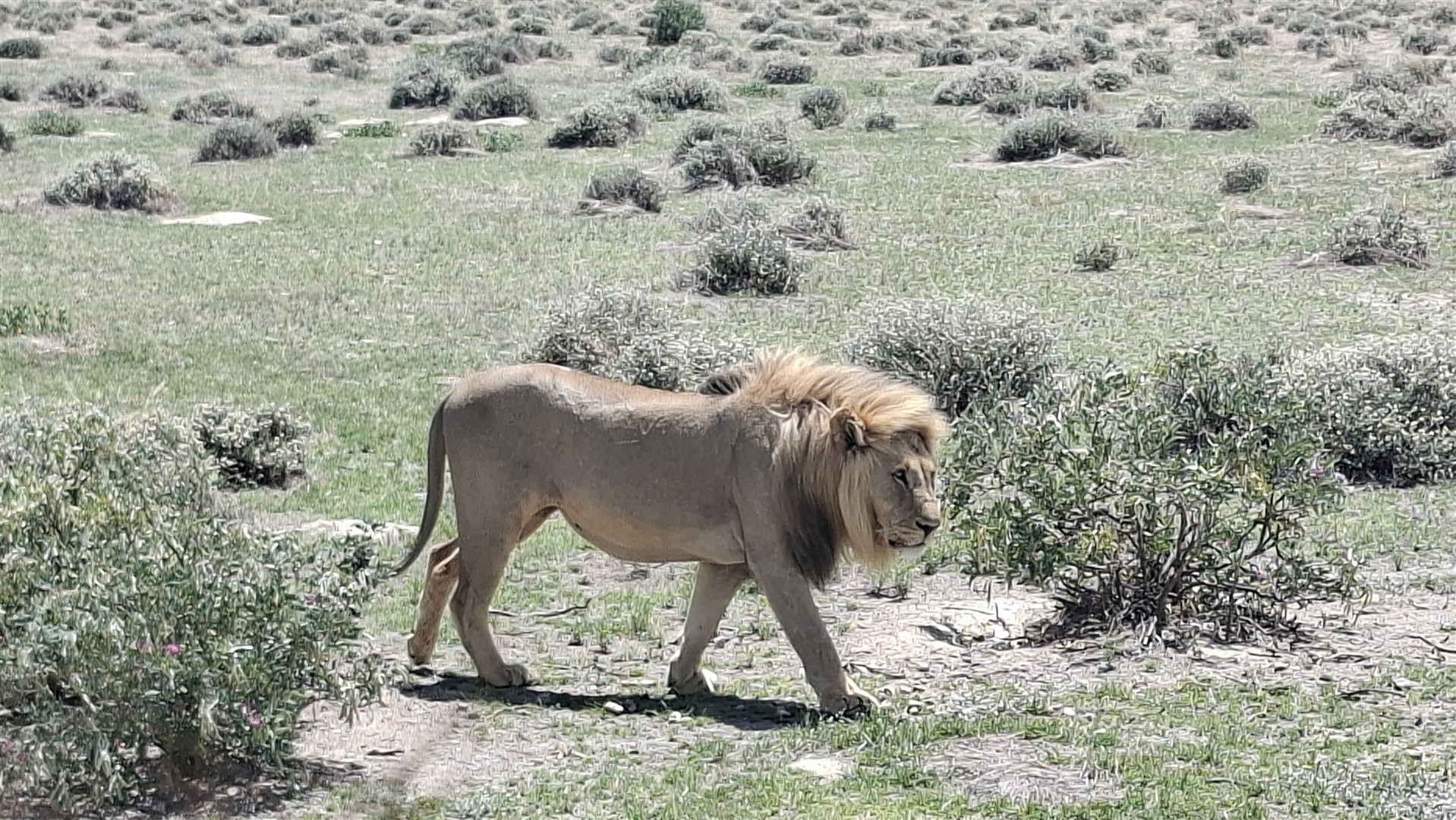
Mr Lion wandered off.
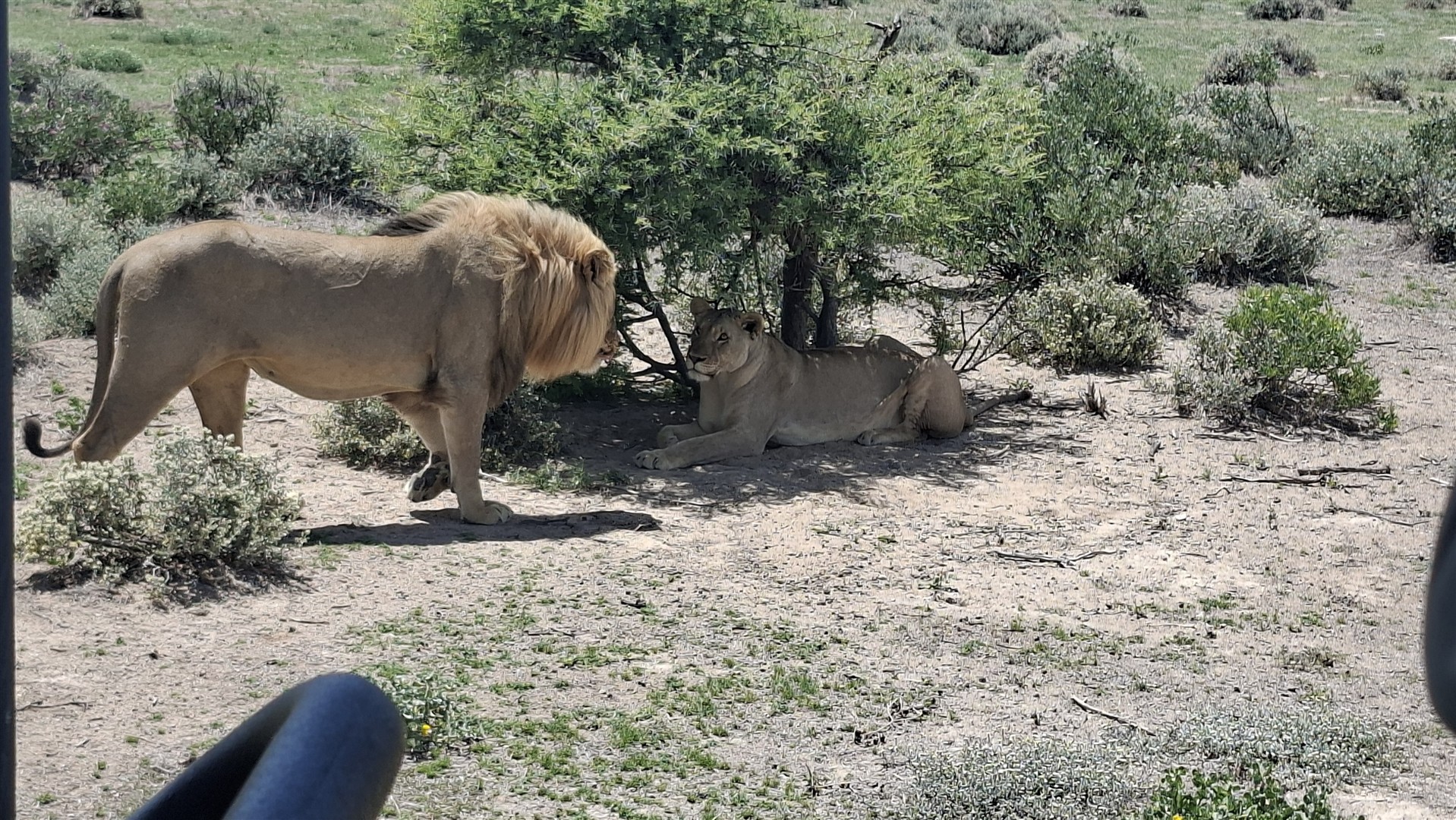
Together again.
Our driver got a call that there was a black rhino in the area so we went looking for it. On the way we disturbed another one that was in a mud hole at the side of the road. He disappeared into the bush but we waited and he popped out to cross the road further up. Photos were taken!
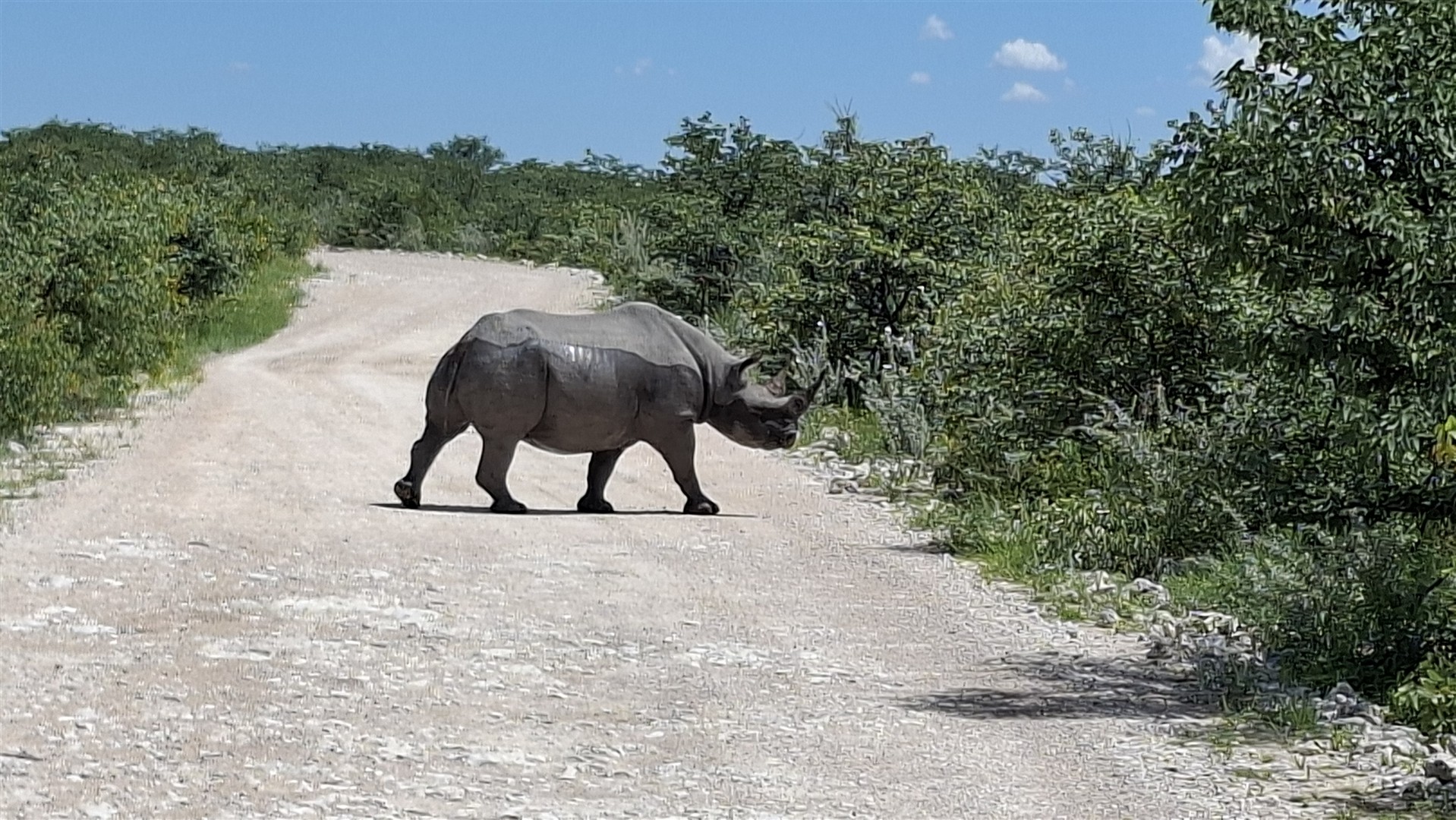
Rhino casually walks across in front of us.
That was just as well because when we found the other one it was too far away for a decent shot.
That was the day done and we headed back to base. I’d had a nice chat with a couple of Aussie women, from Perth. I was sitting next to an elderly American, who started the day off by whinging about the seat belts.
But it was a really good day and surprisingly cheap at £75.
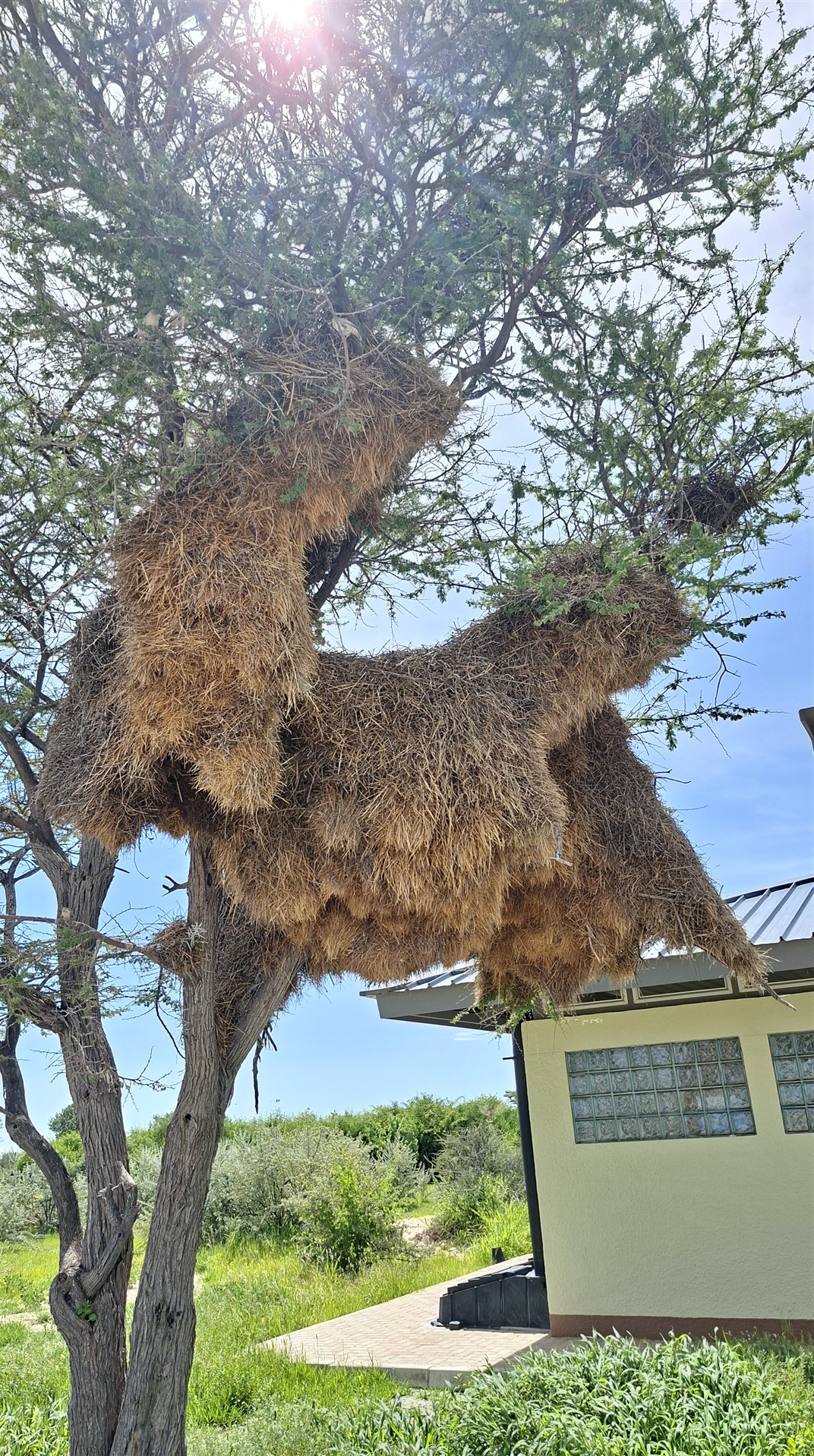
Weaver bird nest.
Next day I headed back to Windhoek with plans to move on to Botswana. I booked into the same hostel for a couple of nights and spent the next day trying to find a new sleeping mat. The original had sprung a leak and wouldn’t stay inflated overnight.
In a country that has a large industry related to exploring the outdoors, I expected to be able to find one quite easily. But it wasn’t the case. The shops were mostly aimed at the 4×4 user, so no luck. I bought a new T shirt instead.
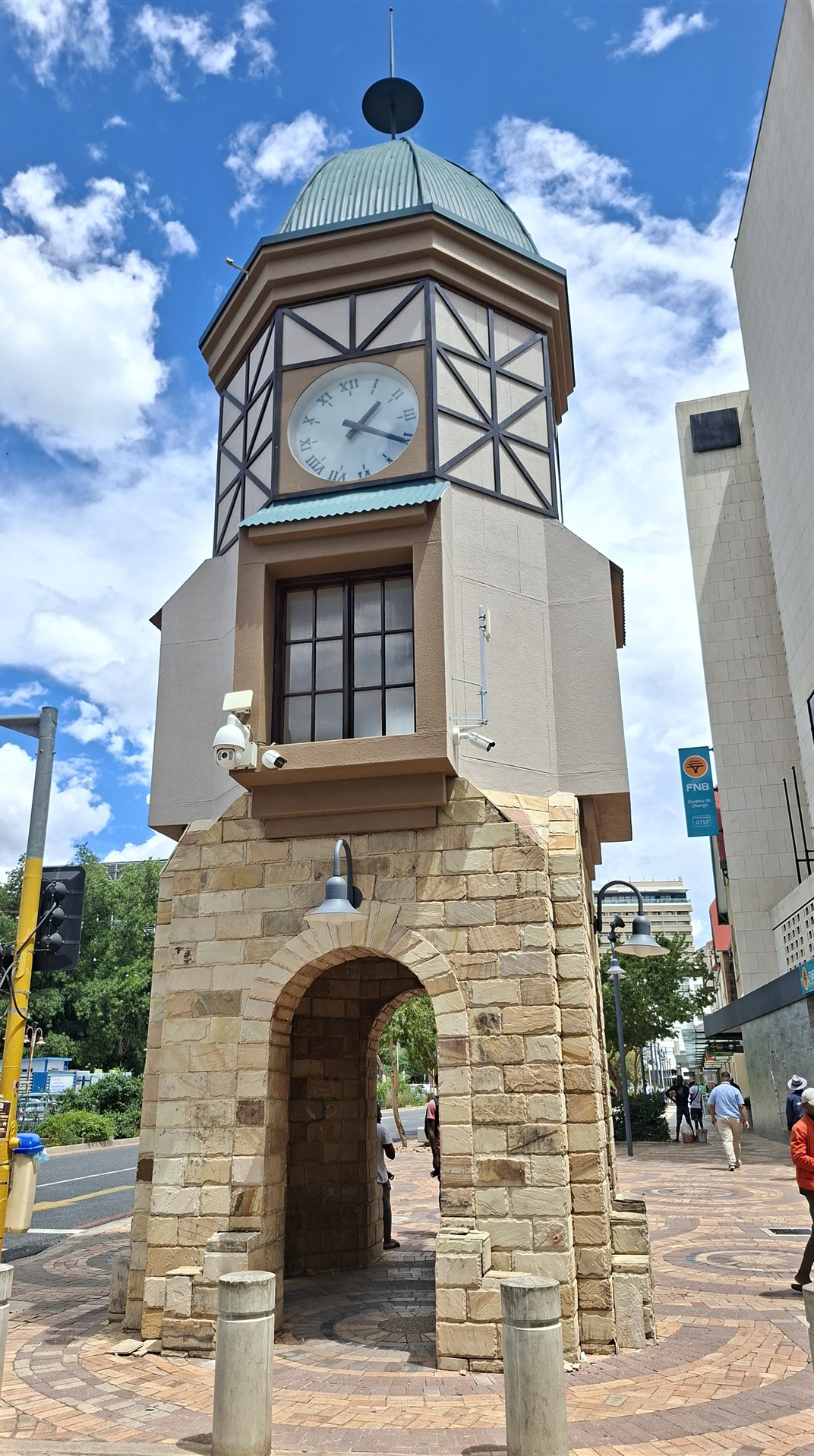
A pleasant clock tower along the main street.
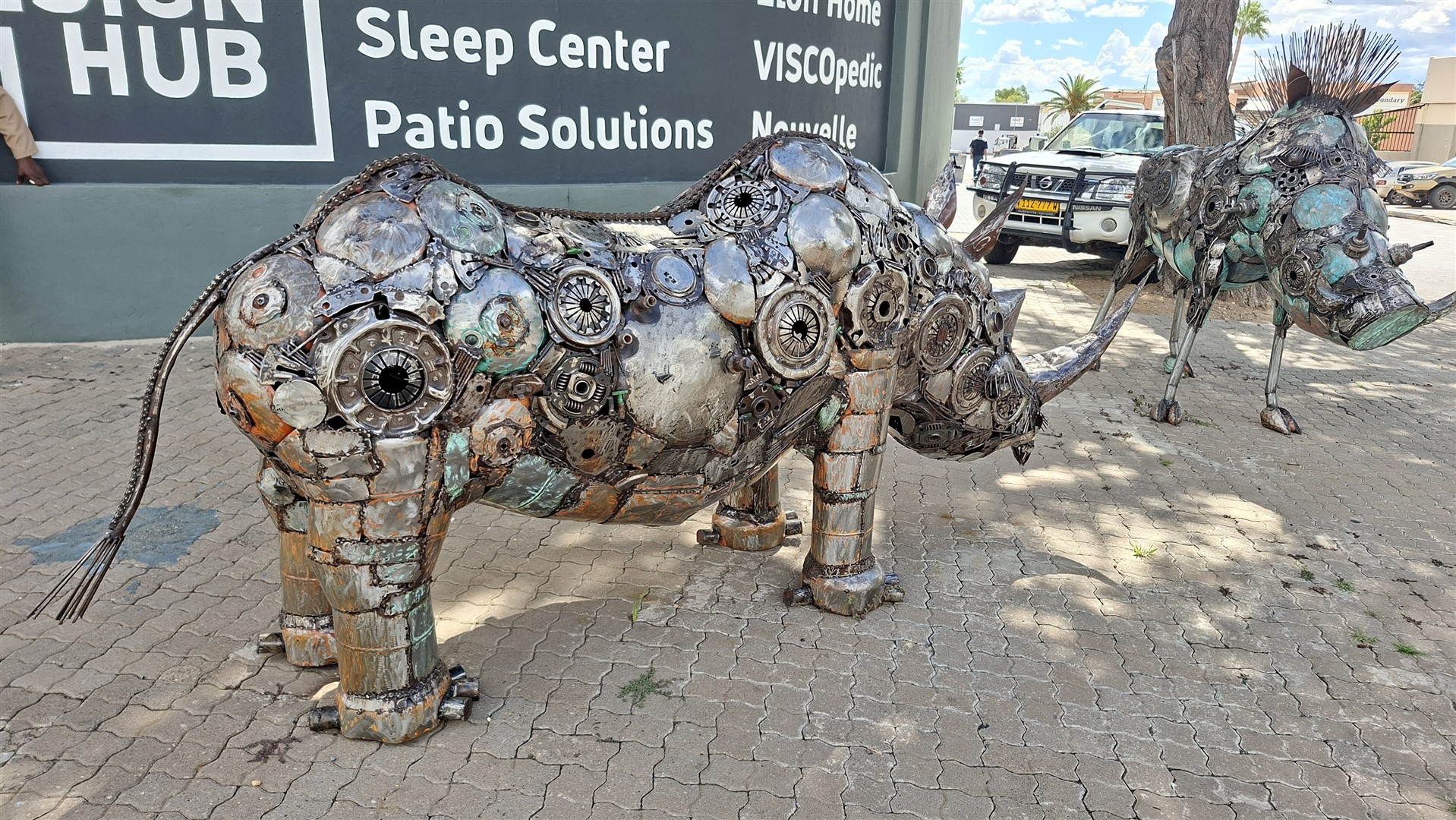
Seen while walking the back streets, near a car spares shop.
Into Botswana.
With Windhoek behind me I headed to the Botswana border. My plan was to refuel there so as to spend all my Namibian money. An easy ride, light traffic but some rain showers.
Next to the servo was a café with a well travelled Yamaha Teneré parked outside. Inside was a Belgium guy who’d ridden down through Botswana. He showed me some video clips of the road ahead. It looked very bad.
He doesn’t know it but he ended up buying me a coffee because the woman in there thought we were together. Thanks Tin Tin!
Crossing the border was easy, once again, although I had to pay the road fee once more (£15).
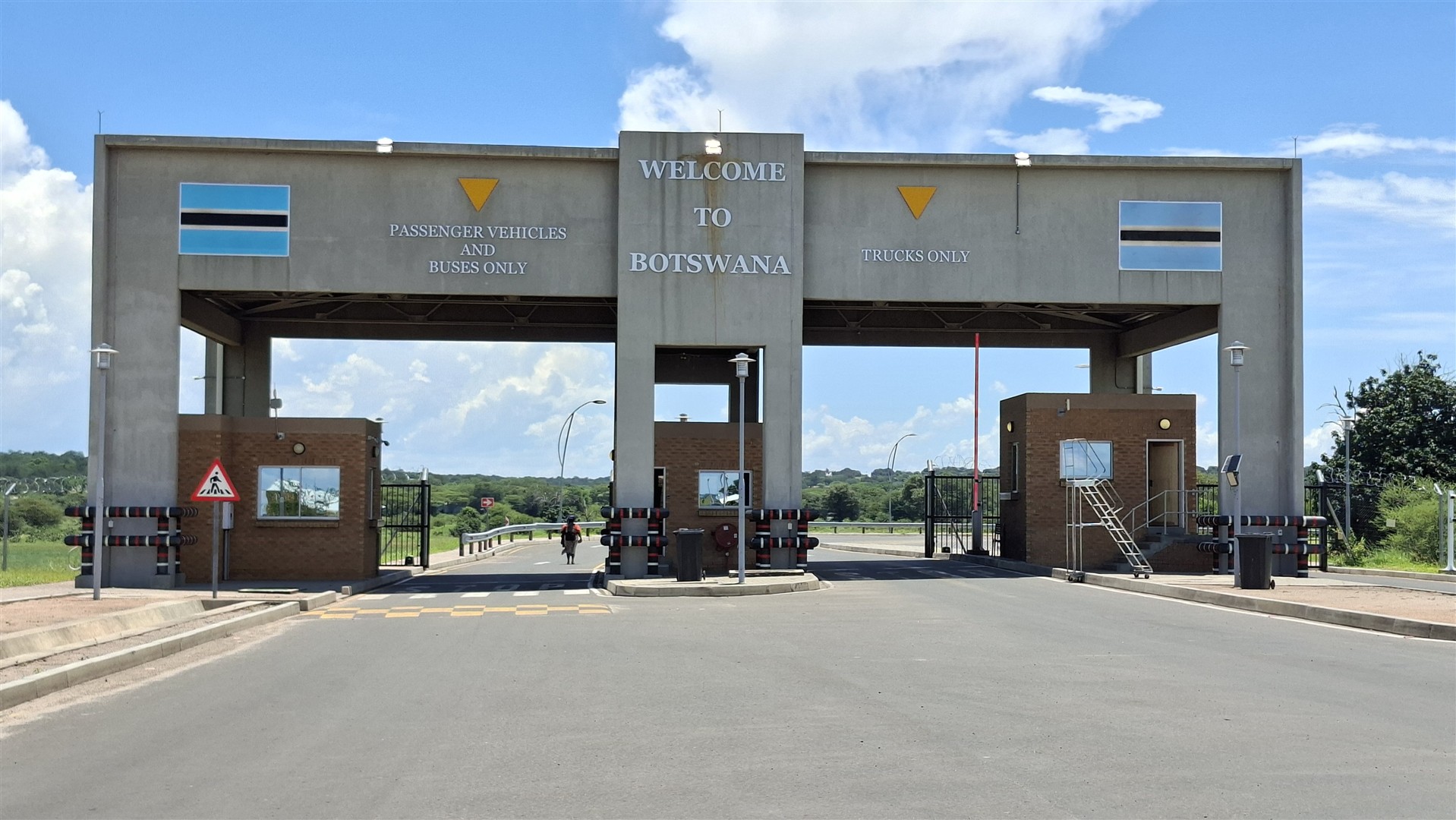
Botswana border post.
There was an immediate difference in the road and what was on it. Some potholes to deal with although not too many. Very little traffic but plenty of domestic animals. Cattle, goats, donkeys and, to my surprise, horses. All of them seemed to enjoy hanging around on the road itself.
In the town of Ghanzi the only practical option for a hotel was the Kalahari Arms at £70. That hurt! But the breakfast was very good, as it ought to have been at that price.
Getting a SIM card was the first job of the day. Orange said I needed to have been in the country for five days before they could supply one. I wasn’t even planning to be there for that long. Masco gave me a card for free, only charging me for the data I needed.
I’d been having problems with the front tyre where it would lose all its pressure overnight. The same problem had come about in Tanzania too. It needed sorting out. I’d been able to feel it as I rode through the town the previous evening.
Tyre pumped up, I headed for the town of Maun. The road, flora and fauna were pretty much the same as the previous day except that I began to see lots of donkeys. They were either being ridden or were pulling carts.
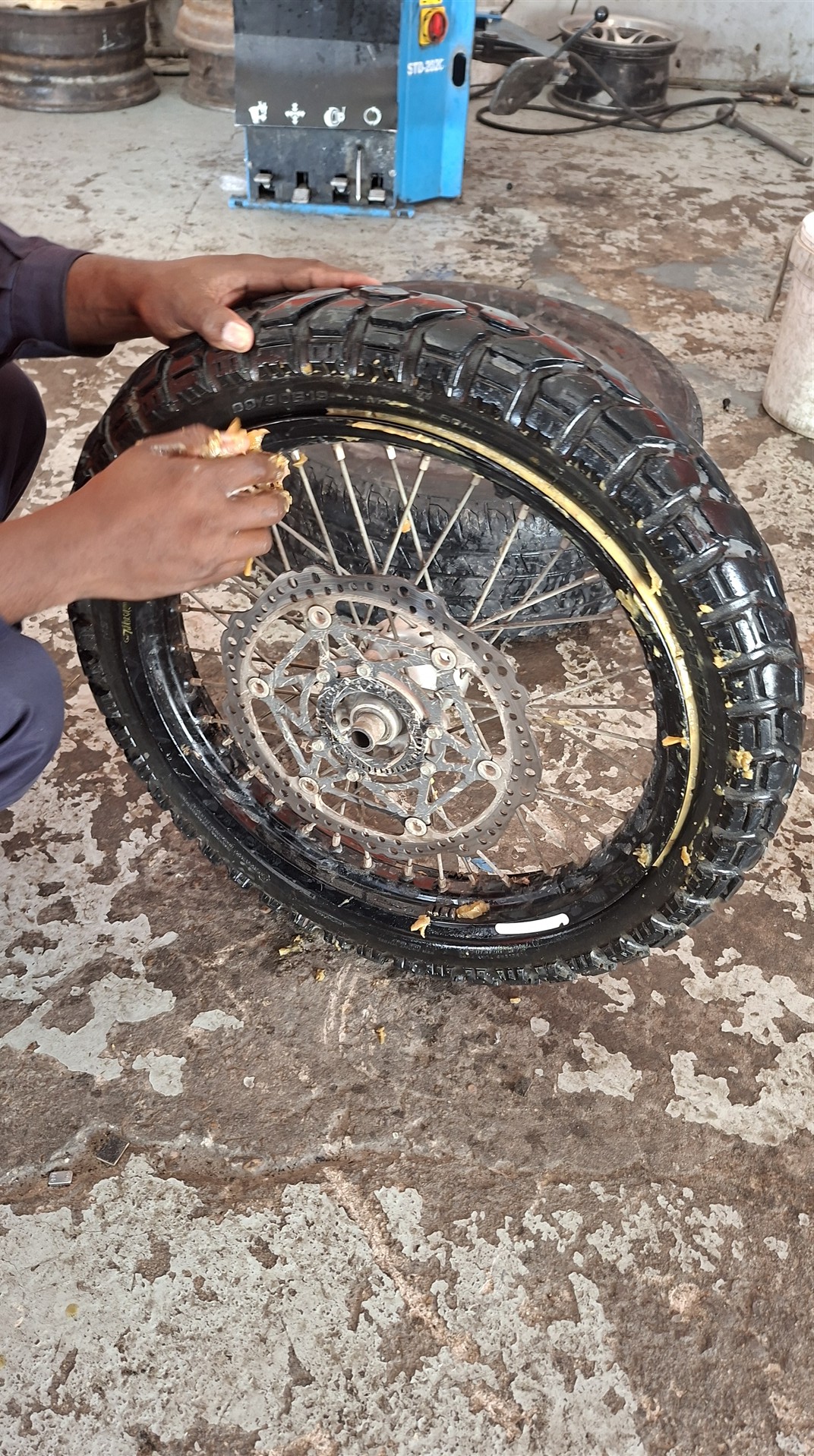
Trying to stop the leak.
On the way to the guest house I’d booked I passed a tyre centre. I pulled in and, with the help of their jack, took the front wheel out. The fitter used water to check for leaks and there was air coming out around the rim.
He pressed the tyre off the bead and gave it a proper clean up. While fitting it on he used a heavy duty, thick soap to help it seal properly. It seemed to do the job and I rode away happy.
I’d booked two nights, thinking to possibly do a safari type trip while I was there. But next day’s weather was mostly solid rain, so that didn’t happen.
I was keen to move on so after another good breakfast I left for the town of Nata. A good ride apart from quite a lot of potholes. I got stopped for disinfecting. They did my sandals, which meant damp shoes going back in my bag. I lied about not having any other shoes.
There was a diversion off the main road. Once I rejoined there was a lot of bad surface and more potholes to deal with. All in the game.
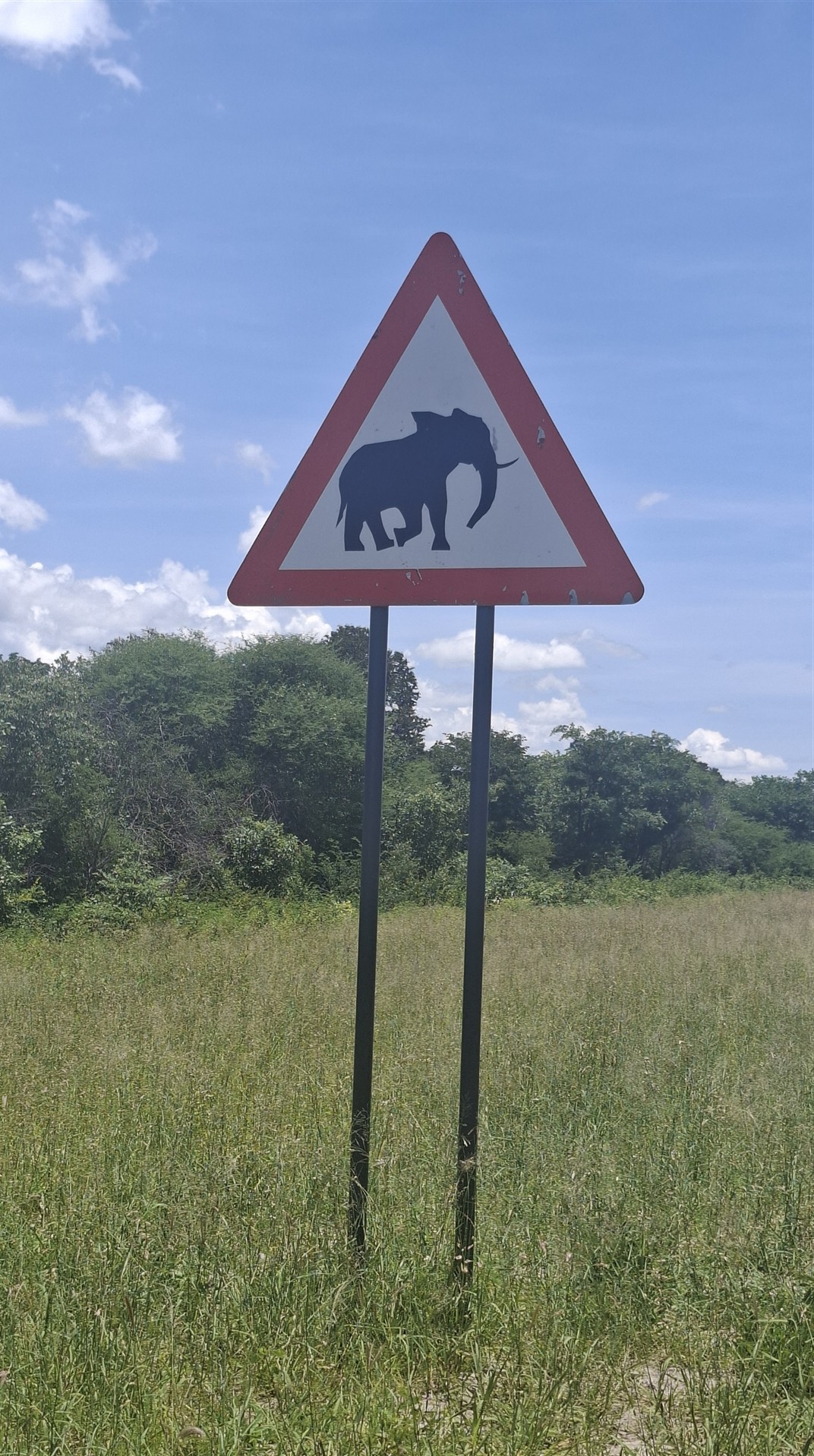
I see the sign but where’s the beast?
I’d booked a chalet in a riverside campsite. A lazy, slow river ran alongside it.
There were three other people there, all women, and one of them was saying that the road to Kasane, in the north of Botswana, is easily driveable and I’m guaranteed to see lots of animals. I can cross over to Zimbabwe from up there so plans were changed and I’d be heading north next day, rain permitting. It was raining while we spoke.
At the same time I’d been told that the road south from Victoria Falls is in poor condition. I just thought well, I’m an adventurer so I’m going to go for it!
The road up to Kasane is supposed to be alive with animals of all different sorts. Looking out for them gave me something to do while I negotiated the frequent potholes, roadworks and domestic animals. But I wanted the real thing. The ones the signs told me were there.
And eventually I got what I wanted. I finally saw an elephant. A bull, with almost black skin. I got plenty of photos.
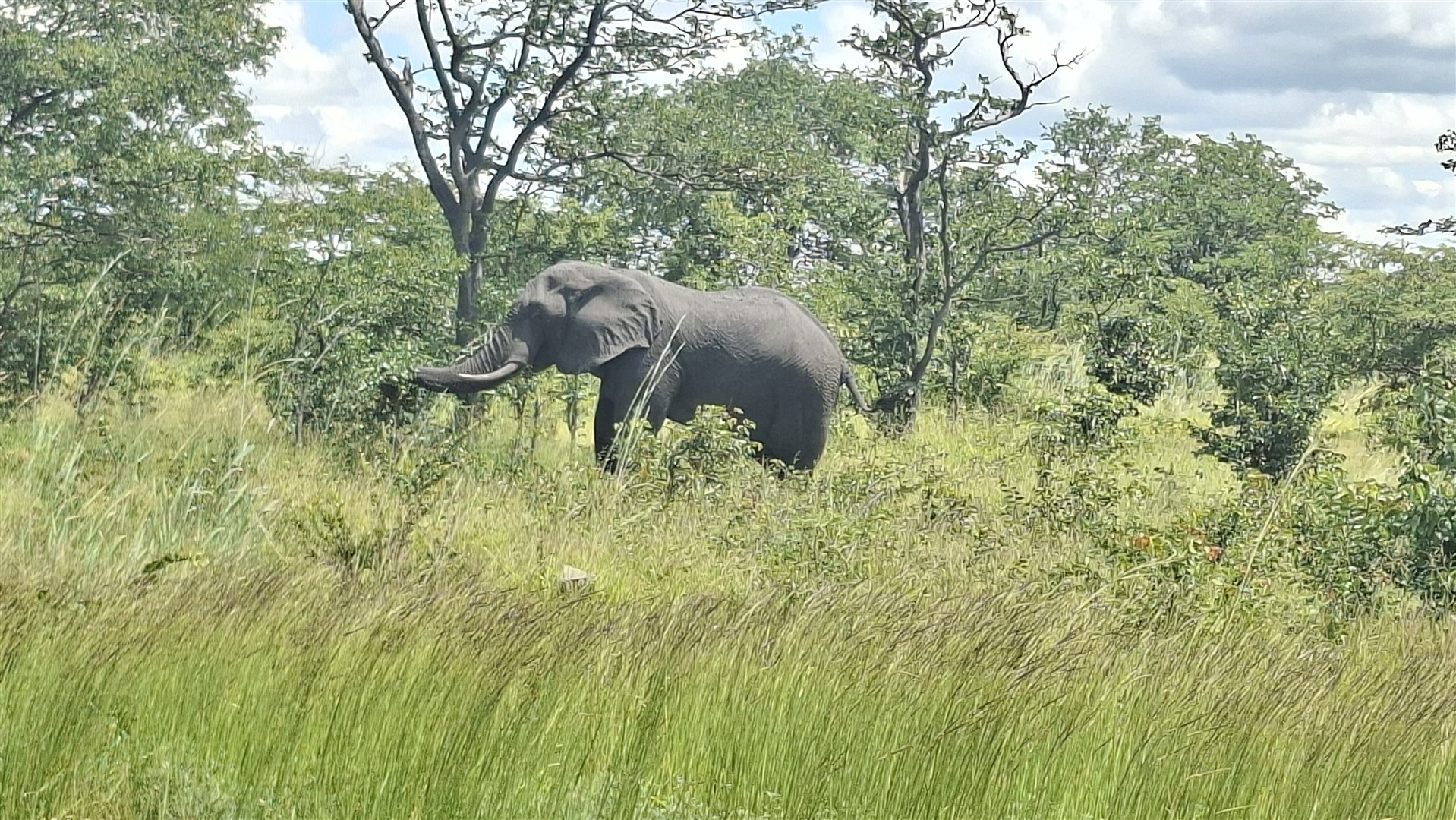
Big, black bull.
Further on I saw another elephant, lighter in shade. I stopped again.
I was on the same side of the road as him, stationary with the engine off. After a minute he started to trot over to see what I was about. He didn’t seem aggressive but I decided not to wait to find out and moved on. But I did get the photos.
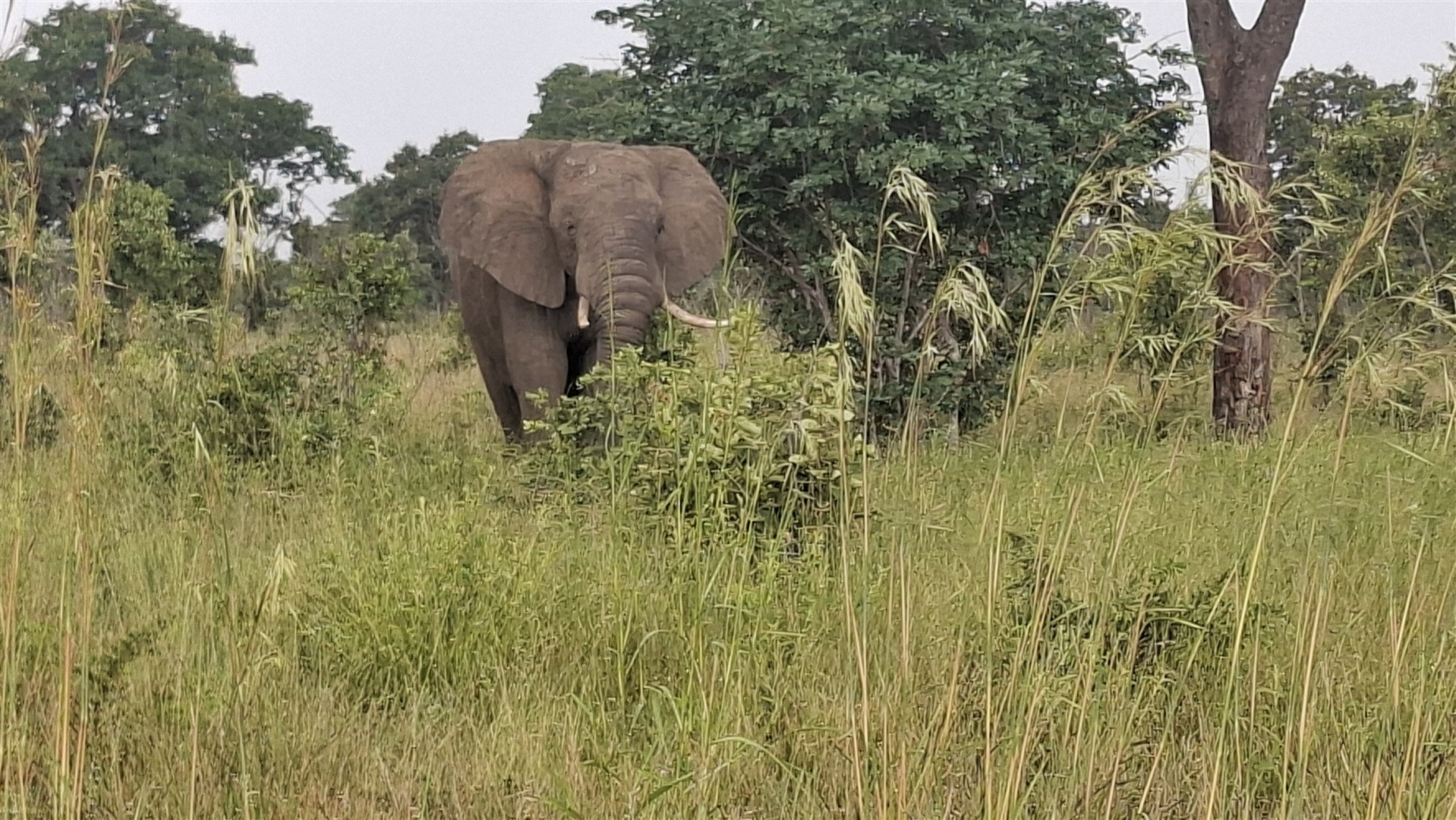
Far too curious for my liking.
Then the phone went funny. The screen suddenly went onto maximum dim. I was just about able to see the message that there was a problem with charging and I needed to unplug. I’m guessing that was what caused it.
I pulled into a pic-nic place and tried to sort it out but I wasn’t able to see the adjuster bar. Even restarting it didn’t work, and I’d now lost Google maps.
At about 120kms from there I saw a sign for coffee but in the middle of nowhere. I pulled in and found a Tuc Tuc with a barrista machine in the back. There were also three white guys in a couple of quads.
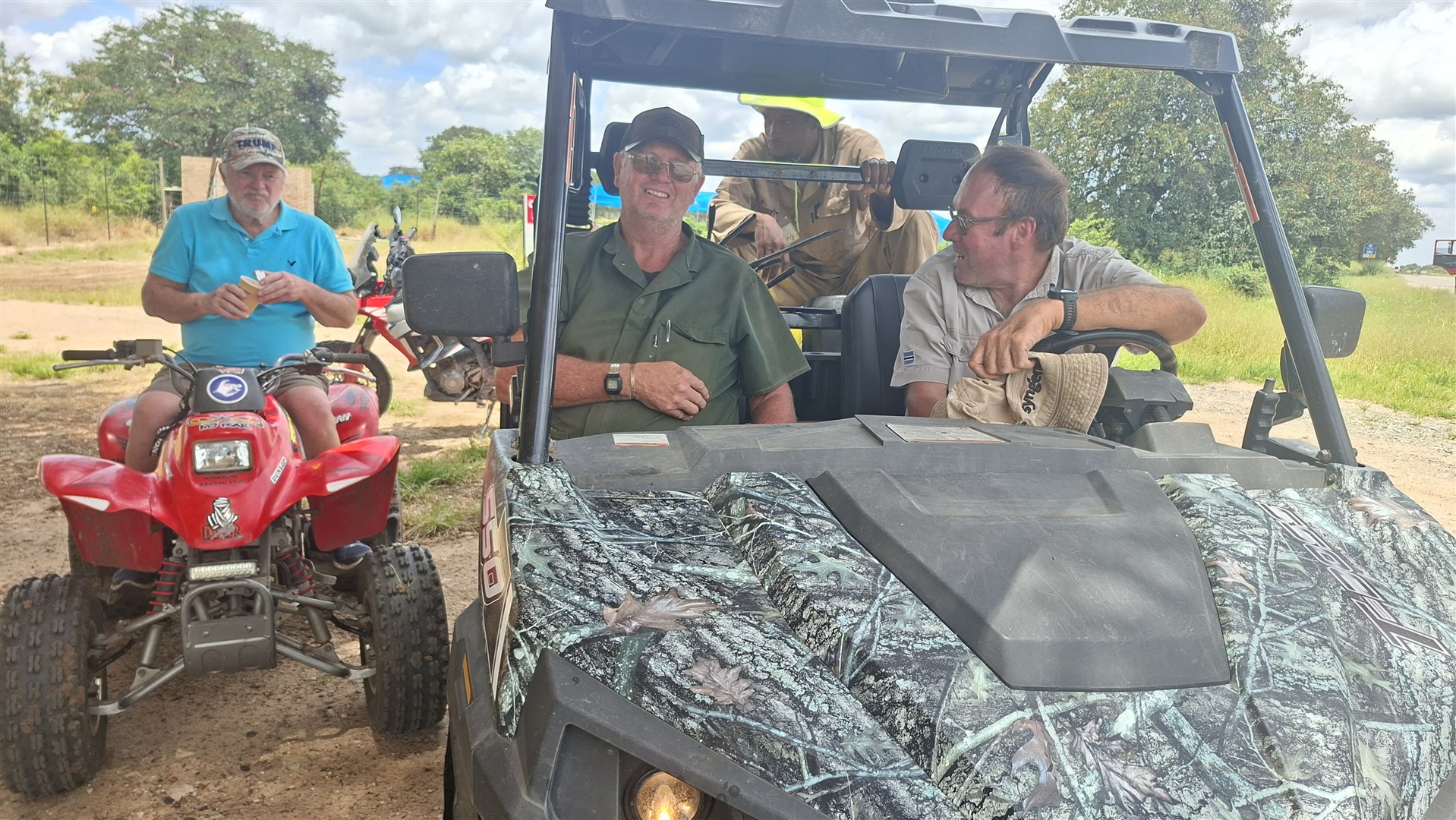
Local farmers and phone fixers.
I ordered coffee and chatted to them. One was from Tennessee, one from South Africa and one local. They owned the local farm, which grew coffee. They also owned the Tuc Tuc.
We had a nice chat and one of them had a Samsung phone. So I tasked him with sorting mine out. Which he did.
I thought that Tuc Tuc version of a mobile coffee bar was a great idea. I wonder if they used it to road test different roasts.
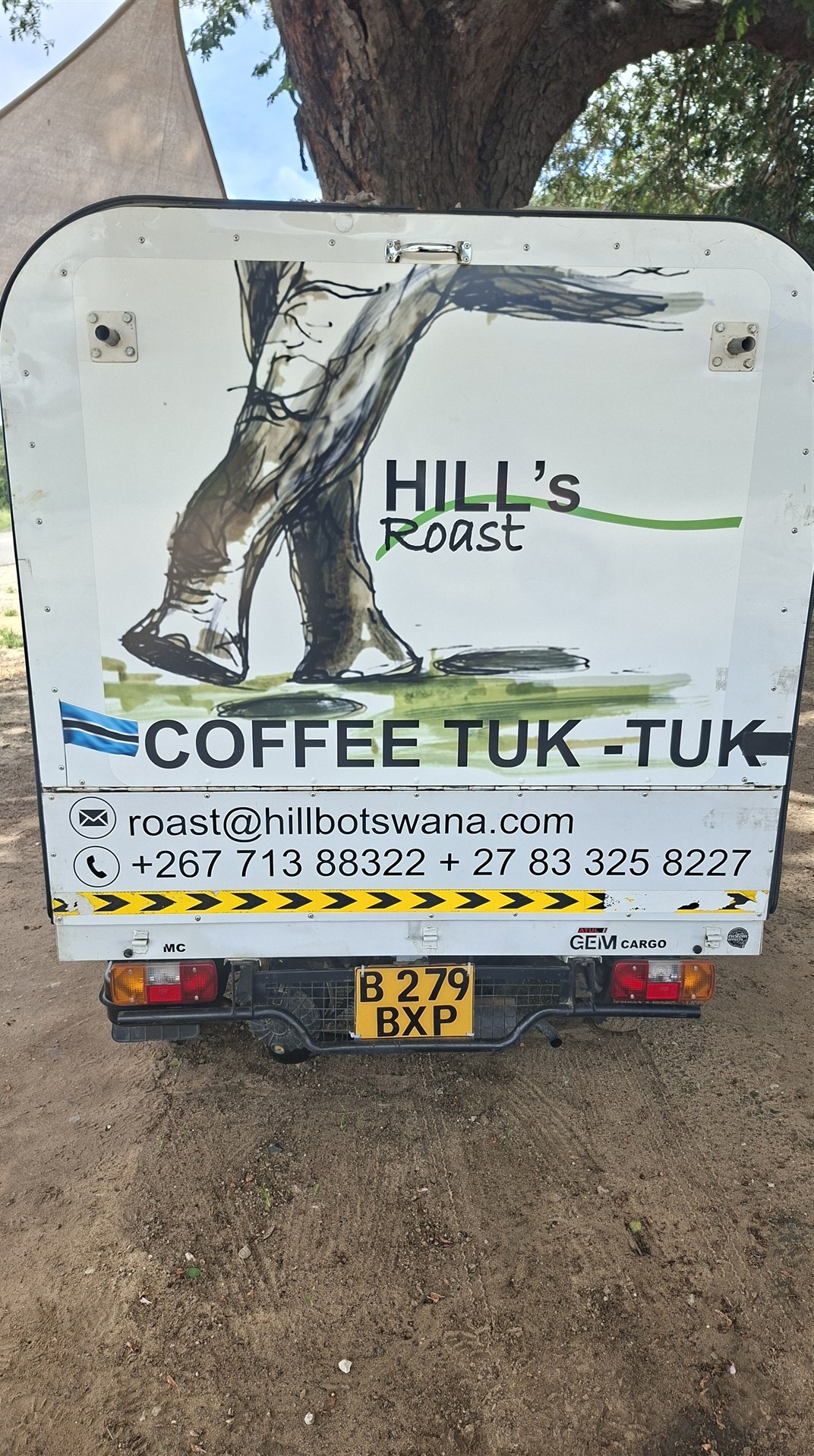
Tuk-tuk coffee bar.
The guest house at Kasane could have arranged a three hour safari followed by a boat tour on the Chobe River, for only £40. A good reason to have stayed another day. But it would only run if more people came too. There weren’t any so another opportunity had to be passed by.
With nothing to hold me back it was time to head to Zimbabwe. I hadn’t really seen anything of great note and I was only there for five days. But I’d enjoyed riding around the country and, as ever, the people were great.
But what of Botswana itself?
It’s the de facto home of the Batswana ethnic group, a Bantu speaking people who emigrated from further north during the first millennium BCE.
The terrain is mostly flat and is sparsely populated. Its industries are tourism and diamond mining. I fancied that if I walked along a river bank, kicking the pebbles, I might find one. No luck on that score.
It was occupied by the British and gained independence in September 1966. Prior to this, at various times, proposals had been made to include the country in the Union of South Africa, with the British asking the Botswanan people what their preference would be.
But the introduction of apartheid in SA killed off that plan. The country has been a successful democracy since independence and is Africa’s longest standing democracy. Lots more info here.
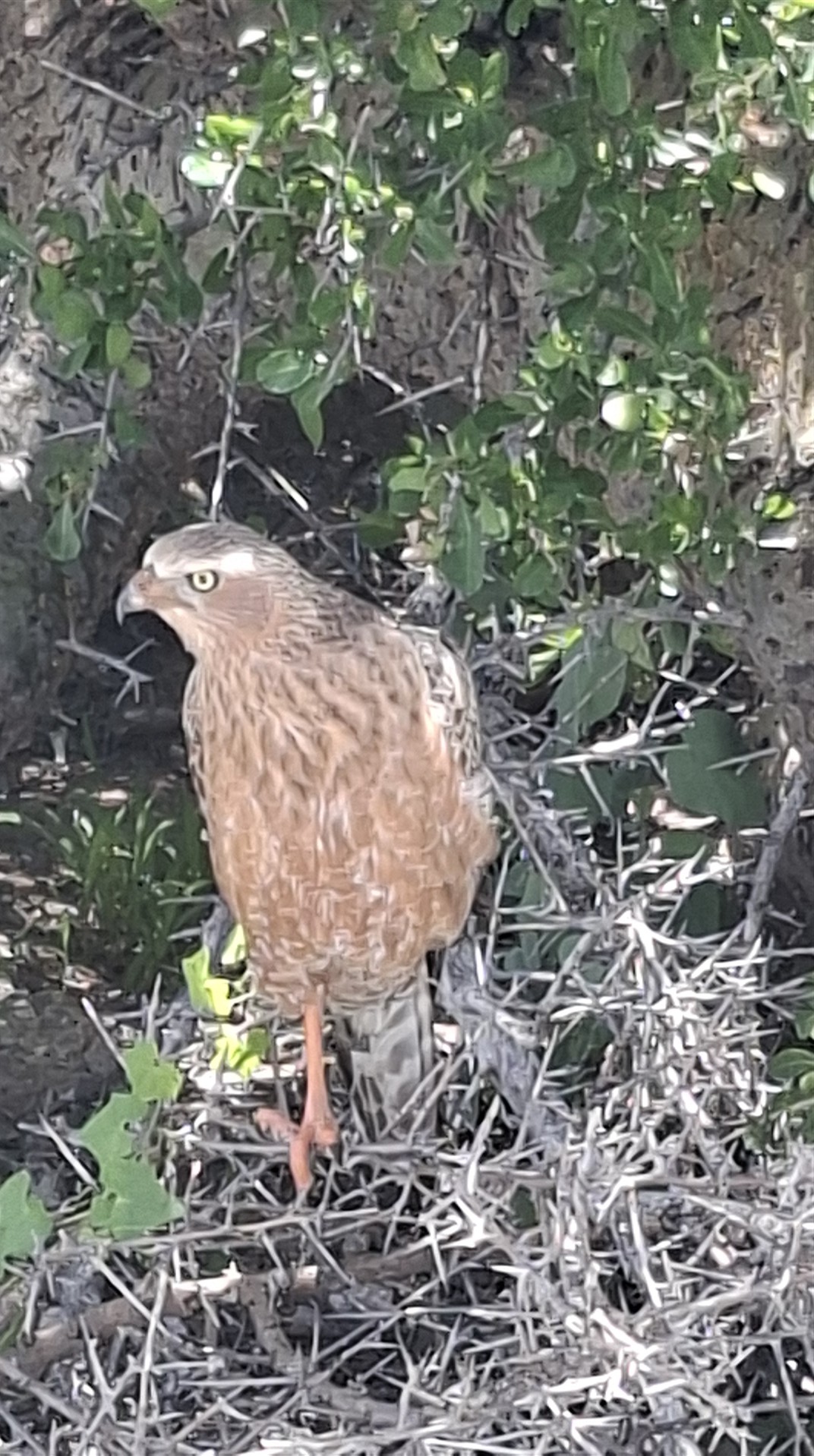
Seen in Etosha National Park.

