
22nd February 2026. Victoria Falls, Zimbabwe.
From the town of Kisane, in Botswana, I headed to the Zimbabwe border, intending to refuel on the way so as to use up my Pula. But I forgot.
Fortunately when I had to pay a customs fee to Zimbabwe the woman there was happy to take the money in Pula, leaving me with only £3 worth. Good enough.
But forgetting to fill up caused me to run out of fuel an annoying 9kms from my destination of Victoria Falls (the town, not the water) so I had to fill up from my can.
I booked into a hostel, in a ten bed dormitory, which managed to be roomier than the six bed one. I was sharing with a guy from Japan, a young woman from Liverpool and a guy from Bethnal Green now living in Scotland. Quite the mix.
I went looking for the guest kitchen only to find, to my disgust, that there wasn’t one. I wasn’t at all happy about that. Not even a kettle. Fortunately the guy behind the food counter was happy to supply hot water for tea and a bowl for my cereal.
As I’ve often done before, I was able to use the local supermarket’s supply of pre-cooked food rather than worry about finding a café.
I’d heard that the colonial era railway station was worth seeing so I walked down there next morning, collecting a SIM card on the way.
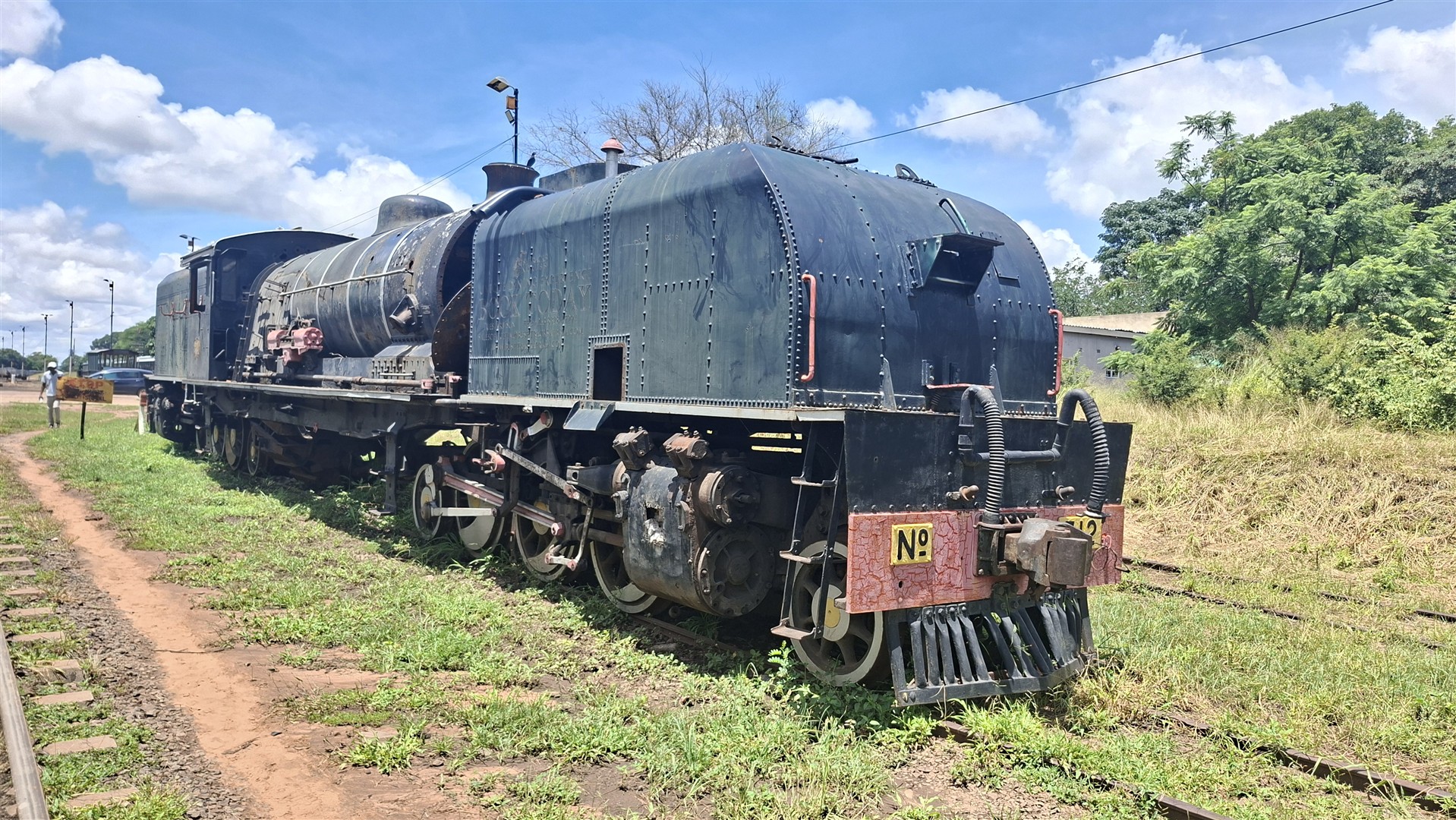
Stripped and left to rot.
I came to a level crossing and saw an old steam engine parked off to one side. It had been completely stripped of anything useful and was very dilapidated. It was of the large 2-6-2+2-6-2 layout, so common in Africa.
On the other side of the crossing were some carriages being used as offices for the local tourist organisation. The station buildings were attractive too.
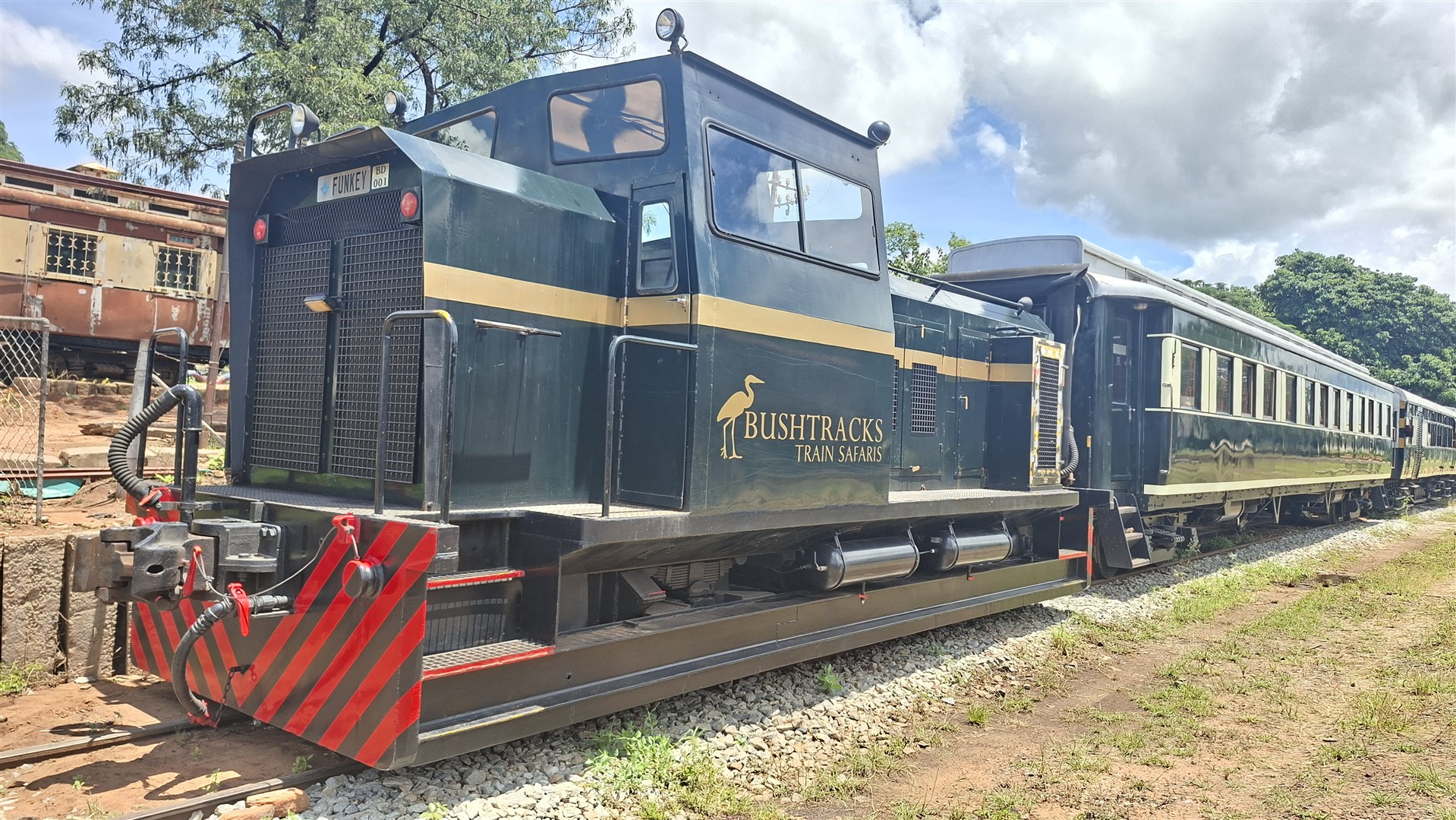
A smart looking tourist train, used as an office when stationary.
I walked around a bit more and came across and art gallery with some excellent wildlife drawings in it. Next to that was a shop selleing sculptures of all kinds, both large and small.
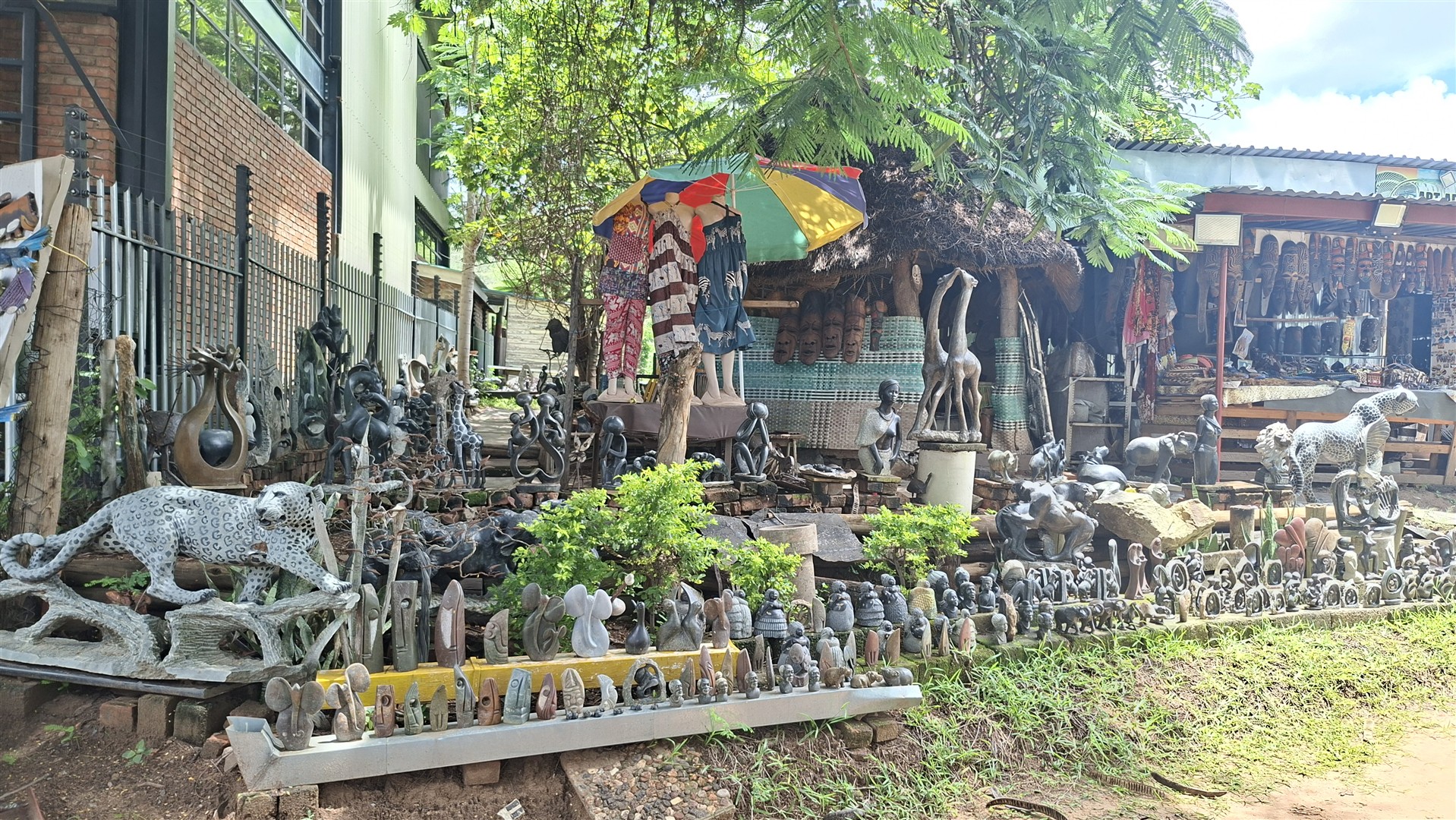
Lots of attractive small sculptures.
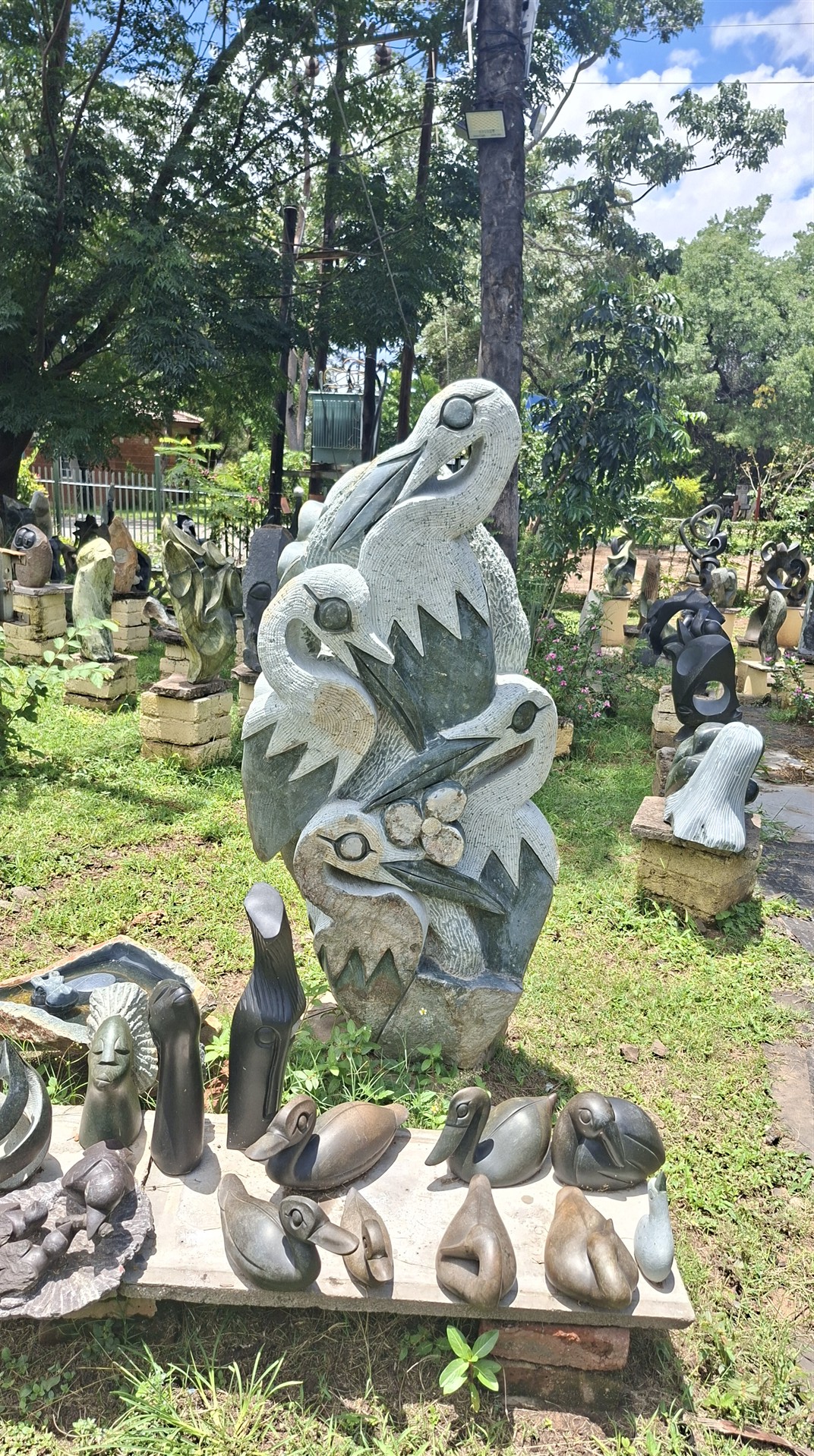
And one of the funky looking large ones.
Having decided not to visit Victoria Falls (the water) again I decided to head south. Before leaving next morning I chatted to a Norwegian woman who was heading to Botswana. I gave her my remaining Pula and my Botswana SIM card. She lives in Oslo and said I should contact her when I get there.
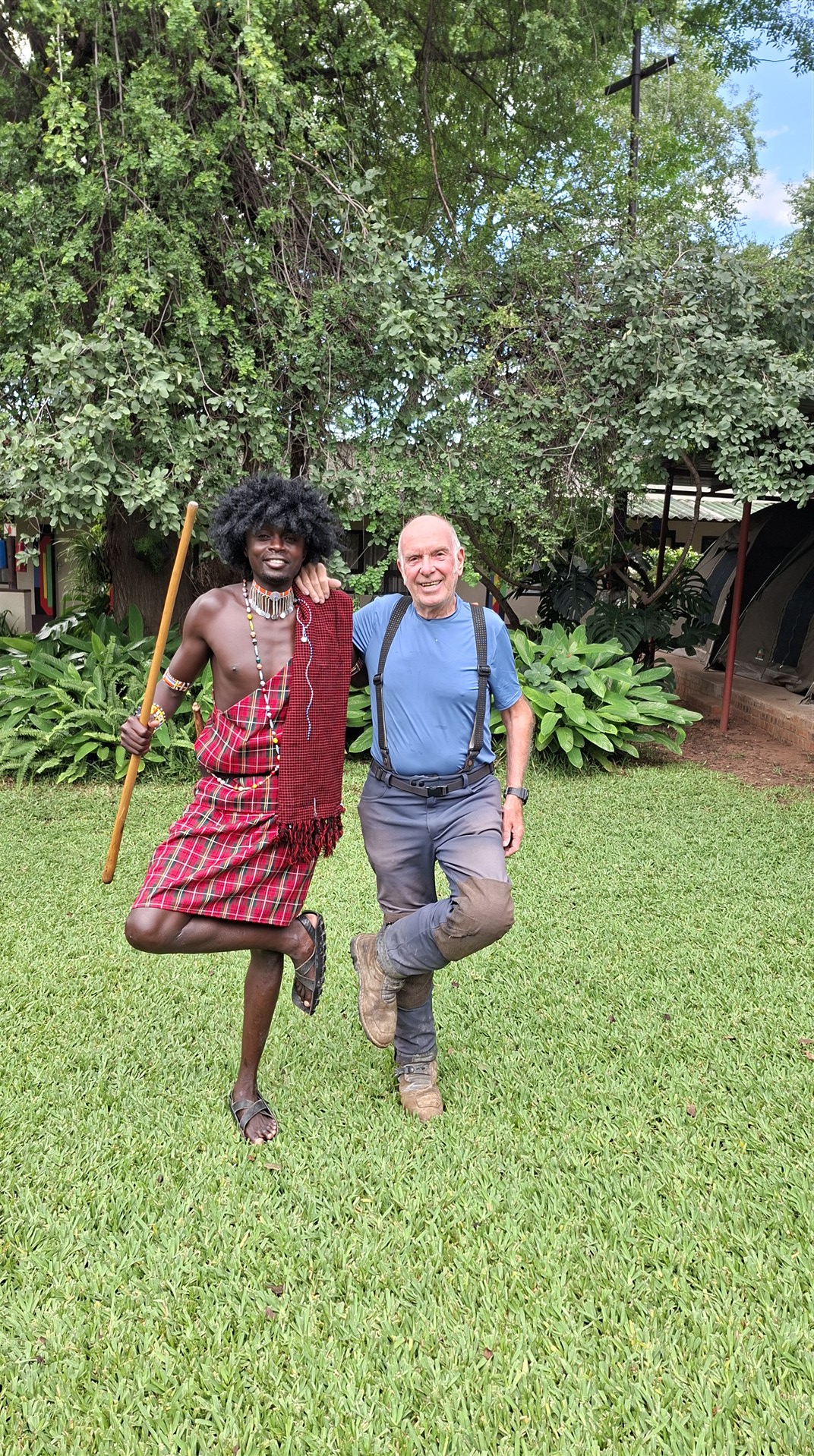
Also at the hostel. A Masai Warrior, happy to pose with me. Both of us in our travelling clothes.
At the service station nearby I called in to get fuel, wanting my can filled up first. Fun and games ensued. The daft girl on the pump didn’t notice that it hadn’t reset. I tried to tell her but she started pumping anyway. The pump said my 4.5 litre can had taken 6.5 litres. Needless to say I refused to pay the extra so she reluctantly calculated the price for 4.5 litres.
I went across the road to another servo to fill up the bike, not trusting that pump now.
I fancied visiting Hwange National Park for a game drive so I headed down that way. The road was mostly OK, with a few potholes.
The guest house by the NP was $50 and he wanted $125 for a game drive next day. With a second night it would have been $225. No thanks.
So I carried on further south. The road got really bad, with lots of rough sections and potholes, and a long and rough diversion.
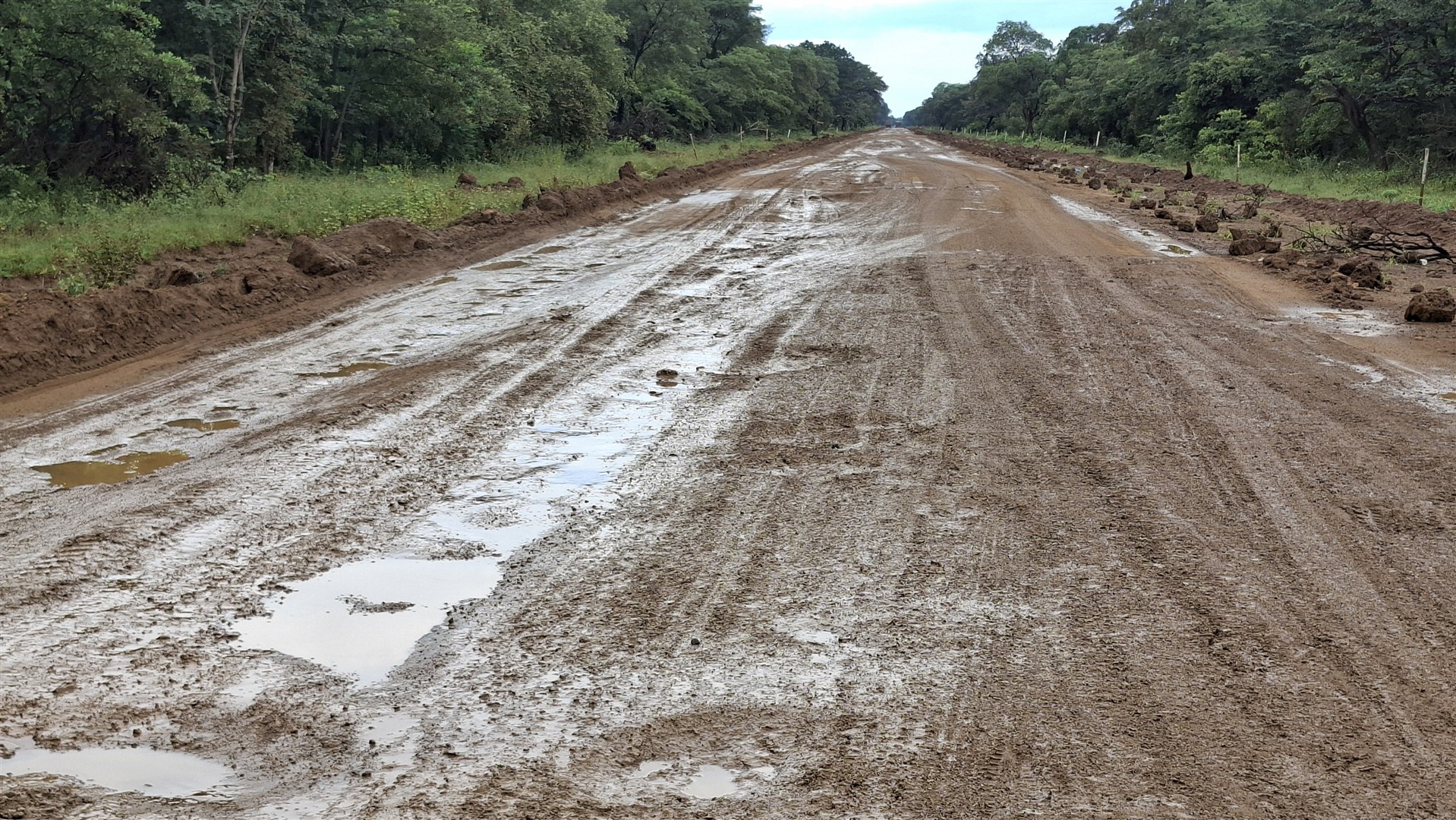
The horrendous road that goes south.
It was soon after the diversion that I looked down to check my fuel can was still there. Gone! Having lost one in Tanzania I’d got into the habit of checking it from time to time.
I turned round and rode back for 35kms but no sign of it. I couldn’t go any further because fuel was getting low. I got off the bike to see what was left only to find that the whole assembly had gone. Last time I’d only lost the can.
That was odd but I later discovered the reason. The pannier frame had fractured thereby allowing the metal mounting block to come off the bike. Decision – use fuel bladders rather than cans in future. 5Kgs bouncing around is obviously too much weight.
I headed on south to Lupane and found a place to stay.
The next day’s destination was Bulawayo, Zimbabwe’s oldest city. It was a good day. The tyre pressures had held up and nothing had dropped off the bike. After I’d topped up the chain oiler I set off.
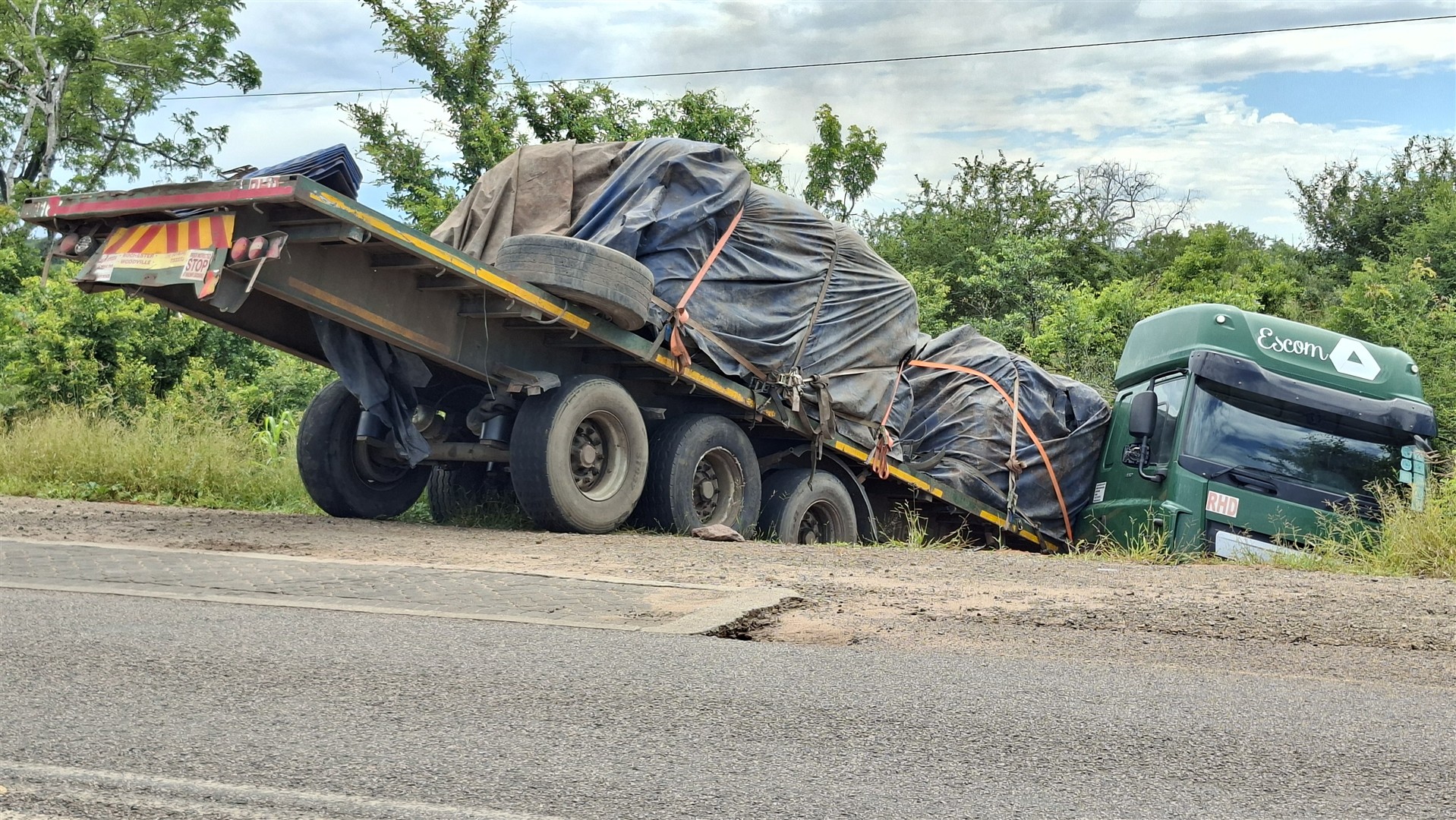
Good road, bad driver (probably). Zimbabwe as bad as Zambia.
The road had long stretches of muddy, potholed, corrugated crap. That was why everyone had said, ‘Are you sure?’ when I said I was going to Bulawayo. It was very busy with trucks and buses heading to and from the borders.
I felt really sorry for those drivers. They had to wander from one side of the road to the other in order to avoid the worst of the deep holes, making very slow progress. A single tracked vehicle definitely has the best of it.
But the bike and I handled it well. I actually enjoyed the ride. There were long stretches of good road too.
I’d booked a place that morning for 3 nights. While I was heading to it through the city I had a moment of brilliance and realised that as it was still early (1pm-ish) I should go and look at one of the places I wanted to see. So I went to the railway museum.
In the reception was a nice old guy who was very welcoming and said he’d make me a coffee when I’d finished looking around. A very reasonable $5 entry fee.
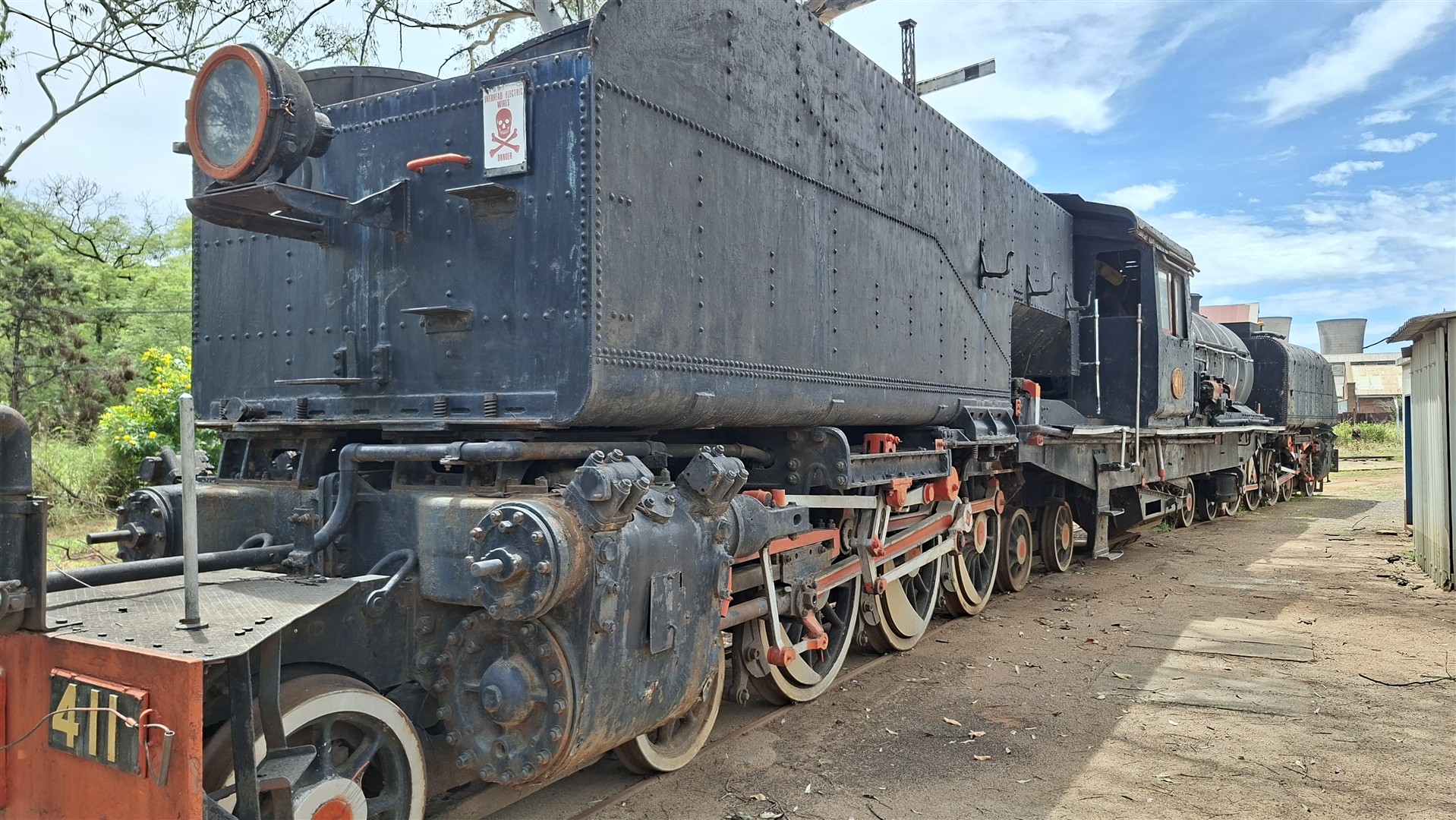
Giant steam locomotive. This one is 4-6-4+4-6-4
It was very good. There was a particular loco that had a 2-8-2+2-8-2 layout. Very long, very powerful, designed and built in England. The problem was getting a decent photo.
One interesting wagon was diesel powered and armoured. It was designed to carry soldiers or police to trouble spots. But the engine was too underpowered for the weight so it was rarely used.
There was a coachload of schoolkids there being shown around. I was able to chat to some of them and get photos taken with them. I love doing that.
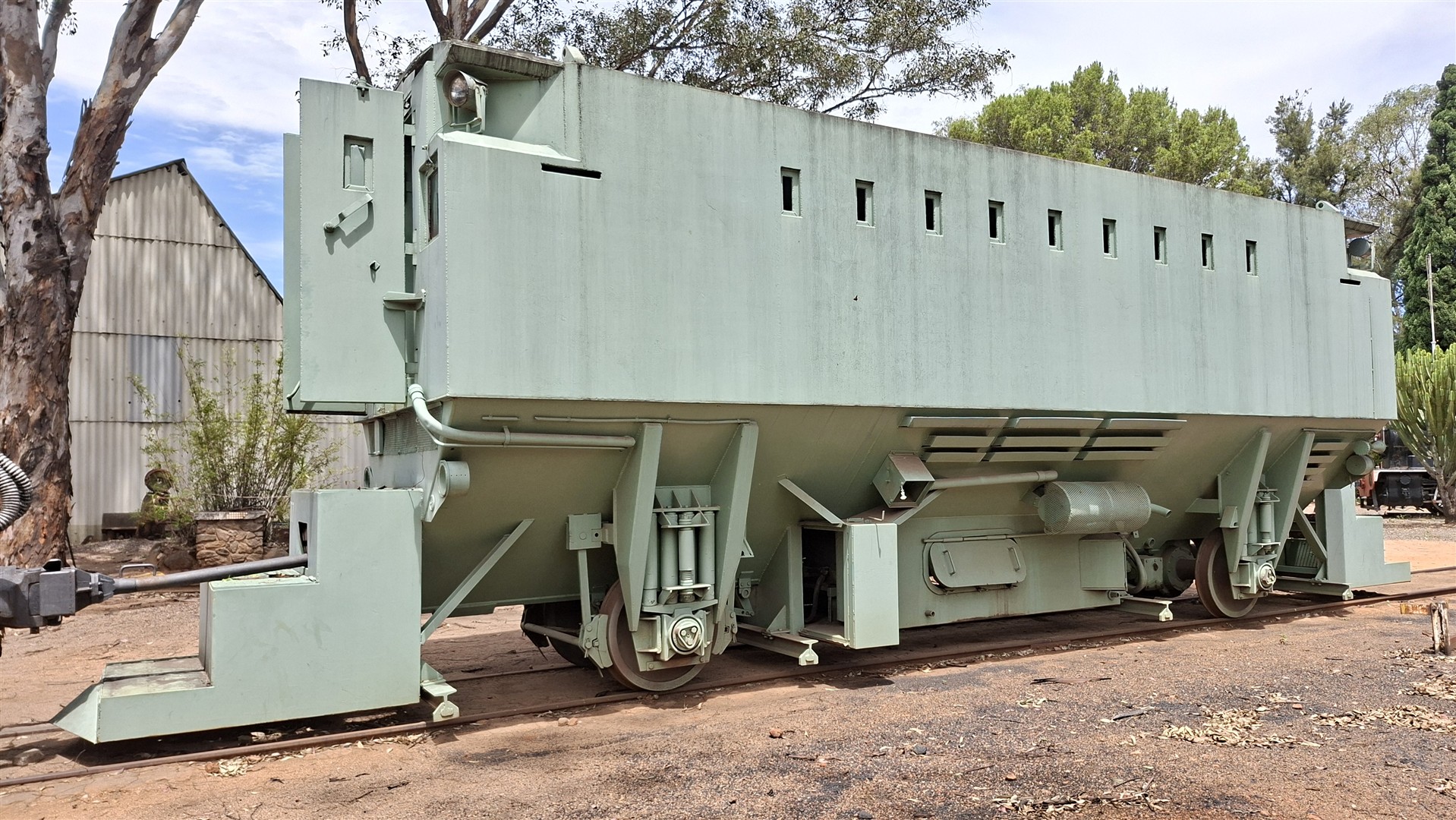
Troop carrying diesel wagon. Too heavy to be of any use..
I sat and chatted with Gordon while I drank coffee. He started working on the railway in 1972 and segwayed into running the museum on retirement. He collects stamps and gave me a spare 1st Day Cover he had of Zimbabwean Tree Week.
This section of railway was part of Cecil Rhode’s attempt to build a line from Cape Town to Cairo. He never succeeded but the legacy is a functional network of lines up through south and east Africa. And some great museums to visit as well.
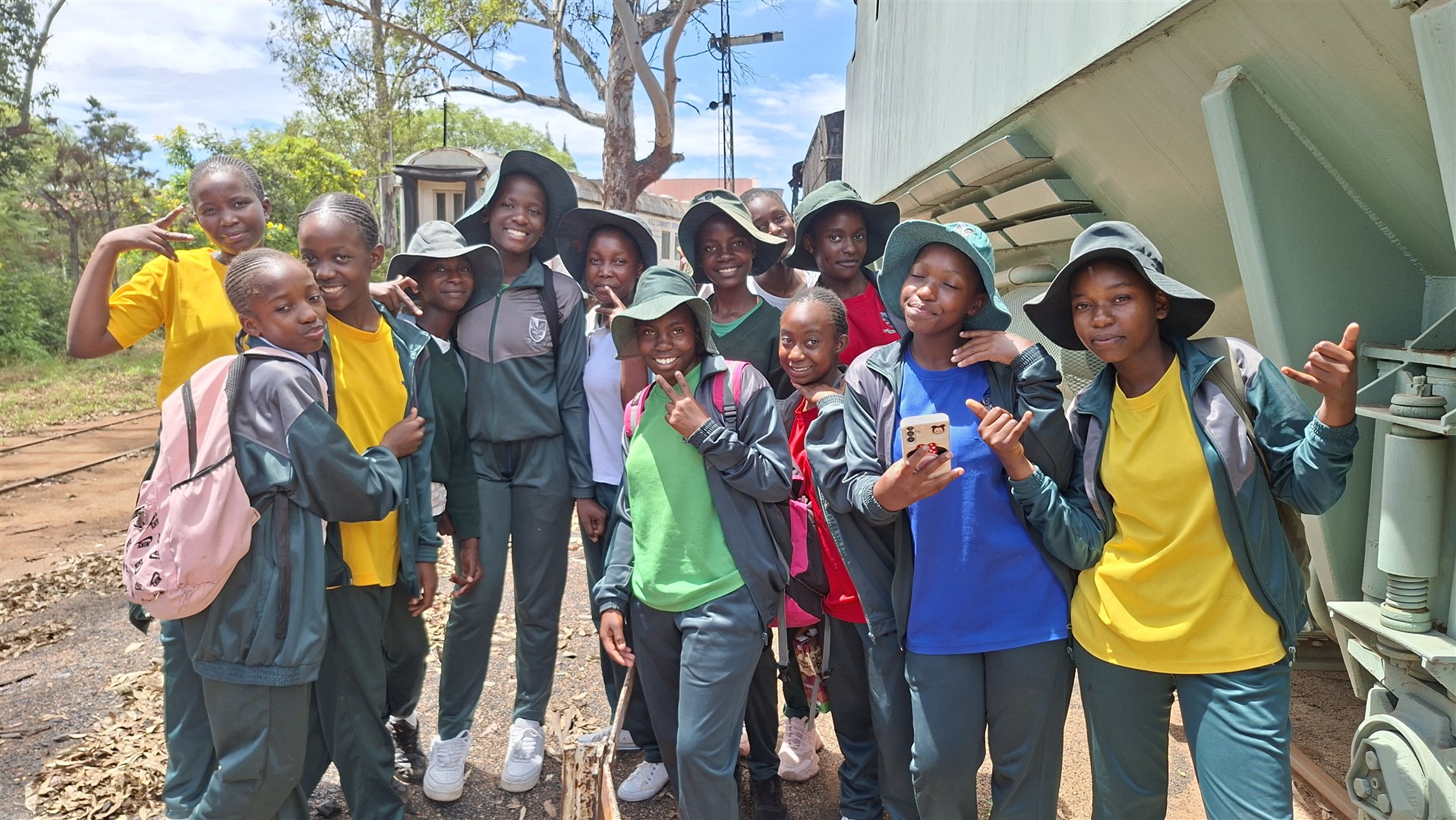
Local school kids are always happy to pose.
Bulawayo was founded by the Ndebele people around 1840 but was taken over by the British South Africa Company in the 1890s. King Ndebele tried to regain it by means of a siege but was ultimately defeated.
It became Zimbabwe’s largest industrial city, although these days it’s focus is more on heritage.
The place I’d chosen to stay was a bit out of town and the breakfast I was served was a bit away from being good.
On the upside the owner of the guesthouse, who was abroad, used to race bikes and had a display of awards earned on the track. It made me feel at home.
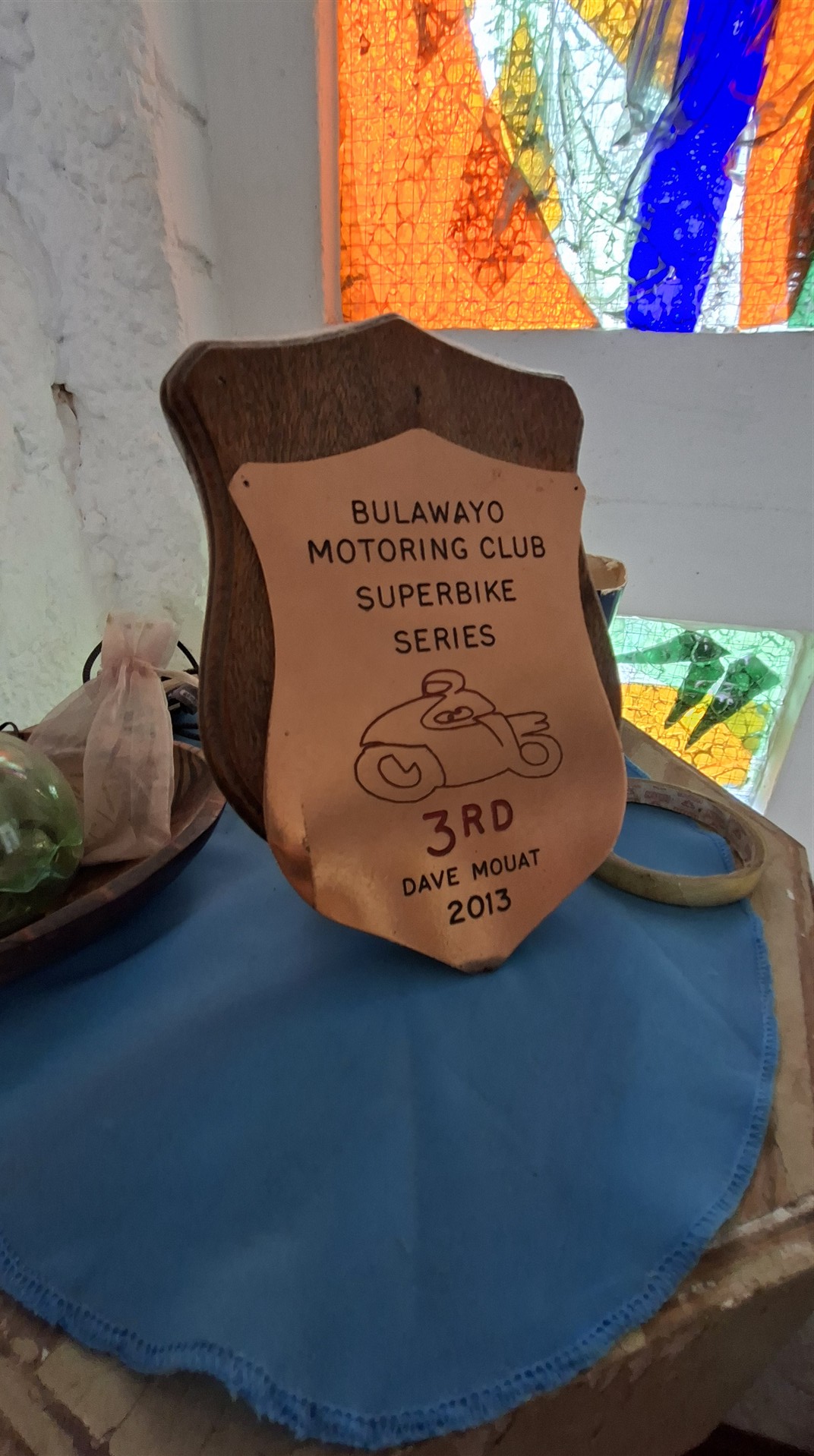
Successful rider.
I headed into the city to visit the Natural History Museum. It’s built on a circular basis and has what seemed to be endless galleries. Not all of then were lit up.
The exhibits were very well laid out. The largest was a stuffed elephant. Filling that up must have been a hell of a job.
There was an excellent geology display and one on the development of man. Also one about local people. Talking of which there were a load of schoolkids there too. I had a good interaction with them.
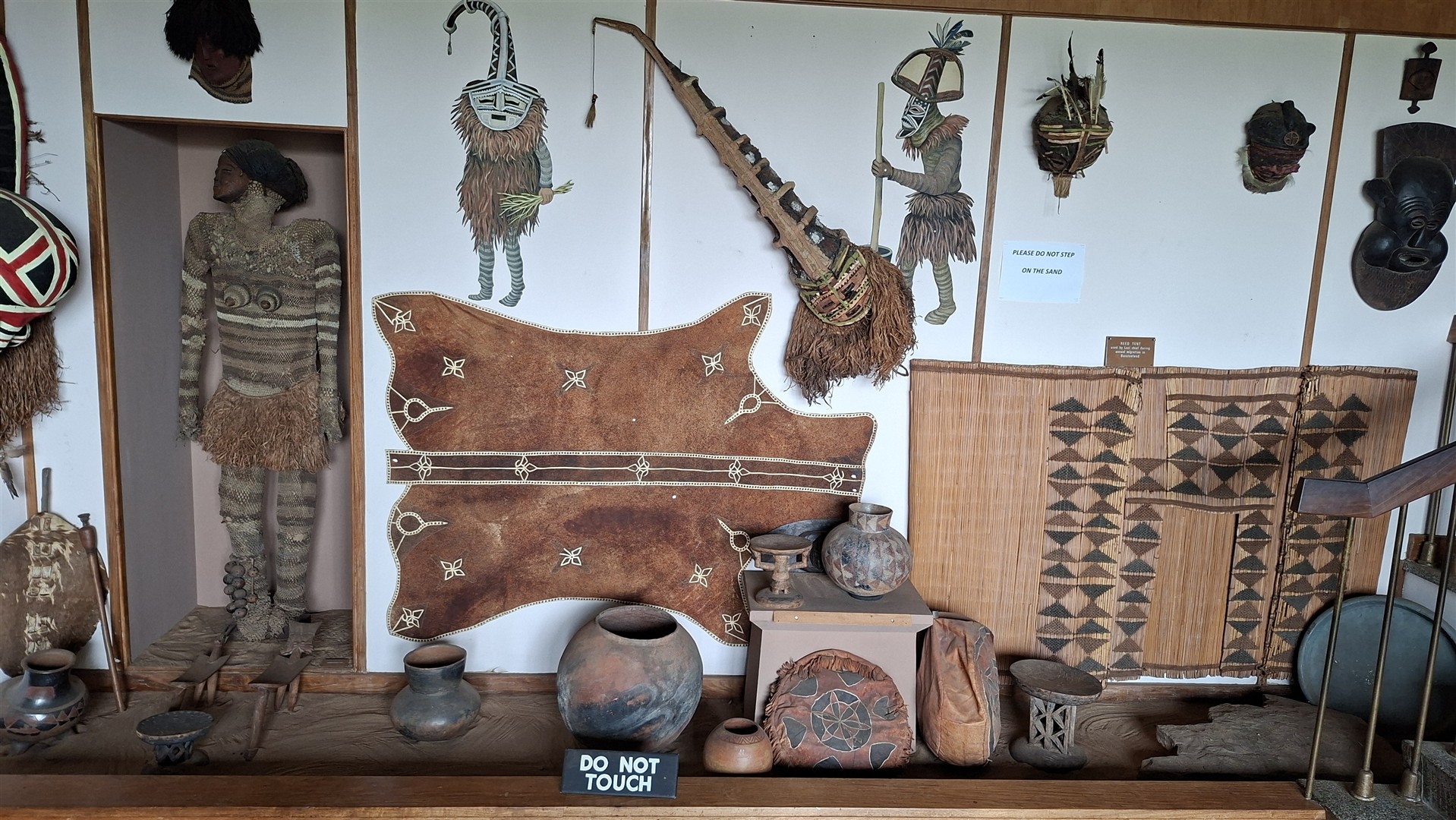
A display of local culture.
Then I went to the Bulawayo Club, as suggested by Gordon the Railwayman. It’s a very imposing building of a classical colonial style. The interior is of dark oak and teak, plus several other expensive woods.
The foyer has a big fireplace, with settees around. Lots of copper and animal heads mounted on the walls. Exactly as I’d expected such a place to be. It was, apparantly, modelled on a typical London club, including that women were only allowed in on special occasions, about twice a year, and had to use the side entrance.
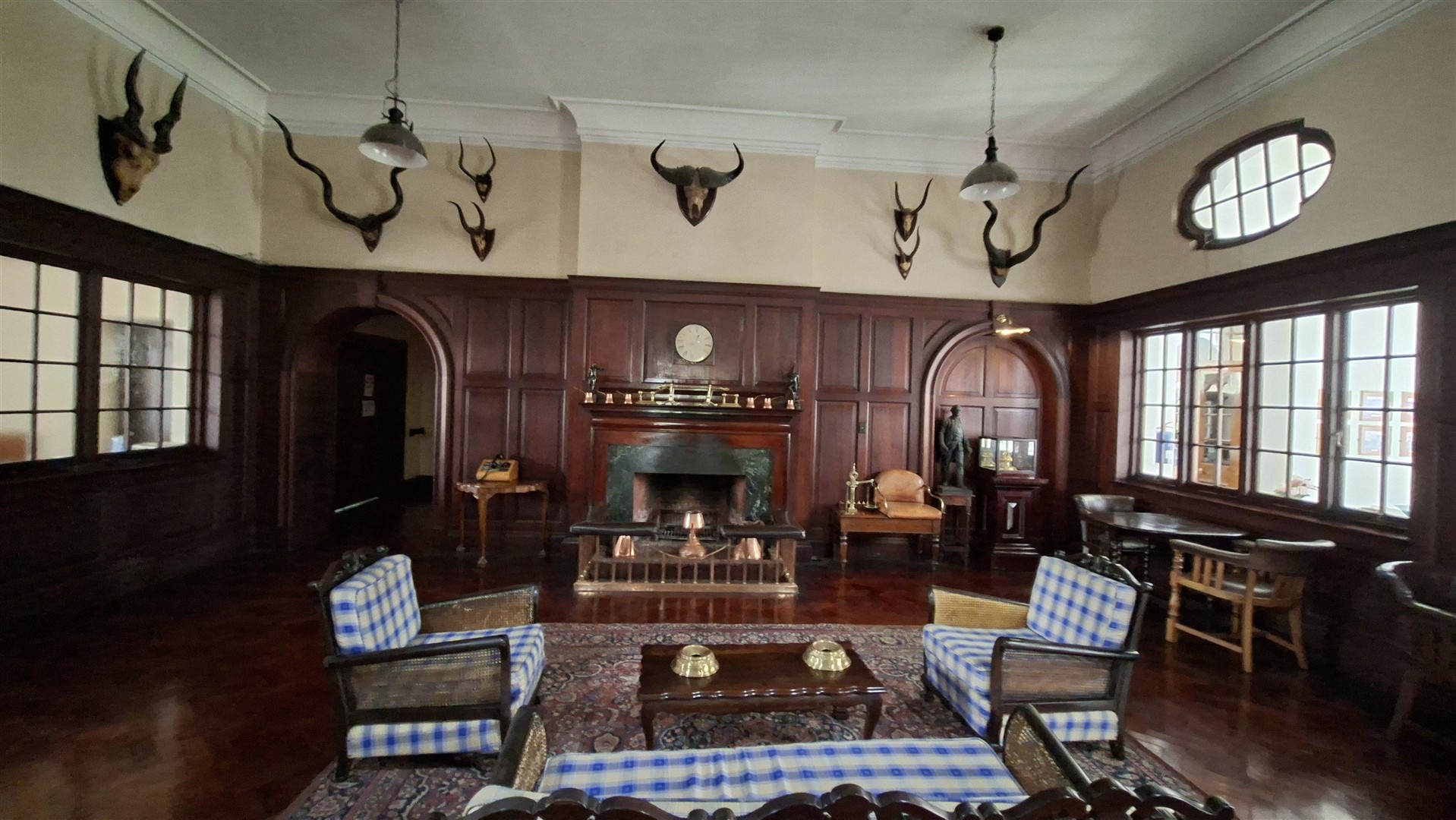
The foyer of the club. Very old fashioned.
The bar is huge and sells decent beer – a strong IPA and Irish Red Ale. I ordered coffee and received a big cafétiere with hot milk. It only cost $3, to my surprise.
Because of that I checked to see the price of a room and I could get one for £54. Very reasonable for such a place. It’s now a hotel although is still a club. I’m thinking of staying a night there, just for the experience.
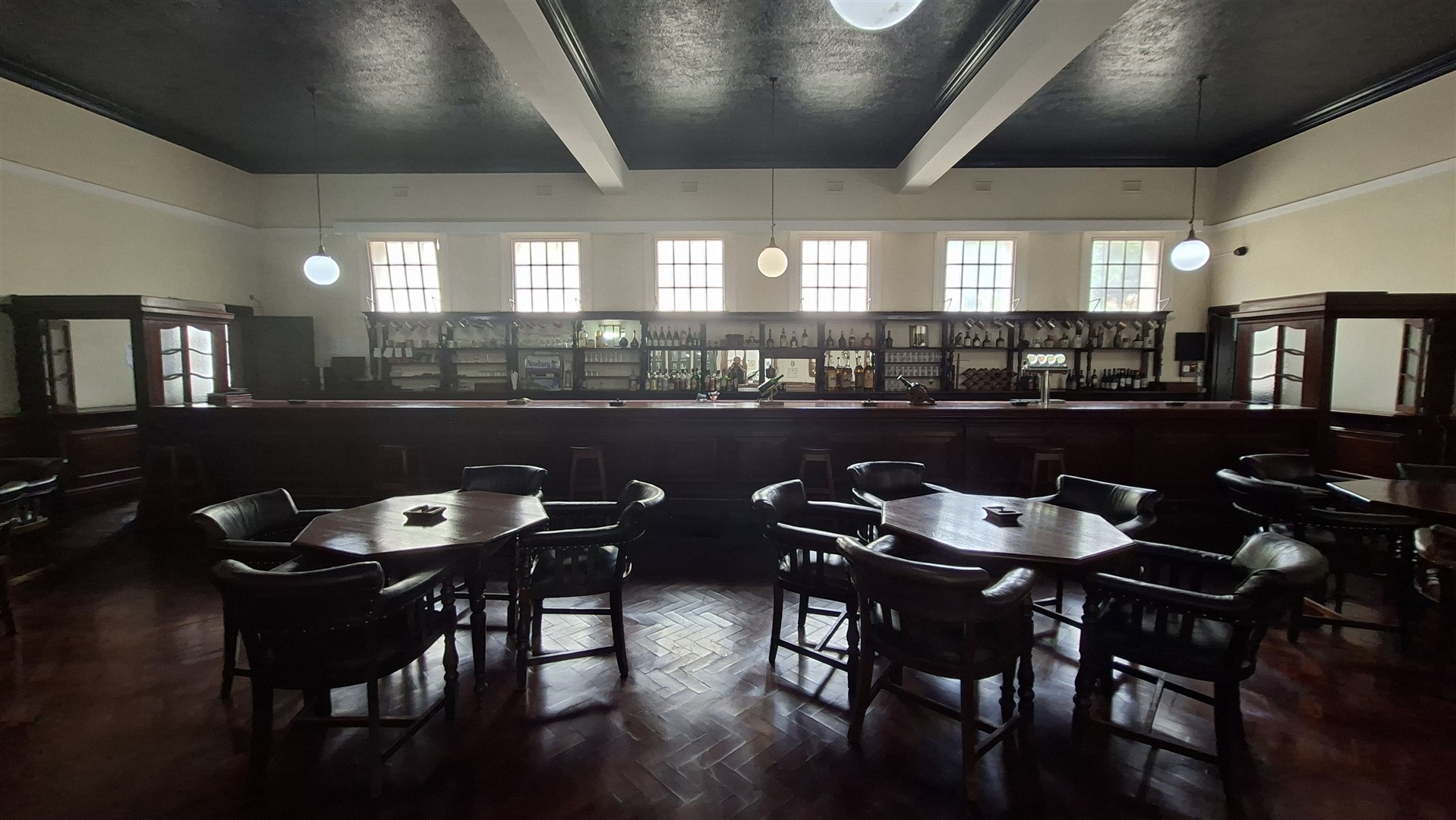
A very large bar and with some decent beer.
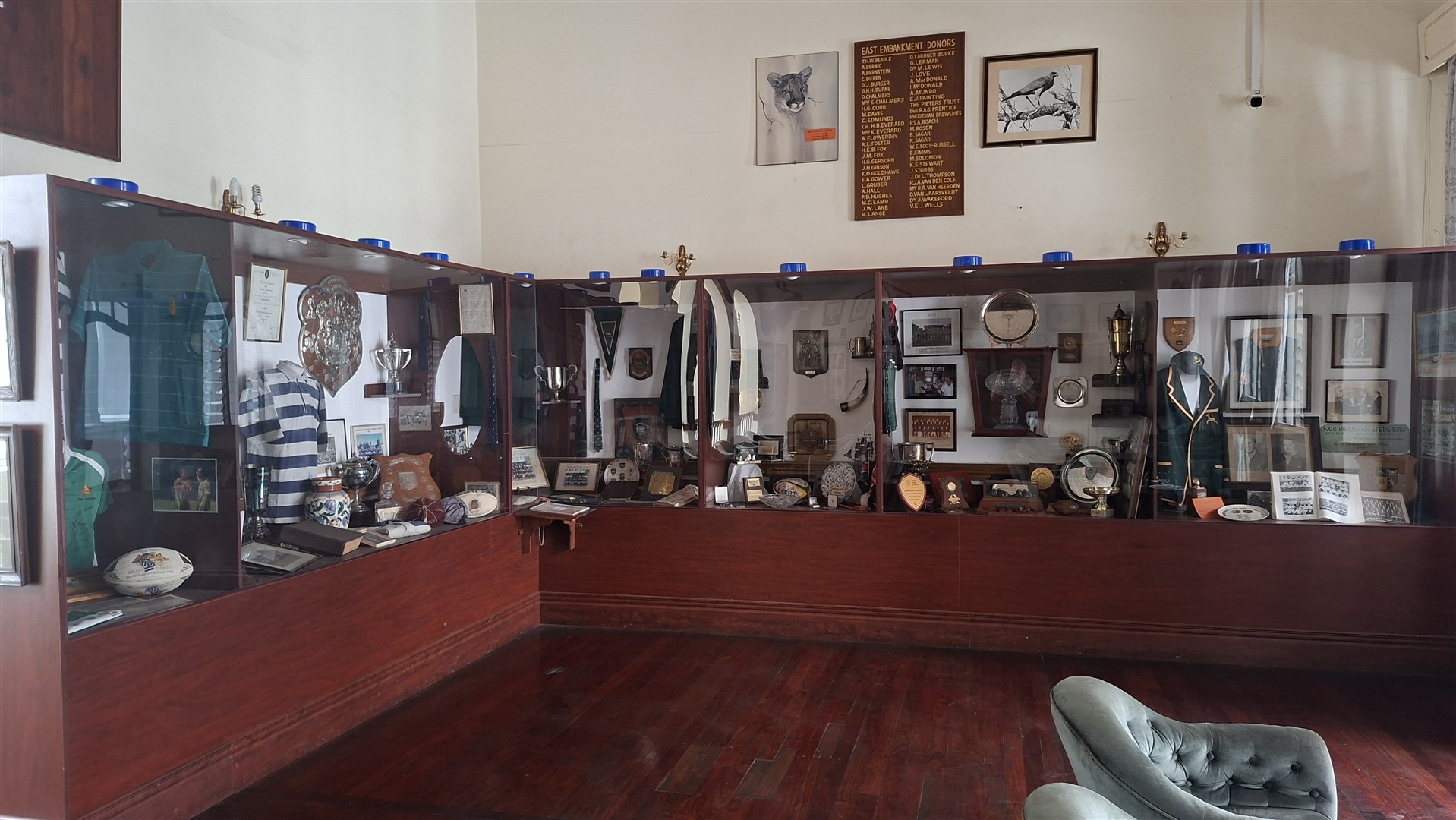
Trophy room.
The last visit was to St Mary’s Cathedral, which was quite ordinary for a Catholic church. A very good roof but that’s about all.
Next day’s visit was to Khami Ruins, which used building techniques dating from the 13th century. The town was started by local tribespeople in the 15th century. I was very surprised to find large buildings made of stones. This was not a method of building I’d ever associated with native Africa.
Most of the buildings were purely practical and not designed for defence, but for good living. The important buildings were built on terraces, retained by long walls with very decorative patterns in them, often using different coloured stones.
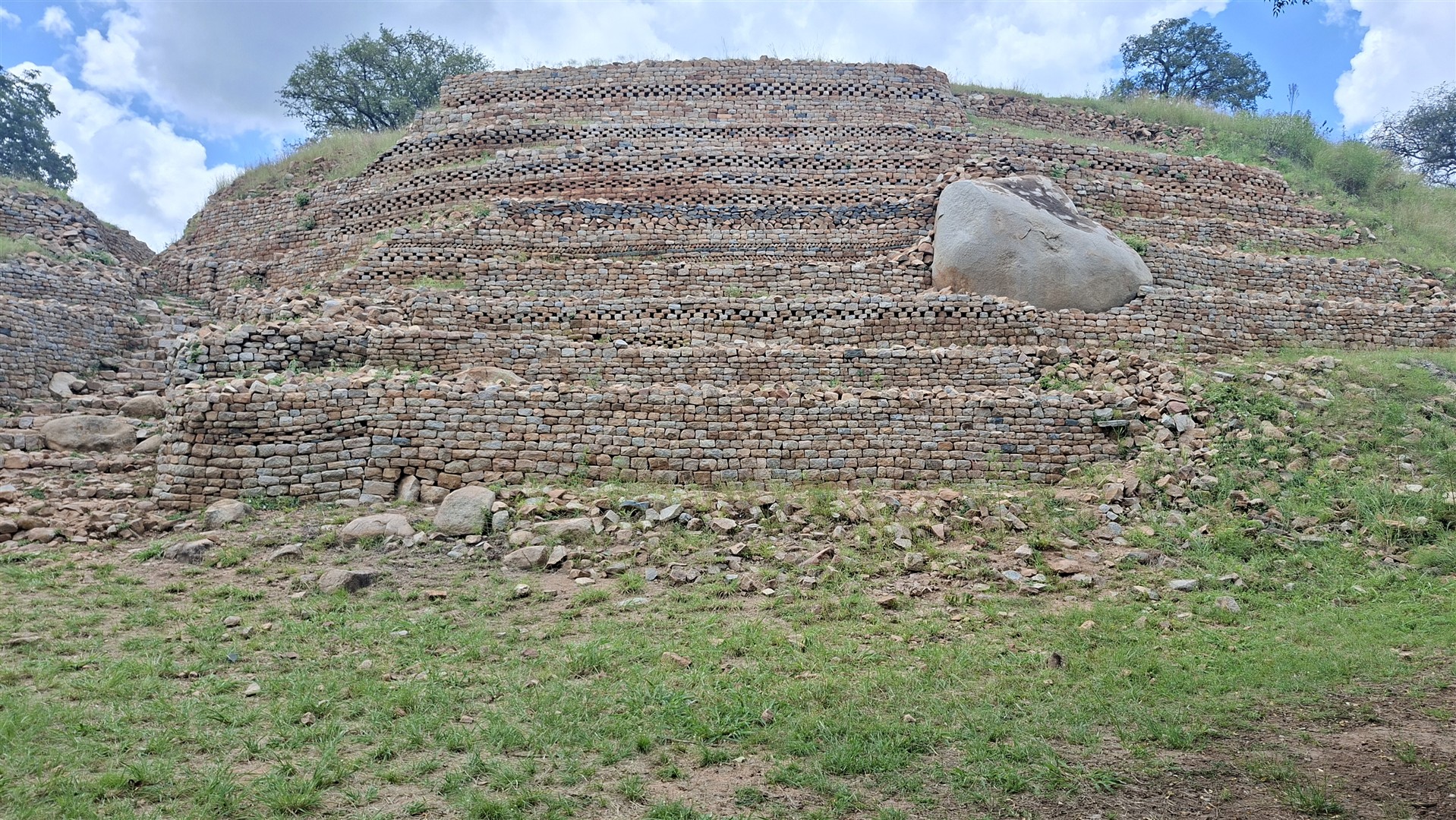
Khami Ruins. Impressive.
The local area has plenty of rivers meaning that malaria was a problem. But by placing buildings on platforms the elite were able to avoid it. Not so the common folk who lived lower down.
There were kraals for cattle too. It was well spread out so I got plenty of exercise walking and climbing around this fascinating place.
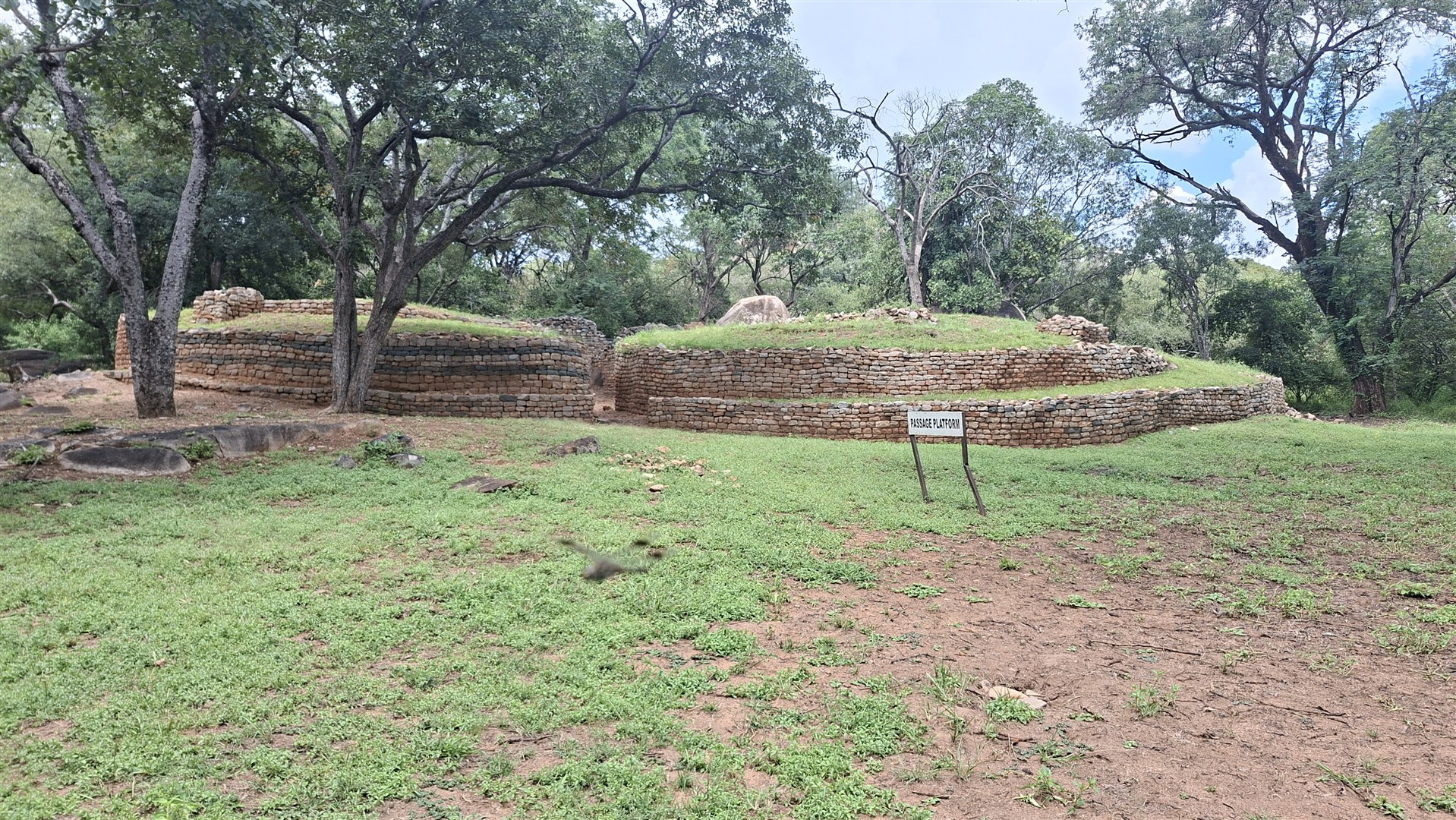
Deliberately designed to impress.
When I arrived back at base there was another bike parked outside. It belonged to an Aussie guy named Jeremy.
He kept a bike in Europe but had bought this Mustang 250cc Cruiser in South Africa and was planning to go further north, to Zambia.
He’d owned a tourist shop in Amsterdam for 30 years and married a woman there. He later told me that he had a son and a daughter with her. She’s half Indonesian and the son lives there. Complicated.
We had a good chat and I suggested he might want to come into the city to visit me as I’d gone online and booked a night at the Bulawayo club.
Next morning I moved there then headed off to see KoBulawayo, the original site of King Lobengula’s HQ before he moved it to Bulawayo.
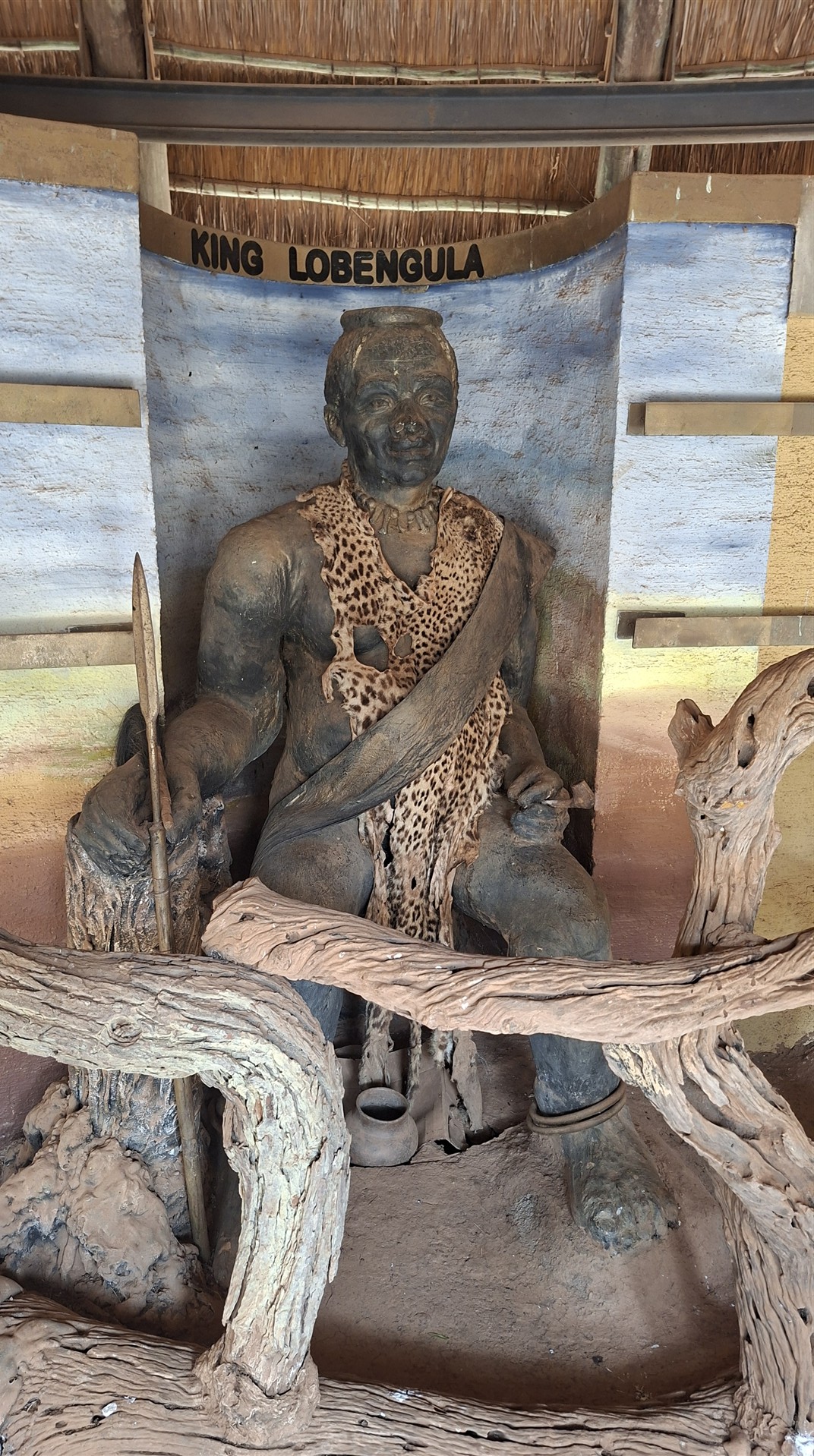
King Lobengula.
But when he left he burned it down, meaning there’s nothing to see. This is a tradition that prevents any of the king’s possessions being used by an enemy for voodoo magic.
They’ve built an information centre, styled on an old local building.
A guy showed me around and we walked down to another area with more stone buildings housing info boards. One of them was built on the site of a wagon shed. It seems that with the coming of Europeans and their trade, owning wagons was a profitable business.
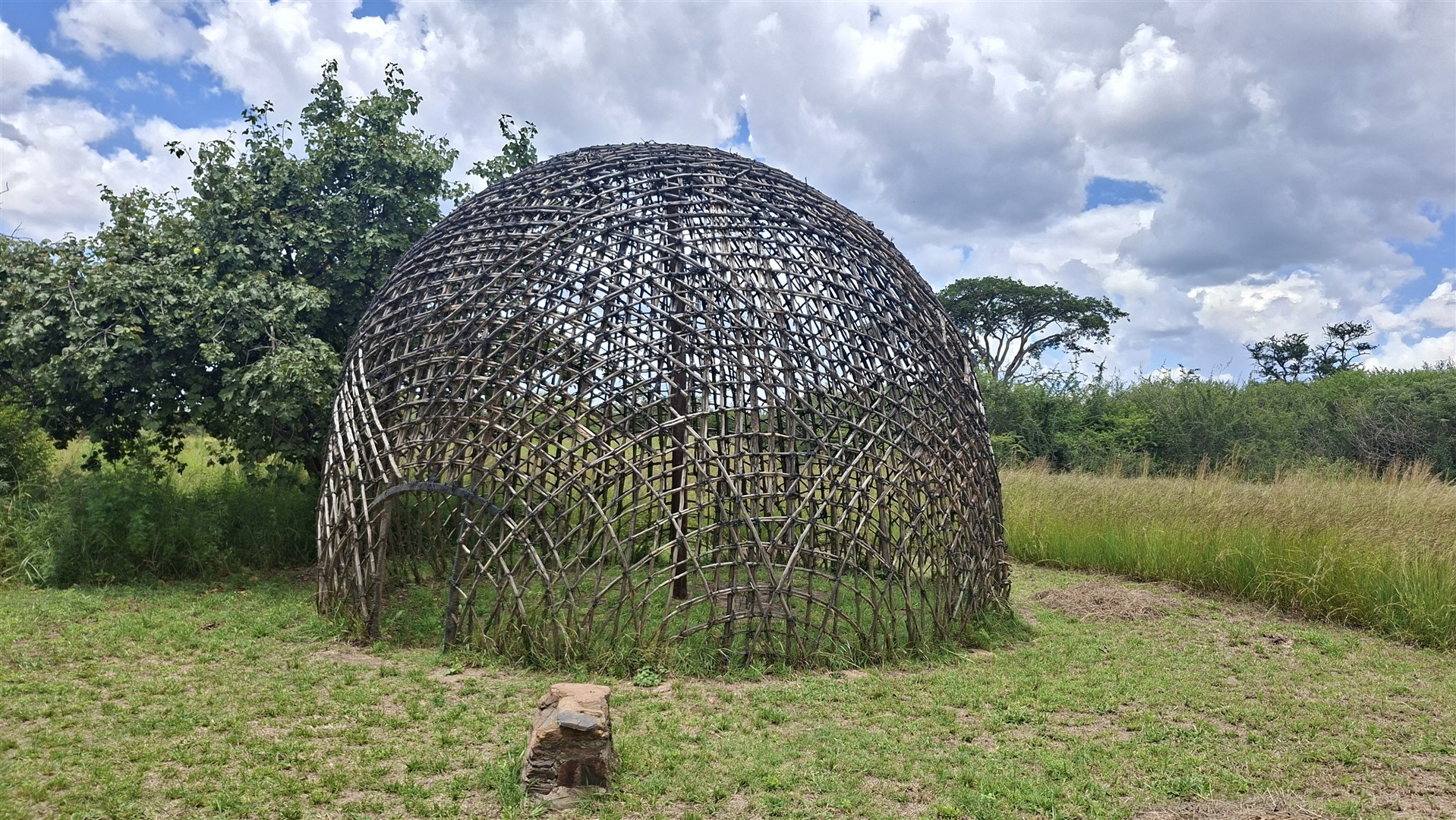
Framework of a typical Zulu beehive hut.
My guide told me of a cave further down the road and that there was a sign pointing to it. I said I’d ride down there rather than walk so we went back to the bike. I gave him a couple of dollars for his time. His basic role seemed to be more of a caretaker than anything else. But I didn’t find the cave in the end.
It was quite a disappointing place. Possibly meaningful to Zimbabweans but not so much to a Westerner.
So I rode back up the lumpy, bumpy, holey track to the main road and headed down to see Cecil Rhode’s grave.
Except that didn’t work out either. It’s inside Maputo NP and bike’s aren’t allowed in. That isn’t really clear from Google maps so it was a wasted journey.
Back at the club I secured the bike in the yard and made myself comfortable with a coffee.
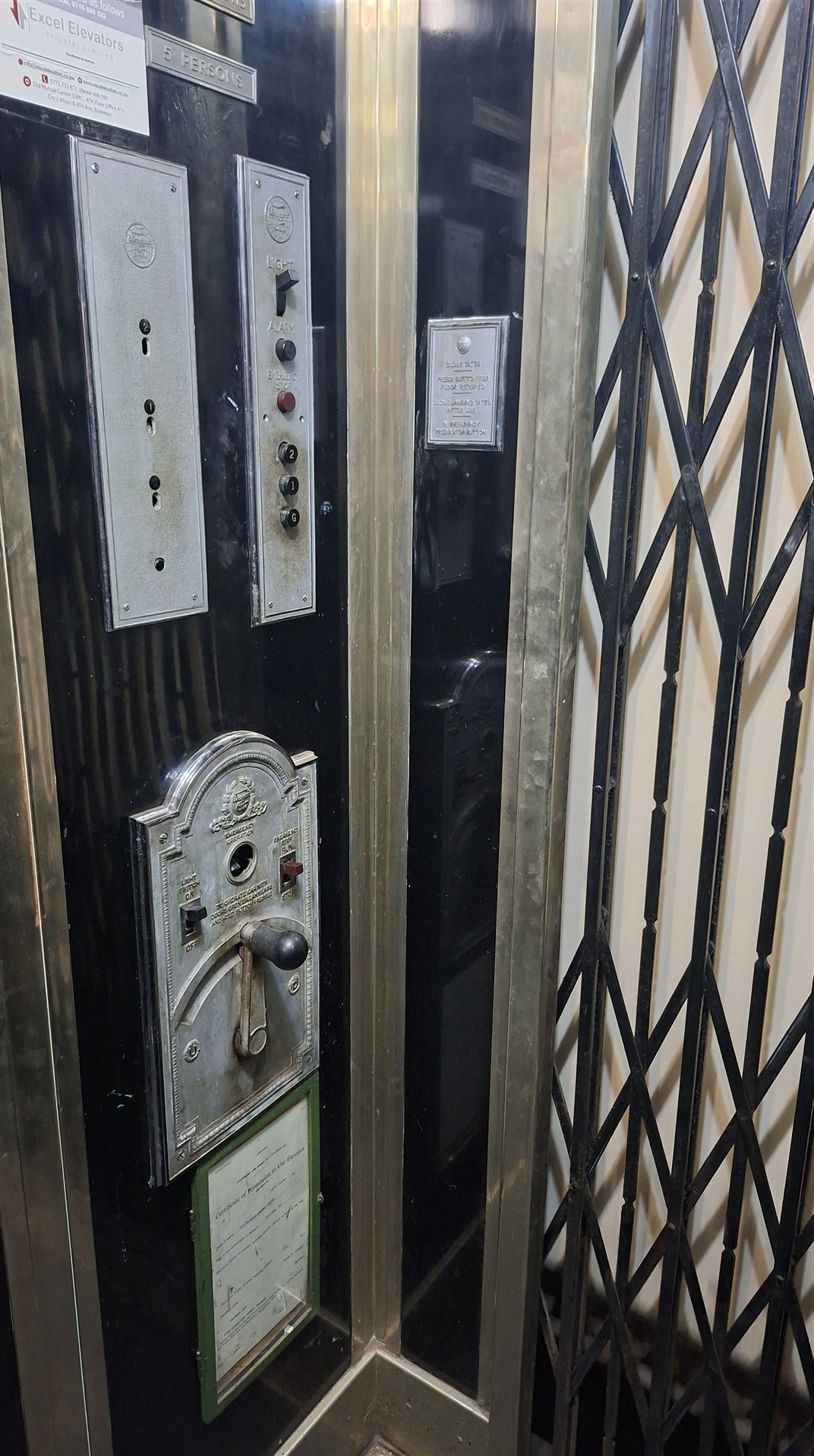
The lift controls in the club. As old fashioned as the rest of the building.
Later on Jeremy came over for a beer. There was a Premier League match on the TV in the bar so we watched that while we chatted. He wanted me to come bar hopping with him but I wasn’t in the mood.
When I spoke to him next day he said he’d visited five night clubs and got home at 5am. No surprise that he wasn’t feeling up to much.
It was time to move on. The road was good and the sun was out. It went up and down through low hills and made for pleasant riding.
All was going well until I came to a junction, whereI went over a couple of small humps and felt the bike go very funny. I pulled in, expecting it to be a flat front tyre. It wasn’t. There was a great big piece of steel sticking out of the rear one.
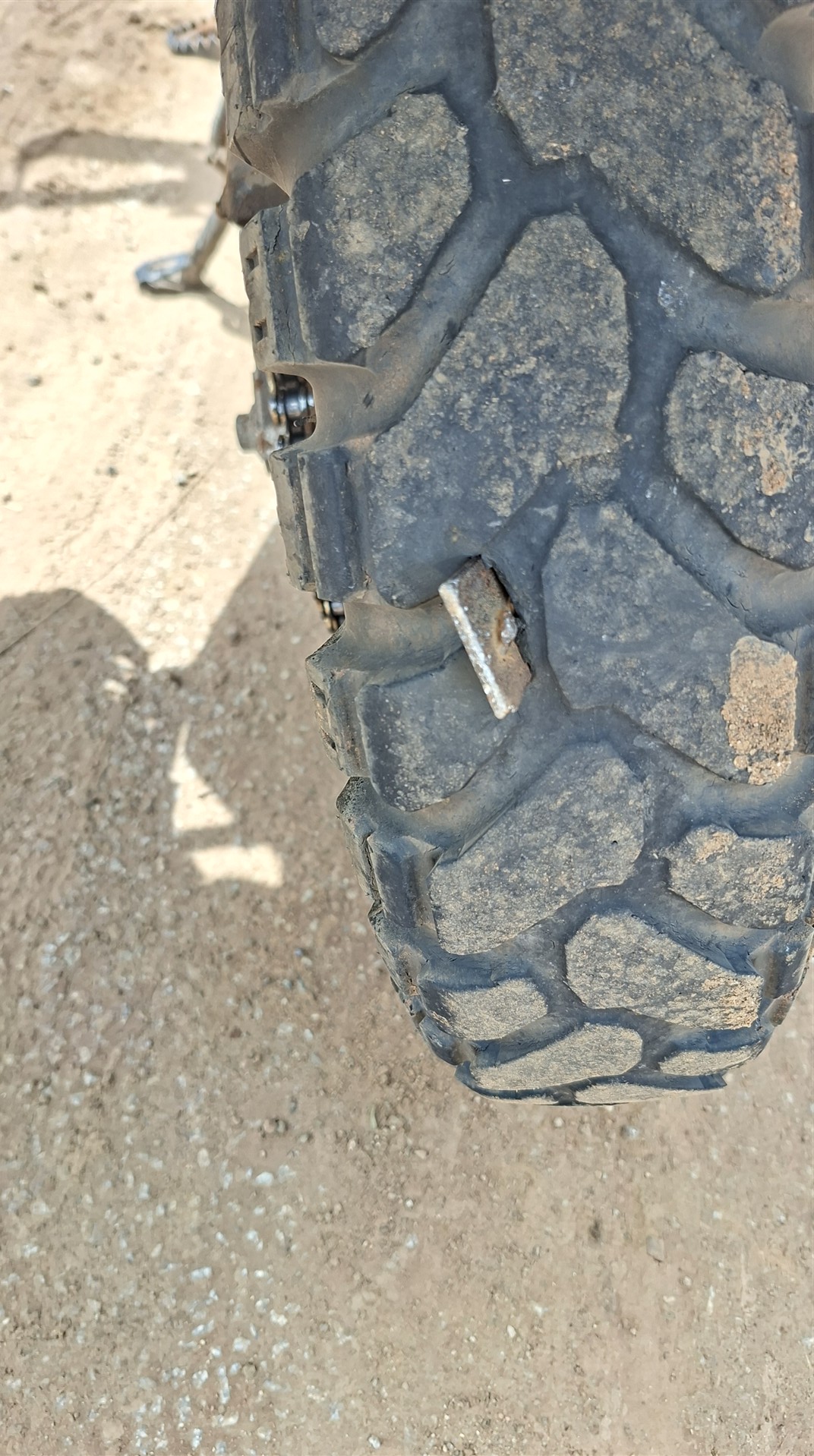
No wonder it went flat.
This presented quite a challenge. There was a 3-4cm long gash in the tyre and I decided my best option was to use several plugs next to each other with lots of glue. I had no choice as I was nowhere near any kind of help.
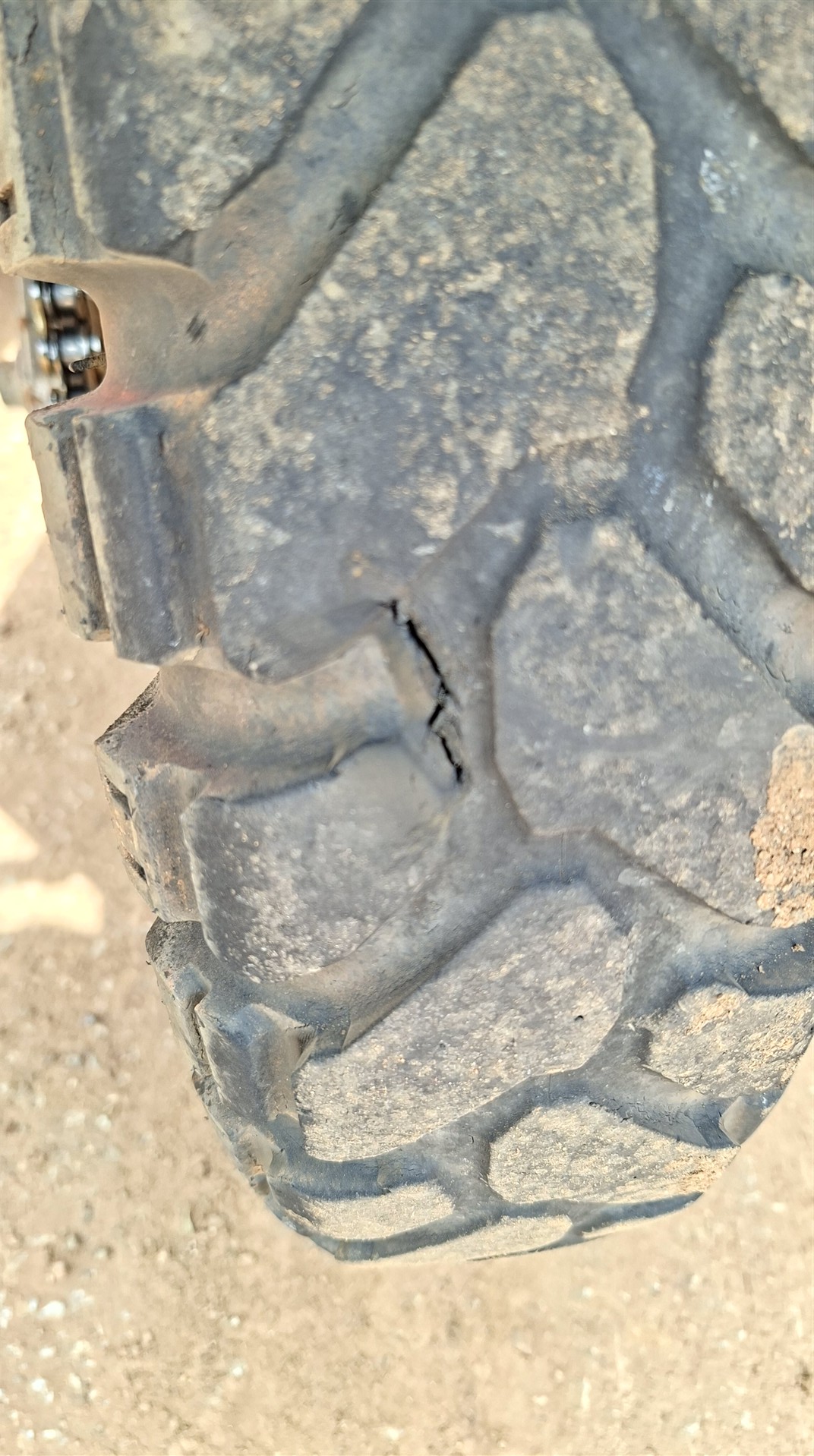
A repair challenge.
I put in four and blew the tyre up to 40psi. I tidied it all up and got going. It was only about 6km to the servo I was heading to and when I checked the pressure it was still at 40psi. Good enough.
When I checked the pressure later it was at 39psi. Tomorrow morning would tell the tale.
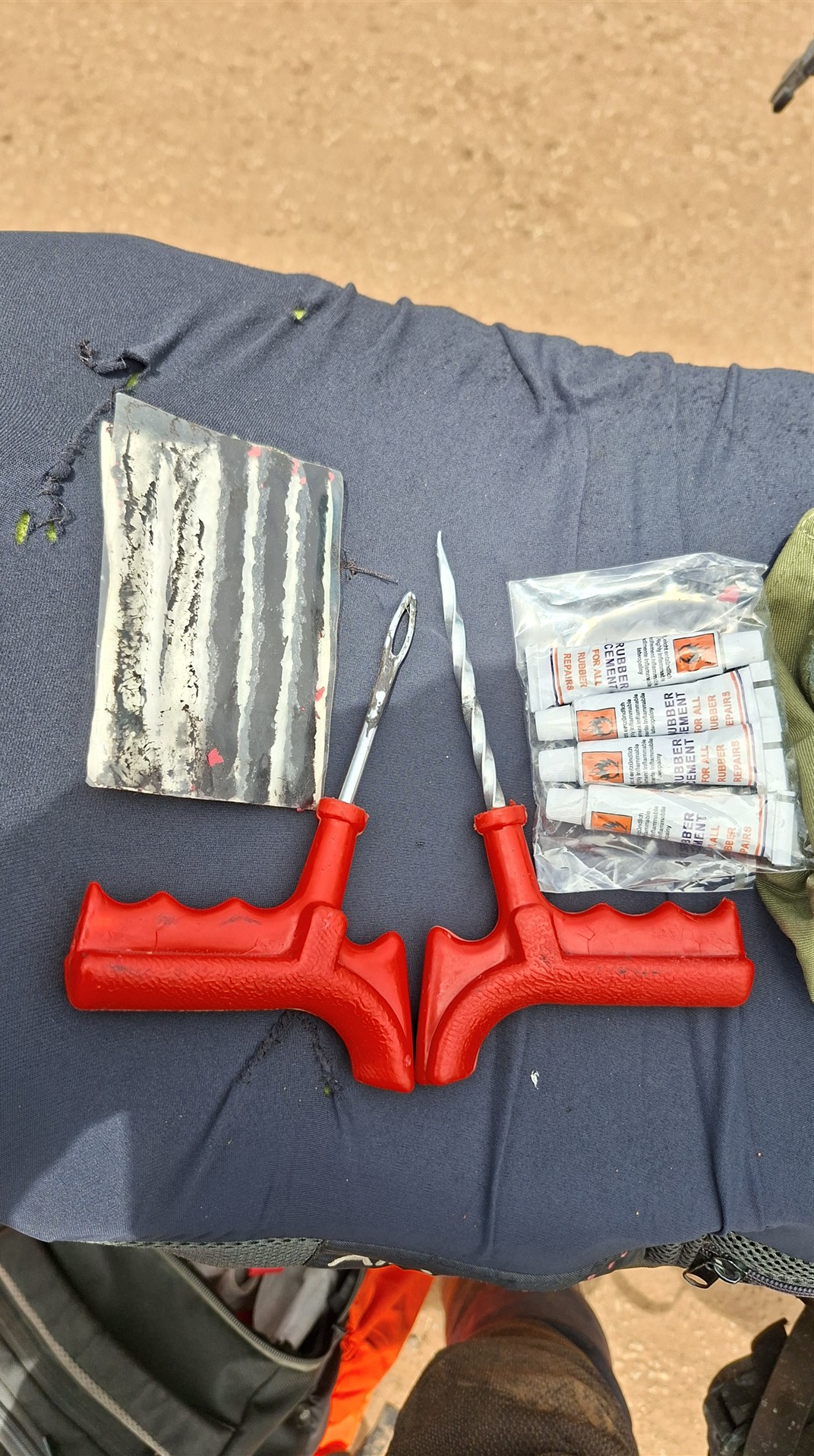
Comprehensive repair kit.
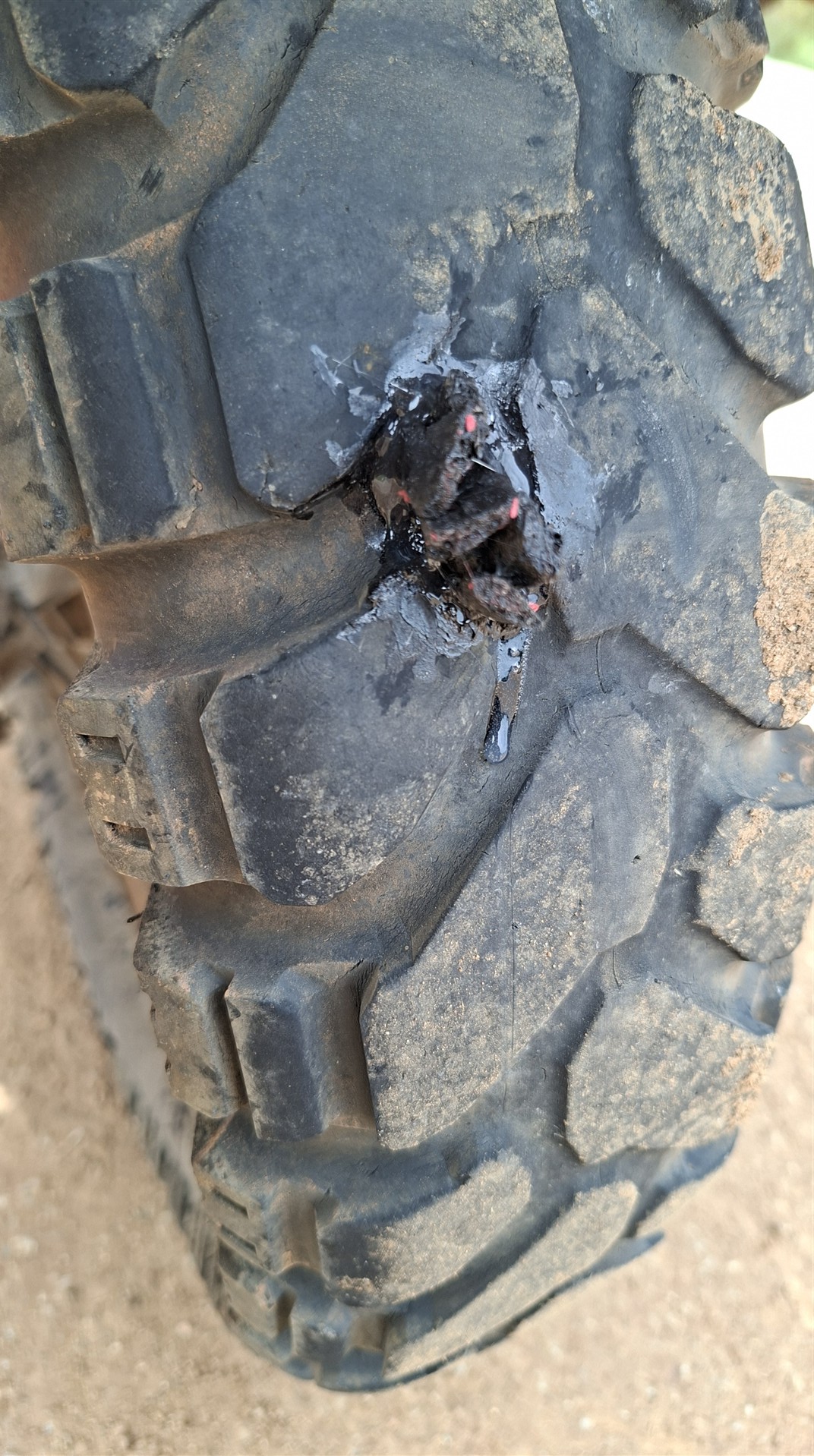
Four plugs did the trick.
At the hotel things did not go well. At reception there was a price list which showed a single room for $25. I double checked on booking.com and it only listed the $35 room. I’d already booked for two nights. I moaned at the receptionist, she got on the phone to somebody and I moaned at her.
She said if I cancel the booking then she could let me have a room at $25. But the cancellation fee matches the room rate. No choice but to pay up.
That’s the reason why I’ll often find a hotel on Booking then go there direct, hoping for a lower price. It doesn’t always work but it would have saved me $20 this time.
To rub salt into the wound the hotel wasn’t great anyway. No towel, no soap and when I tried to borrow a bowl to eat cereal from they only had a tiny one. Humph!
Next day I visited Great Zimbabwe, an ancient Zimbabwean city. I paid the entry and guide fee and parked where all the guides were sitting.
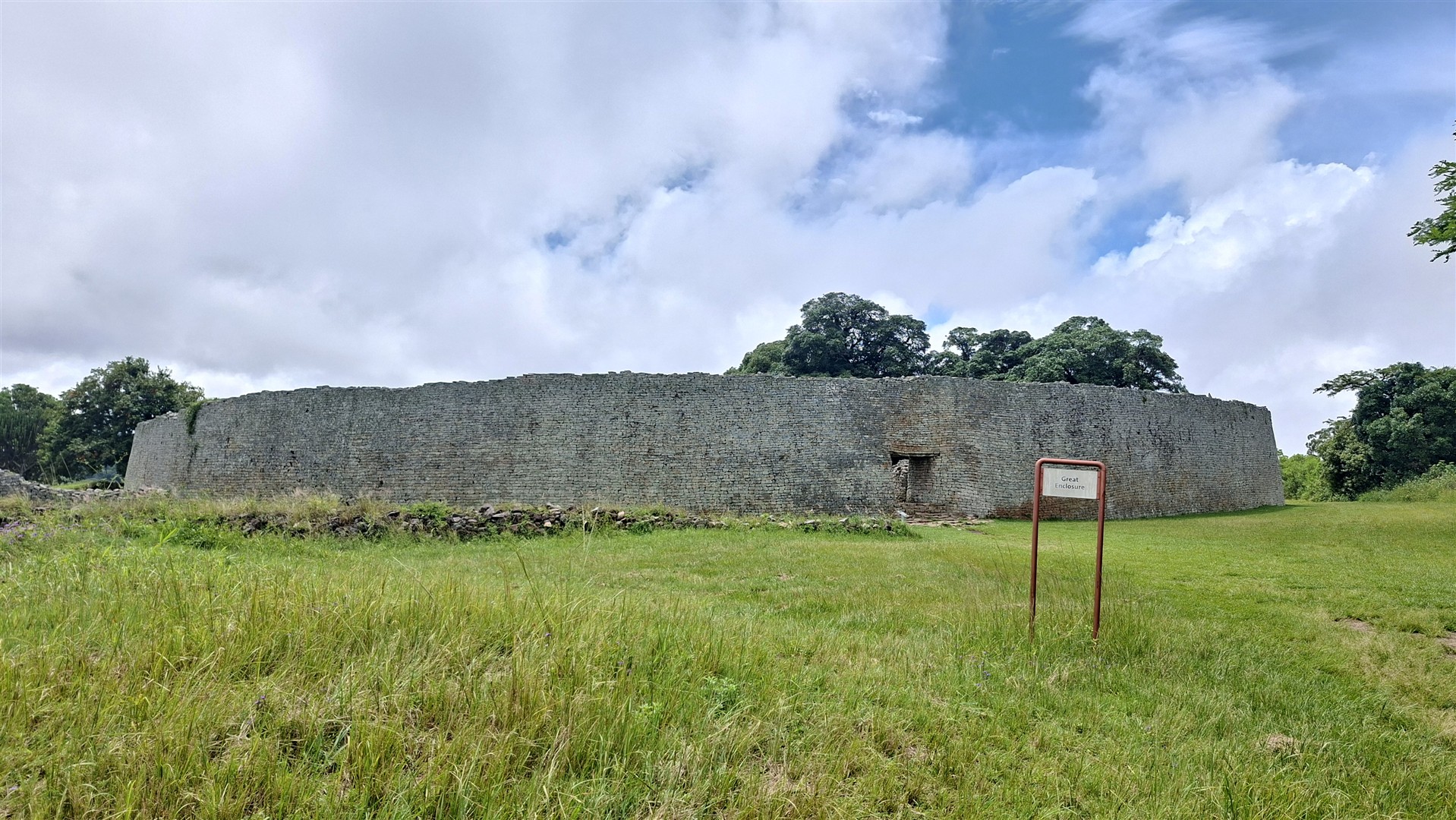
The 250 metre long outer wall.
My guide’s name was Gift, as in ‘from God’. Weird! We had to pause for a shower to pass then we set off. He told me where we’d be visiting and I declined the offer of going to the hilltop area. He said there isn’t much up there anyway.
The name ‘Zimbabwe’ derives from the Shona words meaning ‘Houses of Stone. There are a number of smaller Zimbabwes spread around the country, and across nearby borders.
We went to the Great Enclosure first and when we arrived he sat me down and explained the history of it. It was very interesting.It dates from the 11th century and was built over the following three hundred years. It was lost its importance in the 16th century.
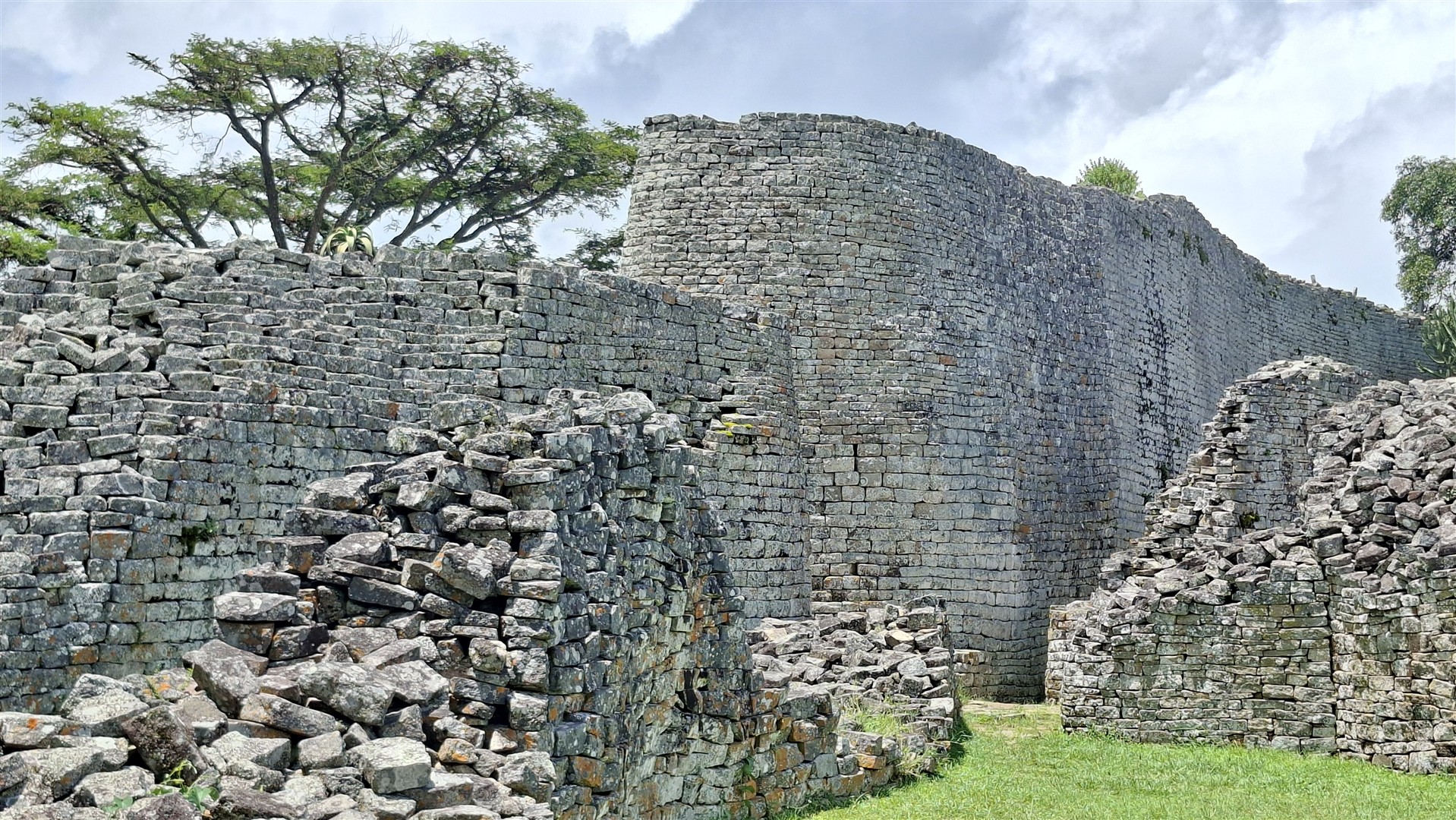
Very thick walls on the outer perimeter.
The main area is the Great Enclosure, surrounded by a high wall which is 250 metres in length. Inside it are the buildings occupied by chiefs and other elite buildings.
The walls are eleven metres high and up to five metres thick, but taper towards the top. They’re filled with rubble. They have a rows of bricks around the top, laid in a pattern. The exterior is in surprisingly good condition although it has had some rebuilding in recent times.
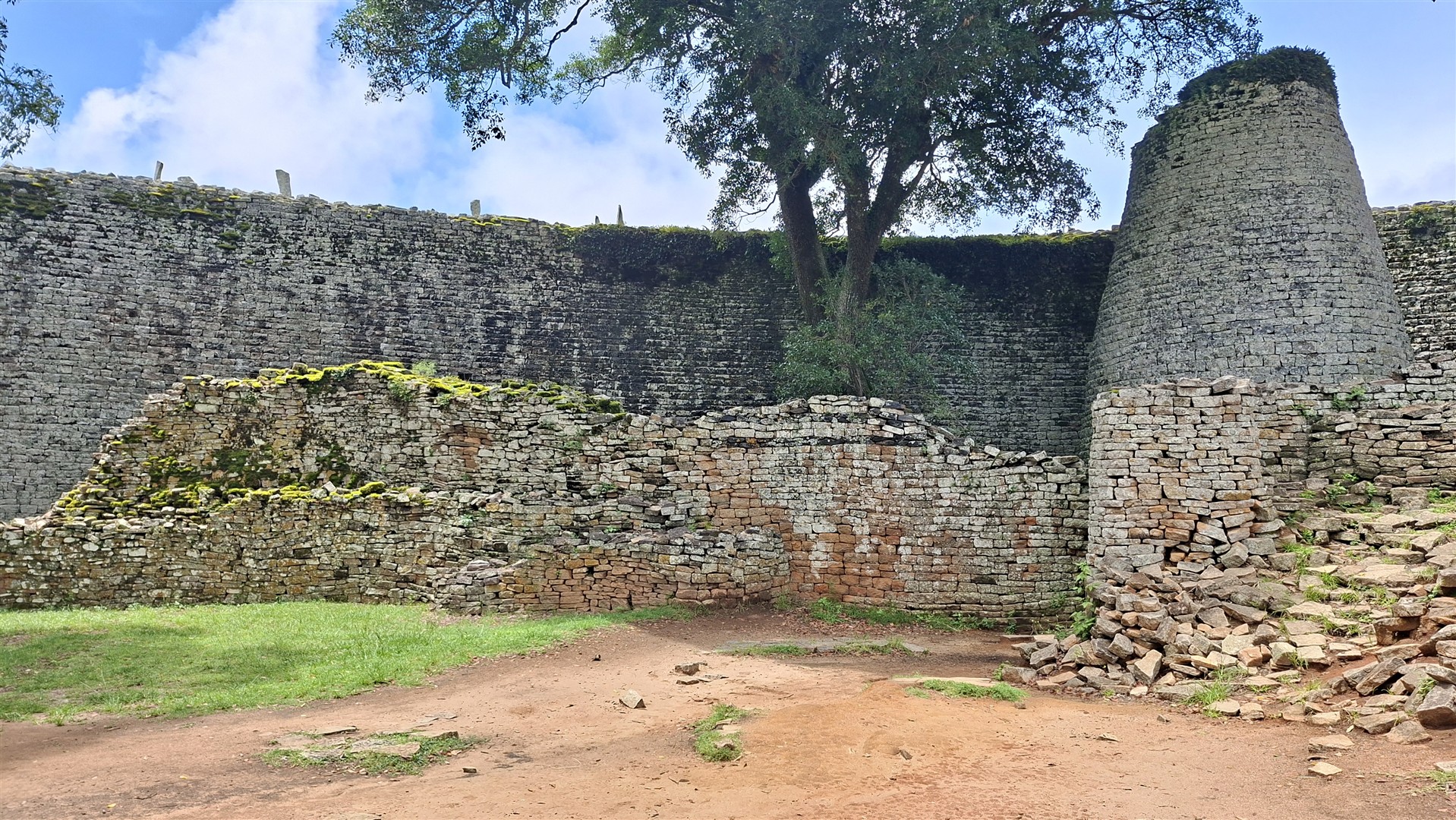
Various other buildings inside.
The buildings in the inside are mostly tumbledown and are where the wives and others lived. Ordinary people had villages outside the main area.
The whole site is about the same size as the original city of London and is reckoned to have housed up to 18,000 people. It’s the oldest building complex in southern Africa.
It became a huge trading centre. Not only for cattle and crops but also gold and copper.
Why did it decline? This is not known for certain but oral tales suggest a lack of salt led to it. It may also be that the aquifer on which the city sat began to run out of water. By the 17th century it had been largely abandoned.
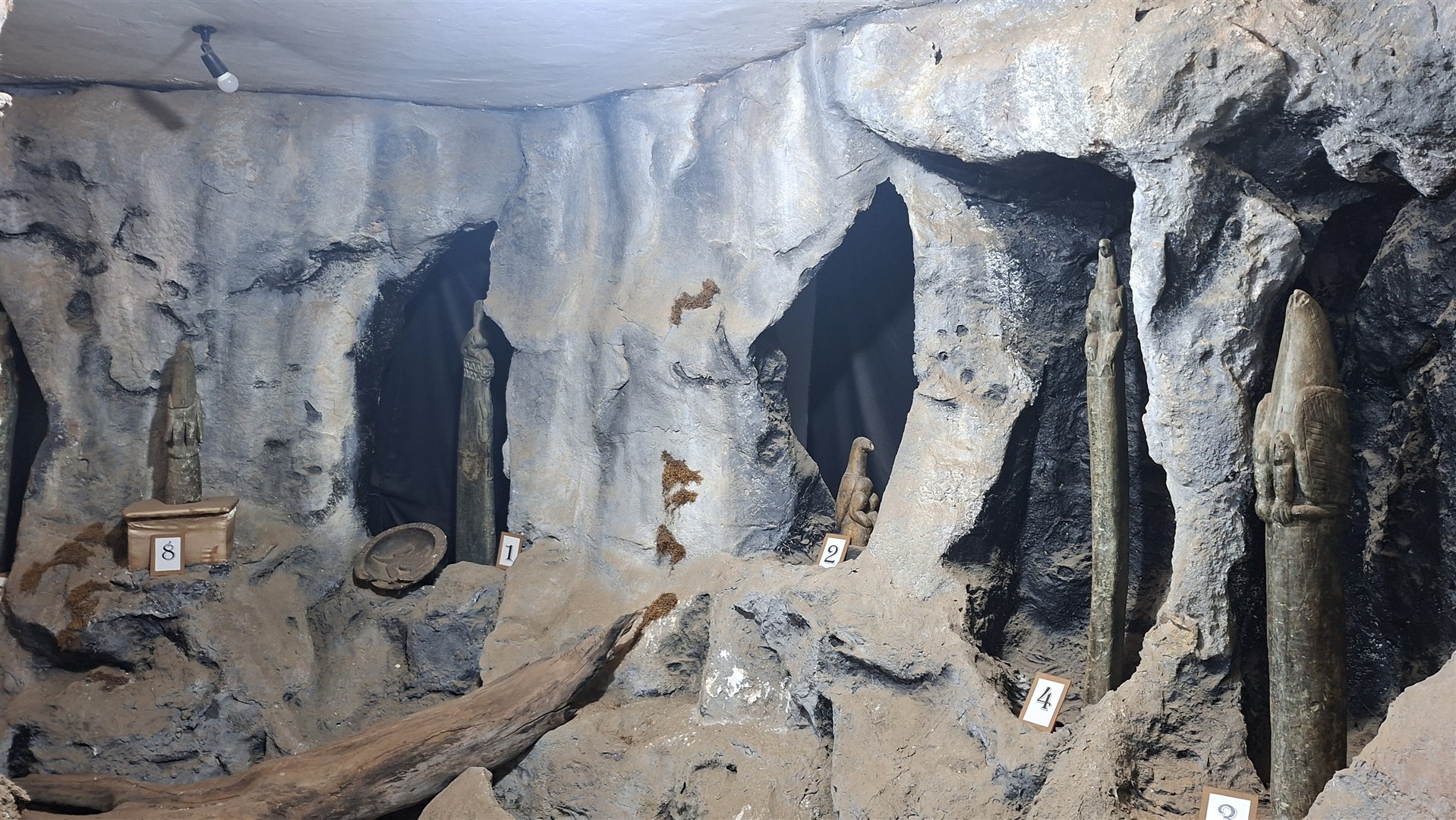
Bird statues used for religious purposes.
After that we went to the museum, with lots of info about the history. A separate section had a display of bird statues that were used for symbolic purposes. The local religion was based around ancestor worship. The birds provided the link to the Great Spirit.
Gift took me back to the start. I gave him the last two worn out dollar bills I had as a tip. He didn’t look impressed. Never mind.
Lots more info is here.
I walked back to the Great Enclosure to look round a bit more. I chatted with a Catalonian couple about the site and a bit about Iran, which had just been attacked.
Onward then, to Zimbabwe’s capital city of Harare, formerly Salisbury. I’d been told of a bike shop there where I hoped to get a new rear tyre.
So I headed to TT Motorcycles. What a fabulous place! I’d been told to ask for Sean, who’s the owner. His son, Rowan, works there too.
Sean didn’t have a tyre but he rang around and located one from a back street importer. It was a Bridgestone Battlax Adventure A41. Unfortunately it’s only 90/10 on/off road, but it was all he could get.
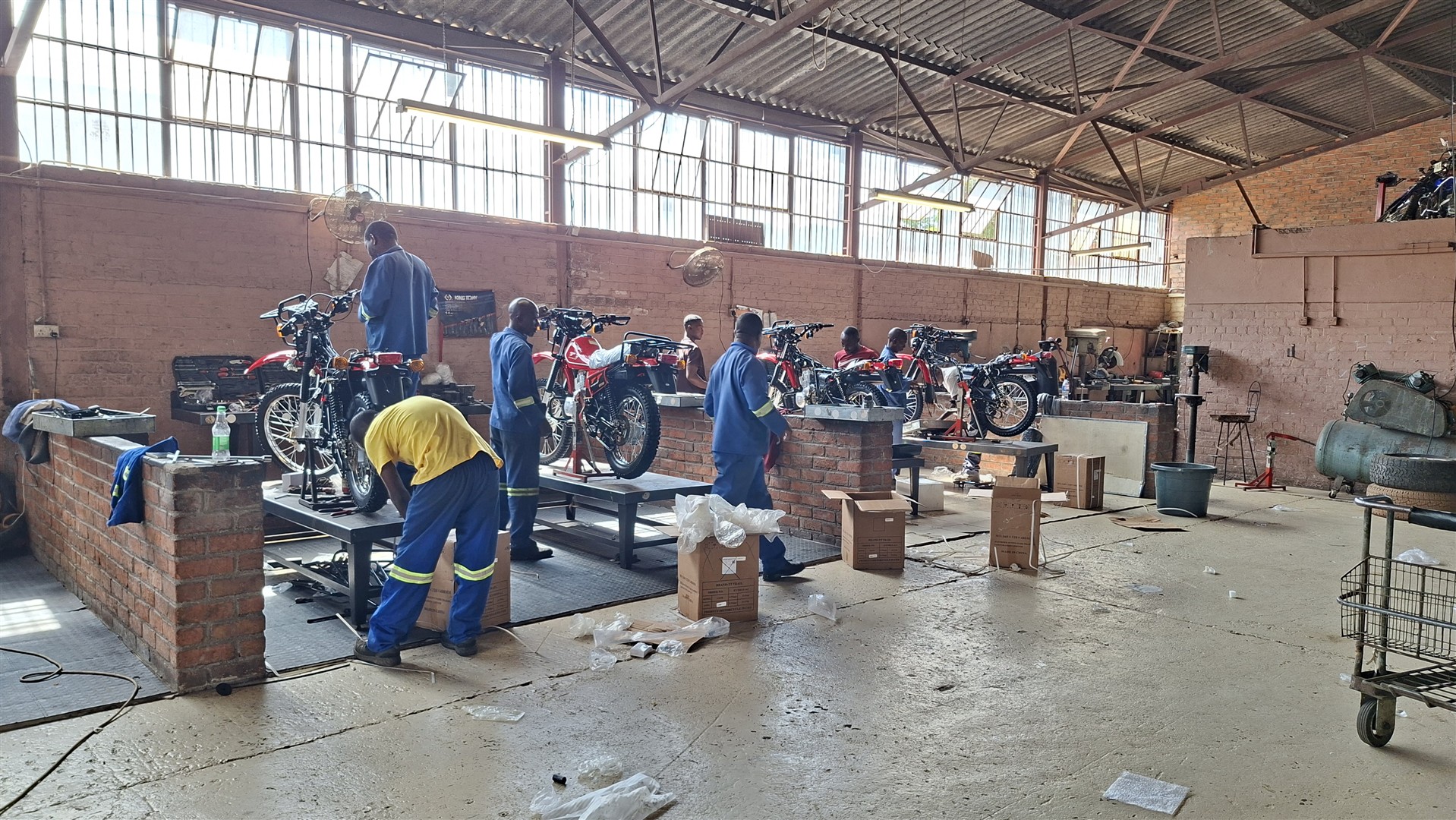
Big and busy workshop.
The great thing was that he fitted it for free while I wandered round his collection of old bikes. BSAs, Matchless, BMWs, speedway bikes etc. It’s his father’s collection and he used to race. He also started the business in the 1960s.
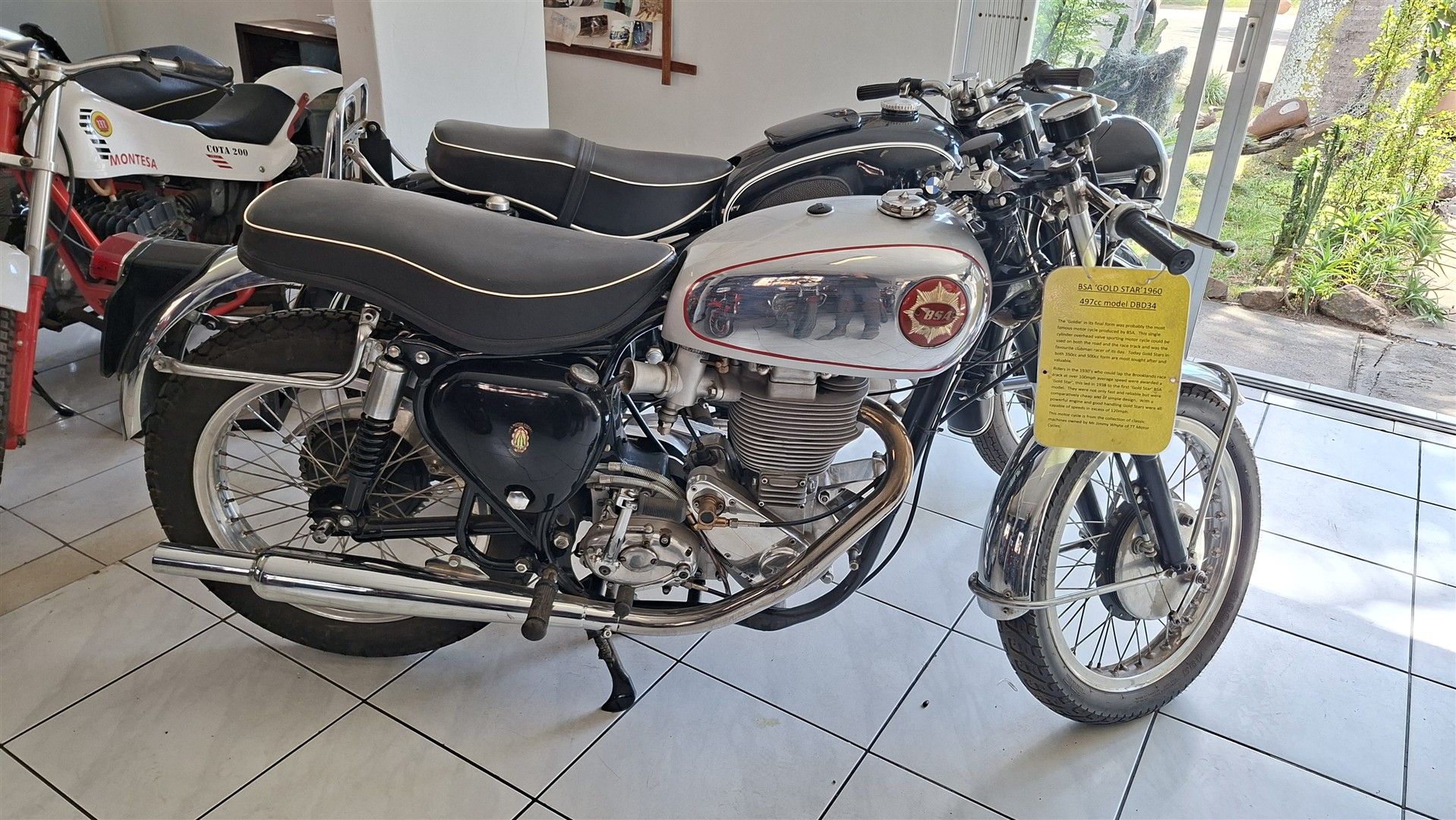
Classic British bikes.
He has a large workshop with about 10 work ramps. There were six guys working at that time. A very impressive operation.
His business imports 150cc and 200cc bikes from China but badges them with his business name. They’re farm bikes, with racks on the front and the rear. The engines are very basic, being pushrod. The 200s look a bit more handy for off road. They’re the ones on the ramps in the photo.
I had to pay cash. The price was $210 but I only had $206. He sent a lad off to fetch it. Cost in £££s is £156. UK price online is £110.
So I’ve ended up with a not too good tyre at 50% higher price. He could have got one from South Africa in 2/3 days though. But I didn’t want to wait. It is how it is.
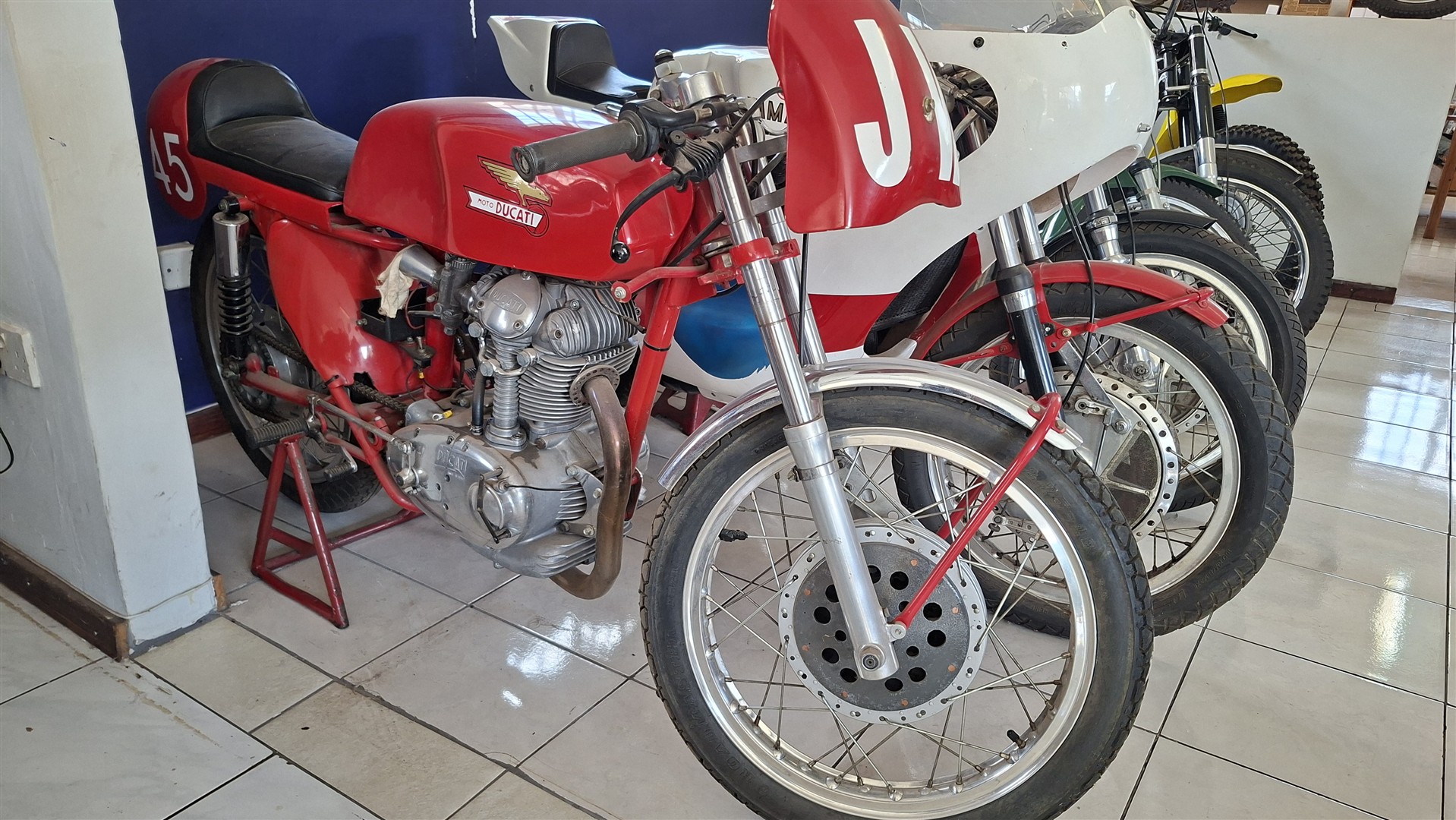
A very lovely racing Ducati.
After that I had a ‘hunt the hotel’ game. I went out to one that looked good but it was full. I found another one, a bit dearer, but it was a nice place and was usefully near to a Spar supermarket.
The last task for the day was to get onto my credit card company to sort my card out. I’d tried to use it a couple of times and it had been rejected. The major problem with that was that I needed it for getting cash.
After the guy tried to suggest my card didn’t exist, he finally told me it been blocked because of fraudulent activity, although he wouldn’t tell me what. Anyway, he unblocked it so all was well.
Mutare was my next destination, heading further south. There were some waterfalls near the town that I wanted to visit.
The hostel I found was run by a German woman. It used natural wood in interesting ways. Roof supports, staircase, benches and so on. I was just about able to get my bike in the garden, which also had a curated air to it. Big pots with big plants. Hanging baskets and so on.
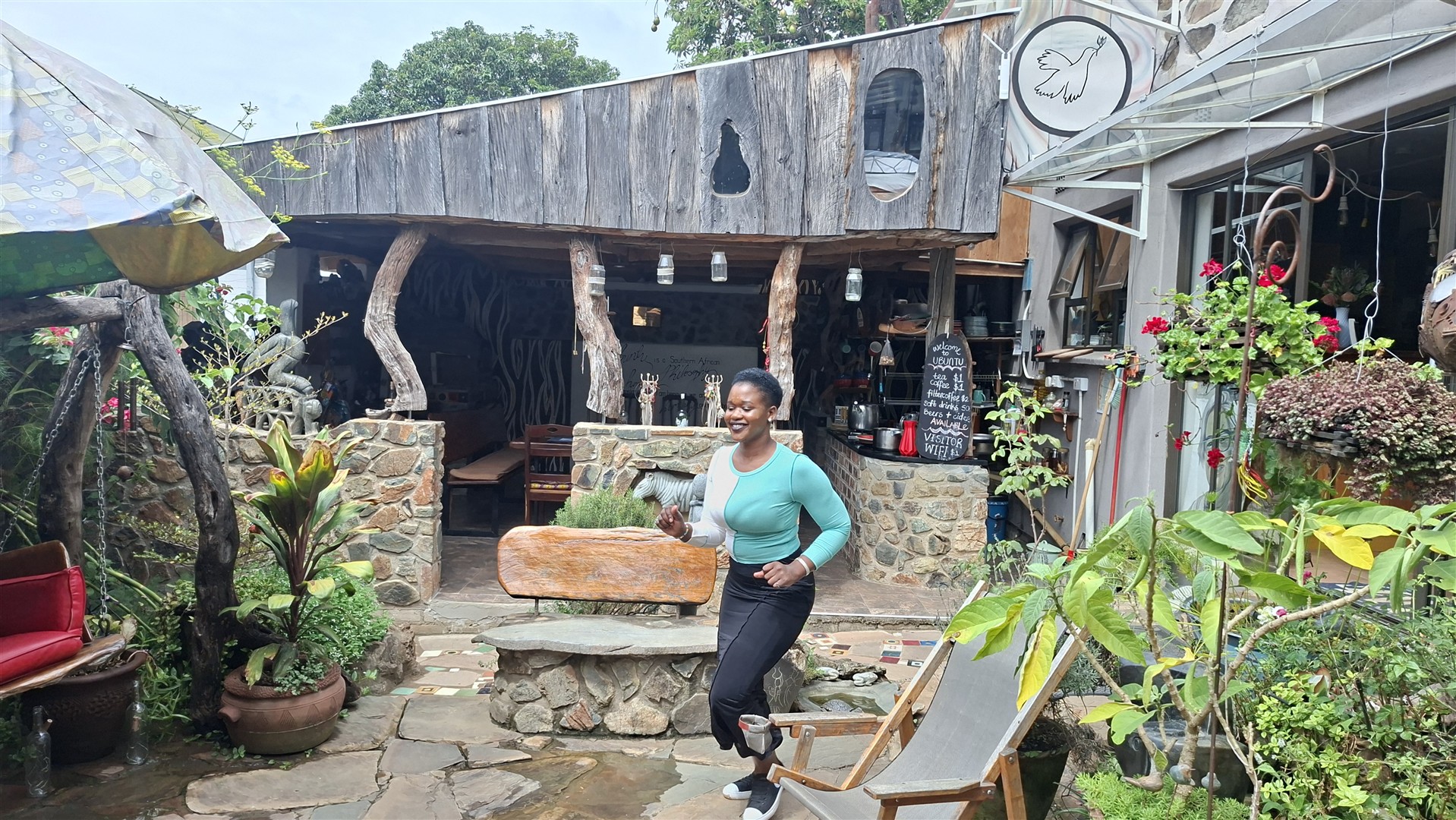
Outside area of the hostel, plus member of staff.
There was a German family staying there and on the second day they, and Crista, the hostel owner, all went off to visit a national park.
Meanwhile I’d been told that the road to the waterfalls was impassable due to heavy rain. So I spent my time exploring the town.
The museum was first. It’s an old fashioned place but that’s part of the attraction.
It ha plenty of stuffed animals. A bit of local history. Lots of weapons, especially guns. A section on the history of man.
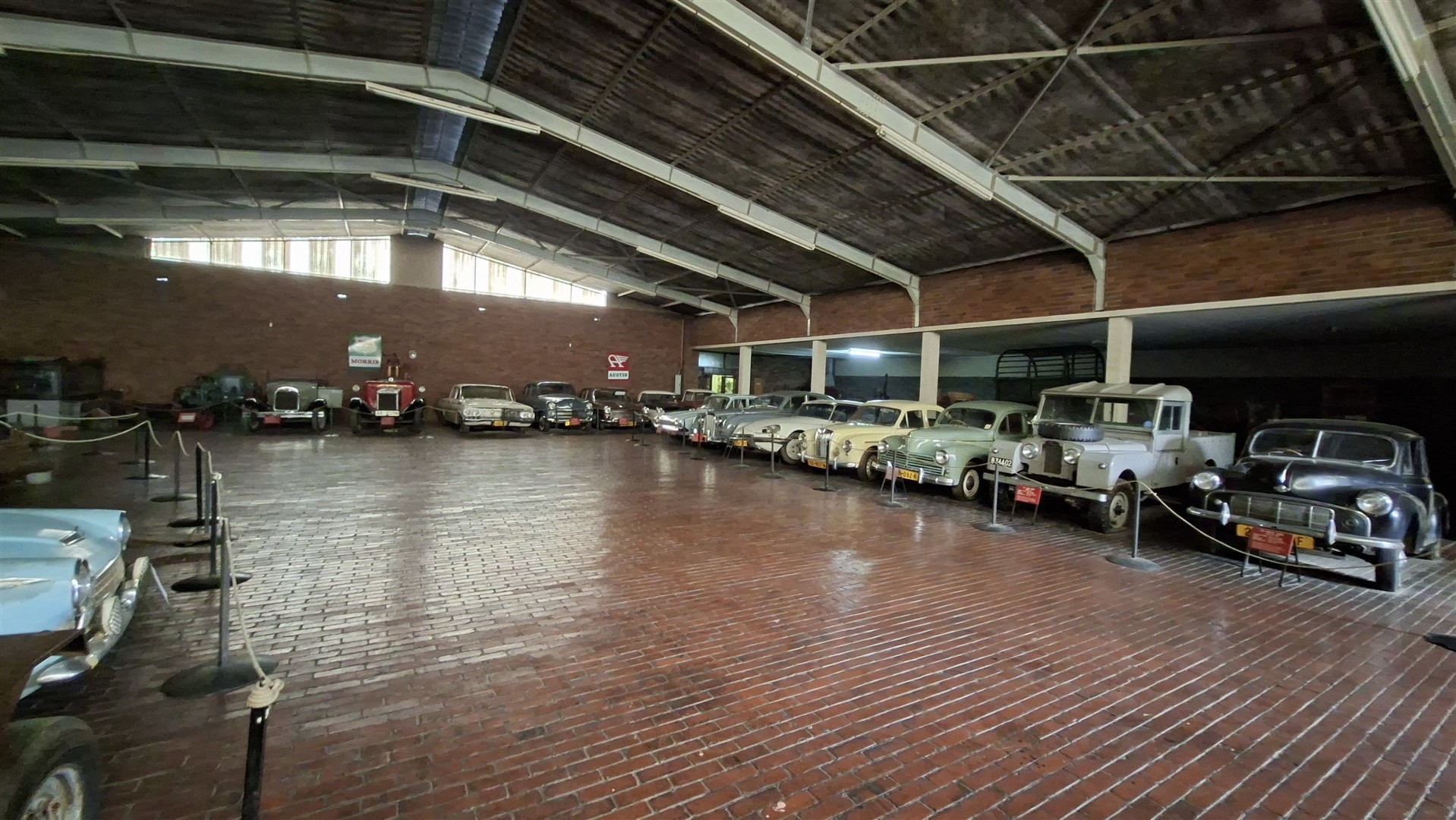
A superb collection of old cars, mostly British.
The best section was of old vehicles from the 1950s and 60s, mostly British cars. Some interesting old tractors, especially the one from 1904, which is reckoned to be the first one with an internal combustion engine.
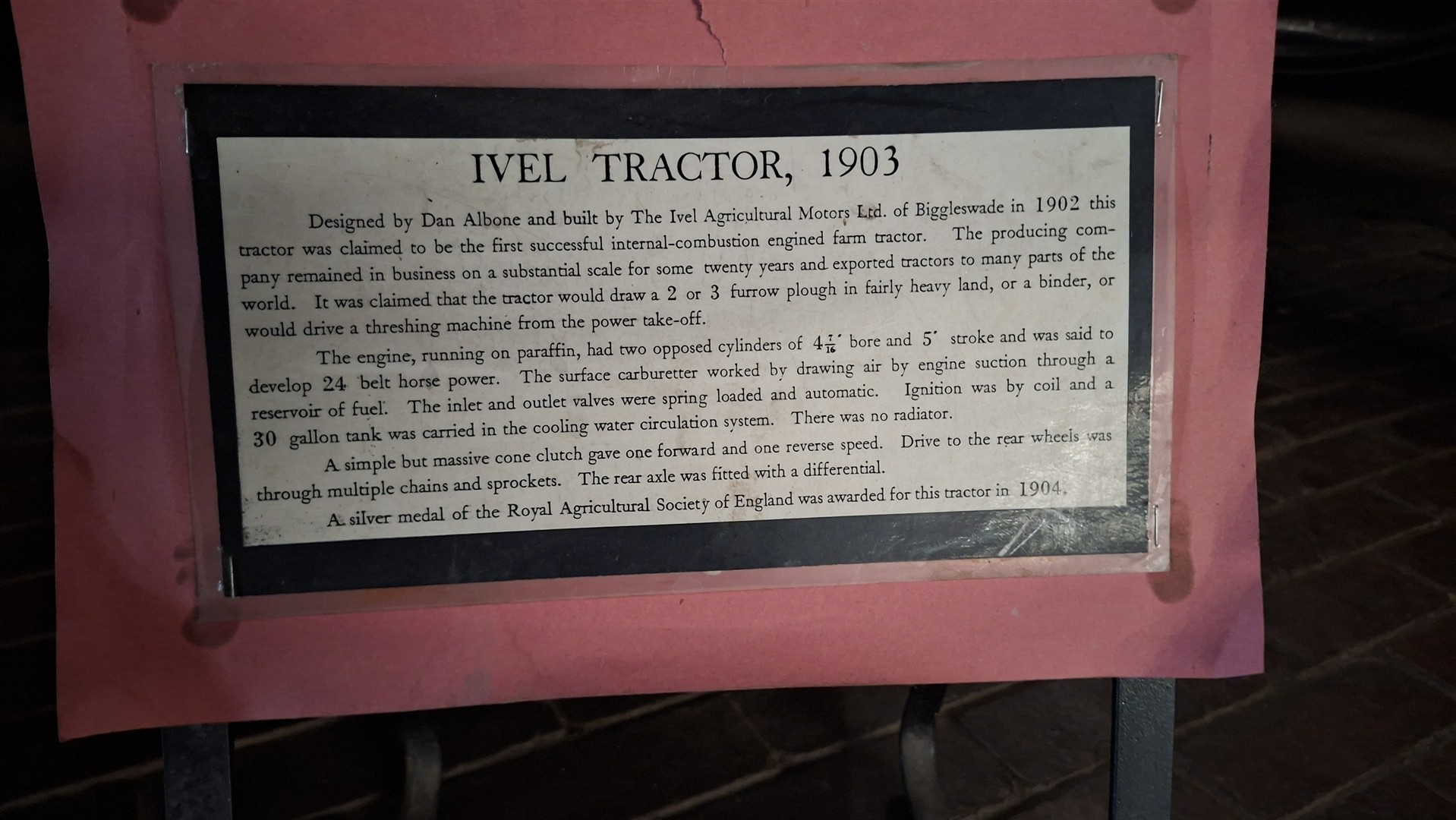
All about the tractor.
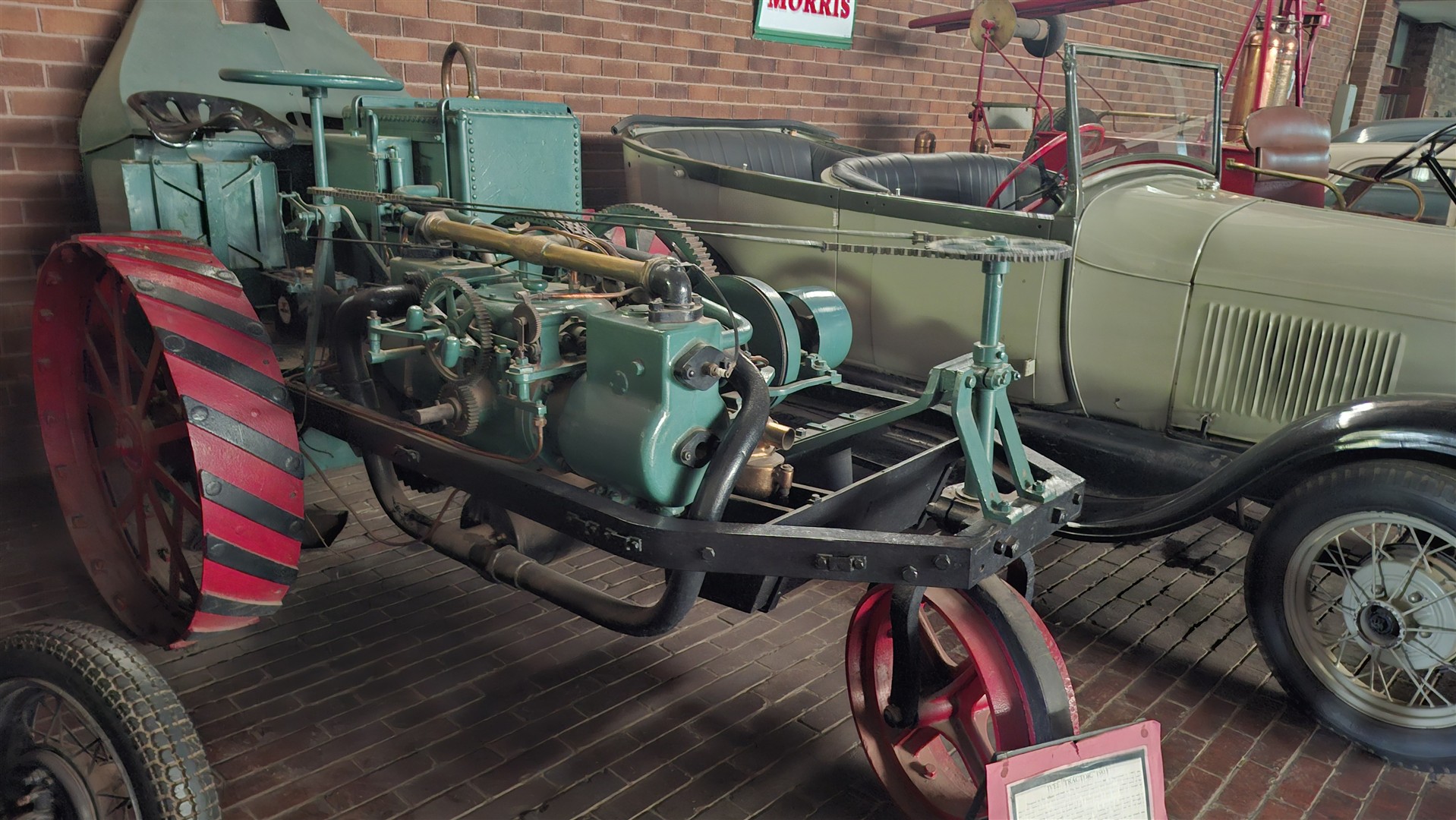
‘Robust and basic’ seems to be the best description.
There were more tractors in a shed outside along with an old bus and an armoured personnel carrier. An enjoyable place but needing to upgrade the lighting. These small, local museums are always worth visiting as they often contain some gems.
I met a Polish woman there named Celina. She seemed to be a bit of a helper around the place but she told me she was just killing time before flying out.
Her journey was going to involve changing planes at Mumbai and she was struggling with completing the application form for an Indian transit visa.
Now I was pretty sure she didn’t need one. From her description, she wasn’t going to need to go through immigration but I didn’t want to tell her that in case I was wrong.
I’ve filled a few of these online forms out and I know how rickety the website can be. We sat down and worked our way through it and it was completed in the end.
On my last evening there a couple of young guys from Uganda arrived, Ronald and Derrick own a safari company which operates in Uganda, Kenya and Rwanda. They’d come to Zimbabwe to extend their business.
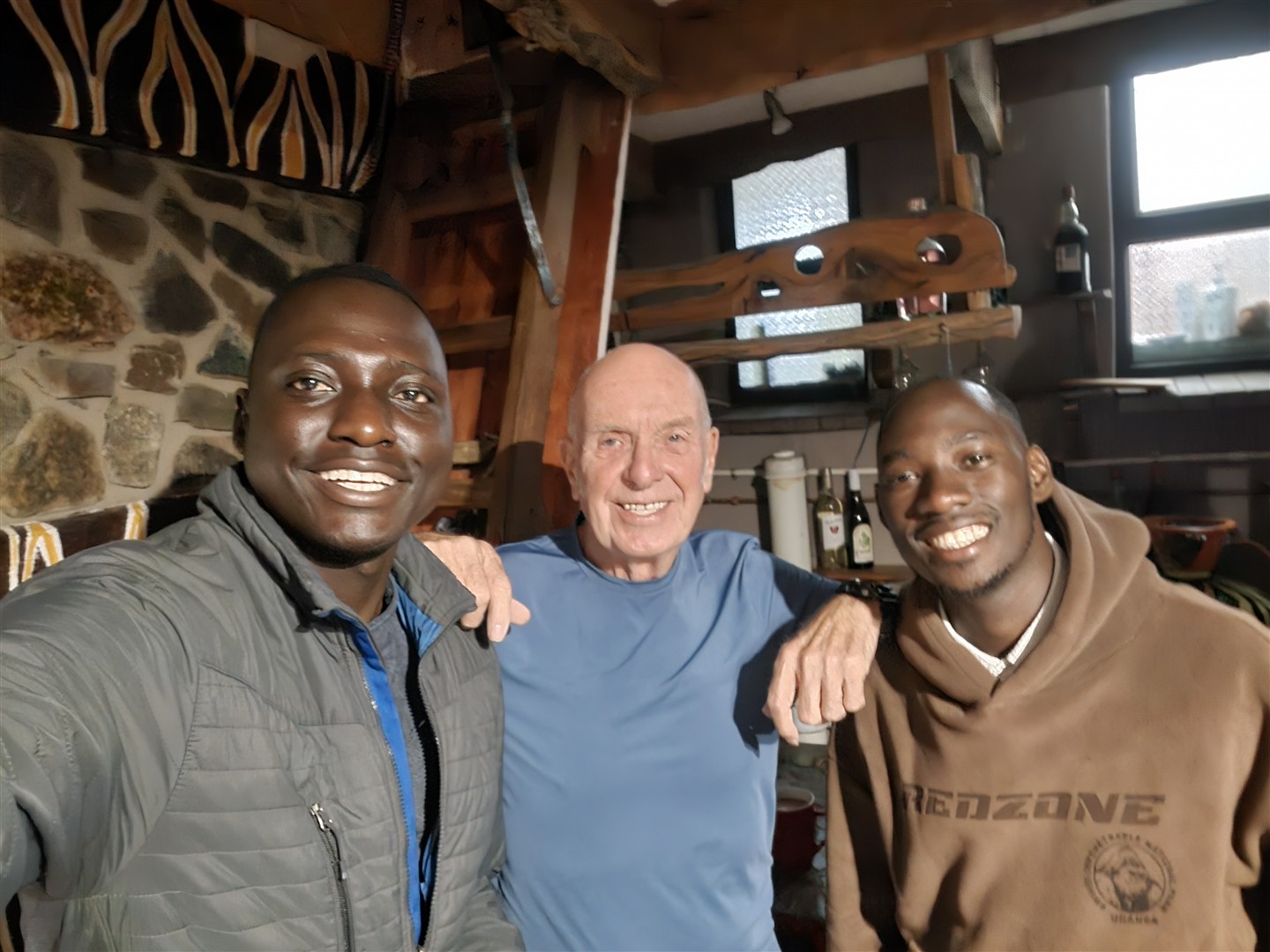
Ronald and Derrick. Young entrepeneurs.
They liked that I’d visited Uganda and we had a very enjoyable chat about that. Ronald interviewed me about my travels in Africa and other places. That’s on YouTube and this is the link.
I was very impressed by these two guys and the serious way in which they approach their business. So I’m happy to link to their website and I’d recommend you contact them should you want to go on safari in the countries where they operate. Find them here.
As many of you will know, Zimbabwe had a difficult transition from colony to independent state. But I’m not going to discuss that here. If you want to know more, follow this link.
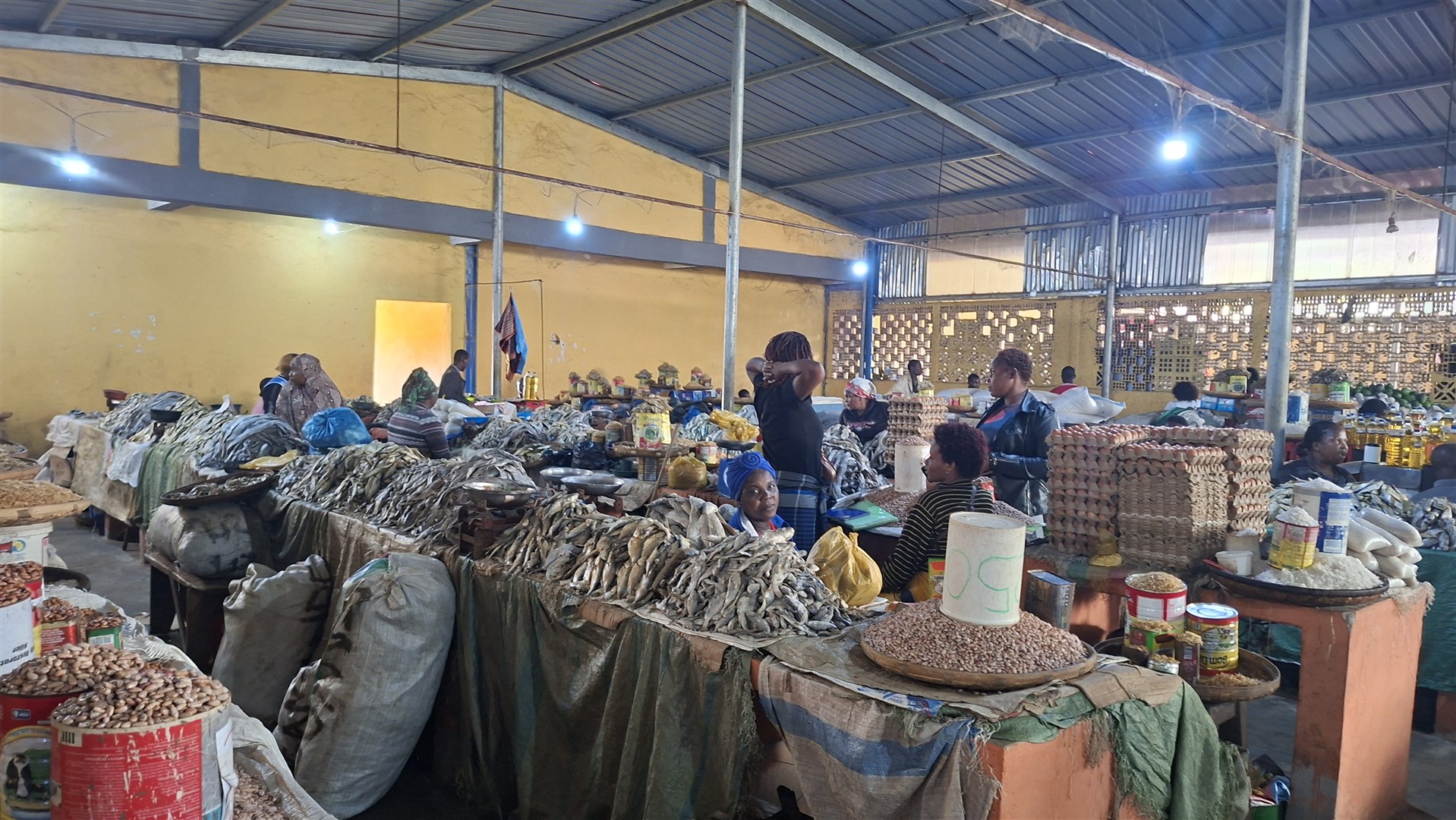
In the local market.
A border crossing loomed. Zimbabwe to Mozambique. There was some uncertainty about the procedure for Moz, relating to whether or not an Electronic Travel Authority was needed. So I’d paid an online agent $47 to procure one for me, that cost included the $10 visa fee.
I’d also booked a hotel room on Booking.com to include in the application and had printed it out.
It was a short ride to the border. I was out of Zimbabwe quickly. But Mozambique was a costly exercise and immigration stitched me up.
They wouldn’t accept my ETA letter because I didn’t have a receipt for the visa payment. I was forced to pay another $10. To me it was obvious that I’d paid otherwise how did I get the letter? But the immigration guy wouldn’t accept that.
It was as well I had a paper copy of the booking.com hotel because he very much wanted it and I let him keep the one I had. Once I was across the border I cancelled that booking anyway.
A guy was hanging about talking about a TIP and insurance. He was able to show me an ID badge when I asked. I went to customs and they gave me a form to fill in, the same one as he was showing me. So I accepted his bona fides.
I had to pay two sums of $10 for road tolls. Why two? I didn’t know. But I got two bits of paper so I suppose it was correct. But the fixer guy kept one of them for some reason. Then it cost me $30 for insurance.
So including the $47.50 I paid online, it came to well over £80 in total.
It all took a while and left me feeling very annoyed with the ETA company. I should have just gone to the border and taken a chance on getting the visa there. Judging by what happened it would have been possible.
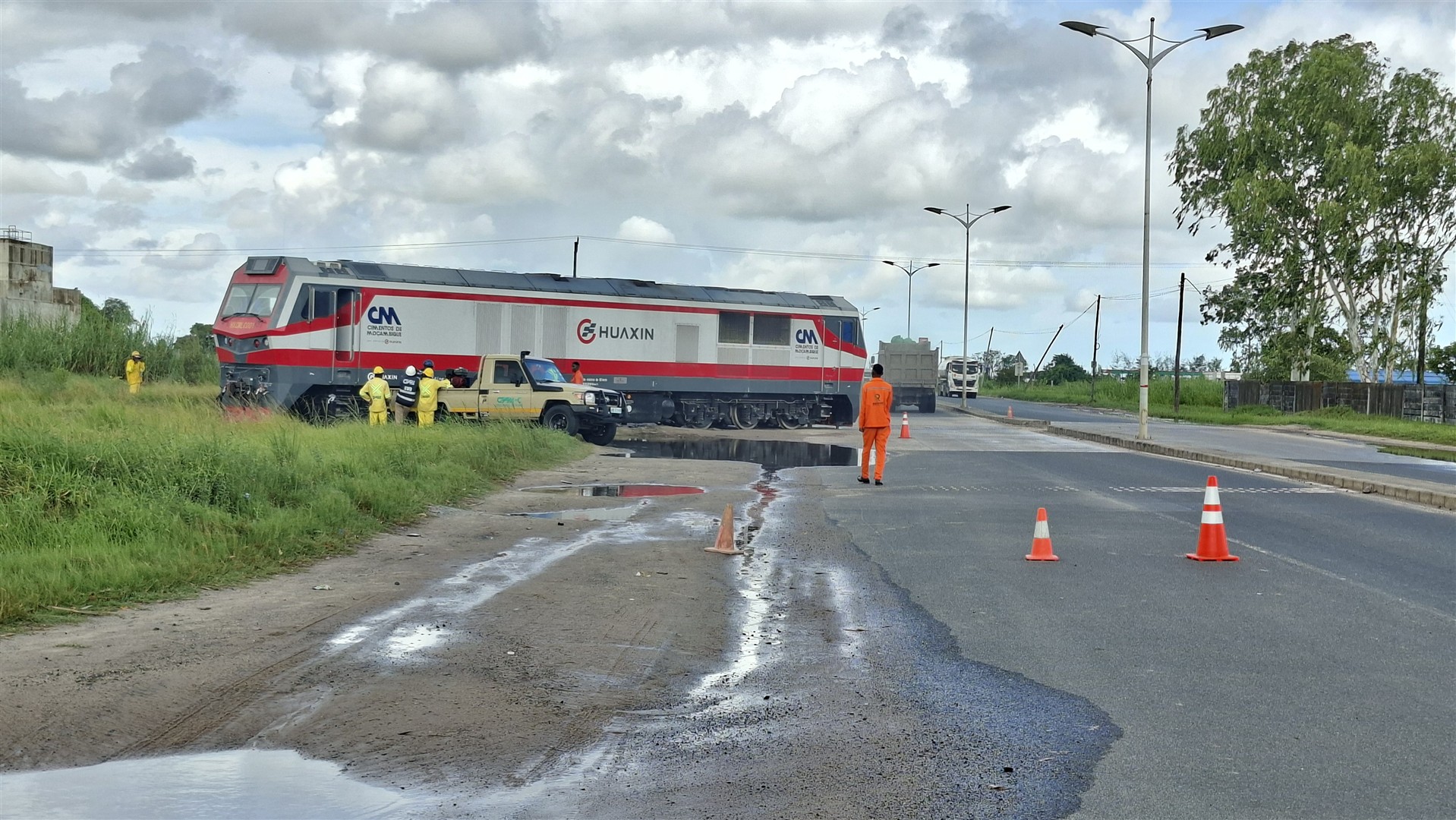
I couldn’t work out quite what was happening with this locomotive.
To my surprise, considering Moz had been colonised by Portugal, they drive on the left. I guessed that was because all the surrounding countries do so too. The roads were busy and there were lots of Boda Bikes and family bikes around. Plenty of smart looking schoolkids too. I took things steady. I did see one mobile speed camera.
I headed to Manica and got a SIM. 220 Mozambican Metical for the SIM and 5GB of data. Less than £3. There’s around 85 MT to the GBP.
There was one toll booth on the way to Chimoio and they charge 100MT for bikes. I showed my bit of paper and that covered it. The guy had said to me I’d need it and that it would be accepted. It was stamped at the toll booth.
I’d identified a hostel on Google which I found OK. The woman, Lakandia, heard the bike and came out to meet me, even though I hadn’t booked. I got a room for £15.25. Booking would have cost £19. Shrewd move not to have booked and a nice little win.
The other win was at the border when I changed up $50 at 65MT, a better rate than the official one. But paying for the room used them all up.
People in Moz speak Portuguese and I asked Lakandia, who came from Zimbabwe, how she got on with the language. I was thinking about the change from English to Portuguese. But she said there was no problem because the local people spoke Shona.
That brought me up with a jolt. I’d been employing some colonial thinking there, forgetting about the commonality local African languages. Time to tell myself off!
I rode down to a Rite Price supermarket, almost crashing into a mad man on a bike, where I got food for tea.
At the supermarket young lady at the checkout noticed I was on a bike and seemed all excited. I asked her if she wanted to come with me. She smiled.
So, apart from the unnecessary border costs, a successful first day in Mozambique, country number sixty eight on this journey.
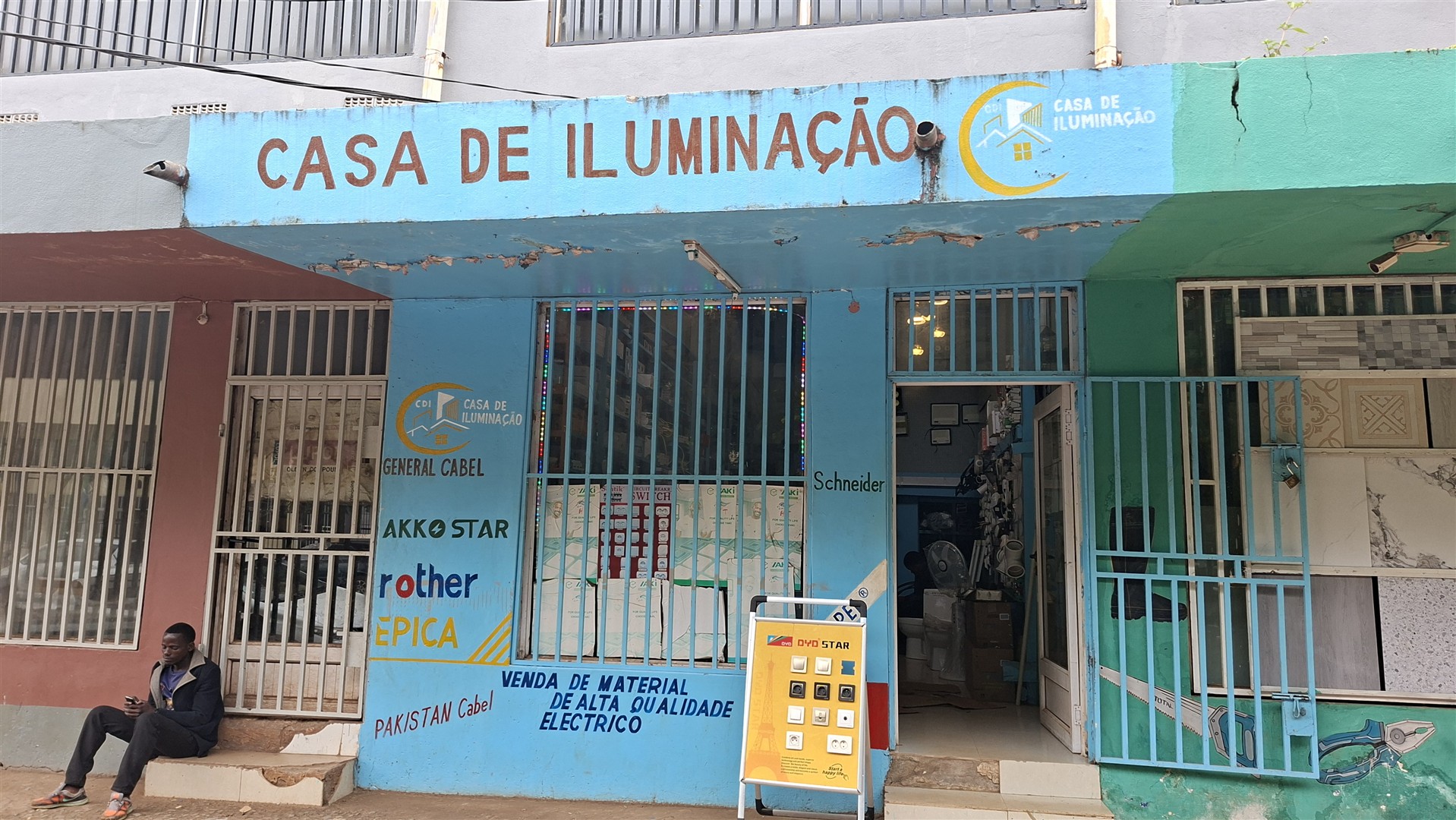
The Blue House of Lights. Some of my follwers will get that reference.
Next day was mostly about loafing around. At lunchtime I went out for a walk to the Central Market. It’s quite a downbeat place but is stuffed full of stalls selling everything from beans to beads to besoms. Some of the passageways were quite narrow too.
The general area was all about shops, stalls, street sellers and people striving to make a sale.
On the way there I passed a café and once I’d finished wandering I went back to it for cappuccino and a cake. And that was the sum total of my adventuring for that day.
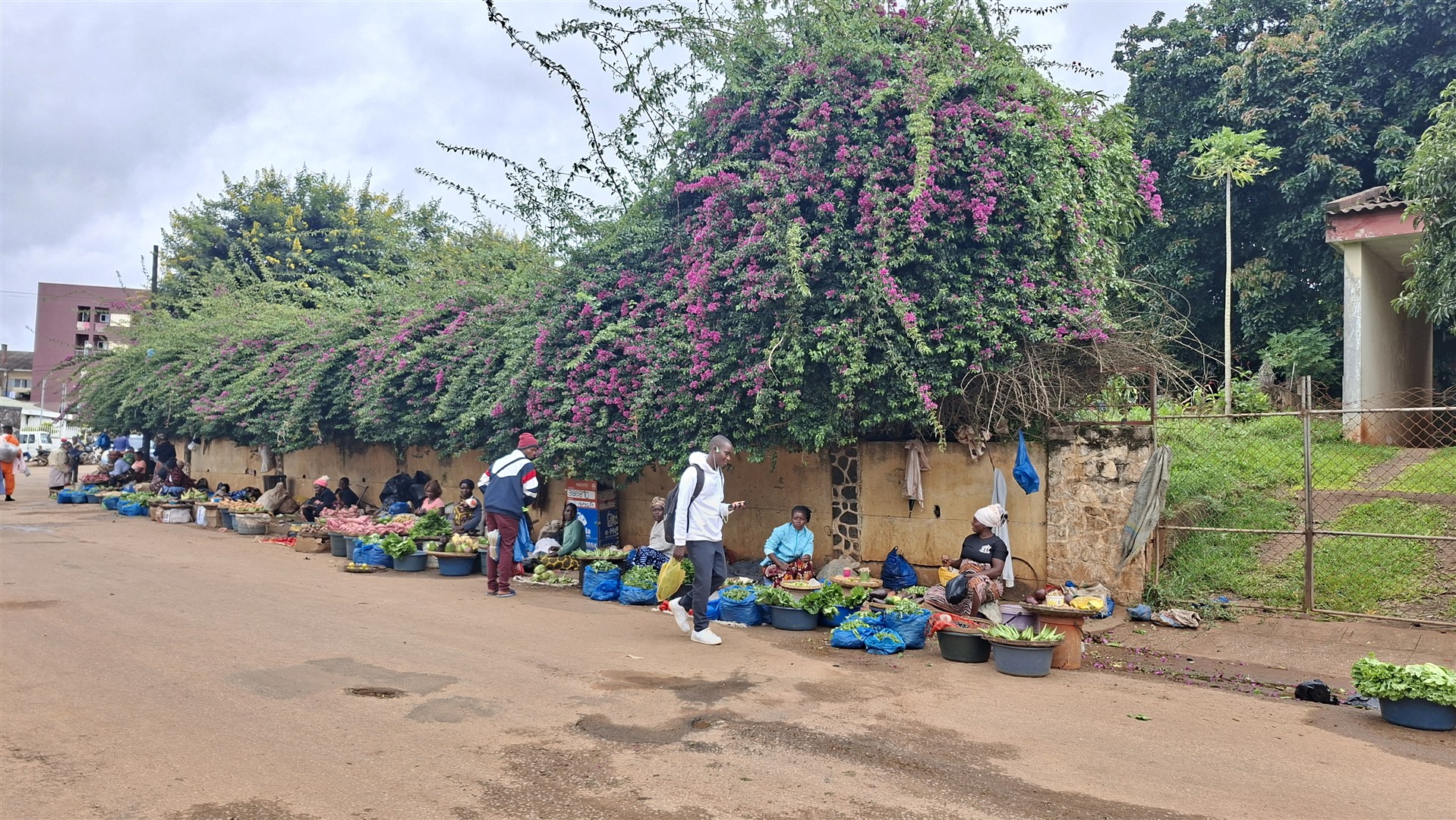
Street sellers under a pretty tree.
When I left next morning I tried to find fuel on the way out of town, actually turning back to go to a Puma servo, thinking they’d be more likely to accept cards.
But they had no petrol and neither did the next one I tried. A shortage? I hoped not. A bit closer back into town I found one that had petrol and took cards. So all was good in the end.
As I’d noticed the other day, the roads were very busy with people, especially smartly dressed schoolkids. Lots of trucks too, including two that had gone into the ditch. Plenty of bikes as well.
The other thing there was plenty of was police checks. For that reason I was very careful about where I overtook and kept close to speed limits. That paid off because I passed a couple of camera traps.
In the next town of Beira the hotel was down a side road that started out well, with pavers for the surface, but eventually deteriorated into muddy, water filled potholes.
I got a decent room but the hotel was being refurbished. That was almost certainly why the TV didn’t work nor the wi-fi.
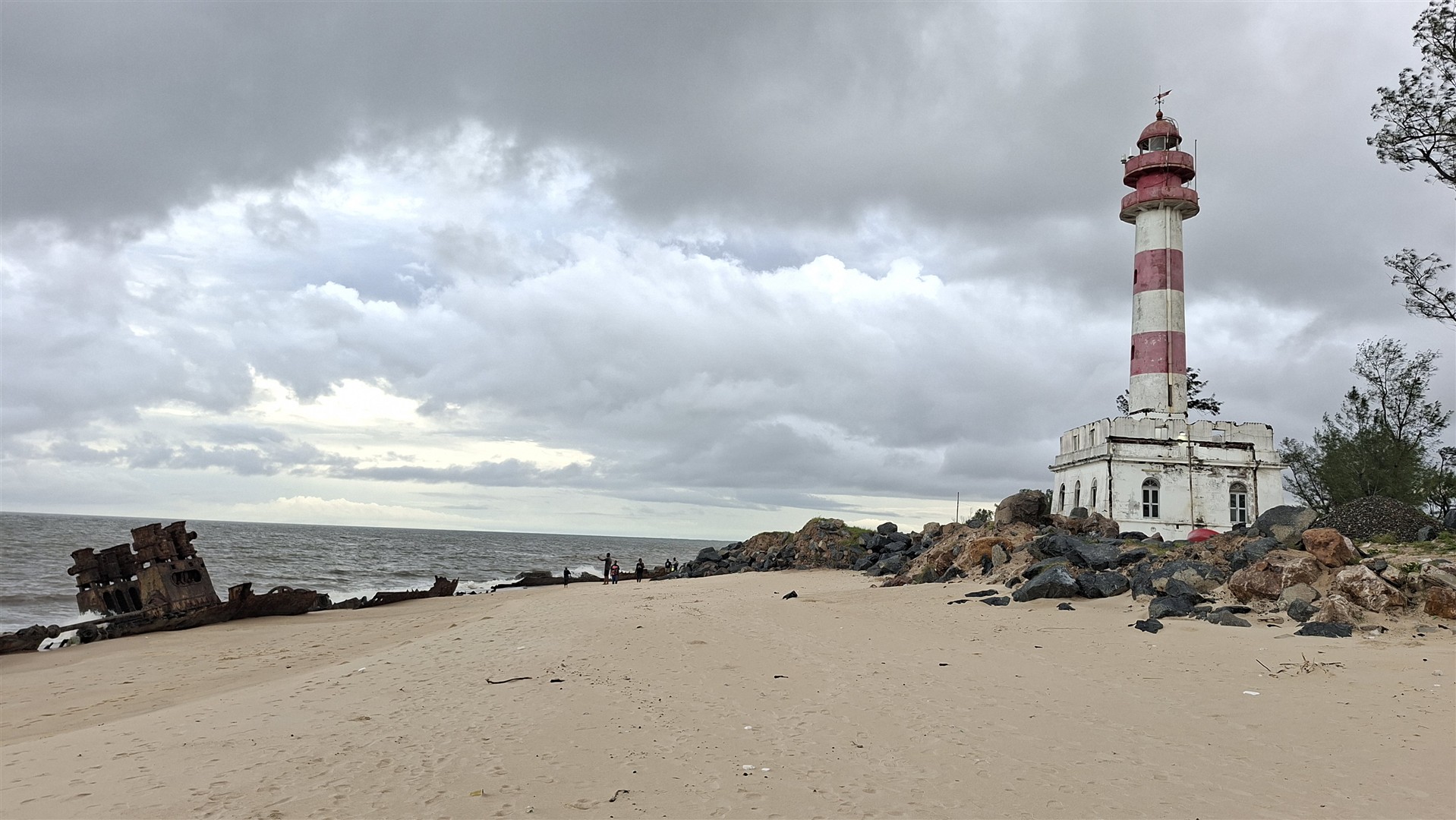
The old lighthouse and a very old wreck. But how did it happen, right beneath the warning light?
After a while I took a 45 minute walk down to the beach to see the lighthouse, about the only thing worth seeing in the town. That’s being refurbished too.
There was an old shipwreck right on the beach. How they managed that, right in front of the lighthouse is anybody’s guess.
Back at the hotel I found water all over the floor. Very odd, especially given the amount. But there was a leak in the flank wall.
A guy came round to check my name and I told him about it. He brought another guy back to do a bit of mopping.
In the morning I found the room completely flooded, right under the bed and everything. It had rained heavily during the night and I’d got my share of it. I called the guys in to show them.
It was dry when I was getting ready but the heavy rain arrived just as I was leaving. I needed data and the boys said to go to the main road and turn left.
The amount of water on the back road had increased somewhat, to put it mildly. They’d said the shop was on the left but I eventually found it on the right. I topped up then got back on the bike in the persistent rain and left.
It rained heavily, then slowed down, then got heavy again. Eventually I came to the main N1 and turned south. By now the rain had stopped and it brightened up a lot.
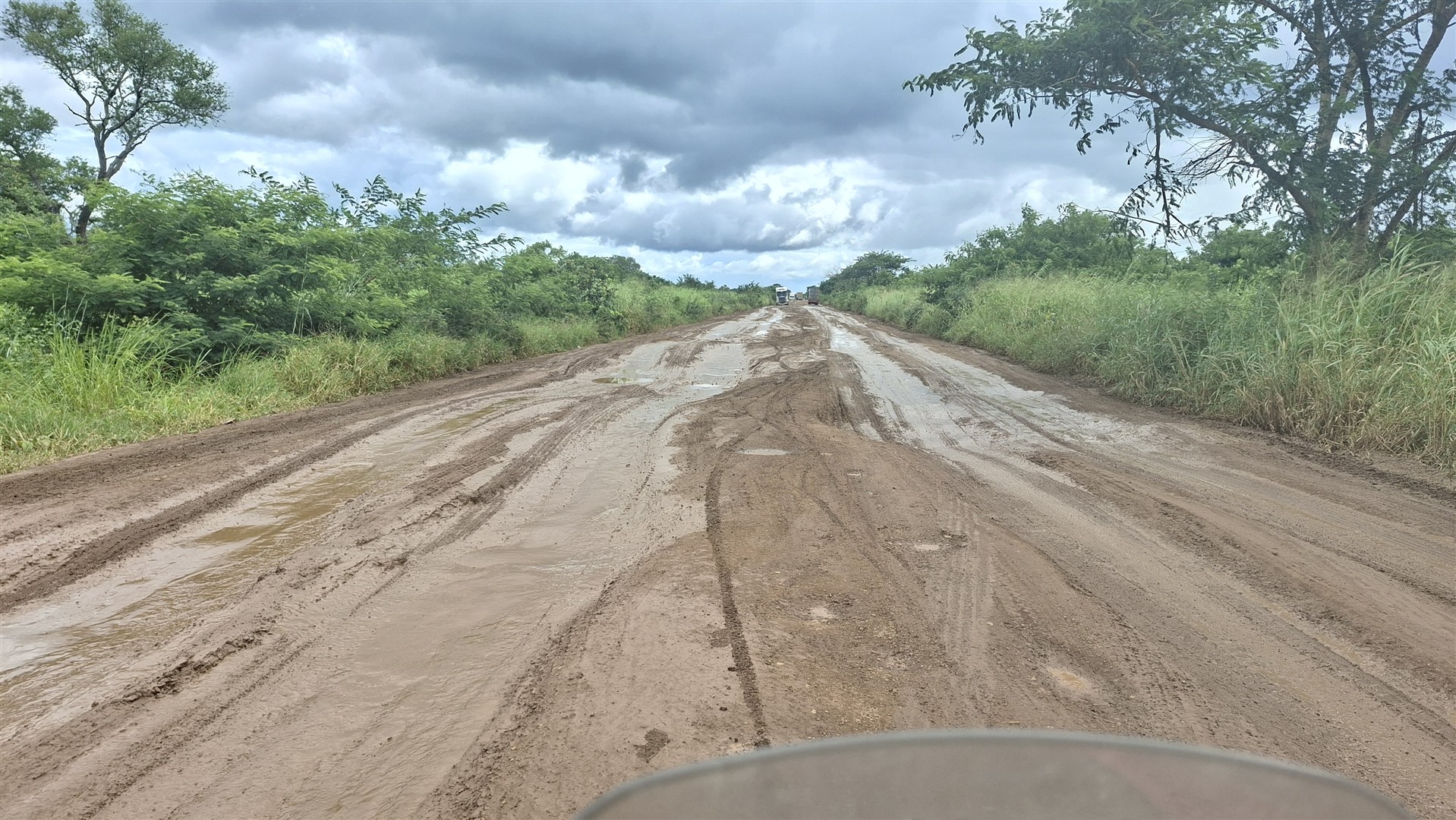
It was like being back in Zimbabwe.
For a main arterial road the N1 was in very poor condition. Plenty of potholed sections, a good amount of smooth stuff. But there was also about 20 – 30kms of potholed dirt. Some nice mud needless to say, but we got through OK. I remembered that Mozambique had suffered some serious flooding a couple of months previously. So I swapped selfish mode for sympathetic and just got on with it.
As I came in the town of Save I was stopped by police who only wanted to say hello. At the toll booth my form wasn’t accepted. I can’t remember if the guy looked at it or just rejected it out of hand. I had to pay 50MT.
The thing is that there’s spaces for stamps, which I hadn’t realised. But when I looked later they were all full. If that was the reason it means that the guy at the border messed me up by keeping the second form. I’m really naive sometimes.
I went to the servo, with the red light flashing but I was waved away. “Would he have any in the morning”, I wondered. The nearest alternative was 75kms away.
I had no choice but to pay 1,500 for a very basic room in a guesthouse. Not even any running water. The woman brought me two big buckets of water for washing and flushing the toilet.
I put all my damp clothes and paperwork out to dry while they brought me a flask of hot water and teabags. Later on they brought me a meal.
Not at all to my surprise, the servo had no fuel next morning either. And also not to my surprise the young guy with a stall right next to it did. He tried to twist my arm for 150MT per litre but I refused to pay any more than 120, which was still a 50% premium.
I was heading for a place called Tofo Beach. It was a hostel right on the beach, situated on a promontory that was surrounded by the sea on three sides.
It had been suggested to me by my friend Danish Michael and the people who run it had helped with my ETA by providing me with an official invite.
The road there was mostly OK. I stopped for fuel, food and to check and adjust my chain.
The place was very nice indeed. The owners, Chris and Sascha, are Dutch and there was a Belgian couple there too, Mattias and Isa. He’d cycled down from Nairobi. She came down on the plane to meet him.
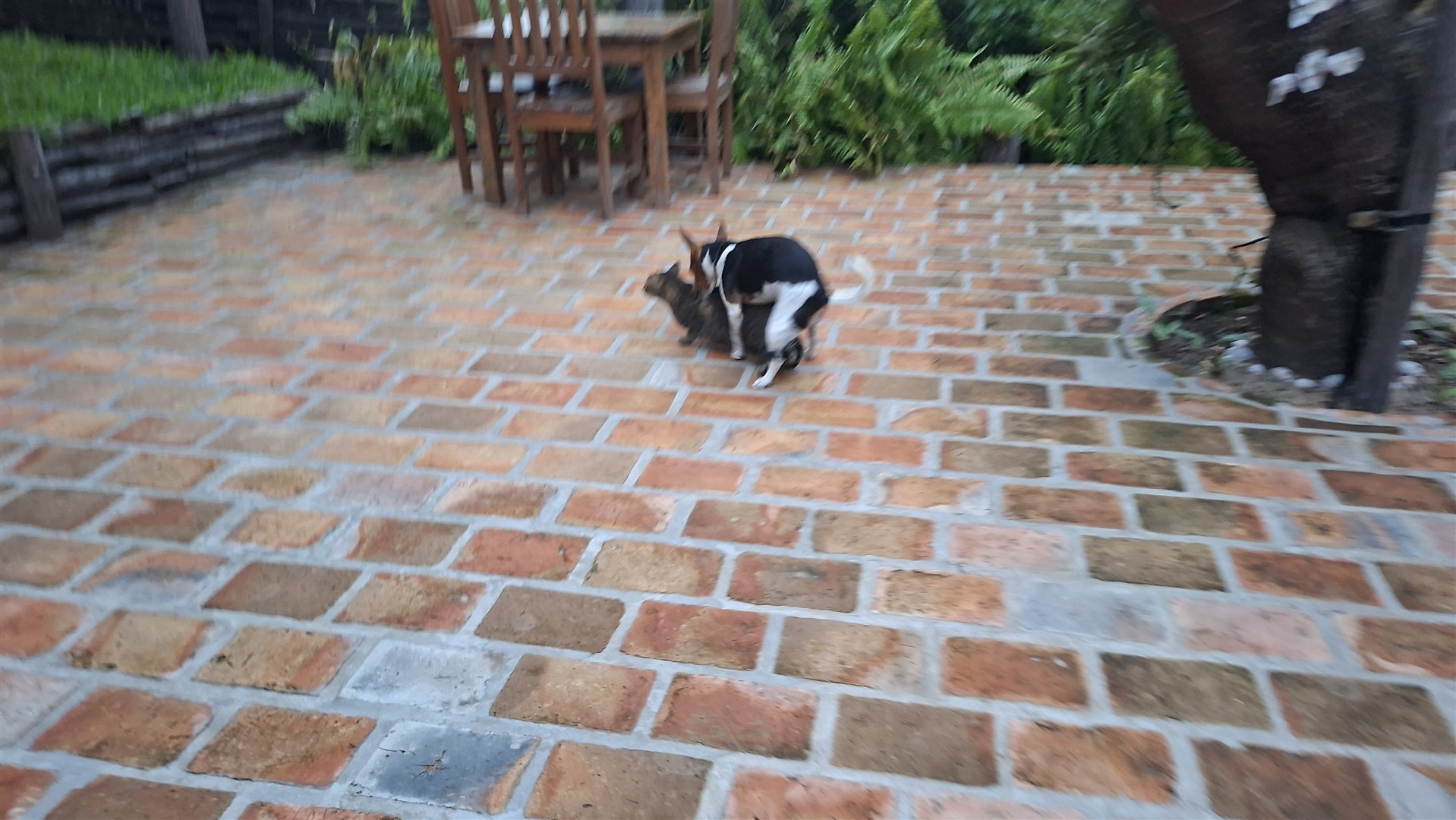
The Hostel dog, female, likes to hump the hostel cat, male. Sascha said it’s a domination thing.
We sat and talked about our travels. Sascha and Chris came there in 2019 to set up the business. As well as accommodation they also provide for various water sports, such as surfing and para gliding.
Fortunately they also provided plenty of places in their beautiful garden for sitting around, which suited me far more.
I stayed there for six nights, not really doing very much, although I did get a blog post finished.
But the company was very good and the sun shone. Chris directed me to a café on the beach where I got really good breakfasts. My favourite was Spanish Omelette sat on a bed of fried, mashed potato. Novel and very tasty.
The woman who ran it, Lanchin, came from Tabriz in Iran. I talked about my journey there and, naturally, expressed sympathy about what was happening.
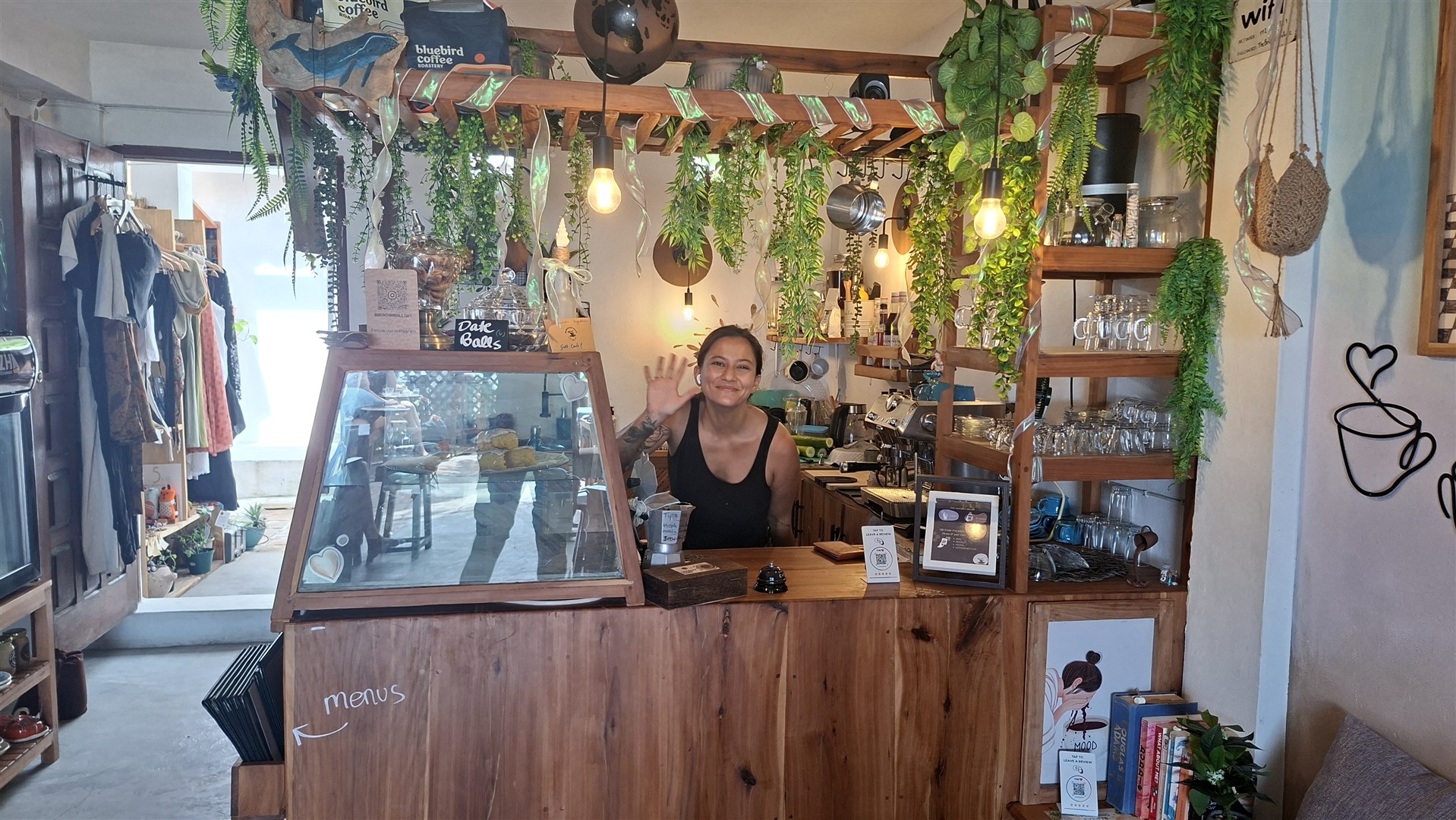
Lanchin in her café.
There was a small village just a bit further along the beach where I could have a laugh with the ladies in the market and get essential supplies.
It became a thing to combine our food supplies in the evening and enjoy some community meals, along with a beer or two and some great conversation.
I was highly amused to see the female dog trying to hump the male cat. Sascha said it’s a domination thing. I just thought it was hilarious.
We all went out for a meal to a local restaurant one evening. It was next to a beach where there’s a whale watching point. Apparently they come to within 20m of the shore. But, sadly, not that time of year.
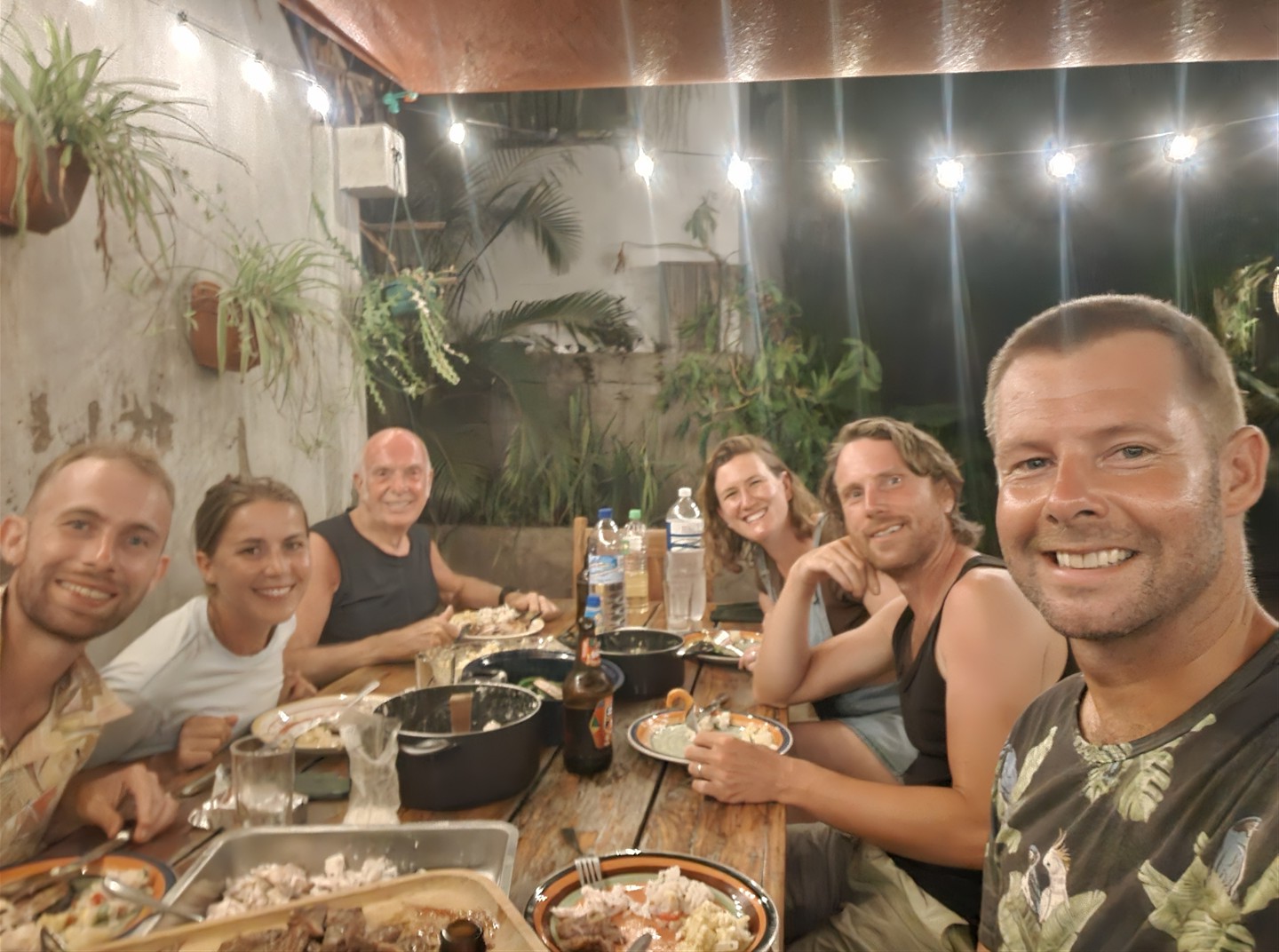
Coming together for food.
I had fish. The menu said Barracuda but Chris said not. We had great chats about all sorts of things. Isa works with the Belgian government on GDPR so was making interesting points about how we get tracked.
I said I didn’t really care and she agreed that it doesn’t matter all that much.
I’d kept in touch with Heidi, the woman I’d met in Livingstone and she messaged me, wanting to chat.
She was feeling very low because while out on a ride with her Harley Davidson club one of her friends had crashed. She was in a bad way, having suffered very deep cuts to her arm and smashed her shoulder up so badly it was likely to need replacing.
It seems she lost control on a bend and crashed badly.
All I could do was sympathise, especially having had some bad accidents myself.
We chatted again after a couple of days. Her friend had had her operation and had just come out of ICU. Heidi had been out and organised an electric wheelchair and bed for her. Her recovery will be long and difficult, poor girl.
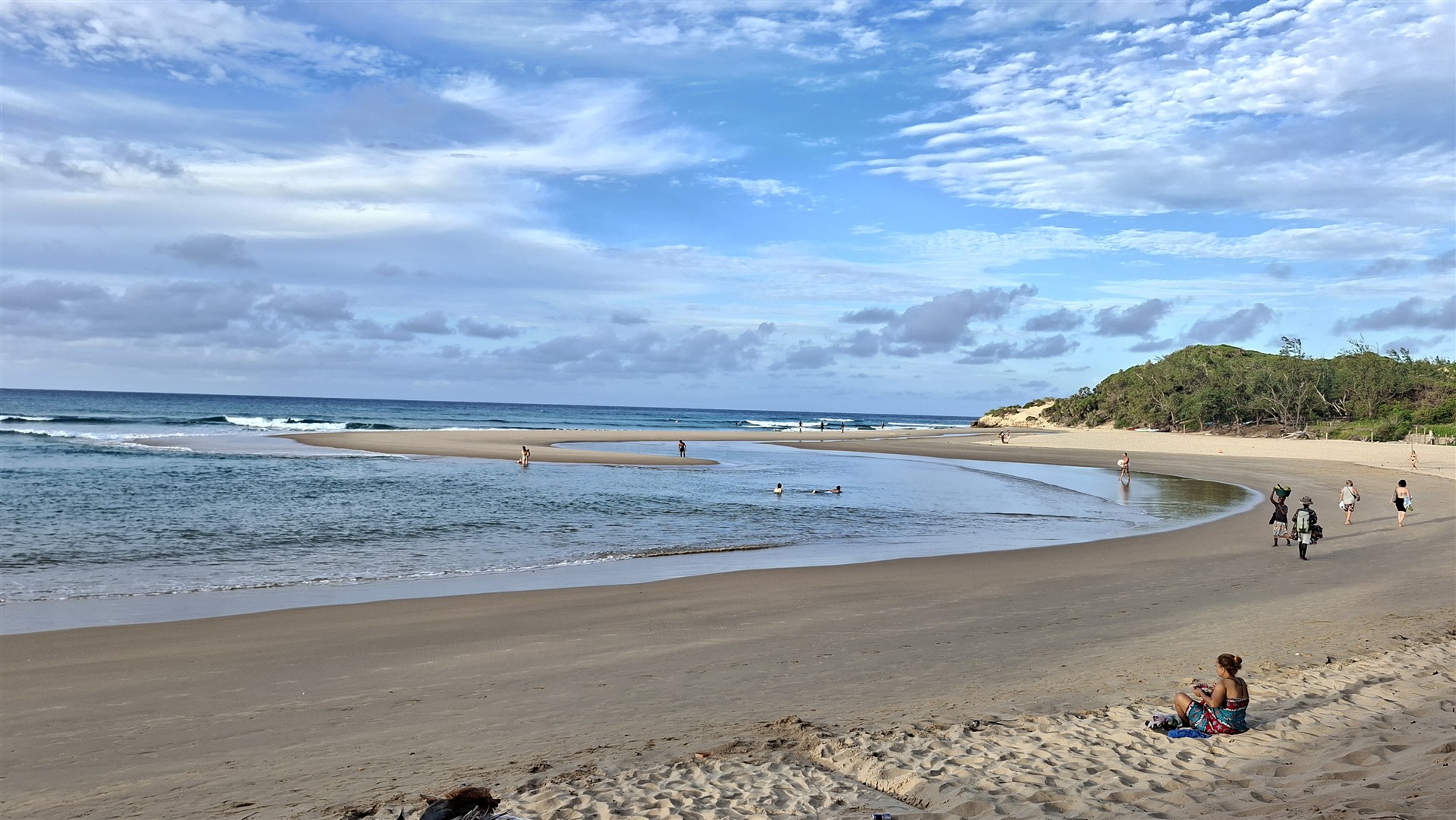
Tofo Beach.
The time came to leave the lovely Tofo Beach and the great people there. I’d enjoyed it very much. My plan was to head south to Mozambique’s capital of Maputo.
It was a two day journey, with nothing much of note apart from a police check, some tolls and some showers.
But I made a mistake with the hotel. I didn’t book it in the morning and when I got there I found I had to pay more, not less. Oh well, you win some and you lose some.
I went out for a walk. The streets are well laid out but there are some rough bits, such as potholes back-filled with rubble.
I was heading for the House of Iron (Casa de Ferro). On the way I passed the cathedral, noting it to visit on the way back.
The House of Iron is just odd. Quite big, across two storeys. All the supports and panels are of iron, bolted together onto an iron frame. I was only allowed into the foyer, not upstairs.
That was a shame as it would have been interesting to see the rooms. So I just took photos of what I could see. But there was no entry fee.
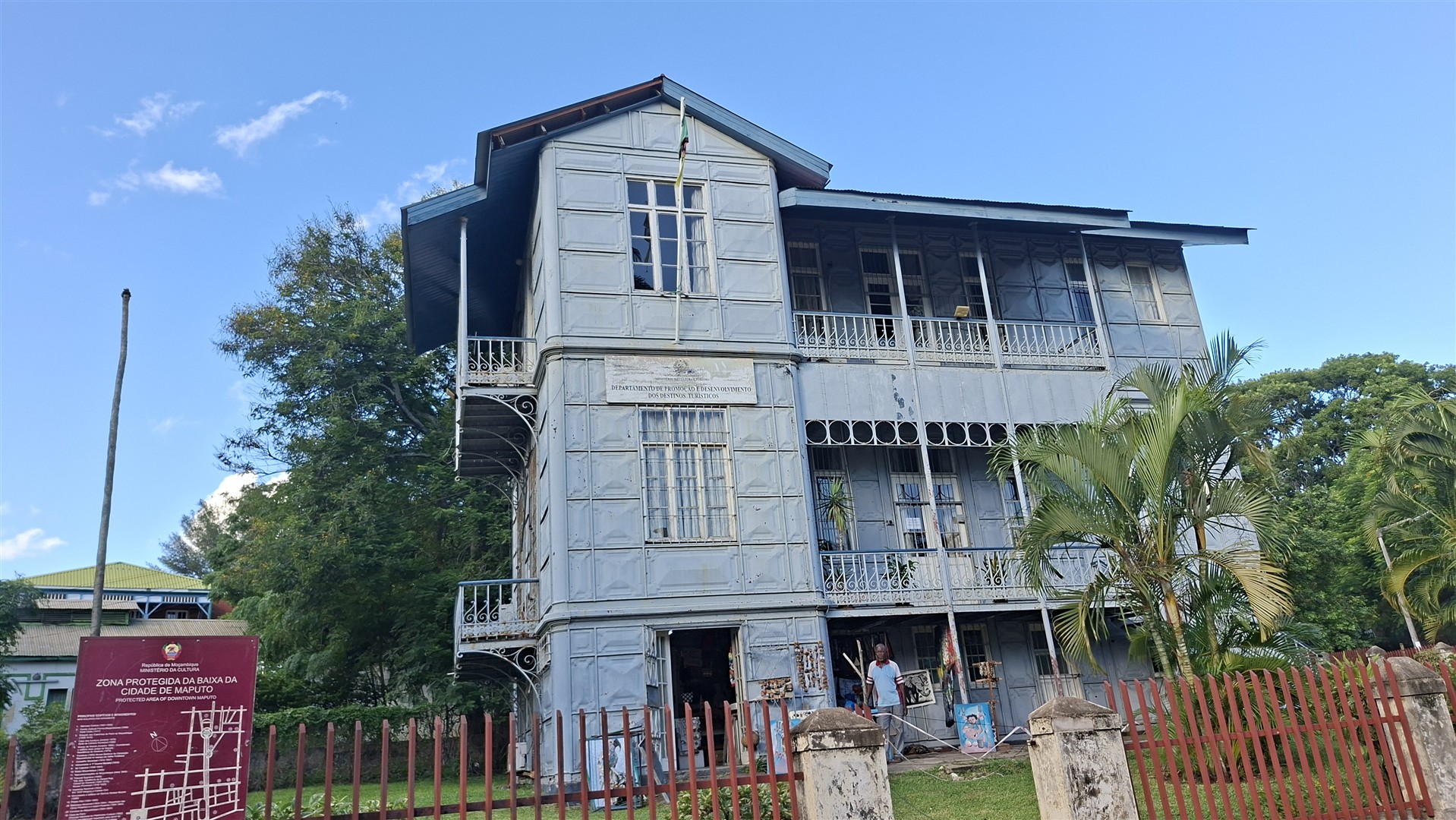
Casa de Ferro.
It was imported from Belgium. There was a fashion for such buildings in Europe at the time. They were liked for their portability, for being fire proof and for being damp proof.
I walked back towards the cathedral but stopped to look at Independence Plaza. Just a statue of the first president. Samora Machel, to photo. There were several hawkers for me to ignore too.
The cathedral wasn’t really up to much. No fancy decorations. Just stained glass windows behind the altar. It looked impressive from the outside though.
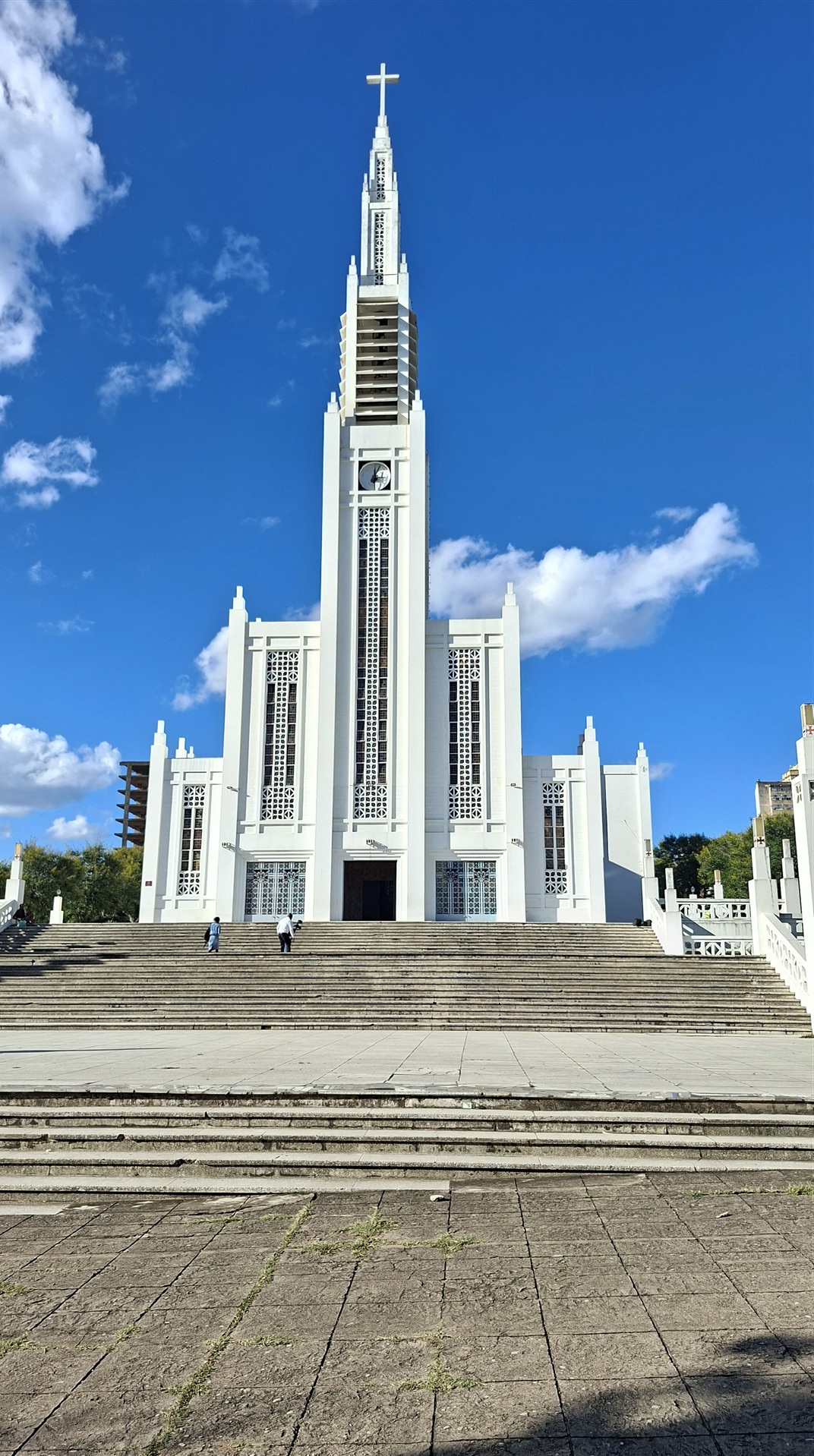
A lovely building but not very special inside.
Next day, after a rainy morning, I went out to visit the fort, down near the port. It’s Portuguese, of course. Square and bare in the middle. Thick walls with walkways and weapons along the top. There was a good display of info boards in one of the rooms, which I had to use Google translate to understand.
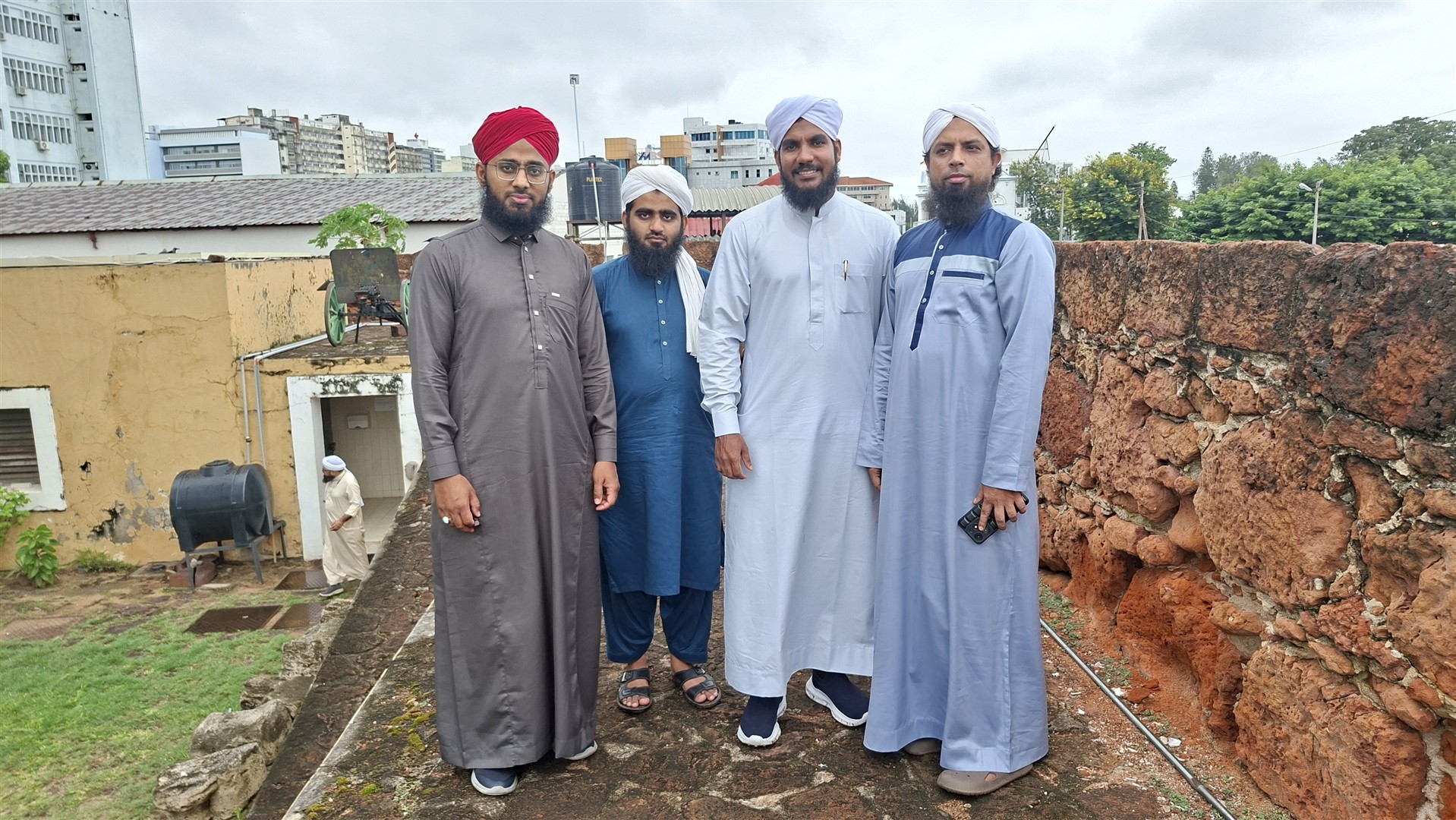
The four professors.
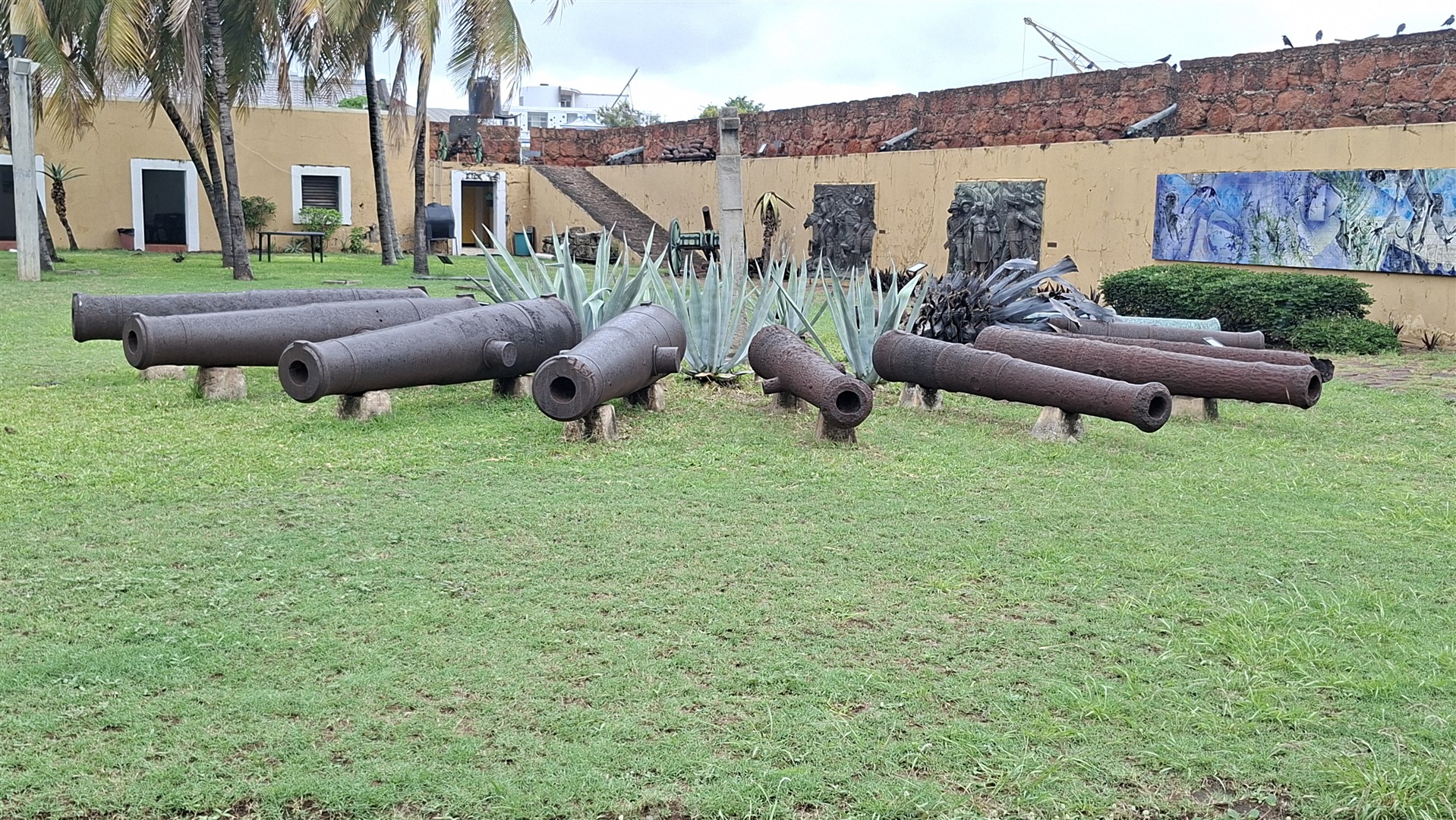
A fine collection of cannons.
I bumped into four Pakistani guys for a chat. They’re all professors. How bizarre.
There was an impressively big tree outside, possibly a Banyan Tree, looking quite old.
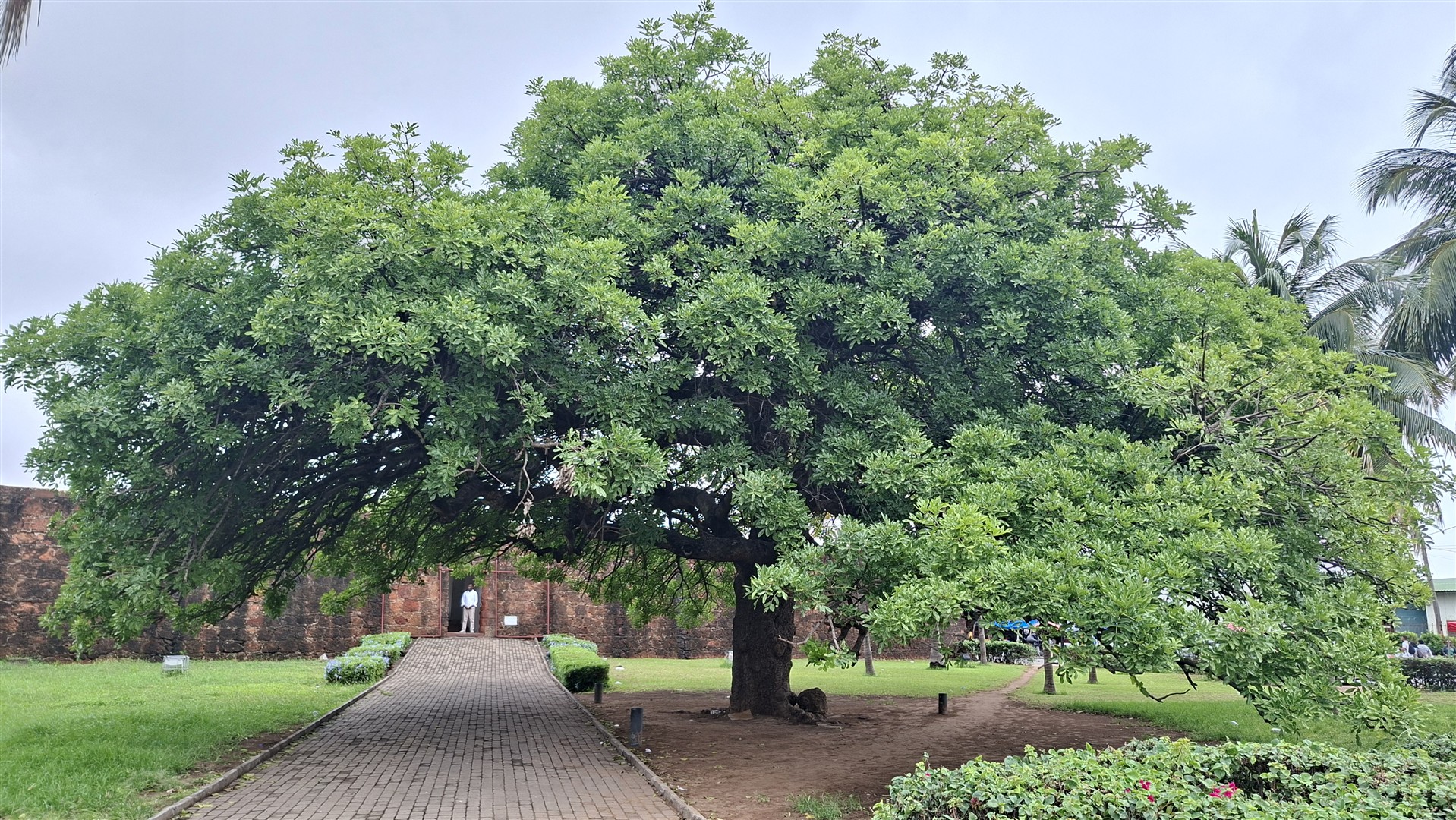
A very impressive tree outside the fort.
I had a little walk around the area but there was nothing much to see so I headed to a coffee shop.
Then I walked down to the station. Sadly there’s roadworks in front of it and also a massive tree in the way of a decent photo.
But the building is very attractive and old fashioned. There’s a couple of old engines on display just inside the entrance.
The platforms are very long, with up to fourteen coaches in a train, all looking very smart. I was able to go inside them for a photo.
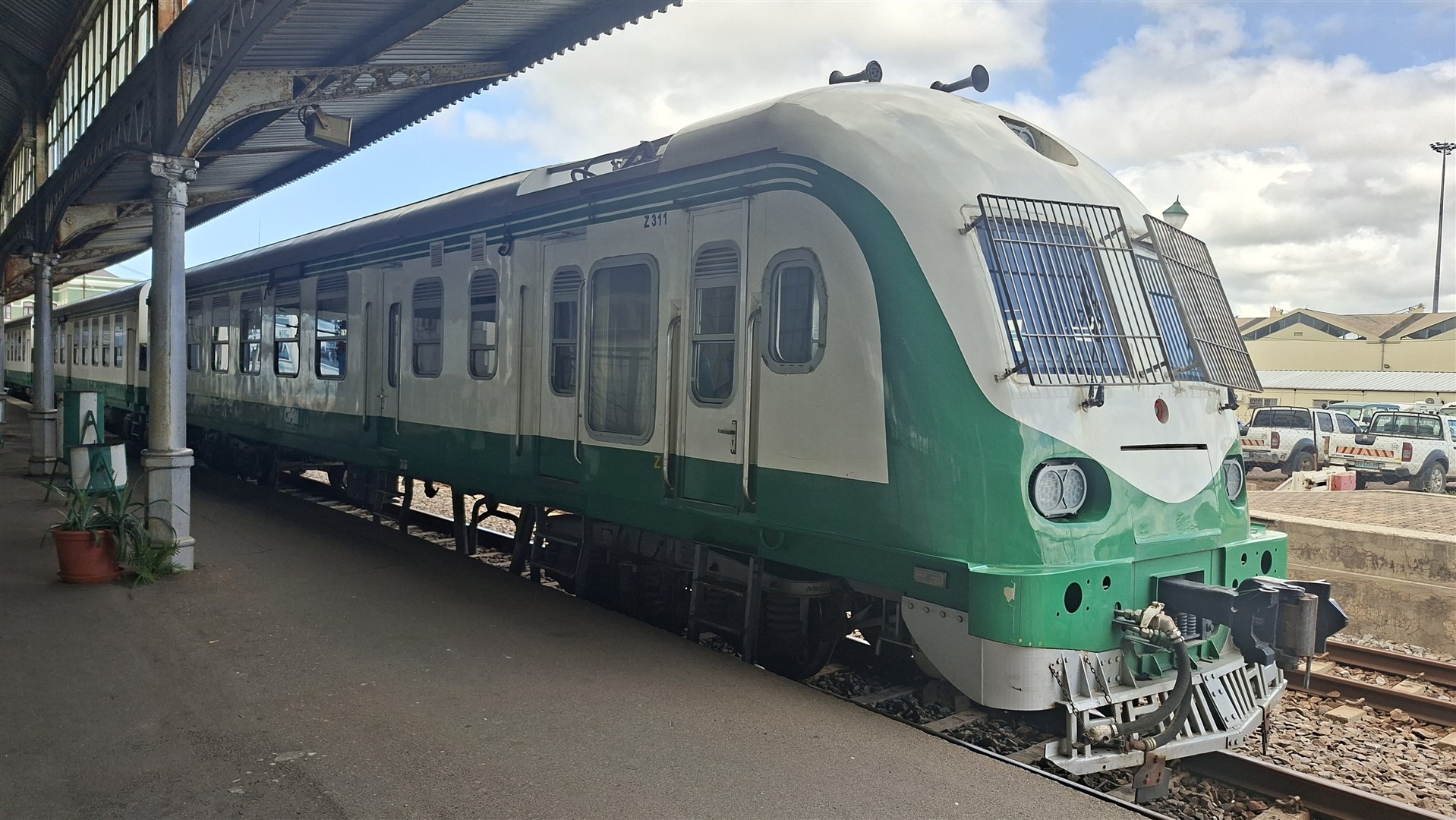
A modern locomotive with fourteen carriages.
Towards the end of the platform was the entrance to the CFM museum. Caminhos de Ferros Mozambique. It runs the ports as well.
There were loads of info boards about the history. Interesting enough. Some workshop tools and communication equipment on display. Also a couple of more modern engines.
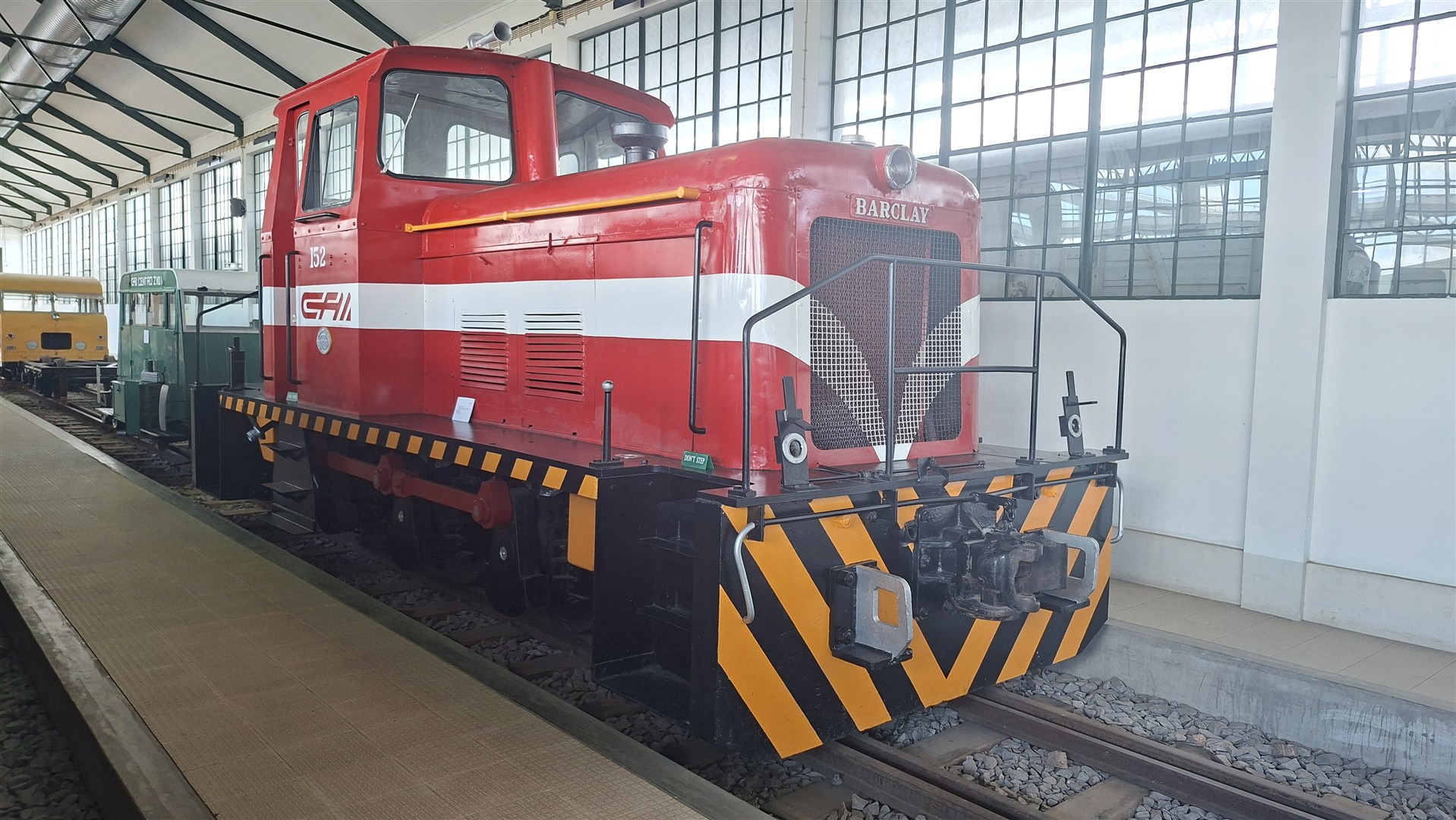
An old diesel/electric loco. Very nicely restored.
But compared to the other places I’ve visited it’s all very sterile. Outside was an old, beaten up steam engine. But nothing else.
A worthwhile visit anyway and it did indicate and reflect Mozambique’s attempts to modernise the country’s transport and port infrastructure. Pleasingly there was no mention of Chinese involvement.
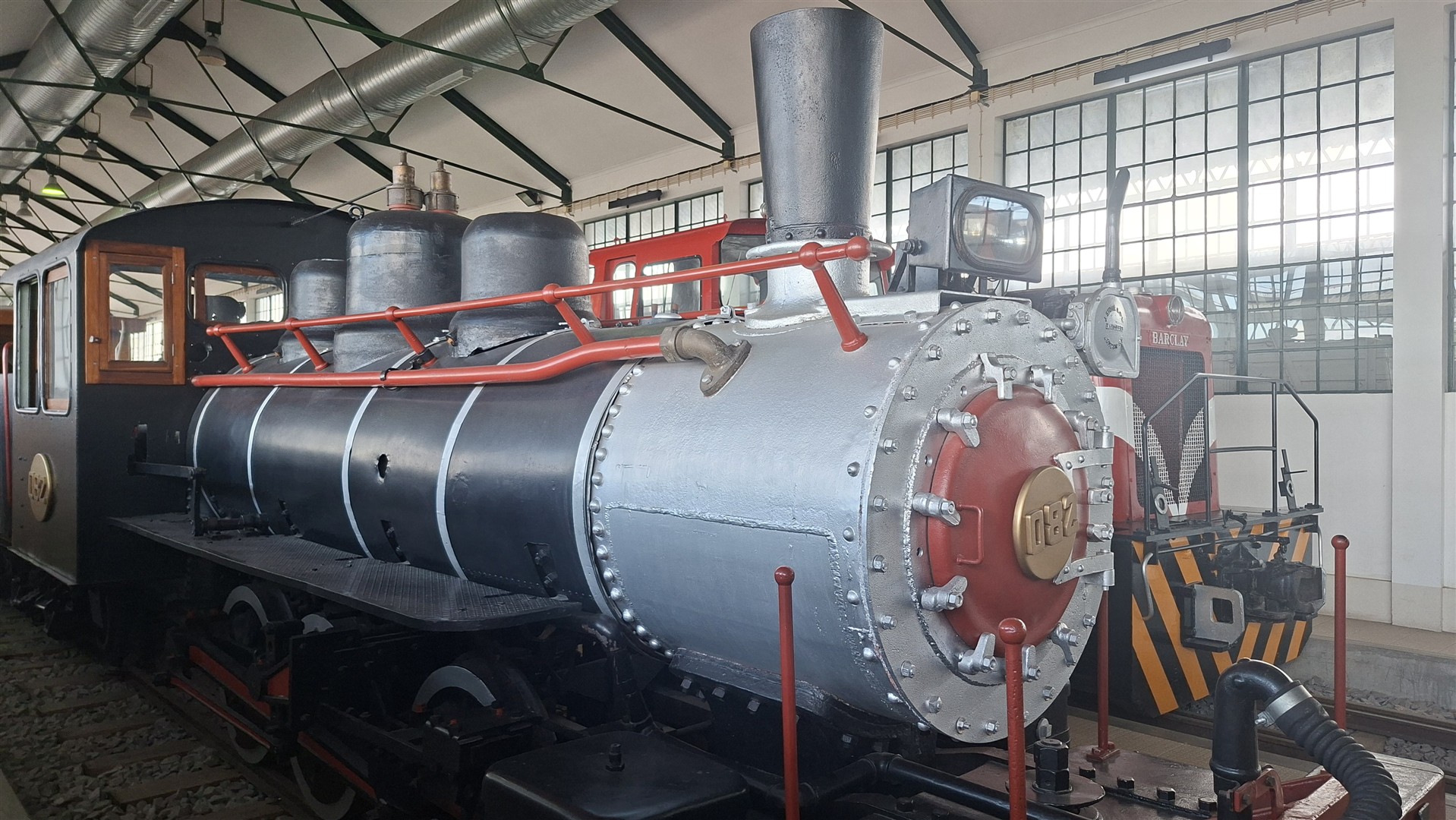
A very well restored steamer.
And that was about it for Maputo and, indeed, Mozambique. This former Portuguese colony had won independence inn 1975 but had promptly descended into a near twenty year civil war. But since 1994 it has been a stable democracy. That’s good news.
For my part I was going into South Africa where I’d meet up with Heidi and travel around together for a while. Something to look forward to.
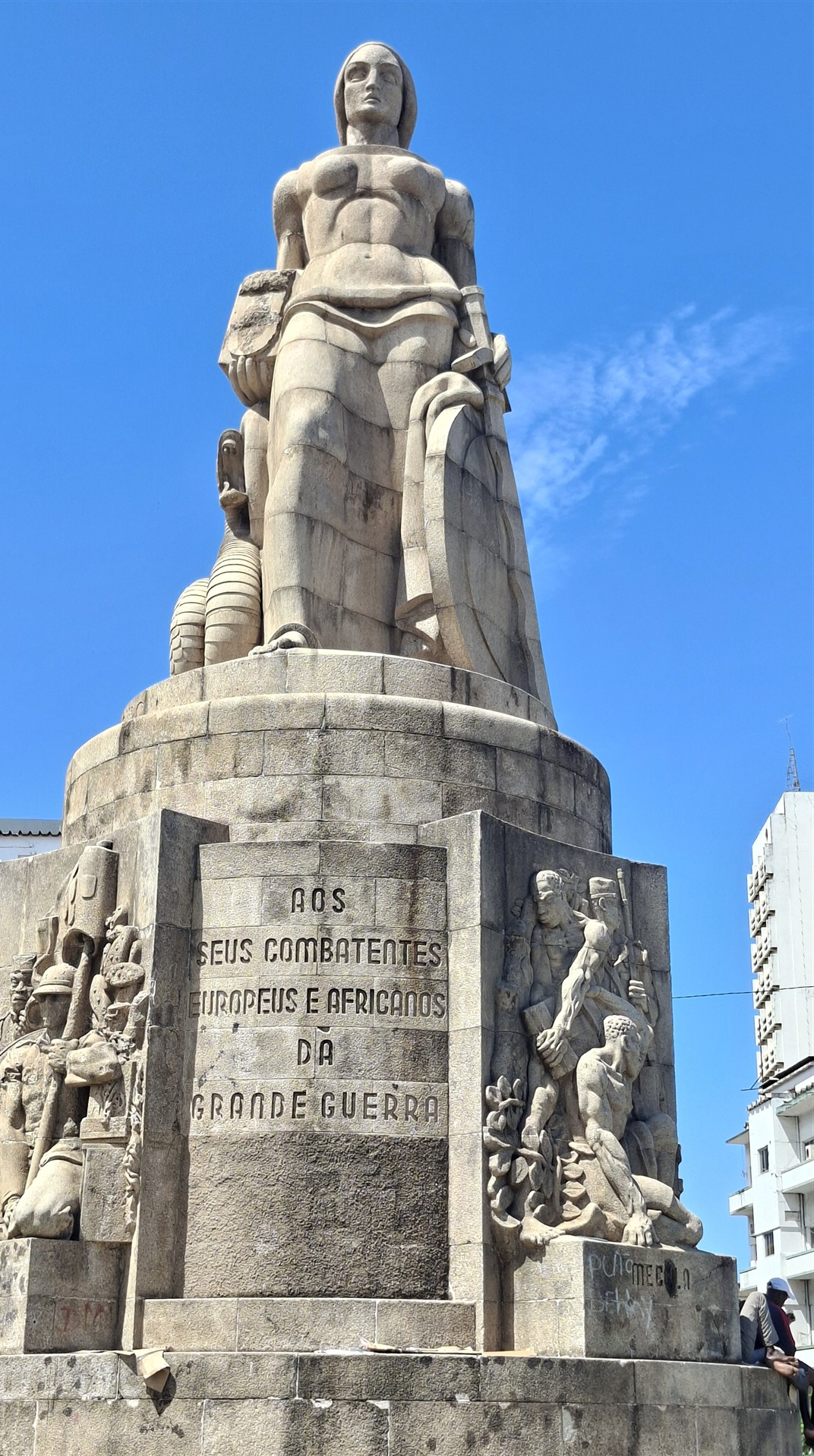
WW1 memorial, near the station.

