
7th April 2026. Montagu, Sth Africa.
Departure day and after some running around here and there, we said goodbye to Heidi’s Mum and Berry, then headed off out.
We had a very good ride, including up through the mountains. Then we arrived at a place called Freedom 301.
This is a biker hangout, part owned by a former Hells Angel president. We met a friend of Heidi’s named Wayne and he’s loaning her one if his Harleys that he calls Bumble B, with a number plate to reflect that.
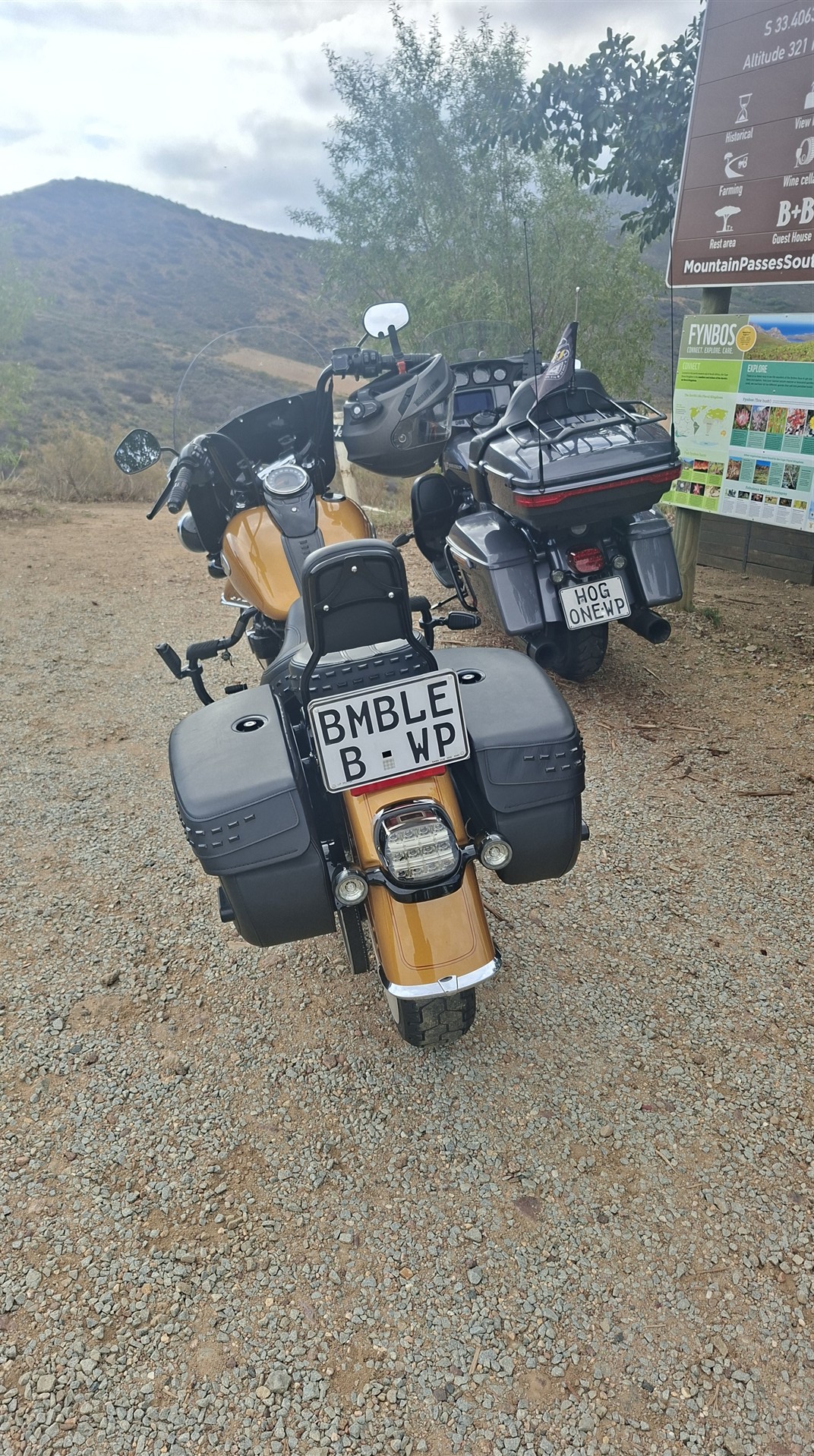
A very classy number plate.
He was telling me the venue is very busy from Friday night through to Sunday night. There was a band playing that night, it being Friday.
The bar is very impressive with loads of bikes displayed around it, all owned by the bar owners. A couple of Harleys but also bikes such as a Honda CBX, a big KTM and some trail bikes.
Wayne is a nice guy, quite a laugh. With some stories to tell. He has shares in the bar so gets a discount on the whiskey but not the coke.
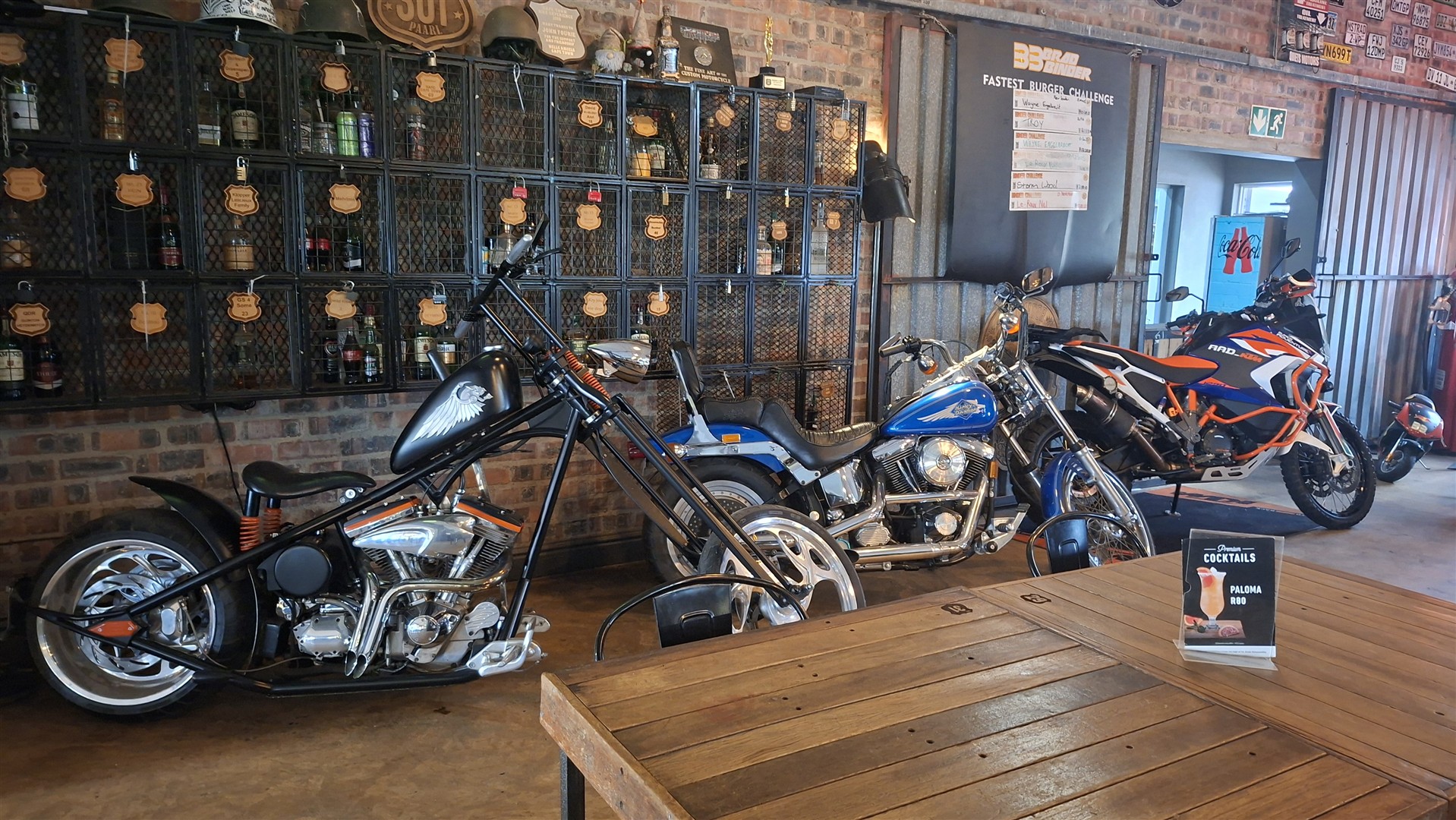
Inside Freedom 301.
Eventually we all left and came to Paarl, where Heidi had booked accommodation.
Heidi was giving a presentation next day, at a place called The Bike Shed, on the edge of Cape Town.
It was an excellent day. It was a chilly ride there, especially on the motorway. Not that much of a surprise given that March is Autumn in South Africa.
It was a bit more than a shed though. A large warehouse full of bikes, especially up on the mezzanine floor. Lots of BMWs and KTMs. Adventure bikes being the most common, but lots of others too. Some for sale and others being repaired in the large workshop.
Heidi set herself up downstairs with seats set out in front of her. Apart from one guy, the audience was all female and, Heidi said, all lesbian. The exception was the wife of the one guy. It seems there’s quite a large lesbian biker culture in the area, almost all on Harleys.
There was also a stall from another cancer charity, aimed at survivors. All the women there wore ‘survivor’ badges or T shirts. Do they do that all the time, I wondered? Or only when ‘on duty’?
The woman who’d organised it asked me ‘what I was about’ and I got mentioned during the introduction, and I also made a small contribution later. I was asked my age and got a round of applause when I told them.
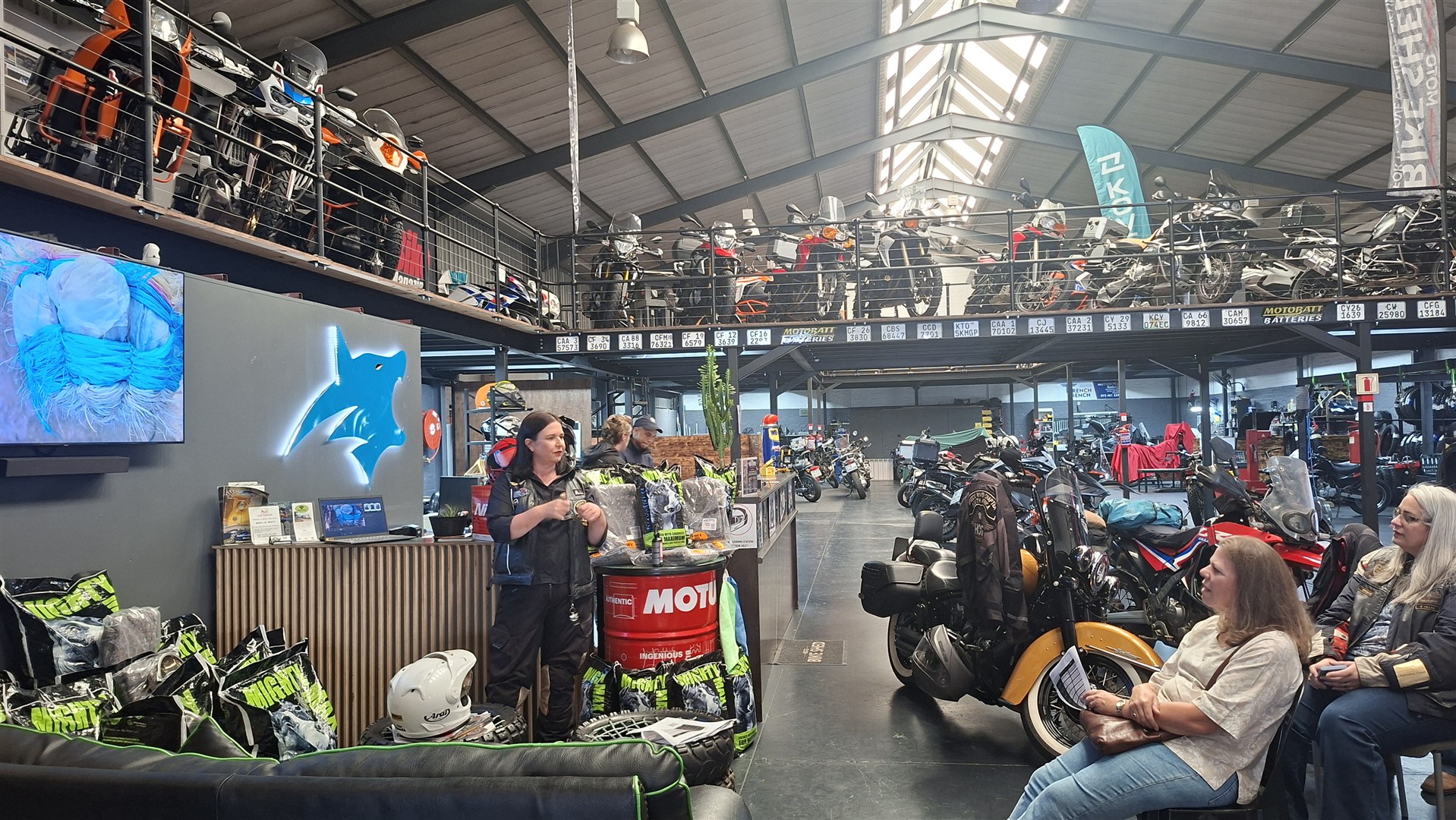
Heidi tells her story.
Heidi did a brilliant job. After talking about her charity and how she funds her travels herself, she then showed lots of great photos from places she’d been and I was thinking how much that must inspire people.
Her key message was that liver cancer is the most type in Sub-Saharan Africa. And the simple reason is Hepatitis B. It attacks the liver, mostly leading to the death of those infected. So she’s trying to raise awareness and encourage people to get vaccinated, regardless of age.
I walked around taking photos of her and the audience, which I then copied to her.
I had a chat with some of the people there too. All in all, a very good event.
From there we rode a little way out, to a shopping centre where we met Wayne, having coffee and cake while we waited for him.
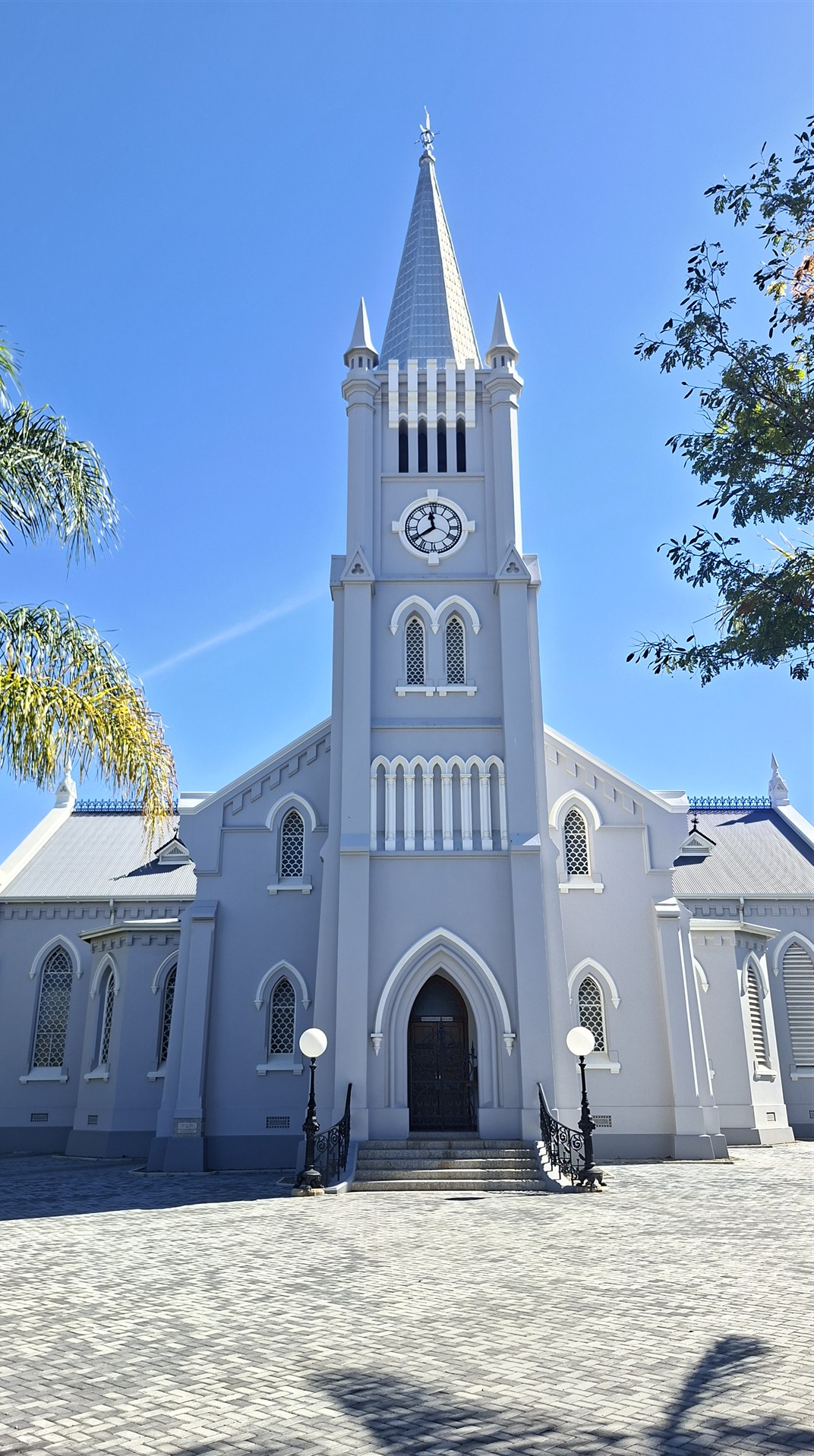
These Dutch Reform churches are very common in this Afrikaaner area.
He led us out on a very nice ride which ended up at a place in the hills that overlooked a valley full of vineyards.
With that done we headed back to base.
We were up and out quite early next day. We went to refuel then we had a chilly, misty ride out of town to the turn off for Bainskloof Pass.
This was a very twisty road going up to 580 metres from about 130. Near the top we pulled in to admire the view and had a nice chat with a couple on a GS1200, who lived nearby.
The view was stunning, out across the valley to the far hills, which were rising up out of the ground mist in an ethereal style. We were enjoying the warm sun.
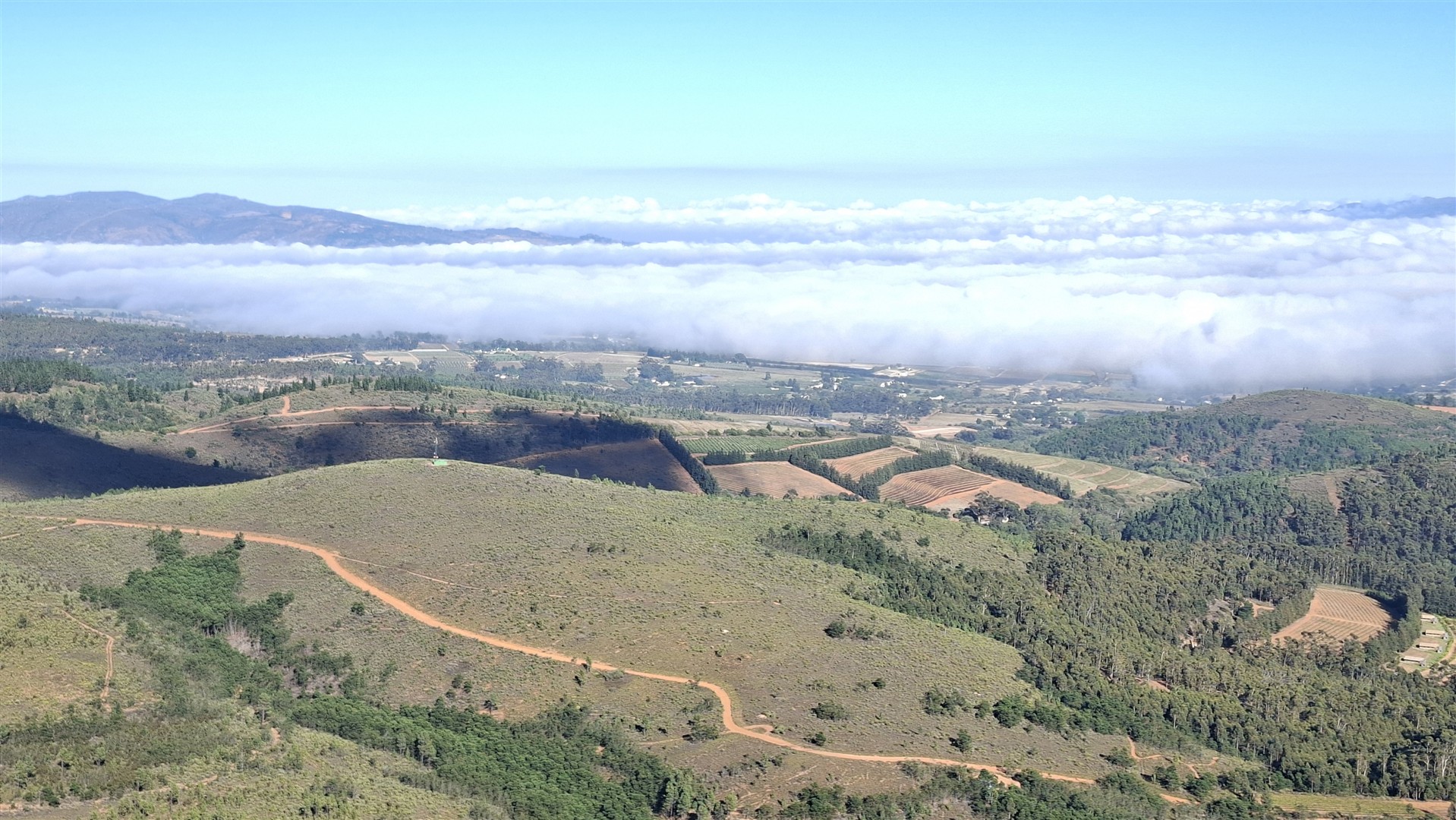
The sun eventually chased the mist away.
We carried on down the other side and headed to a big biker meeting place called Biker Forge. Bigger than anything in the UK that I know of.
Lots of other members of Heidi’s HOG group, Breede River Chapter, were there and I was introduced to them all, especially her gay friend Liesl, who she’d told me about. Naturally they were all riding Harleys.
There was a band playing soft rock, just a woman on bass and a guy on guitar. Out the back of the building was an excellent collection of bikes, predominantly Italian.
Loads of Ducattis, a Bimota, a Laverda and three Moto Guzzis. That included a T3, taking me back in time to when I owned one. Lots of more ordinary bikes and some sports bikes too. I saw a very nice Suzuki 750 Kettle and some other classics.
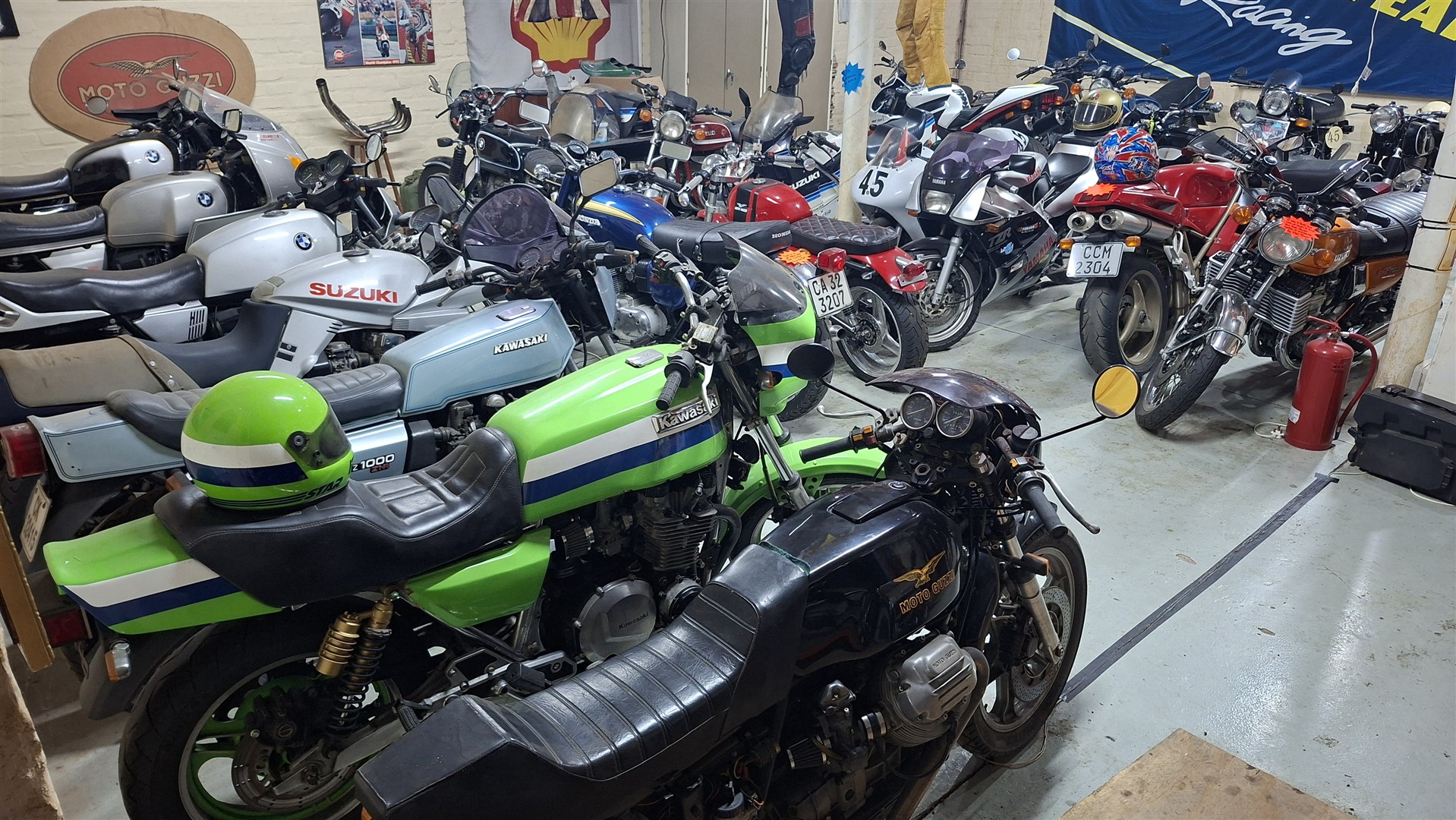
Classic Collection, including a very nice Moto Guzzi.
Brunch was excellent and it was a great way to spend a Sunday, among very good people at an amazing biker hangout. I was so impressed I bought one of their buffs.
From there we went to look at Bosjes, which is a wedding chapel. It’s a very interesting design and the architect was Berry’s son, Coetzee Steyn. He works in Madrid now. Nearby is a café, also of an interesting design.
Next we went back to Freedom 301 where we ended up having tea. There were almost no bikes there. Heidi said they come mostly at lunchtime.
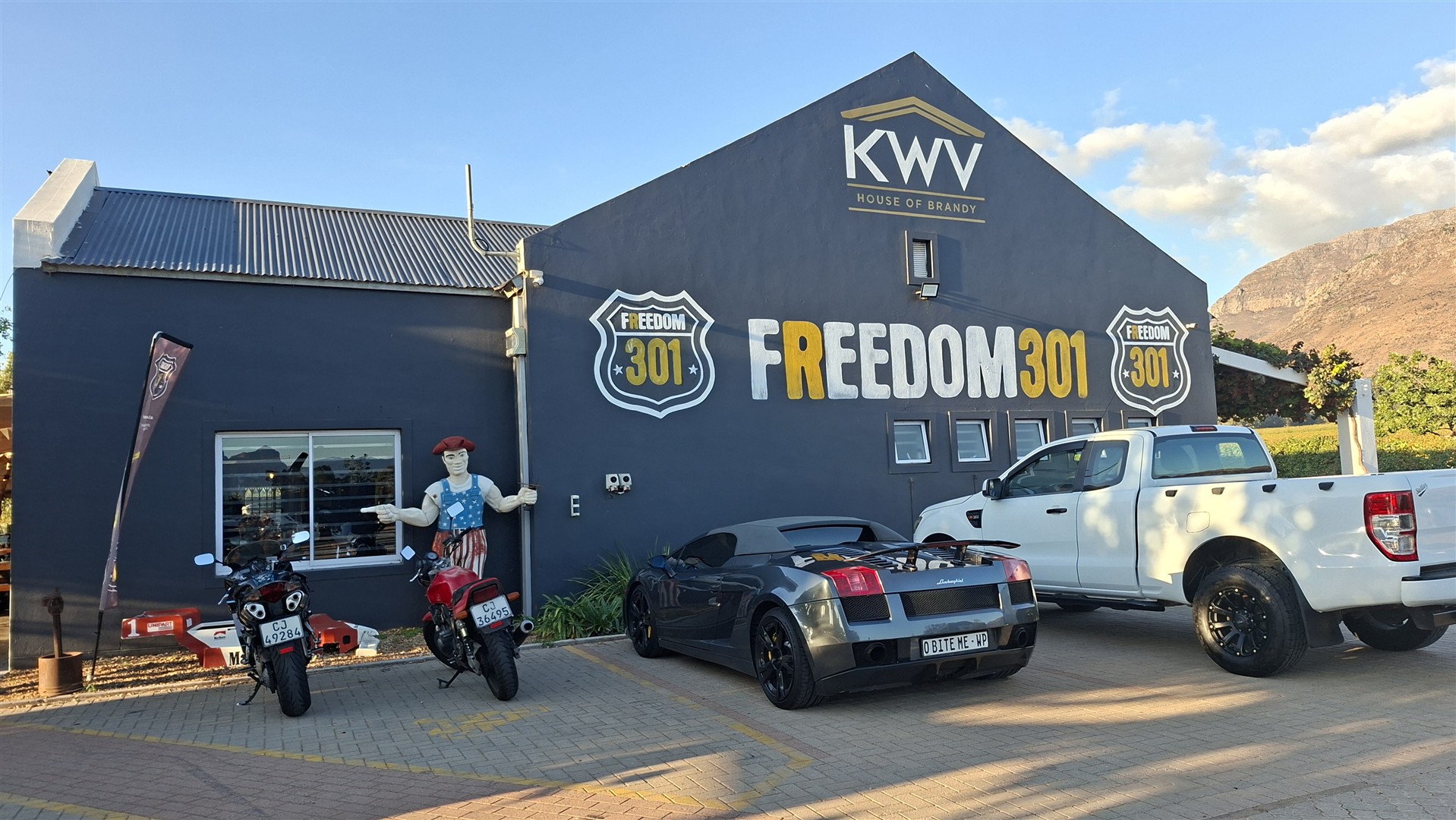
Back to Freedom.
After tea it was back to base. I had no overheating problems. But did that mean the fan was working? There was no way of knowing.
Next day Heidi and I parted company. We’d had a great time visiting places she was keen to show me. But she needed to prepare for a big promotional trip she was making to Namibia and Angola. She had family to visit before she left too. So we said our goodbyes and she left.
I got myself organised and headed to the coastal town of George. This is located on what’s referred to as The Garden Route, which runs along the eastern side of the Cape towards Durban. There were some places nearby that I wanted to visit.
It was a very nice ride through lovely countryside although the land definitely dried up as I got closer to George. Fewer vineyards and more corn and similar crops. I was riding in areas that lay between hills, most of them with saw tooth ridges on the top. It took a while to warm up too.
Next day was a walking day. My first destination was George Museum.
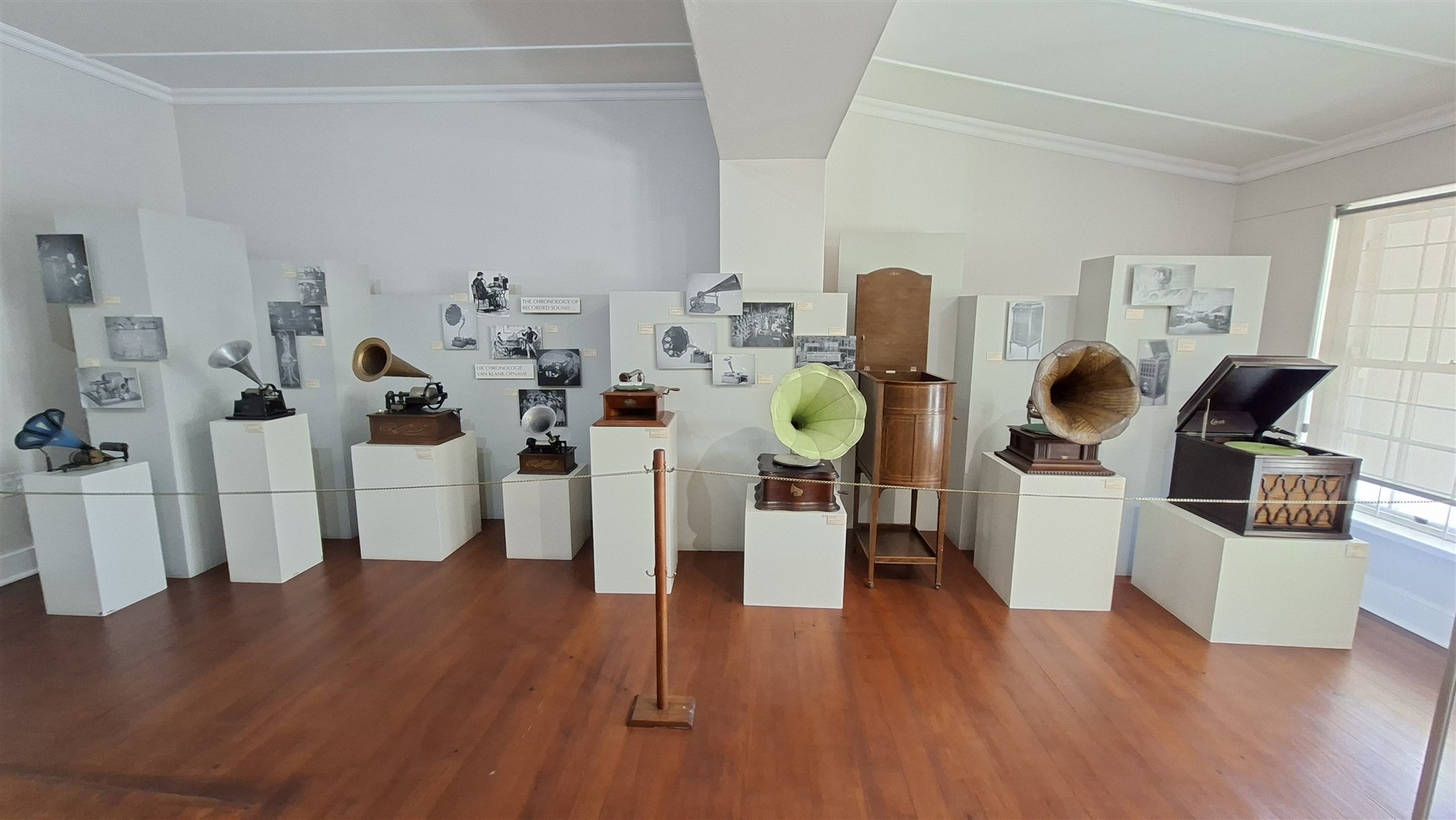
Granny’s gramophones.
It was a surprisingly good place inside a lovely looking building. There were the usual crop of artefacts but it also had a large collection of old music boxes, the original metal drum type, and also of wind up gramophones.
Upstairs was an exhibition about slavery in the area but, of more recent times, the history of local people, who were mostly coloured and black. They’d been moved off their land to make way for white incomers.
There had been non white farmers since the middle of the 19th century. The Natives Land Act of 1913 was a foundational piece of racial segregation legislation in South Africa that legally prohibited Black people from buying or leasing land outside designated reserves. It restricted the Black majority to just 7% of the country’s total landmass.
Black citizens were forced to relocate to overcrowded, often infertile, and under-resourced rural reserves.
It also brought about the end of share-cropping. Before the Act, many Black farmers worked as share-croppers on white-owned farms, keeping a portion of the crops for themselves. The law outlawed this practice, forcing these farmers into a choice between giving up their livestock and becoming low-wage labourers, or losing their homes entirely. By severing the Black population’s independence and ability to farm for themselves, the Act created a massive pool of cheap, exploitable migrant labour for white-owned farms and the expanding mining industry.
There were displays about the growth of the town, the railway, the reservoir etc. The museum building used to be one of the big hotels. The town was actually founded in 1811.
In a separate annex was the story of the forestry and furniture industries. Out in the yard was a typical forester’s cottage, which had been taken down and carefully reconstructed.
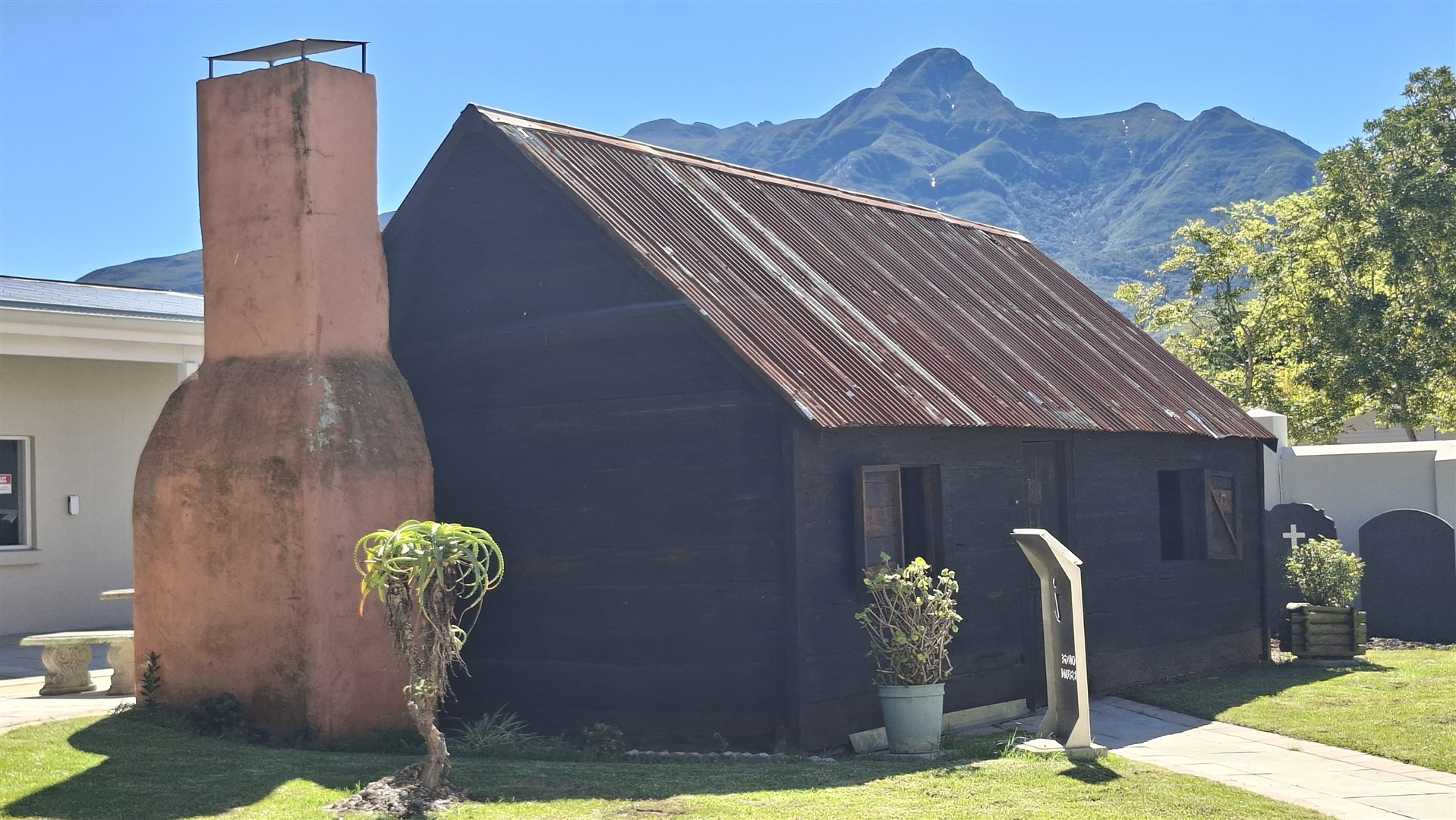
A forester’s shack.
Upstairs were lot of paintings but nothing very notable, plus the aforementioned exhibition. And it was all free.
Then I took a long walk down to the Outeniqua Transport Museum. This was an incredible place.
It was mostly about the railways. There was a huge collection of steam locos, almost all of them inside a huge shed. They were all in excellent condition.
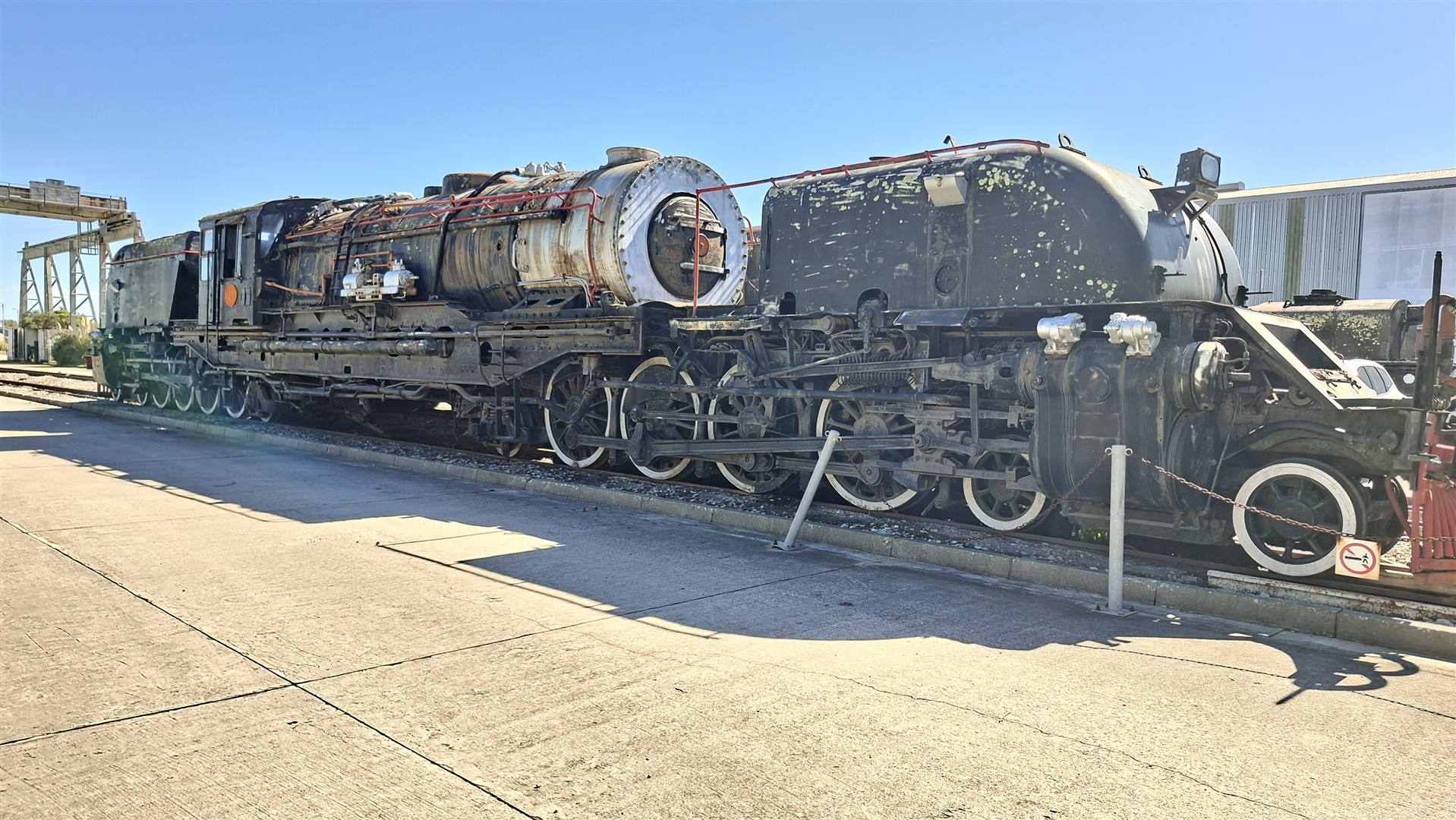
Double eight wheeler. 2-8-2+2-8-2.
They included some with six and eight wheels, plus some doubles. Plenty of carriages too.
Dotted around were things such as track maintenance vehicles and old, small vans, used to transport maintenance crews. A couple of old buses completed the picture.
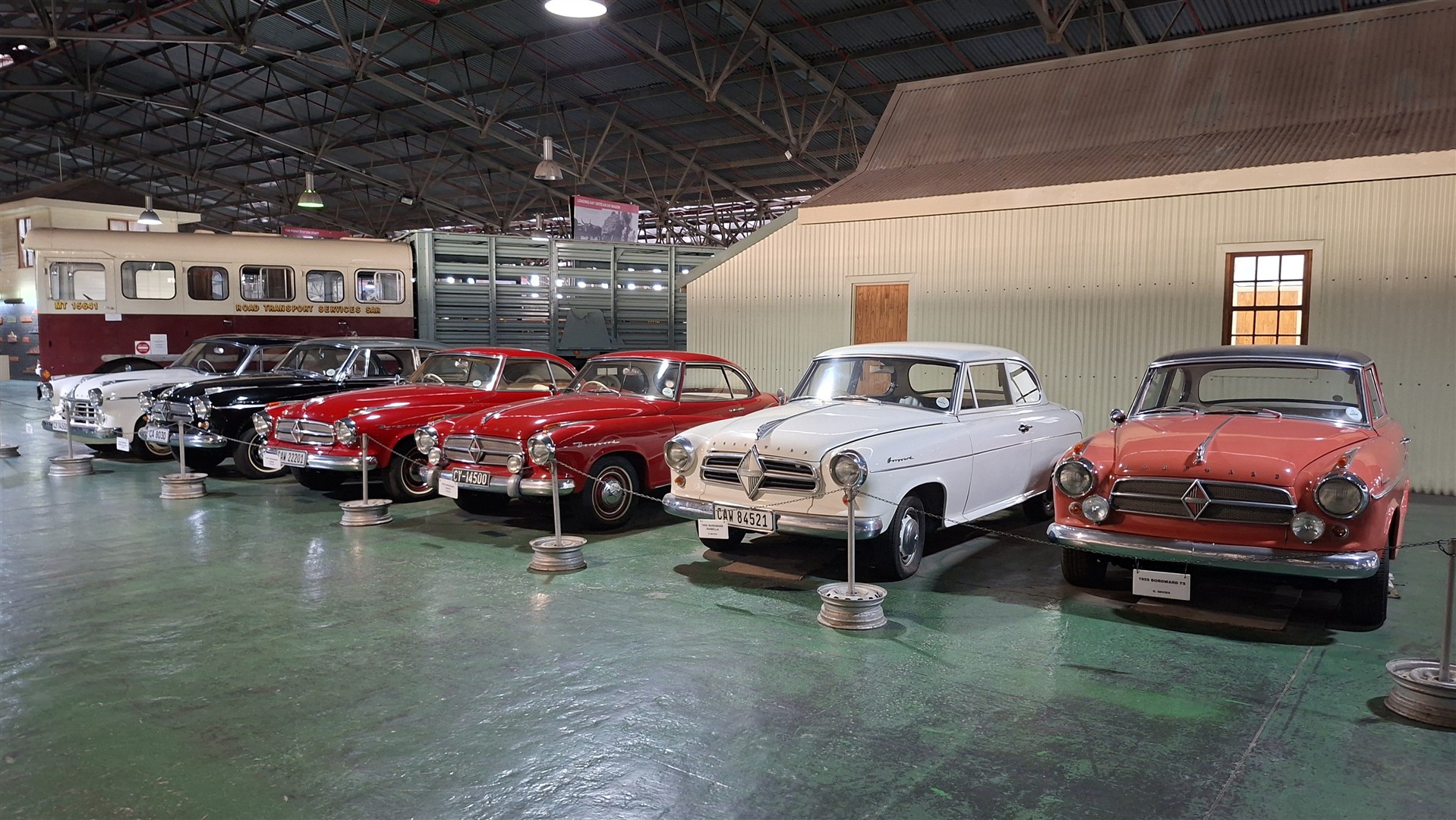
A collection of Wardborgs.
In a separate section was a collection of old cars, including some German made Wardborgs, a make I’d never heard of. The factory was called Borgward, after its owner. South Africa was a key export market. The cars were quite advanced for post war vehicles. But bad management closed the factory in the 1960s.
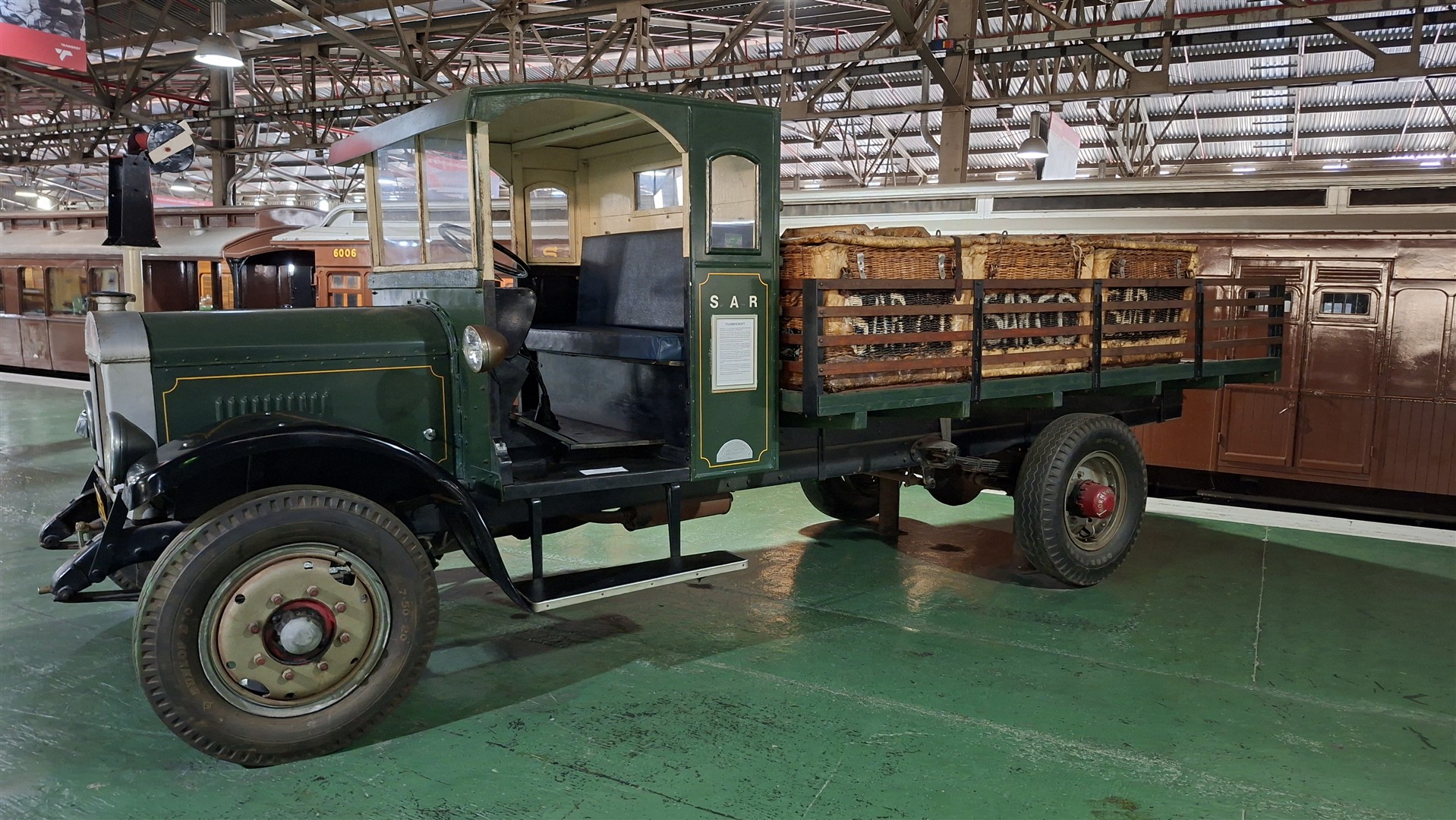
A railway truck.
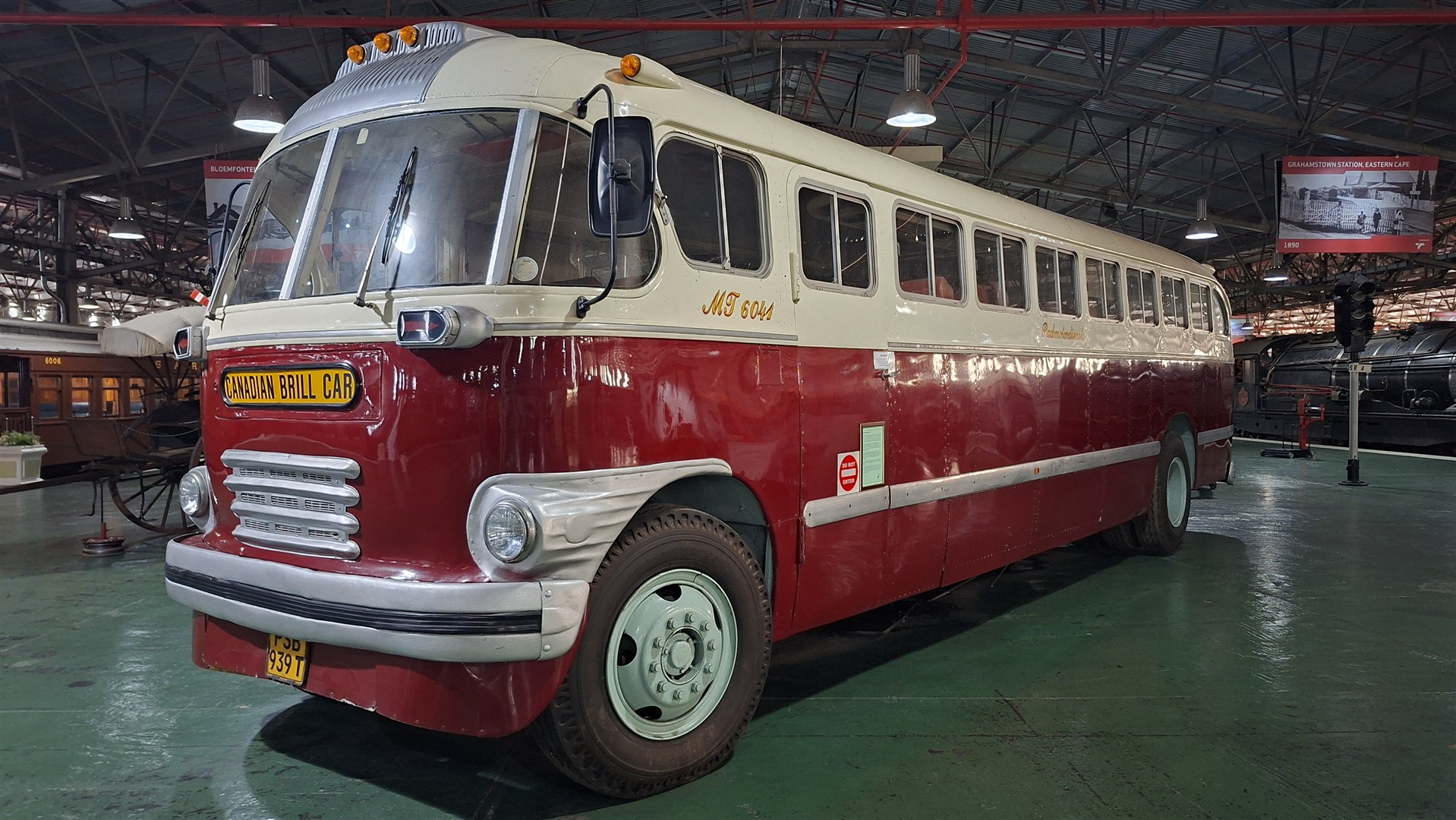
Classic Coach.
It was a long walk back and ended up having to rest my right knee, which was in pain. It had been acting up over the last few weeks. Old age is creeping up on me. I took a couple of Ibuprofen to help things along.
I’d planned to go out for a ride next day but the rain defeated me. But I was happy to rest my leg.
A dry morning followed so I headed out to visit a couple of places. The first was The Map of Africa. The sun was warm when I left but with a slight chill in the air.
I rode up to the lookout point. The Map wasn’t really anything special. Just a wooded hill that had a vaguely similar shape to Africa. There was a small river running either side of it. An old guy sitting there explained it all to me.
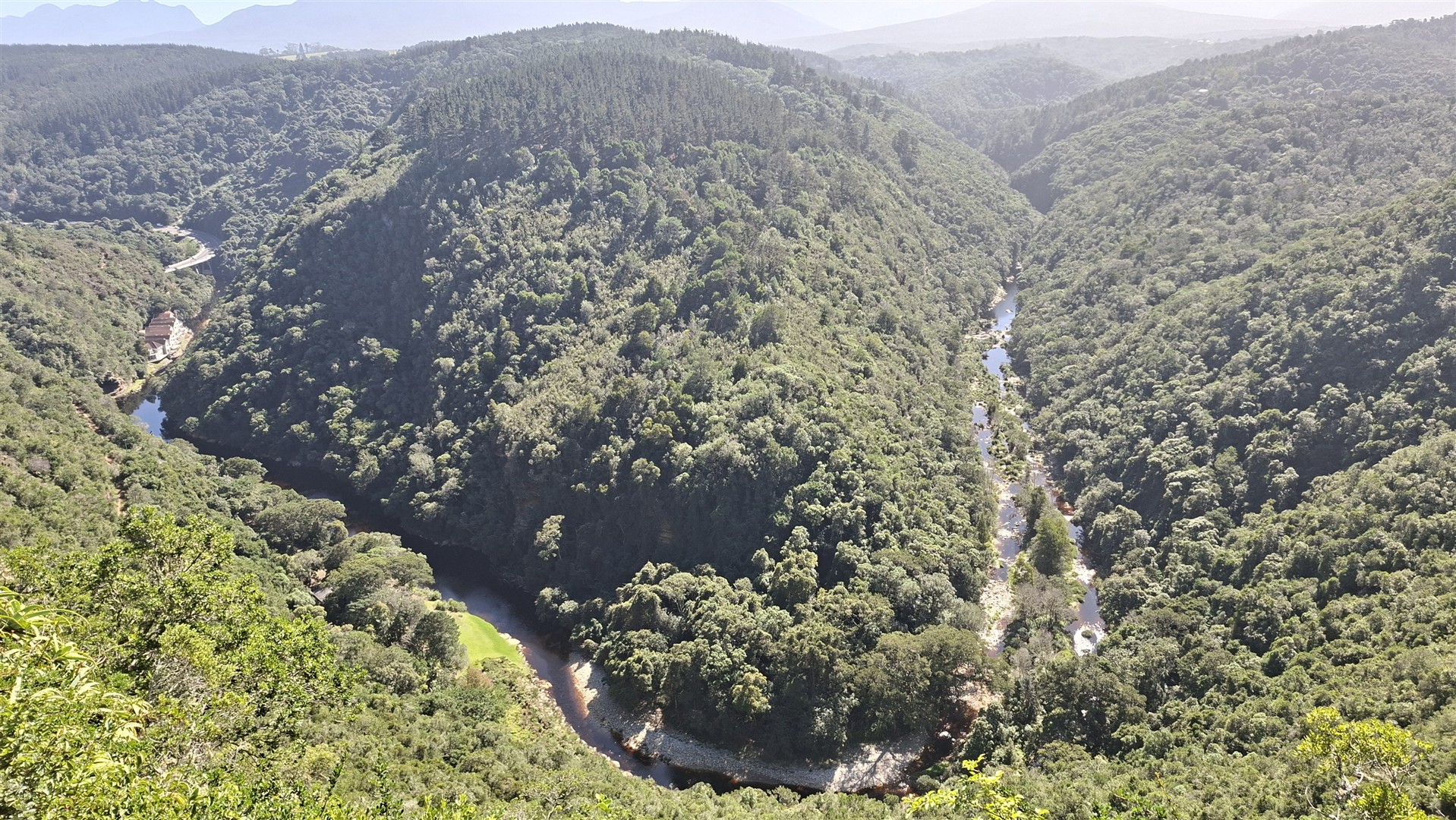
I suppose it vaguely looks like the outline of Africa.
Then I headed to Cango Caves, home of ancient rock paintings, but the road was closed so I had to head back to the main road.
I pulled up by a bus stop to decide what to do and the bike overheated. – again! I decided to forget the caves, especially as it would be a steep climb up there.
Back at base I stripped the bike down and did all the tests, same as before.
I put a post in the WhatsApp groups about it and have had some suggestions, but not really anything more than I knew anyway. Somebody suggested that there might be too high a current draw from the fan which was blowing the fuse.
That tied in with my own thinking about a faulty fan. Time will tell.
It was starting to rain when I left next morning although it did stop eventually. I was heading to Cape Town via the Franschhoek Car Museum.
I turned off the main road to go over the Franschhoek Pass, up at 700 metres.
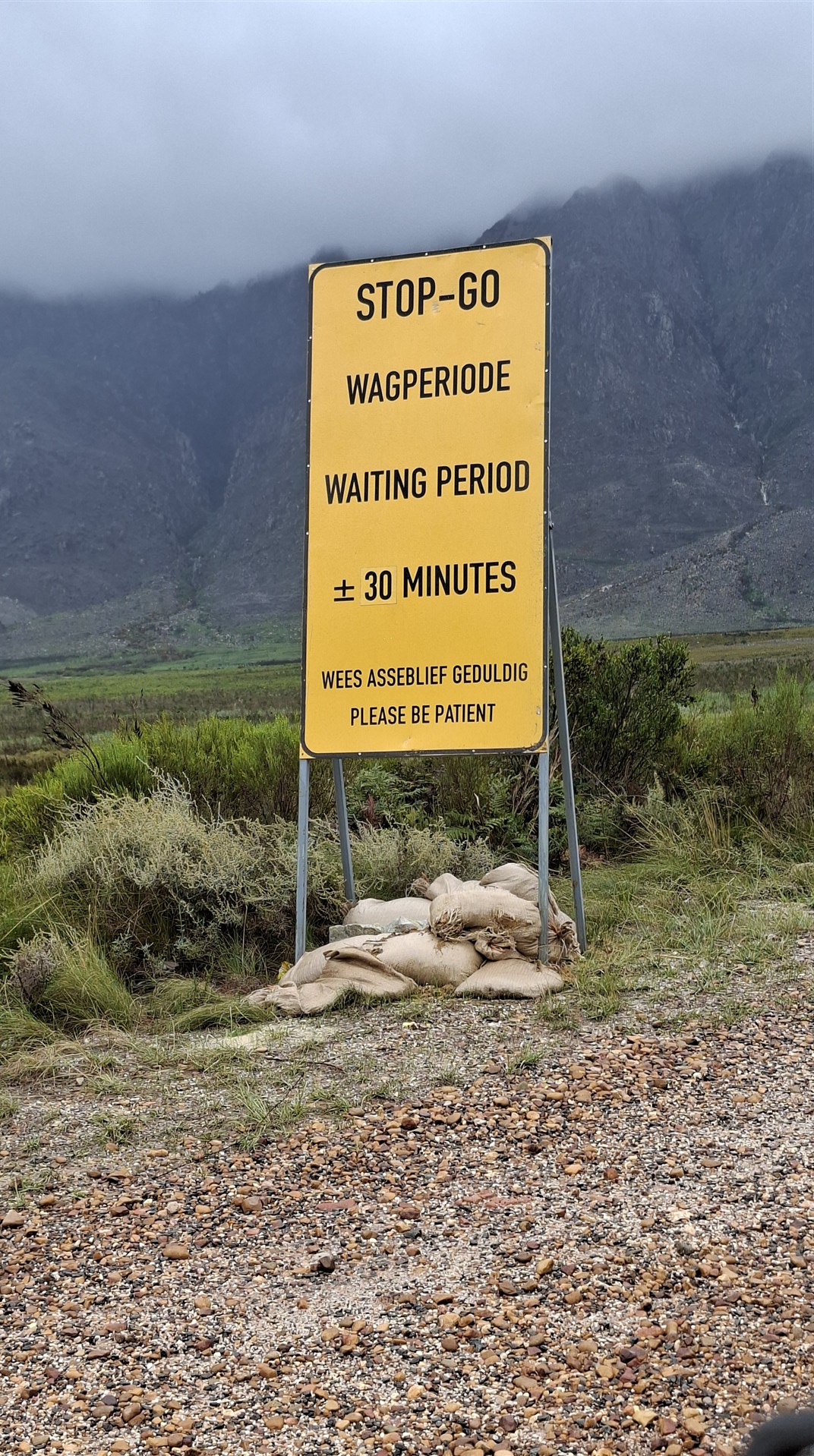
A sign you’d never expect to see.
I came to some roadworks, controlled by traffic lights, which were red. The sign said it could be up to 30 minutes wait. I’ve never seen anything like that before. I waited for about ten minutes.
The section was 4kms long and it passed by where part of the road had gone down the cliff. That section ended but another one came along, also 4kms. This one passed another part that had also gone down the cliff as well as one where the cliff had come down onto the road. I didn’t think this road was going to be fully open any time soon. I was disappointed in not being able to stop for photos.
The town of Franschhoek was full of art shops. No reason for stopping then. When I got to the main entrance to the museum I wasn’t allowed to use it. The bike would disturb the horses, they said.
I was directed to another entrance where I was told to go to a car park from where a little bus would take me round to the museum.
And this worked. I’d just got off the bike when the bus arrived. It’s main purpose was to ferry people from the museum to the winery. It was about 3kms across the estate.
I was very surprised at how cheap it was to get in, especially given how superbly manicured everything looked.
There were four buildings to explore, roughly grouped in age, full of fascinating exhibits. There were bikes as well, but nothing I hadn’t seen before.Some of the cars were from makes I’d never heard of. Apart from the old ones, there weren’t many ordinary cars on display. Mostly upmarket or sporty stuff. It was nice to see a bright red Cord.
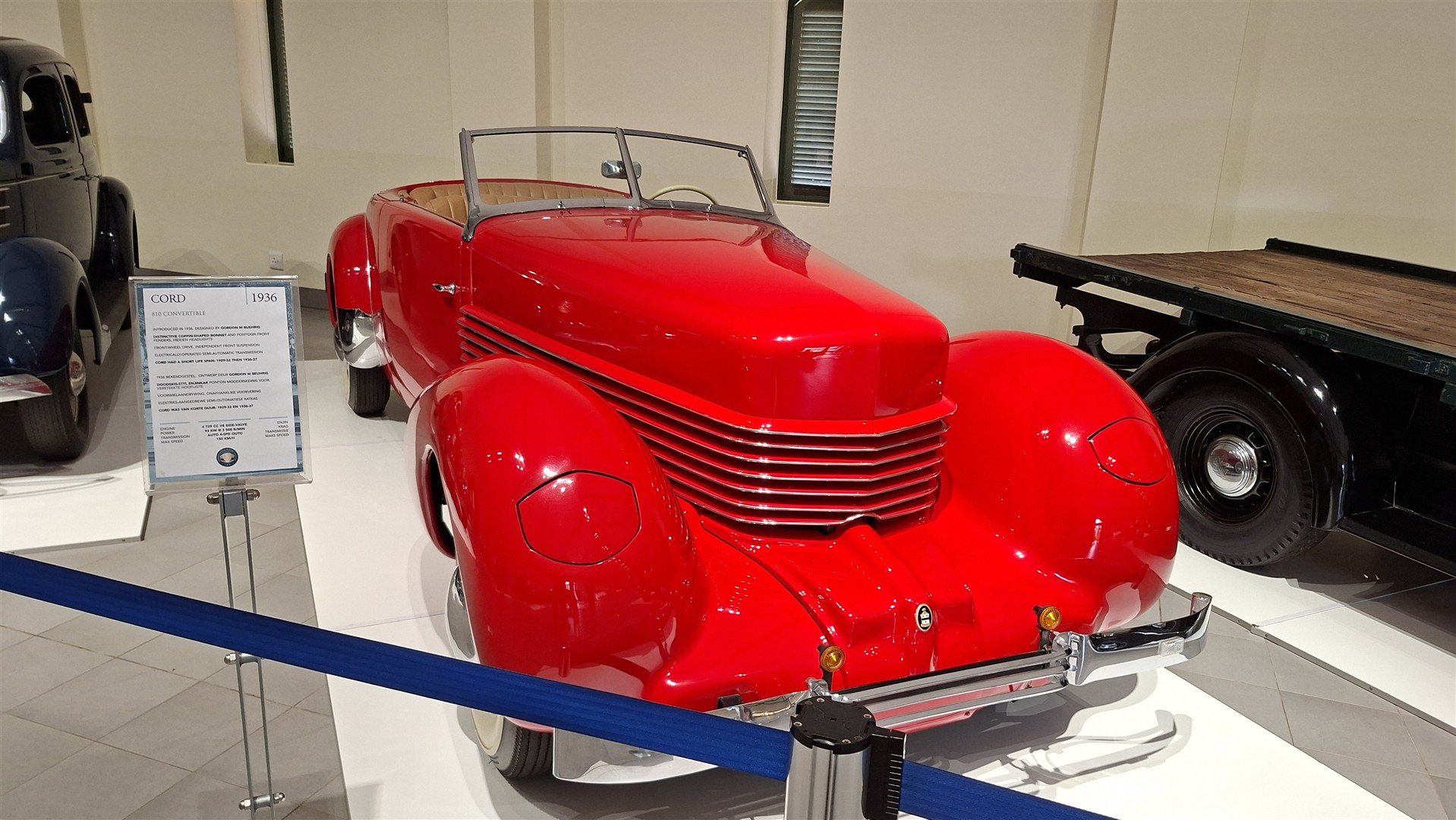
A Cord 810 Convertible. One of the classiest cars ever made.
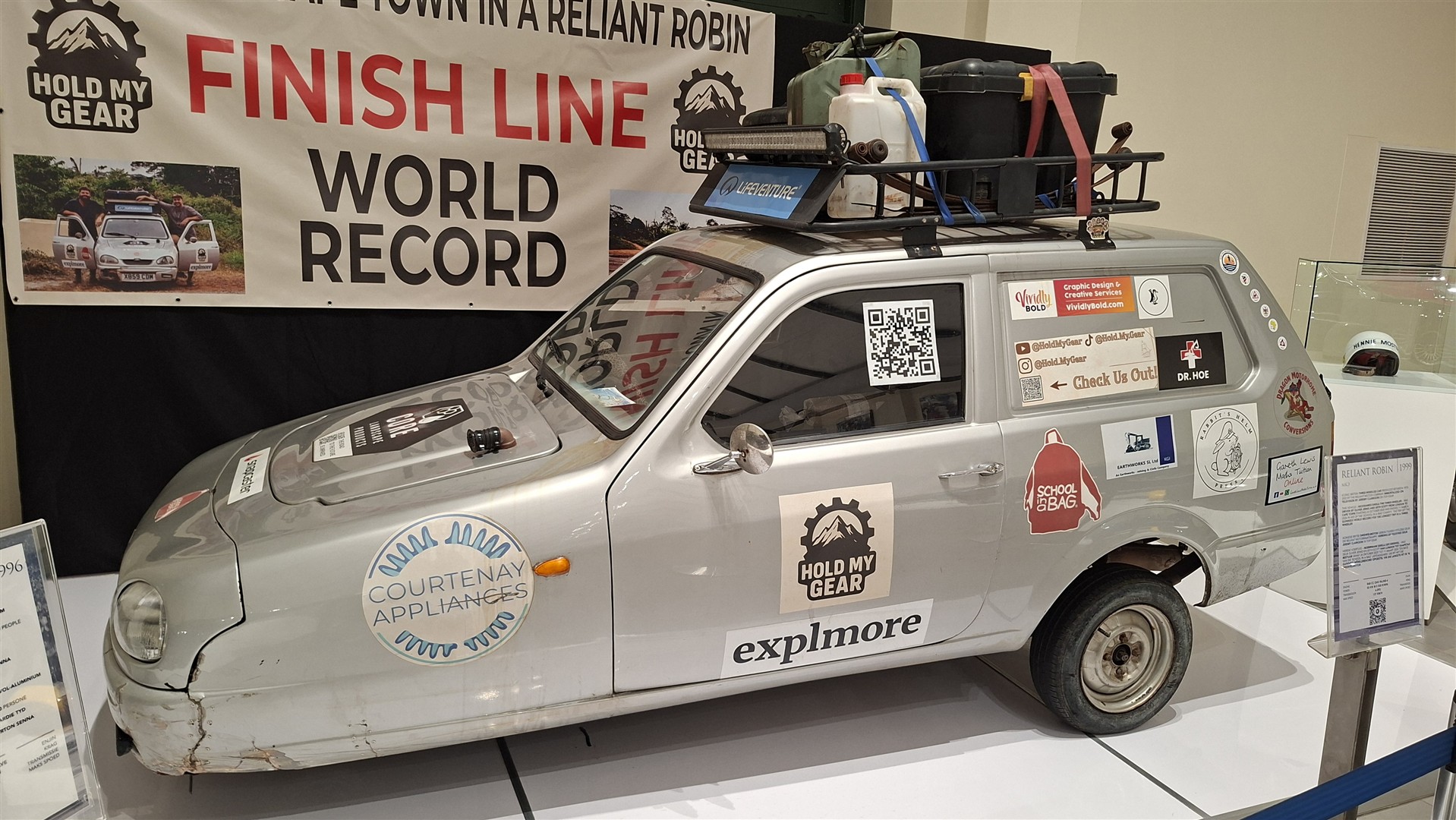
From the sublime to the ridiculous.
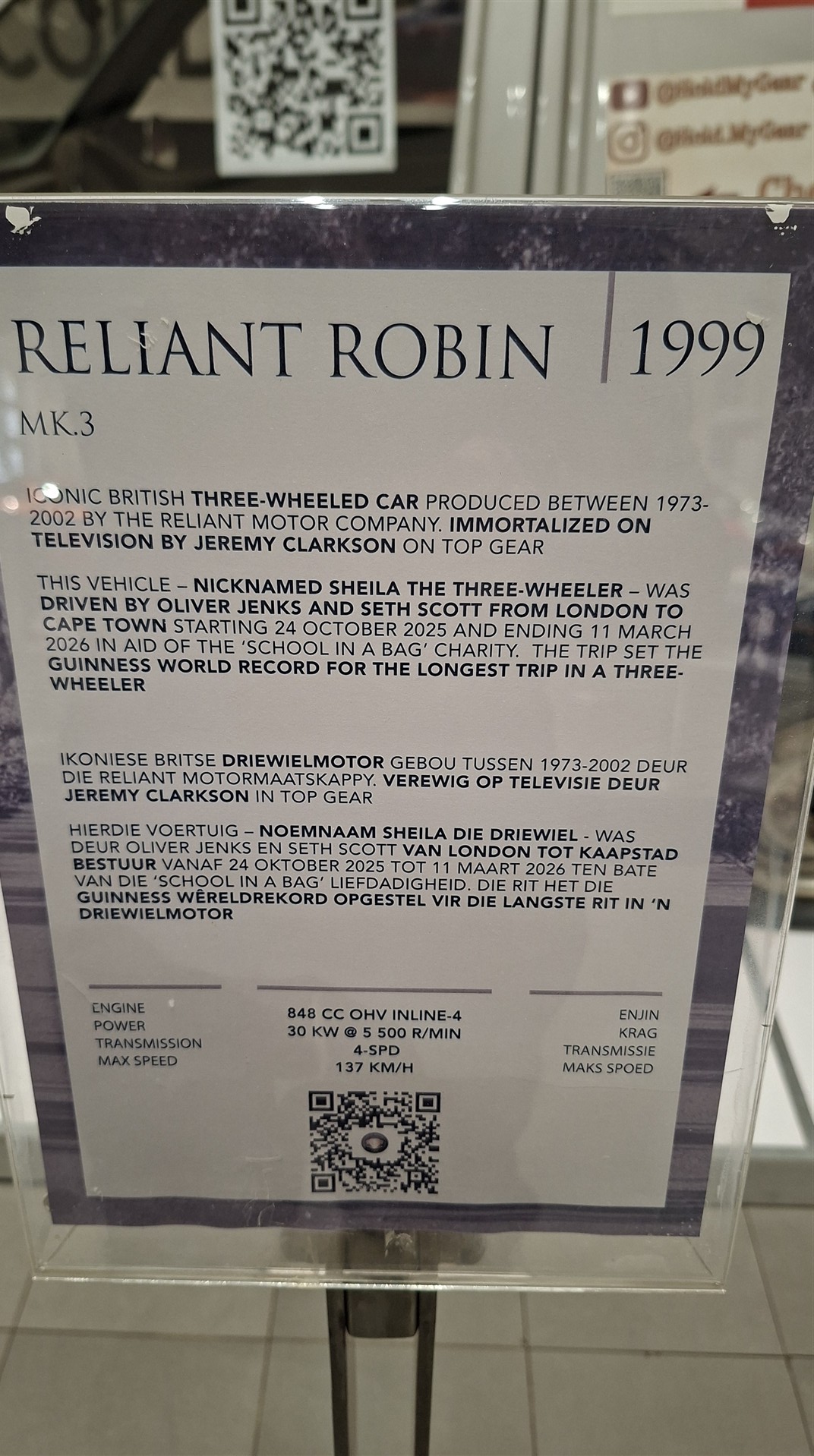
No mention of Delboy Trotter on this info board.
I took photos of almost everything, along with the info signs. I chatted to a couple of guys from Philadelphia and one of then took my blog details.
Then it was time for coffee and cake. They had a deal on the go that I couldn’t resist.
I went back to the bike on the bus and I departed in the rain. But it cleared up after a while. The main road took me down near to the waterfront in Cape Town and the hostel I’d booked was on the main road.
I managed to get my bike into a corner of the car park, for free, as Danish Michael had suggested. The hostel is very big and very well organised. The kitchen is excellent and the staff were very helpful. There was a huge and noisy bar underneath, always very busy. It’s called never@home, should you be looking for a place to stay.
I’d been needing a service and been recommended a mechanic in CT by Andy of Mad or Nomad. I’d contacted Ray and asked when I could come to him. He said “Anytime”. So I arranged to go there next day, which was a Sunday.
It was a very wet ride. The roads were flooded and the wind was blowing me around, with the rain coming down in biblical proportions.
I noted that he had family and asked him when he took time off. He said “Sunday”. So I asked him why on earth he’d given up his day off when I could just as easily have come next day. I felt really bad.
He’s a very pleasant guy and had gained most of his experience working at BMW dealers. He also used to be quite a successful racer.
He had loads of bikes around, including a fairly modern Moto Guzzi, set up as a café racer. It looked really small compared to the adjacent BMW GS. He also had a BMW C1, and loads of others in various states of repair, both in his workshop and yard.
As Andy had said, he’s a very careful worker. The first thing he did was to check the steering head bearings and declared them knackered as they were notchy. I’d wondered about that myself, relating to the strange steering I get sometimes.
I told him about my oil usage, which is about half a litre between the 10,000km services. He said that was just about OK, and he suggested I do a top end rebuild before going to America. I need to think about that.
Once the servicing was done he offered to replace the brake fluid, a job that was now due after two years. He didn’t ask for any extra for it but I paid him R1800 instead of R1650 anyway. It was only fair.
I was very pleased with Ray and his attitude towards his work and customers. I hope I can direct some work his way.
While travelling I’d made contact with a woman named Steffi. She referred to herself as ‘Steffi, motorbike girl’. We arranged to meet by the clock tower on the waterfront.
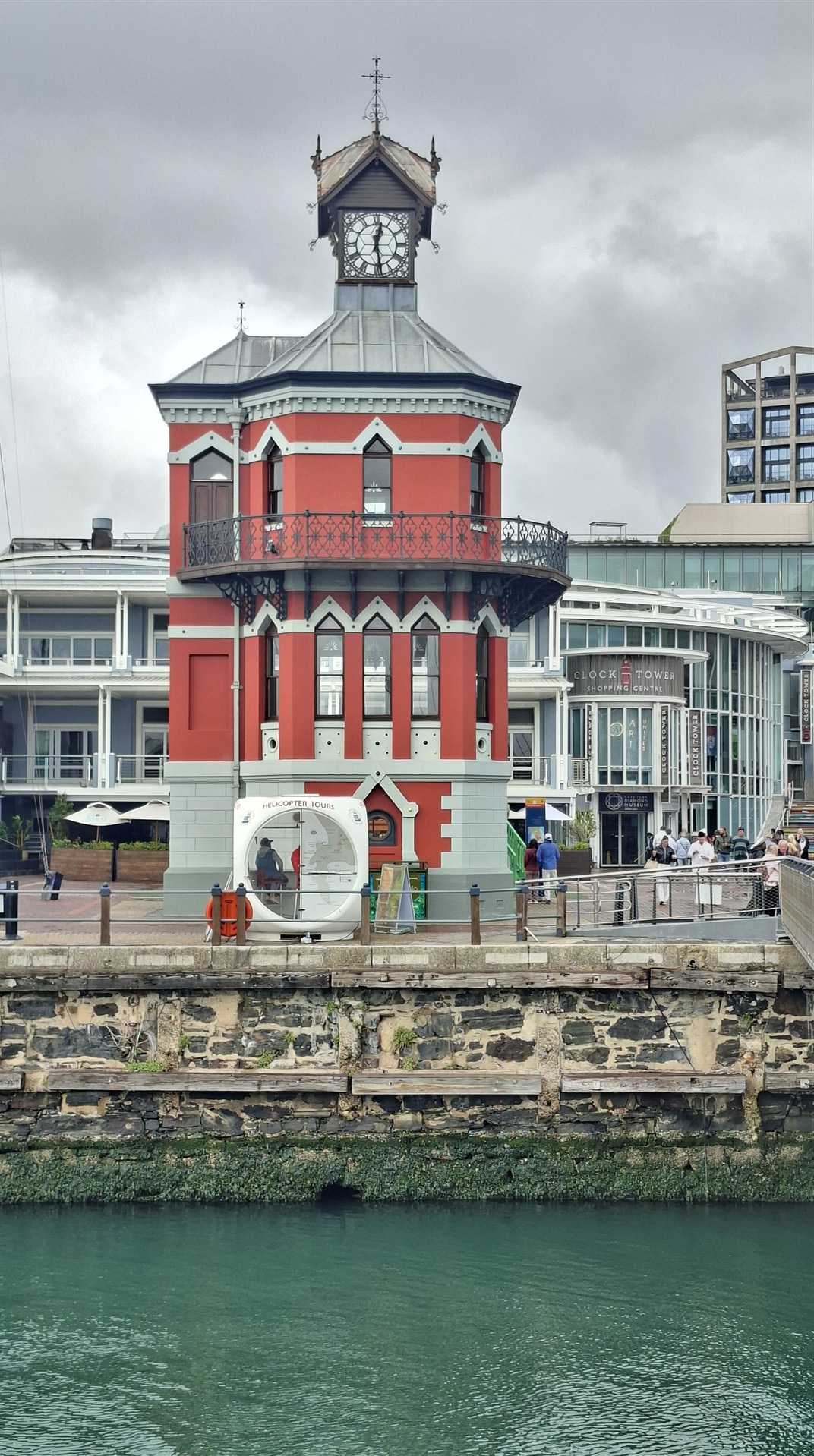
Waterfront clocktower.
We found a place for coffee and a sandwich and had a good old chinwag, covering all sorts of travelling topics. Many stories were swapped.
She is very personable. Mid to late forties, I’m guessing. She’s German but has lived in Portugal for 20 years.
She started her journey in 2022 and went around some of Central Asia, then the Middle East. She flew her bike to Nairobi from Dubai in 2024 and has been wandering around ever since, much the same as me. She rides a BMW GS700.
She’s planning on going to South America and is thinking of getting a Honda CRF. So I gave her lots of info and suggestions on that. She may well get back in touch with me about it in due course.
In fact she wants to keep in touch generally, which would be really great. After some photos we parted company.
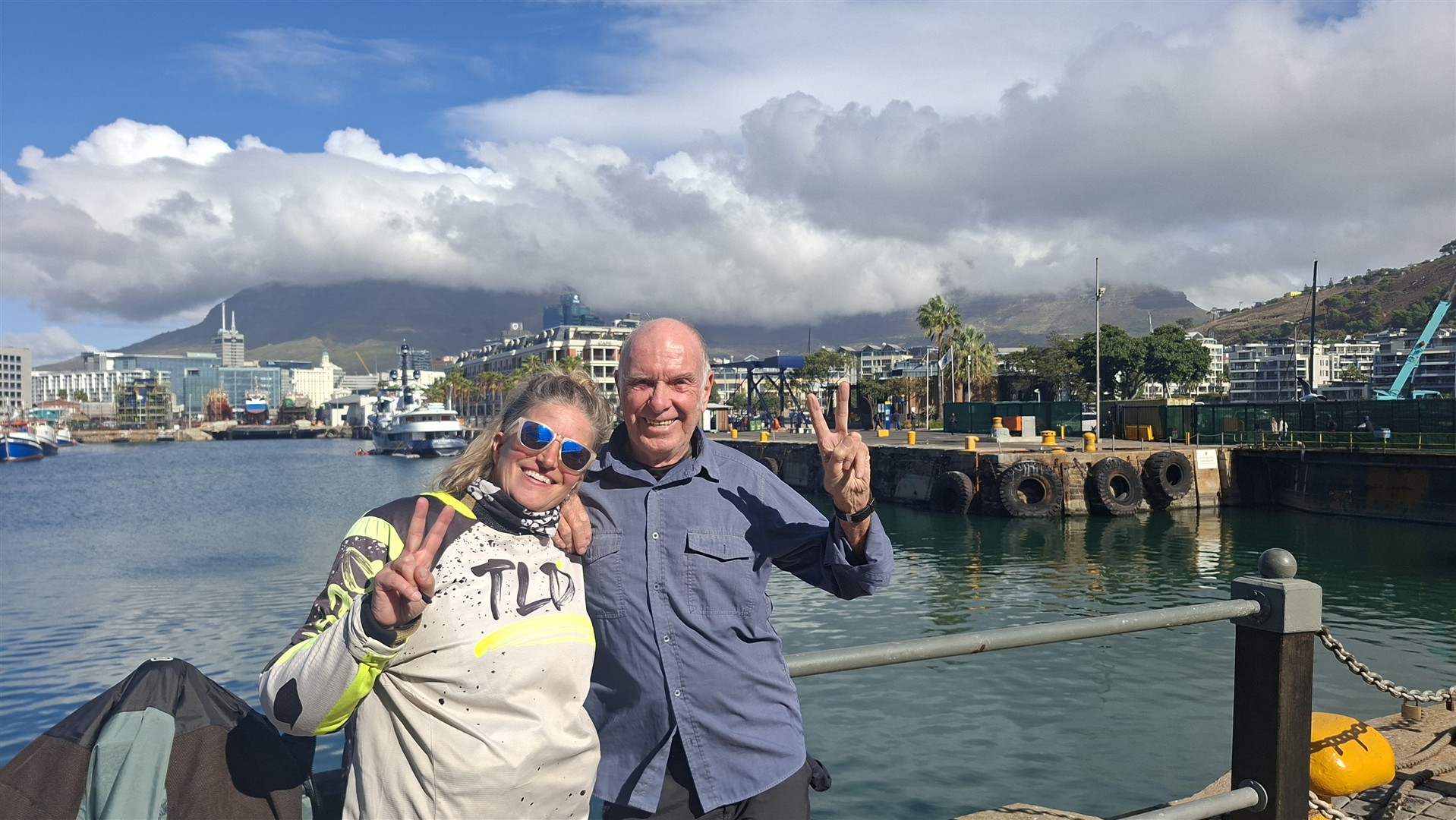
Me ‘n Steffi, on the waterfront.
I went to the supermarket and on the way back I tripped over the Irish pub.
One pint of Guinness became three, at the wonderful price of £3 each, while I watched some football highlights. A great way to kill some time.
To my surprise I spent seventeen days in Cape Town. Some of it was chilling out; some of it was organising; some of it was riding; some of it was spent with Steffi. All of it was very pleasant.
The weather was getting chilly, especially at night. But I still enjoyed some rides out.
I went out one day intending to ride to Cape Agulhus, which is Africa’s most southerly point. But I didn’t leave very early and only went as far as Hermanus.
I went along the coast road and enjoyed a great time swinging round the bends. The road wasn’t busy and ran along the coast for quite a distance, passing through some lovely, small coastal villages.
I passed a place where a truck had gone down the embankment and was laying on its side, wheels in the air. On the way back I stopped to photo it.
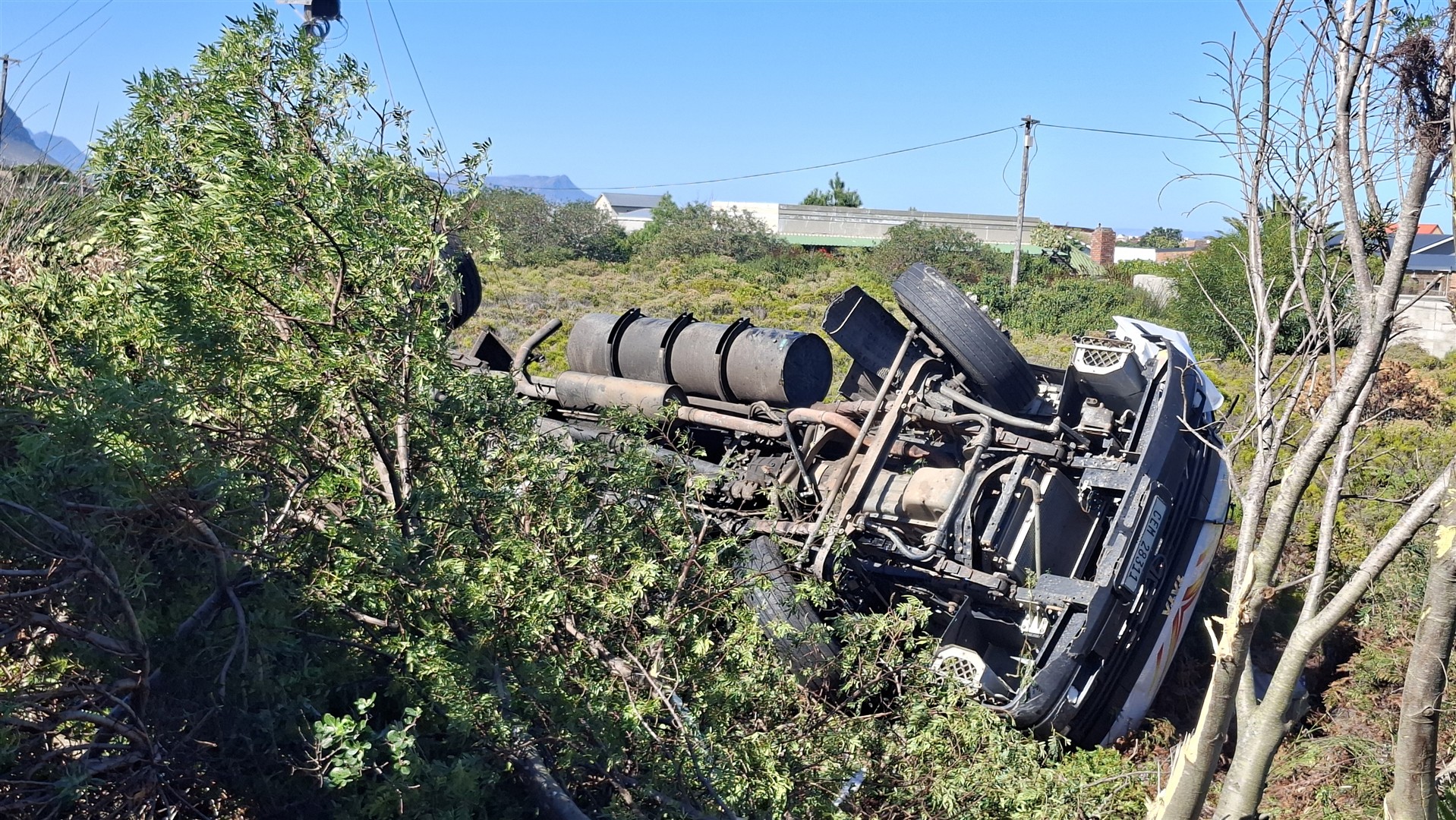
Caused by a puncture, I was told. The driver wasn’t badly hurt.
When I got to Hermanus I parked up and found coffee and carrot cake, with ice cream. The café overlooked the sea front and sitting out in the sun was very pleasant.
Rather than have a very late day I didn’t bother with the Cape, saving it for another day, and took the same route back.
Next day I did go to Cape Agulhus and had a lovely day out. It was beautiful weather albeit chilly up on the tops. I took a faster route and once I was off the main N2 the road became nice and twisty in places, with hills and valleys all the way.
The scenery was quite boring as it was almost all huge wheat fields. But I suppose it helped keep my mind on the road. The bike ran well and fuel consumption was much better than recently because the headwind I’d been suffering had gone. It’s amazing the difference it makes.
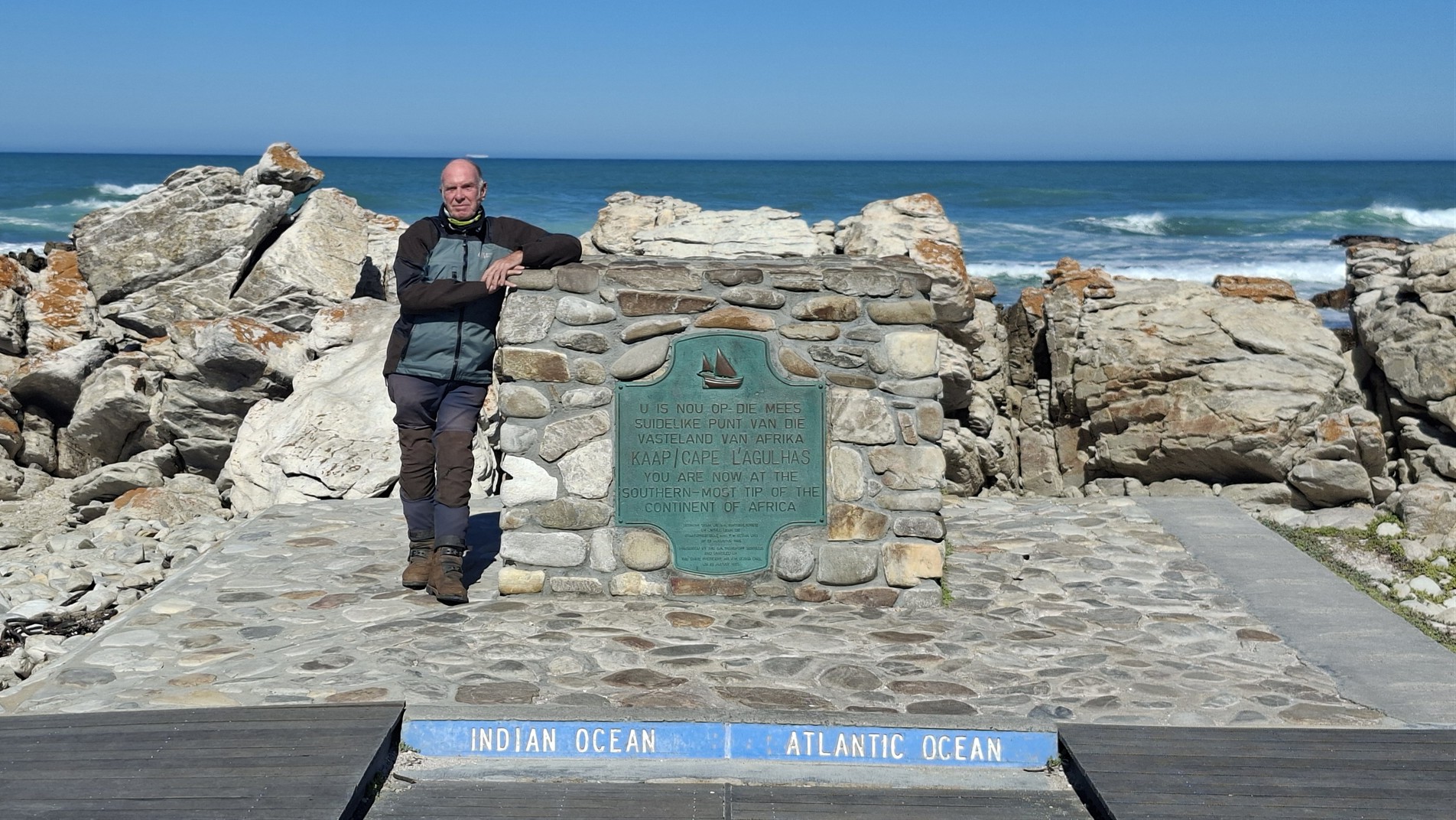
The photo that has to be taken.
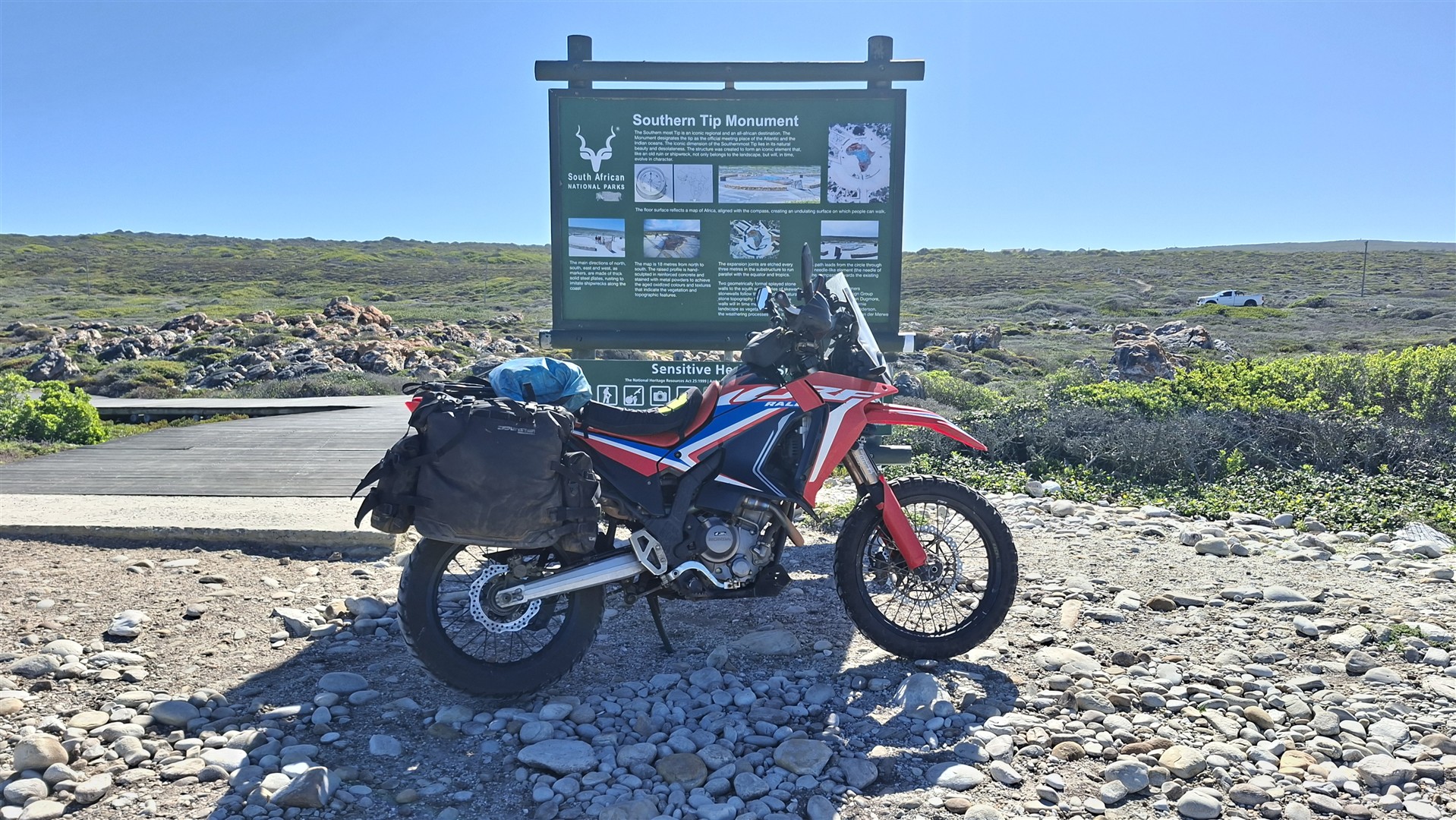
The bike did get a look in.
Cape Agulhus was very good. I was able to get photoed next to the famous sign by the beach, about it being the most southern point but, sadly, I couldn’t get the bike there.
There was a sculpture of the map of Africa, with the equator and the tropics marked on it. Sort of bas relief and with colour.
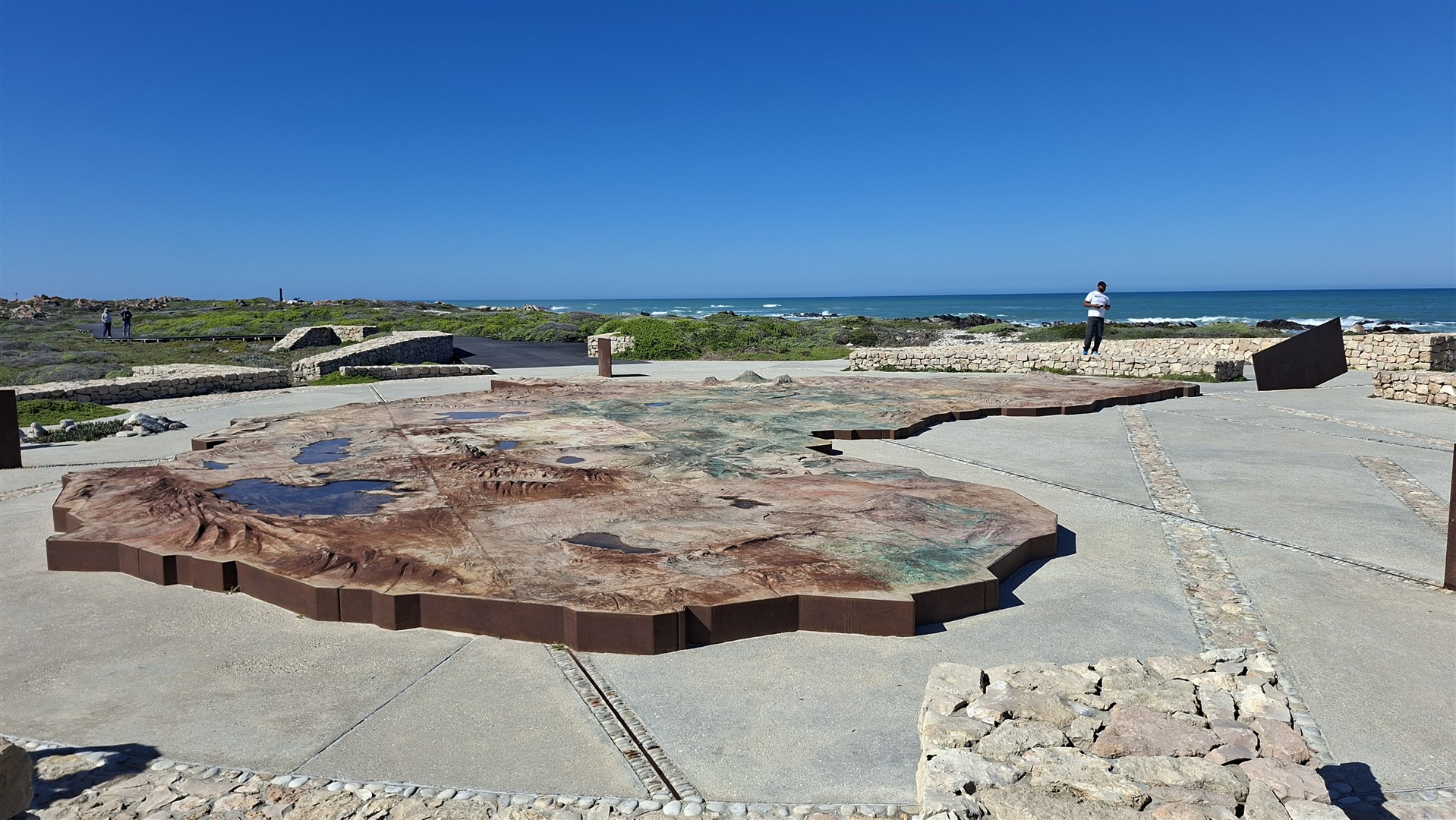
A much better ‘Map of Africa’.
When I came to leave the bike wouldn’t start. The fuel injection fuse had blown. Back to the problem I had in Windhoek. I messed about, pulling wires etc until it was OK again.
With the mysterious fault in abeyance I rode round to the lighthouse. It was built in 1848 and still operates. There was a display of info boards and I was able to climb up the steep stairs and then the ladder, out to the balcony around the light.
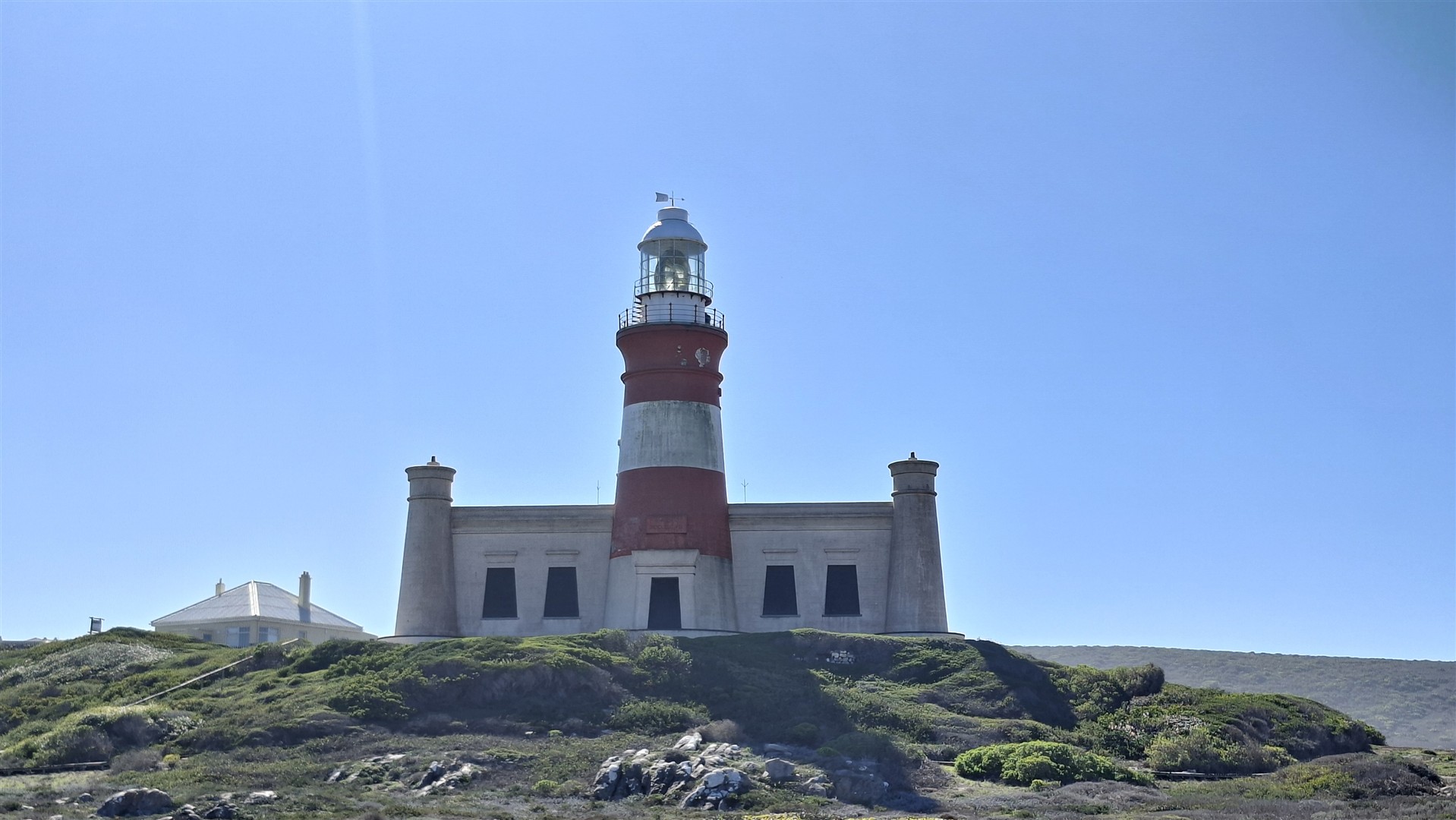
Cape Agulhus lighthouse, still in use.
By now the afternoon had got very hot. I stopped in one of the towns for coffee and cake. The towns out this way are quite old, judging by the buildings.
Cape Alguhus itself is old but is very much a holiday place. There were hundreds of what I took to be holiday homes straggled along the roadside. Massively expensive, I’m guessing.
The bike overheated while I was going through one of the small towns. Traffic was busy on the N2 but no problems with it. I turned the engine off whenever I was queueing. But the light came on a couple of hundred metres before I reached the hostel.
I went down to the bar for a couple of beers. I got talking to a Quebecois. He didn’t have much English. He was mostly using Google translate and I was answering him in French. He said my French was very good. Complimentary but not really true.
One place I wanted to visit was Chapmans Peak. Ray had told me about it, saying that the road going up the hill was built on an overhang above the road below it. It sounded fascinating.
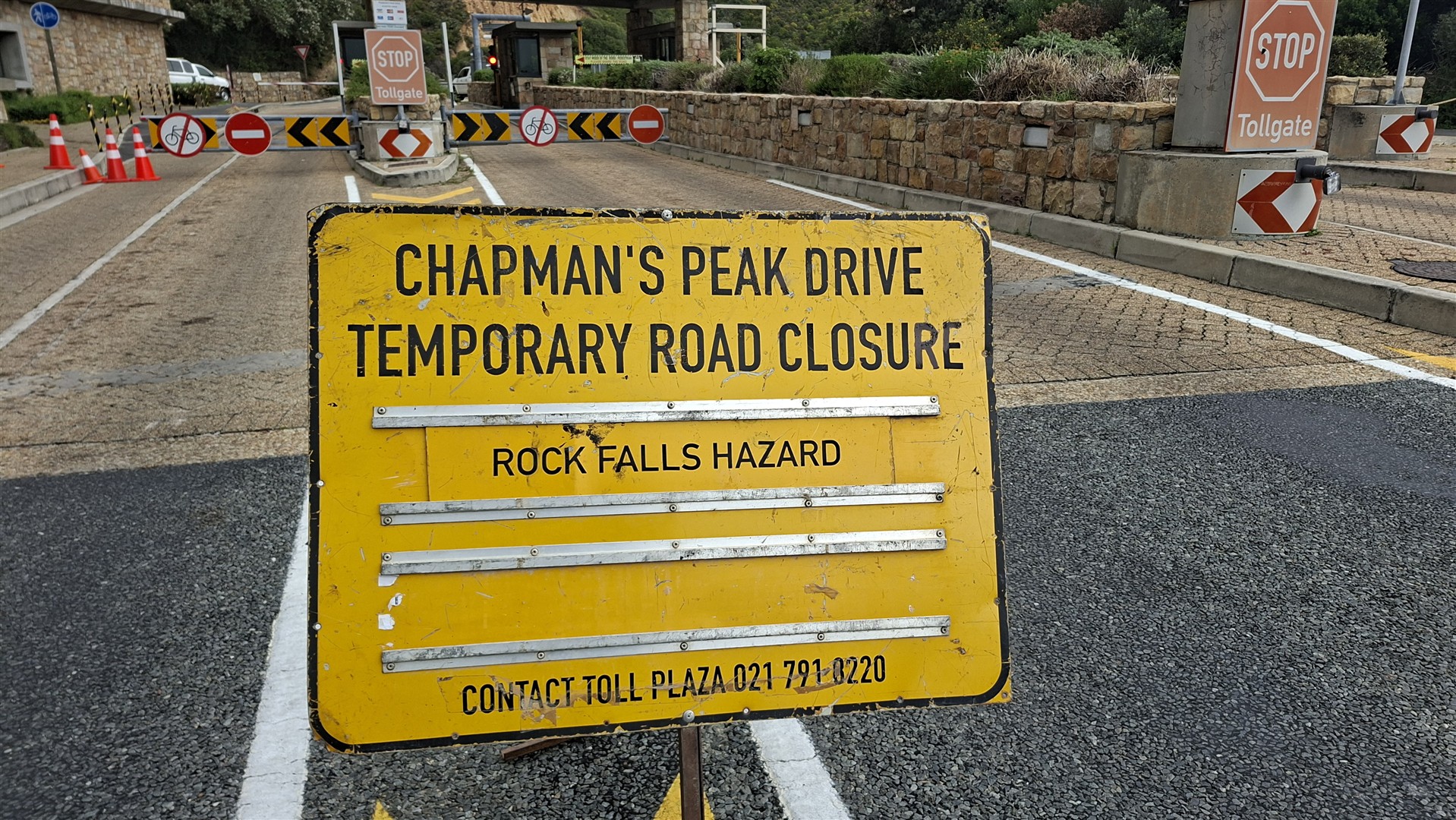
Rocky Road Blues.
But unfortunately it was closed due to a rock fall. And it remained closed all the time I was in CT. The closure was at the toll booth and there was parking space there.
I hung around for a while, admiring the misty view of the mountains across the bay and eating my apple. Then I headed back along the coast road.
I stopped in Haut Bay looking for coffee but I didn’t see an outlet. The main thing there was a huge café that sold fish and chips to the masses.
So I moved along and came to Camps Bay, a much nicer place. Plenty of good looking buildings, right across from the beach.
I found a café for coffee and biscuit. There were seven or eight scooters and bikes parked outside, none of them runners.
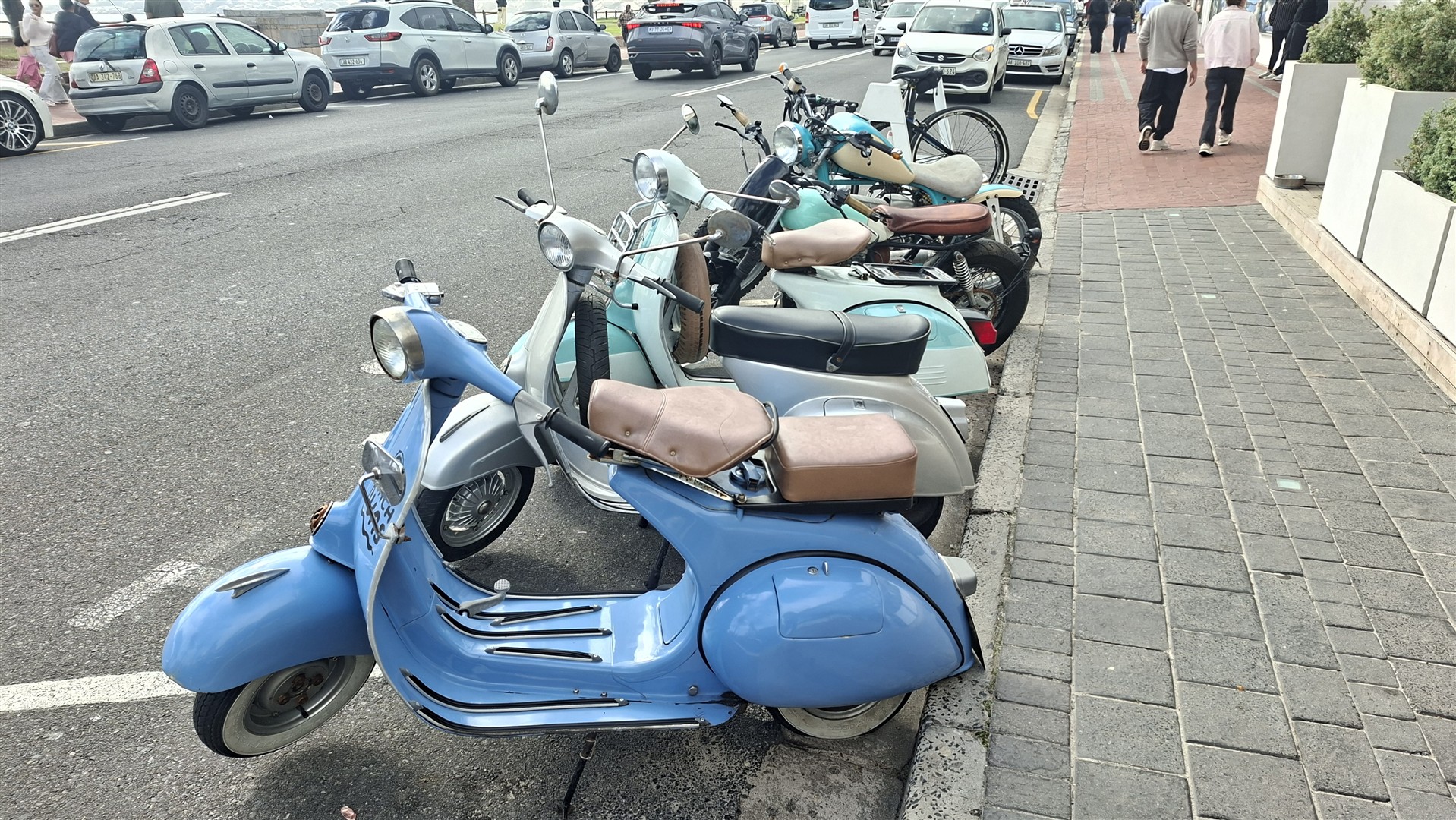
A collection of classics.
One was an old BMW made into a Bobber. Very nicely done. The scooters were old ones too. But why were they there?
Across the road were a couple of native dance troupes. They were all kids, working hard and looking good, and I was happy to put my loose change into the collection bucket.
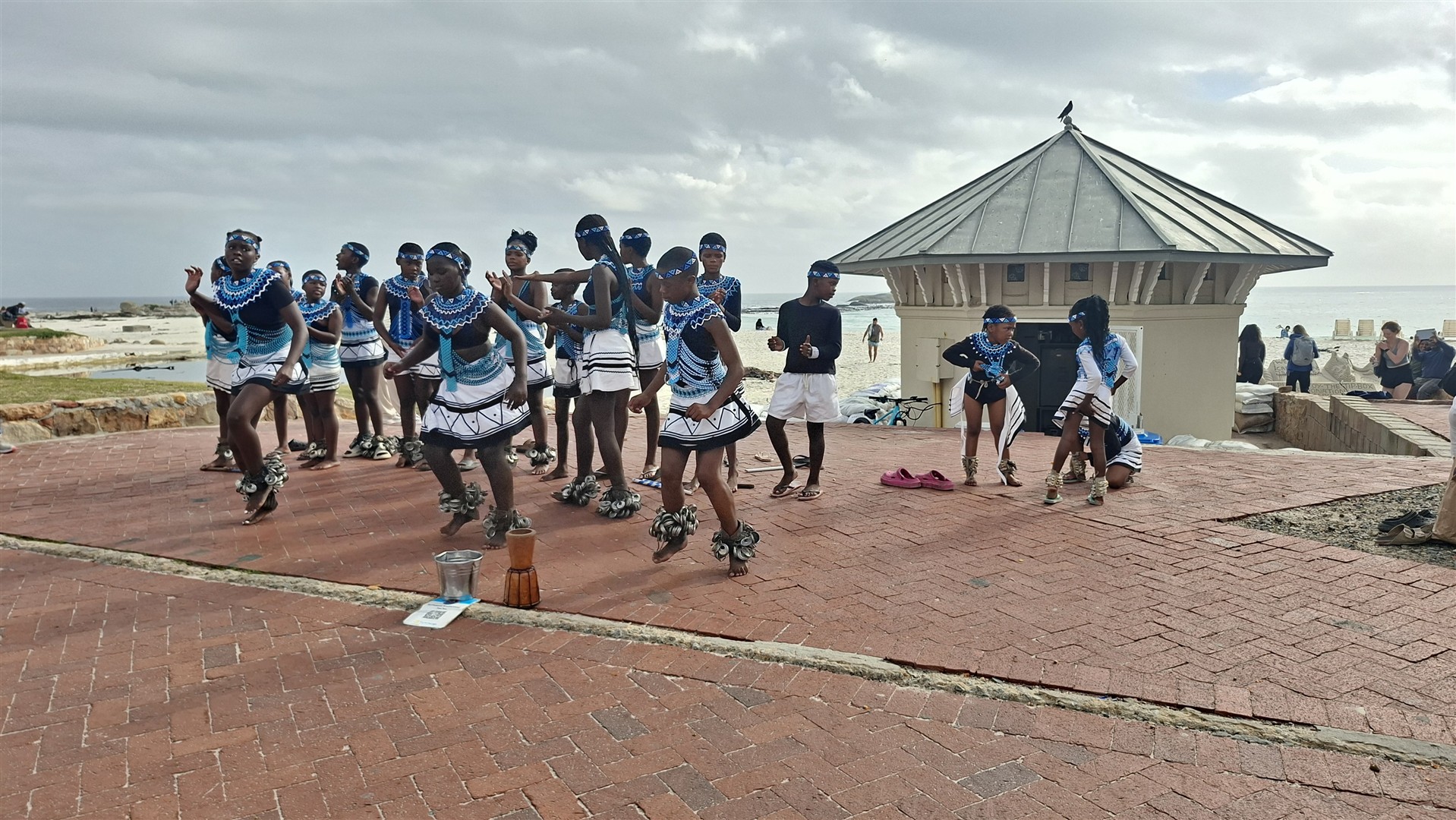
Musical Youth.
It was a chilled out ride back to base. On the main drag there was all sorts of traffic control, coned off lanes etc. I assumed it was police checks but I later discovered it was diversions due to very heavy traffic.
I met Steffi again one day. I wanted to visit a bike accessory shop called Flying Brick. After all the hassle with my fuel can I’d decided to invest in a six litre fuel bladder, for potential use in South America.
We met at a nearby Starbucks (boo), had a coffee then went round there. I was very impressed with the range of products they carried. Biking is a big thing in South Africa so it wasn’t all that surprising.
I bought the bladder, costing £35 rather than the £59 in would have cost at home. I was also very tempted by a waterproof backpack they had on sale but decided to research other alternatives first.
Afterwards we rode along the coast a bit to a waterfront café for some lunch and more great chatting.
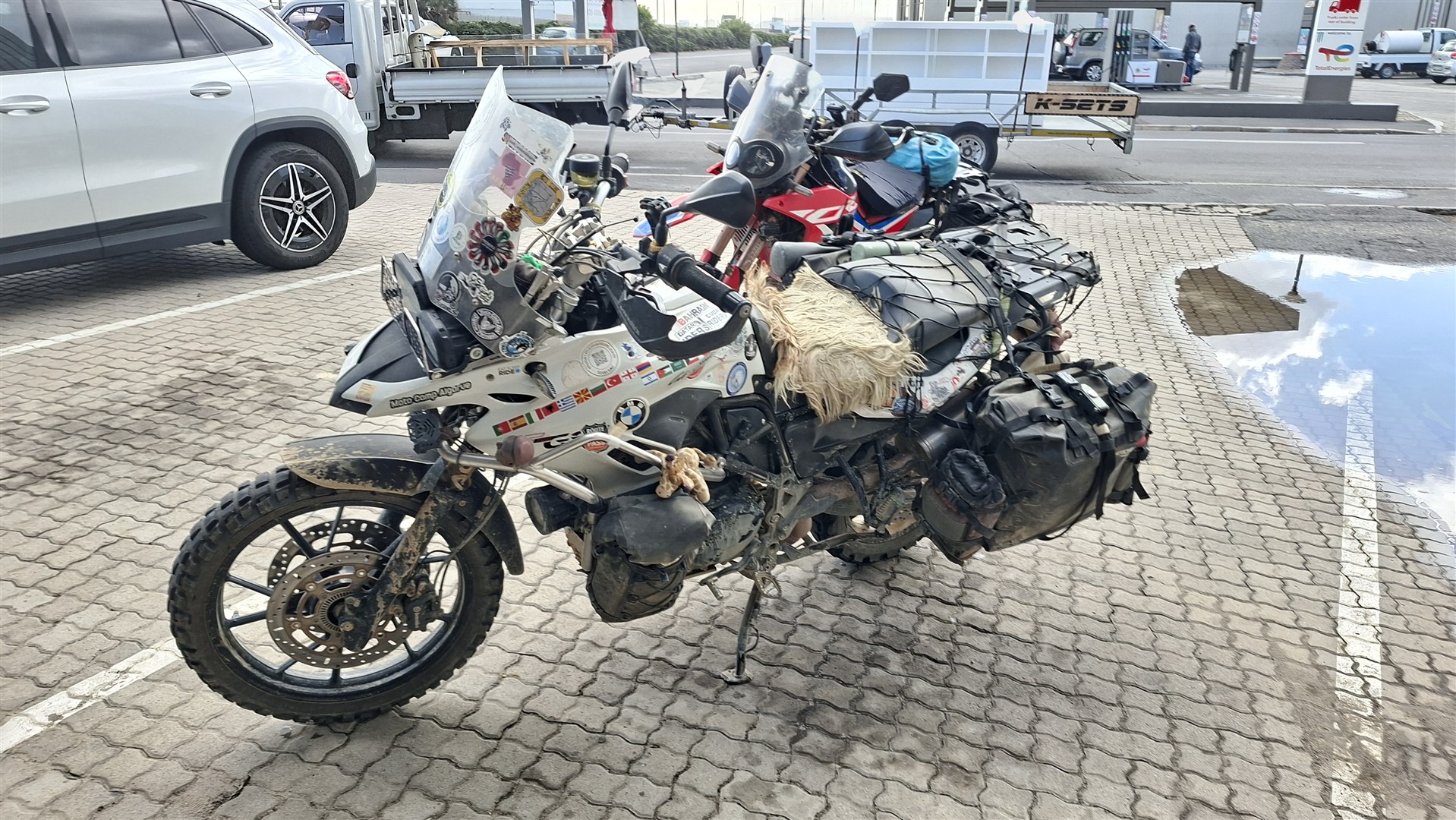
Steffi’s well travelled BMW 700GS.
Meanwhile, some organising was required. There were two things to be done. The most important was shipping the bike back to the UK.
Andy had recommended a company called Econtrans so I contacted them and got a quote. It was quite high but also quite quick. Speed was more than price important so Econtrans got the gig.
I went to meet a guy named Lyndon and discussed it all with him. He said they send a container to London Gateway every week so when I brought the bike to him he would get it loaded, provided there was room. Excellent.
The second task was to book a flight to the Philippines. When I was in SE Asia I hadn’t been able to get there as shipping the bike out there would have been too impractical. So it seemed an opportune moment to put that right while my bike was on the ship. My Irish friend, Michael, had told me how much he enjoyed it out there and had given me details of a bike rental business that he’d used. So a departure date was selected and a flight was booked.
I’d planned to meet Steffi again so I got organised to go but the bike wouldn’t start. There was no display on the dash. Jump starting made no difference.
After a lot of prodding and pokig, I got it running. But now I had no fuses left. I’d already messaged Steffi to tell her I’d be late or possibly not going. So I messaged again to confirm the worst.
After a break I went out to find some fuses. But that was going to be very difficult on a bank holiday weekend.
I walked along the main road, heading for the servos there. On the way I passed a car repair place that was open and the lad in there managed to find me a 20 amp fuse. I didn’t think to ask him if he had any more.
A lot of walking with no result ensued. Servos don’t sell car accessories any more, only sandwiches.
On the way back I stopped at the same repair place to see if he had any more. Another guy went to look and he found three more, also FOC.
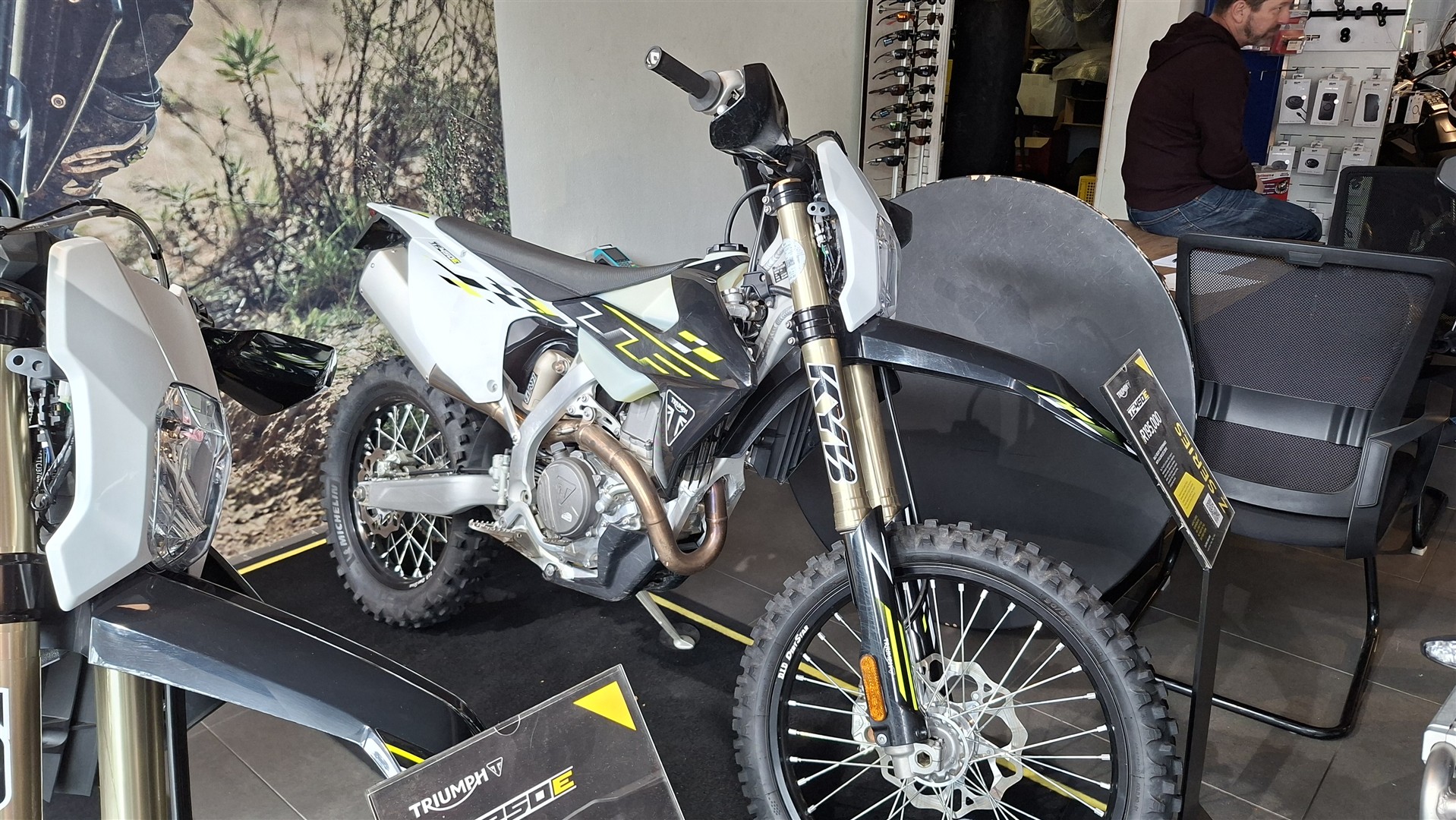
I was mega impressed by this Triumph dirt bike.
One very interesting place I did call into was Triumph dealer. I was admiring the bikes when I spotted a 250cc Enduro bike next to a 450cc version.
They both looked very handy. The guy told me the power outputs. The 250 is 42BHP. The 450 is an incredible 65BHP. Both single cylinder engines. I was amazed. They’re not designed for road use. No indicators or brake lights. But the guy said they’re looking into a conversion kit. Well done Triumph for venturing into a new market.
Back at base, after a coffee, I went out to the bike and put in the fuse. Needless to say it ran OK. Before doing so I tried to recreate the earthing situation from before but with no luck. All this was getting very frustrating.
My final ride out before shipping the bike had two purposes. Firstly to use up some fuel before giving the bike to the shippers. And secondly to have one last lunch date with Steffi and a couple of her friends before departing South Africa.
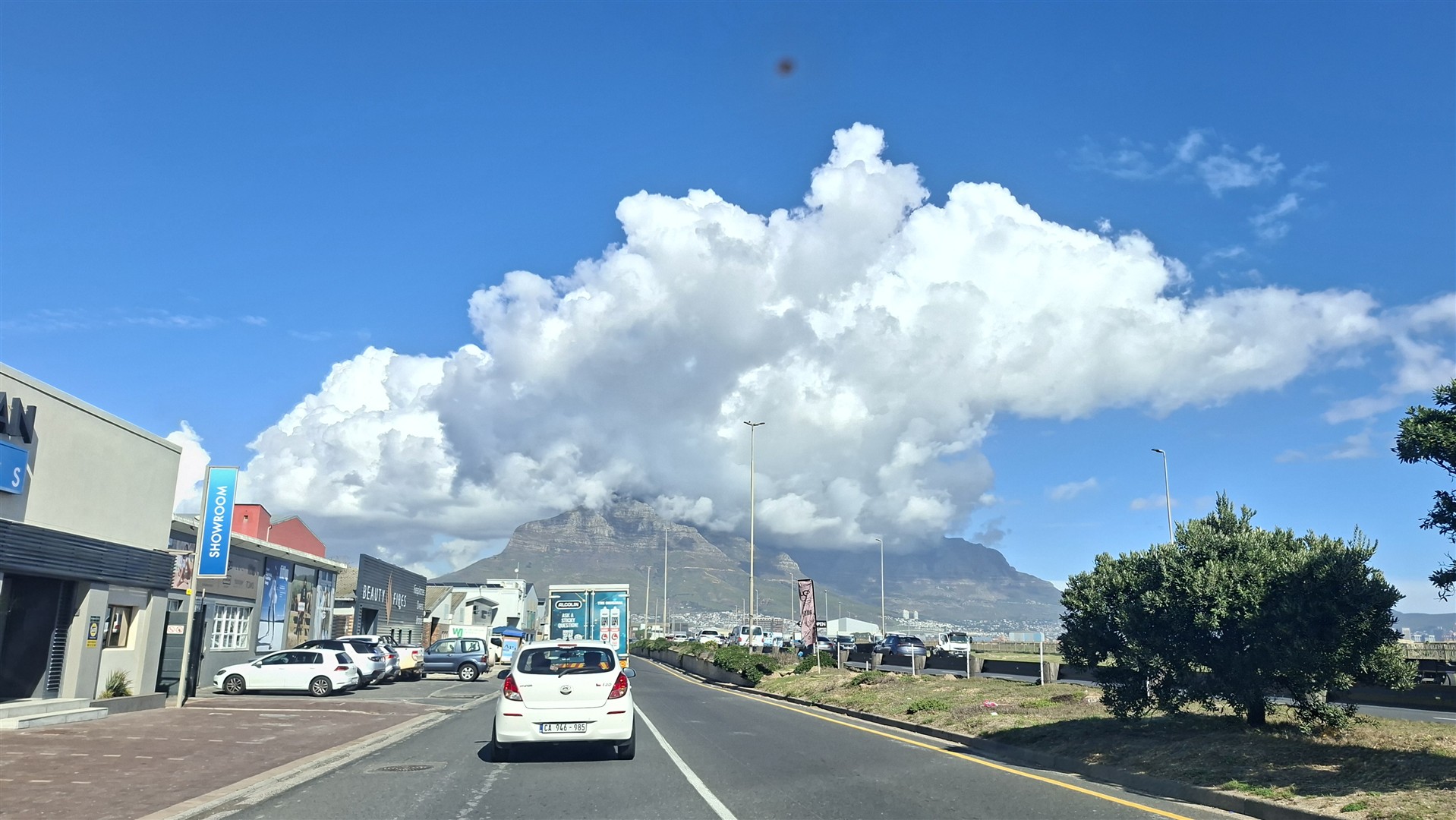
Table Mountain enjoys its own weather system.
The heavy mist from the morning was still around when I went out. But once I cleared the city the sun came out. My destination was Bainskloof Pass. I’d wanted to go to Chapman’s Peak but the road was still closed.
I went right up the pass, and beyond. That was a mistake because I didn’t really have enough time. So I upped the pace a bit on the way back.
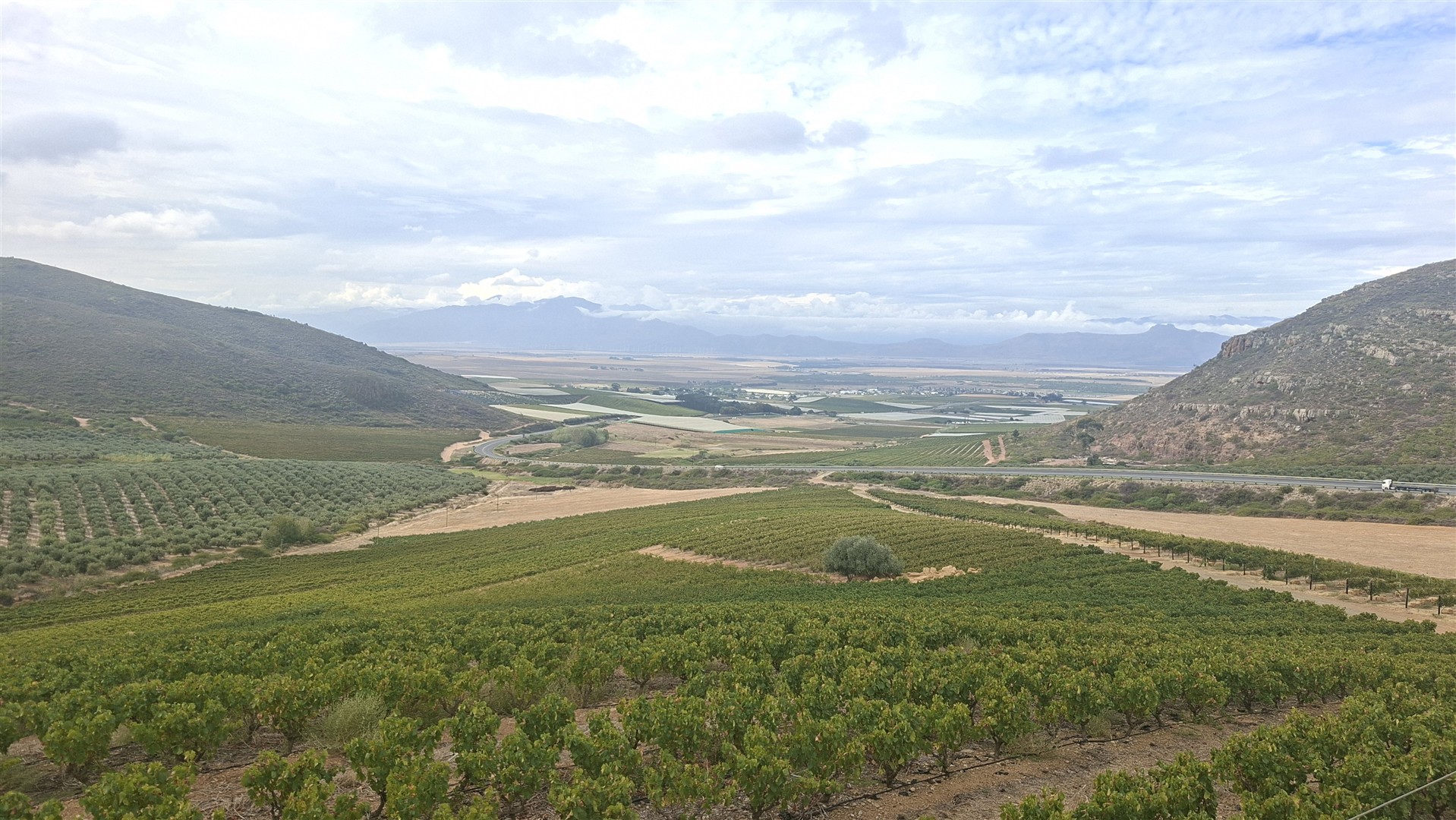
Looking out over the valley to the vineyards.
I was down the bottom of the hill, overtaking some cars, when the dash went blank and the bike cut out. The car I was passing kindly let me in and I was able to stop.
The start circuit fuse had blown and so had the fuel injection fuse. I fitted two of the three spares but that left me dead worried about what I would do if they blew again. But I got back to base OK.
I made it to the meeting place eventually, a nice Italian restaurant in a shopping mall. Steffi, Steve and Sonja were all there. Sonja was the friend that Steffi was staying with.
Sonja had a bad accident on her BMW 1250 where she was tipped off the road by a taxi. She suffered quite quite bad damage to her arm. She only started riding at 56 and has covered 200k kms. Very impressive.
They were drinking Jaegermeister shots. I declined. They were saying that drink drive laws were very relaxed in SA, but completely missing the point about driver impairment.
We had a great time chatting about all the things we’d done. We were all experienced travellers so the stories were good.
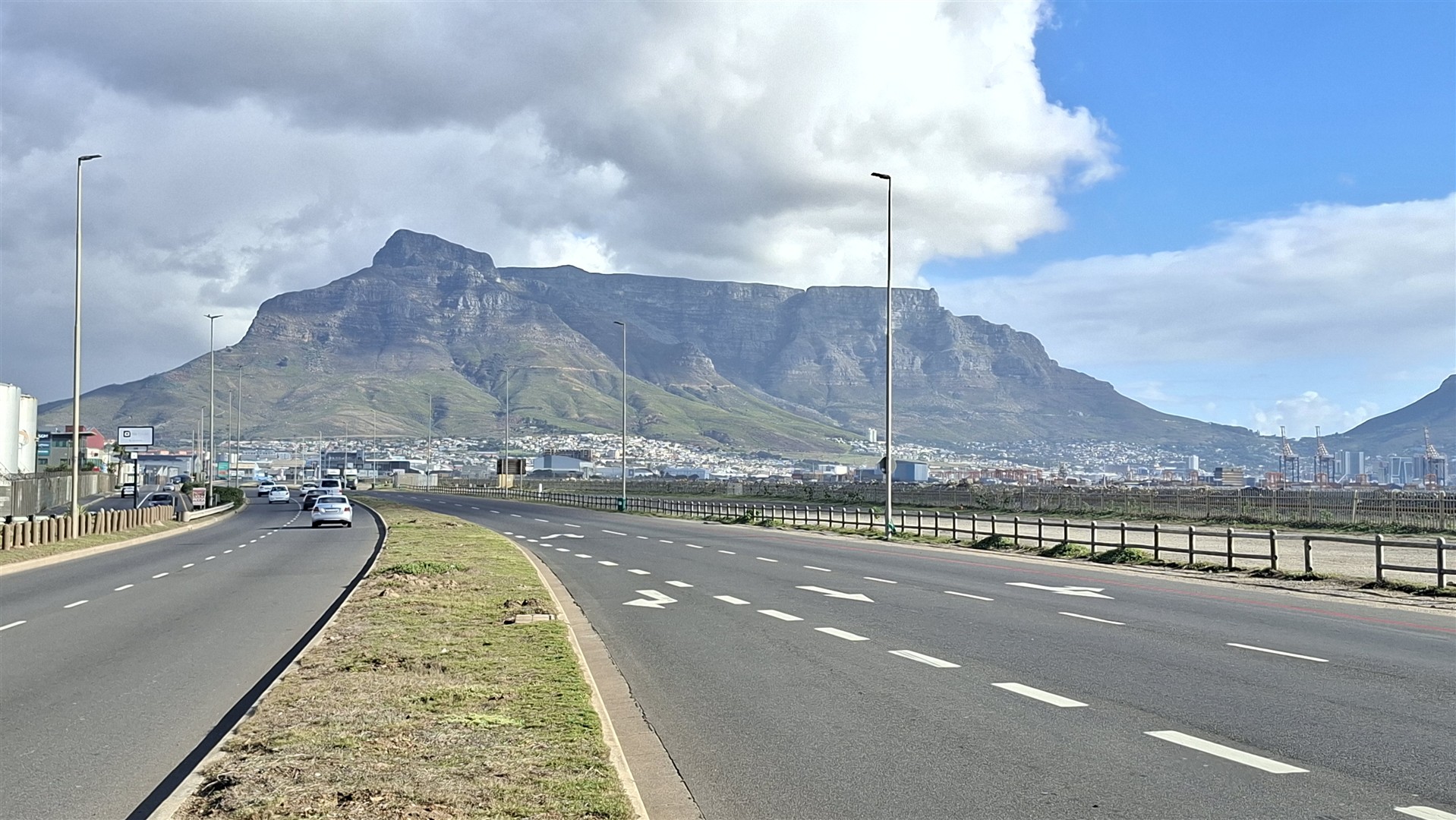
Table Mountain on a clear day.
A couple of days later I rode the bike down to the shippers. Needless to say, it gave me one last surprise when the fuse blew. But by now I’d bought plenty of replacements so it was replaced in short order.
I took the screen and panniers off the bike. Lyndon said they’d wrap it in cling film then crate it. At that point he’d be able to invoice me with the final cost. That cost would include all UK handling charges, making life very simple.
I was pleasantly surprised when he told me the UK agent would be Motofreight, a company I know and trust. He couldn’t tell me an exact shipping date but I was feeling relaxed about the whole thing.
A couple of days later I got a taxi to the airport and headed off for the Philippines.
Thoughts on South Africa.
I came to Sth Africa with very mixed feelings about what I was going to find. I’d already discovered that in Namibia, formerly part of Sth Africa and also run on apartheid lines, people of all races seemed to mix together in public and in the workplace with no sign of prejudice or superiority. That was how it seemed to me, at least. I hoped to find the same situation in SA.
To a large extent, I did. The only big city I went to was Cape Town, which is probably more focused on tourism than most others. As in Namibia, all races seemed to happily co-exist, in the workplace at least. But I had no way of gleaning what might lie behind that in terms of wages, status etc.
I could see areas of housing outside the city that were black only, suggesting that equality hadn’t reached that part of life yet.
I became an adult in the late sixties so was conscious of the dreadful state of affairs in SA throughout the seventies and eighties. As I grew older, and as British Prime Minister Margaret Thatcher’s influence over our daily lives grew, I became more aware of the appalling situation there, which she supported.
Nelson Mandela was often in the news and most of Britain cheered when he was released.
It was tempting to think that life was dreadful for native races but good for whites. But this wasn’t the case. The restrictions on freedom of movement, freedom of employment and freedom of social mixing affected whites too, albeit in a different way comparedr blacks and coloureds. And the secret police would happily arrest a white person as quickly as they would a native if they transgressed the apartheid rules.
Roll the clock forward thirty years and everything is obviously much better. But it’s still the native peoples that suffer more from poverty and lack of opportunity. Much work remains to be done.
Outside of all that, it’s a beautiful country and I wish I’d had more time to explore. The different areas have different cultural histories but I’d mostly been in former Afrikaans areas.
There are twelve official languages, including English (the main official language), Afrikaans, Zulu and Xhosa. Their usage varies from one area to another but English speakers get off lightly in having to learn the others as most people will speak some English at least. That suited me!
Thoughts on Africa
There are fifty four official countries on the African continent and I only visited ten of them on this trip, all Sub Saharan. I wish I could have visited more but, as said elsewhere, I really didn’t fancy the struggles associated with riding north through West Africa.
All of them were different to each other but many of them had huge similarities. These lay in the general appearance of the people, the topography of the countries and the crops grown there, and the nature of the problems faced by the peoples.
Most African countries have a very young population, leading to problems with unemployment, poverty and opportunity.
Some of them are clearly politically corrupt – as I witnessed in the Tanzanian presidential election. They’re probably financially corrupt too but but I’m not really qualified to comment on that.
Out of those ten countries seven of them were former British colonies, making my life much easier in terms of language etc. And I was always made to feel welcome wherever I went. And that last remark is why I enjoyed Africa so much.

