
23rd March. Maputo, Mozambique.
When I left the hotel in Maputo I was happy to give a tip to the security and car park guys. They’d looked after me and my bike, and it was a good way of disposing of my remaining local currency.
The road went through a national park where I saw, and photoed, some giraffes.
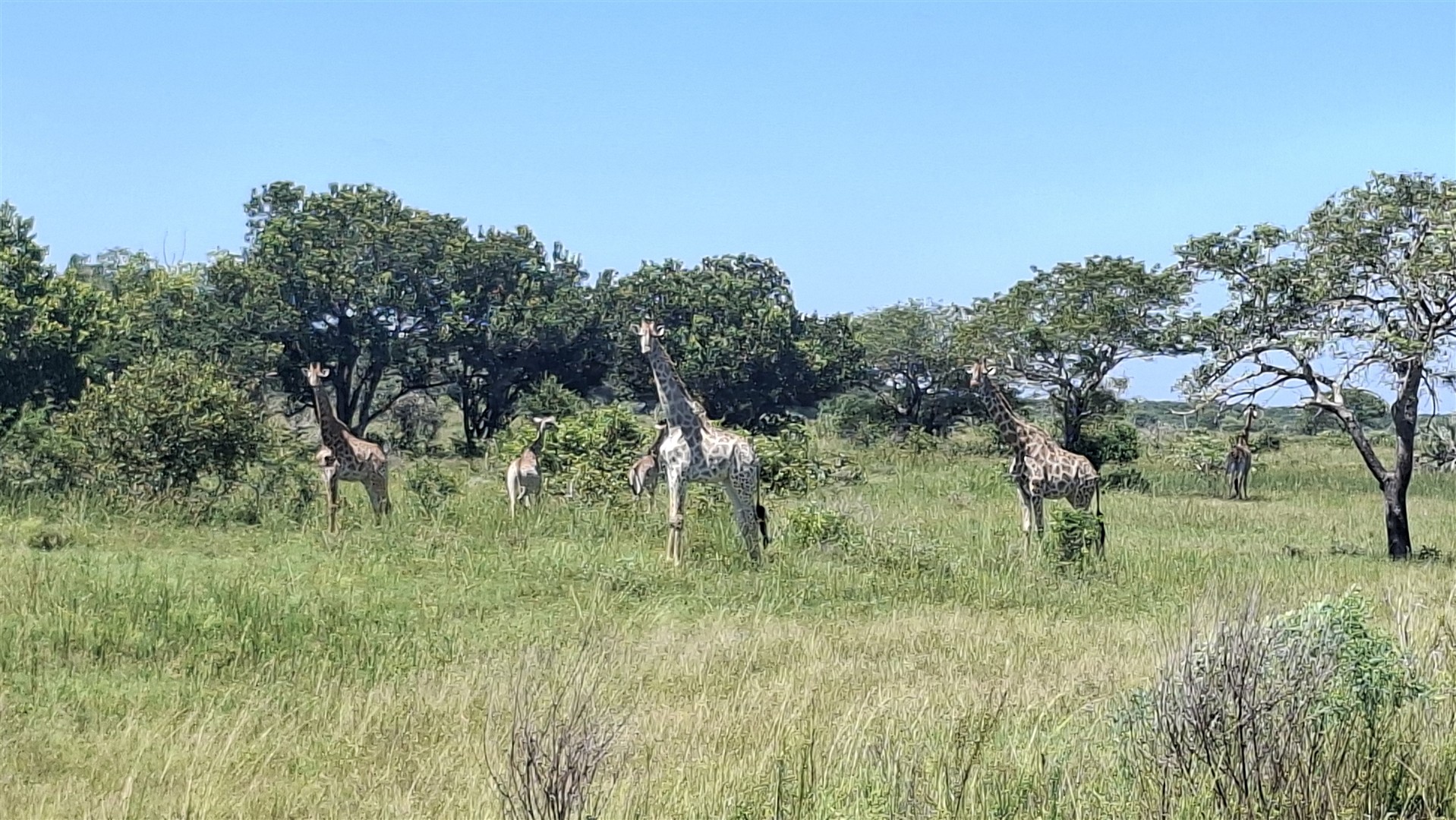
Roadside giraffes.
On the way to the border I came to a toll booth. Panic! No cash. But they were happy to take my card, thankfully.
Mozambique immigration wanted to see the receipt for the visa fee. Fortunately I’d kept it. Otherwise it would have been their final blow. Customs took the TIP off me.
South Africa immigration happily gave me a 90 day visa. And customs gave me a TIP valid for 6 months. Excellent. And no fees. That TIP was important because I would need it when it came to shipping the bike out.
I headed down to the town of Mangazi where I found an ATM and a Vodacom SIM card, purchased from a PEP store. These stores are everywhere in South Africa and sell clothes and various other dry goods. Heidi told me that a town isn’t a town until a PEP store arrives.
The road south was good. An occasional pothole but that was all. The big difference was speed humps. Lots of them close to schools, where the limit drops to 40Kph.
I was in the Eastern Cape and the terrain was just open fields, growing various crops. Some cattle as well.
I found a hotel on Google maps and settled in for my first night in country number sixty nine.
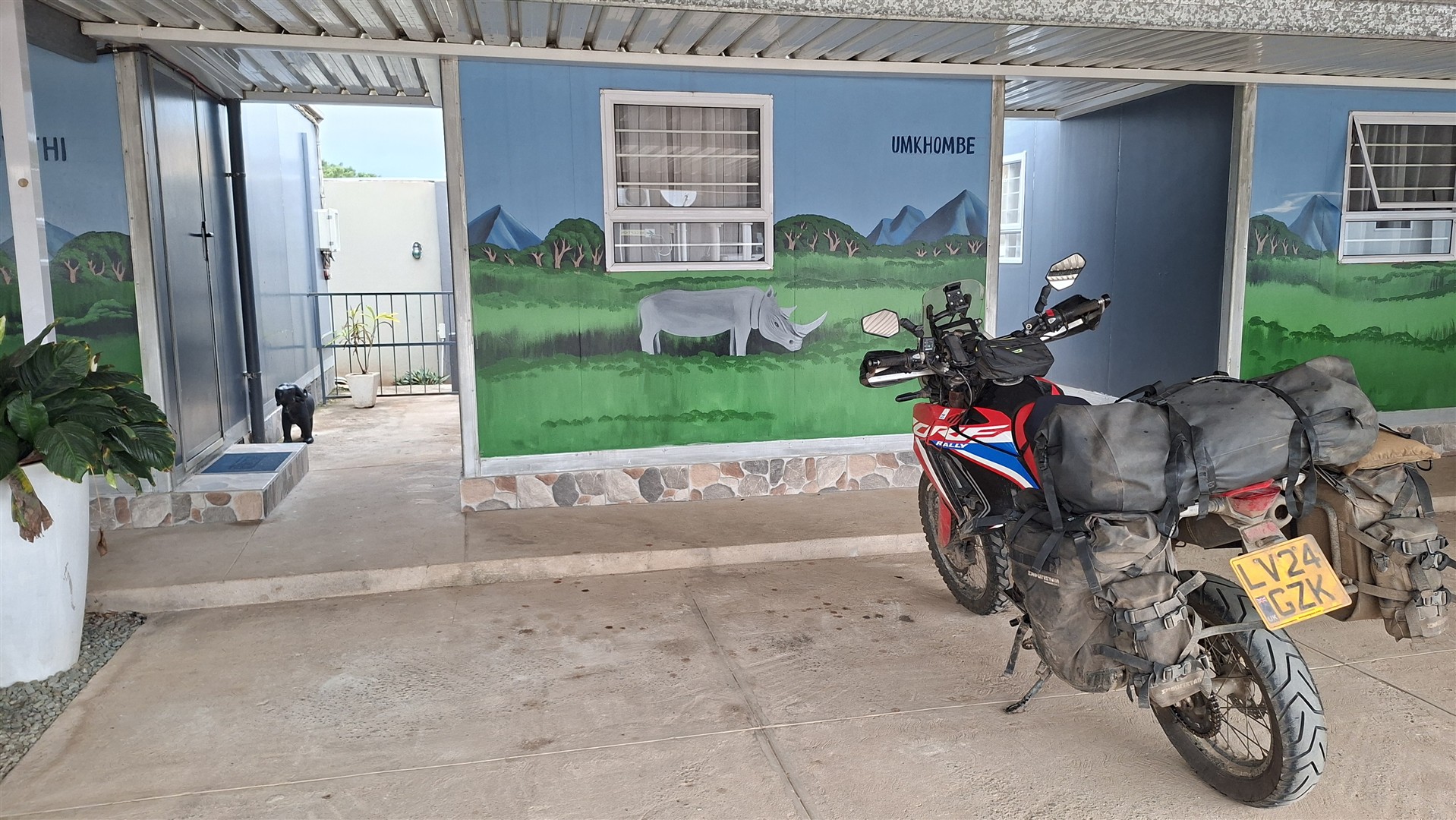
I was in the Rhino room.
My plan was to go to Eswatini (formerly Swaziland), take a look around then come back to SA. I would meet Heidi and we’d go off to Lesotho together.
I went onto the Vodacom site and arranged for a roaming package, 1GB for seven days. It was supposed to cost R99 but no option for payment was offered. But it did say that provided I had enough data ‘in the bank’ it should be OK.
Cloudy but forecast for dry. The ride to the border was good. I passed large banana and sugar cane plantations. Then a big rum distillery.
At the border I got balked by a coach party but it was still quite quick. One of the guys saw the bike and said it was his ambition too. I told him I was living his dream for him.
I had to pay Eswatini customs a road fee, about £3.50. Other than that, no drama.
I’d selected a place up in the hills to stay at. The clouds descended causing me to get a bit damp.
But when I arrived they had no water on the premises so I couldn’t stay there. I used their wi-fi to select and book another place. Not too far away, and along a muddy track.
It was a coffee farm, selling the product in a shop which was also a café. The room was basic but OK, with the bathroom just along the corridor. Expensive but tasty food rounded off the experience.
I identified a likely place to stay for the next night and also worked out a nice four hour drive on a round about route, giving me the chance to explore this small country.
I set off and rode up through the hills to a place called Piggs Peak. It was very scenic, with hilly and twisty roads to enjoy. Mostly forested but with some agriculture mixed in. An enjoyable day of around four hours riding.
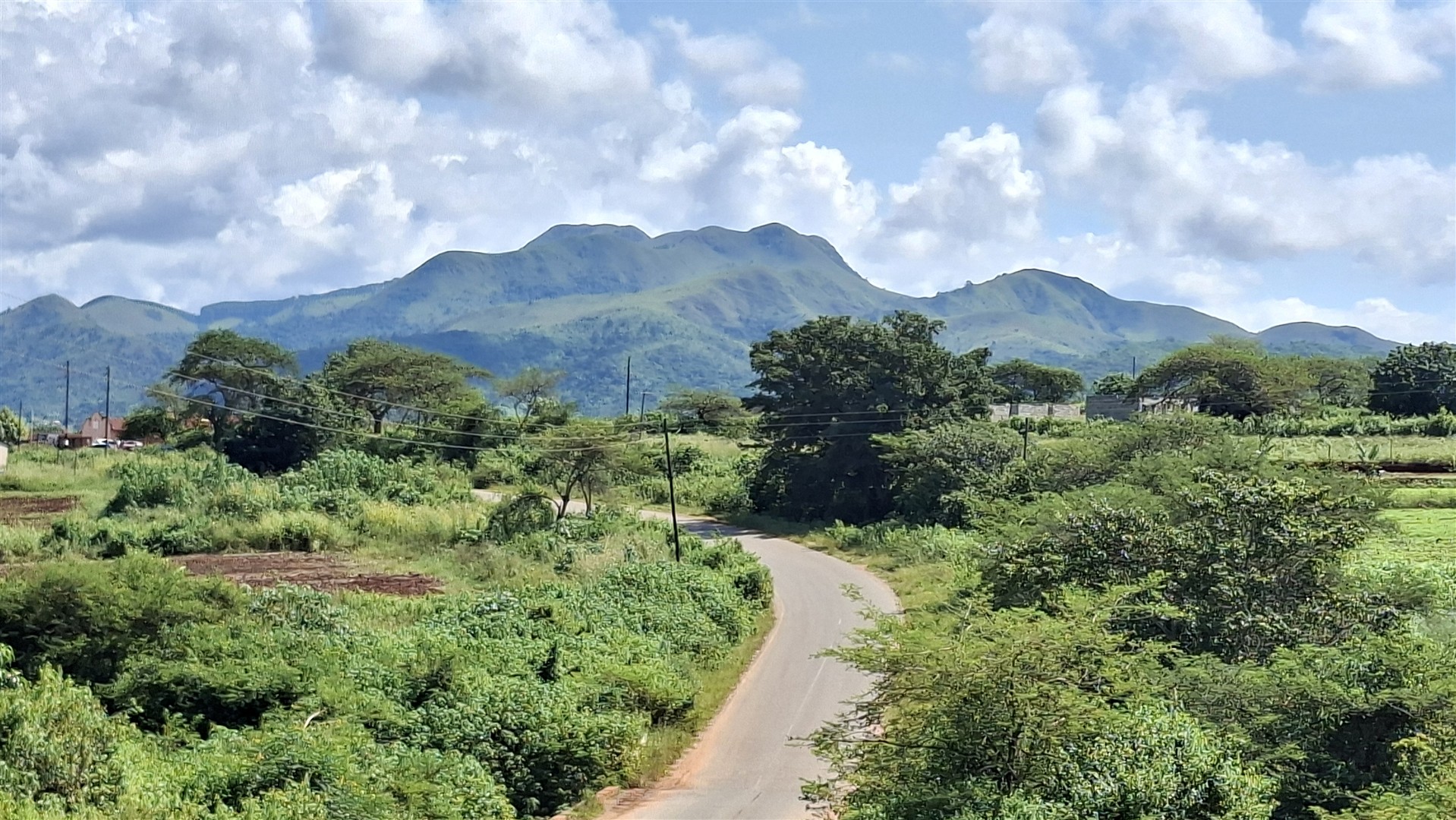
Piggs Peak
Eswatini isn’t very big. Their currency is pegged to the South African Rand (ZAR) at 1:1, making life easy. But the Vodacom roaming package didn’t work, making navigation ‘interesting’.
I stayed in Mbabane, one of Eswatini’s two capital cities (the other is Lobamba), which was very busy. The bike overheated a couple of times in the traffic, making life interesting.
My plan for next day was to visit the Ngwenya iron ore mines on the way across to the South African border.
The mine was first used 43,000 years ago by the San Bushmen but only to get the ore for decorative purposes.
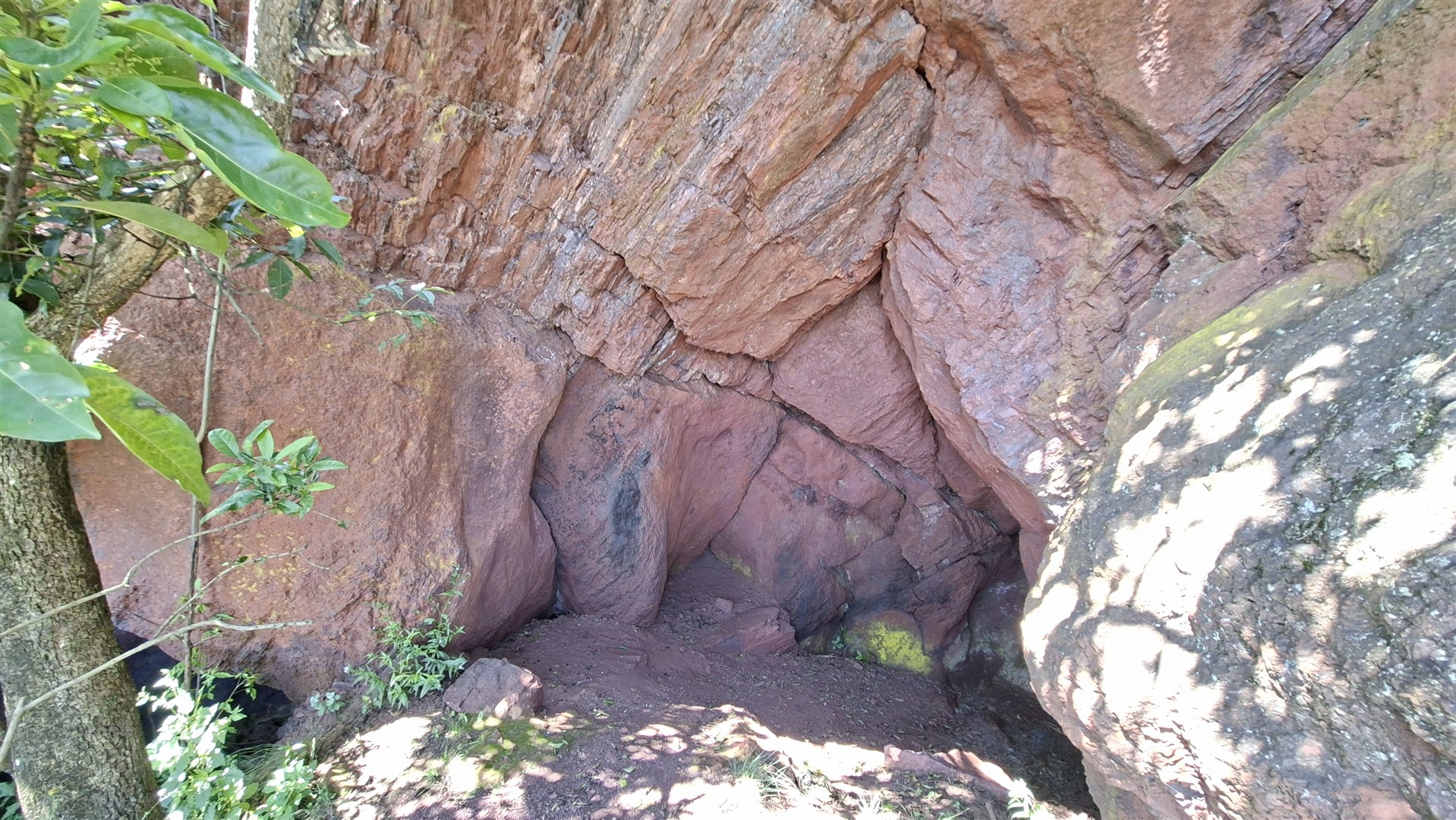
The original mine. Just a shallow cave.
It was the Bantu tribes who used it for smelting at around 400CE. Then it was commercialised by Europeans in the late 19th and 20th centuries.
The visitor centre burned down in 2018 with the loss of many ancient artifacts from the early days. There was nothing left to see apart from the shell of the building.
I rode around to where the path up to Lion’s Cavern began. This is the actual mine that the Bushmen dug out.
After a steep climb up a path and some stairs I came to a couple of caves where they’d mined. There wasn’t very much to see, just the sense of history.
The commercial mining had left a deep quarry, now picturesquely filled with water. Nicely photogenic.
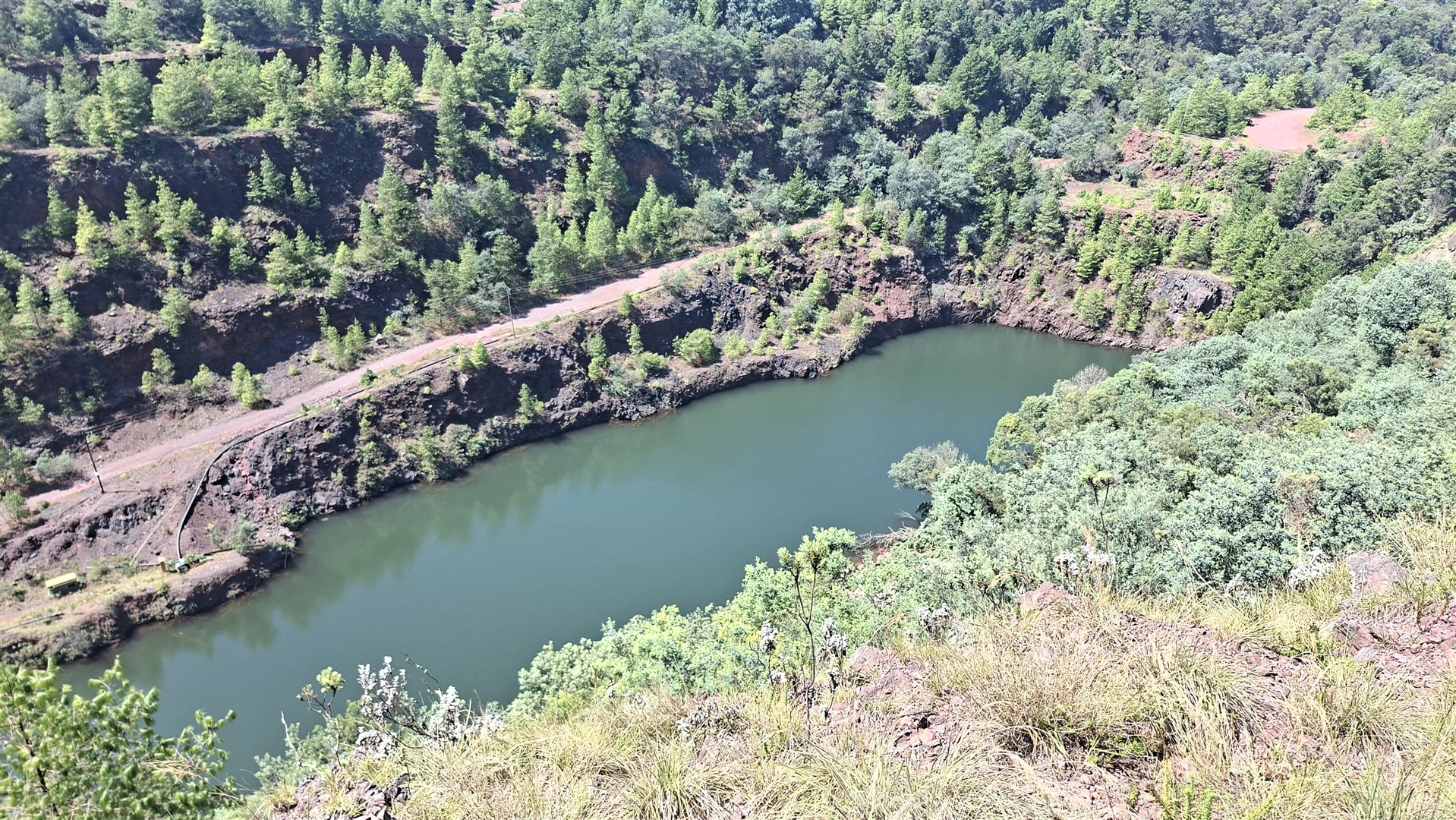
The modern mine pit.
I then headed to the border. It was straightforward in terms of method but there was a very long queue for immigration. Probably about 100 people. My SA visa still held good.
I carried on down the road, initially heading to the town of Dundee, which was a good base for exploring the Zulu battle sights. But that was too far so I went to the town of Volksrust.
The new plan was to go on to Dundee next day via a battle site of which I hadn’t initially been aware.
Apart from being woken up at 06.30 by the hotel guy wanting to know what I wanted for breakfast, it was a very good day.
I had some easy riding across the velt. Mostly beef grassland with a bit of agriculture here and there. Gentle rises and falls with higher hills in the distance.
When I came to the turn off that led to the battlefield it was dirt so I stopped to double check the route. Yep, 25Kms of dirt to be ridden. But the road was in very good condition. I was in 5th gear quite a lot at 60Kph.
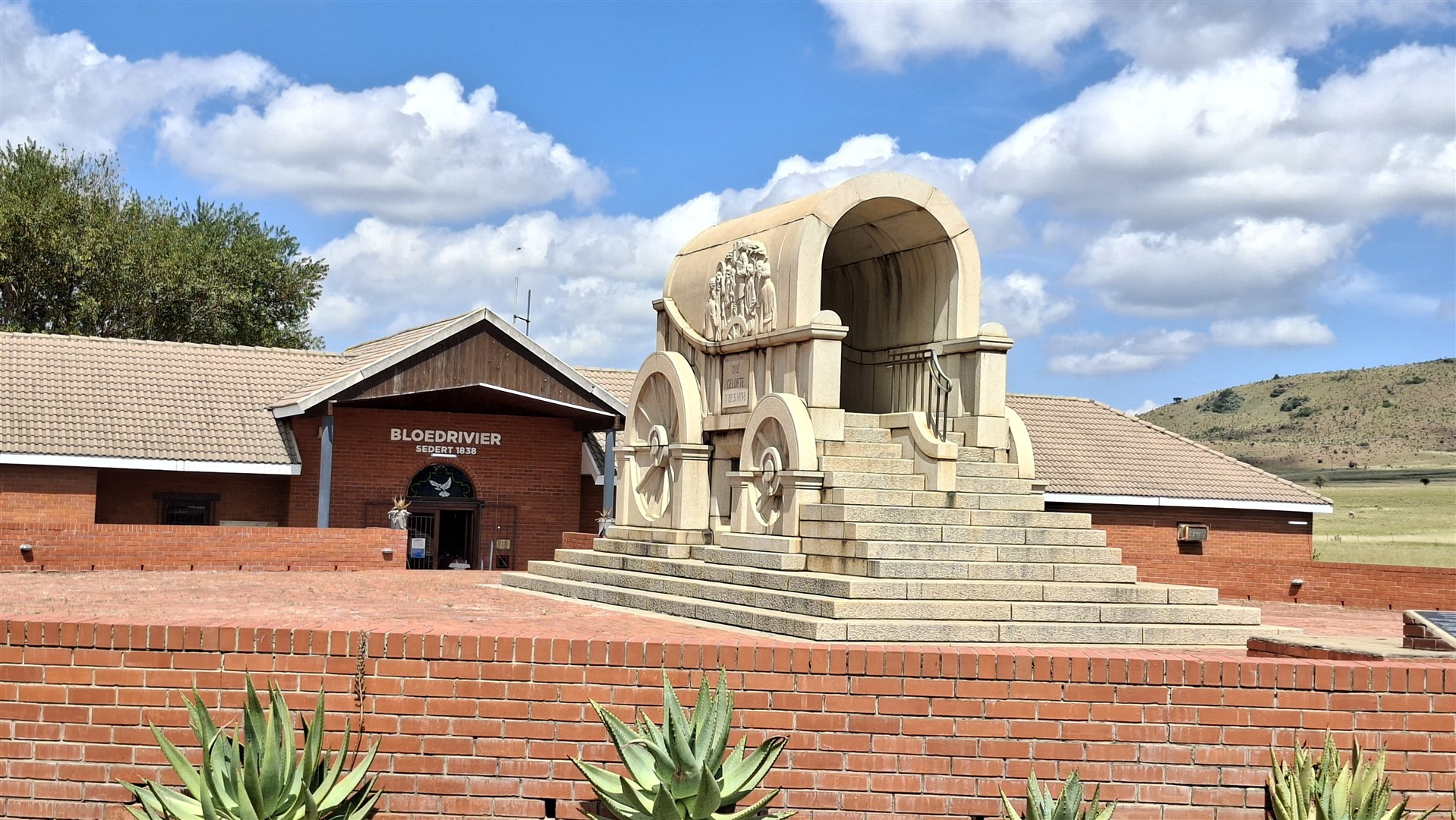
Blood River Museum.
The site is called Blood River and it’s where 464 Voortrekkers (Boers) went out to get revenge on the Zulus on 16th December 1838.
Earlier in the year some of their representatives had gone to meet the Zulu chief, Dingane. They’d reached an agreement about what land the Boers could occupy. But the chief reneged on the deal and killed them.
The result of the battle was around 3,000 Zulus killed and three Boers injured. Job done!
The guy there showed me an informative video, which was a re-enactment of the battle.
Then I rode down to the actual site, stopping to read various info boards on the way.
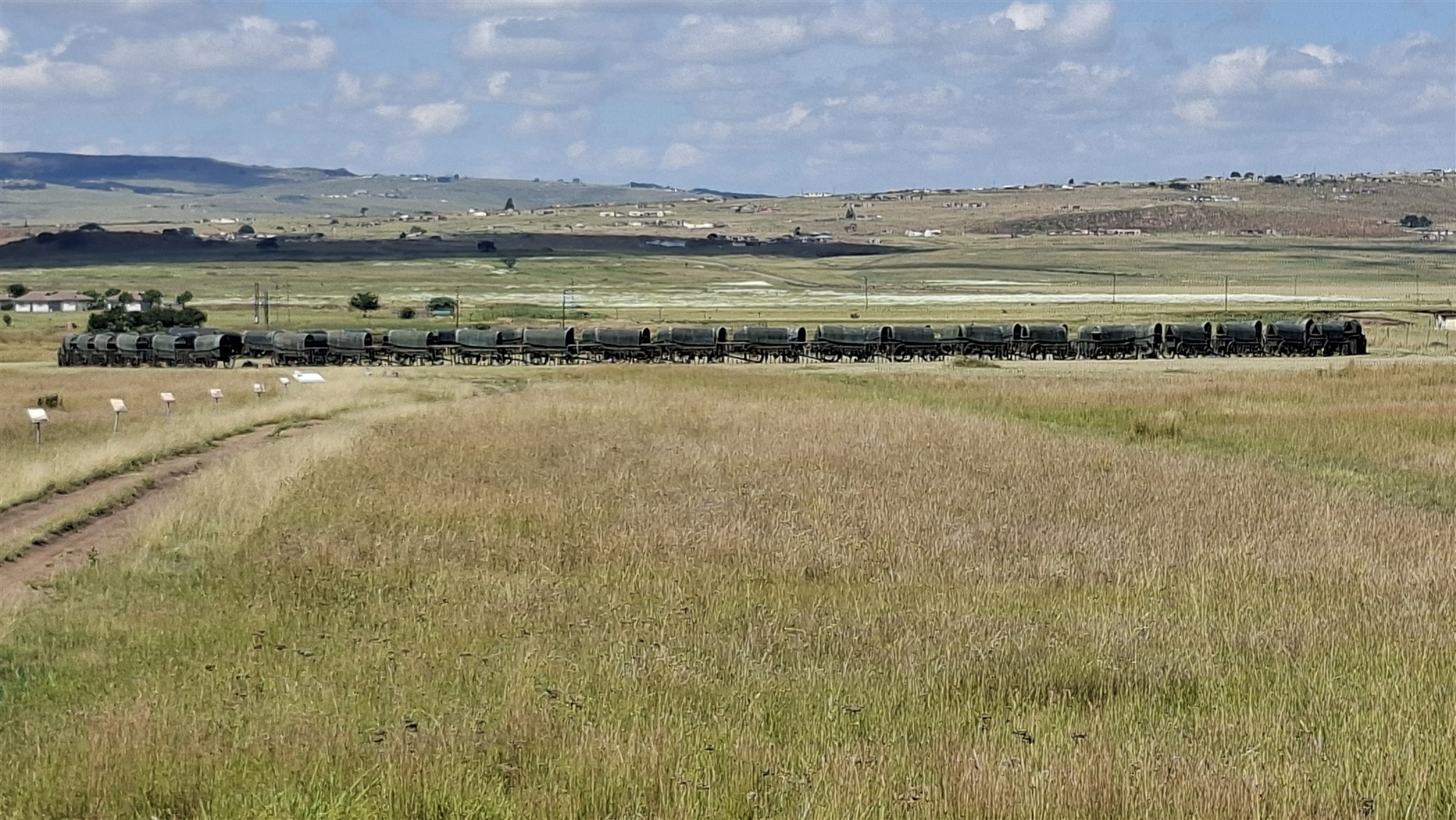
A recreation of the laager the Boers built.
They’ve done a very good job of recreating the laager that the Boers had set up. Life size models laid out in the same way, along with the three canons they also had, and in the exact same place.
Spears can’t win against gunpowder and the Zulus were also thwarted by the layout of the land. The Boers had chosen the battle site very carefully.
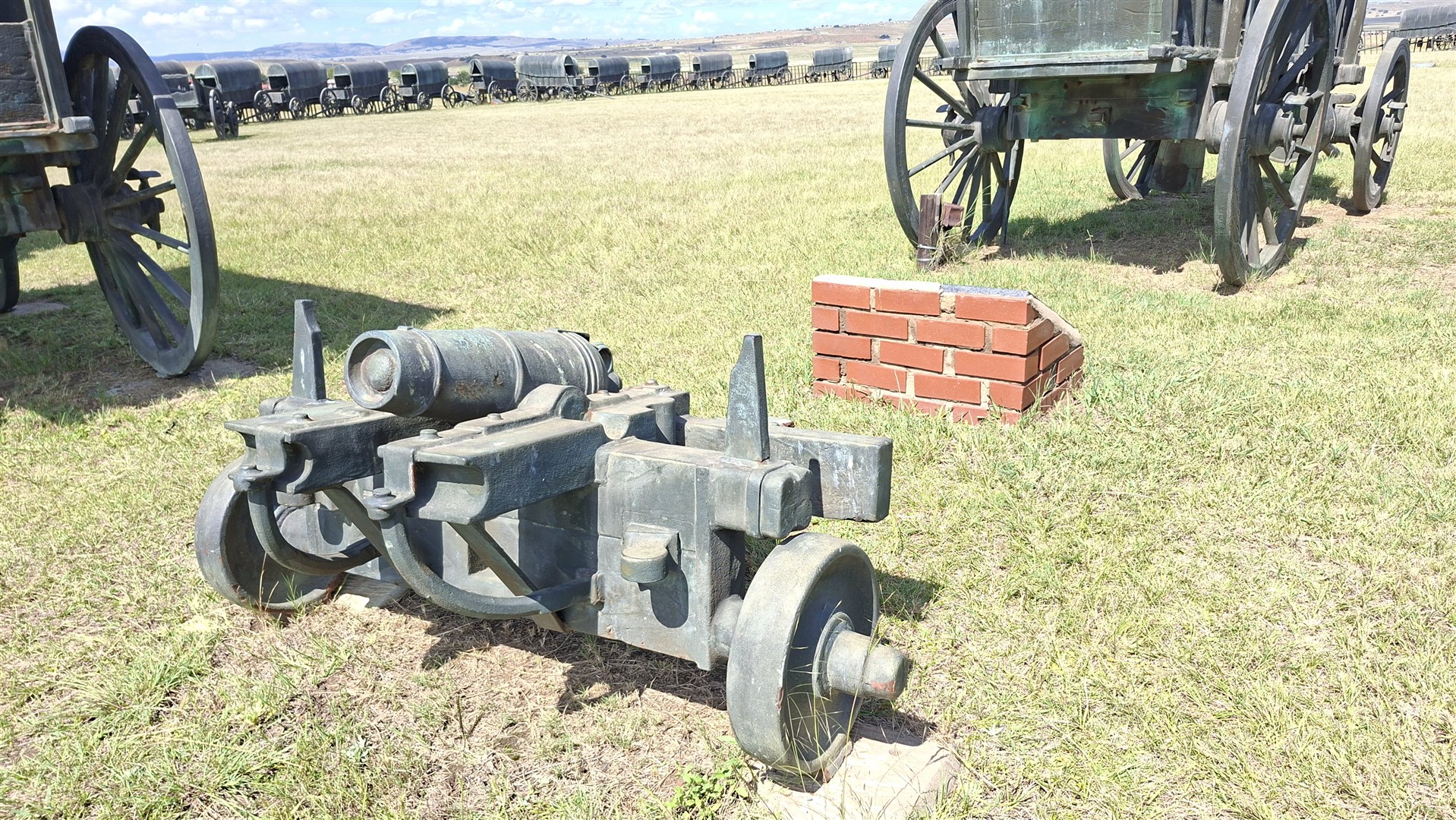
One of three canons used. Stubby but effective.
I found a good hotel in Dundee and made plans for the next day. I wanted to see Rorke’s Drift and Isandlwana battlefields.
It was a good ride out to the Isandlwana battlefield site. 20Kms of dirt to finish off with but easily managed.
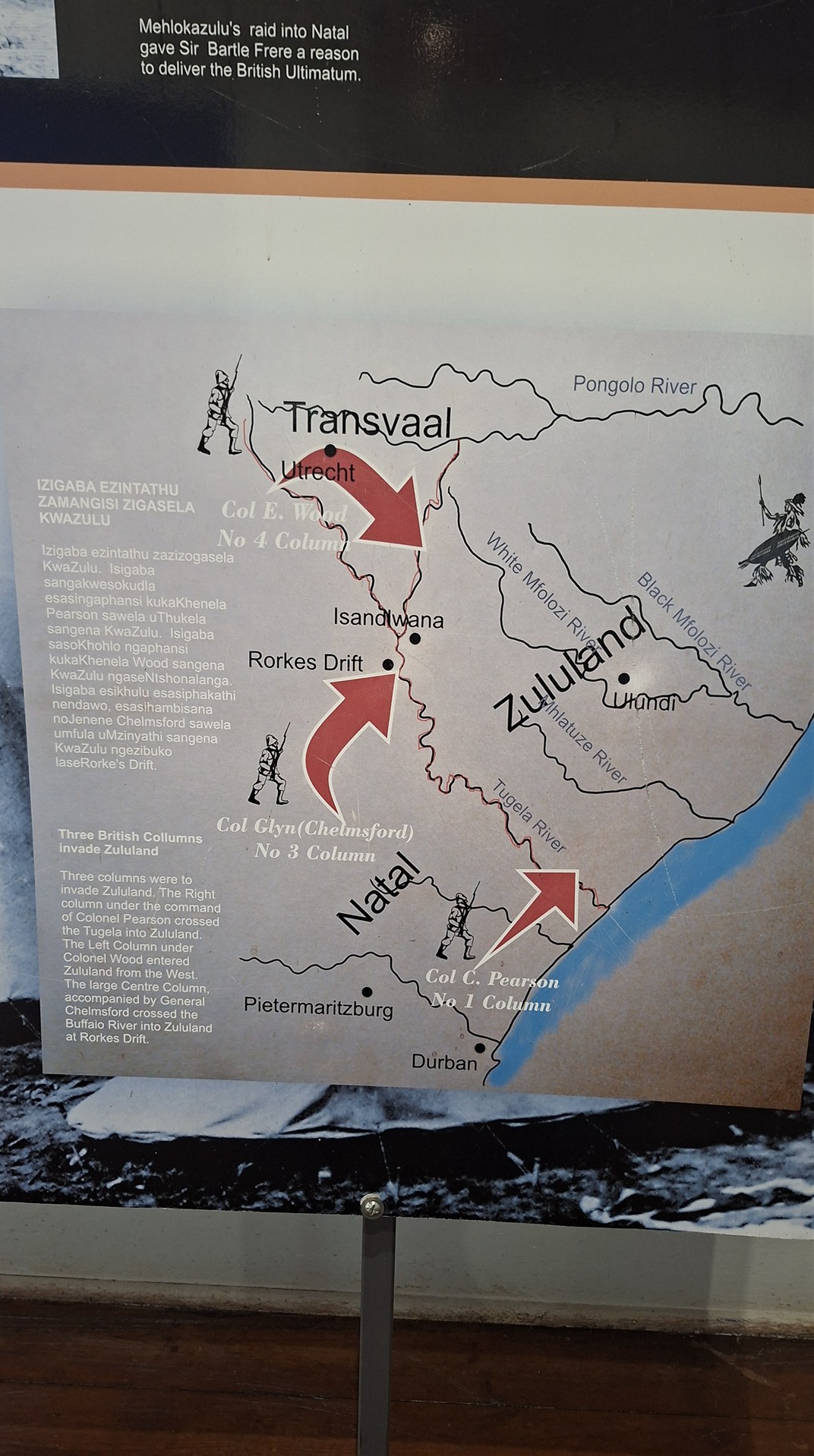
The Zulu raids into British Natal caused the war.
At the site I went into the museum and read all about the battle. It took place on the 22nd January 1879. The British were complacent about the risk of an attack on their camp, despite the doubts of some officers, and allowed the Zulus to tempt half of the force away on a pointless chase. It was badly sited in terms of terrain too.
They engaged with the Zulus in the field but at the same time the undermanned camp was being attacked too. It was a complete disaster and most of the troops were killed. The survivors headed to Rorke’s Drift.
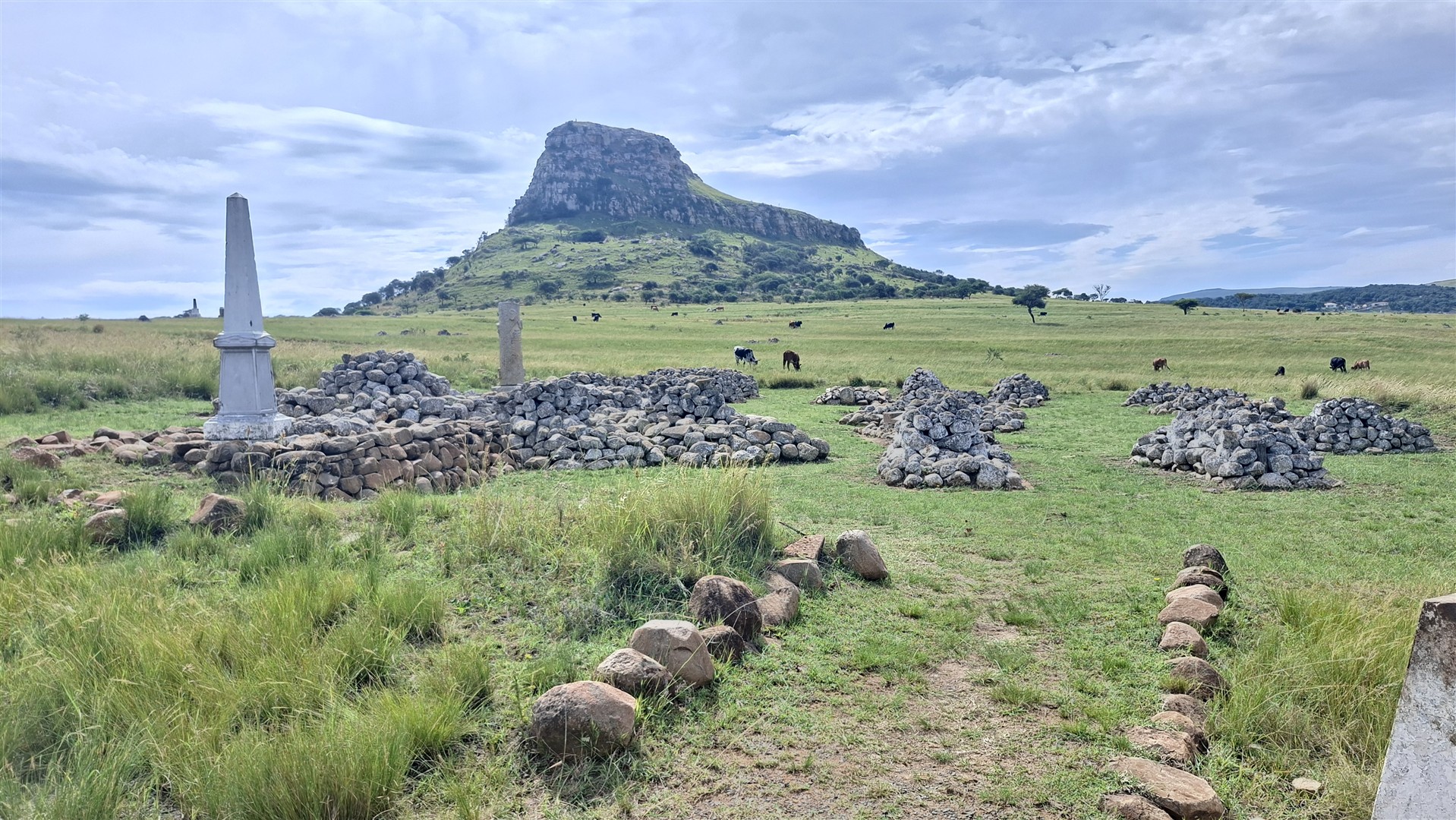
Any account of this battle will mention this odd looking hill.
I went down to the battlefield and took photos of the memorials and the cairns. The weird shaped hill in the background made a great backdrop.
Then I headed to Rorke’s Drift. Rorke was a successful farmer and trader who died in 1877. He’d lowered the banks of the Buffalo River to make a ford (drift). The British military had taken over his house as a hospital.
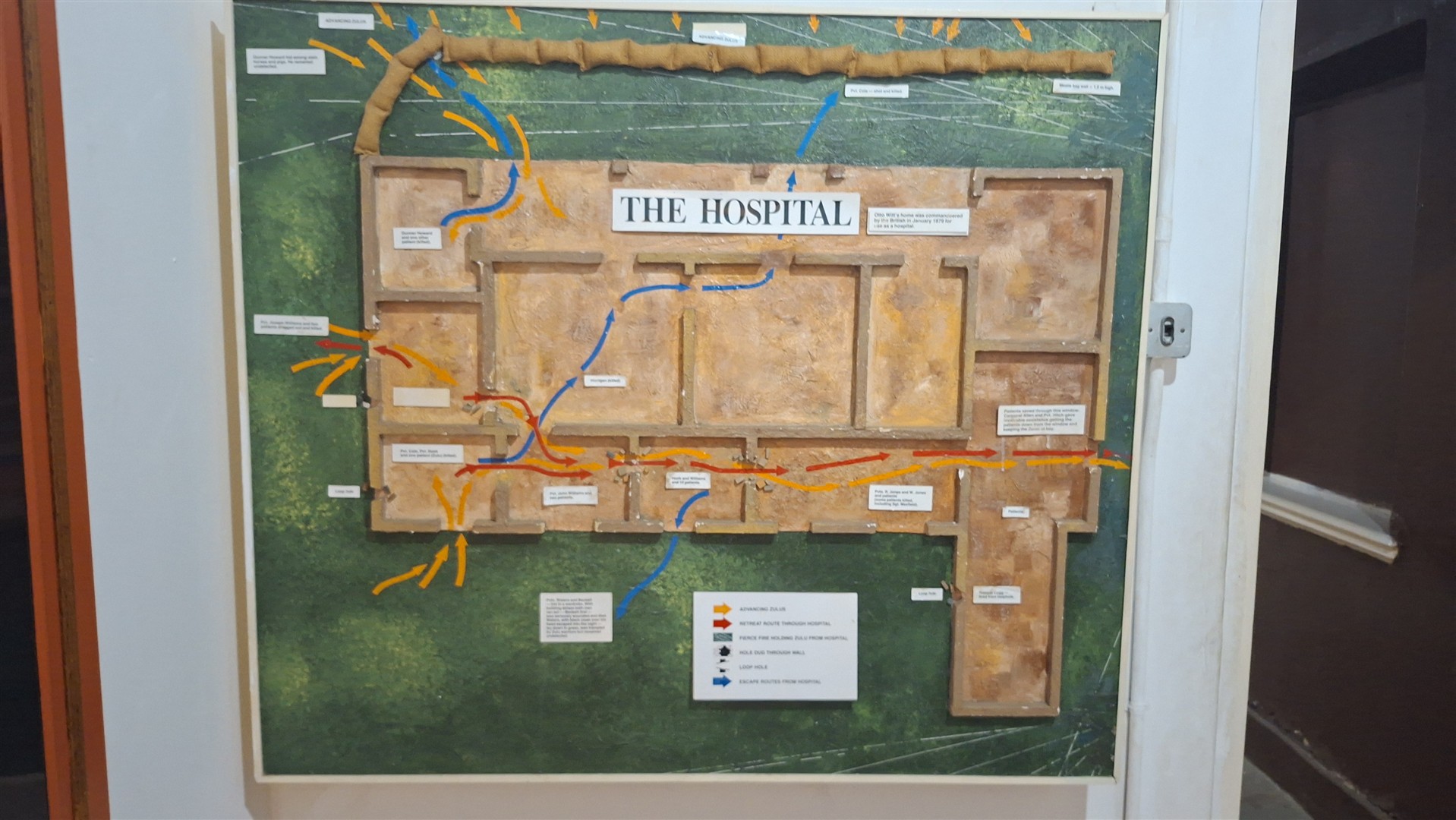
Rorke’s Drift hospital. Centre of some of the action in the film, Zulu.
Again, I had a look at the story in the museum. Heroic deeds from all concerned. It made clear that some of the eleven VCs awarded were thought to be political. I’d read that it was a way of trying to hide some of the horrors of war in Africa and promote recruitment.
It also told a different story of some of the characters portrayed in the film Zulu, especially Private Hook. He’d been portrayed as a drunken, work-shy reprobate. In fact he was teetotal and very hard working. But I’d also read that it portrayed the events with some degree of accuracy, if not the characters.
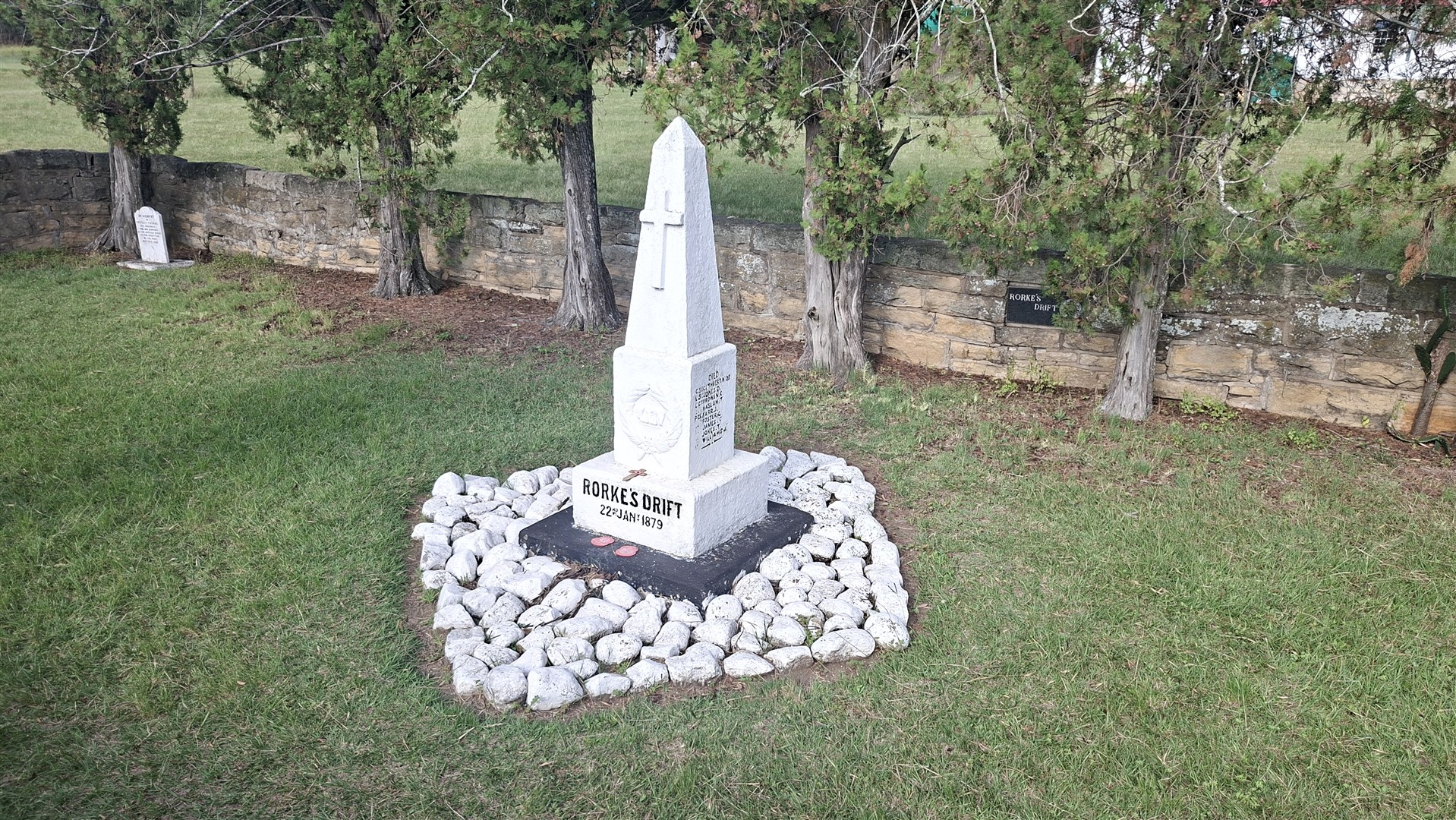
Memorial to the British forces.
Unlike at Isandlwana, there was a building at Rorke’s Drift to centre on, although the only sign of it was some foundations.
Then I walked around the site looking at memorials to both sets of soldiers. The big difference here was that all the buildings, although modern, gave a sense of place to the events.
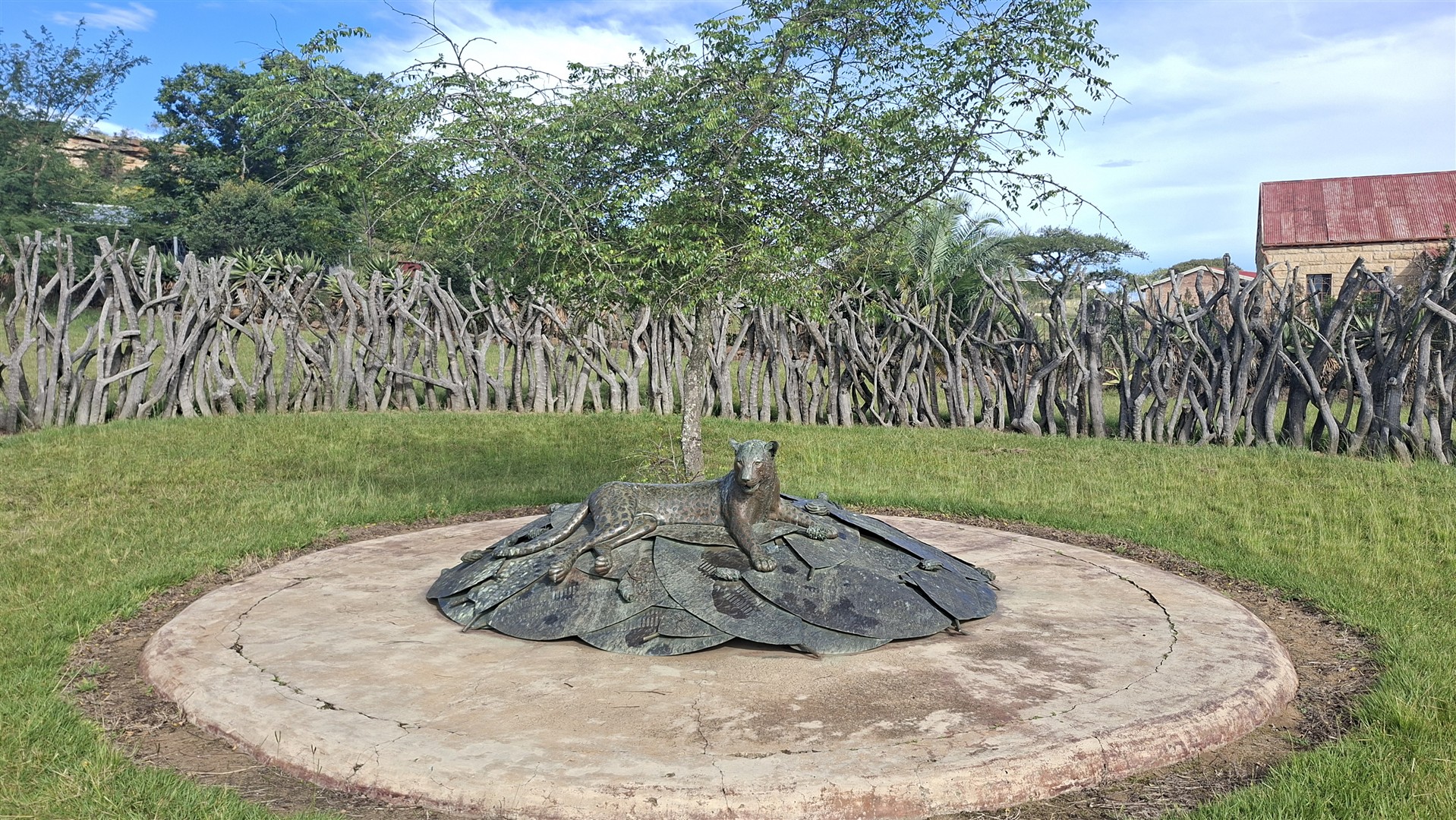
Memorial to the ‘Buffalo soldiers’.
Then I headed for home along another 20kms of dirt, and did it at quite a high pace. It was very enjoyable.
I was just going to sleep that night when I heard a loud noise that sounded like an alarm of some sort. I moved the curtain to look out and it stopped.
A few minutes later it started again. This time when I moved the curtain I saw a big, fat cricket on the window sill. I picked it up and put it outside. But my word, it was loud.
Next day was a rest day but it turned out to be a bit fraught. Heidi and I had been planning to meet in a town close to the Lesotho border. She’d been having problems with her bike when we met at Livingstone and had been directed to a workshop that was approved by the South African Harley Davidson importer. It was them that had supplied her with the bike as sponsorship for her charity.
The problem was that they were useless. They’d taken a long time to obtain the right hand handlebar switch, which had failed. When the mechanic took it for a test ride he said that the clutch needed attention. He also said that the rear tyre and rear brake pads needed replacing.
Our plans to meet were shipwrecked on the rocks of seeming disinterest and inefficiency. We planned to meet further down the line.
So it was left to me to explore Lesotho on my own. Which, in itself became a challenge.
It was a very lovely morning. Warm and bright. A pleasure to ride in. I took the motorway and paid a total of ZAR100 in tolls. That’s a lot! Almost £5.
As I progressed the clouds came in and a downpour arrived. I was quite close to a bridge which I stopped under, by now a little damp. I put my rain gear on but didn’t bother moving for half an hour while the downpour faded away.
It was still raining when I set off but I knew I’d ride out of it soon as I could see blue sky ahead. And I was right.
The road was now heading up into the Drakensberg Mountains, making the road go up and down. Over 1500 metres a lot of the time. But it was beautiful to look at.
I had to stop once when the overheating light came on. It followed a bit of climbing. It took about 5 mins to go out then I carried on. But it doesn’t bode well for the Sani Pass.
Sani Pass? This is a famously difficult track that goes over the mountains into Lesotho. It’s very steep and stony and reaches an elevation close to 2,900 metres. I’d watched a couple of videos about it and it didn’t look good. Add in my overheating problems and I wasn’t sure what to do.
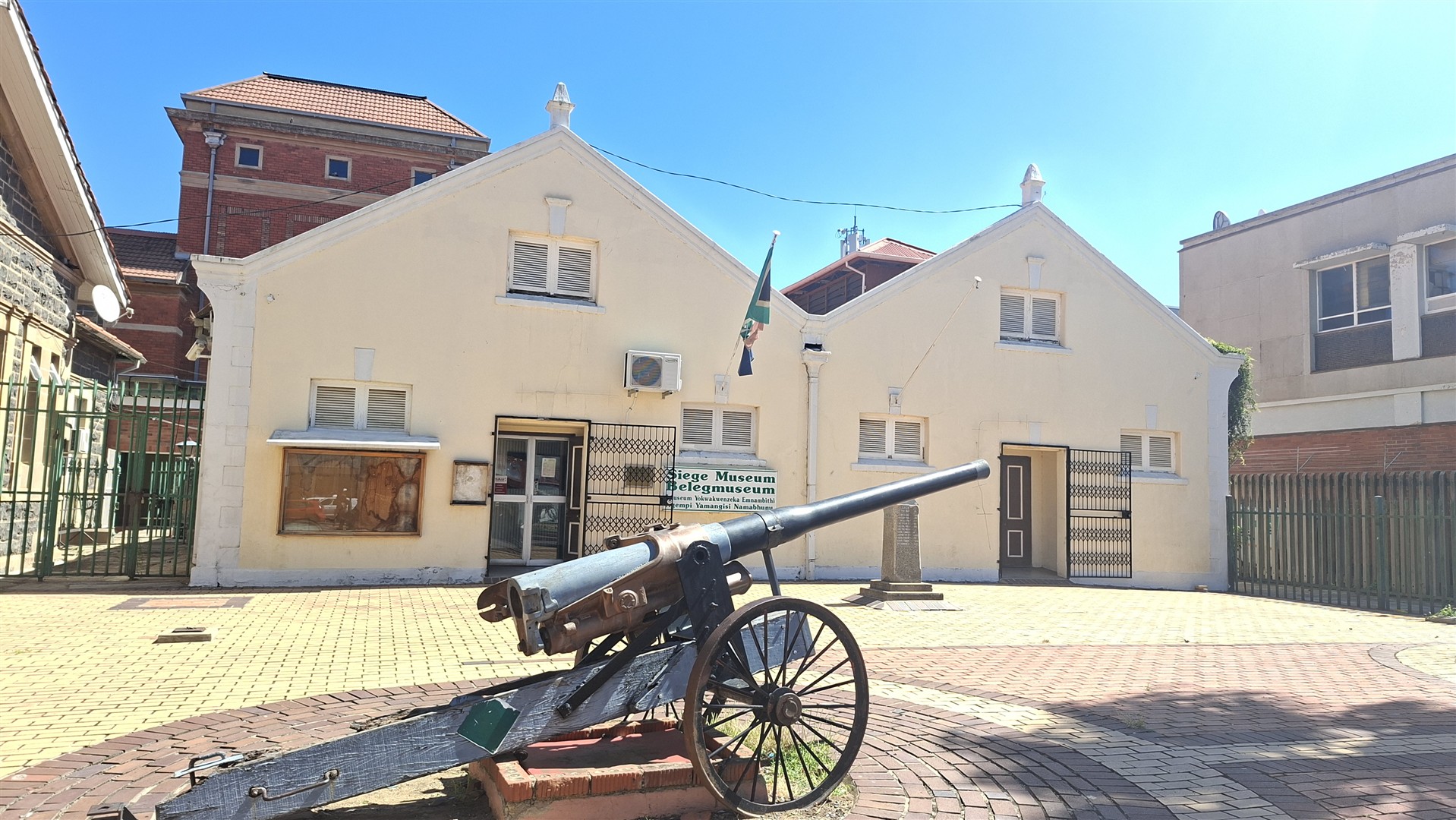
The Siege Museum in Ladysmith.
As I passed through the town of Ladysmith I remembered it was the site of a famous siege, where Boers pinned down British forces. It lasted 118 days before relief arrived from the south. There was a very good museum to look around as well.
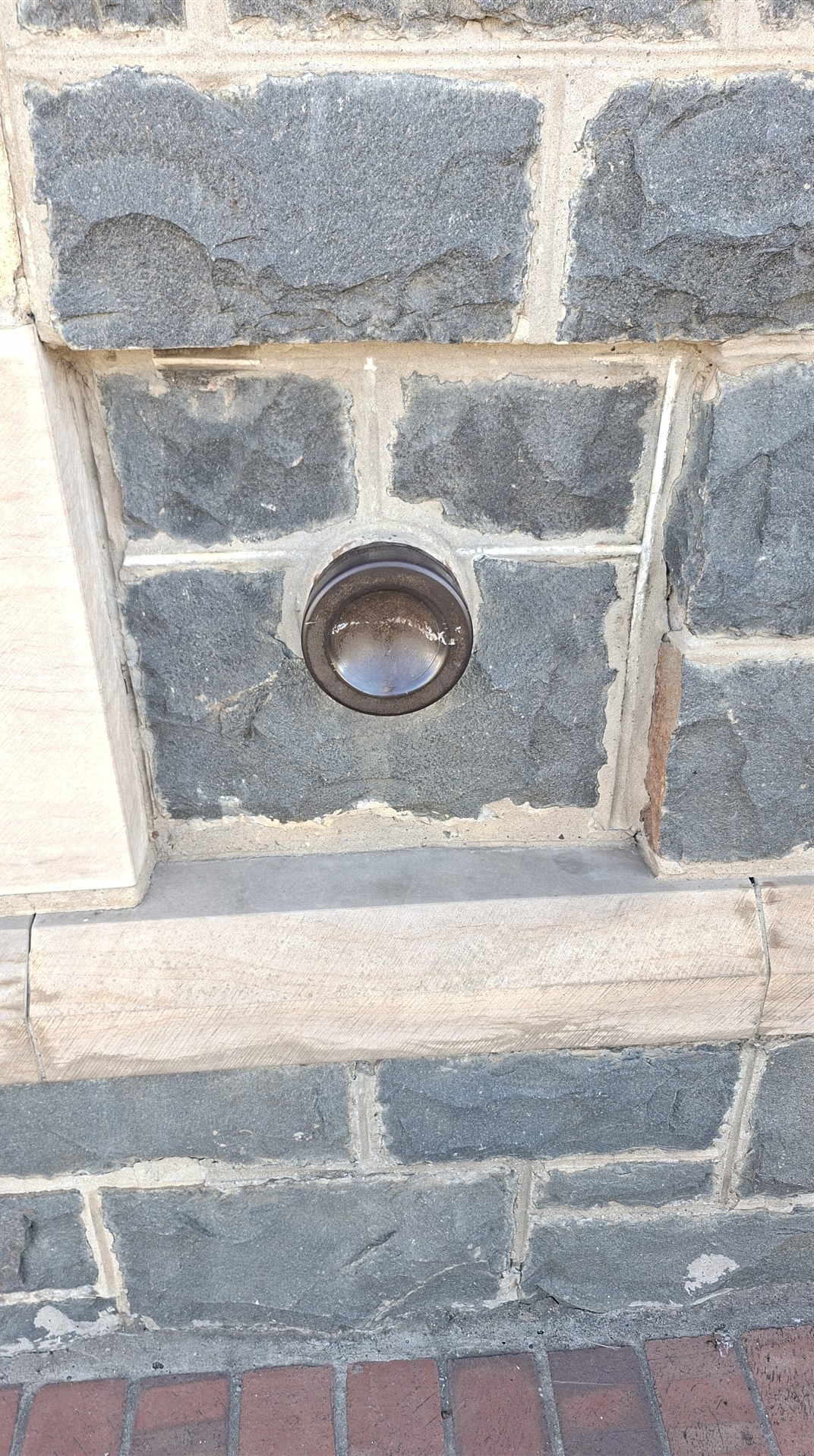
A howitzer shell buried in the wall.
Next morning when at breakfast a local guy came in who knew about Sani Pass. He said it would be difficult although the first 5kms would be easy.
So I set off with severe doubts in my mind. Eventually I pulled up and decided not to bother. Then I saw some people going into a building, which was a museum.
So I went in too and came across a very good local history museum. I was in the town of Himmeville, named after an early 20th century politician.
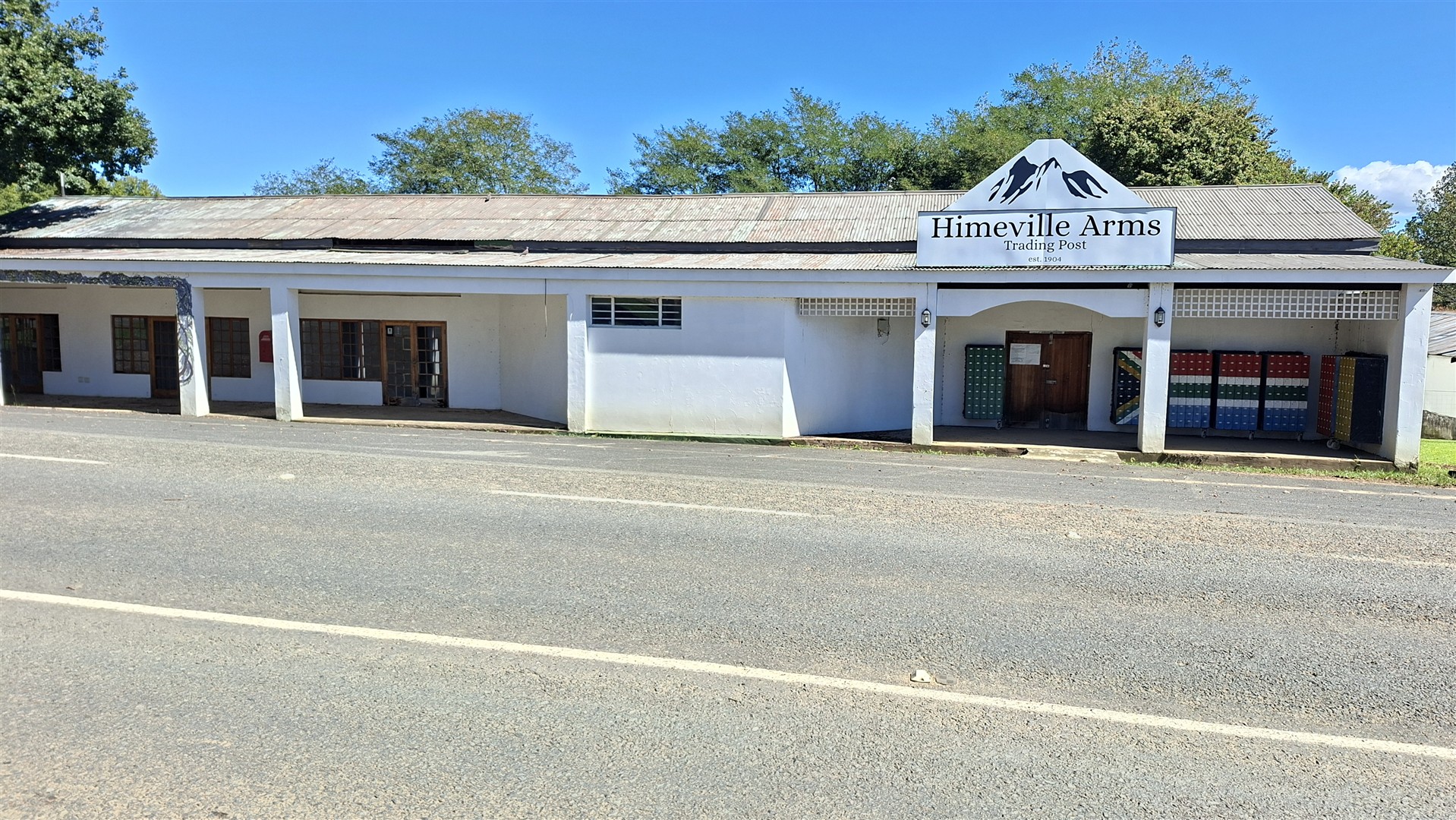
A friendly litte museum.
The building used to be a fort (laager) but then became a prison. It was built as defence against a local hostile tribe but they never attacked and it became a prison a few years later, up until 1972. Eventually it was converted into a museum.
Essentially it covers rural life plus some ancient history. Lots of good exhibitions, all very interesting.
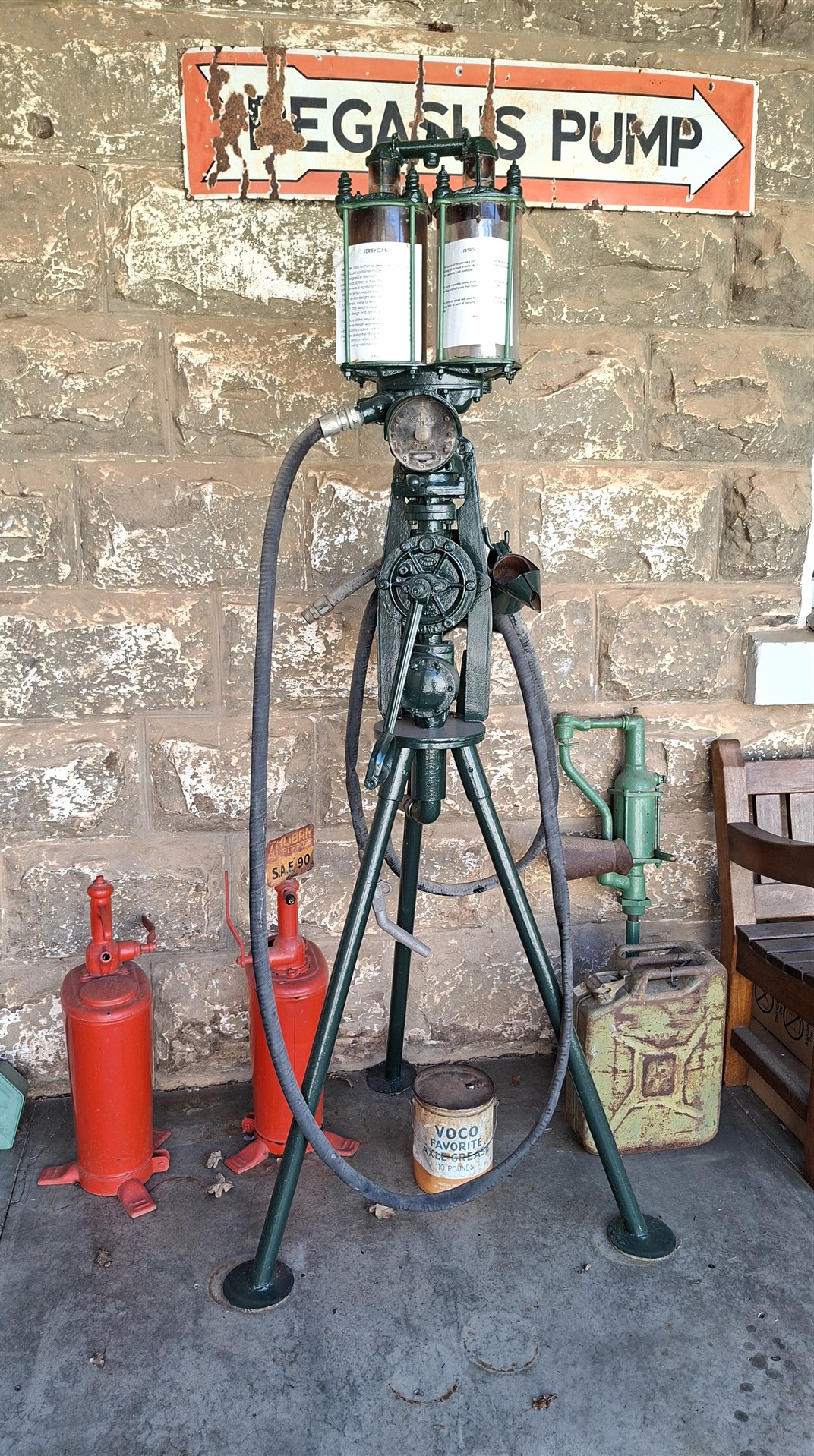
A Pegasus petrol pump.
Decision made, I headed for Qacha’s Pass, as suggested by the guy at breakfast. The road was good at first but eventually became dirt, to my surprise. Ninety kilometres of it until I came to a town.
It was mostly OK, nothing very challenging and I was in 4th and 5th gear most of the time.
In the town I refuelled. The pump jockey told me the price would rise tomorrow by R9 for petrol and R11 for diesel. Prices always change on the first of the month and it was the end of March.
I set off hoping for a continuation of the sealed surface. No such luck. It became dirt again and started climbing up the pass. I had to stop three times on the steepest part when the overheating light came on. The elevation here was ‘merely’ 2,500 metres.

The Drakensberg Mountains are spectacular.
The border was easy enough although I had to pay an R100 road fee in Lesotho.
I headed to a hotel and coughed up the high price. But at least it included breakfast
It was now 5pm so I had a look at the bike. I was able to establish that the fan worked by connecting it to the battery. I pulled and pushed all the wires hoping it would cure the fault. But I wasn’t confident.
While it was almost off I completely removed the tank and turned the pump unit around 180 degrees. The gauge now shows a proper reading.
Over the last few days I’d been having problems with the front tyre. I’d been inflating it in the morning but by the end of the day it had gone down.
On this day, when I tried to pump it up I couldn’t get it to accept air. I set off anyway, hoping to find a tyre shop en route. Which I did. A tiny place in a tiny village.
The guy there helped me get the wheel out and he tried to pump it up. But air wouldn’t go in. I got a piece of thick wire and eventually cleared the blockage. But now when he inflated it we could see that the air was coming out around the spokes.
The only solution was to fit an inner tube but he didn’t have one. So I tried tightening up all the spokes. That slowed the air flow but didn’t cure it. Stymied!
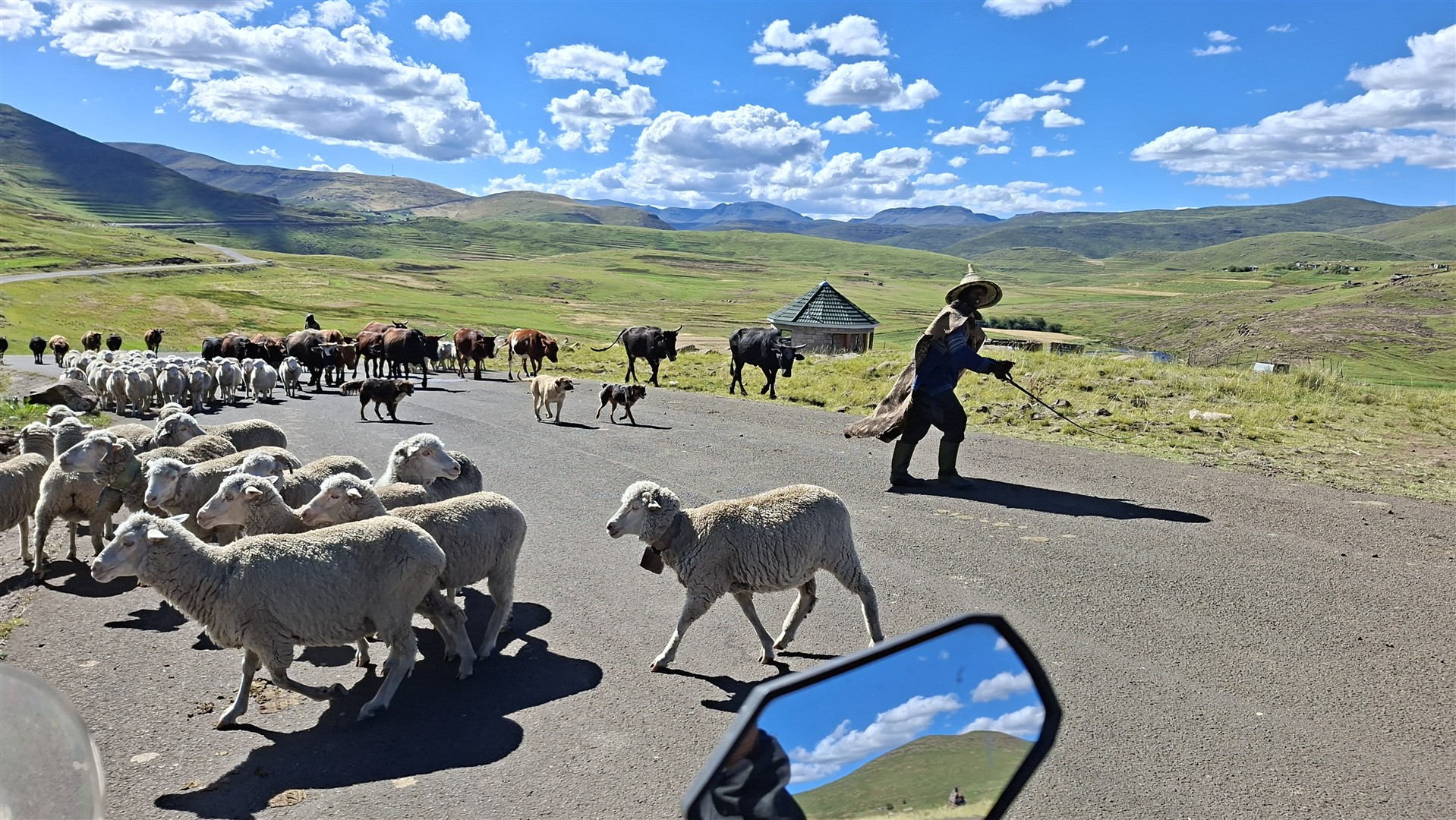
The road to Masura had some surprises.
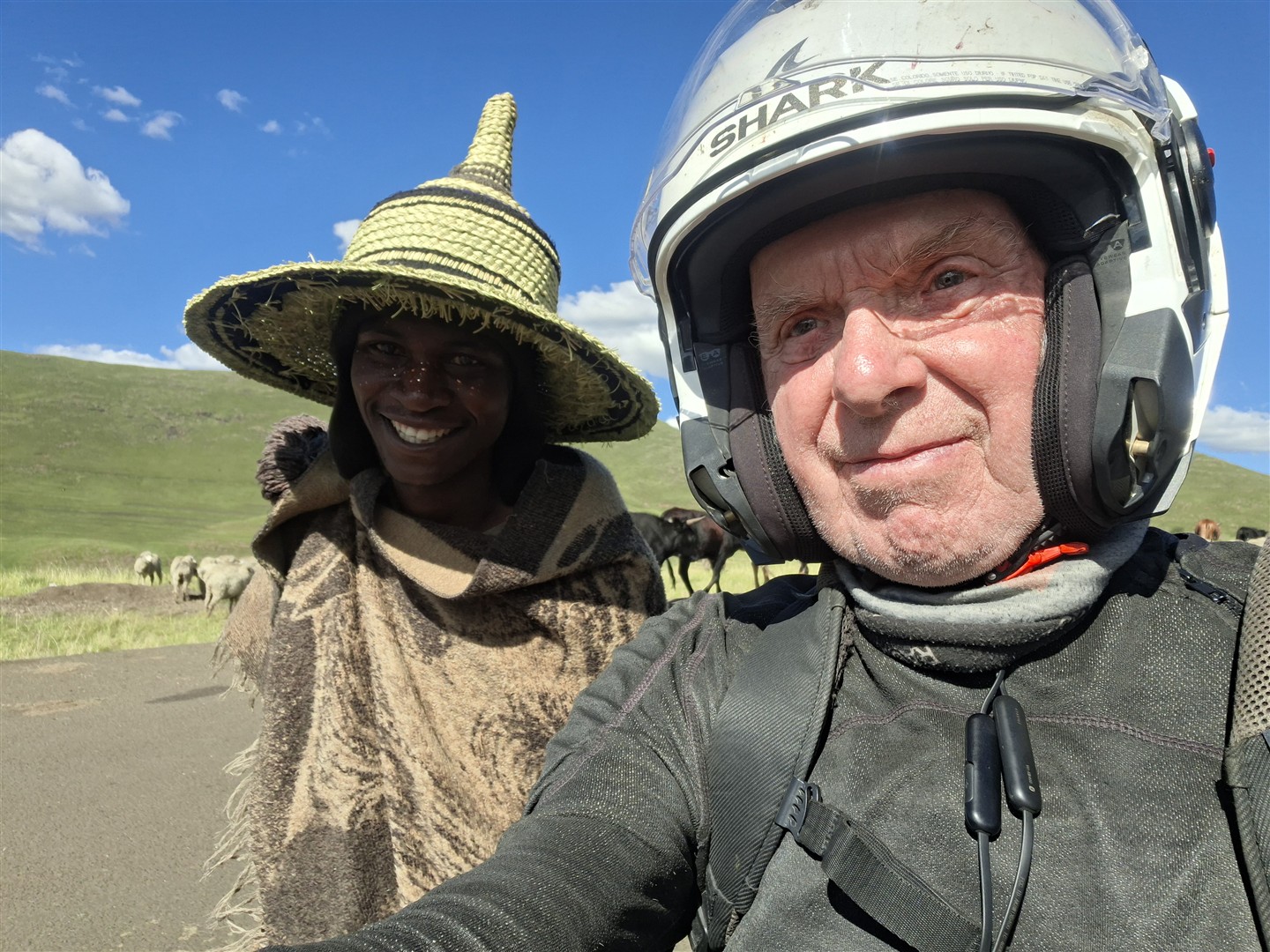
Local dress. It gets very cold up there.
Any thought of exploring Lesotho was now abandoned. I headed to the capital, Maseru, hoping to find a solution there.
The only problem was that I couldn’t locate a bike shop that sold tyres. The traffic was very heavy and the bike overheated a few times on the way to the hotel I’d found. What with hassle getting food, it wasn’t a good day.
But the riding had been very enjoyable despite the sketchy handling with my flat front tyre. Tubeless tyres have very stiff sidewalls so the bike rode well enough apart from the sharper bends. And I was pleasantly surprised by that.
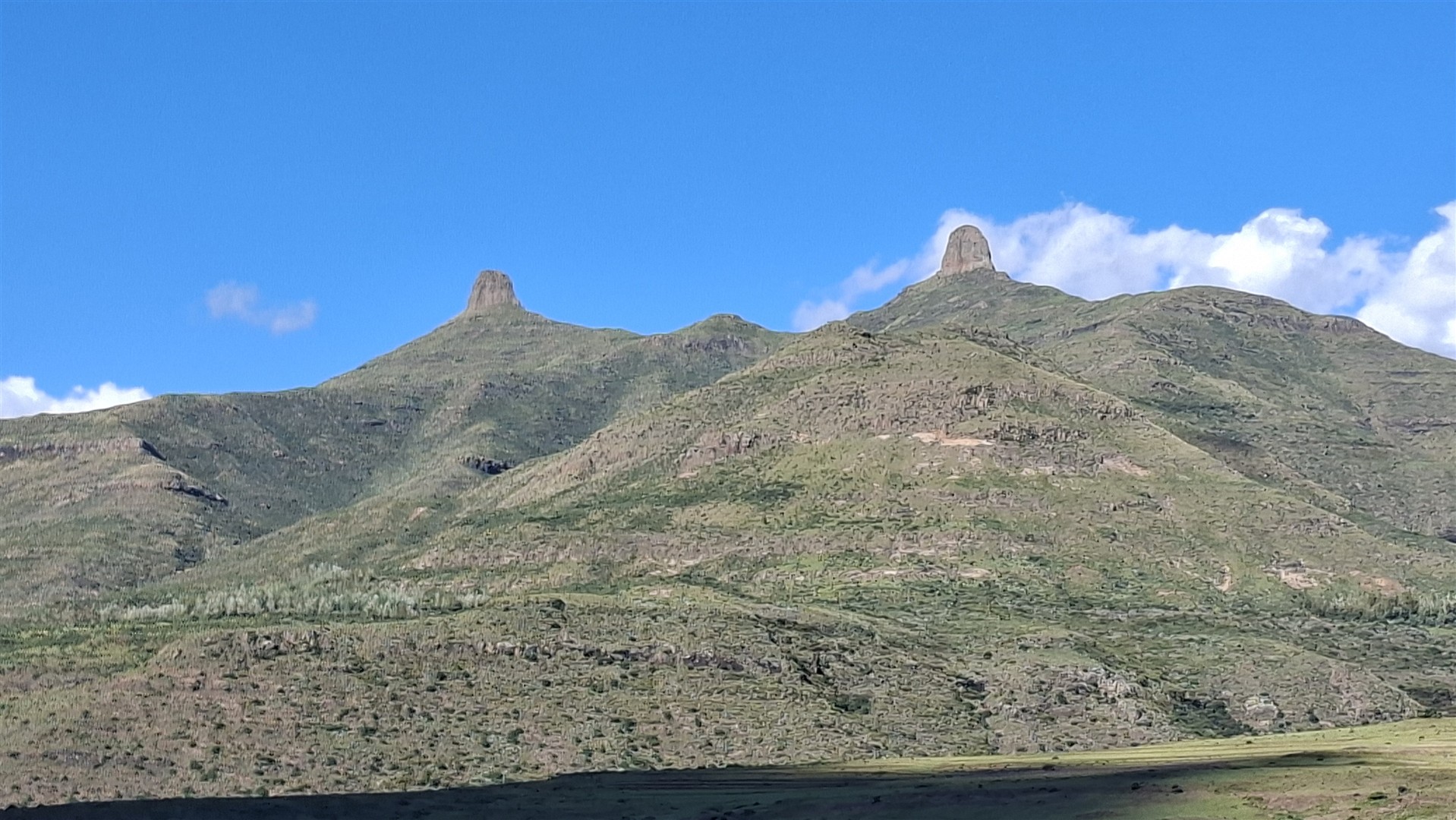
I’ve no idea what these two hills are called. Answers on a postcard.
Next day I headed to the border with South Africa, aiming for Bloemfontain.
I messaged Heidi and then called her. I explained what I needed and she said she’d get onto it.
Which she did. In very short order she found a place that would supply and fit a tube. I just had to get there.
I refuelled just before the border. Easy out and easy in. I felt bad about the fact that a local guy at the SA immigration office told me to come forward and jump the queue. On the other hand, there were about 30-40 people in front of me.
I carried on but then got caught by the police. I didn’t completely stop at a STOP sign and the copper was further up the road waiting for me, like a cat watching for a mouse.
He said it would be a R1,000 fine then said we could sort it out here and now. Well yes, of course. R400 later and I was on my way.
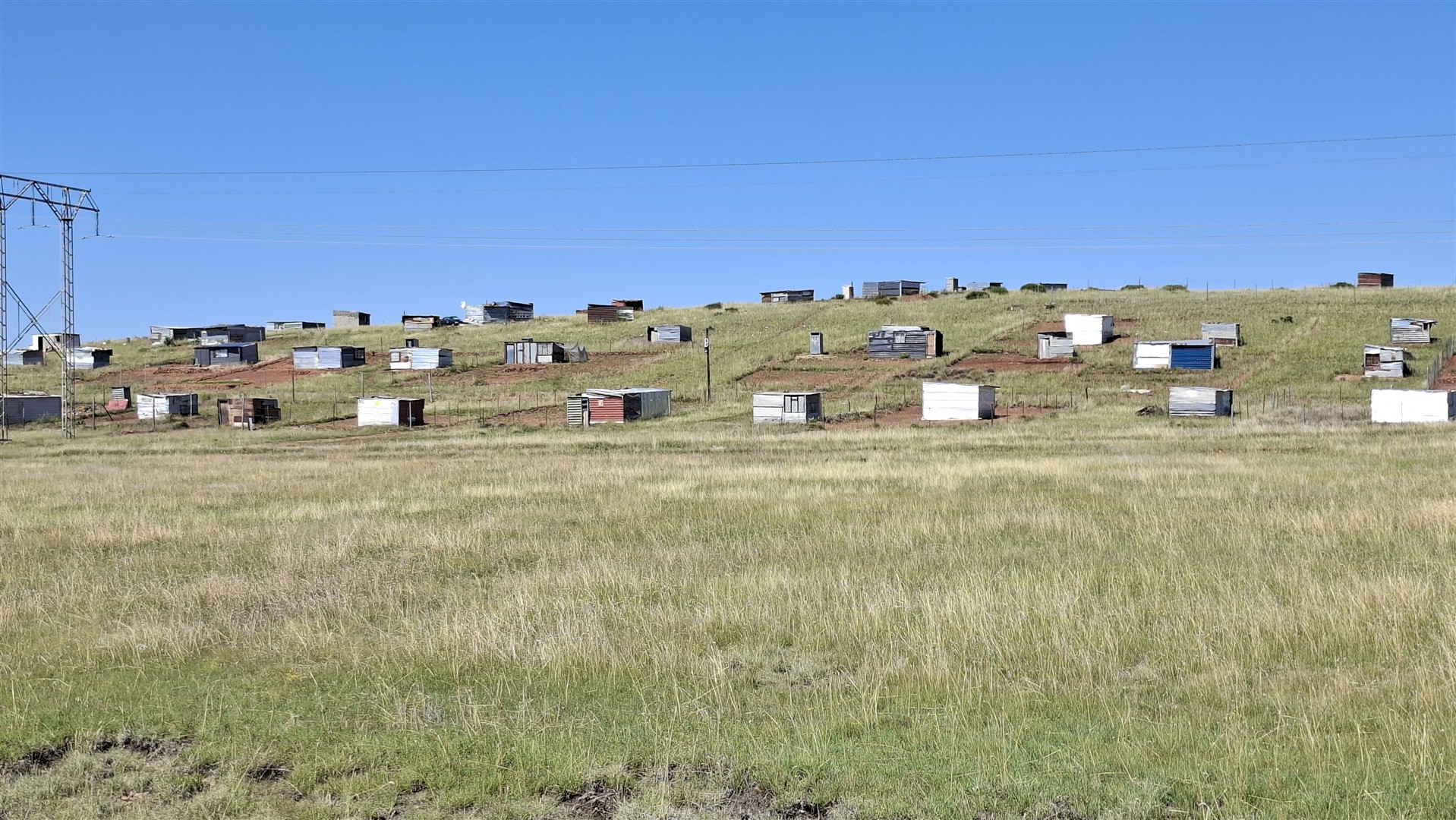
These are the kinds of places where most black South Africans live.
It was a straightforward ride on a lovely sunny day. I kept below 90kph. No overheating problems and no handling problems.
At Salley’s Motorcycles I met Heather, whom Heidi had spoken to, and she got someone onto it straight away.
I was able to go into the workshop. I wanted to see what was happening inside regarding the spoke sealing system. There was a thin plastic strip which had come loose but the actual sealing band looked OK. But it obviously wasn’t.
I was interested to see that it’s about 5mm, maybe more, thick and is quite soft. I did feel surprised that it had failed.
The tube was installed and I was happy to pay the cost. When I left it felt very strange to have air in the tyre.
I headed round to a nearby servo that had a café where I got a sausage roll and a coffee. I rang Heidi to tell her the story.
She’s been trying to get hold of her mechanic all morning but with no luck. It’s pretty bloody obvious she won’t be seeing her bike today.
She’d had offers from a friend of a loan bike or she could use her own Harley. She wasn’t sure which to go for. I suggested she try to work out where we’d be most likely to meet and I could head that way when I left Bloemfontain. She said she’ll message me when she’d thought about it.
While drinking my coffee I thought it would be a good idea to get more fuses and a replacement for the fan relay. So I went back to Salley’s. There was a young woman standing by the counter. I wasn’t sure how many fuses to get so I asked her what her lucky number was. She said 7 so I bought 7.
But he didn’t have a relay so I went to a different place for that, just up the road.
I selected a place to stay on Booking and booked 3 nights. It’s a very nice place. The room isn’t massive but has all the necessary equipment.
Next day I decided to have a really good try at sorting out the problem with the radiator fan. I took off the side panels and unbolted the fuel tank to give me more access to the wiring.
I’d already spent some time studying the wiring diagram, using a magnifying glass at times. The print is very small!
The circuit is pretty straightforward. The relay switches the current to the fan on and off, which comes from the fuse box. The relay is switched by the ECU in response to the engine temperature sensor.
I used my AVO meter and test light to check all the wiring, as well as physically checking the harness for breaks for short circuits as much as I could.
No fault found with any of it. Conclusion? The relay itself was defective. I fitted the new one I’d bought the day before, congratulating myself on my foresight.
I started and ran the engine and, after a while, the fan worked as it should. Fantastic.
While I had the tank off I finally sorted out the fuel gauge. It too now worked properly.
Next day was a good one. I went out to explore Bloemfontain and headed to Naval Hill, where lies the planetarium. But it was closed until the evening.
So I rode round to look at the statue of Nelson Mandela, which overlooks the city from the top of a high cliff. There were some ostriches wandering around to take photos of. I also had a nice chat with a couple of local guys who’d spotted my UK number plate.
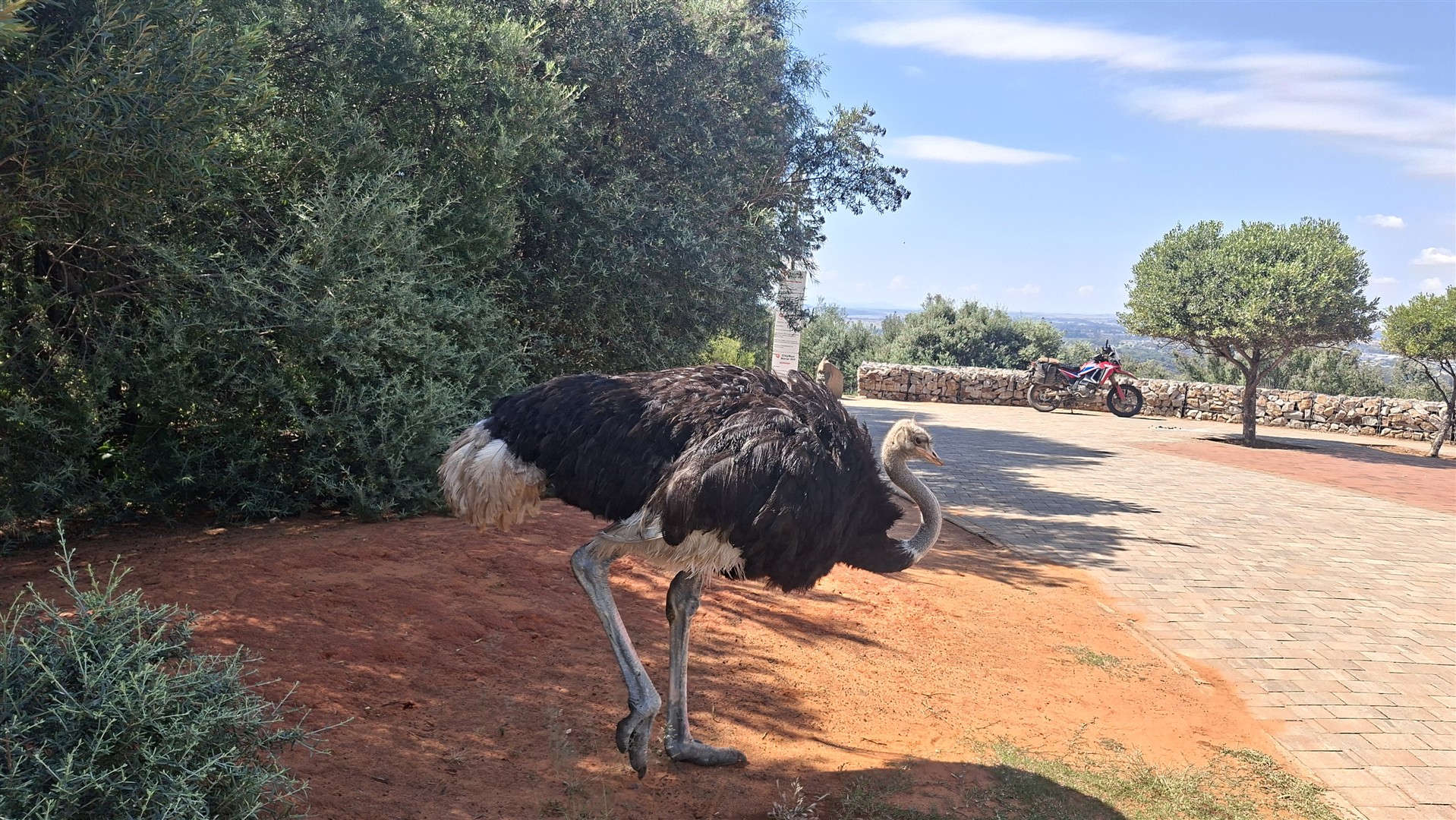
Ostrich on the loose.
Then I went to the Oliewenhuis Art Museum. Free to enter after the guy on the gate let me through without collecting the R10 parking fee he should have.
There was a nice collection of African art and I especially liked the ink line drawings.
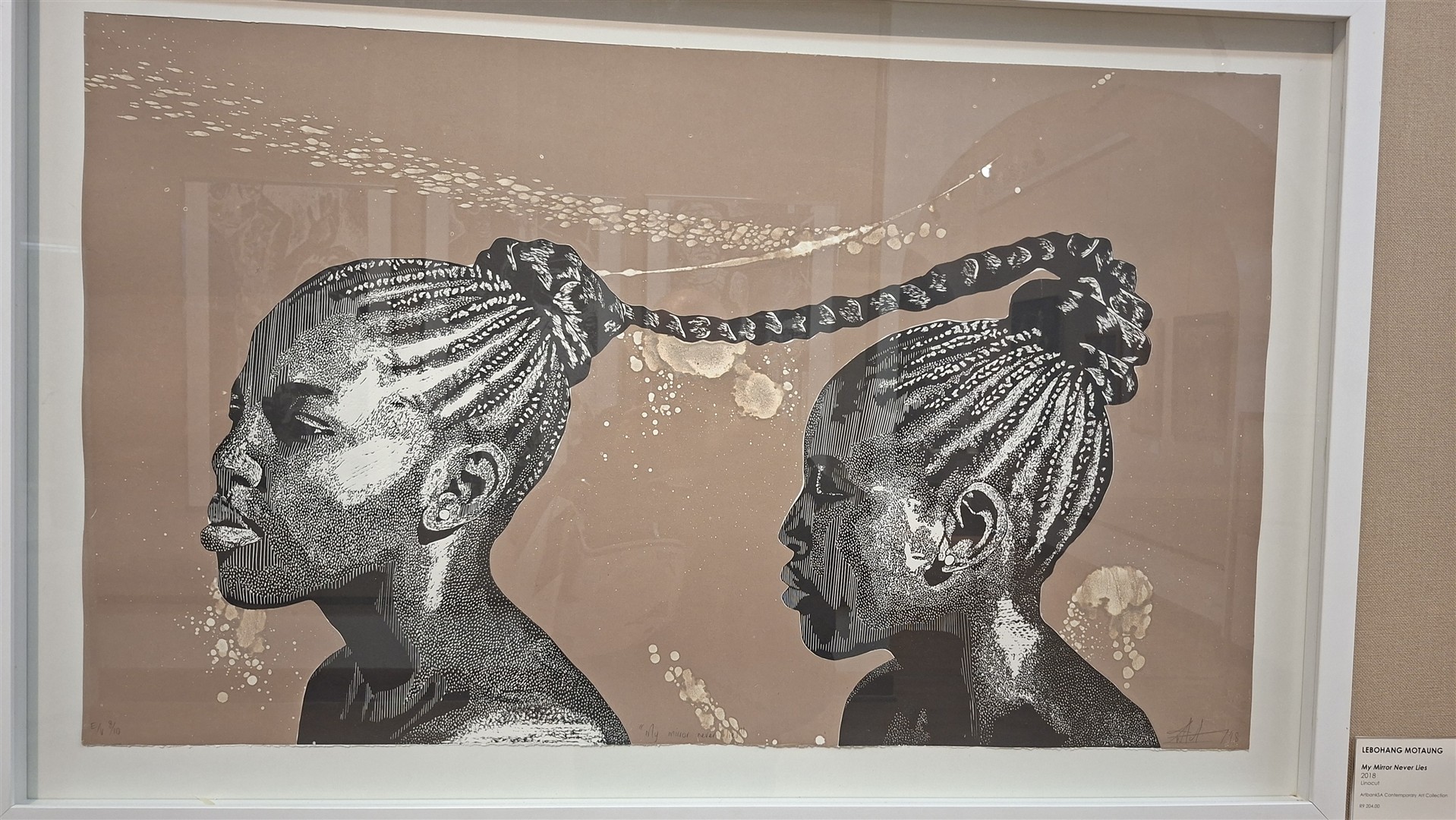
Pen and ink art.
After that I rode round to the War Museum of the Boer Republic. Very much focussing on the Boer side of the conflicts against Britain, there was lots there about the battles they won and the story of the concentration camps.
A British woman named Emily Hobhouse was a key figure in trying to provide relief to the women and children in them. She spoke and took her campaign to government ministers and also visited the camps.
These camps were only ever meant to be temporary but as time went on they became permanent. The facilities were extremely basic and disease was rife. Tens of thousands of children died.
Other camps were set up for black people who’d been working for, or servants to, Boer families. Those camps were just as bad, for people who weren’t even involved in the war. I felt ashamed to be British.
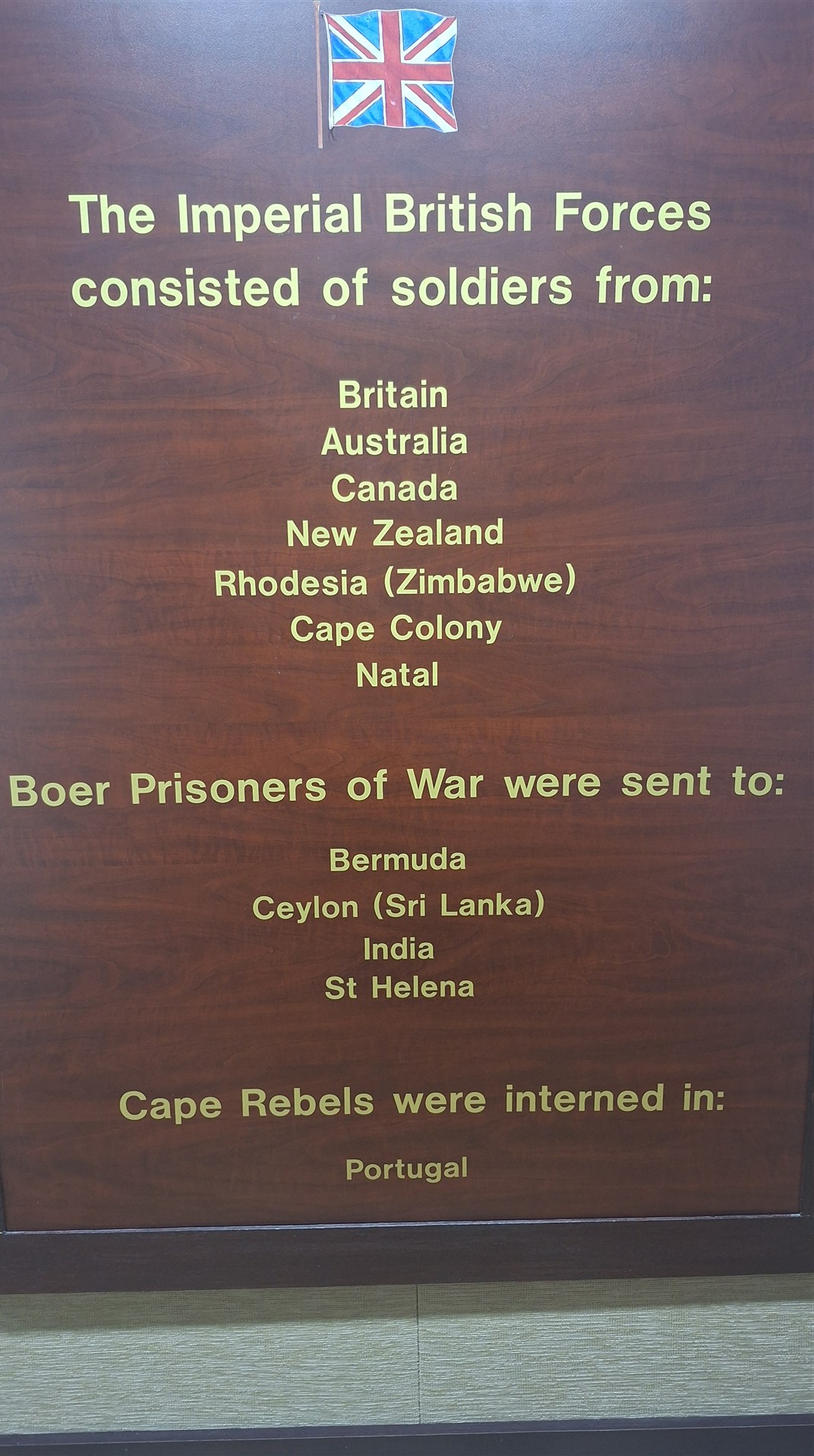
The British Empire helped out..
Other displays showed how many European countries had allowed their citizens to go there in support of the Boers.
British colonies and former colonies also sent troops to assist the British army.
Captured Boer fighters were sent to a large range of countries to be held captive, including the island of St. Helena (where Napolean was held) and Portugal.
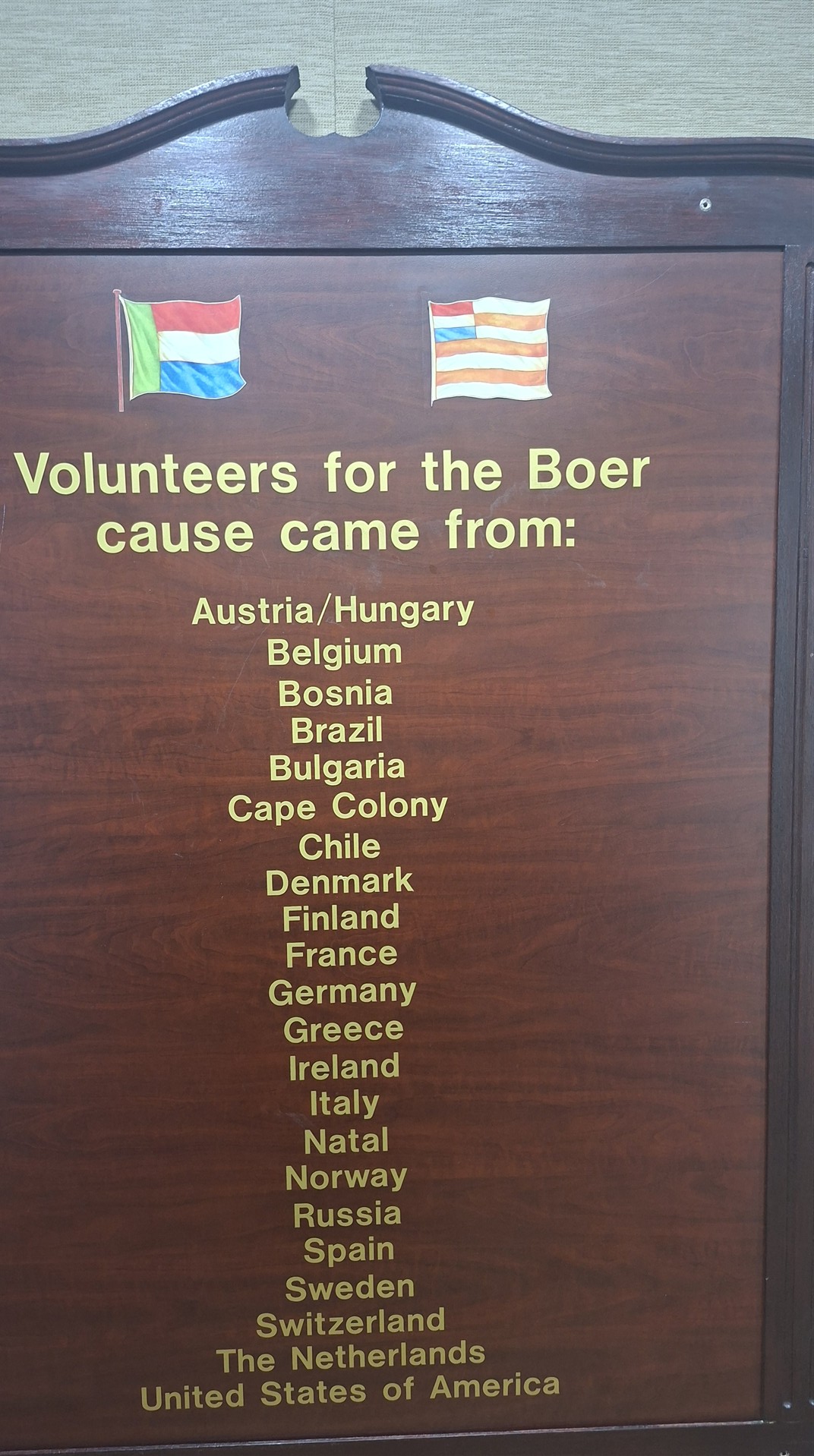
Boer supporters.
There was a section on the activities of black people during the war, on both sides of the conflict. Britain armed some of them, the Boers never did.
After the peace agreement various promises were made to black people about enfranchisement and equality. But those promises failed to be upheld.
In fact the 1913 Land Act by the South African government restricted black land ownership to 7% of the total land area. It’s worth noting that there were many black farmers before the war, most of whom lost their land and cattle as a result of it.
The whole display was very sobering and demonstrated, as ever, how appallingly native people were treated by colonial occupiers.
I bought a white chocolate Magnum to make me feel better then went outside to look at the memorial to the women who died in the war.
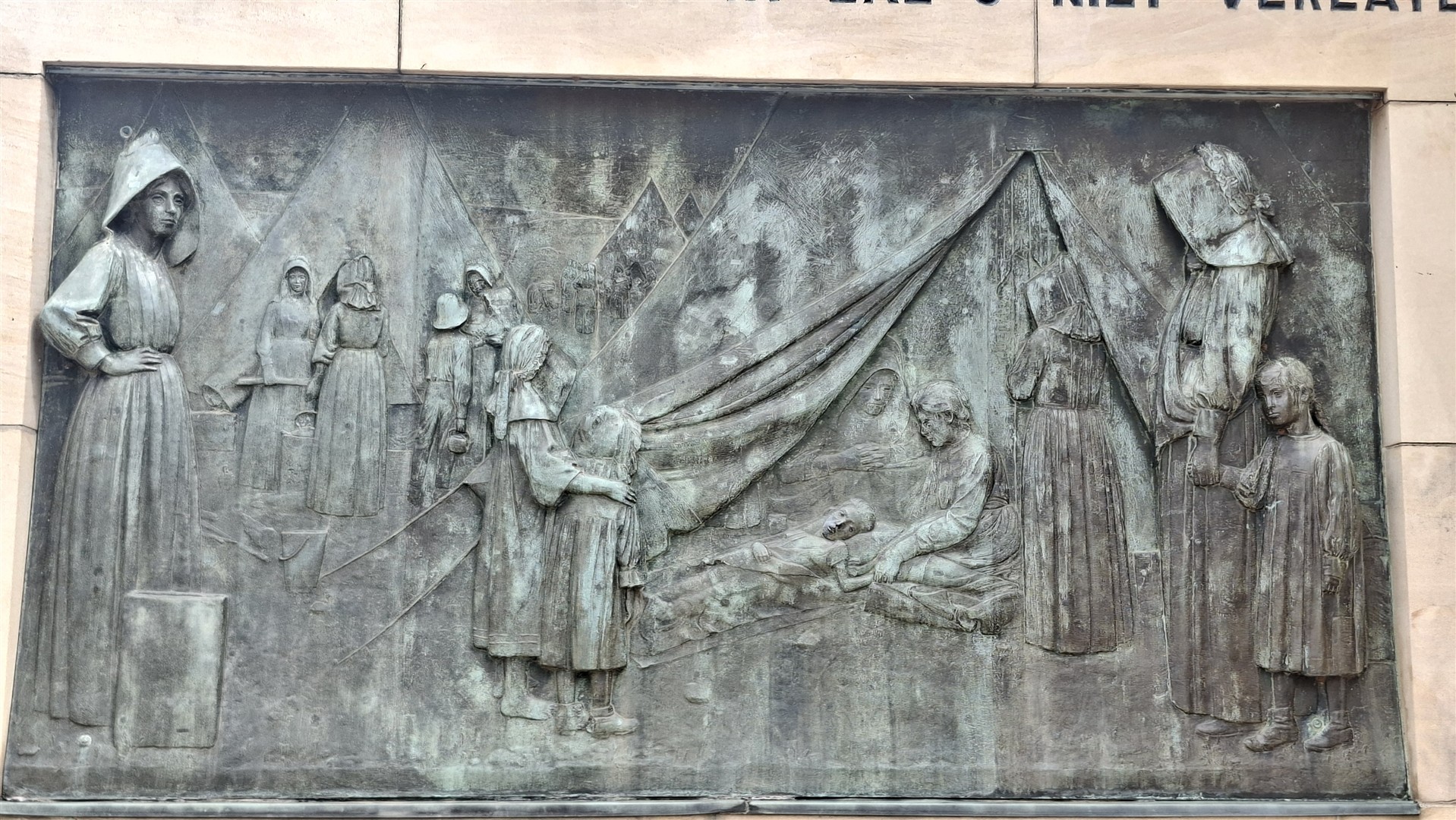
Bas relief of the concentration camps.
Heidi told me she’d now arrived in Montagu, where her mother lived. This was out on the Western Cape, not all that far from Cape Town. I told her it would take me two days to get there. She suggested a couple of places I should visit on the way.
I left Bloemfontain towards Britstown. It should have been a good day but it wasn’t.
My first call was to see the Kimberley Big Hole at the diamond mine. But as I pulled up in the car park, having wandered round the streets a bit, the overheating light came on and the fuse was blown. I was not at all happy!
The big hole was deep and is the only such hole entirely dug out by hand. The mine is now more conventional, with diagonal shafts and explosives.
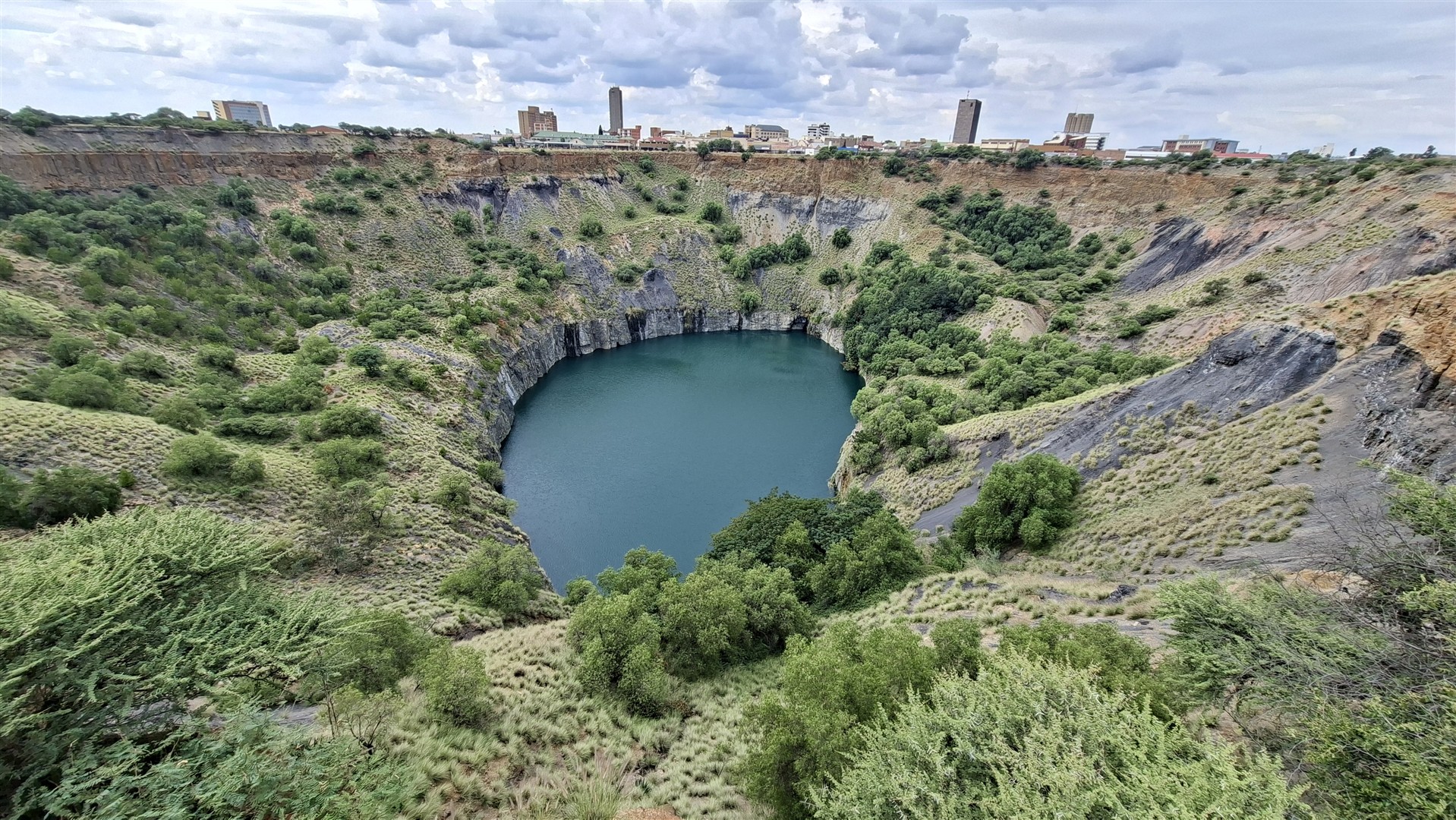
Kimberly’s big hole.
The history is interesting, beginning as a typical ‘gold rush’ event. And again, typically, the claims were consolidated until they were all owned by a pair of brothers and Cecil Rhodes, all British.
They battled each other for control and Rhodes won, forming the De Beers mining company. It also mined gold.
There was a very good information display plus various artifacts. The whole thing began with a wistful kind of film, which I found quite boring.
I was feeling impatient as I was fed up about the fan and also wanted to get back on the road.
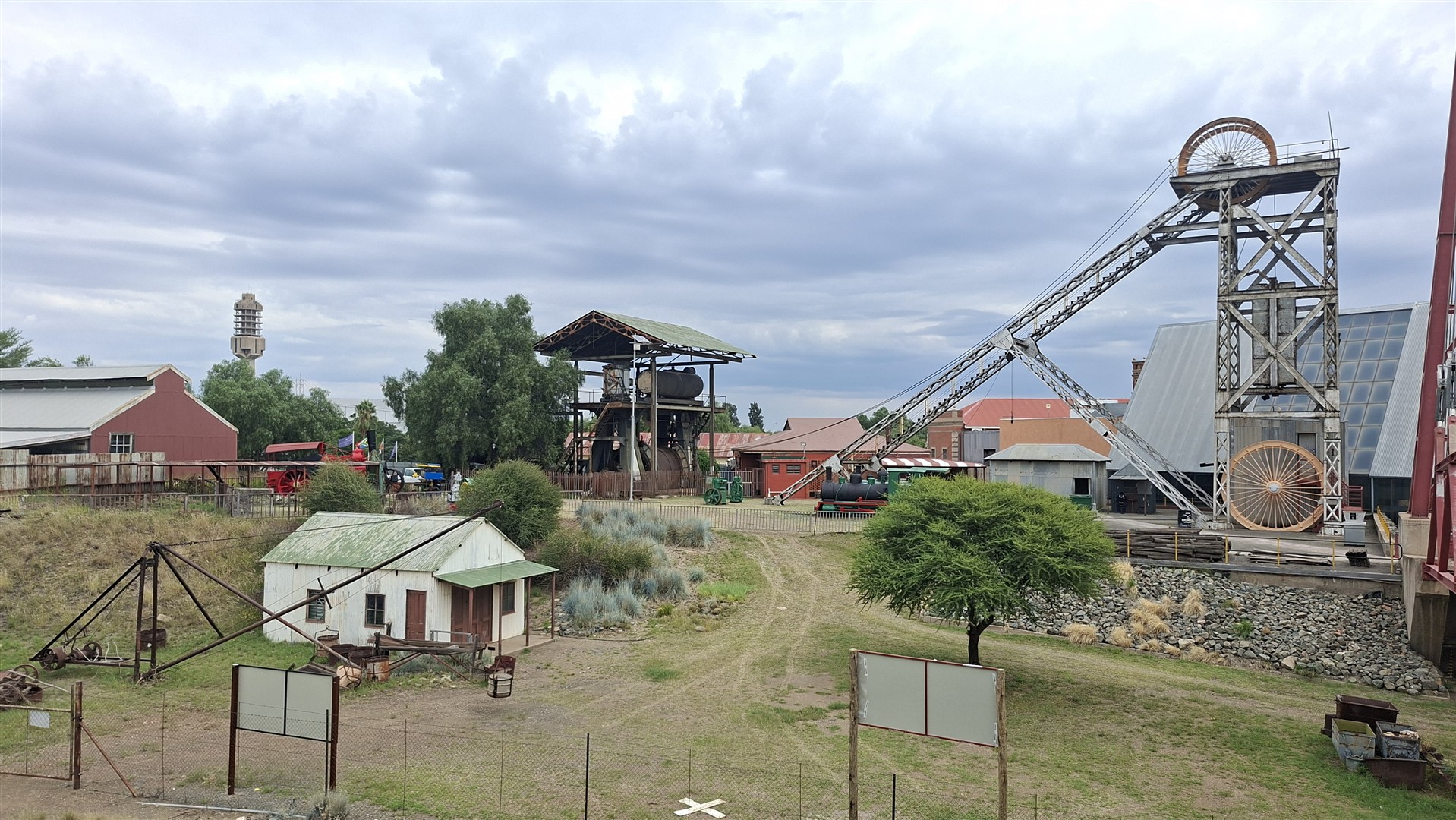
Some of the museum displays.
Once I was rolling again I headed for Orania.
This dreadful place was established in 1991 as a White Afrikaans only living space. All work is undertaken by them and no blacks live there or are allowed to work there.
They state that its purpose is to preserve the Afrikaans culture but it’s seen as a way of preserving apartheid.
They can get away with it because the town is built on private land so they have the right to control entry.
It is a neat looking place and has some innovative buildings, such as those made from plastered straw bales.
I didn’t like it at all because of its sanitised appearance and its ethos.
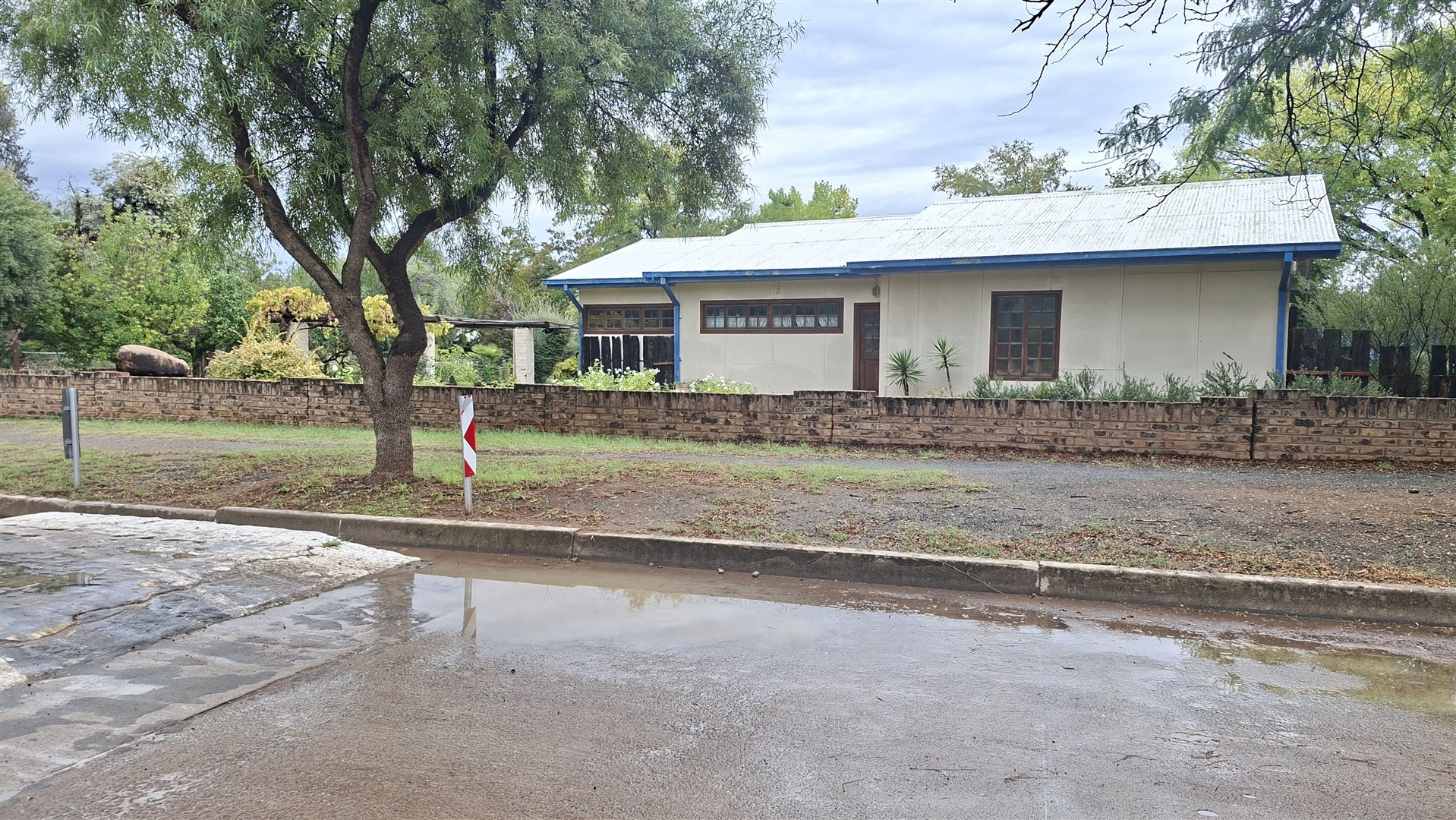
A nice house but in the super racist area called Orania.
Next day was a long one. I got to Laingsburg to see the flood museum about 1.30. But it was closed. Only the foyer was open. But I did get to see some info.
The museum told the story of a very bad flood event of the Buffalo River, with it rising up as much as two metres. Much of the town was destroyed.
Another place recommended by Heidi was Matjiesfontain, which wasn’t very far away. The whole village is a heritage site and everything was open. I had a look around the museum, which was a huge collection of old stuff from the 19th/20th centuries. Just household goods, tools and equipment.
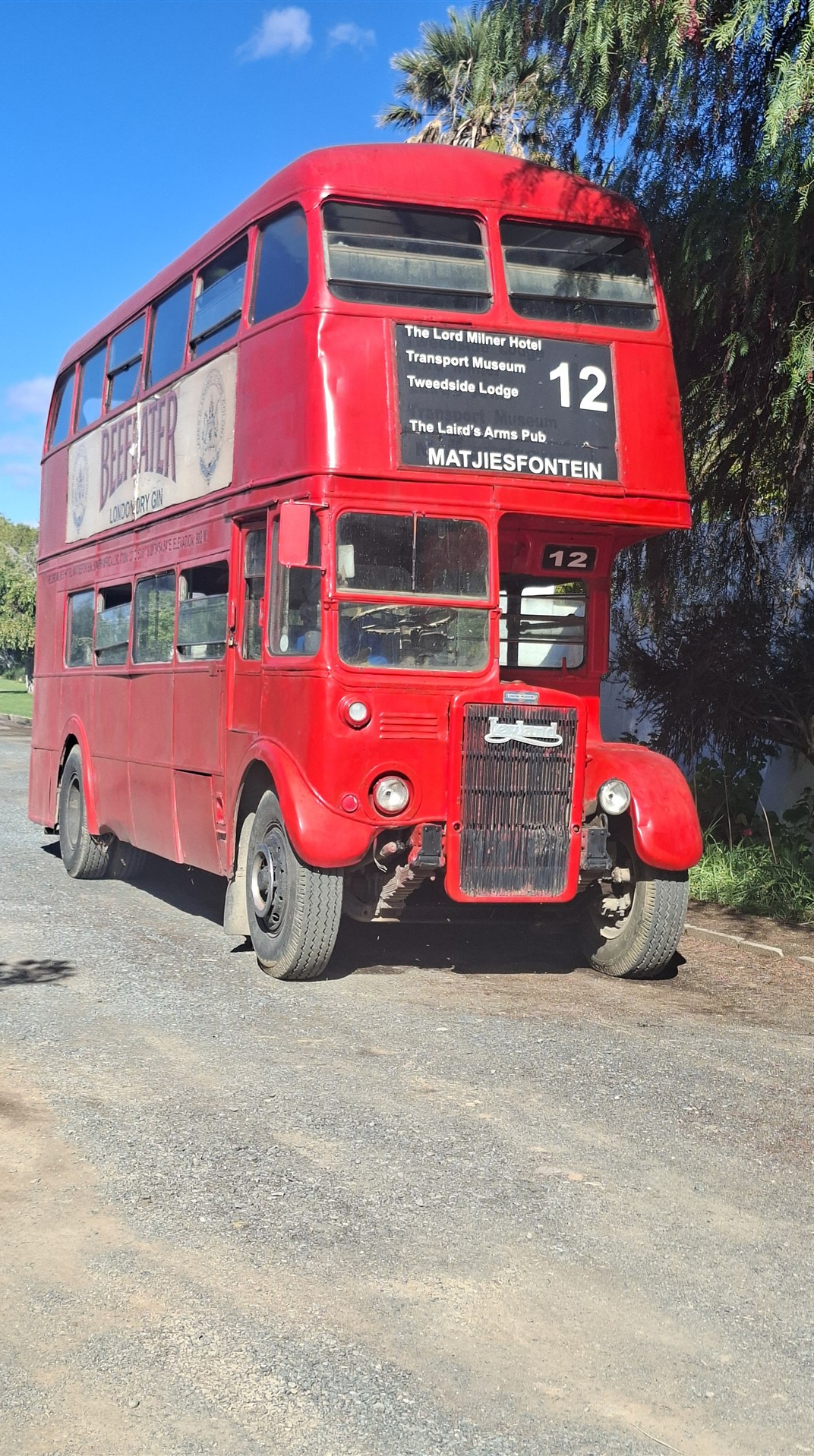
A reminder of home.
Outside the museum was an old London bus, looking to be from the 1950s.
Heidi had mentioned old locomotives so I went onto the station platform but there weren’t any there. I actually found one, plus carriages, in the transport museum.
There were some cars inside and a large collection of Brit and American ones outside. But no information about any of it. I photoed the nice old buildings too.
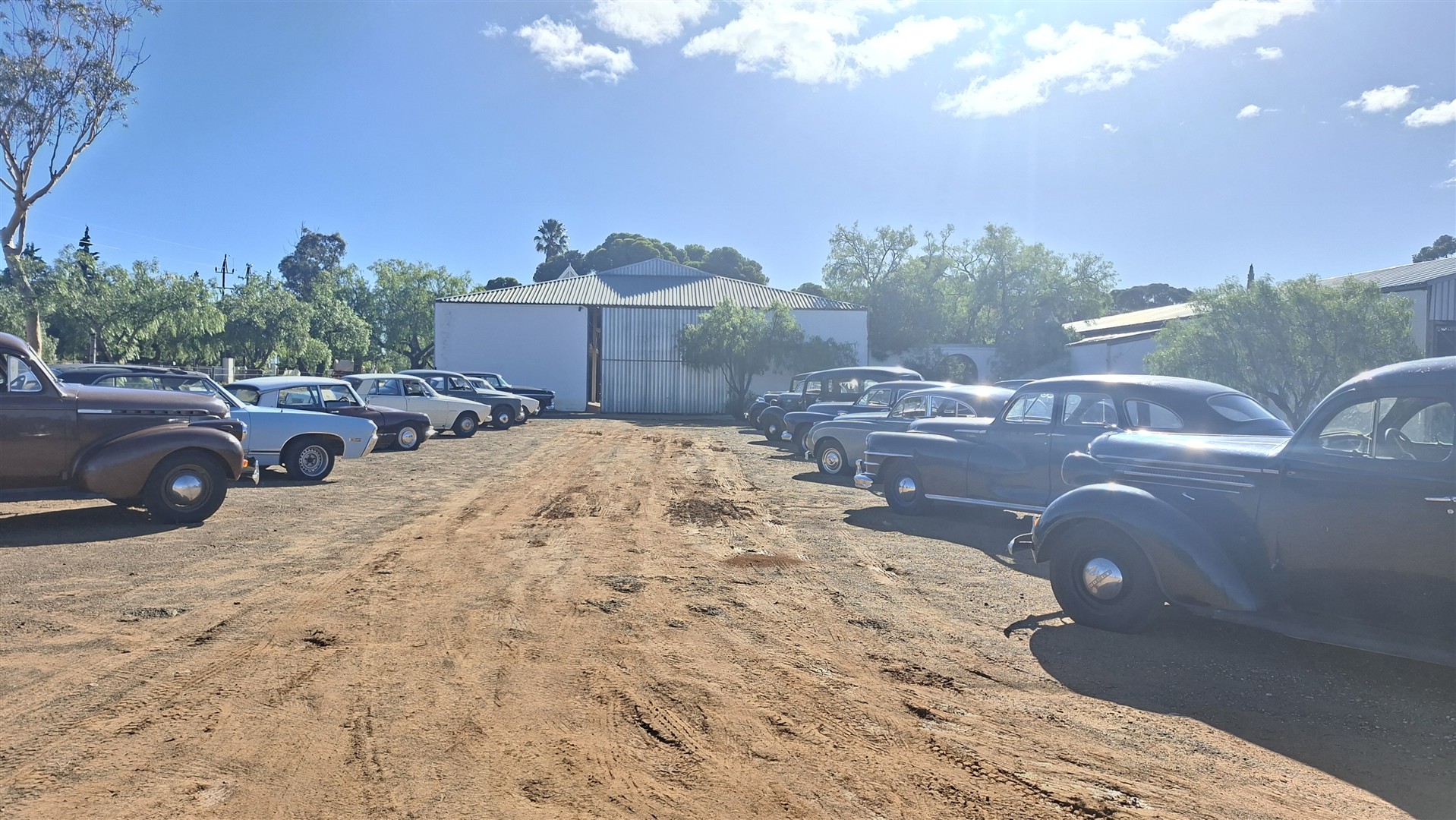
A good collection of cars.
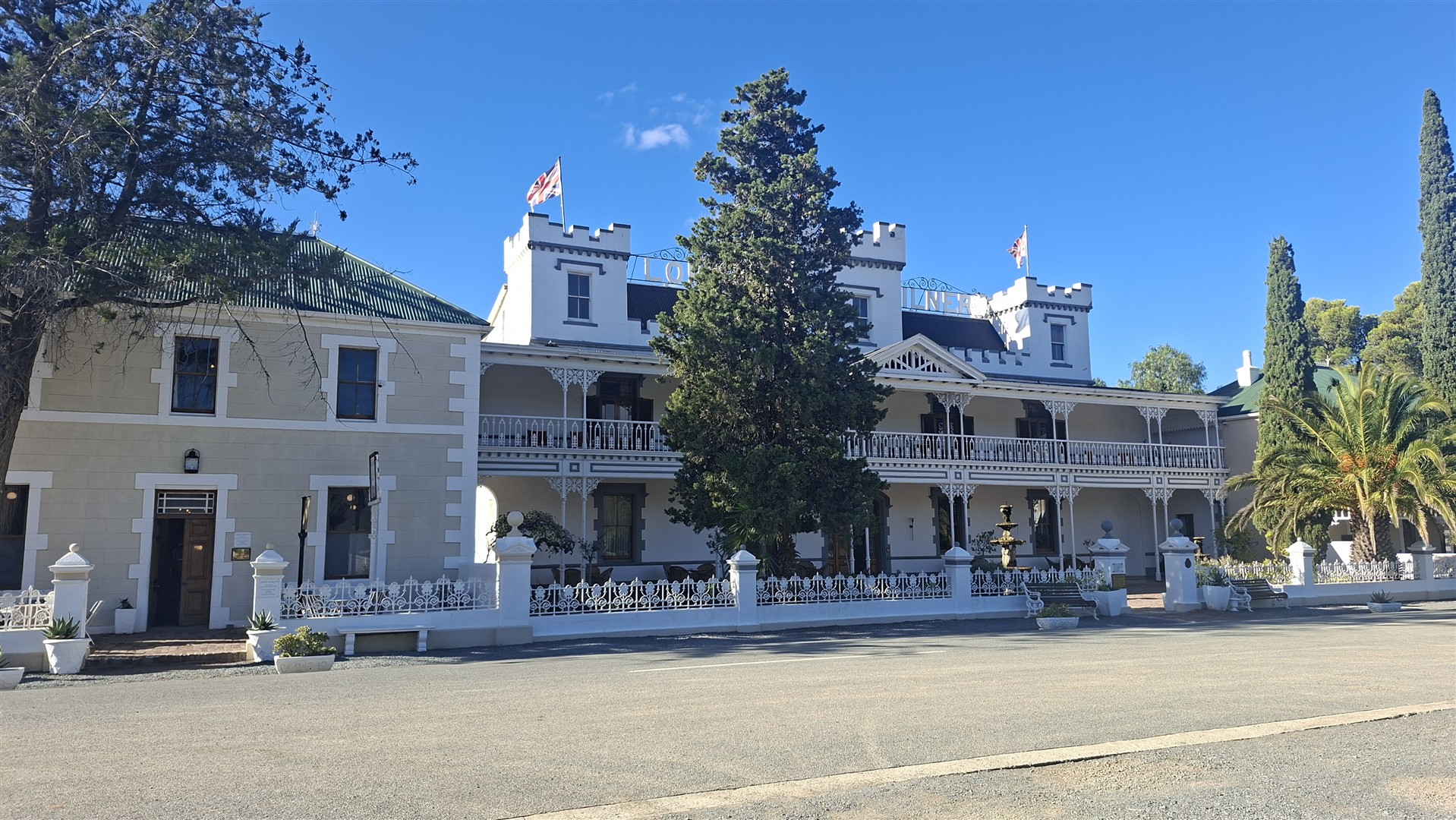
One of the classic buildings from the colonial era.
Then it was time to push on, with an ETA of 6pm. Traffic was only moderate on the main road. I was going at 100kph and I moved over to let faster traffic past. I got pulled over by the police because he thought I was a small bike. He said something about small bikes not being allowed on national highways. Very odd.
The ride from the main road to Montagu was really good. It went uphill and then wound through a pass at about 1200m. I was surprised the bike didn’t overheat as it had done so twice on the main road under circumstances that didn’t make complete sense.
Coming down from the pass was really lovely. The road twisted and wound, with care needed on some bends but generally very enjoyable. It was so nice to have a front tyre with air in it.
There was a really clear view down into the valley, bathed in evening sunshine. There was a viewpoint but I didn’t have time to stop at it.
I found Heidi’s mum’s place (Karina is her name). It’s a complex of self contained apartments, empty at that moment. Heidi had wangled one of them for me to use.
Heidi was still waiting for her bike to be repaired so wasn’t able to come out riding with me.
Next day we went out in her car for a look around the local area. Heidi was brought up in Montagu so she showed me her old house and school.
I was both surprised and amused when she showed me the stables near the school, where she used to leave her horse after riding it there. I can safely say I don’t know anyone else who used to ride a horse to school.
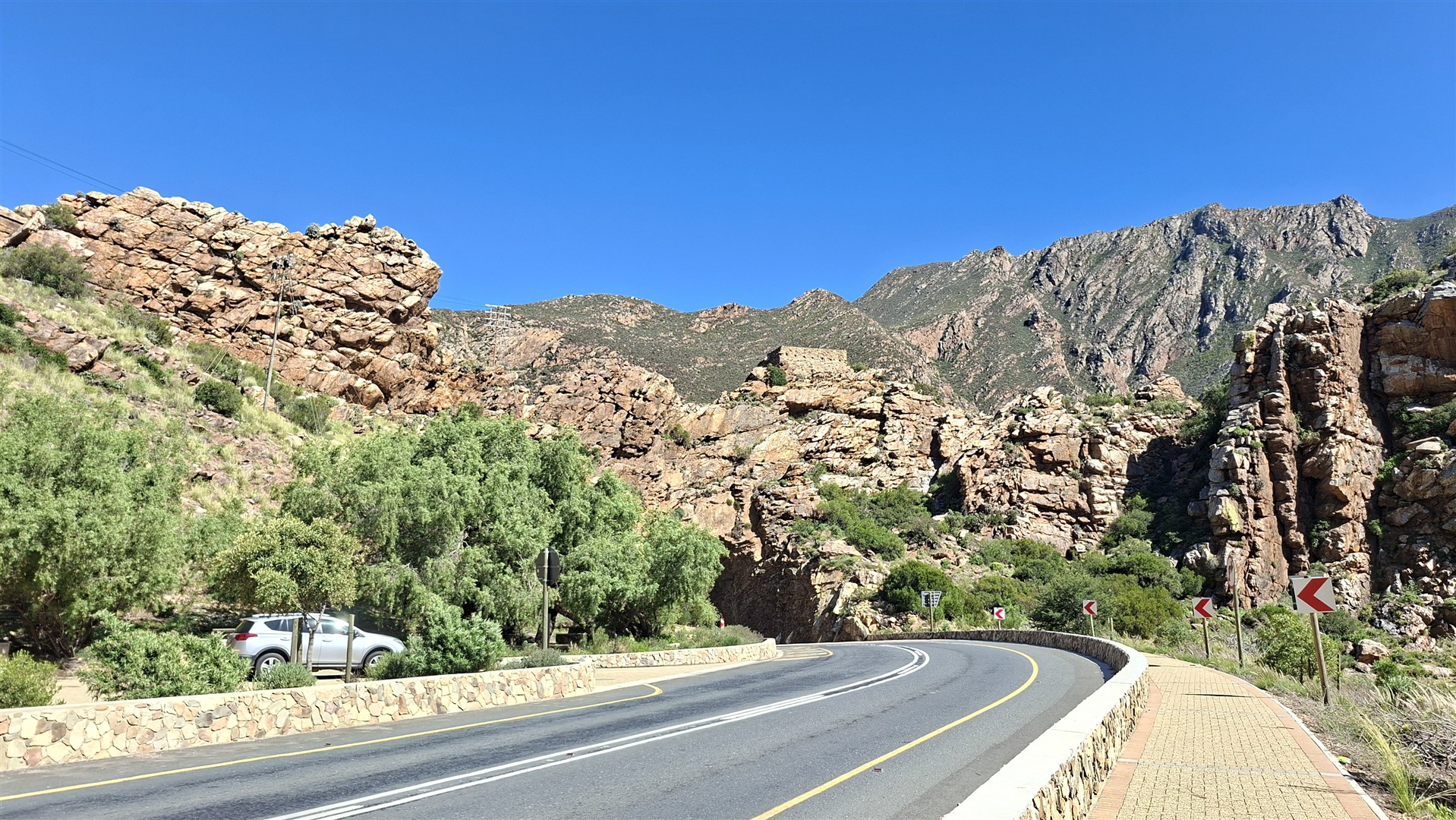
Lookout post on the ridge.
Then we drove out of town and stopped to look at an old British lookout post on a ridge overlooking the road. The new road goes underneath it through a tunnel. A steep climb up to the top but a good view to enjoy
After that we drove along to the next town. A dull little place with a canning factory. Its claim to fame seems to be that the road suffers from flooding most years, which means a 200km diversion to get round it, going over the pass that I’d ridden over. Challenging!
We brought the car back then walked around some of the town. We ended up in the nearby hotel, the building of which her parents used to own, and had apple crumble and a coffee.
I’d mentioned before that Heidi had set up a liver cancer awareness charity. This is the story behind why she did it.
Her cancer was discovered by accident. She had gall bladder problems towards the end of her first pregnancy. When they operated to remove it they also wanted to look at her pancreas but went in the wrong direction, behind her liver. They saw cancer cells on it. She’d just had a caesarian section to deliver her son, at the age of 27.
They operated on her, removing three out of the seven sections of her liver. That cured her and she went on to live a normal life, having twins then getting divorced.
Twenty years later she was contacted by a researcher who wanted permission to examine the sections of her liver they’d removed. They discovered that her T cells are able to recognise, and block, cancer cells. This was why the cancer didn’t progress.
What they’re doing now is attempting to create a system of targeted vaccination whereby her T cells can train another person’s T cells to recognise, and block, cancer cells. It was this train of events that encouraged her to give up work and set up the charity.
That evening I met her mothers boyfriend, Berry, and his two sons. Berry fired up the braai (BBQ). If I’m honest it all struck me as a lot of effort just to cook some sausages and toasted sandwiches. But it’s traditional and it tasted good.
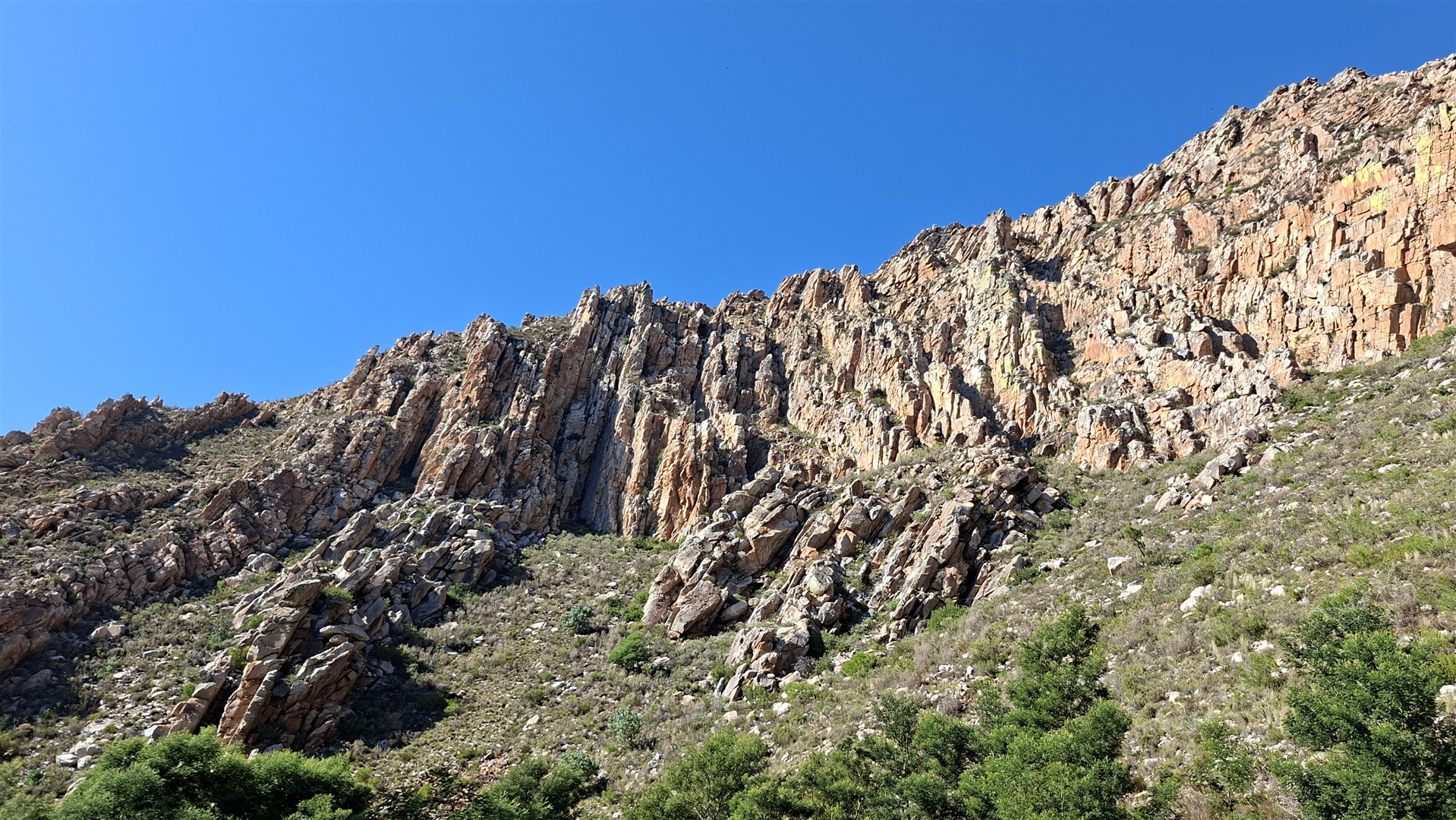
The local rock formations are quite striking.
We lazed around in the morning then went out for brunch to a place called Guano Cave. It’s owned by an old school friend who’s family fell on hard times after the father died.
Johann worked his socks off and bought the land, then built his dream. It’s a super nice place, with accommodation, pools and a big venue for functions.
A few years ago there was a bush fire which destroyed a lot of the premises. It had started on the other side of the mountain and had spread across.
That seemed strange as there were no trees but there is a small bush called Fynbos that is indigenous to the Western Cape and burns extremely well.
Johann had to rebuild and he now has his own fire engine. He’s created a 20 metre wide fire break around the premises. Smart move. Insurance covered most of the loss, but not all.
The breakfast was very good. Heidi was going to show me around the place but Johann offered us a free tour of the caves for the next day.
That was a very good morning out. The countryside is spectacular, with all the rocky ridges (neks) and slopes. I’d thought the rock was sandstone but it actually seems to be mostly iron.
Next morning we went back to Guano cave.
We met our guide, Innocent, who was from Zimbabwe, and he took us to a screening room to watch a video. There was a young family with a cute little girl as well.
The video mostly explained about the bats that lived in the cave, plus a bit about its discovery.
Then we took to the track in a vehicle, followed by a climb up a very steep path. A challenge for all of us.
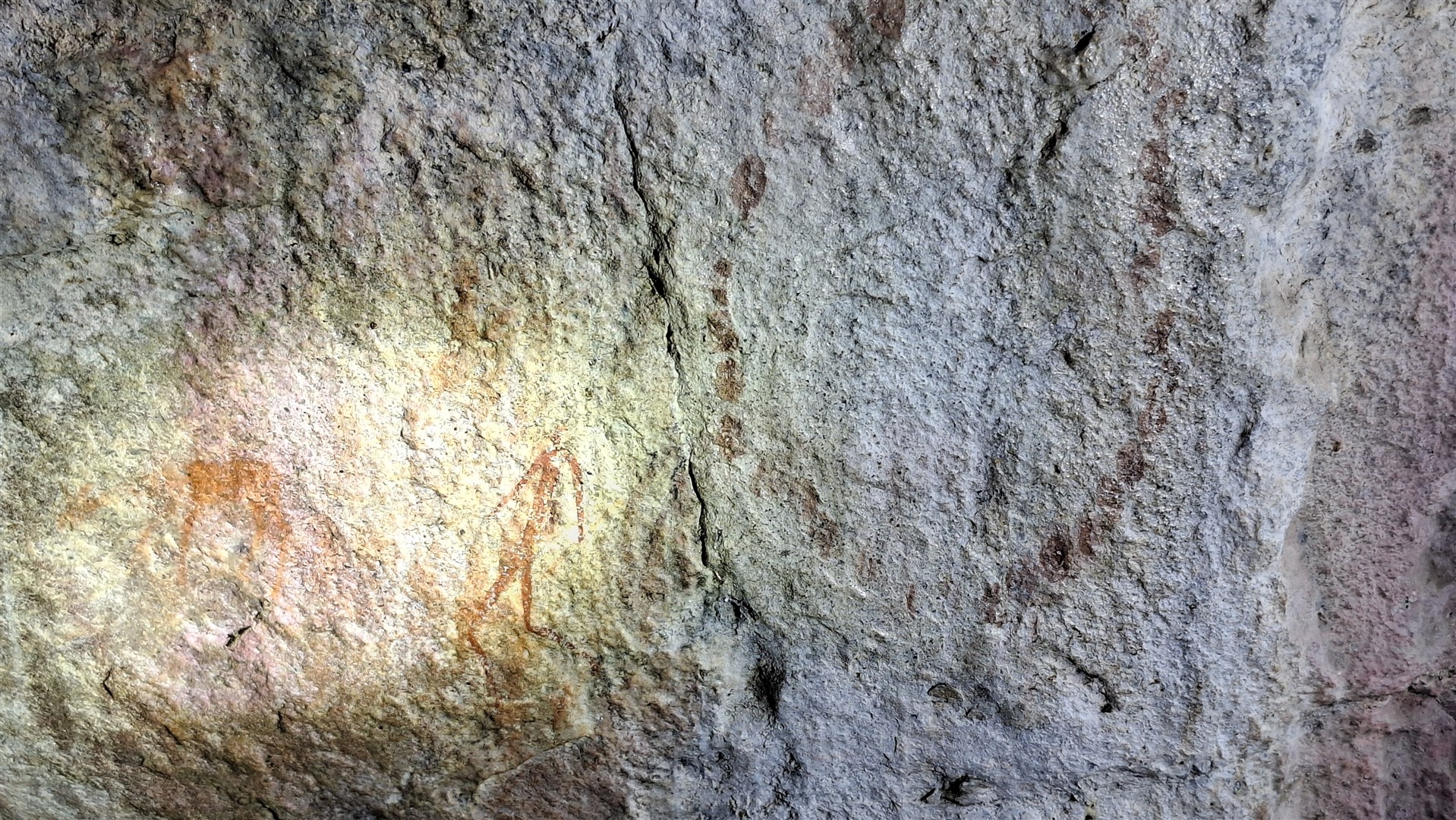
Ancient rock art.
In the first part of the cave Innocent showed us some rock art drawings. There was also an info board which said that pre-modern humans occupied the cave too.
We climbed up some steep steps to the upper chamber where we saw lots more bats but different to those below. There were some interesting rock formations too.
Then back down the steps, the path and the track. Lots of photos were taken, especially of the fascinating sandstone rock formations around the cave.
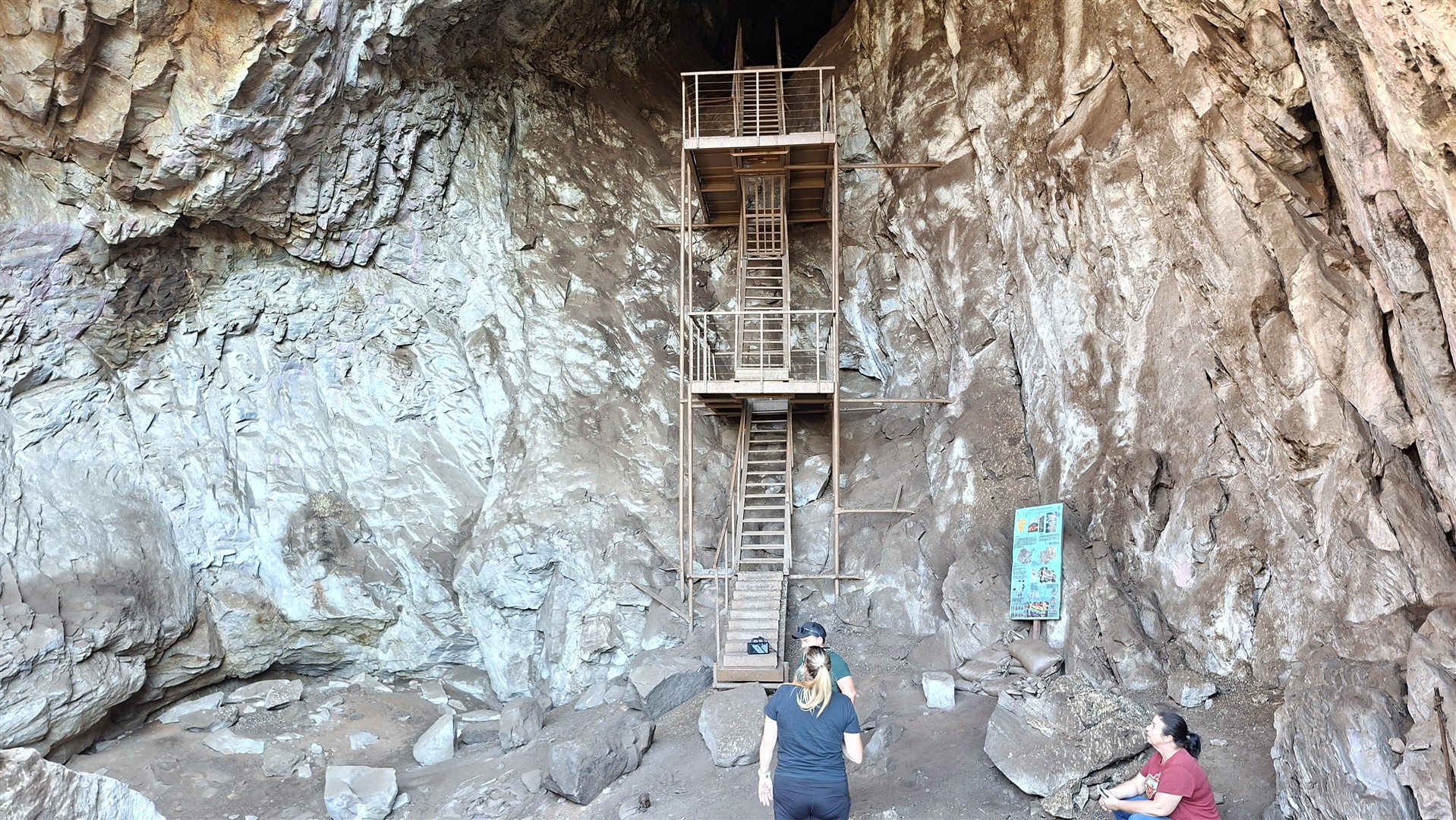
A steep climb up but worth the effort.
Back below we had some lunch before heading back to the town.
Later I worked on the bike, checking everything again. No fault found. I ran the fan for several minutes to check it wasn’t seizing up. No problems there. So that left me exactly where I was after the last repair attempt. I wondered what tomorrow would bring.
In order to keep this post to a reasonable length, I’ll tell you soon.
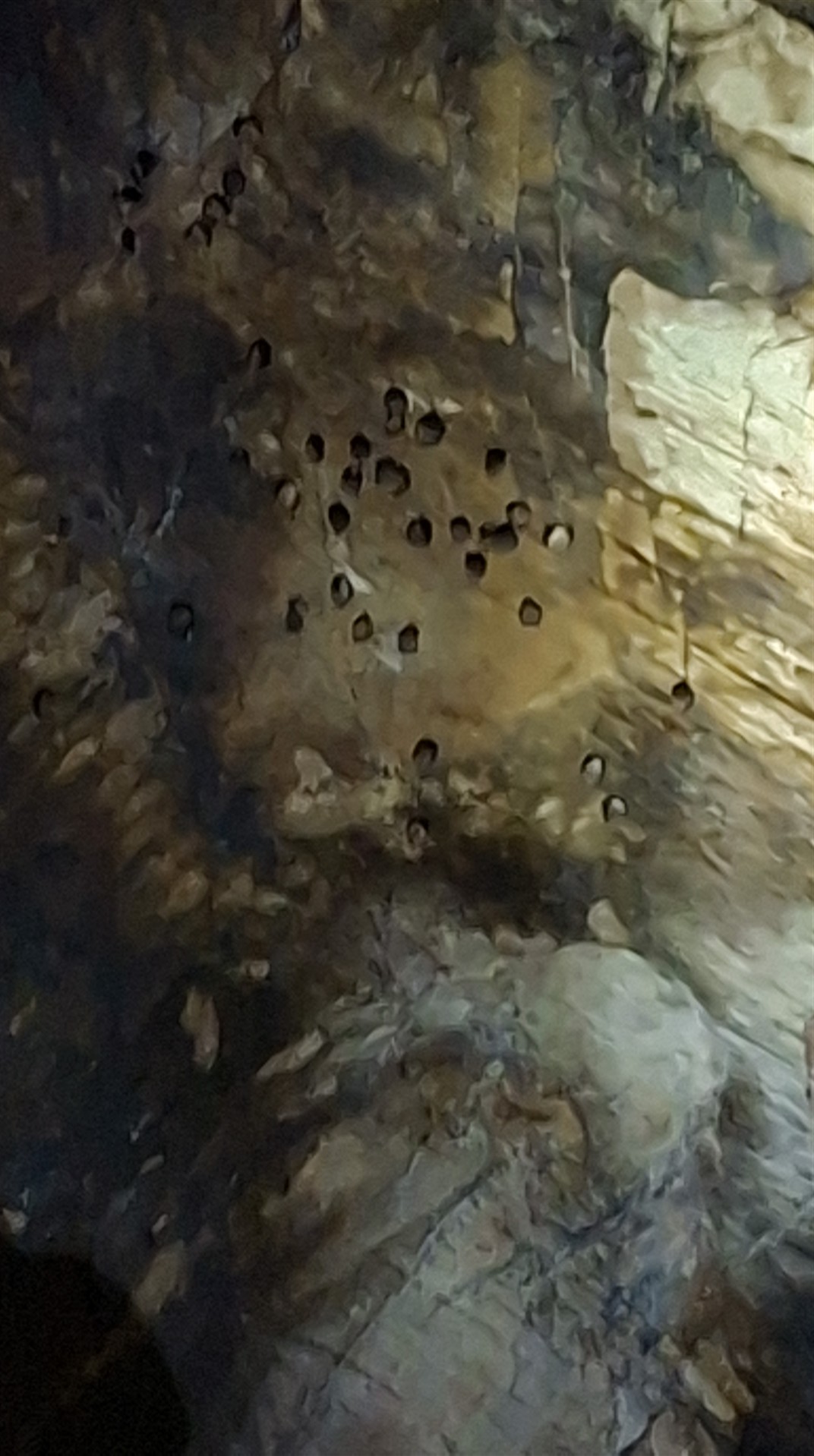
Bats. Hence the guano.

